LGBTQ

What do you know? Doctrinal-covenant fights can occur on an Orthodox Jewish campus

What do you know? Doctrinal-covenant fights can occur on an Orthodox Jewish campus

By now, GetReligion readers are probably aware that some journalists have their doubts about whether the First Amendment actually protects religious doctrines and the “free exercise thereof” by believers.

The problem is that the old-liberal defense of “religious liberty” — inside the usual “scare quotes” — now clashes with the evolving doctrines of the Sexual Revolution. This leads to fights on religious campuses in which journalists pit bad religious believers who defend ancient doctrines against good believers who want those bad doctrines to evolve to mesh with the good teachings of the New York Times and other sacred texts.

The key in most of these clashes is whether students, faculty and staff sign a “doctrinal covenant” when they choose to work or study at one of these private schools. Private schools — liberal and conservative — have a right to defend the doctrines of the religious groups that founded them. As GetReligion readers know (explore this file), journalists often ignore the content of these covenants and fail to ask progressive activists whether they read these covenants before signing them.

Most of these stories focus on disputes at evangelical and Catholic schools. If you ever wondered how an education-beat newsroom would handle one of these stories in an Orthodox Jewish context, now you know — care of an Inside Higher Education report under this double-decker headline:

Students Sue Over Denial of LGBTQ+ Club Recognition

A lawsuit accuses Yeshiva University of violating New York City human rights law in its long-standing refusal to recognize an LGBTQ+ student group

The reader who forwarded this URL was rather blunt, stating that the article is “a mess. Journalistically speaking, it's biased, lopsided, and incurious.”

As usual, there is no way to know whether the school’s admission documents include a doctrinal covenant, since the reporting is sketchy, at best, on that subject.


Please respect our Commenting Policy

2020 revisited: Repeat after me, White Catholic voters, White Catholic voters ...

2020 revisited: Repeat after me, White Catholic voters, White Catholic voters ...

The two main November exit polls showed Joseph Biden, the first Catholic elected U.S. president since John F. Kennedy, won either 52% or 49% support among Catholics over-all.

That's quite the plummet from 1960, when the Gallup Poll found J.F.K. scored 78 percent.

Reporters covering either politics or religion pay heed: Other remarkable data appear in the first batch of 2020 findings from the Harvard University-based Cooperative Election Study (CES), with more due in July. Though Hispanic and other minority Catholics went only 30% for Donald Trump (up from 26% in 2016), white Catholics gave the Republican impressive 59% support over their fellow church member, up a notch from 57% in 2016.

The massive CES sample of 61,000 allows good breakdowns by religion (also a highly useful feature with many Pew Research surveys). The CES data were explored for Religion Unplugged by ubiquitous political scientist Ryan Burge, a GetReligion contributor.

The Guy once again preaches to the U.S. media that those white Catholics are the nation's largest chunk of swing voters who can decide competitive elections except in Protestant tracts of the Southeast, and that they deserve more attention than the lavishly covered white "evangelicals," perennial knee-jerk Republicans who may edge up or down but never "swing."

That was true in 2016. It was true again in 2020. It’s especially interesting to look for patterns among generic “Catholic voters” and voters who are active, Mass-attending Catholics.


Please respect our Commenting Policy

Thinking about 'Uncle Ted' McCarrick's rise and fall: Did Catholic leaders learn anything?

Thinking about 'Uncle Ted' McCarrick's rise and fall: Did Catholic leaders learn anything?

If you have followed the career of fallen cardinal Theodore “Uncle Ted” McCarrick, you know that for a decade or two he was probably the most influential Catholic leader in the United States — especially with journalists (think “Team Ted”) and gatekeepers in the church hierarchy.

With McCarrick, it wasn’t enough to discuss his evil deeds. That was a tragic, hellish story, but it wasn’t the most important story.

The big question was how he managed to land a cardinal’s “red hat” and a throne in Washington, D.C. — even while, behind closed doors, warning lights were flashing and sirens were sounding in America and in the power centers of Rome.

Once journalists have asked that question, they need to ask (a) who promoted McCarrick, (b) who protected him and (c) who were the McCarrick disciples who used their connections with him to climb the ladders of Catholic power?

This brings us to a think piece at The Catholic Herald in England that received some attention in social media and probably deserved more. The headline: “How McCarricks Happen.”

The big idea: Are we talking about a “bad apple” or about multiple “bad barrels” that consistently produce rotten apples? Thus:

Barrels influence apples, sure: how big the barrel, how tightly packed, one’s position within it, who one’s neighbors are, how regularly the apples get mixed, removed, or replenished. But the apples themselves, good or bad, influence both each other, and collectively, the barrel environment as a whole. Furthermore, while barrels come in different shapes, sizes and materials – as whisky connoisseurs know, outwardly indistinguishable single casks can produce subtly different drops – there are significant commonalities between them.

This is precisely why, to leave barrels behind for a bit, when reading exposés of high-profile sexual predators (and we’ve read more over the past several years than is probably mentally healthy) they start to feel a little samey.


Please respect our Commenting Policy

New podcast: German priests plan huge rite to bless gay unions? Time for time travel ...

New podcast: German priests plan huge rite to bless gay unions? Time for time travel ...

I don’t know about you, but this Crux headline sounds like a big story to me: “German Catholics plan huge blessing of gay unions on May 10.

I mean, think of the global ramifications of that kind of event, when connected to other doctrinal developments on the Catholic left in German and Europe in general. Remember that recent Memo to journalists that GetReligion patriarch Richard Ostling, the one with this headline: “With open talk of schism, will German bishops mar the rest of Pope Francis's reign?

But there seems to be some question about whether the plans for this event are worthy of mainstream media coverage. Why is that? That was the topic of this week’s “Crossroads” podcast (click here to tune that in or sign up for the podcasts with iTunes).

One crucial detail jumped out at me in the overture of this Crux report (see if you can spot it):

ROME — Continuing to openly challenge the Vatican, several Catholic leaders in Germany are openly supporting the blessing of same-sex couples, with a massive blessing service scheduled for May 10, in direct opposition to Rome’s chief doctrinal office.

Bishop Franz-Josef Overbeck of Essen said that the priests in his diocese will face no canonical consequence if they decide to bless gay and lesbian couples next month as part of the event called “Love wins, blessing service for lovers.” …

His comments came in an interview with WDR earlier this week, and follow his comments on Easter, when he argued that there are “many blessings for gay couples” in Germany. He also said that the Catholic Church is not supposed to reject gay people but “find ways for homosexuals to be able to live together.”

Note: We are not talking about one or two rebellious priests. There is a bishop who plans — in a rather passive-aggressive manner — to support the event by refusing to discipline his priests if they take part.

Obviously, Bishop Overbeck is not the only man in a mitre in Europe who has gone on the record in opposition to that recent headline-fueling Vatican ruling against same-sex marriages. Check out my “On Religion” column on that ruling and the aftermath on the Catholic left: “Did Pope Francis undercut that Vatican ruling on blessings for same-sex couples?”

There are many, many Catholic priests (and other activists) in the German Parish Priests Initiative who have signed a petition in support of same-sex blessings.


Please respect our Commenting Policy

With open talk of schism, will German bishops mar the rest of Pope Francis's reign?

With open talk of schism, will German bishops mar the rest of Pope Francis's reign?

Conservative Catholic news outlets have thoroughly covered growing turmoil in Germany's Catholic Church, making available solid backgrounding for "mainstream" media who've generally been sluggish in picking up on this story.

That neglect presumably won't last, considering factors The Religion Guy will now underscore for colleagues' consideration.

A significant phalanx of German bishops, united with prominent lay activists, seem intent on revisionist change to come from their "Synodical Way" project, which the Vatican has sought to suppress, so far without success.

The German go-it-alone demands set up an inevitable showdown with the Holy See. The global repercussions were captured in a blunt Wall Street Journal headline April 16: "Can Pope Francis Head Off a Schism?" One week earlier a headline in the conservative National Catholic Register declared that "U.S. Theologians Echo Fears of Schism in Catholic Church in Germany."

The Religion Guy proposes a different hed that uses the P-word rather than the S-word: Will German Catholicism Go Protestant, Five Centuries Late?

Peg-hunting reporters will want to watch the "wires" (to use an anachronistic term) May 10 for the latest pageant of defiance. On the heels of the Vatican's papally-approved statement reaffirming opposition to church blessings and marriages for same-sex couples, a large network of German Catholics — with clergy involved — plan to stage same-sex blessing ceremonies across the nation. Watch for how many bishops are silent, or even pleased, when their priests are willing to participate.

The LGBTQ issue is only one aspect of the German imbroglio that dates from the 2019 launch of the "synodical" process, which is co-sponsored by the German Bishops' Conference and the Central Committee of German Catholics, an influential group of lay activists.


Please respect our Commenting Policy

Zero objectivity: Seattle Times report on Franklin Graham-backed police dinner hits new low

Seattle is in trouble.

People don't feel safe taking their kids into downtown Seattle, even the public parks (they support through taxes). The place is dirty. Mentally ill people wander about. Drug use and crime and widespread. And in the middle of it all are the demoralized Seattle police, who saw one of their precinct stations closed by rioters for three weeks last summer during the infamous CHOP occupation.

So, you’d think that an event honoring these same police would get some good press.

Not so fast. According to the Seattle Times:

The invitation to a free dinner at a four-star hotel in Bellevue starts out by thanking law enforcement officers for their bravery and service and goes on to promise an uplifting message, fellowship and practical wisdom from God’s word.

That invitation showed up in the inboxes of Seattle Police Department employees on Wednesday, according to a copy of the department wide email obtained by The Seattle Times. On Friday, police Chief Adrian Diaz revoked the email invitation because the dinner, billed as a law-enforcement appreciation event, is reportedly hosted by the Billy Graham Evangelistic Association. The invitation was signed by the association’s CEO, Franklin Graham, a conservative, second-generation Christian televangelist who has a history of opposing LGBTQ rights.

Some of you may remember that Graham got negative press treatment this time a year ago for setting up a tent in Central Park that had the temerity to treat COVID-19 patients. Largely ignored was the fact that a local health organization, Mount Sinai Health System, contracted with Graham to set up the tent. Most reports in the local media made it sound like it was as if Adolf Hitler had set up shop.

Despite his organization’s policy that only the caregivers, not the recipients of care, affirm centuries of Christian doctrine that marriage is only between a man and a woman, Graham was demonized as an anti-gay bigot. He couldn’t win; if he didn’t help out, he was neglecting the masses; if he did, he was imposing his beliefs on others.

I am curious if the Seattle Times reporter read this New York Times interview with Graham that said that New York City’s Commission on Human Rights found no evidence that Graham had discriminated against patients and included a link from the editor of a Jewish publication slamming local politicians for their own bigotry.

Now we’re moving the media-bias battle to Seattle. Back to the Times:

The email to SPD employees was sent by the department’s Wellness Unit after being approved by the unit’s lieutenant, according to the original email.

Diaz sent his own department-wide email just after 4:30 p.m. Friday and a message was posted on the department’s online blotter, stating that based on “Graham’s history and affiliations,” concerns had been raised that SPD does not fully support the community’s LGBTQ members.

The article then runs through the usual PR comments by various police officials, a withering quote by Seattle City Council President M. Lorena González (thanks to the council’s defund-the-police actions, a record number of 144 officers have left in the past year), an angry police officer (no doubt the source for the email being forwarded to the Times), an openly gay police officer and so on.

As someone who lives in the Seattle suburbs, the hypocrisy of it all stuns me. Here’s a city that’s overrun with homeless, whose tents are smack in the middle of major tourist attractions (like the city’s gorgeous waterfront), plus crime is surging and even Amazon is decamping for neighboring Bellevue and the media-friendly culture warriors are upset about this?

The police officers are telling local TV stations they are refusing to work for “this socialist city council” and when an outside organization tries to hold an appreciation dinner for the stoic officers who remain, the best the Seattle Times can do is a one-sided report?

Contrasted to the five sources that trashed Graham and his organization, the Times ran no balancing quotes from any local leaders who would offer an opposing point of view.

A sentence saying that Graham’s group didn’t answer an email sent the day before doesn’t cut it. The sponsoring Billy Graham Evangelistic Association is based in Charlotte, N.C., which is three time zones ahead of Seattle. The chances are good that the email arrived too late for anyone in charge to take a look.

Plus, when the reporter can’t find a quote from a prime source, she’s supposed to look for one from a secondary source. Evangelical organizations and churches do exist in Seattle and I can’t believe she couldn’t find a pastor in one of them who could have offered some kind of defense for Graham. Sadly, the Times did away with its religion beat years ago, so apparently the newsroom has no one with the local religious contacts.

Hint: There are plenty of evangelical organizations in town: (World Relief, Union Gospel Mission, Seattle Pacific University, Northwest University for starters) who’ve got talking heads. Start cultivating them.

To get right to the point: The Fellowship of Christian Peace Officers has a Seattle affiliate. I found a contact name and phone number in less than 30 seconds.

Plus, Graham himself recorded a video several months ago explaining why he wants to do these police appreciation dinners in places like Seattle, Portland and Kenosha, Wisc. Surely, a quote could have been lifted from that.

But no. Here we see “Kellerism,” a term created by a GetReligion reader after former New York Times editor Bill Keller implied in a speech there’s no need for balance or fairness when the reporting is about morality, culture, religion, etc. You can read the Keller quotes for yourself right here.

To find the other side of the story, I didn’t need to look much harder than this column by KTTH Radio show host Jason Rantz, who said that Gonzalez’ anti-cop views were at the base of it all. He said in part:

Gonzalez frames her concern over LGBTQ issues, calling out Graham’s religious views as anti-gay. But her concerns are contrived. This is about getting in the way of supporting police officers. In the process, she wins some plaudits from anti-police activists upset she hasn’t done enough to abolish the police.

The event is free for law enforcement officers. It offers appreciation for the work law enforcement does in a city where the Council and a loud activist community turn cop-hating into a sport. It’s also religious in nature, as the invite promises an “uplifting message, encouraging and practical wisdom from God’s Word, live music, and fellowship with other law enforcement officers.”

But because of its religious nature, and Graham’s religious objection to gay marriage, Gonzalez feigned outrage.

Now what the Times and the above column did add is that the event was sponsored by the Billy Graham Evangelistic Association, not by Franklin Graham’s organization Samaritan’s Purse. Yes, the younger Graham signed the invite, but that was his only involvement. But folks out here in western Washington are going to punish him if that’s the last thing they do. The dinner will occur in mid-May and The Stranger, a local lefty site, is encouraging folks to bring their cameras and take photos of whichever police officers decide to attend.

But hey, doxxing is OK when the group is related to Franklin Graham.

I get that journalists can’t help the craziness that reigns in the Emerald City at present. But when it comes to reporting on something like this, at least try — try to include an opposing point of view. Show some respect for people on both sides of public debates. It’s called “journalism.”

I know it’s a stretch. But it can be done. Trust me.


Please respect our Commenting Policy

What is news? Apparently, strangers shooting at nuns in an American convent isn't news

What is news? Apparently, strangers shooting at nuns in an American convent isn't news

It’s a question journalists hear all the time from mystified readers: “What is ‘news’?”

At least, that was a question we used to hear when newspapers tried to appeal to all kinds of people in a community, including those on both sides of common cultural and political divisions.

Why are some stories big local, regional and national news stories, while others are not?

Years ago, a Charlotte megachurch pastor asked me why it was news when a downtown Episcopal parish replaced a window, but it wasn’t news when his church built a multi-million-dollar facility. Well, I explained, there was controversy about changing that window because it was part of a historic sanctuary. What I didn’t say is that editors tend to think that what happens downtown is, by definition, more important than what happens in suburbs.

I raise this issue because of events that unfolding in rural Missouri. But before we get to that, let me ask a few questions. Would it be local, regional and even national news if strangers kept shooting rifles at a:

* Mosque in the Bible Belt?

* Catholic parish with an LGBTQ+ rainbow flag?

* Baptist church at the forefront of local #BlackLivesMatter demonstrations?

Clearly, the answer would “yes” in all three cases, especially if that Baptist church was in Georgia.

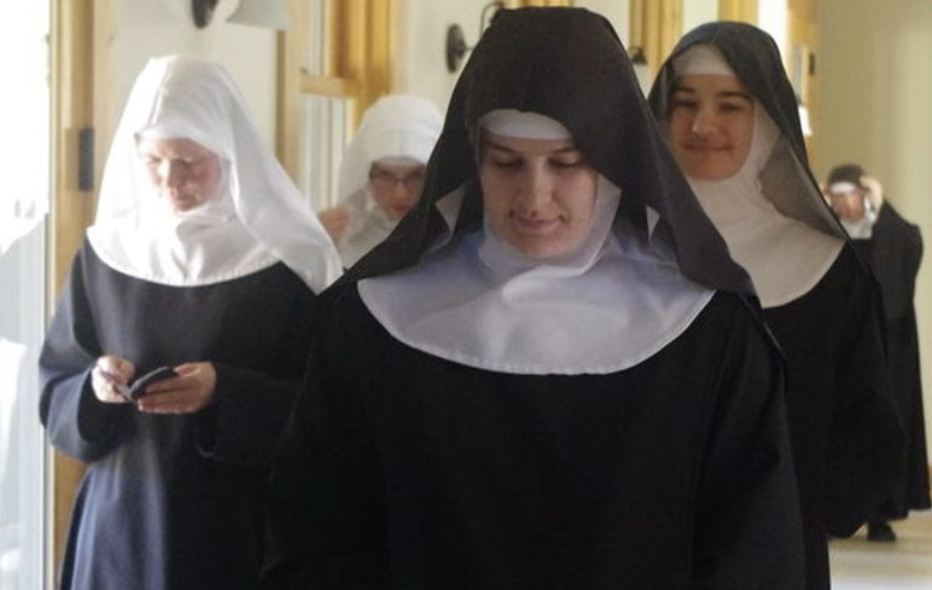
Now let’s look at an example of a story that is NOT news, care of the Catholic News site called The Pillar: “Missouri nuns targeted in multiple ‘extremely disturbing’ shooting incidents, motive unknown.” Here is the overture on this recent story:

Shots have been fired at a rural Missouri abbey of nuns on several occasions this Lent, the sisters have said, with a bullet from one shooting lodging in the bedroom wall of the order’s superior. The nuns are fundraising for a security fence, while local law enforcement is providing extra security and investigating the shootings.


Please respect our Commenting Policy

Hail to the resurrection of the Religious Left, creating media blitz No. 175 (or thereabouts)

Hail to the resurrection of the Religious Left, creating media blitz No. 175 (or thereabouts)

The Easter season 2021 came with legacy media belief in the resurrection -- of the Religious Left.

Since Jerry Falwell (Senior) emerged from the underbrush, how many times have we read forecasts that religiously inspired political liberals will supplant the political prominence and influence of the Religious Right? This must be something like round 175.

The latest, headlined "Progressive Christians Arise! Hallelujah!", emerged from the word processor of Nicholas Kristof, who treats religious themes more often than fellow New York Times commentators — except David Brooks and Ross Douthat.

The Religious Left, so prominent in the New Deal days and the anti-war and civil rights efforts of the 1960s, never went away. Witness the perpetual political pronouncements from the “Seven Sisters” of Mainline Protestantism, for example the United Methodist Church lobby headquartered across the street from the U.S. Capitol and next door to the U.S. Supreme Court.

Journalists need to carefully evaluate these claims because renewed political impact by a Religious Left would loom large on story agendas. What's the evidence?

Kristof pins hopes heavily upon Democrats with religious leanings "moving onto center stage" as follows. Catholic President Joe Biden is a faithful churchgoer (unlike Donald Trump). Veep Kamala Harris regularly "attended" Baptist churches (but note the past tense). Senator Elizabeth Warren "taught" Sunday School (another past tense). Senator Cory Booker and Transportation Secretary Pete Buttigieg "speak the language of faith fluently." And media star Alexandria Ocasio-Cortez says Catholicism "inspires" her radicalism.

The column also touts troubles on the right. Some of those rabid U.S. Capitol rioters invoked religion.


Please respect our Commenting Policy

This just in! Millions of folks are sort of religious, a key to church membership decline

This just in! Millions of folks are sort of religious, a key to church membership decline

When it came to poll numbers about religion and American life, the late George Gallup, Jr., wasn’t all that interested in many of the most obvious questions.

As he told me in several telephone interviews, starting in the 1980s: The religion numbers just don’t add up. You could see the same sentiments in some of his public addresses.

Gallup — who died in 2011 — wasn’t impressed by the high numbers of Americans who told pollsters that they believe in God, attend worship services on a regular basis and say that faith is “very important” in their lives. That didn’t seem to fit with national patterns of divorce and family breakdown. He kept trying to find ways to ask questions that focused on the role of religious faith in daily life.

When push came to shove, Gallup was convinced that about 20% of Americans were seriously practicing some form of religious faith. The number might be lower than that.

Thus, that recent blitz of news about church membership trends. As the Washington Post headline stated: “Church membership in the U.S. has fallen below the majority for the first time in nearly a century.” Here’s some of the overture:

The proportion of Americans who consider themselves members of a church, synagogue or mosque has dropped below 50 percent, according to a poll from Gallup. … It is the first time that has happened since Gallup first asked the question in 1937, when church membership was 73 percent. …

In 2020, 47 percent of Americans said they belonged to a church, synagogue or mosque. The polling firm also found that the number of people who said religion was very important to them has fallen to 48 percent, a new low point in the polling since 2000.

Click here for the Gallup report on these findings, old and new. Here is another summary from 2019. And here is some additional background from the new Gallup release:

Gallup asks Americans a battery of questions on their religious attitudes and practices twice each year. The following analysis of declines in church membership relies on three-year aggregates from 1998-2000 (when church membership averaged 69%), 2008-2010 (62%), and 2018-2020 (49%). …

The decline in church membership is primarily a function of the increasing number of Americans who express no religious preference.


Please respect our Commenting Policy