Journalism

U.S. bishops preach pro-life Catholic doctrine to Biden: Isn't that a story during midterms?

U.S. bishops preach pro-life Catholic doctrine to Biden: Isn't that a story during midterms?

The looming midterm elections have the Republicans giddy over the potential that they may take control of the House and Senate. Democrats, on the other hand, are hoping to stem the loses knowing that they still have President Joe Biden in the White House.

Amid all this midterm mania are the talking points politicians are pushing in order to appeal to their core voters. Republicans are campaigning on inflation and crime and Democrats on diversity and, of course, abortion following the repeal of Roe v. Wade.

Polls show that voters care more about inflation, but Democrats are hoping that talking up abortion will get out their base. Abortion, however, isn’t just a political issue. As Biden, a practicing Catholic, promises to make abortion a federal right by codifying Roe v. Wade into law should Democrats keep a majority, tension among him and several prominent U.S. bishops has heated up once again.

Some of these bishops have been in the news in the past regarding Biden’s support of abortion, threatening to deny him the sacrament of Holy Communion. It was last week that the issue came to the forefront again.

At least, it come to the forefront in Catholic news publications. In the elite press that GetReligion studies? Not so much or not at all.

This is how Catholic News Agency reported it on Oct. 25:

President Joe Biden, a professed Catholic, must end his “single-minded” abortion extremism and see the humanity in unborn children, the U.S. bishops have said. They said abortion’s impact is “tragic” and urged the president to support mothers.

“The president is gravely wrong to continue to seek every possible avenue to facilitate abortion, instead of using his power to increase support and care to mothers in challenging situations,” Archbishop William Lori of Baltimore, chair of the U.S. Conference of Catholic Bishops’ Committee on Pro-Life Activities, said Oct. 25.

“This single-minded extremism must end, and we implore President Biden to recognize the humanity in preborn children and the genuine life-giving care needed by women in this country,” he said.

The U.S. bishops’ statement noted that last week Biden declared that his top legislative priority after the November elections is to codify a national right to abortion.

This is a major story that was covered by the Catholic press, but big secular newsrooms ignored it.
Please respect our Commenting Policy

Tips for reporters covering feds arresting abortion-facility protestors, from Christianity Today

Tips for reporters covering feds arresting abortion-facility protestors, from Christianity Today

Long ago, back in 1980s Denver days, I was out of town covering a national religion-news event when something interesting happened during an Operation Rescue protest at abortion facility.

The protest was going as planned, with peaceful protestors willing to be arrested for blocking the entrance (think civil disobedience) when someone rushed forward and started verbally and physically harassing a client and her escort. This became the big story of the day.

When I heard about what had happened I asked the city desk if anyone had checked to see if the attacker was actually part of the planned protest. There was a possibility, of course, that this was a rogue protestor or even a plant from pro-abortion-rights groups whose goal was to get Operation Rescue shut down.

The key question: Had this person signed the Operation Rescue card to take part in the protest, in which participants promise to do nothing more than pray and sing hymns during the blockade, then allow themselves to be arrested? I had included that tactical detail in my earlier coverage of the protests.

Well, no one asked. To cut to the chase: No one really wanted to ask.

The template for the story had already been created. Factual details about Operation Rescue techniques were irrelevant. Once I was home, I checked. No one knew the identity of this rogue protestor and he had not signed the pledge card. He wasn’t part of the organized protest.

I thought this was a story. My editors just shook their heads.

I bring this up because of an interesting story I read at Christianity Today: “DOJ Steps Up Prosecution of Pro-Life Protestors at Clinics.” GetReligion rarely looks at coverage in religious-market publications, but I thought that this piece included some information that might help MAINSTREAM reporters cover this important trend story. Here is the overture:

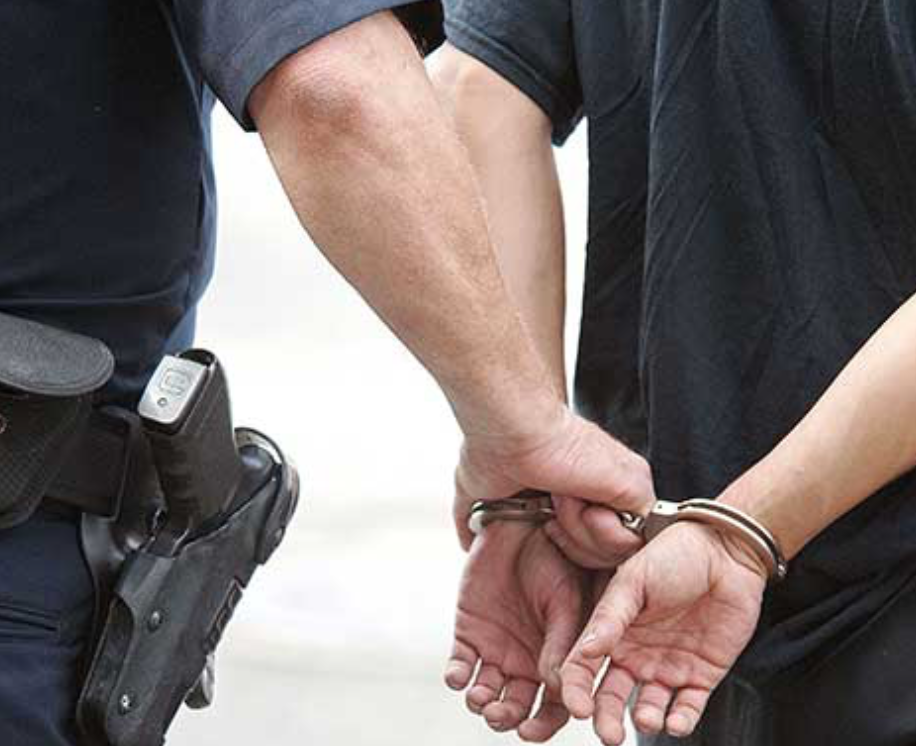
In the past month, the Department of Justice (DOJ) has indicted more than a dozenpro-life protestors across the country for obstructing access to abortion clinics.

Such prosecutions have been rare historically, with just a case or two annually for the past decade. But after the US Supreme Court reversed Roe v. Wade this summer, the DOJ announced a task force to pursue more enforcement against anyone obstructing access to abortion clinics. Many of those protestors facing charges are Christian.


Please respect our Commenting Policy

Catholic voters and the midterm elections: Mainstream news blitz ignores major voter bloc

Catholic voters and the midterm elections: Mainstream news blitz ignores major voter bloc

We are in the middle of another election season and in full mud-slinging mode.

Elections are an annual occurrence, to one degree or another, but the vote that will dominate this Nov. 8 are known as the midterms. It’s when a majority of seats in both the House and Senate are up for grabs, allowing for the party in the minority (in this case the Republicans in both chambers) to potentially becoming the majority. Midterm elections are also traditionally viewed as referendums on presidents.

This takes us to the Catholic vote and its impact on the outcome. This is a topic that is receiving little or no mainstream press coverage. As we say here at GetReligion: “Hold that thought.”

While inflation and crime will certainly be on the minds of most as they cast ballots, “culture war” issues are very much alive and well. Abortion, especially after this June’s Supreme Court decision that once again made it a state issue after Roe v. Wade was rolled back, will certainly be an issue.

There have been many, many news stories about how the abortion issue will motivate those on the political left to come out and vote following the Dobbs decision. The Washington Post, on Oct. 8, reported on the issue in a news feature that appeared under the headline, “Women powered Democrats in the 2018 midterms. Will they again in 2022?”

After opening with two Colorado women, Robin Kupernik and Elizabeta Stacishin, who had joined forces in 2016 to combat Donald Trump, who was elected to the presidency that year. This is the feature’s thesis:

In the 2018 midterm elections, women like Kupernik and Stacishin were part of a women-led army that changed politics. Women who had never been particularly active politically worked phone banks, wrote postcards and sent text messages to voters. They were repulsed by Trump and determined to do something about it.

They met in small groups, marched in the streets and went door-to-door to encourage people to vote for Democrats. Their passions were palpable. Many of the congressional candidates they were supporting flipped Republican-held seats, all part of a political tide strong enough to flush the GOP from control of the House, dealing Trump a major defeat. The Pew Research Center has estimated that 62 percent of White women with college degrees backed Democrats for the House four years ago.

That has become the major press-coverage storyline of the midterms.


Please respect our Commenting Policy

Journalism question for these times: When are death threats 'real' death threats?

Journalism question for these times: When are death threats 'real' death threats?

Here is a journalism question for you: When is a death threat an actual “death threat”?

Let me state that another way: When do words that clearly communicate a death threat represent a “real” or legitimate death threat in the eyes of journalists, local police and (wait for it) the Department of Justice?

We can add another question I received via email from a religion-beat veteran: In what sense is a death threat “pro-choice”?

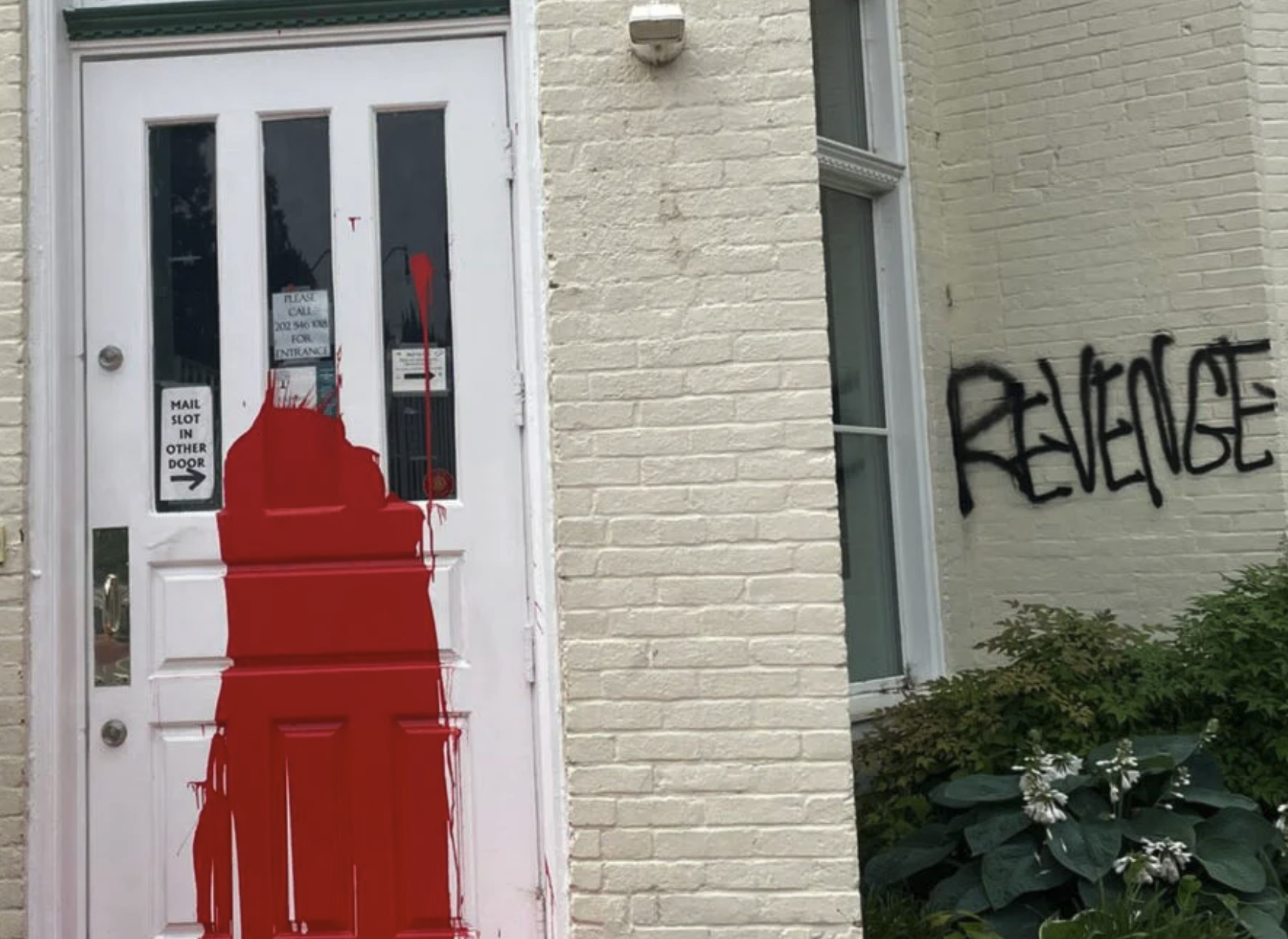
Yes, once again we are looking at a story that is linked to abortion, a topic that mixes politics, religion, law and science. In this case the event that made news (barely) was the vandalism of yet another Catholic church in a blue zip code. Here is the entire report from a local CBS newsroom and note the headline, which inspired that email question: “Catholic Church in Lansing vandalized with pro-choice graffiti.”

(CBS DETROIT) - The Diocese of Lansing released video footage of three people vandalizing the Church of the Resurrection with spray-painted pro-choice graffiti.

The incident happened on Saturday, Oct. 8, between 11:52 p.m. and 11:56 p.m. Video footage shows the three suspects walking up to the church from the area of Jerome and Custer, spay-painting the church, and then leaving the area.

The suspects spray-painted on the doors, signage, and sidewalk of the church, and the messages included: "Restore Roe" and "Is overturning Roe worth your life or democracy?"

Police are reviewing the security footage and searching for the suspects. According to the Diocese of Lansing, the graffiti has been power-washed.

If anyone has any information about this crime, they are urged to contact the Lansing Police Department at 517-483-4600.

The key language: “Is overturning Roe worth your life or democracy?" What are the logical implications of the words “worth your life”?

I realize that some anti-abortion demonstrators use chants claiming (thinking “mortal sin” consequences) that those taking part in abortions are risking their souls. Is that the same thing as saying that the U.S. Supreme Court voting to overturn Roe v. Wade is, addressing Catholic worshippers, “worth your life”?


Please respect our Commenting Policy

English-language coverage of Italian elections packs lots of Meloni media baloney

English-language coverage of Italian elections packs lots of Meloni media baloney

I have received more texts than usual the past two weeks. Most of them were about a rather unusual subject — Italy’s national elections. I say unusual subject because it’s not every day that this subject is discussed among my American friends.

Many readers of this space may know that I am the son of immigrant parents who moved to the United States from Italy. As a result, I am bilingual (I read Italian news sites almost as voraciously as American ones) and also a dual citizen, meaning I can vote in Italian elections.

But the texts I was getting was coming from a place of fear. They feared that the center-right would win the election (they ultimately did on Sept. 25) and bring Italy back 100 years to an era marked by fascism.

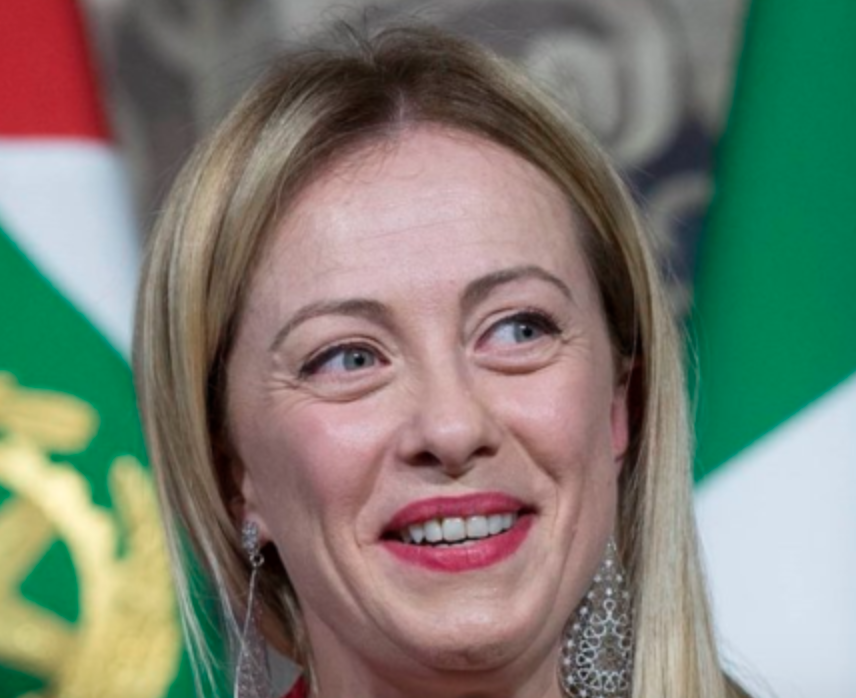
This sentiment came as a result of the English-language press (predominantly the United States and England) that framed the political rise of Giorgia Meloni as threat to democracy. It was this skewed news coverage that got me to write about her twice in pieces for for Religion Unplugged, which included an analysis piece last week on what her election means and the Vatican’s reaction.

Running on a “God, homeland and family” platform, the 45-year-old was labeled a “neo-fascist” and “hard right” by The New York Times largely because of her traditional Catholic views regarding marriage and her anti-abortion views. The Times hailed Meloni’s election this way:

ROME — Italy turned a page of European history on Sunday by electing a hard-right coalition led by Giorgia Meloni, whose long record of bashing the European Union, international bankers and migrants has sown concern about the nation’s reliability in the Western alliance.

Results released early Monday showed that Ms. Meloni, the leader of the nationalist Brothers of Italy, a party descended from the remnants of fascism, had led a right-wing coalition to a majority in Parliament, defeating a fractured left and a resurgent anti-establishment movement.

It will still be weeks before the new Italian Parliament is seated and a new government is formed, leaving plenty of time for political machinations and horse trading in a coalition with major differences. But Ms. Meloni’s strong showing, with about 26 percent of the vote, the highest of any single party, makes her the prohibitive favorite to become the country’s first female prime minister.

The opening of this news story reads more like an opinion piece, loaded with adjectives such as “hard-right coalition.”

This was parroted by other U.S. newspapers as well as major television networks and cable news channels.


Please respect our Commenting Policy

DeSantis as 'culture warrior' or theocrat: Coverage depends on a newsroom's worldview

DeSantis as 'culture warrior' or theocrat: Coverage depends on a newsroom's worldview

A Republican politician with presidential aspirations visits a Christian college. What happens next, in terms of the way the event is covered by the mainstream press, is predictable — during this era of niche news, with stories written to appeal to the beliefs of specific political flocks.

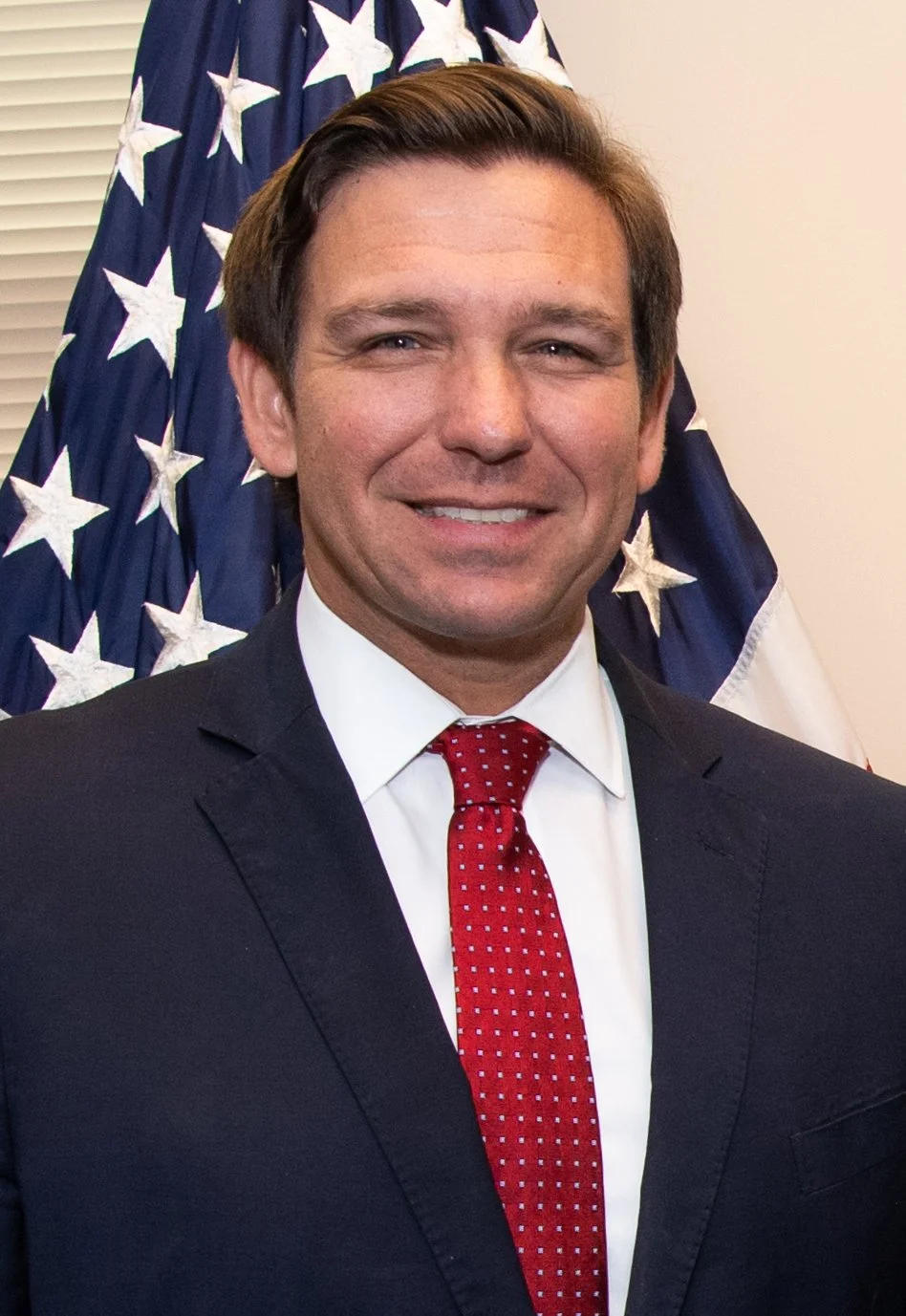
The politician in question is Florida Gov. Ron DeSantis and the school is Hillsdale College in Michigan. The visit took place this past February and was used as an example in a recent Miami Herald article of DeSantis’ mingling of faith and politics.

This is how the paper opens its Sept. 13 piece:

While visiting a private Christian college in southern Michigan that wields influence in national politics, Gov. Ron DeSantis rephrased a biblical passage to deliver a message to conservatives.

“Put on the full armor of God. Stand firm against the left’s schemes. You will face flaming arrows, but if you have the shield of faith, you will overcome them, and in Florida we walk the line here,” DeSantis told the audience at Hillsdale College in February. “And I can tell you this, I have only begun to fight.”

The Republican governor, a strategic politician who is up for reelection in November, is increasingly using biblical references in speeches that cater to those who see policy fights through a morality lens and flirting with those who embrace nationalist ideas that see the true identity of the nation as Christian.

That’s followed by the thesis:

He and other Republicans on the campaign trail are blending elements of Christianity with being American and portraying their battle against their political opponents as one between good and evil. Those dynamics have some political observers and religious leaders worrying that such rhetoric could become dangerous, as it could mobilize fringe groups who could be prone to violence in an attempt to have the government recognize their beliefs.

The article has no problem finding experts who warn of impending danger.


Please respect our Commenting Policy

In praise of the humble news Q&A: God, Lt. Dan and spiritual motivations for public service

In praise of the humble news Q&A: God, Lt. Dan and spiritual motivations for public service

It would be hard to name a form of journalism more “humble” than a simple Q&A piece about a celebrity or someone else who has found his or her way into the news.

The journalist produces a short introduction and then, theoretically, gets out of the way.

Yes, the news organization still controls the narrative — as in asking the questions and then publishing edited versions of the questions and the answers. In practice, readers encounter this bit of journalism-speak: “This conversation has been edited for length and clarity.” (I often advise newsmakers to record these interviews for themselves, allowing them — if necessary — to post transcripts of what went down.)

This brings me to a recent Knoxville News Sentinel feature about actor Gary Sinise, whose work with injured veterans and first responders was bringing him back to Knoxville for the 2022 Medal of Honor Celebration. His public-service work on these issues is rather logical because of his famous role as Lieutenant Dan Taylor, an angry wounded warrior who finds his way back to wholeness in the movie “Forest Gump.”

Here at GetReligion, we often ask why so many journalists, when writing about public figures of this kind, tend to leave facts about religion out of the mix. This is especially problematic when the person being profiled has, on numerous occasions, made it clear that faith is one of the defining elements of his or her life. To cut to the chase: It’s harder to do that kind of crude editing when offering what is supposed to be a verbatim transcript of an interview.

There were zero “religious” questions about in this interview, even though Sinise has for years talked openly about his faith. But the humble Q&A format allowed the actor to talk about his life on his own terms. Here is an example of that in a discussion that is at the heart of the feature:

Knox News: You've played Lt. Dan, but also directed a production of "Tracers," a story about wounded Vietnam vets, in the '80s. You've been very involved with veterans in your show career, how has that influenced your work as a philanthropist?


Please respect our Commenting Policy

Shia LeBeouf converts to Catholicism: News coverage -- good and bad -- focuses on redemption

Shia LeBeouf converts to Catholicism: News coverage -- good and bad -- focuses on redemption

Celebrity news coverage and religion couldn’t be more polar opposites most of the time. Coverage of actors, models and others in the entertainment industry often resembles a list for the seven deadly sins.

Every so often, the world of celebrity and faith intersect. When they do, the mainstream press doesn’t know what to do with it, creating tone-deaf coverage similar to sports stories containing what GetReligion has long called religion “ghosts.”

Meanwhile, the religious press — I’m referring to Catholic media in this case — love to jump on this kind of story. This has certainly been the case with actor Shia LaBeouf this summer and public statements regarding his conversion to Catholicism.

It’s a textbook case of the mainstream press largely ignoring such an announcement, while the Catholic press can’t get enough of it. When the mainstream press did cover LaBeouf’s interview, it was in the context of his troubled personal life. For some journalists in the Catholic press, he became a poster child for upholding tradition and the Latin Mass against the more progressive forces in the church.

Depending on who and what you read, LeBeouf’s conversion story is either a farce, something to be celebrated or something to be feared.

LaBeouf, like many in his profession, does interviews primarily to promote specific movies and their careers overall. While promoting his new film “Padre Pio,” which premiered at the Venice International Film Festival, LaBeouf announced that he had converted to Catholicism. The movie is based on the life of Padre Pio, an Italian Franciscan Capuchin friar famous for exhibiting stigmata most of his life. He was canonized as a saint by Pope John Paul II in 2002.

The former “Transformers” star made it known that he was now a practicing Catholic during an Aug. 25 appearance on Bishop Robert Barron’s show “Conversations at the Crossroads.” The YouTube link alone has generated over 1.3 million views.

Here is where the celebrity news coverage got interesting.


Please respect our Commenting Policy

Podcast: Journalists should ask if faith-based schools clearly state their doctrines on sexuality

Podcast: Journalists should ask if faith-based schools clearly state their doctrines on sexuality

I forget who originally came up with the term “Romeaphobia.”

This can be defined as the hatred or fear of all things that can be viewed as links to Roman Catholicism or the early church in general. Obviously, this affects issues linked to worship and church governance. However, in my experience (I grew up in Texas), many evangelicals (especially Baptists) have a fear of clear, authoritative doctrinal statements that, you know, might be interpreted as “Roman” creeds. All together now: We are “Bible Christians” and that’s that.

I am not saying this to take a shot at my heritage (I am very thankful for the deep faith and examples of my family and my father was a Southern Baptist pastor). The reason I mention this up is because, in my opinion, this anti-creedal Romeaphobia is playing a major role in an important news story all over America. This was the hook for this week’s “Crossroads” podcast (CLICK HERE to tune that in).

Does this USA Today headline sound familiar? It should, for readers from sea to shining sea: “Christian Florida school tells parents gay and transgender students must 'leave immediately'.”

My goal here is to offer advice to reporters who want to do accurate, fair-minded coverage of these church-state skirmishes (let’s hope there are some out there). I’m also offering press-relations advice to terrified leaders of Christian schools at all levels, from kindergartens to colleges. The Romeaphobia angle? That takes us into legal nuts-and-bolts questions about these conflicts.

Let’s start with the rather familiar USA Today overture:

A Florida-based Christian school sent out an email informing parents that LGBTQ-identifying students "will be asked to leave the school immediately."

According to the email obtained by NBC News, the top administrator of Grace Christian School in Valrico, Florida, Barry McKeen, sent the email to the families for the kindergarten-grade 12 school on June 6. He later confirmed and doubled down on the policy in an Aug. 18 video on the school's official Facebook page.

The June email read: "We believe that any form of homosexuality, lesbianism, bisexuality, transgender identity/lifestyle, self-identification, bestiality, incest, fornication, adultery and pornography are sinful in the sight of God and the church. Students who are found participating in these lifestyles will be asked to leave the school immediately."

For starters, private schools — liberal and conservative — have First Amendment rights, including the right to clearly state their foundational doctrines and, thus, disciplines that apply to staff, faculty and students. Tip No. 1 for reporters and church leaders: Get to know the details of the UNANIMOUS 2011 U.S. Supreme Court decision commonly referred to as the Hosanna Tabor case.

But we need to figure out what actually happened in this Florida case.


Please respect our Commenting Policy