Journalism

What if mass media can't get rid of misinformation (or agree on what the term means)?

What if mass media can't get rid of misinformation (or agree on what the term means)?

Panelists on the final episode of the media-analysis show “Reliable Sources,” axed after three decades by CNN’s incoming management, gave voice to widespread angst about America’s news and information environment.

Rampant misinformation is among the top concerns these days. Social media have blocked COVID discussions regarded as misleading. The Biden Administration launched an Orwellian-sounding Disinformation Governance Board under the Department of Homeland Security, but quickly shelved the effort.

By the way, “misinformation” means incorrect knowledge of any sort, whereas “disinformation” is false knowledge that’s spread deliberately.

One commentator recommends that we all chill.

Only sheer “arrogance” could create “confidence that we can accurately and productively root out misinformation,” contends Isaac Saul, who heads up www.ReadTangle.com, an online newsletter that offers non-partisan summaries of the best arguments from various sides of political issues. (Check it out.) He titled a July article “Misinformation Is Here To Stay (And That’s OK).

The Guy does not necessarily embrace all of Saul but considers his contentions important for media toilers, critics and consumers to ponder. Thus this Memo condenses the essence as follows.

For starters, Saul cleverly notes that many things each of us believes right will prove “utterly wrong” and history proves it. As recently as a century ago, doctors believed in bloodletting cures using leeches or scalpels. U.S. women had just obtained the vote over against the common belief they were too emotional. The Milky Way was the outer limit of the universe.

Only two decades ago, experts were telling us mass opioid prescriptions were safe and that switching from paper to plastic bags would save trees and thus help the environment. More recently, Twitter and Facebook barred accurate New York Post reportage on Hunter Biden’s loaded (in several senses of that word) laptop, and established sources branded as a conspiracy theory COVID’s origin in a China lab leak, now regarded as possible or even likely. Add your own examples.

Please respect our Commenting Policy

Tip for reporters: Don't assume what Catholics believe based on politics or Internet memes

Tip for reporters: Don't assume what Catholics believe based on politics or Internet memes

There are moments in journalism that stand out more than others. One of those moments is when a certain piece — whether it’s a news story, analysis or opinion — gets a lot of attention by a large group of people for good and/or for bad reasons.

For a set of bad reasons, The Atlantic piece on the weaponization of the rosary was that piece for many Catholics and those who keep a watchful eye on media coverage of matters pertaining to the largest Christian denomination in the United States.

The piece — not necessarily a news story, but it was not labeled as commentary or even analysis — became a viral conversation topic among many family and friends over the last week. While the issue of Christian nationalism is important to understand, the bigger discussion — and questions I had to field — was more like this: What’s wrong with journalism these days?

That’s the central preoccupation of many — especially those of us who have been doing this for decades. (For more on that, please check out tmatt’s post and podcast from this past Friday. This view of what was going on in this piece may shock you.)

There were many lines from the Atlantic piece that stood out, but one that did most was this one:

The theologian and historian Massimo Faggioli has described a network of conservative Catholic bloggers and commentary organizations as a “Catholic cyber-militia” that actively campaigns against LGBTQ acceptance in the Church. These rad-trad rosary-as-weapon memes represent a social-media diffusion of such messaging, and they work to integrate ultraconservative Catholicism with other aspects of online far-right culture. The phenomenon might be tempting to dismiss as mere trolling or merchandising, and ironical provocations based on traditionalist Catholic symbols do exist, but the far right’s constellations of violent, racist, and homophobic online milieus are well documented for providing a pathway to radicalization and real-world terrorist attacks.

There’s the thesis of the piece, the connect-the-dots language linking strange behavior to current tensions in Catholic life in America.

There’s plenty to unpack here, but the reality is that citing a few political websites claiming to represent Catholic thought and then adding a smattering of social media memes is no way to gauge for what anyone really thinks and believes.


Please respect our Commenting Policy

Traditional Latin Mass feud news remains scarce: How reporters can grasp what's at stake

Traditional Latin Mass feud news remains scarce: How reporters can grasp what's at stake

What’s the deal with all the emotional meltdowns about the traditional Latin Mass? I mean, no one speaks Latin anymore.

It sounds like a line that could have come out of the mouth of comedian Jerry Seinfeld during one of his stand-up acts. It isn’t part of his act, but it is a more than symbolic question that Catholics have been pondering over the past year.

It was last summer when Pope Francis signed a motu proprio — Latin for a papal document personally signed by the pope to signify his special interest in a topic — on this very subject. In the July 16, 2021, decree, the pope approved clarifications regarding restrictions on the traditional Latin Mass in an effort to ensure that liturgical reform is “irreversible” and that bishops strive to enforce changes made after the Second Vatican Council.

Specifically, bishops were told to ban ordinations of priests and confirmations using the old rite. They also were instructed to limit the frequency of rites by priests who have managed to receive a dispensation to celebrate Mass in Latin.

What’s the deal with the traditional Latin Mass? It turns out a lot.

The Novus Ordo Mass, which has been celebrated since 1965, is the norm among Catholic churches in this country and around the globe. Coverage, particularly last year, of the Traditional Latin Mass took on a political twinge in the pages of The New York Times. This is how their story from July 16 of last year framed the debate:

Pope Francis took a significant step toward putting the Roman Catholic Church’s liturgy solidly on the side of modernization on Friday by cracking down on the use of the old Latin Mass, essentially reversing a decision by his conservative predecessor.

The move to restrict the use of an old Latin rite in celebrating Mass dealt a blow to conservatives, who have long complained that the pope is diluting the traditions of the church.

Francis placed new restrictions on where and by whom the traditional Latin Mass can be celebrated and required new permissions from local bishops for its use.

The key words to look for in mainstream news reports are “modernization” and “conservative,” as if this pope was doing something positive and that Pope Benedict XVI had been somehow stuck in the past.


Please respect our Commenting Policy

Ciao, GetReligion: Thanks, all, for my tenure. Critic that I am, though, here are some final thoughts

Ciao, GetReligion: Thanks, all, for my tenure. Critic that I am, though, here are some final thoughts

I’ve been a contributor to GetReligion since 2015, when founder Terry Mattingly recruited me over salad at an Annapolis mall eatery. I’m grateful that he did.

Seven years is, for me, a hefty professional run. But nothing lasts for ever. Change is constant. In short, this is my last regular GetReligion post.

During my time here I’ve noticed what I consider an imbalance in the stories GetReligion bloggers generally choose to critique. It is this: The underwhelming and frequently inaccurate religion news coverage too often offered by “mainstream media” is criticized at GetReligion on a near-daily basis. The ignorance of important religion details and the coverage’s overall poor quality are often attributed to mainstream journalists’ “secular,” or “progressive,” worldviews.

Another regular criticism is that mainstream media journalists view everything through a zero-sum political lens. This, goes the argument, renders them incapable of understanding or communicating religious complexity as it’s actually lived by believers living outside the blue-state mindset. Politics is all that really matters, is the trope.

hese broadsides are standard GetReligion fare. Importantly, the accusations are generally on target. It’s more than a coincidence that the GetReligion team members behind this website have decades of experience in the mainstream press.

Religion journalism has suffered greatly in this Internet era. Relatively few news outlets ever invested in upping their religion coverage. Today, even fewer do. Blame that on journalism’s downward economic spiral brought about by the World Wide Web explosion — a major theme here at GetReligion.

However, what’s too often missed here is criticism of the similar lackluster coverage originating in clearly conservative media. At GetReligion, conservative-market media more often than not get a pass. This is, in part, because conservative media’s most popular content is offered by right-wing commentators who make little to no effort to hide their biases and whose stock in trade is pure opinion.


Please respect our Commenting Policy

Looking beyond the polls to find Catholic news hooks in stories about 2022 midterms

Looking beyond the polls to find Catholic news hooks in stories about 2022 midterms

Political news coverage is, in part, guided by polls.

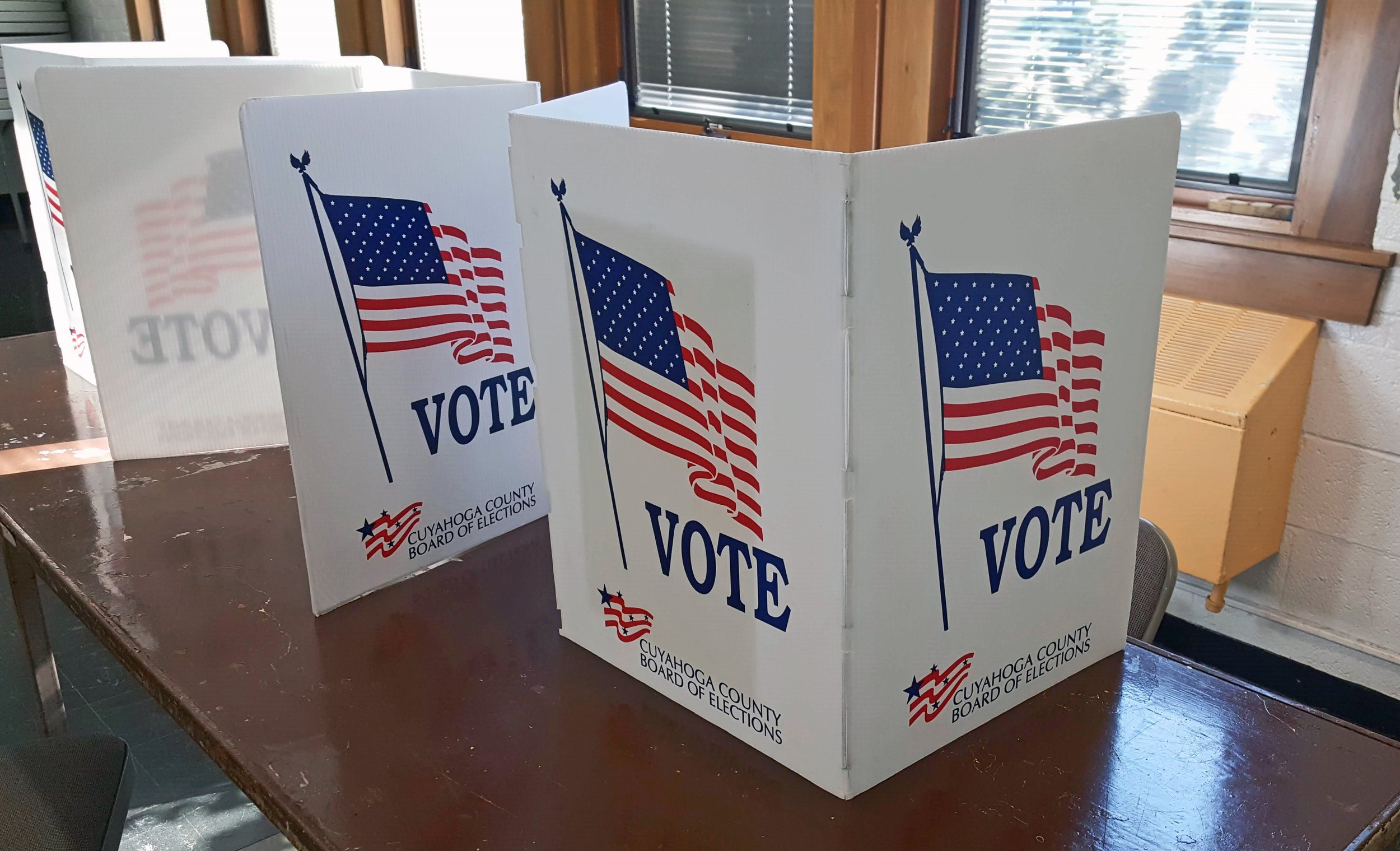
There are dozens of them that come out every few days in reporters’ email inboxes trying to gauge the temperature of the electorate on any given politician or policy decisions. This is especially true in a presidential election year. it’s also true during the midterms, which will arrive on Nov. 8.

While mainstream pollsters took a hit for being inaccurate when Donald Trump won the White House in 2016, the polls roll on as the experts put them out, pundits dissect them and news coverage reports on what they mean.

Often lost in this horse-race coverage of who’s up and who’s down are the views of real people about issues that are, in many cases, larger than partisan politics.

However, an EWTN/RealClear Opinion poll, released on July 15, took a snapshot of what Catholics are thinking, at this point in time. I wrote about its major findings for Religion Unplugged. However, there was more to this survey than a one-day headline.

There are plenty of nuggets of data that could serve as a jumping off point for news coverage in the coming weeks and months.

Overall, the survey found, in the words of Matthew Bunson, executive editor of EWTN News:

This new EWTN News/RealClear Opinion Research poll finds that Catholics — like the majority of Americans — are dissatisfied with the direction of the country, have largely negative views about most of the institutions of government save for the Supreme Court, and are deeply concerned about attacks and vandalism against churches and pro-life clinics.


Please respect our Commenting Policy

Reporters speculate on Pope Francis retiring, but where are the sources in this reporting?

Reporters speculate on Pope Francis retiring, but where are the sources in this reporting?

Age is something the press is fixated on. Donald Trump’s age when he occupied the White House became a major news story that went on for several years.

President Joe Biden has now been in office almost two years and the speculation whether or not his age has become a fatal political flaw is slowly becoming a big news story. Every public appearance that includes a flub, limp or fall becomes a big deal, especially in conservative media.

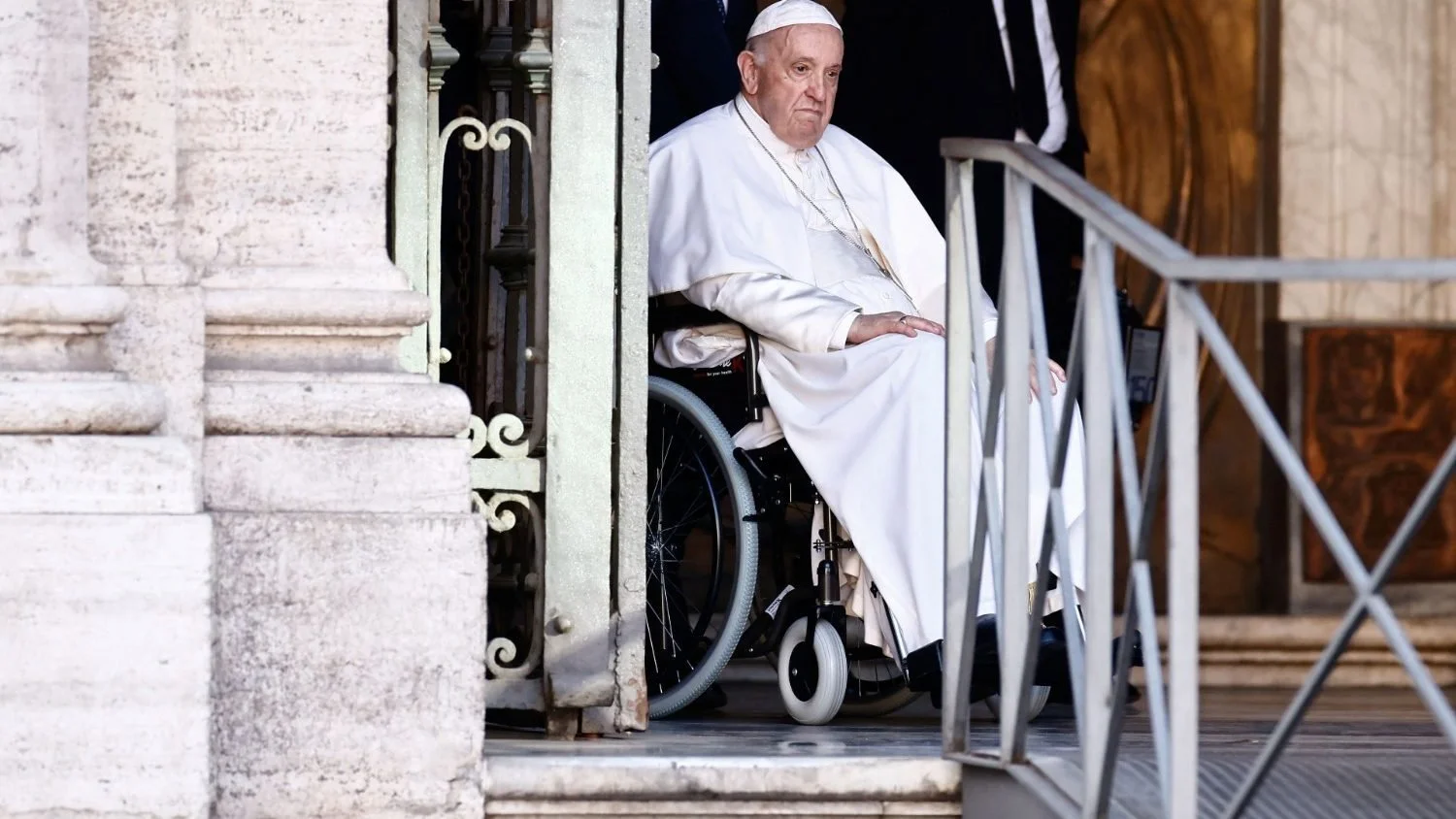
Now we have the supposedly uncertain status of Pope Francis. The speculation over whether Francis’ age — he turns 86 on Dec. 17 — will cause him to resign has increasingly become a story, first in the Italian press, and subsequently around the world.

Italy’s many national dailies cover the Vatican akin to the way the American press reports on the White House. It’s those news reports out of Italy that started in late spring, raising the specter that the pope would follow in the footsteps of Pope Benedict XVI and resign from his post. Add to this hubbub papal announcements that have been twisted in translation and (#DUH) waves of speculation in Catholic Twitter and other forms of social media.

Benedict resigned from the papacy in 2013 — and as a result took on the emeritus moniker — eight years after he was elected by the College of Cardinals. The unexpected resignation came after Benedict cited a “lack of strength of mind and body” due to his age. He was 86 at the time. In doing so, he became the first pope to resign since Gregory XII in 1415 and the first to do so on his own initiative since Celestine V in 1294.

It's a symbolic series of events — including a canceled papal trip to the Democratic Republic of Congo and South Sudan scheduled for the first week of July, his recent use of a wheelchair to get around and events with connections to Celestine V and a central Italian city — that led many Italian reporters to raise speculation about what Pope Francis might do next.

In June 12 column in Crux by omnipresent Vatican watcher John L. Allen, Jr., connected the dots, as he always does, for the the English-speaking press.

The resulting wave of speculation — fueled by no sources whatsoever, either anonymous or named — has created headlines in newspapers on websites around the world. Everything has been based on observation and reading of tea leaves. Day after day, GetReligion team members have bumped into stories online or have been sent URLs by readers.

At a time when news organizations increasingly aggregate reporting from other places in order to garner mouse clicks, this story has been reported everywhere. Also, smaller newsrooms, due to layoffs over the past two decades, has made it more difficult for reporters to confirm a story. In the case of Francis’ retirement, there never was anything there to confirm.


Please respect our Commenting Policy

WHAT IS THIS? Looking for real news coverage of crisis pregnancy centers? This isn't it ...

WHAT IS THIS? Looking for real news coverage of crisis pregnancy centers? This isn't it ...

If you have been around newsrooms for several decades, especially after the arrival of the Internet, you know that Donald Trump didn’t invent the term “fake news.” Yes, he grabbed it and ran with it. Big time.

Basically, what Orange Man Bad wanted was news coverage that praised all things Trump and, whenever possible, attacked his enemies. This is the flip side of mainstream news offerings that conservatives criticized during the whole Barack “The One” Obama era, when some press people had a thrill-up-the-leg or messiah-esque approach to news.

This preach-to-the-choir ethos is, I believe, one form of “fake news” and I started hearing journalists expressing concerns about it back in the 1980s. Journalists also, as newspaper economics soured, began worrying out loud about news coverage of powerful businesses that resembled cheerleading for the home team. Many feared the line between news and public-relations was in danger.

Then there was the whole “news you can use” phenomenon. The idea is that newsrooms need to offer “news” that is, in reality, offers handy, cheerful, useful, positive guides to local services and worthy causes.

With all of that as a backdrop, let’s look at a recent headline in The Olympian, a mainstream McClatchy chain newspaper up in the deep-blue Pacific Northwest: “Anti-abortion ‘fake clinics’ exist throughout WA. Here’s what they are and how to spot them.”

Read this article and then ask: WHAT IS THIS?

While the scare quotes around ‘fake clinics’ provide a smidgen of editorial distancing, it’s clear — if you look at the sources for this article — that the newspaper is cheering for the pro-abortion-rights activists who are using that term.

But first, WHAT IS THIS? Here is what this article is NOT. It is not an editorial. It is not an opinion column. It is not even a news “analysis” feature.

I would argue that this is a “news you can use” feature for readers who want to attack — that word can be used in several ways — religious and nonprofit groups opposed to abortion and, in particular, crisis pregnancy centers. If you have scanned small headlines deep inside mainstream news outlets, you may know that some of these centers, and the churches that support them, have recently experienced vandalism and even arson.


Please respect our Commenting Policy

Fallout from Supreme Court abortion decision: When reporters parrot partisan talking points

Fallout from Supreme Court abortion decision: When reporters parrot partisan talking points

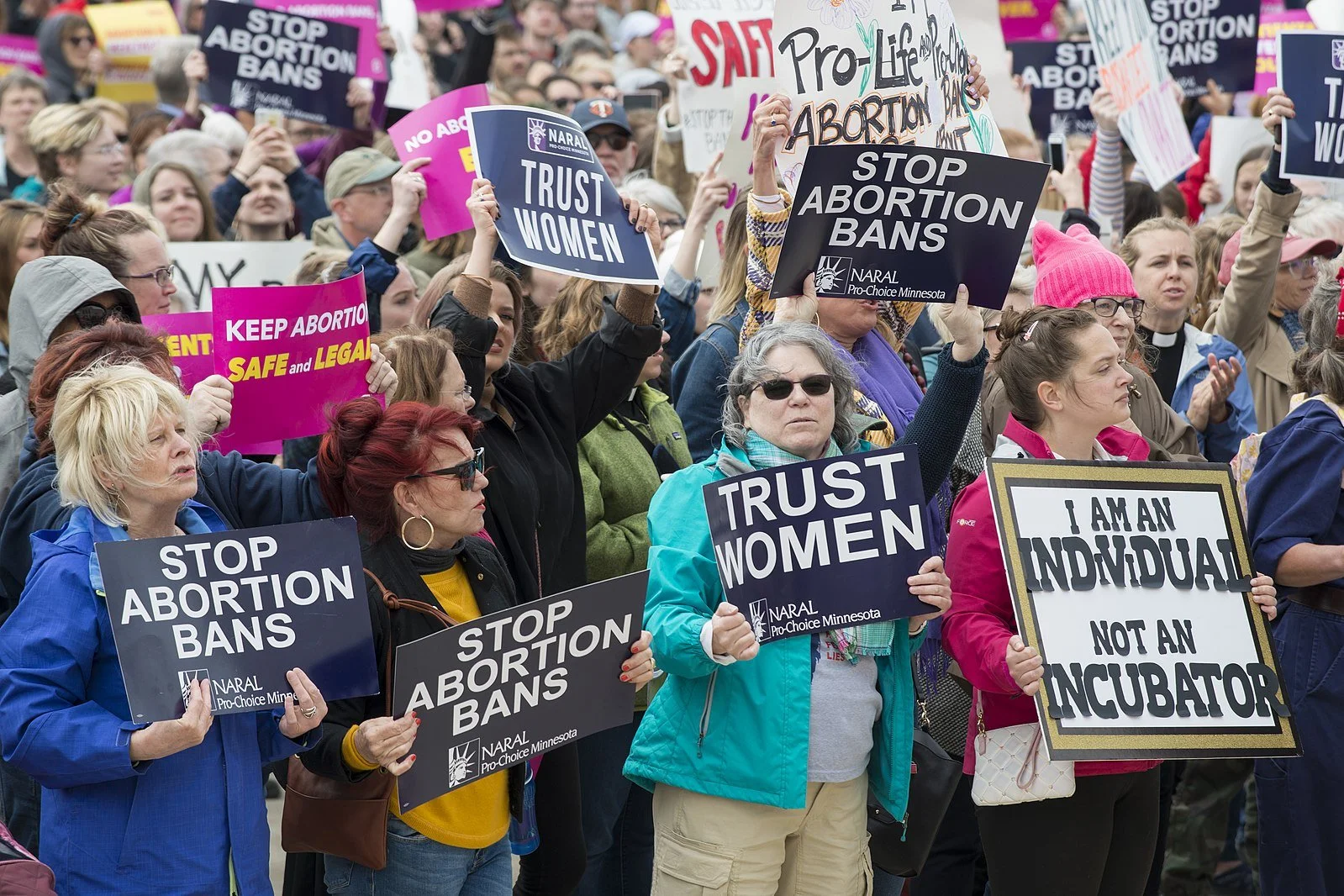
With emotions running high, the Supreme Court’s reversal of Roe v. Wade marked a cataclysmic shift in the ongoing culture wars. What it means for the upcoming midterm elections and beyond has been the topic of much speculation since the ruling was handed down.

The decision was marked by joy on one side and anger on the other, with may reporters wearing their emotions on their faces and under their bylines. However, many people I know reacted with mixed emotions. Even conservatives were uneasy about the decision, mostly because they feared the violence that could be a part of the fallout. Indeed, the National Catholic Reporter’s news account put it best in its headline: “As Court overturns Roe v. Wade, Catholics react with joy, anger, trepidation.”

We do live in a time when political decisions often inspire violence.

Lose an election? Storm the Capitol Building.

Unhappy with police misconduct? Burn down stores.

Both sides are guilty of this, although the mainstream press — which has grown ever-partisan in the Internet age — hasn’t always been good about calling out both sides for such intimidation.

The fallout from the Dobbs decision? It’s only been a few days, but there was violence in some parts of the country from Rhode Island to Iowa to Arizona. The rhetoric was vile on Twitter, quickly aimed at Christians, and that was soon on display in the streets in a variety of forms.

Again, national legacy media have not always been good about giving proper background and context to the events of the recent past, especially in terms of coverage of violence against churches and crisis-pregnancy centers.

The fissures in American public life are real. So are the distorted realities partisan news organizations like to perpetuate these days.

Just two weeks ago, Gannett, the nation’s largest newspaper chain, argued that opinion pages are alienating readers and becoming obsolete. They doubled down by warning their reporters to refrain from using social media platforms to comment on the decision. However, take a look at this morning’s news summary from USA Today. Spot any patterns?


Please respect our Commenting Policy