Journalism

What is religion's role if powerful social media trends are endangering America?

What is religion's role if powerful social media trends are endangering America?

Whew! Within a matter of days Elon Musk bids $44 billion to get full control of Twitter, Netflix's market value plummets $54 billion, Florida's conservative version of "cancel culture" penalizes the Disney empire, and CNN kills off its streaming service in a month after investing $300 million -- perhaps the worst industry flop since Time Warner's 2001 merger with AOL.

Anchor Kasie Hunt, who left MSNBC for CNN+, embraced a life-goes-on attitude: "The news is the news is the news is the news." (She was quickly named CNN's Chief National Affairs Analyst.)

By the way, a certain influential newspaper in New York City also named a new team of top editors. Did you see those photos of incoming editor Joseph Kahn?

Maybe all that media turbulence is far less important than the inexorable accumulation of 21st Century cultural power by Twitter and other "social media: giants.

Thus, readers will want to consider this warning from Jonathan Haidt, a social psychologist at New York University's business school, in the May issue of The Atlantic: “Why the Past 10 Years of American Life Have Been Uniquely Stupid.”

American democracy is now operating outside the bounds of sustainability. If we do not make major changes soon, then our institutions, our political system, and our society may collapse during the next major war, pandemic, financial meltdown, or constitutional crisis.

Religion writers: Despite Haidt's imagery of failed communication taken from the biblical Tower of Babel (Genesis 11:1-9), his article sidesteps whether faith groups could help restore societal calm and how they're being reshaped by ubiquitous media. Perhaps he'll get into that in his book "Life After Babel Adapting to a World We Can No Longer Share," due from Penguin next year.

Though critics often say conflicting religions erode social cohesion, is it only coincidence that organized religion's slump to near-Depression status since A.D. 2000 occurred simultaneously with the disintegration Haidt decries?


Please respect our Commenting Policy

Thinking about 'bothsidesism' and sad changes in American politics and journalism

Thinking about 'bothsidesism' and sad changes in American politics and journalism

This is Holy Week for those of us in the ancient churches of the East. Thus, I am spending lots of time at my local parish as we march through many hours of ancient prayers, scriptures and liturgy. Yes, we are hearing more than a few prayers for peace in Ukraine and for the victims of that hellish fratricidal conflict. Will there, at the very least, be a ceasefire for Pascha (Easter)?

At the same time, my “Crossroads” partner — Todd Wilken of Lutheran Public Radio — was on the road to attend a funeral, so we didn’t record the podcast at our usual time. That should go live here at GetReligion tomorrow (mid-day Saturday).

Thus, I would like to point readers to a “think piece” that I have had in the hopper for some time now. It’s an opinion essay by Damon Linker that ran at The Week with this headline: “The noble and needful philosophical tradition of bothsidesism (no, really) — A call for equanimity in a polarized time.”

The term in question — “bothsideism” — is closely linked with another hot-button word that is frequently used as a semi-curse in social media. That would be “whataboutism.” Click here to read Merriam-Webster on that.

My interest in “bothsideism” is rooted in journalism theory, as opposed to pure political science.

During my days leading the Washington Journalism Center, two of the key lectures focused on four models of the press that dominate journalism debates in religious circles. For some people these days, discussions of balance, fairness and even accuracy — think the “American model of the press” — are one jump away from “bothsideism.” Here is a bite of an essay based on those lectures (.pdf here):

The American Model fit well with other American values — promoting a lively public square in which citizens could believe that their views would be treated with respect. It was possible, reading coverage over a period of time, to see which newsrooms were striving to be accurate and fair-minded. This approach meshed with a liberal approach to the First Amendment, as well.

Yes, this is a challenge for journalists as they do their work. I’ll be blunt. I think the most important skill in journalism is the ability to accurately report the views of a person with whom you disagree. Journalists are supposed to strive to show respect to people on both sides of hot- button debates.

This brings us to Linker.


Please respect our Commenting Policy

Some 'Father Stu' coverage misses real-life redemptive message while shooting at actors

Some 'Father Stu' coverage misses real-life redemptive message while shooting at actors

Easter weekend has become secular enough over the past few decades where many Americans use the holiday weekend to go to the movies.

It’s a trend that started with the summer blockbuster during the Fourth of July holiday and subsequently by Hollywood with premieres on Christmas Day. While COVID-19 put some of that on hold as audiences streamed movies at home, it seems to be making a comeback with the easing of the pandemic.

The gently gay-friendly Fantastic Beasts: The Secret of Dumbledore won the box office this past weekend, while the religiously-inspired film Father Stu finished a respectable fifth. It wasn’t a bad finish for a film that doesn’t feature a Marvel superhero and may find an audience in Western-rite Christians who were otherwise at church and with family this past Sunday.

Of course, this is a film that features a superhero of a different kind.

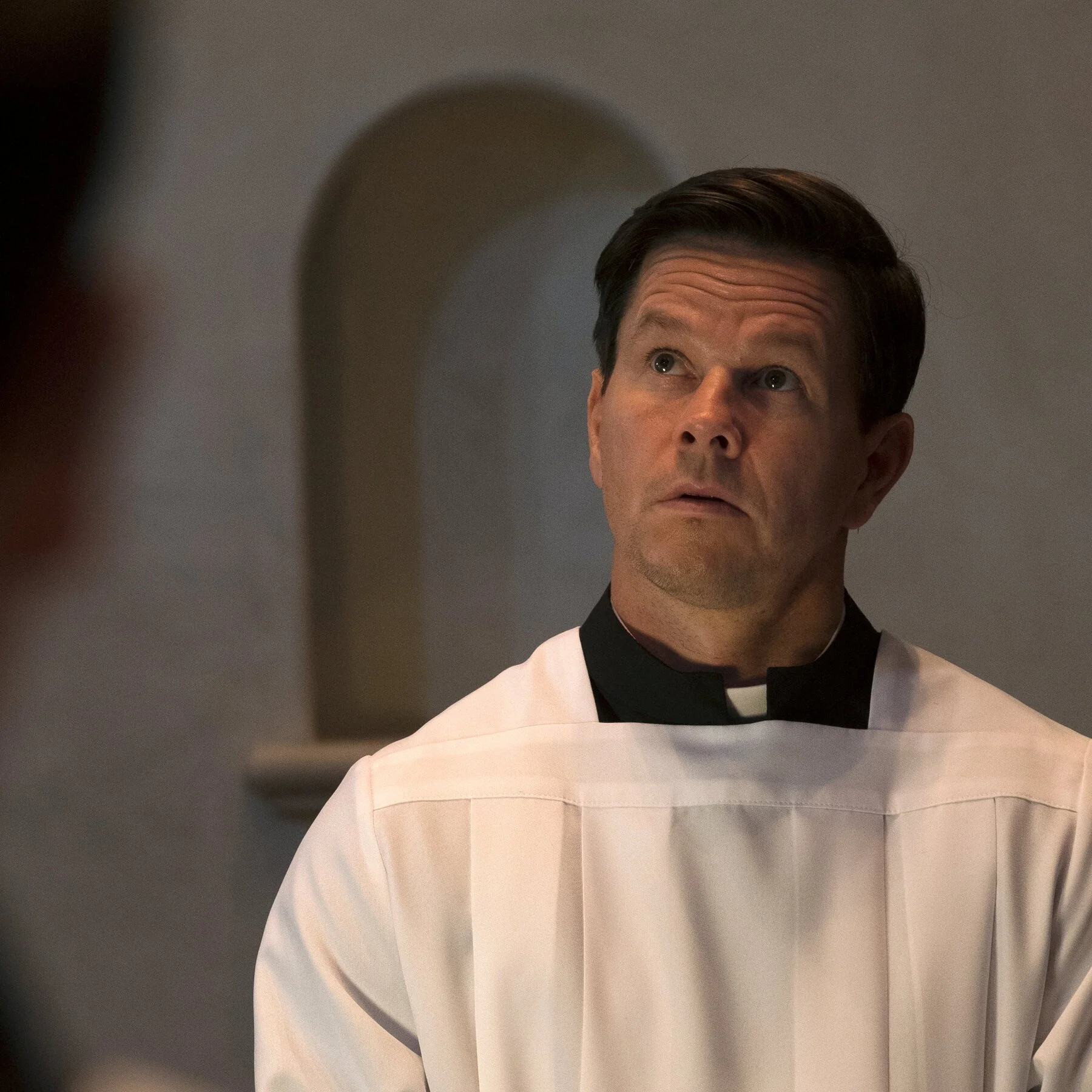
Father Stu is the true story of Stuart Long, an amateur boxer who eventually moves to Los Angeles in order to pursue an acting career and along that journey he becomes a Catholic priest. That’s the simplest way to put it without giving away too much of the plot for those who are planning to see it in the coming days.

The two-hour film, featuring Mark Wahlberg as the main character, gets a Rotten Tomatoes score of 45% based on 75 reviews by critics, but a 95% from verified users from the general audience. It shouldn’t surprise me that there is a divergence between media-market critics and the audience when it comes to movies that glorify faith. I found the story compelling, despite the vulgar language, but it is worth seeing.

I get that reviewers are entitled to their opinions. After all, that’s the job of a critic. But the coverage around the film, however, has been framed in a certain way, offering up lopsided and negative takes among many mainstream news sites.

This isn’t a traditional news-coverage question, but it’s appropriate to ask: What’s going on here?


Please respect our Commenting Policy

Liberal religion's sharp decline closes Reform Jewish seminary. How about some elite news ink?

Liberal religion's sharp decline closes Reform Jewish seminary. How about some elite news ink?

Organized American Judaism — not unlike other American faith traditions — is in the midst of a shakeup. The latest evidence of this was the recent announcement that Reform Judaism’s first rabbinic seminary, in Cincinnati, will soon cease ordinations at the end of the 2026 academic year.

Nothing about this strikes me as shocking or even unusual. I view religious bodies as bureaucratic extensions of living traditions in which evolutionary change is both normal and inevitable. They’re shapeshifters and those institutions that do not accommodate changes in worship style are bound to calcify over time.

This is not to deny that change can be wrenching. We tend to become deeply attached to the familiar. As a species, we anchor our livelihoods, identities and emotional equilibrium in what we like to think of as comforting routine. We want to know what’s expected of us so we may reap the rewards we think our efforts should bring.

The devil we know is preferable to the devil we do not know.

So as one might expect, the recent news from Hebrew Union College’s board of governors that its Ohio campus, opened in 1875, will cease ordaining new rabbis did not go down easy for those whose religious and professional lives are most directly impacted by the decision.

But what of ordinary North American Reform Jews (Canada is jurisdictionally connected to Reform’s U.S. institutions)? My sense is that most individual Reform congregants, if they’re even aware of the closing, are far less troubled.

Why? Because declining rabbinic student applications coupled with shrinking congregational memberships have been cited as the twin reasons for the HUC decision. The Israeli newspaper Haaretz explained this as follows:

The plan’s backers said it would help the school reorient itself amid its ongoing financial and enrollment crisis. Over the past 15 years, enrollment at HUC’s three American campuses fell by 37 percent, with the largest drop, 60 percent, coming in Cincinnati.


Please respect our Commenting Policy

Washington Post seeks brave, skilled reporter to venture into mysterious heart of Jesusland

Washington Post seeks brave, skilled reporter to venture into mysterious heart of Jesusland

Is there anyone out there who remembers fax machines?

There was a time when sending faxes played a crucial role in the news process and, from time to time, journalists even received crucial story tips and sort-of-anonymous tips via fax.

If you know your religion-beat history, for example, you may remember this quotation from a job notice posted in the newsroom at the Washington Post back in 1994, when editors were seeking a reporter to fill the religion-news desk. Someone in the newsroom faxed it to other scribes.

Here’s a note about that, via Julia Duin (who has written on this topic many times) and, well, a book quote from moi. Duin’s whole post (with lots of URLs) is here: “Here we go again: The New York Times can't admit it needs theologically astute writers.”

The Post’s job announcement said in part, “The ideal candidate is not necessarily religious nor an expert in religion.” … It was a Washington Times columnist, John McCaslin, who broke the story about that Post job announcement and a lot of protest followed.

As our own tmatt put it in the 2008 book, “Blind Spot: When Journalists Don’t Get Religion” phrased the problem in this way:

“Post editors are correct are correct in that the ‘ideal candidate’ is ‘not necessarily religious.’ What is controversial is the statement that the ‘ideal candidate’ is not necessarily ‘an expert in religion.’ They were, in effect, arguing that a lack of expertise and experience can be a plus — a virtue — when covering religion news.”

Why do I bring this up? Well, there is a long history of newspaper managers trying to find fresh, new, innocent reporters to send into dangerous, foreboding parts of America — think religious sanctuaries full of believers — in which news stories Just. Keep. Happening. The result, frequently, reads like those in-depth National Geographic features about strange cultures on the other side of the world.

This brings us, in a roundabout way, to a headline that ran the other day atop a short David Harsanyi item at National Review. The headline: “Washington Post Seeks Seasoned Anthropologist to Observe the Indigenous Tribes of Waco.”

Maybe religion plays a role in this hiring drama? What do you think?


Please respect our Commenting Policy

Podcast: Can the AP Stylebook team slow down the creation of new Godbeat 'F-bombs'?

Podcast: Can the AP Stylebook team slow down the creation of new Godbeat 'F-bombs'?

Words matter, especially when covering a topic as complex as religion.

That concept has, of course, been one of the core doctrines of GetReligion for nearly 20 years and it was the hook for this week’s “Crossroads” podcast (CLICK HERE to tune that in). This episode discussed a few of the religion-language changes in the evolving Associated Press Stylebook — an update project that involved both Godbeat patriarch Richard Ostling and Bobby “Are the Rangers playing today?” Ross, Jr.

I am gung-ho about making stylebook improvements. Carry on!

But I have my doubts about whether these changes will have a major impact, when it comes to the butchering of religious language, information and history when complex religion subjects are covered by reporters (especially political-desk stars) with zero training and experience on this beat. After all, we already know that religion-news coverage radically improves when editors hire qualified writers and editors.

Thus, The Big Question, for my entire career, has been: Why don’t more newsroom managers show respect for religion news by hiring religion-beat pros?

So, will the improved AP bible help? Well, consider the many GetReligion posts over the years praising the stylebook entry for “fundamentalist,” while noting that way too many reporters ignore that advice. Why does this happen? Here is some material from an “On Religion” column I wrote on the topic (“Define fundamentalist, please”). First, the classic stylebook language:

"fundamentalist: The word gained usage in an early 20th century fundamentalist-modernist controversy within Protestantism. ... However, fundamentalist has to a large extent taken on pejorative connotations except when applied to groups that stress strict, literal interpretations of Scripture and separation from other Christians.

"In general, do not use fundamentalist unless a group applies the word to itself."

Alas, for reporters and academics, one person’s "evangelical" is another's "fundamentalist” and “fundamentalist” is basically and F-bomb.


Please respect our Commenting Policy

Press quiet as a mouse when it comes to Catholic angles in this Disney-DeSantis fight

Press quiet as a mouse when it comes to Catholic angles in this Disney-DeSantis fight

I was never nuts for Disney. I’ve never been to one of their a theme park, either as a child or now as a parent of two children, and never indulged in their movies much over my lifetime. I’ll freely admit that puts me in the minority, both in the United States and around the world, when it comes to Disney consumption.

I was, however, once a Disney employee. No, I didn’t work in one of their stores. Instead, I was employed at ABC News in New York, where I worked for their digital unit running the website and other internet assets such as social media. It was a great place to work — although not “The Happiest Place On Earth” as the official tagline for Disneyland states. It was, after all, a newsroom — but one of the perks was free tickets each year to their amusement parks.

I say all this in the context of the ongoing feud regarding the Florida “Parental Rights in Education” bill, which is now law after Gov. Ron DeSantis signed it. This is the much-discussed bill that bans classroom instruction on sexual orientation or gender identity from kindergarten through third grade “in a manner that is not age appropriate or developmentally appropriate for students in accordance with state standards.”

The law continues to get media coverage for two reasons. First, because of Disney’s involvement and second due to the larger notion that DeSantis, a potential 2024 presidential candidate, is — everyone chant the media mantra — “engaging in a culture war.” This remains a political story, a business story and a pop culture story.

Is this also an important religion story? It certainly is (tmatt takes on this very topic in GetReligion’s most recent podcast).

My most recent GetReligion post focused on the news media’s largely ignoring the Republican DeSantis’ Catholic faith in regard to the widespread news coverage around the bill, which opponents effectively labeled “Don’t Say Gay” even though the bill never used those words.

At the same time, the news coverage for conservative press around the legislation has centered much more on Disney’s late-in-the-game activism in opposing it. The coverage among mainstream and progressive news sites continues to center on that activist “Don’t Say Gay” mantra.


Please respect our Commenting Policy

Plug-In: Just say no to 'cult' -- That four-letter word journalists really need to avoid

Plug-In: Just say no to 'cult' -- That four-letter word journalists really need to avoid

“Don’t Call It a Cult.” That was the title of one of the more intriguing sessions at last week’s Religion News Association annual meeting, held at a Washington, D.C.-area hotel.

Moderated by independent audio journalist Sarah Ventre, the panel featured Anuttama Dasa, global communications director for the International Society for Krishna Consciousness; Melissa Weisz, a podcaster who grew up in a Hasidic Jewish community; and Shirlee Draper, who was born and raised within a polygamous sect known as the Fundamentalist Church of Jesus Christ of Latter Day Saints.

“The goal was to explore the ways in which we report on marginalized religious communities, particularly those that are often referred to as ‘cults,’” said Ventre, who hosted the award-winning 2020 podcast ”Unfinished: Short Creek,” about the fundamentalist Mormon community where Draper grew up on the Utah-Arizona border.

"I wanted to unpack the responsibilities we have both to our audience and to our sources,” the moderator added, “and examine the ways in which our reporting affects the communities we report on long after we publish.”

“Show, don’t tell” is a journalistic adage.

This session reinforced the importance of describing a specific pattern of abusive or manipulative behavior rather than resorting to more generalized terms like “cult” or “brainwashed.” This has, of course, been a topic of frequent discussion here at GetReligion for two decades. Here’s a few recent items to check out, but there are many more:

* “Define ‘cult’ -- give three examples.”

* “Updates in the journalism style bible: Appropriate 'cult' advice and other tweaks.”

* “Entering a religion-beat minefield: What is the proper definition of the word 'cult'?

All of this is not to say sources can’t describe their own experience as having escaped from a cult. Nor do journalists have to be completely relativist: They have a responsibility, to the extent possible, to evaluate and assess people’s — and leaders’ — accounts. Often, groups do have systemic ways of enabling abusers and abusive behavior, and journalists can identify that where they can verify it.

But news organizations need to be careful.


Please respect our Commenting Policy

Along the religion beat: Should 'mainstream media' pundits take sides on church disputes?

Along the religion beat: Should 'mainstream media' pundits take sides on church disputes?

The acerbic anti-Donald Trump conservative Jonah Goldberg says that — at National Review and currently TheDispatch.com — he has spent the past 25 years complaining about "liberal media bias."

But, he wrote last week, much has changed during that time with the breakup of America's onetime "hegemony" of three broadcast networks, the newsmagazines and a few influential newspapers. Now we have devoutly conservative news-talk radio and cable TV while infinite opinions of commentary and information overwhelm the Internet.

Then there's rising distrust in the news media, which The Religion Guy believes is a serious threat to healthy democracy. A Pew Research Center survey, reported last August, found that since 2016 the percentage of Americans with at least "some" trust in the national news media has slumped from 76% down to 58%, and among Trump-era Republicans and Republican leaners from 70% down to 35%.

Another simultaneous change, Goldberg said, is "the blurring of reporting with partisan punditry, particularly on cable news and social media." The Guy would contend that this distrust expands when partisan opinion seeps into or overshadows supposed hard news. (This is the spirit of our media age, since, as tmatt often observes here at GetReligion, opinion is cheap and actual reporting is expensive).

That brings us to religion coverage in the print media and the Internet (broadcasters and cable generally slight the beat) and a rather idiosyncratic must-read complaint about The New York Times from Hillsdale College historian D.G. Hart, posted at Real Clear Religion the same day as Goldberg's article. In case you missed it, the text is here.

Hart thinks the Times "rightly" figures that explicitly religious periodicals can handle faith news, which means he does not read the paper that closely (though it can be criticized for sins of omission). The article appears to suggest the Times and other outlets should downplay or eliminate attempts to do religion-beat reporting -- which would remove the very reason GetReligion exists.


Please respect our Commenting Policy