Journalism

Eastern Orthodox thinking on Ukraine? Reporters can't settle for the predictable voices

Eastern Orthodox thinking on Ukraine? Reporters can't settle for the predictable voices

For the past week or so, I have been getting quite a few emails and messages from people wanting to understand what “the Orthodox” think about the invasion of Ukraine.

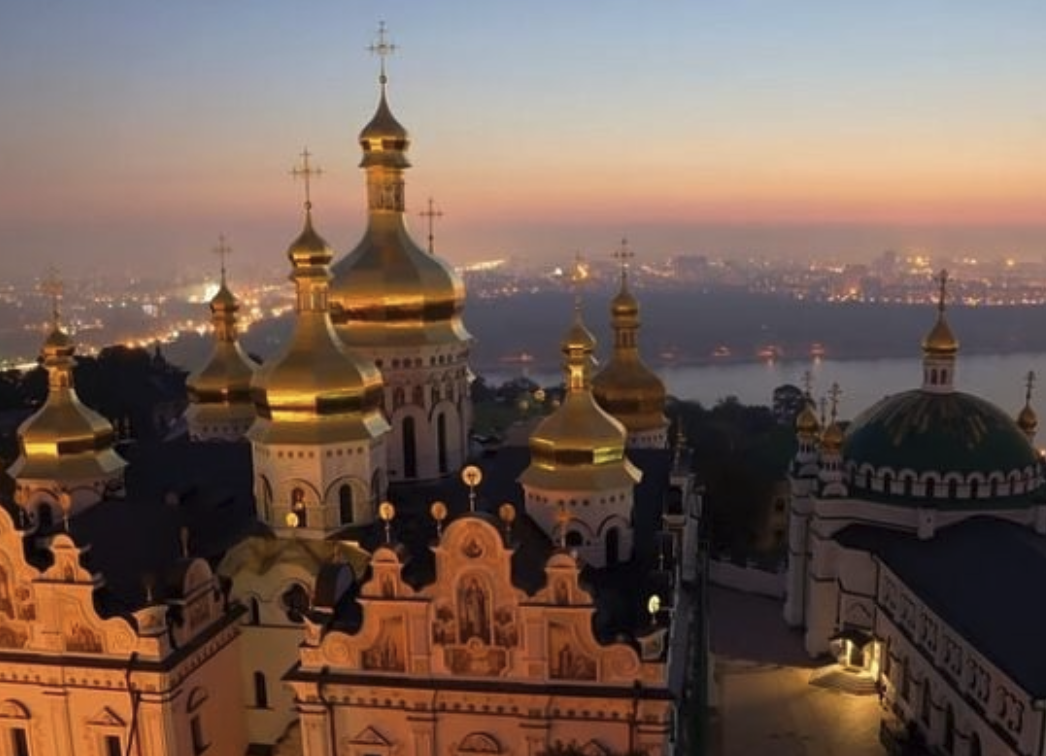
That’s a massive question. In my experience, the Orthodox are praying for a ceasefire and negotiations, seeking a Ukraine that is militarily independent of the United States-European Union and, certainly, Vladimir Putin’s Moscow regime.

At this point, no one should be surprised that Orthodox leaders aligned with USA-EU and Turkey are releasing fierce statements against Putin’s arrogant and evil invasion of Ukraine. At the same time, no one should be surprised that Patriarch Kirill of Moscow has tried to call for peace, while avoiding any language that openly clashes with the autocrat next door. You end up with language such as:

As the Patriarch of All Russia and the primate of a Church whose flock is located in Russia, Ukraine, and other countries, I deeply empathize with everyone affected by this tragedy.

I call on all parties to the conflict to do everything possible to avoid civilian casualties. I appeal to the bishops, pastors, monastics, and laity to provide all possible assistance to all victims, including refugees and people left homeless and without means of livelihood.

The Russian and Ukrainian peoples have a common centuries-old history dating back to the Baptism of Rus’ by Prince St. Vladimir the Equal-to-the-Apostles. I believe that this God-given affinity will help overcome the divisions and disagreements that have arisen that have led to the current conflict.

Note this meek language — “I call on all parties to the conflict to do everything possible to avoid civilian casualties” — that still manages to condemn the current actions of Russia’s leaders.

Anyone seeking the “Orthodox mind” on this matter needs to remember that Eastern Orthodoxy, no matter what Western media think, has no pope and that its (I should candidly say “our”) conciliar approach to settling disputes moves very slowly, with good cause.


Please respect our Commenting Policy

Pronoun wars? The 'usual suspects' quoted by the press skewed Baptism-gate coverage

Pronoun wars? The 'usual suspects' quoted by the press skewed Baptism-gate coverage

What is the role of journalism? Above all, it is to inform and educate. We know that reliable information is needed for any society to properly work. At the very least, readers deserve accurate information.

What happens when this isn’t the case? That’s the dilemma that befell many news organizations in recent days when a big Catholic news story came across their newsroom desks.

Yes, I’m referring to the botched baptism story out of Arizona last week that made so many headlines. And that’s hard to do considering the ongoing pandemic, the Beijing Olympics and Russia-Ukraine crisis.

Yes, baptism-gate has been all the rage. News coverage of it, however, not so good. More on that later.

To summarize: a priest named Andres Arango, following a church investigation, determined that he’d incorrectly performed thousands of baptisms over more than 20 years. It meant that those who had been baptized in Phoenix, and at his previous parishes in Brazil and San Diego, needed to be baptized again.

What did he do wrong? Arango, who has since resigned after making the mistake, used the wrong pronoun. Instead of saying, “I baptize you in the name of” he used “we.” After diocesan officials found out, they said people who Arango baptized aren’t officially Catholic. That means they weren’t eligible for other sacraments like Holy Communion.

This is where the news coverage got interesting. Once again, on an issue of great importance to Catholic readers and church leaders, secular news outlets assumed the views of one side were normative — even accurate — at the expense of church doctrine. Here at GetReligion, we have a name for that approach (click here for information).

Everyone from The New York Times and USA Today to NPR and local news outlets covered the story. What we learned from the coverage was telling. It was also largely one-sided and inaccurate.


Please respect our Commenting Policy

Covering the Goyim Defense League: Does news about anti-Semitism inspire copycats?

Covering the Goyim Defense League: Does news about anti-Semitism inspire copycats?

Ahad Ha’am, considered the father of “cultural Zionism,” is quoted as saying: “More than Jews have kept Shabbat (Hebrew for “sabbath”), Shabbat has kept the Jews.”

Ha’am’s comment is a recognition of the cohesive power inherent in widely shared group traditions and tribal memories. Call it positive re-enforcement.

But similar sentiments have been expressed about anti-Semitism’s influence on Jews. In short, do communal fears over anti-Semitism also keep Jews connected to this day? After all, the enemy of my enemy is my friend — even if I utterly reject my newfound ally’s particular expression of Jewish religion, politics or lifestyle. Call it negative re-enforcement, if you will, but fear of persecution, and certainly death, is a powerful motivator of group cooperation.

Switching lanes now, here’s a journalistic question about anti-Semitism. Does giving anti-Semitism extensive coverage — warranted though it may be — prompt more anti-Semites to act out publicly? Does publicity embolden and thus spark potential copycat anti-Semitism?

I have no doubt that the current global upswing in reported anti-Semitic incidents — some deadly, some just irritating — requires heavy coverage.

Journalists have a responsibility to alert authorities to anti-Semitism’s illegal expression, to warn Jews about the dangers they face, and to try to educate those media consumers who know little about anti-Semitism’s impact and incubators.

This responsibility, of course, extends beyond Jews to cover all groups suffering discrimination or persecution. Hatred of Jews may be, as has been said, the oldest hatred, but all hatred is equally wrong and personally and communally destructive.

As journalists, we don’t just report the news. We help shape it, and civilization, by what we report.


Please respect our Commenting Policy

Do athletes have a moral duty to protest Chinese authoritarianism? How about Elon Musk?

Do athletes have a moral duty to protest Chinese authoritarianism? How about Elon Musk?

Do elite international athletes have a moral responsibility to publicly comment or act in a way that acknowledges their awareness of oppressive — or worse — political conditions in nations in which they compete?

Do societal moral standards require them to speak up, even when criticism and confrontation jeopardize their ability to compete and may threaten to derail an entire career?

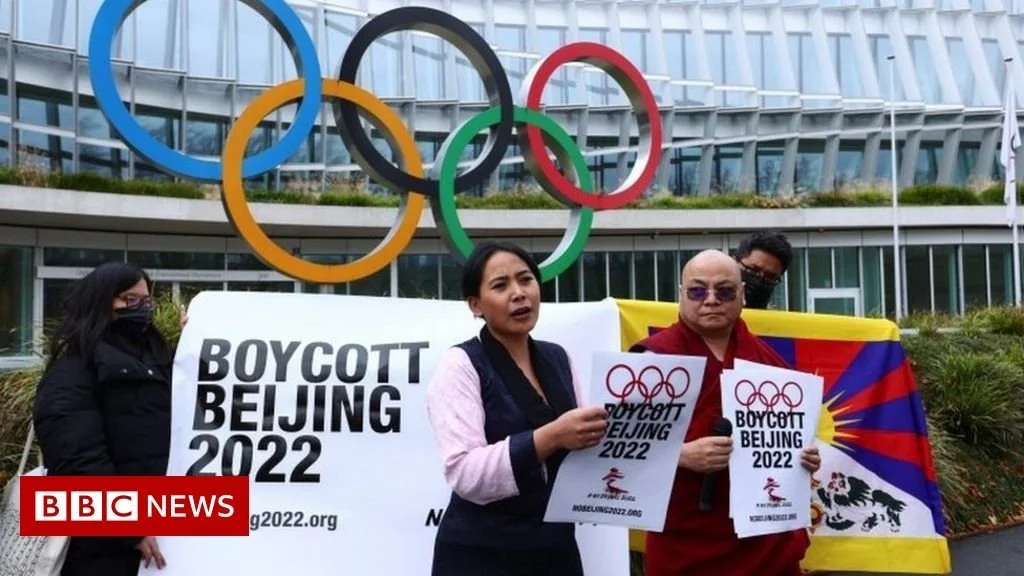
The Beijing Winter Olympics — scheduled to begin in early February in and around China’s capital city — makes this a timely question.

Several democratic nations have announced “diplomatic” boycotts of the Beijing competition. They include the United States, Australia, Britain, Canada, Denmark, and Japan. (To be clear: democratic claims alone do not necessarily stifle a nation’s darker impulses and render it “moral.”)

That means that no political office holders from the the boycotting nations will attend these Games, but qualifying athletes are free to make their own choices about competing.

The following paragraphs from the above linked Washington Post article explain the limits on free speech China is demanding (with International Olympic Committee acquiescence).

The IOC has said athletes will be free to express themselves during the Games as long as they abide by IOC rules barring any demonstrations during sporting events or medal ceremonies.

Athletes could raise any number of issues, including allegations of cultural genocide against the Uyghurs in Xinjiang, the erasure of civil freedoms in Hong Kong, and the arrests of human rights lawyers, activists and outspoken Chinese citizens. [Note that the Post left Tibetan issues, a major international sticking point for the West, off this list.]

But Chinese authorities are extremely sensitive to criticism about the country’s human rights record, its role in the outbreak of the covid-19 pandemic, and even the country’s efforts during the Korean War.


Please respect our Commenting Policy

20 years later, the Boston Globe clergy sex abuse revelations show why journalism matters

20 years later, the Boston Globe clergy sex abuse revelations show why journalism matters

The date Jan. 6 means different things to people. For me, as a Catholic, it is the Feast of the Epiphany. It marks the date on the liturgical calendar when the Magi, according to the Bible, brought gifts to the baby Jesus.

This year, the date became a polarizing remembrance of the 2021 U.S. Capitol insurrection, riots or whatever else one calls it depending on their political affiliation. For me, this Jan. 6 marked a special anniversary — the 20th anniversary of the groundbreaking Boston Globe Spotlight team’s investigation into predator priests. The series of articles won the Pulitzer Prize in 2003 in the Public Service category.

I must admit that the anniversary went by without much fanfare. It’s surprising given that the ramifications from those original series of news articles reverberates within the church, both in the U.S. and globally, and that it was even made into a 2015 movie “Spotlight” that won the Oscar for Best Picture. Even the Vatican gave the film two thumbs up at the time.

Maybe the events of a year ago in Washington were just too compelling for the news media — even though they love anniversaries — to make room for coverage of anything else.

That’s a shame because the stories remain so very important to both the craft of journalism as well as how the Catholic church failed to police itself in the decades following the Second Vatican Council and the betrayal of trust of so many people over a period of four decades.

The question, for GetReligion readers, is this: What are the elements of this story that are still alive, important and worthy of coverage now and in the future?


Please respect our Commenting Policy

Whether art or mere craft, old-school interviewing is a reporter's perennial linchpin

Whether art or mere craft, old-school interviewing is a reporter's perennial linchpin

The New York Times offers daily doses of clever self-promotion (and often self-congratulation) in a feature called "Inside The Times: The Story Behind The Story." One of these carefully curated items last week, "How Reporters Interview Celebrities," merits contemplation from other journalists.

Interviews are forever the linchpin of all original reporting. This opus tapped three specialists about dealing with show business personalities, a different challenge from typical interviewing. But some points have broad application.

Prepare thoroughly, which assures interview subjects of your professionalism and intent to conduct a knowledgeable discussion . Know what they have said in previous articles, which they may be anxious to explain or rebut. Inevitably you'll have some prickly questions, and a savvy subject will expect this and be prepared, but don't ask them early on.

The best strategy is often "simply to listen."

Those observations, of course, pertain to feature-writing with advance notice and a reasonable amount of time for the conversation itself — as opposed to breaking news stories where the reporter is scrambling and the interview must quickly get to the point.

How does this apply to the religion beat?

For one thing, the field has few celebrities. Over the decades The Guy has met with some, such as the Dalai Lama, Billy Graham, Mother Teresa or Cardinal Joseph Ratzinger (soon to become Pope Benedict XVI). In those situations, never ever give way to awe, whatever your private reactions. (The Guy has observed this is a more likely temptation among people who do not work the religion beat.)

Even religious leaders who are highly influential within their own spheres typically do not have to deal with inquisitive journalists. They may feel (often for good reason) that representatives of the Mainstream Media will bring little understanding of faith or harbor slight scorn toward this aspect of human experience.


Please respect our Commenting Policy

Give the charismatic world's 'new prophets' more ink? Julia Duin still says 'yes' (updated)

Give the charismatic world's 'new prophets' more ink? Julia Duin still says 'yes' (updated)

Surely you’ve heard of the “new prophets” in the rowdy world of charismatic Christianity?

In terms of hooks for news, these folks have everything.

We’re talking about lots of energy and egos, with the kind of on-camera talent that produces megachurches and social-media outbursts that go viral. There are also plenty of links to the powers that be around Donald Trump. This is “charisma” in every sense of that word.

Julia Duin has been sounding this horn here at GetReligion for years, long before the events surrounding January 6th caught the attention of Big Media. Here is a chunk of a 2018 post: “Religion News Service — Movie claims 'red tsunami' will vindicate Donald Trump in November.”

… (S)ecular America doesn’t get how vehemently many people believe that God orchestrated President Trump’s 2016 victory. And what’s more, many of those people believe God has mandated another victory for Trump in 2020.

You’ve not heard this? Folks, you’re not reading the right websites. …

It’s not so much evangelical Protestants who are pushing this idea, but a daughter movement made up of charismatics and Pentecostals (linked up with Liberty University film people). I’ve been amazed over the years how few religion reporters follow these folks, even though this demographic was instrumental in getting Trump elected. Plus, a growing percentage of world Christianity is Pentecostal/charismatic (see this classic major Pew Forum study). Visit Brazil, if you don’t believe me. And much of Africa.

You want more? How about this piece early in 2020: “About Todd Bentley and 2020 prophecies: How are reporters supposed to cover this stuff?

Julia was back with more information and news hooks linked to the this new generation of self-proclaimed prophets (and the people who warned about getting tied up in politics) months later with this piece: “Who's covering this? Are charismatics and Pentecostals behind Trump's refusal to concede?

Everyone remembers that viral “strike and strike and strike” rap from the Rev. Paula White-Cain.


Please respect our Commenting Policy

Five big Catholic news angles that journalists will need to cover during 2022

Five big Catholic news angles that journalists will need to cover during 2022

As 2021 comes to a close, everyone is looking towards 2022. The news cycle over the last two years has been dominated by COVID-19 and that doesn’t seem to be subsiding — given the rash of infections the past few weeks as a result of the Omicron variant.

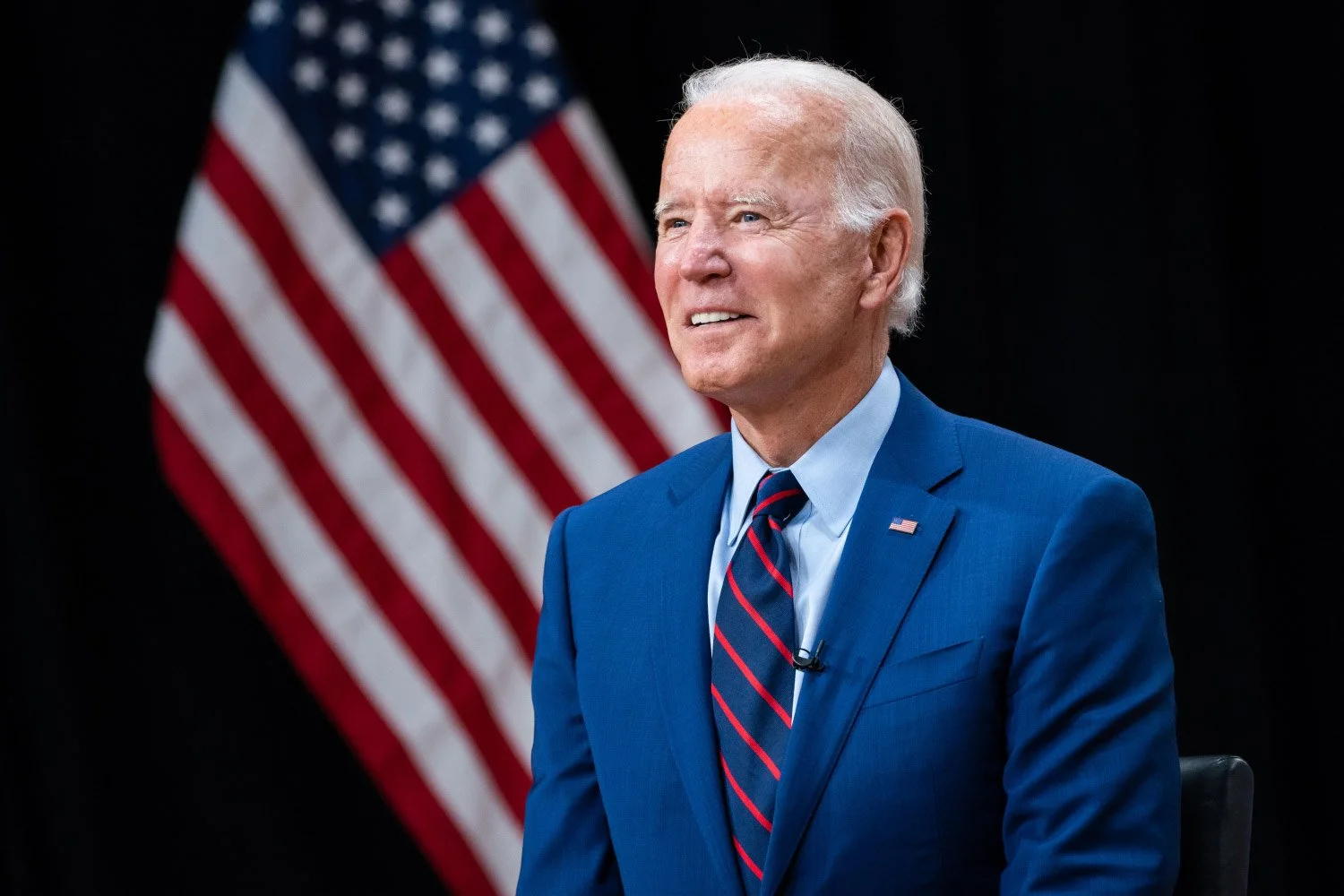
The Catholic world, meanwhile, had in 2021 one of its busiest years. The election of Joe Biden as president — this January will officially mark his first year in office — also dominated news coverage. That Biden was also a Catholic (only second after John F. Kennedy in 1960) thrust Catholicism into the political news coverage. Politics plus religion equals news. It’s a familiar formula.

Biden, a practicing Catholic who attends Mass on Sundays, was at odds this year with many U.S. bishops — setting up a year-long debate over whether he (and other pro-abortion politicians) should receive Holy Communion. In the end, the bishops offered more clarification in the importance of the Eucharist without singling out Biden. Truth is, no one knows if the bishops actually considered mentioning Biden or other pro-abortion-rights Catholics.

Issues around politics and religion will likely dominate once again in 2022. The abortion issue and a pending Supreme Court decision regarding access to it will be a big story in the coming year. The Catholic church, a major part of the abortion debate in this country for decades, will play a major role in news stories that will be written over the coming months.

At the same time, Pope Francis, who recently turned 85, will again be surrounded by rumors that he will either resign or die. Whether this pope — the most polarizing in centuries — can chip away at his agenda to change the church in the 21st century will continue to pit traditionalists versus progressives.

Here are the five big news trends and stories journalists need to keep an eye on in the new year:

(5) Pope Francis and his focus on a progressive agenda

This coming year could be the one where the battle between this pontiff and doctrinal traditionalists intensifies even further. A Dec. 17 Associated Press story set the stage for such a confrontation in what will be Francis’ ninth year as head of the Catholic church.


Please respect our Commenting Policy

Religion's impact on global migrant crisis: RNS concludes that it's Gordian Knot complicated

Religion's impact on global migrant crisis: RNS concludes that it's Gordian Knot complicated

Globalization has been a decidedly mixed bag.

On the plus side, it’s managed to knit diverse people together economically and, to a lesser degree, culturally. But it’s also further divided others along religious, political, race, and class lines.

It’s introduced us to a myriad of once exotic consumer products at relatively cheaper prices (cheaper for many Westerners, that is). Globalization has also brought us fresh ideas and life choices that — while I certainly don’t agree with every new view put forth — has enormously enriched my own life experience.

On the negative side — and this is huge — it’s allowed multi-national corporate boards (and shareholders) to escape the full weight of responsibility for the enormous environmental degradation their decisions have produced in exploited regions thousands of miles distant from their posh corporate headquarters.

Also, let’s not forget the foreign workers, including child laborers, exploited by unscrupulous employers trying to satisfy their Western customers insatiable demands for rock bottom prices.

For the United States and other Western nations, globalization’s complex outcomes has produced still another key Gordian Knot dilemma. I’m referring to the vast numbers of desperate human refugees heading, most often without proper documentation, to the United States, Europe, Australia — and even to neighboring countries that may be only relatively better off.

The latter group includes situations American news media rarely cover. They include Nicaraguans fleeing to Costa Rica and South Africa’s burgeoning refugee population comprised of hopeful immigrants from a variety of sub-Saharan African nations.

Is it any surprise to anyone with a working knowledge of Homo sapiens that we demand globalization’s creature comforts without us wanting to deal with those actual Homo sapiens that globalization has negatively impacted.


Please respect our Commenting Policy