Journalism

Why the press loves Santa Claus and the case for more news about St. Nicholas of Myra

Why the press loves Santa Claus and the case for more news about St. Nicholas of Myra

We are currently in “the most wonderful time of the year,” as the popular Christmas song by Andy Williams goes. For many Christians, however, the four weeks leading up to Christmas Day are marked by Advent, a time of prayer in preparation for the birth of Jesus. In Eastern churches, this season is called Nativity Lent.

Advent is one of those religious customs largely ignored by the mainstream press. Many newspapers and TV networks are more preoccupied with the economics around the season — Black Friday marks the beginning of the shopping-mall season for them — and things like trendy Advent calendars (which these days are largely devoid of any religiosity) and Santa Claus, the hero previously known as St. Nicholas.

In fact, the things the mainstream media value this time of year are starkly different from the message worshippers in ancient Christian traditions get in church during Sunday liturgies in the weeks preceding December 25th.

This is not something that’s entirely new. Even as a child, I could sense a disconnect between the materialism around me growing up in New York and the Christmas I celebrated at home featuring a Nativity crèche and Advent wreath. The Peanuts Christmas special had Charlie Brown bemoaning commercialization of the season — and that aired in 1965 (and network executives worried that it was too religious, even back then).

Where are we in 2021? Amid talk of supply-chain issues, inflation, the ongoing pandemic and political bickering in Washington (with politicians posing with guns on their Christmas cards), it looks pretty bleak out there.

This time of year is yet another reminder of what mainstream media values and the divide over what most Americans think and believe. This is where the Catholic press is of great value to help frame not just what’s important, but also what is more connected to the traditions and reality of this time of year.

In particular, it’s interesting to look for coverage of the backstory of Santa Claus. Hold that thought.

Let’s start here. Scanning various news sites the last two weeks led me to notice a larger trend.


Please respect our Commenting Policy

Attention please: Two housekeeping items (both important) as GetReligion enters 2022

Attention please: Two housekeeping items (both important) as GetReligion enters 2022

Believe it or not, GetReligion has been around since 2004.

Doug LeBlanc clicked a mouse and launched the earliest version of this weblog on February 1, to be precise. When you’ve been working that long in the craziness that is the World Wide Web, you end up with some inevitable housekeeping issues.

Please hang in there with me for a minute or two for updates on two pieces of in-house business.

First, we have had to change — once again — the format of our daily mini-newsletter for those who would rather read GetReligion via email. The current list will vanish in a day or so.

A bit of history: Long, long ago, we had more than 600 people signed up for this kind of service. Then we switched platforms (it’s a long story) and lots of email readers got lost in the process. It’s always a hassle when something changes what does, and what doesn’t, show up in your daily wave of emails.

Now, we are having to relaunch our Mailchimp list. This is yet another side effect of the 2014 death of our co-worker Arne Fjeldstad of the Media Project, who launched the current version and, thus, was the “owner” of that list. Yes, many people (around the world) still miss Arne.

Now this feature needs to be updated. However, signing up for this updated Mailchimp list isn’t rocket science. Just click here and fill in the blanks. That’s all there is to it.

Item No. 2 is linked to the end of 2021 — think taxes and end-of-the-year donations to nonprofit groups.

For many of you, GetReligion is in that list. To cut to the chase, we still need your help.


Please respect our Commenting Policy

New podcast: Are news reports 'dunking' on the late religious broadcaster Marcus Lamb?

New podcast: Are news reports 'dunking' on the late religious broadcaster Marcus Lamb?

If you search for the word “posterized” in up-to-date online dictionaries, this is what you find: “A slang term depicting a play in basketball. In said play, a player dunks the ball over top or in front of another player, making a play so picturesque that it may appear on a poster, hence the term, posterized.”

Clearly, this is linked to another term frequently used in the nasty verbal wars that are common on social-media sites, with Twitter — dominated by liberal and conservative voices in elite zip codes — being the best example.

That term is “dunking.”

“Dunking” is relevant to the main topic discussed in this week’s “Crossroads” podcast (click here to tune that in) about media coverage of the death of religious broadcaster Marcus Lamb, who died of COVID-19 after using his Daystar Television Network to criticize vaccine mandates and other anti-pandemic rules and guidelines, while advocating alternative treatments.

“Dunking” is defined, sort of, in this Slate article: “ ‘Dunking’ Is Delicious Sport — But it might be making Twitter even more terrible.” Here is a relevant passage:

Since Twitter rolled out the feature a couple of years ago, the quote-tweet has evolved into something like a pair of magic high-tops dispensed to every user on the service: Anyone can botch a tweet, and anyone can leap over him or her to score a couple of points—or a couple thousand likes and retweets.

The basketball term is apt: In a Twitter dunking, someone has made his point or said her piece, and instead of responding to it with a direct reply, perhaps in the spirit of equal-footed debate, the dunker seizes it like an alley-oop on his or her way to the basket. Maybe another player gets the unwitting assist, but the point is yours to be liked and retweeted not just as a reply but as a worthier tweet in its own right.

What does this look like in practice? Consider this example from the blitz of tweets about Lamb’s death. This dunk comes from the creator of the “America’s Best Christian” brand:


Please respect our Commenting Policy

Finally, another Overby Center program: Why religion was one big factor in vaccine wars

Finally, another Overby Center program: Why religion was one big factor in vaccine wars

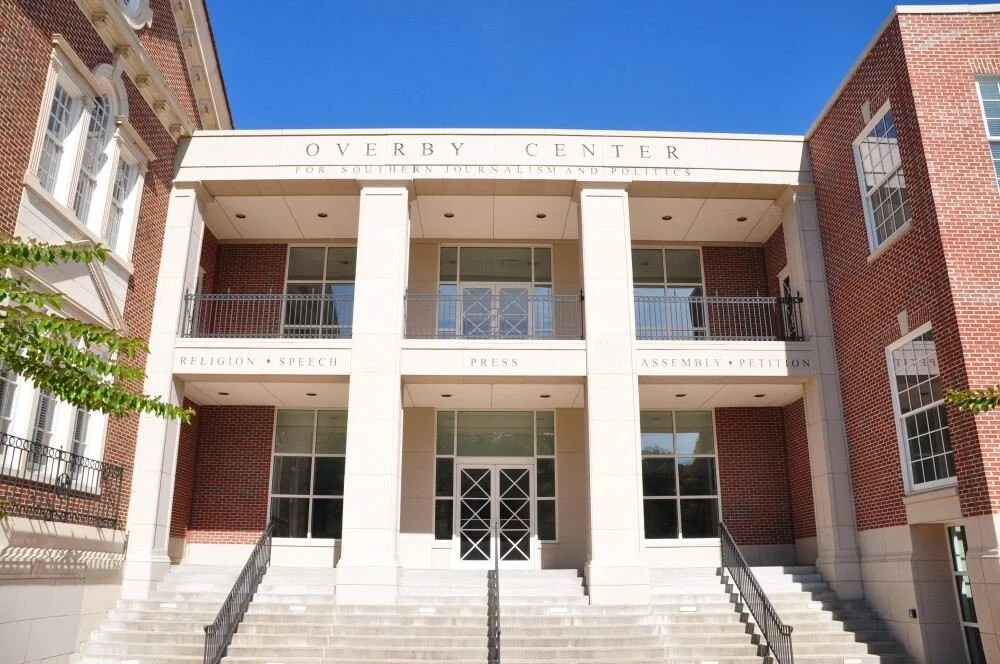
I have strong memories, to say the least, of the first Overby Center program in which I was able to participate, as a senior fellow for the center and as editor of GetReligion.

The topic was the role that religion would play in the 2020 presidential election. Religion-beat patriarch Richard Ostling was there and both of us stressed that, while journalists were pouring oceans of ink into coverage of (#TriggerWarning) white evangelicals, Catholic voters would play the pivotal role in swing states. I also noted the little-covered 2016 impact of Latino evangelicals and, especially, Pentecostal believers in Florida. I didn’t think to predict a starring 2020 role these Latino voters in Texas.

When was that program? Here’s a clue. As I drove home, I stopped for lunch in Jackson, Tenn. As I pulled back onto the interstate headed east, I heard a radio report noting that the mysterious virus that was causing havoc in Wuhan, China, had now been detected in Europe and, perhaps, in New York City.

Days later, the whole world turned upside down.

With social-distancing, masks and vaccines in mind, we recently gathered in Oxford for a forum addressing a logical topic — why religion was a key factor (but not the only one or even the dominant one) in America’s wars over COVID-19 vaccines. Click here to watch the event on YouTube.

In addition to Center founder Charles Overby, I was joined by three logical voices on this subject.

First, political scientist (and GetReligion contributor) Ryan Burge Zoomed in with several crucial charts full of relevant info. Take this post, for example: “Thinking about white evangelicals, COVID-19 vaccines and VERY popular headlines.” Then there was Marquita Smith of the University of Mississippi faculty, a journalist I came to know while she was teaching at John Brown University on the edge of the Ozarks. She is now the assistant dean of graduate programs at the Ole Miss J-school.

The final panelist was the Rev. Daniel Darling, who was recently named director of the Land Center for Cultural Engagement at Southwestern Baptist Theological Seminary in Fort Worth, Texas.

Then again, Darling may be better known in religion-beat circles because of this New York Times headline: “Fired After Endorsing Vaccines, Evangelical Insider Takes a Leadership Role.”


Please respect our Commenting Policy

Notre Dame's 'woke' rebuild plan: Why the glaring lack of mainstream news coverage?

Notre Dame's 'woke' rebuild plan: Why the glaring lack of mainstream news coverage?

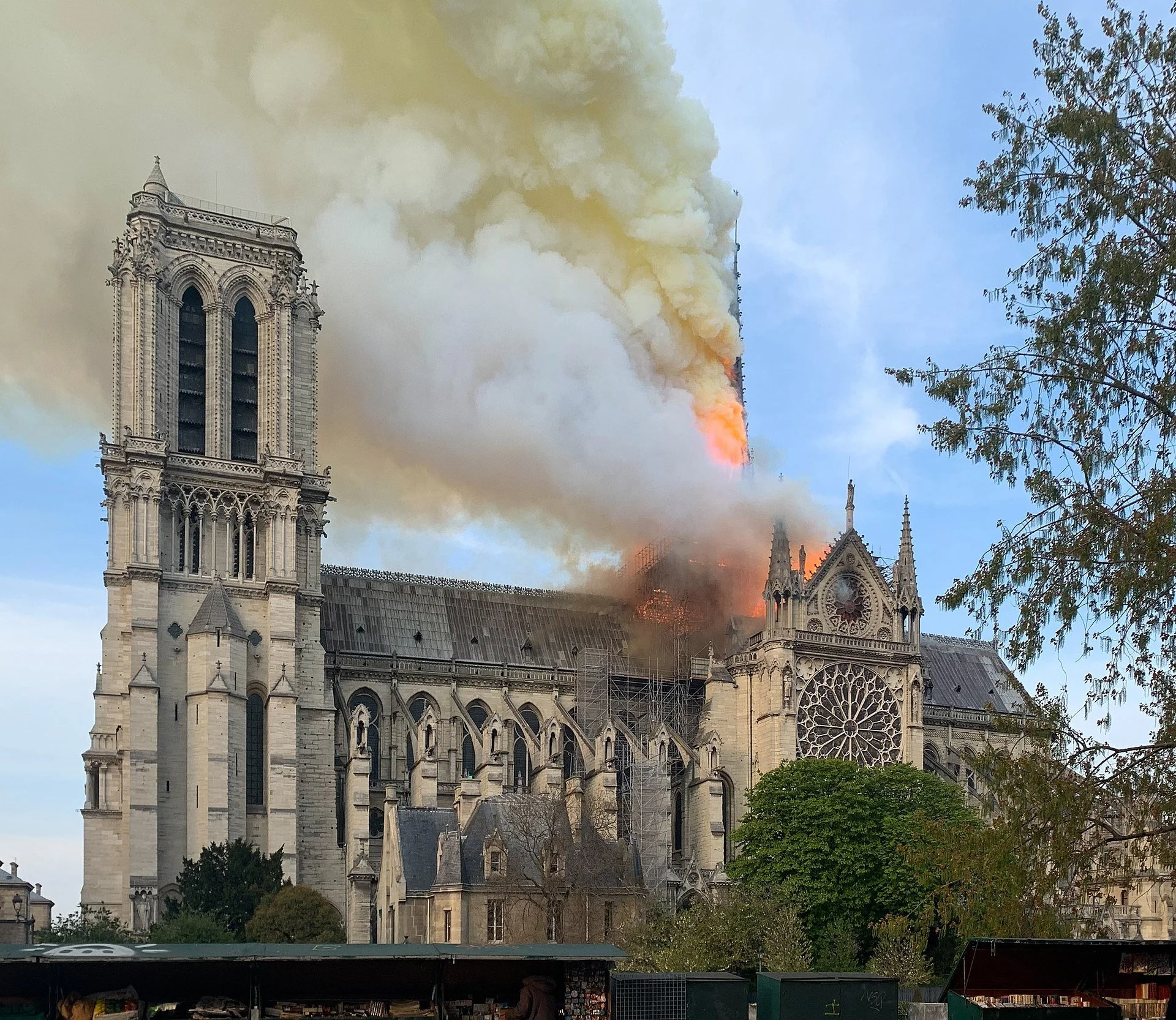
Before the pandemic dominated the news cycle starting in 2020 (and continues to do so), the fire that ravaged Notre Dame in Paris in 2019 was among that year’s biggest stories.

Over the Thanksgiving weekend, the famed cathedral was once again catapulted into the news cycle — despite it being a busy few days thanks largely to the Omicron coronavirus variant — after The Telegraph, based in London, reported a scoop under the headline “Notre Dame interior faces ‘woke’ Disney revamp.”

What followed was an amazing lack of mainstream news coverage.

Here’s how the Telegraph story (behind a paywall) opened. The following is a meaty excerpt since so many of you do not have a subscription to the British newspaper:

Paris’ fire-ravaged Notre-Dame cathedral risks resembling a “politically correct Disneyland” under controversial plans for its renovation seen by the Daily Telegraph.

Critics have warned that the world-famous cathedral will be turned into an “experimental showroom” under plans to dramatically change the inside of the medieval building.

Under the proposed changes, confessional boxes, altars and classical sculptures will be replaced with modern art murals, and new sound and light effects to create “emotional spaces”.

There will be themed chapels on a “discovery trail”, with an emphasis on Africa and Asia, while quotes from the Bible will be projected onto chapel walls in various languages, including Mandarin.

The final chapel on the trail will have a strong environmental emphasis.

“It’s as if Disney were entering Notre-Dame,” said Maurice Culot, a prize-winning Paris-based architect, urbanist, theorist and critic who has seen the plans.

“What they are proposing to do to Notre-Dame would never be done to Westminster Abbey or Saint Peter’s in Rome. It’s a kind of theme park and very childish and trivial given the grandeur of the place,” he told The Telegraph.


Please respect our Commenting Policy

Podcast: Why was the New York Times so interested in Marvin Olasky? Take a guess ...

Podcast: Why was the New York Times so interested in Marvin Olasky? Take a guess ...

Why was The New York Times so interested in Marvin Olasky and his views on journalism and Christian faith?

That’s a question that I heard several times this week from readers and others.

Actually, the Times published a previous article on Olasky, which I mentioned in a post here earlier this week (“Wut happened? Tensions behind World's move to push Olasky out of his editor's chair”). So let’s tweak that question a bit, to get to the point that host Todd Wilken and I discussed in this week’s “Crossroads” podcast (click here to listen to it).

Why was the Times team so interested — it’s a long, complex feature — in Olasky right now?

Actually, the answer to that question is pretty clear. Read the headline: “His Reasons for Opposing Trump Were Biblical. Now a Top Christian Editor Is Out.” Now,. read the thesis statement:

At one level, Mr. Olasky’s departure is just another example of the American news media sinking deeper into polarization, as one more conservative news outlet, which had almost miraculously retained its independence, is conquered by Mr. Trump.

It also marks the end of a remarkable era at a publication that has shaken evangelical churches and related institutions with its deeply reported articles. … At a time when hot takes get the clicks, these articles offered something old-fashioned and hard for any community to take: accountability reporting.

That’s actually two answers, isn’t it.

Answer No. 1: Trump, Trump, Trump, Trump. Answer No. 2: Olasky has built a magazine known for producing hard-news articles. That’s rare, in today’s digital world dominated by a quick-click business model that loves opinions and commentary work. The editorial approach at World was shaped by cultural, religious conservatism, more than partisan politics.

Think of this magazine as an evangelical version of the late, great New Republic.


Please respect our Commenting Policy

Holy Communion wars: What is news at this week's USCCB meeting depends on what you read

Holy Communion wars: What is news at this week's USCCB meeting depends on what you read

What is news?

It’s the key question editors and reporters continuously ask themselves when approaching and covering a major event.

Days before a pre-scheduled event or meeting like a political convention or the Super Bowl, these same people working in newsrooms prepare for what they can expect — although much of journalism deals with the unexpected such as a scandal, a crime or natural disaster.

Reporters are not in the seeing-the-future business — but there are storylines that they look for ahead of a pre-arranged event.

One such event will be the United States Conference of Catholic Bishops annual fall meeting in Baltimore (the first in-person assembly since the pandemic struck in March 2020) that started Monday and runs through Thursday. What used to be largely overlooked week by mainstream news organizations, the meeting has been catapulted into the spotlight in recent years for several reasons.

Many prominent Catholic bishops have become increasingly vocal in the ongoing culture wars and that’s drawn more media attention. At the same time, American Catholics have increasingly become split along political and doctrinal lines on issues such as abortion during the trump years. Last year’s election of Joe Biden, the first Catholic president since John F. Kennedy in 1960, and his open advocacy of pro-abortion policies.

Thus, the USCCB meeting has become a news even that now lives outside the Catholic media ecosystem. Alas, there may even be political-desk reporters covering this event.

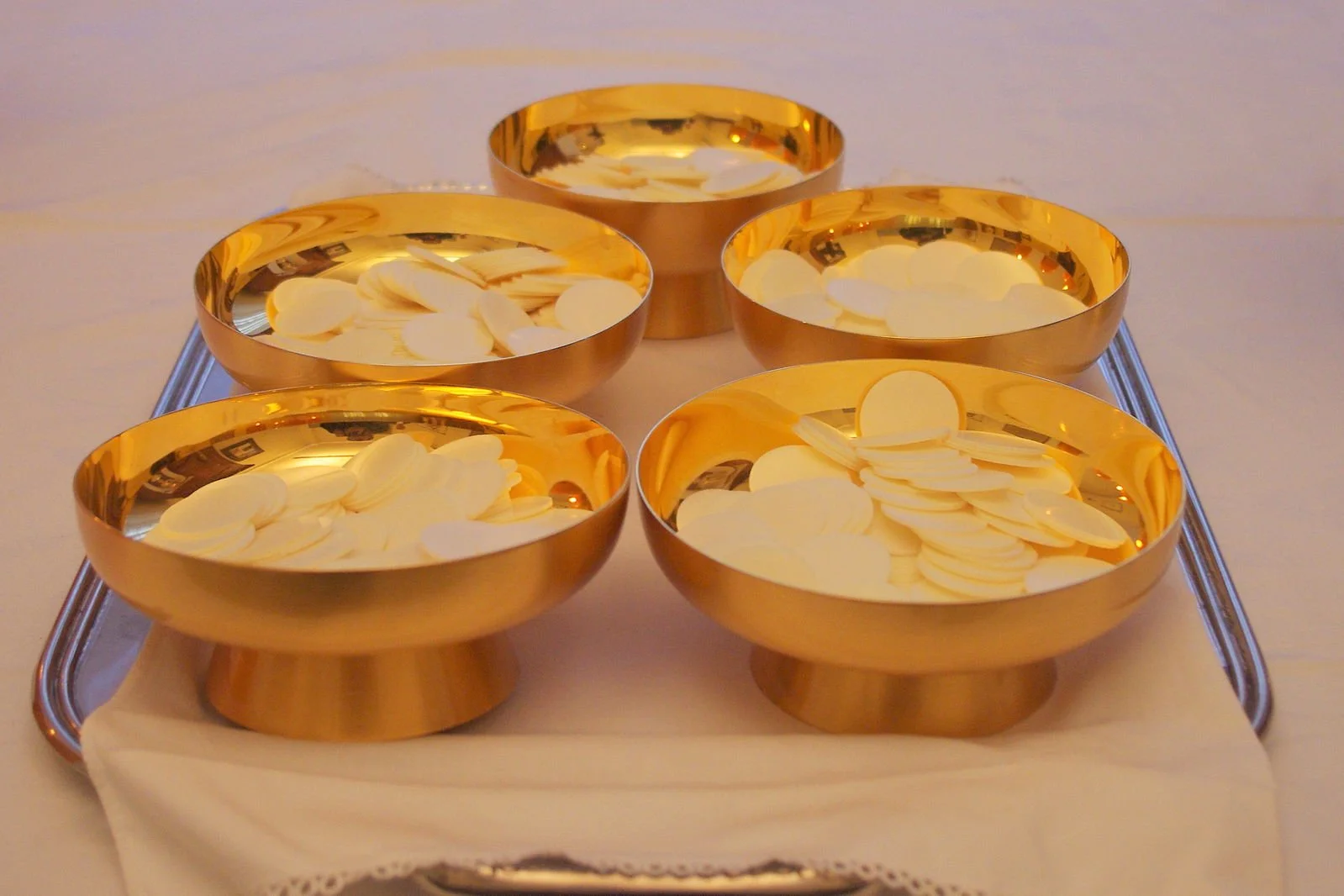
The main storyline since the 2020 election season has been the ongoing argument over whether Catholic politicians who openly advocate for abortion are in direct conflict with church teachings and therefore should not receive Holy Communion.


Please respect our Commenting Policy

Wut happened? Tensions behind World's move to push Olasky out of his editor's chair

Wut happened? Tensions behind World's move to push Olasky out of his editor's chair

First things first: Readers need to know that Marvin Olasky has been a friend of mine for yearly three decades. If I was dangling off a cliff, I’d trust Olasky to hold the rope.

Through the years, Marvin and I have disagreed on many journalism issues and had some stimulating debates. For example: He was dead right when, in the first years of Internet life, he predicted that life in the digital world — think social media in particular — would undercut old-school standards of balance and objectivity in journalism. In GetReligion terms, think “Kellerism” and much of today’s New York Times.

Back to the present, and a pretty solid Times piece that is lighting up Twitter. Here’s the double-decker headline:

His Reasons for Opposing Trump Were Biblical. Now a Top Christian Editor Is Out.

A clash over culture and politics comes to World, a groundbreaking journalistic institution that covers evangelical Christians.

There is, of course, no way to leave Donald Trump out of this story, with Olasky submitting his resignation (he was planning to retire next summer) after a coup in the World board after several years of tensions. Among the hot-button issues, readers learn, were COVID-19 masks and voter fraud (#DUH).

As I said, the story is pretty good, with Olasky — rare, this — portrayed in the elite press as a good guy. However, there is one statement that I need to challenge right up front:

At one level, Mr. Olasky’s departure is just another example of the American news media sinking deeper into polarization, as one more conservative news outlet, which had almost miraculously retained its independence, is conquered by Mr. Trump.

Has the newsroom at World been “conquered by Trump”?

I would say that we do not know that, yet. It’s clear that the World board signed off on the creation of an ambitious World-branded commentary website — without Olasky’s approval as editor. But do we know that the news team will not bravely carry on with its work?

We do not know that, do we?


Please respect our Commenting Policy

While most media ignore religious persecution, Al Jazeera devotes space and time to it

While most media ignore religious persecution, Al Jazeera devotes space and time to it

I remember when Al Jazeera was looking to hire folks in Washington, D.C., about the time they launched Al Jazeera English in 2006.

Some journalists about town weren’t sure about applying there, even though the money was said to be good and its connections within the Arabic-speaking world were light years better than any other news operation.

It was, of course, the whiff of Arab nationalism and Islamism that scared a lot of folks off. (Then again, in 2018, it was officially banned from more than one-third of all Arabic-speaking countries, so sometimes those connections exact a high price.)

Anyway, that was then. In 2008, it launched a human-rights desk in its newsrooms and began doing stories where such rights were violated. Being that religious groups were often the first targeted, Al Jazeera got into some serious religion reporting — covering all kinds of issues, often with a striking effort to be balanced, fair and accurate.

Fast forward to 2021, where they just won first place in the Excellence in Television News Magazine Religion Reporting category for the Religion News Writers annual contest. I am not sure what specific story won them that award but in recent years, they’ve done some quality religion pieces. Now they’re at the point where folks are writing academic papers based on their religion coverage.

I am not going to go into their reporting on Islam, which is a whole other topic. This post concerns their human rights-religious minorities coverage. One of their latest examples details how Myanmar has become “a living hell” for Christians — a story very few secular media are covering. Let’s start here:

Last month, Myanmar soldiers gunned down Cung Biak Hum, a 31-year-old Baptist pastor, while he rushed to help put out a fire caused by military shelling. As his town of Thantlang in Myanmar’s northwestern Chin State went up in flames, soldiers sawed off the pastor’s finger and stole his wedding ring.


Please respect our Commenting Policy