Journalism

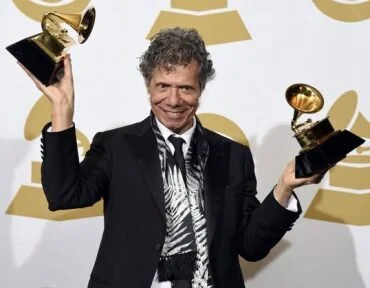
Chick Corea's life and music: If Scientology 'informed' his art, why not offer a few examples?

Chick Corea's life and music: If Scientology 'informed' his art, why not offer a few examples?

When it comes to modern forms of jazz, I was never a fan of the late Chick Corea’s work in the fusion megaband Return to Forever. I was a Weather Report guy.

However, I was totally into Corea’s classic duets with Gary Burton on vibes (see the epic 1979 live version of “Crystal Silence” at the top of this post) and his lovely “Children’s Songs” collection, for solo piano.

I can also remember debates long ago among my friends — secular and religious — about the impact that Corea’s embrace of the Church of Scientology would have on his life and music. After all, he was an instrumental musician. Were the teachings of L. Ron Hubbard supposed to have soaked into his unique chord voicings and the sparkling rhythms of his compositions?

This leads me to the solid New York Times obituary for Corea, who died recently after a short battle with a rare form of cancer. The double-decker headline on this feature covered a lot of ground:

Chick Corea, Jazz Keyboardist and Innovator, Dies at 79

When jazz and rock fused in the 1970s, he was at the forefront of the movement. But he never abandoned his love of the acoustic piano.

I’ve been thinking about this piece for a week now, wondering if it was worthy of a short post. I finally decided that it was. After all, the obit’s brief treatment of the religion angle demonstrated a classic puzzle that GetReligion has discussed many times in the past, linked to coverage of athletes, actors, writers, etc. Here is that section of the Times piece:

In the early 1970s, Mr. Corea converted to Scientology, and the religion’s teachings informed much of his music from then on, including his work with Return to Forever.

Armando Anthony Corea was born on June 12, 1941, in Chelsea, Mass., near Boston. His father, also named Armando Corea, was a trumpeter and bandleader in Boston, and his mother, Anna (Zaccone) Corea, was a homemaker. He began studying piano when he was 4.

And that was that.


Please respect our Commenting Policy

Welcome to New York Times 'religion' feed? A kissy-kissy chat with exiting NARAL boss

Welcome to New York Times 'religion' feed? A kissy-kissy chat with exiting NARAL boss

Does anyone else remember RSS feeds?

The whole idea of RSS — Really Simple Syndication — is that websites can allow you can set up an automated feed that feeds you updates on specific topics in a standardized, computer-readable format.

The key is that computer algorithms are supposed to detect when stories address issues that interest a specific reader.

Anyway, I received this item the other day in my RSS feed devoted to New York Times stories about religion. In this case, the Times defines the RSS criteria, not me.

In terms of religion news, this one is pretty weird — even for today’s Times. The headline: “Ilyse Hogue, Influential Abortion Rights Advocate, Will Step Down as NARAL Chief — In an interview, Ms. Hogue discussed a tumultuous era for abortion rights and the future of Roe v. Wade.”

In other words, this is a kissy-kissy Q&A marking Hogue’s exit after eight years as leader of NARAL Pro-Choice America. The Times informs readers that “abortion rights are at something of a crossroads, with Democrats facing the choice of whether to try to deliver on their promise of codifying Roe v. Wade.”

All right, says I, let’s see the many points in this report that touch on religion. After all, the RSS algorithms put this in the “religion” feed.

I found three, and even that it is stretching it. Can you spot the religious content in the following three bites from this news feature? The questions, obviously, are in bold type:

Let’s start with perhaps the biggest question: Is Roe v. Wade safe?


Please respect our Commenting Policy

Con Don: Why some conservative Catholic news sites were duped by Donald Trump

Con Don: Why some conservative Catholic news sites were duped by Donald Trump

Now that Donald Trump is no longer president, the discussion about his time in office and legacy is something that has become a media preoccupation despite Joe Biden being inaugurated last month.

That’s because Trump upended much of the way government worked. Add to that a media that can’t quit him (some outlets saw a huge increase in readers and viewers since 2016) and the U.S. Senate impeachment trial, and you can see why Trump remains a focal point.

The U.S. Capitol riot on Jan. 6 is the coda to the Trump presidency and the reason why he remains a news cycle fixture. You may no longer see the former president on Twitter, but The New York Times and CNN — to name just two mainstream news organizations — continue to give him plenty of coverage.

This brings us to another development in today’s evolving news-media marketplace: Catholic media also blossomed during the Trump years.

What has been the result of some Catholic news websites giving Trump any form of editorial support?

Catholic news sites across the doctrinal spectrum should have done a better job calling out both sides — something the mainstream press no longer does, especially on moral, cultural and religious issues. Most often, they don’t run opposing opinion pieces and it appears that the selection of news stories and their arguments are often guided by politics.

However, if we have learned anything over the past four years it is that marrying one’s faith to a political ideology can be a form of idolatry. How else would you explain the zeal of some Catholics who argued that Trump should remain in office?

Catholics have been seduced by the concept that the government can remedy the nation’s problems. They weren’t duped by Trump in as much as they tried to find a solution for what ails society, from their point of view, by supporting an imperfect man. Catholics, like many people of other Christian denominations, wanted to believe Trump. They had too much invested in him and his policy decisions.

Where right-wing Catholics news sites, in particular, go from here remains to be seen.


Please respect our Commenting Policy

Early arrests after U.S. Capitol riot: So were there evangelical leaders in the attack or not?

Early arrests after U.S. Capitol riot: So were there evangelical leaders in the attack or not?

If you’ve worked as a reporter for any amount of time, you know what it’s like to return from covering a Big Story. Then you face your editor and get THAT LOOK.

Here is the religion-beat version of this scene. The editor asks a question that sounds something like this: “So what happened? Did (insert name of ecclesiastical group) finally make a decision about (insert hot-button topic, usually involving sex and/or politics) or not? We need to know how big a story this is.”

The reporter answers that this or that religious group passed a vague resolution calling for more study, dialogue and prayer, but the text contains slight hints — often involving scripture references — that one side or the other is making progress toward achieving this or that goal (maybe). They’ll be arguing about this newsy issue again next year (or whenever the assembly has its next legal gathering), as they have been arguing about it for 25 years.

The editor gives the reporter THAT LOOK. It says, “You have got to be kidding” (or stronger words) and/or “Why did we spend money to send you to cover this national meeting? You said this was a Big Story.” Trust me: Reporters can detect THAT LOOK in an editor’s voice, even if this encounter is on the telephone.

Editor’s don’t like to wait. They like clear results that produce a BOLD headline over a Big Story.

With that in mind, let’s look at a recent New York Times story about the slowly unfolding legal process surrounding rioters who were arrested for attacking the U.S. Capitol during the Jan. 6 “Stop the Steal” protests. The headline stated, “Arrested in Capitol Riot: Organized Militants and a Horde of Radicals.”

My question: Did the 14 reporters involved in covering this story get THAT LOOK when their reporting revealed that the kinds of people facing federal charges (as of Jan. 31) were pretty much what careful news consumers would have expected? In particular, why isn’t there evidence — at this point — linking the violent rioters with (wait for it) evangelical networks and institutions?

To dig a bit deeper into that question, I think readers should read a Tony Carnes essay — “Mysteries about the Mob in the Capitol cleared up“ — at the website called “A Journey Through NYC Religions.” (That’s a deep website that GetReligion reader should include in their “favorites” lists in online browsers.) Carnes explores lots of logical religion questions about this story.


Please respect our Commenting Policy

New podcast: Are tensions between Speaker Pelosi and her archbishop a valid news story?

New podcast: Are tensions between Speaker Pelosi and her archbishop a valid news story?

The following is not a hypothetical case or a parable. This is the heart of the news story that was the hook for this week’s “Crossroads” podcast (click here to tune that in).

Step one: Speaker Nancy Pelosi was a guest on Hillary Clinton’s “You and Me Both” podcast. As you would expect, since this was recorded a week after the stunning January 6th attack on the U.S. Capitol, they spent some time discussing their views on the Donald Trump years.

This led to a discussion about the choices made by pro-life voters in the 2016 election. Here is some crucial material from a Catholic News Agency story about the exchange.

… House Speaker Nancy Pelosi (D-Calif.) said that support of pro-life voters for former President Donald Trump was an issue that “gives me great grief as a Catholic.”

“I think that Donald Trump is president because of the issue of a woman’s right to choose,” she said of abortion, implying that pro-life voters boosted Trump to victory in 2016. She added that these voters “were willing to sell the whole democracy down the river for that one issue.”

Other than the “sellout” implication, the key phrase there is “as a Catholic.”

Step two: The archbishop who — canonically speaking — is charged with overseeing Pelosi’s life as a Catholic believer was not amused by this assertion. Here is another chunk of that CNA report.

“No Catholic in good conscience can favor abortion,” said Archbishop Salvatore Cordileone of San Francisco, Pelosi’s home diocese. … “Our land is soaked with the blood of the innocent, and it must stop.”

Pelosi has long supported abortion despite her Catholic faith. In 2008, she said on NBC’s “Meet the Press” regarding when life begins, “over the centuries, the doctors of the church have not been able to make that definition.” She said that her Catholic faith “shouldn’t have an impact on a woman’s right to choose.” …

Archbishop Cordileone clarified that "Nancy Pelosi does not speak for the Catholic Church. … And on the question of the equal dignity of human life in the womb, she [Pelosi] also speaks in direct contradiction to a fundamental human right that Catholic teaching has consistently championed for 2,000 years.” …

Step three: Write a mainstream news story?


Please respect our Commenting Policy

Happy birthday (I guess): GetReligion will keep highlighting 'religion ghosts' in the news

Happy birthday (I guess): GetReligion will keep highlighting 'religion ghosts' in the news

Growing old is complicated.

This is especially true during these bizarre COVID-19 days in which one day runs into another and sometimes it’s hard to remember what is what and when is when.

Oh well, whatever, nevermind. I being this up because GetReligion.org launched on Feb. 2, 2004 (even though the first post was written a day earlier). I think that means we just turned 17 and are headed into year No. 18, but my aging mind goes rather numb just thinking about it.

This blog has always had two essential goals.

The first is to highlight what we call “ghosts” in mainstream news coverage, as in essential facts and themes about religion that journalists — on lots of beats — frequently miss when covering news stories, big and small. A side effect of that task has been urging newsroom managers to hire experienced religion-beat reporters to strengthen their newsrooms.

Goal No. 2 is related to that. We have tried, year after year, to defend what is frequently called the American Model of the Press (see this .pdf) — with its emphasis on accurate, fair-minded, even balanced coverage of stories in which there are competing, or even clashing, viewpoints. For a taste of what that sounds like, check out this famous 2003 memo by the late, great, Los Angeles Times editor John Carroll. Here’s a crucial chunk of that, after his critique of a one-sided story:

The reason I'm sending this note to all section editors is that I want everyone to understand how serious I am about purging all political bias from our coverage. We may happen to live in a political atmosphere that is suffused with liberal values (and is unreflective of the nation as a whole), but we are not going to push a liberal agenda in the news pages of the Times.

I'm no expert on abortion, but I know enough to believe that it presents a profound philosophical, religious and scientific question, and I respect people on both sides of the debate. A newspaper that is intelligent and fair-minded will do the same.

In recent years, economic, cultural and political forces have greatly weakened the American Model of the Press (see this recent Celemente Lisi post on that topic). Some people say this model is outdated, in a digital age in which opinion is cheap and information is expensive and the safest business model — producing mouse-clicks and loyal subscribers — is to tell your niche audience what it wants to hear.


Please respect our Commenting Policy

These ratings and tips on media bias can help news consumers and journalists (updated)

These ratings and tips on media bias can help news consumers and journalists (updated)

On Inauguration Day last week, CNN was newly proclaimed to be politically on the "Left," joining rival MSNBC. Previously, the cable news net was in the softer "Lean Left" category that includes news coverage by The New York Times, The Washington Post, Time magazine, The Economist, The Atlantic, Bloomberg, Politico, ABC, CBS and NBC.

Meanwhile, Fox News, New York Post, Washington Examiner, Washington Times, Christianity Today, ChristianPost.com and Salt Lake City's Latter-day Saint Church-owned Deseret News are considered to "Lean Right." Breitbart, Daily Caller, Daily Wire, Federalist and Fox News opinion shows are straight-up "Right," as is the Rev. Pat Robertson's Christian Broadcasting Network.

Not many major news organizations are positioned in the less partisan "Center." They include The Associated Press (though its Fact Check feature "Leans Left"), Axios, BBC, Christian Science Monitor, Forbes, NPR news (though its opinion fare "Leans Left"), Reuters, The Hill, USA Today and The Wall Street Journal's news copy.

Who sez?

The team at Allsides.com, whose continually updated "Media Bias Ratings" compiled from readers and viewers judge 800 outlets on the five-point scale, ranging from BiblicalSexology.com (!) to ZeroHedge.com. The site also posts current media examples that demonstrate ideological slant, as well as articles of interest to reporters such as a history of "wokeness" picked up from Vox.com (rated "Left").

The judgments are debatable, of course, but worth considering.

The bias-o-meter assesses only online media postings, not what's issued in print or broadcast. We're told that ratings "do not reflect accuracy or credibility; they reflect perspective only."

Though "bias" sounds negative, this site doesn't oppose point-of-view journalism but seeks to fairly characterize news organizations and inform consumers accordingly.

Allsides boasts that its three co-founders are "a proud, active Republican" and former party operative, "a proud, active Democrat" who co-founded MoveOn.org, and the tech guy who's "more centrist and less active politically." The operation lives off donations, which have included groups linked with the likes of Tom Steyer on the left and Charles Koch on the right.

The Guy especially calls attention to this site's memo on "How to Spot 11 Types of Media Bias."


Please respect our Commenting Policy

Watch what Biden does, not what he says: Executive orders will widen rift within U.S. bishops

Watch what Biden does, not what he says: Executive orders will widen rift within U.S. bishops

Can you feel the unity yet? That’s the joke among political conservatives as the Biden administration closed out its first week.

Within hours of taking the oath of office on his family’s massive Bible, President Joe Biden signed a raft of executive orders — something that went on in the ensuing days — to undo strategic executive moves during Donald Trump’s presidency. During that process, Biden fan afoul of traditional Catholic teachings and, once again, placed the spotlight on his Catholic faith.

Political and religious conservatives (not always the same thing) can agree that Biden’s actions over the past week didn’t foster unity. If anything, this blitz of activity highlighted the differences between two ever-divergent Catholic camps in this country, something that revealed itself on Day 1 among the U.S. bishops and across the Atlantic Ocean in Rome as a result of dueling statements and the polemics it unleashed, all of which pointed to old fights and old wounds. Can you say “Theodore McCarrick”?

Biden, the first Roman Catholic president since John F. Kennedy in 1960, is often identified as “devout” (click here for background), when journalists describe his faith. Of course, the doctrinal side of Biden’s piety isn’t something journalists dig into. We don’t know what is in Biden’s heart or even his head.

But here is the key point for journalists and news readers: What we do know — as is the case with every politician — is what he does and says. Options about church teachings on marriage and sexuality are one thing. Biden’s decision to perform an actual gay union rite represented open conflict with the teachings of his church.

Journalists can (and should) report and show where there is overlap regarding church teachings and where there is clear contradiction. The Religious Left will soon learn that it shouldn’t hitch their wagon to any political ideology. The Religious Right learned that the hard way with Trump — something that could take years to unspool when it comes to credibility.

With Biden being a Democrat, however, I don’t expect the mainstream press to do any of this. Instead, we see puff pieces from The New York Times calling Biden “perhaps the most religiously observant commander in chief in half a century.” Guess they forgot that George W. Bush was a born-again Christian who regularly attended services. What about Jimmy Carter’s decades teaching Sunday school?

Here’s the key excerpt from that very feature that ran this past Saturday:


Please respect our Commenting Policy

Catholic press braces for Biden presidency: How it will further polarization on doctrine

Catholic press braces for Biden presidency: How it will further polarization on doctrine

Inauguration Day this year comes two weeks after pro-Trump rioters descended on the U.S. Capitol before President-elect Joe Biden’s victory was certified by lawmakers. It was the latest — and most stark — demonstration of how our nation’s media ecosystem is in a state of decay and under attack.

Two weeks removed from that awful day, it’s worth taking stock in where we are, how we got here and, more importantly, what can we expected over the next four years under Biden.

This road, more than a decade in the making, was exasperated by Donald Trump’s presidential run and election in 2016. At the same time, citizens on the left and right have grown increasingly weary of institutions (the press being one of them) and that’s made violence an acceptable means for retribution.

As a result, the political, cultural and religious polarization that has taken place over the past four years, ignited further last year amid a pandemic and the presidential election, can’t be undone. The violence on Jan. 6 in Washington, D.C. is the latest tangible example of where we are as a country. The National Catholic Register made this observation in the wake of the riot:

The United States is troubled today by something deeper: At its core this is a spiritual and cultural crisis, even more than a political one.

The Founding Fathers worried about the same factionalism we saw on full and ugly display at the Capitol. But in the past, as Alexis de Tocqueville observed in Democracy in America, shared religious values have provided a glue that allowed for peaceful coexistence in our strikingly individualistic nation, while reminding us that politics was not ultimate.

Today, that is no longer the case. The system of Judeo-Christian values that grounded our political and civic life for more than two centuries has eroded and not been replaced. The ensuing vacuum means our national tendency toward factionalism has no “ballast” to steady the ship of state at turbulent moments, such as this disputed presidential transition.

The events of the last six months and how they have been covered by news organizations — spanning the COVID-19 lockdowns and #BlackLivesMatter protests to the presidential race and the attack on the Capitol — mark an end to an era in press history. It would appear that the American Model of the Press is dead and that reality has become mangled as Americans get their news through a prism of advocacy, partisan media sources.

This journalism earthquake has shaken Catholic media, as well. Hold on, because that’s where we are headed.


Please respect our Commenting Policy