
Journalism

Weekend of #MuslimBan: Did it help for press to ignore key contents of executive order?

Weekend of #MuslimBan: Did it help for press to ignore key contents of executive order?

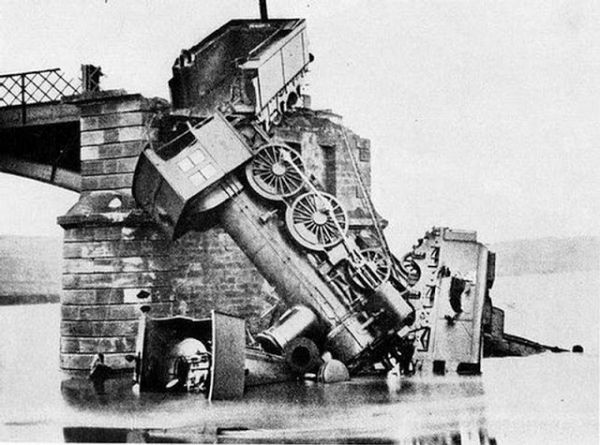
What a train wreck. There is really no way to dig into the thousands, maybe millions, of words that the mainstream press poured out over the weekend in coverage of President Donald Trump's rushed, flawed executive order creating a temporary ban on most refugees from lands racked by conflicts with radicalized forms of Islam.

My main question, in this post, does not concern the merits of order or the process that created it. That's clearly part of the train wreck and, as someone who was openly #NeverTrump (and #NeverHillary), I think mainstream reporters should go after that mess that with the same fervor they dedicated to the humanitarian impact of the previous administration's policies in Syria, Iraq, etc. We need to know who decided to rollout such a important executive order in such a slapdash, incompetent fashion -- especially whatever it did or didn't say about people in transit or those with green cards.

Now, I would like to focus on one question in particular related to this journalistic blitz that I think will be of special interest to GetReligion readers.

The hashtag for the day was clearly #MuslimBan, even though the order contained language specifically trying to protect many oppressed Muslims. The media also focused on Trump's statements pledging to protect oppressed Christians (I know it's hard to #IgnoreTrump, even when it's wise to do so), even though the text of the order said something else.

My question: Did journalists make this tragic crisis worse by ignoring or mangling some key contents of this order? Following the action on Twitter, it seemed that there are two stances on that.

The first was from Trump critics on the left, which included almost all elite media. It said: The news coverage of the executive order was fine. We all know what Trump meant, no matter what the order's words said. So there.

The second -- with very few exceptions -- was among conservative Trump critics (click here for essential National Review essay by #NeverTrump stalwart David French). I said: The EO was messed up and flawed, but press didn't help by ignoring the order's content. This, along with Trump sloppiness and ego, helped add to the panic and added to the firestorm that hurt real people.

It certainly did appear that, in many cases, panicky police and immigration officials acted like they were enforcing what press reports said the executive order said, rather than the text of the order (which was rushed out in a crazed, flawed manner). I hope there is follow-up coverage on that issue.

So, when considering these questions, what is the key passage of the #MuslimBan order?

Please respect our Commenting Policy

Flashback: Where did term 'opposition' come from in Trump vs. @NYTimes war?

Flashback: Where did term 'opposition' come from in Trump vs. @NYTimes war?

Believe it or not, we did get a "Crossroads" podcast recorded late this week, even as I keep fighting a sick-unto-death virus that I obtained on Capitol Hill in Washington D.C. at midweek. I've been sleeping, oh, about 16 hours a day.

Yes, I can follow Twitter some while laying on my back with my glasses perched on my nose. What I have been reading has only made me more and more furious.

Right, back to the podcast. Please click here to tune that in. You will probably be able to hear that I am under the weather in the recording. You will also hear that, for some strange reason (I blame fury and delirium), that I kept putting an "i" sound in the last name of Donald Trump's media-bating pro Stephen K. Bannon -- as in "Bannion." Mea culpa

The podcast focuses on the question of whether many elite journalists have reached the point that they simply not willing to listen to what Trump is saying (yes, it's often incoherent) or even to the factual details in the documents spelling out some of this actions. At the same time, we recorded as the annual March For Life was unfolding and it was clear that some media outlets had poured on the coverage (think The Washington Post), while others had done next to nothing with live work.

So, is the media listening? Do some elite journalists want to listen? Or, to use the Bannon phrase adopted (see video up top) by Trump, are The New York Times and other powerhouse news organizations now functioning as the clearly non-loyal opposition (after eight years of near worship for the previous president)?

Let's back up and look at two things one more time. First, what did Bannon tell the Times, once again?

“I want you to quote this,” Mr. Bannon added. “The media here is the opposition party. They don’t understand this country. They still do not understand why Donald Trump is the president of the United States.”

I do wonder what the word "here" means in that quote, as in "the media here is the opposition party." Is that D.C.? The Acela zone?

But where did Bannon get this idea that the Times, in particular, would fill that oppositional role so openly?


Please respect our Commenting Policy

Just listen for a while: What Spayd said @NYTimes. OK, even what Bannon said ...

For the past several days, I have been in transit from New York to Baltimore to Washington, D.C., and finally home -- all while getting sick as a dog, as we would say in East Tennessee. So I confess that I'm a bit out of touch, when it comes to what's been happening in news and social media.

But let me try to pull things together from my fevered point of view. It seems the hot media items have something to do with President Donald Trump's bluster-maestro Stephen K. Bannon saying something about America's elite media needing to "shut up" and/or do some listening. In fact, if you search for "Bannon," "mouth" and "shut" right now on Google News you get a mere 238,000 hits.

Oh my. What did this man actually say to The New York Times

“The media should be embarrassed and humiliated and keep its mouth shut and just listen for a while,” Mr. Bannon said in an interview on Wednesday.
“I want you to quote this,” Mr. Bannon added. “The media here is the opposition party. They don’t understand this country. They still do not understand why Donald Trump is the president of the United States.”

Oh my, again. Never use a flyswatter when a baseball bat will do. But let's assume that this quote should not be read with the kind of hyper-literalism the Times team would be tempted to call "fundamentalism" in another context. (As usual, turn to M.Z. "GetReligionista emerita" Hemingway at The Federalist for a stunning summary of the online storm.)

Instead of jumping straight to the nuclear option -- Trump aide tells press to shut *$^@#*+ up (some of that was implied, to be sure) -- I think it's possible that the actual content of that quote could better be stated as: "The media should be embarrassed and humiliated and keep its mouth shut for a while and just listen."

Right, right. All I did was move the words "for a while." I think that's what Bannon meant, since everyone knows that the press -- when it comes to listening to Americans on tense topics such as politics, culture and, YES, religion -- is supposed to be listening all the time. I think that's an essential part of their job. 

Is the actual content of this acidic Bannon comment radically different than what ordinary readers said in letters to Times Public Editor Liz Spayd in the hours after Trump won the White House race? Let's flash back to that, while remembering (hello editor Dean Baquet) that discussions of this kind, at the Times and in other elite newsrooms, often include references to the need to "get religion."


Please respect our Commenting Policy

Religion news on TV: A not-quite post mortem on Religion & Ethics Newsweekly

Late last year, a story broke about the impending demise of Religion & Ethics Newsweekly, the almost 20-year-old PBS show that is unique in American journalism. No other network has mounted such an ambitious effort to cover faith and ethics with Washington-based talent and staff.

Those of us on the religion beat were amazed when the show began in September 1997. Imagine, a TV news magazine about ethics (unheard of) and religion (nearly unheard of). Instead of the obnoxious religious TV that constantly hit you up for contributions, R&E had enough funding from the Lilly Endowment to keep those telephones quiet. WNET, whose head office is in New York, produced the show and PBS distributed it.

It also had star power behind it in the person of Bob Abernethy, a widely traveled NBC news correspondent who in his retirement years (age 69) started the show. The show set up shop in offices on H Street, borrowed studio space from Reuters and took off.

Religion News Service told us how it’s all ending two decades later:


Please respect our Commenting Policy

'They say the press doesn't cover them': Trump weighs in on March for Life

Friday's March for Life is gonna be yuuuuuge.

President Donald Trump said so.

In an interview with ABC News' David Muir, Trump was asked about last weekend's Women's March on Washington: 

"I couldn’t hear them, but the crowds were large," Trump responded. "You’re gonna have a large crowd on Friday, too, which is mostly pro-life people. You’re gonna have a lot of people coming on Friday, and I will say this, and I didn’t realize this, but I was told, you will have a very large crowd of people. I don’t know – as large or larger – some people say it’s gonna be larger. Pro-life people. And they say the press doesn’t cover them."

The newly inaugurated president obviously hasn't spent enough time reading GetReligion — or he would be better informed on the longstanding and indisputable problem of news coverage heavily favoring the pro-choice side. Specifically regarding the March for Life, our archive is filled with posts on the (lack of) coverage.

But guess what? The Trump effect already seems to be making a difference. First, the Dow Jones industrial average closes above 20,000 for the first time. Then — the morning after Trump mentions the March for Life on ABC — the annual pro-life march makes the front page of today's Washington Post:


Please respect our Commenting Policy

Surprise! Pro-life women planning to join March for Life get front-page news coverage

Hey, this is a surprise.

Pro-life women planning to join this week's March for Life in Washington, D.C., got front-page news coverage in the Detroit Free Press.

Why's it a surprise?

If you're a regular GetReligion reader, you don't need to ask: We've pointed out a time or two — or a thousand — that news stories heavily favoring the pro-choice side are a longstanding and indisputable problem. If you somehow missed it previously, check out the classic 1990 Los Angeles Times series — written by the late David Shaw — that exposed rampant news media bias against abortion opponents. 

So yes, it's unusual to see a Page 1 story in a major metropolitan daily that focuses on the perspective of the pro-life side. But that's exactly what the Free Press provides — quoting five pro-life advocates, including four women. (Amazingly, this is my second post in the last week-plus praising a mainstream news story on the abortion issue.)

Back to the Detroit story: Let's start with the lede:

While millions of women marched last weekend for equal rights around the world, many others sat on the sidelines.
They felt excluded from the Women's March on Washington because of one tenet: Its pro-abortion rights platform.
But this week, it's their turn.

The wording of the next paragraph gives me a little pause. But maybe it's just me:


Please respect our Commenting Policy

Why you can buy a beer in North Dakota on Sunday morning but not a belt at Wal-Mart

On a reporting trip to North Dakota last year, I woke up bright and early Sunday and enjoyed a not-so-healthy breakfast at McDonald's.

When I finished eating, I had an hour to kill before services at the Bismarck church I was covering for The Christian Chronicle. Since I was driving that afternoon to Black Hills Bible Camp in South Dakota, I decided to visit the closest Wal-Mart. I needed to buy a few snacks and supplies.

But when I got to the Wal-Mart — which looked just like the 24-hour supercenter near my home in Oklahoma City — I found the parking lot strangely empty. Even odder, the store's automatic doors refused to open for me. Weird, I thought.

However, Google Maps quickly located a Super Target just down the street. I discovered that it, too, was closed.

I was reminded of my experience when The Associated Press reported this week that North Dakota is debating whether to lift its Sunday morning shopping ban.

Of course, there's a strong religion angle — and kudos to AP for stressing it:

BISMARCK, N.D. (AP) — North Dakota residents can order alcohol at a restaurant or bar late Sunday morning but must wait until afternoon to go shopping because of a ban — rooted in religious tradition — that some legislators say no longer makes much sense.
Critics of the nation's strictest so-called blue law began another effort Monday to strip it from the books. Some such restrictions have existed since North Dakota became a state in 1889, stemming from fears that visiting a retail store on Sunday morning would compete with church and erode family values, leaving little time for rest.
"I'm annoyed that I have to wait until Sunday afternoon to shop," said Fargo Democratic Rep. Pam Anderson, who has introduced legislation that would abolish the shopping restrictions. She said ending the prohibition would add tax revenue for the state and provide more employment opportunities.
A House committee began mulling the bill on Monday but took no immediate action. Anderson called it a "falsehood" that allowing Sunday morning sales would impact the number of people in the pews.

I'm not certain the politician seeking the law's repeal is the best source to assess whether Sunday morning sales would hurt church attendance.


Please respect our Commenting Policy

Are Bible classes in public schools constitutional? The answer is complicated

I don't have a real problem with The Associated Press' coverage of a religion-related federal lawsuit filed against a West Virginia school district.

I mean, it's a threadbare account — roughly 400 words — but that's typical of AP news these days. At least this one makes an attempt to present both sides. 

However, the story does — IMHO — raise more questions than it answers. I'll elaborate below.

First, though, here's the lede:

MORGANTOWN, W.Va. (AP) — A kindergartner's mother sued her public school system in West Virginia, saying a 75-year practice of putting kids in Bible classes violates the U.S. and state constitutions.
The woman, identified as "Jane Doe" in the federal lawsuit backed by the Freedom From Religion Foundation, said her child will be forced either to take these weekly classes at her Mercer County elementary school or face ostracism as one of the few children who don't.
"This program advances and endorses one religion, improperly entangles public schools in religious affairs, and violates the personal consciences of nonreligious and non-Christian parents and students," the suit said.
The school district said the courses are voluntary electives.

GetReligion readers are, of course, familiar with the agenda of the Freedom From Religion Foundation. It's no surprise at all that the organization has an issue with teaching the Bible in public schools.

But does that make the courses unconstitutional? Not necessarily.


Please respect our Commenting Policy

As Democratic support for Israel wanes, will American Jews abandon their political home?

Buried in a new Pew Research Center poll on a broad-range of American political concerns is a finding that has the potential to radically scramble American Jewry's long association with the Democratic Party. Not surprisingly, the lightning-rod Israeli-Palestinian conflict is at the root of this.

The finding? For the first time, it appears that Americans who are registered Democrats are as statistically likely to favor the Palestinians as they are Israel.

Ladies and gentleman, this is potentially big news -- assuming the polling is accurate.

Not because of the small number of Jewish voters who exist on a national scale relative to the overall number of registered American voters (Jews account for only about 2 percent of the entire American population).

But because of what this could mean for Jewish campaign contributions, Jewish political activism and Jewish voting in future presidential, congressional and other contests in New York, California, Florida and other states with large Jewish concentrations. (I'm referring here to non-Orthodox Jews; the 10 percent of so of American Jews who identify as Orthodox already largely support Republican politicians.) 

Political reporters at mainstream American news outlets, as far as I can tell, paid comparatively little initial attention to the survey finding. I suspect this is because of the avalanche of stories they've been producing on the outgoing Obama presidency and the incoming Trump administration.

Even Israeli and American Jewish outlets initially paid less attention to the Pew finding than I would have imagined, probably for the same reason cited just above.

Hey, religion reporters. Why not pick up the slack?


Please respect our Commenting Policy