Journalism

Global warming: Media rush to interpret what pope says, even before he says it (Updated)

You may have heard of a spinning storm like Tropical Storm Bill -- but have you ever seen the spin before the storm?

You have if you’ve read much about Pope Francis' encyclical on the environment. It hasn't even come out yet -- it's scheduled to be released today -- but already, tongues are waggin' and tweets are twittering.

Laudato Sii, or "Praised Be," is supposed to balance reflections on science, economics and compassion for the poor surrounding climate change. But the message is already in danger of being drowned out by spin doctors, both liberal and conservative -- and anger over media that leaked a version of the document.

Among the cheerleaders is the Los Angeles Times' breathless advance piece. The story throws a bone to conservatives who think the encyclical could "roil the American presidential race by injecting religion into the already contentious politics of global warming." But all the direct quotes go to liberals who applaud what they think Francis is about to say (remember, the letter hasn't even come out yet!).

And the newspaper's own attitude is evident from this:

Viewed by some as a bold act by the pope to sway opinion on a controversial issue, the encyclical in many ways reflects a movement that has been growing for decades, sometimes on the margins, with some Catholic and Christian academics and individual church leaders and congregations increasingly making “creation care” a theological pursuit and a central ministry. In some cases, the approach has helped churches reconnect with people who felt Catholicism and other denominations had become too concerned with divisive cultural issues such as abortion and same-sex marriage. Many of those groups believe they have a formidable new ally.

Reuters chimes in, saying how "keenly awaited" has been the encyclical, which is "destined to become a signature document of his papacy."

Reuters puts Francis on the side of the angels, aka scientists:

Please respect our Commenting Policy

An important new Jewish resource, with something important missing

An important new Jewish resource, with something important missing

In a poignant New York Times Book Review piece, Leon Wieseltier said our hyper-networked culture creates journalism "in which words cannot wait for thoughts, and first responses are promoted into best responses, and patience is a professional liability." And yet the Religion Guy insists that those covering our complex field must write on reflective, bookish themes, and thus passes along three tips that helped his career: obtaining a master's degree in religion (slogging through night classes while working full-time), trying to read a book per week, and investing in key reference works not available in newsrooms.
 
On the third point, note the valuable second edition of "The Jewish Study Bible" from Oxford University Press, which is about all you need to know given that publisher's reputation.

Why did a rewrite seem necessary a mere 10 years after the acclaimed first edition? The preface explains that Bible scholarship is "ever-changing." All 24 essays on Bible interpretation are new or revised, as are many annotations printed alongside the Jewish Publication Society's 1999 Bible text.
 
Chief editors Adele Berlin (University of Maryland) and Marc Zvi Brettler (Brandeis University) report that "Jewish participation in mainstream biblical scholarship" with its "critical approaches" only really took off in the 1960s. They say even during this past decade Jews have become more sophisticated about "how the Bible came to be," the "many voices reflected (or suppressed)" in Scripture, and what later editors "imposed on" prior biblical materials.

The new edition shows journalists the ways liberal Protestant and secular thought is reshaping Judaism.


Please respect our Commenting Policy

RIP John S. Carroll: Author of classic memo defending old-school, balanced journalism

The late John S. Carroll was known, among American journalists, as a strong advocate of investigative journalism, a famous Vietnam War correspondent, a White House beat reporter, a great headline writer and, in the end, a man who was willing to be shown the exit door at The Los Angeles Times rather than obey a Tribune Co. order to radically cut his staff.

Carroll was an old-school American journalist, by all accounts, who led The Baltimore Sun before heading to Los Angeles. He also spent time as the metro editor at The Philadelphia Inquirer, among his many jobs in the top ranks of his craft.

The Sun began its obituary like this:

John S. Carroll, former editor of The Baltimore Sun and The Los Angeles Times who became a seminal figure in American journalism and operated on the principle that no detail was too small when it came to producing a great newspaper, died Sunday at his Lexington, Ky., home of a rare, non-treatable disease. Mr. Carroll was 73.

Here at GetReligion, however, Carroll is remembered for another reason -- one that I should have mentioned 11 years ago in our "What we do, why we do it" overture on Day 1. It was Carroll who, in 2003, wrote a memo to his staff about media bias that inspired me to start thinking about creating a site about the mainstream press and its struggle to, well, "get religion."

The memo -- dated May 22, 2003 -- focused on the editor's concerns about media bias in a Los Angeles Times story focusing on debates about alleged links between induced abortions and breast cancer. Carroll sent the memo to his section editors, but the full text soon surfaced in The LA Observer. Here is the heart of the letter.

The apparent bias of the writer and/or the desk reveals itself in the third paragraph, which characterizes such bills in Texas and elsewhere as requiring "so-called counseling of patients." I don't think people on the anti-abortion side would consider it "so-called," a phrase that is loaded with derision. 


Please respect our Commenting Policy

Again, it's religious liberty vs. gay rights as Christian disc jockey refuses to work gay man's birthday party

Here we go again.

Once again, a case of religious liberty clashing with gay rights is making national news.

The Washington Post reports:

First there was the New Mexico wedding photographer. Then there was the Indiana pizza maker. Now there is the Maryland disc jockey.
The national debate about how to balance religious conscience protections and gay equality flared in the large, mostly liberal Washington, D.C., suburb of Montgomery County Friday, when Dani Tsakounis tried to help her brother hire Ultrasound Deejays for a party. An owner of the business told Tsakounis he would not provide the DJ because Tsakounis’s brother, a Silver Spring therapist, is married to another man and the birthday party they are hosting is for their 60-year-old roommate, who is also gay.
“I just said, ‘We won’t be able to do it, we’re a Christian organization and it would go against our faith, I’m sorry,’” Michael Lampiris, co-owner of Ultrasound Deejays, said Friday.

Tom Tsakounis, 46, was so upset when his sister told him that he posted the news on his neighborhood listserv, prompting calls of sympathy from neighbors. He also registered a complaint with the Montgomery County Human Rights Commission, which hears cases of alleged discrimination.

Maryland state law has banned discrimination based on sexual orientation in public accommodation — which includes businesses “offering goods, services, entertainment” the law says — since 2001. But the question of whether such laws infringe on the rights of religious conservatives, however, has received increased attention as more gay equality advocates have stepped up to file complaints and religious conservatives have argued that their conscience rights are being violated.

I like that lede, although I can't help but wonder: What about the Washington state florist? Or the Oregon baker? Or if you want your same-sex wedding cake war in a different state ... the Colorado baker? 

But I digress.


Please respect our Commenting Policy

War on terrorism: U.S. soft-pedals the religion angle; so does the New York Times

The New York Times, as I noted in February, has been running ahead of the pack on the international effort to fight terrorism on the digital front. But the newspaper has yet to call out the religious ghosts in its own reporting.

"ISIS is Winning the Social Media War," says the latest Times headline on the matter. "The Islamic State’s violent narrative — promulgated through thousands of messages each day — has effectively 'trumped' the efforts of some of the world’s richest and most technologically advanced nations," the article reports.

Based largely on a U.S. State Department memo, the story presents an image of an efficient, united online jihad outgunning a disjointed international counterattack. Says the Times:

A “messaging working group” of officials from the United States, Britain and the United Arab Emirates, the memo says, “has not really come together.”
“The U.A.E. is reticent, the Brits are overeager, and the working group structure is confusing,” the memo says. “When we convened meetings with our counterparts, I am certain we all heard about various initiatives for the first time.”

As the article adds, the confusion has had real-world consequences, with the recent fall of Ramadi and ISIS' continuing occupation of Mosul and Falluja.

Apparently, only two new ideas have been floated since February, both by Under Secretary of State Richard Stengel, author of the memo. Stengel urges a conference of merchants to shun trafficking in the kind of antiques ISIS is selling from wrecking and looting historic sites in Iraq and Syria.


Please respect our Commenting Policy

Arizona Republic examines evil through the eyes of a victim of violence

The mystery of evil may be a religious concept, but it's still the focus of many anguished essays. The Arizona Republic brings the question horrifically home via an interview with a priest who was scheduled to say a requiem Mass last night for a fellow cleric.

Both men, fathers Joseph Terra and Kenneth Walker, were attacked a year ago -- in the ironically named Mother of Mercy Mission in Phoenix -- when Terra opened the door of their rectory. He was beaten suddenly and savagely with an iron rod, with the side of his face smashed and a finger mangled. His friend Walker (the subject of this tmatt column a year ago) was shot fatally.

The suspect, ex-convict Gary Michael Moran, is mentioned only briefly in this new article; he was picked up after he boasted about beating and robbing a priest, the Republic says. Nearly all the focus is on Terra: how he's healing, physically and emotionally, and how he carries on after what happened.

The brutal incident has, of course, sharpened for Terra some classic Christian themes like theodicy, forgiveness, redemption and grace. Still, the Republic says, he sat down for an interview only reluctantly, with spare sentences, carefully choosing words, "guarding his emotions." But he gradually opened up on his memories of that night and his thoughts about living the ideals he preaches.

The Republic cites Terra on forgiveness, but without the facile, high-minded way that many media treat the topic.


Please respect our Commenting Policy

Was there a religion ghost in the life and haunted film career of Sir Christopher Lee?

Sir Christopher Lee was not able to attend the New York City press events held just before the 2002 release of "The Lord of the Rings: The Two Towers," but it sure seemed like he was there, based on the number of times members of the cast and creative team made references to him.

There were members of Peter Jackson's team -- especially co-writer Philippa Boyens -- who knew the fine details of J.R.R. Tolkien's worldview and masterwork, including the ways in which his Catholic faith influenced its symbols and substance. In one famous quote, the author called the trilogy a "fundamentally religious and Catholic work."

However, various members of the team agreed that Lee was, in many ways, the official keeper of the Tolkien flame during the filming, the person whose knowledge and love of the books made him care, fiercely, about getting key details right so that the spirit of the books would soak into the movies. Several people said that they thought Lee was, himself, a Catholic.

Was Lee a believer and, if so, of what stripe? I thought that this detail might surface in the obituaries over the past day or so, but apparently journalists were not interested in the role that explorations of good and evil -- incarnate evil, especially -- played in his life and work. Alas, this didn't happen.

Now I really regret that he wasn't at those NYC round-table interviews. What did Lee say years earlier? I'll come back to that.


Please respect our Commenting Policy

Hey New York Times: Is North Carolina law really about 'curtailing same-sex unions,' or is religious freedom the issue?

The New York Times reports that North Carolina lawmakers passed a measure Thursday "aimed at curtailing same-sex unions."

Here's my pesky question for the Times: Can you provide any facts — any facts at all — to back up that claim?

Or is this new state law — as the supporters claim — about protecting religious freedom?

To give a little background, you'll recall that the Times previously ventured down to North Carolina and provided mediocre coverage on what it labeled "so-called religious freedom bills."

This is the lede on the latest story:

DURHAM, N.C. — Defying the governor, lawmakers on Thursday enacted a law that allows state court officials to refuse to perform a marriage if they have a “sincerely held religious objection,” a measure aimed at curtailing same-sex unions.


Please respect our Commenting Policy

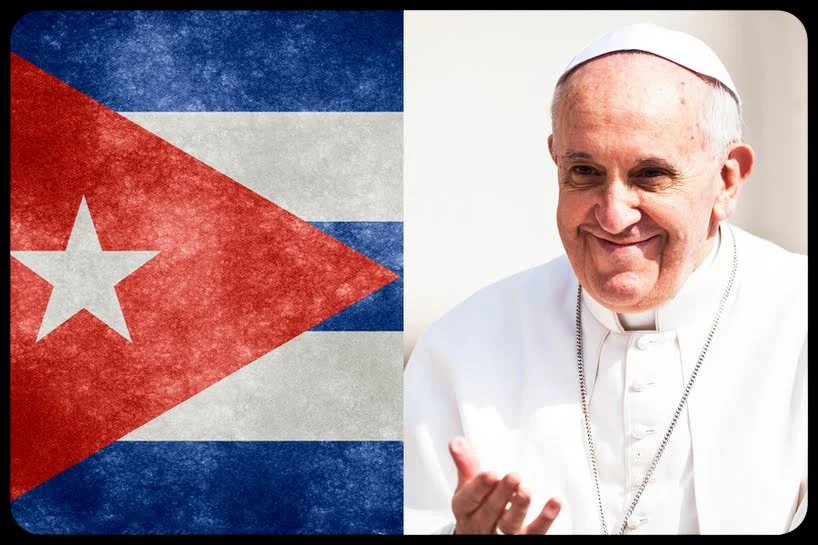
Religion in Cuba ahead of visit by Pope Francis: Think politics, politics, politics

Religion in Cuba ahead of visit by Pope Francis: Think politics, politics, politics

My fascination with Cuba began in my late teens when I discovered traditional Cuban dance music, which I much preferred to the bubble-gum rock that had supplanted the doo-wop sound, my first musical love. My friends and I -- middle class Jewish guys from New York City's outer boroughs -- referred to the music as "Latin;" today it's know as "salsa," a catch-all term that fails miserably, as did Latin, to do justice to the many musical forms that comprise the rhythmic complexity of the Cuban musical palate.

By the early 1960s, we were regulars on the New York Latin dance scene. One of our wider circle actually become one of salsa's biggest stars. That would be Larry Harlow, nicknamed El Judeo Maravilloso (the Marvelous Jew), who began life as Lawrence Ira Kahn. Go figure.

Our access to the music was greatly, if inadvertently, facilitated by Fidel Castro, who's revolutionary success in 1959 prompted many of Cuba's greatest musicians to flee to the U.S. for the artistic freedom that trumped any revolutionary zeal they harbored. 

I got to Cuba in 1998 to cover the visit of Pope John Paul II and I hope to return there later this year or next with three high school-era friends for a bucket-list musical tour of the island nation. In the meantime, I read all I can about contemporary Cuba, including this recent Washington Post piece that touted what was called a Cuban religious resurgence.

Here's a few graphs that convey the news feature's central point:


Please respect our Commenting Policy