Islam-Muslims

Snip, snip? The symbolic clout of Sikh man nodding approval for (a) Trump or (b) Schumer

Anyone who knows anything about America in the past half century or so knows that we live in a culture that is increasingly dominated by visual images and the emotions they produce.

Images were crucial as modern print journalism evolved. It goes without saying that images are crucial in visual storytelling in television, past and present. 

Today? While words matter in social media, nothing grabs people quite like that punchy, ironic, cute, infuriating or poignant image that seems to sum up (a) whatever is happening in the real world at the moment or (b) whatever we are consuming in order to be able to ignore whatever is happening in the real world at the moment.

Thus, a former GetReligionista sent the current team an email the other day -- with the simple headline, "Hmmmm" -- containing the item at the top of this post.

What's the point? The question has been asked many times: Why do so many people get confused and think that Sikhs are Muslims? Is there something compelling about the Sikh turban (the dastaar) that makes journalists think "foreign," "exotic," maybe "Arab" and, thus, "Muslim" or someone who would be accused of being a "Muslim terrorist"?

Ah, but the turban is VISUAL and it all but screams "diversity," "other world religions" and "multiculturalism."

At the moment, is the whole point -- in terms of journalism shorthand -- that a Sikh believer looks like the kind of man that the angry, fact-challenged, Islamophobic Donald Trump voter is supposed to want to (a) beat up and then (b) accuse of being a "Muslim" terrorist? 

Well, a few key facts are all wrong. But, hey, the point is to make a point. Right?

Please respect our Commenting Policy

Weekend of #MuslimBan: Did it help for press to ignore key contents of executive order?

Weekend of #MuslimBan: Did it help for press to ignore key contents of executive order?

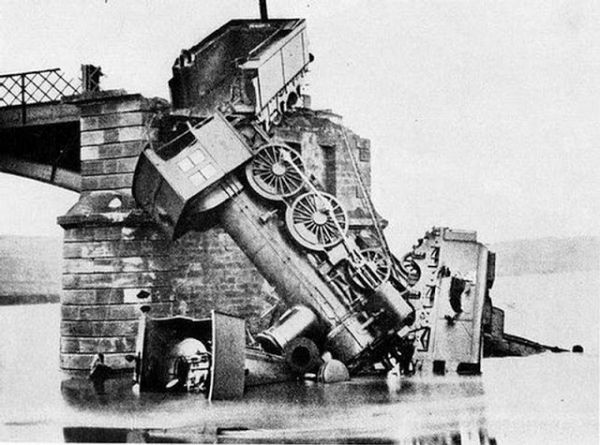
What a train wreck. There is really no way to dig into the thousands, maybe millions, of words that the mainstream press poured out over the weekend in coverage of President Donald Trump's rushed, flawed executive order creating a temporary ban on most refugees from lands racked by conflicts with radicalized forms of Islam.

My main question, in this post, does not concern the merits of order or the process that created it. That's clearly part of the train wreck and, as someone who was openly #NeverTrump (and #NeverHillary), I think mainstream reporters should go after that mess that with the same fervor they dedicated to the humanitarian impact of the previous administration's policies in Syria, Iraq, etc. We need to know who decided to rollout such a important executive order in such a slapdash, incompetent fashion -- especially whatever it did or didn't say about people in transit or those with green cards.

Now, I would like to focus on one question in particular related to this journalistic blitz that I think will be of special interest to GetReligion readers.

The hashtag for the day was clearly #MuslimBan, even though the order contained language specifically trying to protect many oppressed Muslims. The media also focused on Trump's statements pledging to protect oppressed Christians (I know it's hard to #IgnoreTrump, even when it's wise to do so), even though the text of the order said something else.

My question: Did journalists make this tragic crisis worse by ignoring or mangling some key contents of this order? Following the action on Twitter, it seemed that there are two stances on that.

The first was from Trump critics on the left, which included almost all elite media. It said: The news coverage of the executive order was fine. We all know what Trump meant, no matter what the order's words said. So there.

The second -- with very few exceptions -- was among conservative Trump critics (click here for essential National Review essay by #NeverTrump stalwart David French). I said: The EO was messed up and flawed, but press didn't help by ignoring the order's content. This, along with Trump sloppiness and ego, helped add to the panic and added to the firestorm that hurt real people.

It certainly did appear that, in many cases, panicky police and immigration officials acted like they were enforcing what press reports said the executive order said, rather than the text of the order (which was rushed out in a crazed, flawed manner). I hope there is follow-up coverage on that issue.

So, when considering these questions, what is the key passage of the #MuslimBan order?


Please respect our Commenting Policy

As it turns out, hijabs were the most obvious religion issue in Women's March

By now we’ve all heard about the Women’s March on Saturday that caused millions of pink-clad people to take to the streets around the world, even in Antarctica. (Even more impressive were the 2,000 people marching in -50º weather in Fairbanks. Now that’s dedication).

But where did faith fit in? Before the event, Religion News Service had a columnist assemble “a Christian packing list” for the march. Jewish Telegraphic Agency did a walk-up describing where two Jewish groups will organize and meet. 

On the day of the March, RNS had two people survey the religious women to be found on the mall, all of them with the religious left. Buzzfeed followed pro-life women and documented the less-than-enthusiastic reception they got. (I wrote about the controversy surrounding them last week.)

The lone mention about religion from the actual speakers at the Washington March was documented by New York Magazine, which broadcast a quote from Janelle Monae (in the above video) who plays mathematician Mary Jackson in the movie “Hidden Figures.”

Janelle Monáe started her speech at the Women’s March on Washington today with a history lesson. “I wanna remind you that it was woman that gave you Dr. Martin Luther King Jr,” she said. “It was woman that gave you Malcolm X. And according to the Bible, it was a woman that gave you Jesus.”

But the big religion topic that most media missed had to do with how one of the major symbols for the event was a woman swathed in an American flag wrapped to look like a hijab.

This intriguing column in the New York Times dealt with the March disintegrating into “a grab-bag of competing victimhood narratives and individualist identities jostling for most-oppressed status.” The writer wondered why Muslim women were one of the oppressed classes named in the “Guiding Vision and Definition Principles of the March” when Jewish and Latino women weren’t mentioned at all. Her explanation:


Please respect our Commenting Policy

Define 'radical Islam,' please: Is this a candidate for 'scare quote' status? Really?

If you have read GetReligion.org for any time at all, you are probably familiar with the whole idea of "scare quotes."

Actually, I would assume that this piece of media jargon is now in common in just about any setting in which critics, news consumers and journalists argue about issues linked to news coverage and, especially, media bias.

So what does the term mean and what, on this day, does it have to do with discussions of "radical" forms of Islam? Wait. You see the quote marks that are framing the word "radical"?

Here is one online definition of this term:

scare quotes -- noun
quotation marks used around a word or phrase when they are not required, thereby eliciting attention or doubts.

For example, this online dictionary notes that, "putting the term 'global warming' in scare quotes serves to subtly cast doubt on the reality of such a phenomenon."

Here at GetReligion, many of our discussions of scare quotes have started using them to frame a perfectly normal term in discussions of the First Amendment -- religious liberty. Religious liberty turns into "religious liberty" whenever religious traditionalists, usually in conflicts over the Sexual Revolution, attempt to defend their free speech rights, rights of freedom of association and rights to free exercise of religious beliefs.

A GetReligion reader sent me a recent piece from The Atlantic and asked if another important term in public discourse is about to be shoved into "scare quotes" territory. The double-decker headline on that piece saith:

The Coming War on ‘Radical Islam’
How Trump’s government could change America’s approach to terrorism

You knew Trump had to be involved in this somehow, right? Here is the overture, which shows the context of the question that was raised by our reader:


Please respect our Commenting Policy

What's to be learned from the religious makeup of U.S. Congress members?

What's to be learned from the religious makeup of U.S. Congress members?

On January 3 the Pew Research Center issued its biennial “Faith on the Hill” listing of the religious identifications for each member of the incoming U.S. House and Senate, using biographical data compiled by CQ Roll Call. Reporters may want to tap scholars of both religion and political science for analysis.

Coverage in the Christian Science Monitor and other media emphasizes that although religiously unaffiliated “nones” are now as much as 23 percent of the population, members of Congress are lopsidedly religious -- on paper -- with 90.7 percent identifying as Christian, close to the 94.9 percent back in 1961.

Only popular three-term Rep. Kyrsten Sinema (D-Arizona) officially has no religious affiliation, though several members are listed as “don’t know/refused,” along with many generic identities of  "nondenominational" or “Protestant unspecified.”

What’s the news significance here? After all, formal identifications often tell us little about an office-holder’s actual faith, or stance on the issues, or whether there’s a connection. Consider liberal Sonia Sotomayor, conservative Clarence Thomas and straddler Anthony Kennedy, all self-identified Catholics on the U.S. Supreme Court, or all the pro-choice Democrats who are "personally opposed" to abortion.

Sen. Bernie Sanders is counted as “Jewish,” but was probably the most secularized major presidential candidate yet. Does a “Presbyterian” legislator belong to the “mainline” Presbyterian Church (USA) or the conservative Presbyterian Church in America? Are these currently active affiliations, or mere nominal labels that reflect childhood involvement? In reality, are a particular legislator’s religious roots important in shaping policies?

It all depends.


Please respect our Commenting Policy

'Real Housewives of ISIS' on BBC gets laughs from Muslims; who'd have thunk it?

Every so often, a religion story comes along that is simply fun to read about. Such is the reporting on “Real Housewives of ISIS,” a BBC comedy spoofing the daily regimen of the women who went to Syria to become jihadi brides.

The photo with it gives you an idea of what’s to come. Four women who are fully cloaked in hijabs and body-covering black robes, stand arm-in-arm gazing at one of the women’s iPhones as she takes a selfie of them all. Another of the women is wearing a suicide vest.

Instead of wallowing in political correctness and seeking out every indignant Muslim group possible, British media stuck to the basics of a piece on religion and satire.

Here’s how The Guardian describes it:

As 23-year-old student Zarina watches Real Housewives of Isis on a phone amid the bustle of Whitechapel market in the east end of London, she puts her hand to her mouth and gasps before bursting into laughter.
On the screen a hijab-wearing character models a suicide vest for her fellow jihadi wives. “What do you think?” she asks. “Ahmed surprised me with it yesterday.” The pal reacts by excitedly posting a picture on Instagram, saying: “Hashtag OMG. Hashtag Jihadi Jane. Hashtag death to the west, ISIS emoji.”
The comedy sketch – aired this week as part of BBC2’s new comedy series Revolting – has come under fire from some viewers who have called it “morally bankrupt” and insensitive, while others have accused the BBC of making “Hijabis feel more isolated [and] targeted by Islamophobes”. Comedians, however, have said that reaction to the sketch is part of a growing culture of offence which – alongside stories that overhype the reaction – are in danger of stifling one of Britain’s most successful exports: its satire.


Please respect our Commenting Policy

Year-beginner for 2017: Sarah Pulliam Bailey, and moi, see more battles over religious liberty

Year-beginner for 2017: Sarah Pulliam Bailey, and moi, see more battles over religious liberty

Ever since the 1980s, I have been telling editors and journalists that conflicts about religious liberty were going cause some of the biggest news stories on the American horizon.

Anyone who has been reading GetReligion since 2004 knows that I've been saying that, over and over. Amen If you listen to this week's "Crossroads" podcast, looking ahead into 2017, you're going to hear more about that. No apologies.

The roots of this concern run back to my graduate-school work in Baylor University's church-state studies program, where -- in 1977-78 -- we could hear the early rumblings of what would become Bob Jones University vs. United States case.

Why is that important? Do you remember this crucial moment in the U.S. Supreme Court Obergefell debates about same-sex marriage?

JUSTICE ALITO: Well, in the Bob Jones case, the Court held that a college was not entitled to tax­ exempt status if it opposed interracial marriage or interracial dating. So would the same apply to a university or a college if it opposed same­-sex marriage?
GENERAL VERRILLI: You know, I, I don't think I can answer that question without knowing more specifics, but it's certainly going to be an issue. I, I don't deny that. I don't deny that, Justice Alito. It is, it is going to be an issue.

That's why religion-beat patriarch Richard Ostling, in his recent pair of memos looking ahead to 2017, stressed that religious-liberty cases -- linked to LGBTQ issues, again -- would remain on the front burner for major American newsrooms. Click here and then here for those two Ostling posts.

You can see the same themes again, over and over, in the recent "Acts of Faith" year-beginner piece at The Washington Post by religion writer Sarah Pulliam Bailey (yes, a former member of the GetReligion team). The headline: "Here’s what we think will be the major religion stories of 2017." Here is the overture:

The new year could be turbulent for religion in America.


Please respect our Commenting Policy

Parade of 2016 yearenders: Global stories that clicked at the Lapido Media website

Clearly, anyone who wants to understand the modern world (hello administrators at the vast majority of modern seminaries) needs to take a class or two in media literacy.

At the same time, it has become increasingly obvious that most of the journalists who manage newsrooms (hello Dean Baquet of The New York Times) need to have some kind of systematic, professional training in religious literacy.

On the other side of the Atlantic, there is an organization called Lapido Media that is working hard to build bridges to major newsrooms in the United Kingdom and beyond. The Media Project -- the continuing education umbrella project that includes GetReligion.org -- recently cooperated with Lapido Media in an effort to produce a newsroom-friendly book entitled "Religious Literacy: An Introduction." I wrote the final chapter in the book and GetReligion readers that get the book will see many links to themes at this website.

(I should also mention that the headline on the website feature about the book needs to be fixed, since this is not "the first" handbook of this kind, since the Religion News Association -- to give credit where credit is due --  has done similar booklets on this topic in the past, which evolved into the entire ReligionLink project.)

Now, the Lapido team has released an interesting set of feature stories from its website to mark the end of 2016. GetReligion readers with a special interest in global news should click here and check this out.

Some of the subjects include: 

'ISLAMIC STATE ARE MUSLIMS, THEIR DOCTRINES ISLAMIC': BBC HEAD
BBC Head of Religion, Aaqil Ahmed chose a Lapido event to clarify the BBC's use of the term 'so-called Islamic State' in our unprecedented most-read article of the year.

Also, this:


Please respect our Commenting Policy

Parade of 2016 yearenders: Crux takes several looks at surprising year in Catholic news

So how much Catholic news was there in 2016.

Apparently quite a bit, and we are not just talking about angry Catholic voters in depressed corners of the Rust Belt, as in Ohio, Pennsylvania, Michigan and Wisconsin.

Thus, the journalists in the team at Crux didn't produce one list of Catholic stories, when preparing to mark the end of 2016. They went with four lists, I think. Maybe there are more.

It won't surprise you that the ever quotable Pope Francis got one list all by himself. Of course, there's quite a bit of info linked to Amoris Laetitia and the reaction to it. 

Then there's a list of developments at the global level. This includes updates on clergy sexual abuse and the persecution of Catholics in various locations. However, the section that I think will interest most readers is the take on the role of faith in the Brexit debates, battles over the treatment of refugees and the struggle to define what is and isn't "European," in terms of thinking about the future.

Finally, there is an essay with this headline: "Looking back at 2016, the Year of Surprises: Church in the U.S." Yes, the elections get some digital ink. However, the really interesting material is related to the elections on the U.S. Conference of Catholic Bishops. Here is a long chunk of that:

... The election of Cardinal Daniel DiNardo of Galveston-Houston and Archbishop Jose Gomez of Los Angeles as president and vice-president of the United States Conference of Catholic Bishops just ten days after Trump captured the White House was also noteworthy.


Please respect our Commenting Policy