International News

Plug-In: Justice in the Tree Of Life synagogue shooting -- will killer be executed?

Plug-In: Justice in the Tree Of Life synagogue shooting -- will killer be executed?

I’m back in Oklahoma after spending big chunks of the last week in California and Texas.

This is our weekly roundup of the top headlines and best reads in the world of faith. We start with the killer’s sentence in the 2018 Tree of Life synagogue shooting.

What To Know: The Big Story

Antisemitic attack: “The man who killed 11 congregants at a Pittsburgh synagogue was formally sentenced to death Thursday, one day after a jury determined that capital punishment was appropriate for the perpetrator of the deadliest attack on Jews in U.S. history.”

That’s the lede from The Associated Press’ Peter Smith (a religion writer who has covered this case from the beginning) and Michael Rubinkam.

Painful process: Survivors characterized Robert Bowers’ trial as extremely difficult to endure and a necessary accounting, according to the New York Times’ Nicholas Bogel-Burroughs, Anna Betts and Jon Moss. The Times:

“Most families of the victims have said that they supported a death sentence, but some have been outspoken in their opposition to it. One, Miri Rabinowitz, whose husband was killed, said executing the gunman would be a “bitter irony” because her husband had been devoted to “the sanctity of life.”

What’s next: But a big question remains: When will Bowers be put to death?

An even bigger question: Will he actually be executed?

As Religion New Service’s Yonat Shimron points out, “it will take years and likely decades for the sentence to be carried out, if it happens at all.” RNS explains:

Bowers will join 41 others on federal death row. Sixteen people have been executed by the federal government since Congress reinstated capital punishment in 1988.
Please respect our Commenting Policy

Thinking about religion in Russia: Orthodox Christianity has declined, but also grown?

Thinking about religion in Russia: Orthodox Christianity has declined, but also grown?

“Religion” is a complicated word, as I have noted many times at GetReligion.

Put the word “Byzantine” in front of “religion” or “Christianity” and things get really complicated, as in this secondary definition of that adjective: “ … excessively complicated, and typically involving a great deal of administrative detail.”

Frame Byzantine Christianity with the history of Russian culture and the complications are compounded. Toss in centuries of history — complex, bloody, mysterious and sacred — shared by the Slavic giants Russia and Ukraine and, well, you get the picture.

This weekend “think piece” comes from the Orthodox Christianity news website. This is an information source that, from the American point of view, is extremely conservative. This doesn’t mean that mainstream journalists should ignore it.

Why is that? Because it consistently offers direct links to online sources — documents, speeches, quotable analysis — that the vast majority of reporters and editors would not know about otherwise. This includes, for example, lots of material representing the leadership of the Ukrainian Orthodox Church. That’s the historic church of Ukraine that is current caught up — along with millions of its Ukrainian members — in a violent collision between the regime of Russian President Vladimir Putin and Ukraine’s current government, which is backed by the United States, the European Union and the tiny, but symbolic, Orthodox church in Istanbul led by Ecumenical Patriarch Bartholomew I.

It’s easy, these days, for journalists to get government approved material from Moscow and Kyiv. The ancient Orthodox church being crushed by the two armies? Not so much. Thus, it helps to follow the Orthodox Christianity feed on X (the digital platform previously known as Twitter).

Consider the complex realities represented in this recent post: “Percentage of Orthodox is Down in Russia, but Percentage of Practicing Orthodox is up — Survey.” Read this carefully:

According to a new survey from the All-Russian Public Opinion Research Center, the overall percentage of Orthodox Christians has decreased in Russia in recent years, while the percentage of those who actively practice the faith is up.


Please respect our Commenting Policy

Catholic press, and Ross Douthat, remain must-reads during a busy Vatican summer

Catholic press, and Ross Douthat, remain must-reads during a busy Vatican summer

It should come to no surprise to any reader that we live in a polarized nation. We are separated along political partisan lines and in our own media universes.

There are those who watch and/or read Fox News on the web and consume copious amounts of information regarding President Joe Biden and his son’s alleged ties to corruption.

On the other side, the Hunter Biden is ignored. Instead, we get investigative journalism from The New York Times looking into the dealings and relationships of conservatives such as Supreme Court Justice Clarence Thomas and Florida Gov. Ron DeSantis.

This is why tmatt keeps quoting, here at GetReligion and in his national column, the opening lines of the David French book "Divided We Fall: America's Secession Threat and How to Restore Our Nation.”

"It's time for Americans to wake up to a fundamental reality: the continued unity of the United States cannot be guaranteed," wrote French. Right now, "there is not a single important cultural, religious, political, or social force that is pulling Americans together more than it is pulling us apart."

Confession: I have found it healthy and important to watch both Fox News and read The New York Times. Both are highly influential in their respective partisan bubbles. Both impact the world around us, for better or worse, and that’s of great importance in a world were journalistic objectivity is a relic of a pre-internet world.

I also like to read columnists. I like a few. Longtime Vatican observer John L. Allen, Jr., is one. J.D. Flynn over at The Pillar is another.

Yet another must-read is New York Times columnist, blogger and author Ross Douthat.

Douthat is a convert to Catholicism and often writes about the church. He is openly pro-Catholic Catechism. Thus, it is often refreshing to read Douthat because he tackles issues his own newspaper often fails to cover. I don’t know Douthat’s reading habits but I have to think he reads guys like the aforementioned Allen and Flynn.

Douthat was the target of recent criticism in the Jesuit magazine America.


Please respect our Commenting Policy

Still news? Media silent on pronouncements from World and National Councils of Churches

Still news? Media silent on pronouncements from World and National Councils of Churches

Who is listening?

Preachers face that question every weekend and it’s vital for strategizing by religious organizations -- or should be. The Religion Guy has lately been pondering a long-running religion-beat puzzle that possibly warrants some analytical articles, or at least reflection on the part of journalists.

Why do U.S. power-brokers, and journalists themselves, pay little or no heed to ardent pronouncements by the World Council of Churches (WCC) and the National Council of the Churches of Christ in the U.S.A. (NCC)? After all, the WCC says it represents 352 church bodies in 120 countries that encompass 580 million Christians. The NCC reports its 37 American member bodies include more than 30 million members in 100,000 congregations.

Last year, a Religion Guy Memo promoted media attention to the WCC’s upcoming global Assembly in Germany at the start of its 75th anniversary year. 

Journalists could not have asked for a stronger news peg. Russia’s bloody invasion of Ukraine was proceeding with hotly disputed blessings from the Moscow leaders of the Russian Orthodox Church, by far the WCC’s largest member body, which created a vast humanitarian crisis for fellow Christians in Ukraine.

(That Memo put special focus on the plight facing Metropolitan Hilarion, the Moscow patriarchate’s well-known ecumenical officer and foreign envoy. There were signals that his views on the invasion were quite different than those of Patriarch Kirill, and was soon abruptly “released from his duties” and reassigned to Hungary. Follow-up, anyone?)

The September Assembly stated that it “denounces this illegal and unjustifiable war” and (without naming Russian Orthodoxy) that delegates “reject any misuse of religious language and authority to justify armed aggression.” The meeting also called for “an immediate ceasefire” and “negotiations to secure a sustainable peace” — though at the time some critics figured that stance would undercut Ukraine’s position.

The situation facing the WCC and its Orthodox members surely counts as news, and still does.


Please respect our Commenting Policy

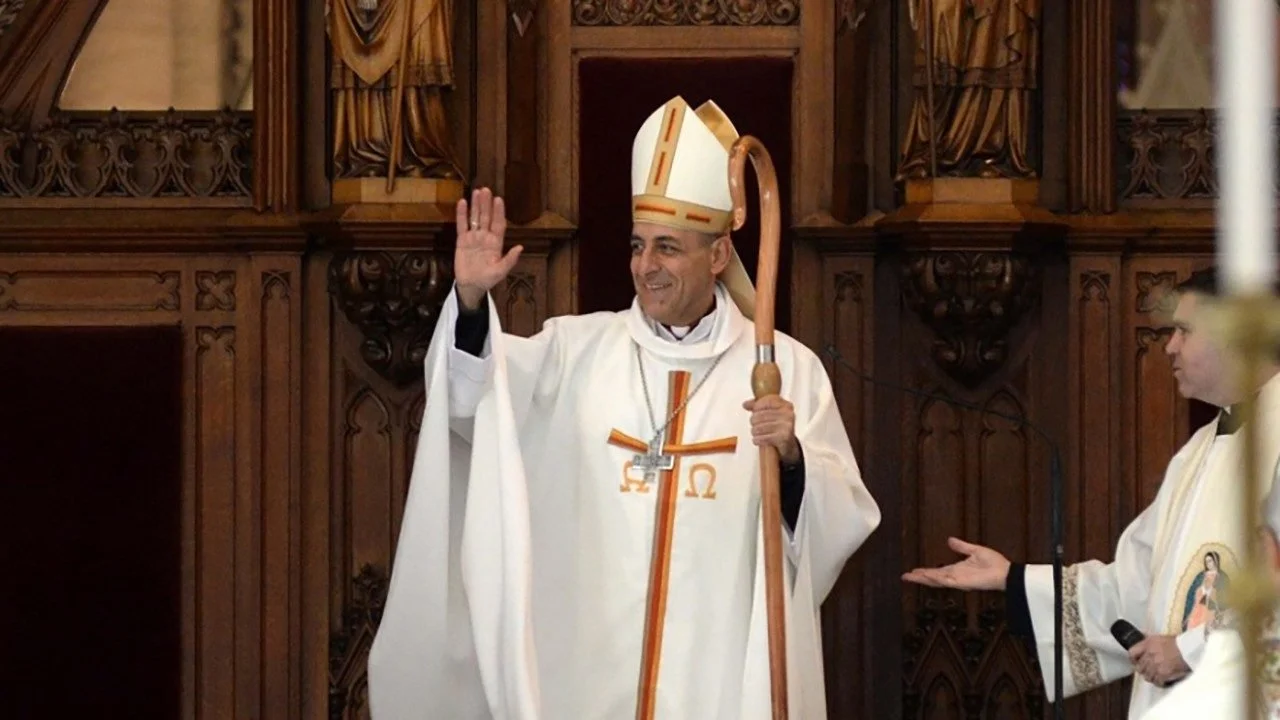
Who is Archbishop Fernandez? What is his theology? That depends on who you read in the press

Who is Archbishop Fernandez? What is his theology? That depends on who you read in the press

The doctrines that govern Catholicism have been very much in the news this summer.

This isn’t normal with the mainstream press. So, why is this the case?

This question has several answers. The Synod of Synodality, a multi-year process involving bishops and parishioners, could very well change church doctrine on a number of key issues. (See this recent tmatt post and podcast for more background.)

The second involves the pope’s recent appointment of Archbishop Víctor Manuel Fernandez as Prefect of the Dicastery for the Doctrine of the Faith.

Both are connected in that they have to do with the future direction of the church and Pope Francis’ legacy. This pontiff very much wants to leave a lasting impression on the global church, in part acting through the synod, and Cardinal-elect Fernandez could very well help shape it. Let’s face it, it has been a very busy news cycle since my last post on the media coverage (and non-coverage) of the synod.

The other major question reporters need to ask themselves is this one: Who is Archbishop Fernandez and why does any of this matter?

It depends on who you read in the Catholic press. Like a Supreme Court nominee, the man now tasked with overseeing church doctrine — and possibly making changes going forward — is seen as a controversial choice. This is especially true in contrast to the most famous recent theologian who held this post, as in Cardinal Ratzinger Joseph Ratzinger, who became the very orthodox Pope Benedict XVI.

Like Francis, Fernandez is an Argentine and soon-to-be cardinal after the pontiff announced a new consistory this past Sunday where 21 men will be given red hats on Sept. 30.

Again, why does this matter?

It matters because the cardinal who heads the Prefect of the Dicastery for the Doctrine of the Faith — an office dating back to the 1500s — wields much power and is automatically considered what Italian press calls papabile (which translates into “popeable), meaning a candidate who can be pope someday.


Please respect our Commenting Policy

After 10 years of mystery, the Orthodox shepherds of Aleppo remain missing

After 10 years of mystery, the Orthodox shepherds of Aleppo remain missing

Metropolitan Paul Yazigi had no way to know that he was about to vanish into the chaos of the Turkish-Syrian border during the violent rise of the Islamic State.

"If we want to be good children to God, then we don't thank Him only when He gives us [blessings]," he said, in one of his final sermons (translated from Arabic) before he was kidnapped on April 22, 2013.

"Also, when we are hurting, we say to Him: 'Your hand must be taking care of us, and we thank You.' …A Christian is a creature that gives thanks to God for all things one knows and doesn't know, for both the good and the hardships one faces in his life."

Sermons about faith and suffering are always timely in ancient churches.

The bishops of Aleppo, Syria -- Metropolitan Yazigi and Metropolitan Yohanna Ibrahim of the Syriac Orthodox Church -- disappeared 10 years ago while seeking the release of two kidnapped priests. Their car was surrounded by a pack of armed men, as they maneuvered through risky checkpoints near west of Aleppo. Their driver died in the gunfire, but a survivor later testified that the kidnappers were not speaking Arabic and appeared to be from Chechnya.

There were no ransom demands from the terrorists. The shepherds of Aleppo simply vanished, inspiring few headlines outside the Middle East.

The 10-year anniversary passed quietly this spring, after years of special prayers during Orthodox worship services around the world.

"I don't think anyone can assume, at this point, that they are still living. But there is a sense that we don't know enough about what happened to have a sense of closure," said Father Thomas Zain, dean of St. Nicholas Antiochian Orthodox Cathedral in Brooklyn, New York.

"It's likely that they were kidnapped in Turkish territory, which added another level of complexity to the political situation."


Please respect our Commenting Policy

Notable Muslim angle in that Wall Street Journal survey of religious changes in Africa

Notable Muslim angle in that Wall Street Journal survey of religious changes in Africa

The New York Times “Sunday Opinion” section, a consistent source of valuable news analysis by journalistic pros in its former incarnations, has oddly transmogrified by indulging in off-the-news features, self-absorbed memoirs and random social psychology musings, often running at considerable length.

By contrast, the “Review” section of the weekend edition at The Wall Street Journal’s has maintained its customary serious mix of news analyses, book reviews and snappy little running features.

In particular, the in-depth articles that lead off each Journal section have emerged as must reading. In particular, religion writers and the news consumers that follow the beat should note that the first two pages in the June 24-25 edition offered an important survey under the capitalistic headline “The Competition for Believers in Africa’s Religion Market (yes, this is behind a paywall).”

Much of the Journal scenario in this essay — written, in part, by Vatican correspondent Francis X. Rocca (who frequently covers other religion news and trends — will be familiar to those who closely follow international religion news, but The Guy will spotlight one notable news angle here regarding Islam.

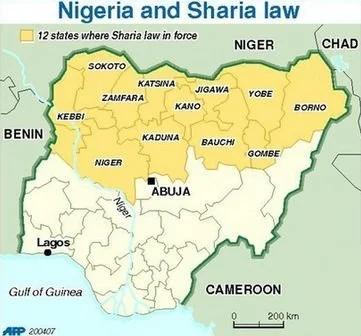
We’re told that the African continent, apart from its Muslim northern tier and south of the Sahara Desert, is “one of the world’s most active and contested religious markets.”

The Guy would amend that to say it’s clearly the single most contested market, one where shrinking indigenous faiths have given way to strong and all-too-often violent religio-political competition between Christians and Muslims.

The experts at the World Religion Database say the region had 7.4 million Christians in 1900 and is projected to have 1.3 billion by 2050, by then making up 38% of the world’s Christians. The team at the Pew Research Center figures that by 2037 the region’s Muslims will outnumber those in their religion’s historic heartland of North Africa and the Mideast.


Please respect our Commenting Policy

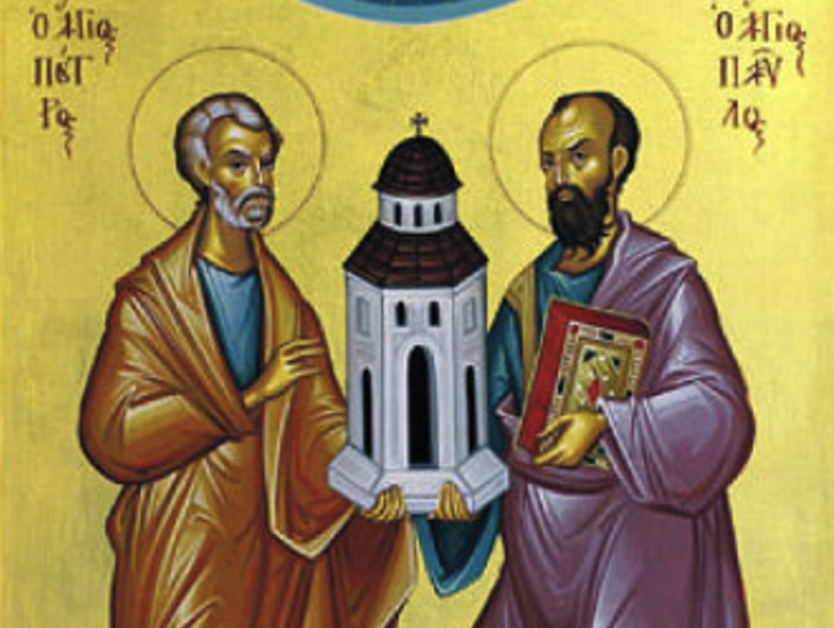
Add to newsroom calendars? Millions of Christians marked the Feast Of Sts. Peter and Paul

Add to newsroom calendars? Millions of Christians marked the Feast Of Sts. Peter and Paul

The feast day of St. Peter and St. Paul is a significant celebration on the Christian calendar, especially in the ancient churches of the East and West, because it commemorates the lives of two of the most important martyrs and leaders in all of Christian history.

However, this is not a holy day that shows up on the “must cover” list in many newsroom calendars. A quick Google News search for the past few days will demonstrate that reality.

Should that change? The annual feast is observed on June 29 and holds deep religious and historical significance for Christians around the world.

The date commemorates the death of the two saints. They are believed to be buried at the two basilicas that bear their names — St. Peter’s and St. Paul’s Outside the Walls in Rome. Through their tireless efforts and unwavering faith, Peter and Paul left an indelible mark on Christianity, shaping the faith’s foundations and spreading the message of Jesus in the world.

The feast day serves as a reminder of the enduring power of faith and the transformative impact of Christ’s message. It calls believers to emulate the courage and commitment displayed by these apostles. Their lives serve as a testament to the transformative power of encountering Christ and the call to proclaim His message of love and salvation to the world.

In recent years, it has also become — more than once — the hook for major ecumenical events involving Rome and Eastern Orthodoxy.

Here is what journalists and readers need to know about the Feast of Saints Peter and Paul:

St. Peter, also known as Simon, was one of the 12 apostles chosen by Jesus to be one of his closest followers. Catholics consider him the first pope and the founder of the church in Rome. Peter was a humble fisherman when Jesus called him to be a “fisher of men.”


Please respect our Commenting Policy

What the Italian press is reporting about the looming Vatican Synod of Synodality

What the Italian press is reporting about the looming Vatican Synod of Synodality

One of the biggest religion-beat stories of the year is currently playing out and most people are probably unaware of it, due to lack of mainstream-news updates. Maybe this story is too Catholic?

I say this because the three-year process that began in 2021 known as the Synod of Synodality is reaching its most contentious and potentially dramatic stage. I wrote back in March 2022 that the mainstream press had largely ignored the story.

This is what I wrote at the time:

A phrase like Synod on Synodality certainly won’t ever make it into a punchy headline, not even at The New York Post.

The secular press isn’t all that interested in doctrinal issues that don’t appeal to a larger audience or lack a political connection. It’s the reason why the pope going after the Latin Mass got little mainstream news attention while bishops batting President Joe Biden about receiving Holy Communion got tons of coverage. Then again, the synod will almost certainly contain strong LGBTQ news hooks.

Here we are 16 months later and the mainstream press is still largely ignoring the story. Our own tmatt had a very detailed podcast and post regarding one hook with the Synod of Synodality (#Vatican3) and the issues swirling around Cardinal Jean-Claude Hollerich’s past comments and current role, in which he will help shape synod debates about some of its most controversial issues.

Now, it’s quite interesting that the mainstream press — in the United States, at least — has largely been silent regarding a very important new synod document.

In fact, the Vatican’s release of the Instrumentum Laboris (Latin for “working document”) head of October’s Synod of Bishops makes clear that it’s “not a document of the church’s Magisterium.” The 50-page document, however, has plenty to say about the issues Pope Francis has openly discussed over the past decade regarding female deacons and gay unions.  

In Italy, mainstream-news coverage of the pope and Vatican affairs are a staple of daily coverage — akin to White House reporting in the United States.


Please respect our Commenting Policy