International News

Celebrities, monarchs, politicos, clergy and sacramental ghosts in coronation of Charles III

Celebrities, monarchs, politicos, clergy and sacramental ghosts in coronation of Charles III

If you read the main Associated Press report about the coronation of King Charles III then you know, in summary material near the top, that the rites were attended by “celebrities including Judi Dench, Emma Thompson and Lionel Richie.”

You would not, however, know that — for the first time in history — the monarch processed into Westminster Abbey behind a new Cross of Wales which, because of a recent gift from Pope Francis — contained two fragments from the “true cross” of Jesus discovered in 312 A.D. by the Empress Helen, mother of Constantine. We are talking about a relic reverenced by the early church and, ever since, by the ancient churches of East and West.

I know. It’s all about priorities. Was the coronation of Charles III a religious rite, a political ceremony or a mega-watt event in mass pop culture?

The obvious answer to this question is "Yes.” The issue, as usual, is which angle received the most accurate and informed attention in the AP report. Want to guess?

Before we go on, let me make a confession. I am, at the moment, high in the mountains of North Carolina and access to solid WiFi is, to be blunt, near zero. I drive into a small town about once day. Thus, I am going to focus on the religion details (and lack thereof) in the AP report alone — since that is what will be read by most news consumers in Middle America and elsewhere.

I will end with some questions about the rite that I have not been able to answer, questions linked to the ecumenical and interfaith content of the ceremony — details that appear to be close to the heart of the new king (background here from TheConversation website). But first, here is the overture:

LONDON (AP) — King Charles III was crowned … at Westminster Abbey, in a coronation ceremony steeped in ancient ritual and brimming with bling at a time when the monarchy is striving to remain relevant in a fractured modern Britain.

In displays of royal power straight out of the Middle Ages, Charles was presented with an orb, a sword and scepter and had the solid gold, bejeweled St. Edward’s Crown placed atop his head as he sat upon the 700-year-old oak Coronation Chair.

In front of world leaders, foreign royals, British aristocrats and stars, Charles declared: “I come not to be served but to serve.”

Please respect our Commenting Policy

Plug-In: Coronation Of King Charles III -- looking at faith in a changing Great Britain

Plug-In: Coronation Of King Charles III -- looking at faith in a changing Great Britain

Almost eight months ago, Queen Elizabeth II’s death at age 96 ended her remarkable 70 years on the British throne.

Now all eyes — billions of them anyway — turned to the coronation of her son, King Charles III.

Since this post was written late last week, consider this a pre-event round up the top headlines and best reads in the world of faith. GetReligion folks will be looking at the coverage of the event itself — if there are mainstream stories about the faith component in the rites.

What To Know: The Big Story

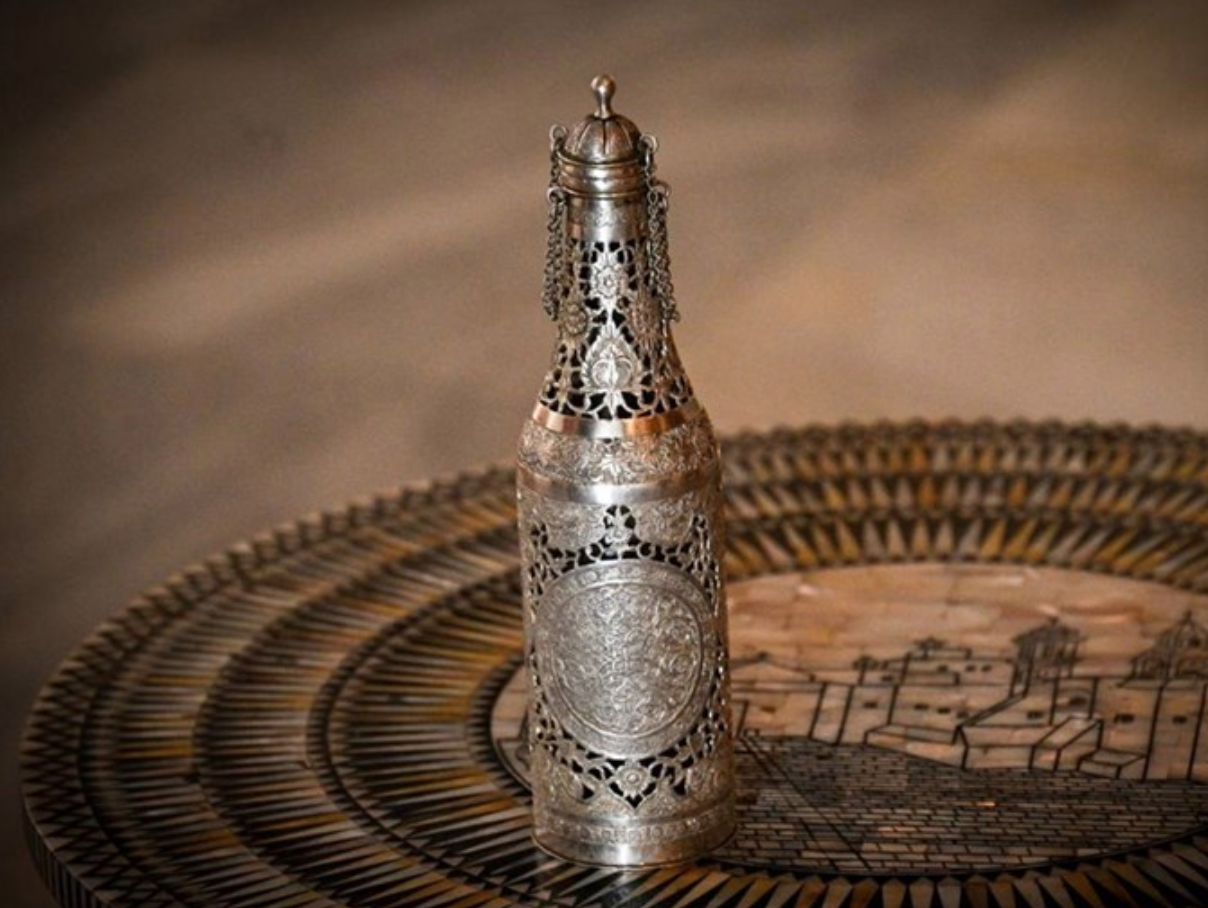
Protecting all faiths: “Prayer and contemplation will accompany pomp and celebration on Saturday when King Charles III is anointed with vegan holy oil consecrated in Jerusalem and the Archbishop of Canterbury places the St. Edward’s Crown on his head for the first time,” the Washington Times Mark A. Kellner notes.

Saturday’s coronation “will not be the ‘woke’ mash-up some conservatives feared but will be unprecedented in its inclusivity,” the Washington Post’s William Booth reports from London.

“The new king wants to present himself not only as the ‘Defender of the Faith,’ meaning the Church of England, but all faiths, here and across the realm,” the Post adds.

Emphasis on diversity: “Religious leaders representing the Buddhist, Hindu, Jewish, Muslim and Sikh traditions will for the first time play an active role in the ceremonies,” according to The Associated Press’ Danica Kirka.

More from AP:

At a time when religion is fueling tensions around the world — from Hindu nationalists in India to Jewish settlers in the West Bank and fundamentalist Christians in the United States — Charles is trying to bridge the differences between the faith groups that make up Britain’s increasingly diverse society.


Please respect our Commenting Policy

Global South Anglicans make big effort to start cutting Canterbury ties that bind (Part I)

Global South Anglicans make big effort to start cutting Canterbury ties that bind (Part I)

After a half-century of decline, the U.S. Episcopal Church has 1.5 million members, and its average weekly attendance was just above 500,000 before COVID-19 and 300,000 afterwards.

After decades of explosive growth, the Anglican Church of Nigeria claims about 18 million members (others say 8 million), and the Center for Global Christianity near Boston estimates it has 22 million active participants in worship.

Caught in the middle of these two trends is the Most Reverend Justin Welby, by Divine Providence the 105th Lord Archbishop of Canterbury, Primate of All England and the "first among equals" among bishops in the 42 churches in the Anglican Communion. While his own flock claims 26 million baptized members, about 600,000 attend weekly services.

Now, Global South church leaders -- representing about 75% of Anglicans who frequent pews -- have decided that it's time to start cutting ties between the "Canterbury Communion" and the rest of the Anglican Communion.

“We have no confidence that the Archbishop of Canterbury nor the other Instruments of Communion led by him … are able to provide a godly way forward that will be acceptable to those who are committed to the truthfulness, clarity, sufficiency and authority of Scripture," warned the Global Anglican Future Conference, which met April 17-21 in Kigali, Rwanda. GAFCON IV drew 1,302 delegates from 52 nations, including 315 bishops.

Meeting together, leaders of GAFCON and the Global South Fellowship of Anglican Churches said they "can no longer recognize the Archbishop of Canterbury as an Instrument of Communion, the 'first among equals' of the Primates. The Church of England has chosen to impair her relationship with the orthodox provinces in the Communion."

While this gathering in Africa drew little or no coverage from Western news organizations, Lambeth Palace released a brief response, noting that the Kigali Commitment statement echoed many previous claims about Anglican governance.


Please respect our Commenting Policy

Elite editors often ignore Catholic stories, so why is St. Pope John Paul II a target?

Elite editors often ignore Catholic stories, so why is St. Pope John Paul II a target?

What is news? Who gets to define that term?

These are questions that I ask students when I teach journalism during their freshman year in college.

It sounds like a simple question — but increasingly an important one as we examine trends in recent religion coverage in the news media.

The bottom line: There is a trend where many religion stories — especially those regarding Catholicism — receive zero coverage whatsoever in the secular mainstream press. However, stories about evangelicals, Anglicans, Eastern Orthodoxy and other faiths have also vanished or never appeared in the first place.

When some issues do get coverage, it’s often because it has more to do with politics than debates about doctrine, theology or faith. Why?

That’s the key question.

It takes us back to the original question: What is news?

This trend includes Catholic stories that I have written about here — vandalism of churches/pro-life centers and the FBI spying on parishioners — and others that I have not regarding other faith traditions such as the split in the Anglican Communion.

All of these stories are news — “big” news, even. However, they clash with what left-leaning readers of major legacy news organizations want to see and hear in the publications that they support with their online clicks and subscription payments. That appears to affect a majority of elite editors and reporters (click here for tmatt’s Religion & Liberty manifesto on that topic).

Coverage of these stories either never happened or just vanished, like the manifesto of the Nashville school shooter. Regarding Catholic storylines, a recent First Things essay — written by a prominent American bishop — that all but accused a cardinal of heresy never drew any mainstream media ink.

Neither have the statements of a progressive cardinal who now heads the pro-life Vatican office who says he has no issue with euthanasia.


Please respect our Commenting Policy

Schism or not, what's next for the huge, disrupted global Anglican Communion?

Schism or not, what's next for the huge, disrupted global Anglican Communion?

If the Anglican Communion did not suffer schism on April 21, it’s the next best thing.

A declaration issued that day at the conclusion of an international church assembly in Kigali, Rwanda, means the media and other religion-watchers should gird loins for years of maneuvers, legalities, confusion and acrimony.

Here’s what’s at stake. This major segment of Christianity encompasses an estimated 85 to 90 million members worldwide in 46 regional branches. Its older western churches have a rich heritage in religious thought, worship, and fine arts, while the younger churches in the “Global South” are at the forefront of today’s creative Christian expansion.

This loose confederation has been organized like so.

(1) The archbishop of Canterbury, its titular leader as head of the “mother” Church of England, is no pope but summons and presides at these meetings.

(2) The Lambeth Conference, which gathers all Anglican bishops worldwide, most recently held — with many Global South leaders absent —last summer.

(3) The Primates’ Meeting (the confusing P-word refers to the leaders of regional branches), held most recently in March, 2022.

(4) The Anglican Consultative Council, a body of bishops, clergy and lay delegates that met most recently in February in Ghana.

The April 21 “Kigali Commitment,” which includes an emphatic vote of no confidence in all four of those entities, was issued by 315 bishops, 456 priests and 531 lay delegates from 52 countries. Sponsors claim their churches constitute nearly 85% of the world’s active Anglicans; for certain they represent a substantial — and growing — majority.


Please respect our Commenting Policy

Global South Anglicans cut their ties to Canterbury? Maybe that's a news story worth ink

Global South Anglicans cut their ties to Canterbury? Maybe that's a news story worth ink

One of the most depressing things about being a reporter these days is trying to accept the fact that we live in a split, divided, warped news marketplace in which stories that, in the past, would have been Big News for everyone are now “niche” news items that half of our journalism culture feels totally comfortable ignoring.

This happens on the journalist “right” as well as the journalism “left,” or whatever word people are using instead of “left” these days.

This just in: One of the world’s great Christian traditions — the global Anglican Communion — ran into a wall late last week. The big idea: Anglican leaders from nations that represent about 80% of all Anglicans regularly IN PEWS — as opposed to being names on membership lists that may or may not be relevant — voted to cut the ties between Canterbury and the most of the Anglican Communion.

I’ve been watching for elite media coverage all weekend. Here is a Google News file with logical search terms. Please click that search, which was made Sunday night. What do you see? Obviously, at that moment, this was a “conservative” and/or “religious” media story.

You see, the Anglicans in the Global Anglican Future Conference (GAFCON) represent the growing (in some cases booming) churches of Africa, Asia and the Third World. They do not, however, represent the zip codes in which the major newsrooms of the Western world are located. They also do not represent the world’s richest Anglicans. Thus, to be blunt, what these “lesser” Anglicans say is NEWS is not news until the New York Times says that it’s news. Right?

With that in mind read the top of this report — long, but essential — from the venerable Anglican publication called The Living Church: “GAFCON Rejects Archbishop Justin Welby’s Leadership.”

On April 21, primates representing a large majority of the Anglican Communion formally repudiated the historic leadership of the See of Canterbury.


Please respect our Commenting Policy

'On Religion' column enters year 35: Demons, martyrs, violence and miracles in Colombia

'On Religion' column enters year 35: Demons, martyrs, violence and miracles in Colombia

In one of her first encounters with violence linked to the Revolutionary Armed Forces of Colombia (FARC), Deann Alford heard, or felt, a bullet pass and slam into a door frame, with shrapnel striking a nearby woman and child.

The future journalist was both shocked and inspired by her contacts with Christians caught in that land's toxic climate of paramilitary warfare, narcotrafficking and kidnappings. She struggled to grasp how someone like pilot Russell Martin Stendal, after years held for ransom, could forgive his kidnappers and then start a missionary effort to convert them.

"Without his months as their hostage, I'm convinced he never could have reached the FARC," wrote Alford, in "Victorious: The Impossible Path to Peace," her blunt memoir about religious freedom in Colombia.

Stendal, she added, "has forgiven all. But I have not. ... In my quarter-century as a journalist, I've written dozens of articles about Colombian guerrilla groups' crimes against Christians, ranging from extortion to murder. Many of these stories regard crimes of the FARC, typically threatening and abducting church workers, missionaries and pastors, extorting them with offers they could not refuse."

Eventually, Alford realized that it wasn't enough to cover Colombia with telephone calls, faxes and Internet connections. She would have to put "boots on the ground" and return. "But I didn't. I was afraid. No, that word is too mild. I was terrified. I let the risk of being killed and kidnapped keep me away."

Alford's bottom line: "I told the Lord I would go anywhere for him but Colombia."

But she returned and, over years of contacts, her fears mixed with frustration. After working in secular newsrooms, as well as Christian publications and wire services, she couldn't understand why more people -- journalists and religious leaders -- could not see the importance of the faith stories unfolding, decade after decade, in Colombia.

This is another example of an important theme woven into my work with this "On Religion" column, with this week marking the start of my 35th year. Simply stated, many journalists do not "get" religion, in terms of grasping the role faith plays in many important events and trends stories.

But Alford was dealing with an even more complex equation. Yes, many editors fail to value religion-news coverage. But it's also true that many Americans -- including people in pews -- do not value coverage of international news. Thus, it's hard to imagine a tougher sell in today's media marketplace than coverage of religion news on the other side of the world.


Please respect our Commenting Policy

Pascha in Ukraine, 2023: That's a subject journalists view through a totally Western lens

Pascha in Ukraine, 2023: That's a subject journalists view through a totally Western lens

Ask faithful members of Eastern Orthodox churches to name the most important day of the Christian year and about 99.9% of them will say this — “Pascha.”

This is the ancient Orthodox term for the feast of the Resurrection of Jesus. As the OrthodoxWiki.org website notes, “Pascha” is “a transliteration of the Greek word, which is itself a transliteration of the Aramaic pascha, from the Hebrew pesach meaning Passover.”

Pascha rites around the world began just before midnight on Saturday and proceeded into the early hours of Sunday, followed by festivities to break the long, intense fast of Great Lent. Folks get home about 4 a.m.

Needless to say, this was not a normal Pascha in Ukraine. I was curious to see how mainstream newsrooms would cover the rites in the Ukraine, where two competing Orthodox bodies are united in their opposition to the Russian invasion of their land, but separated by decades of competing claims of which church represents the future of the faith in Ukraine (see this earlier post-podcast on that topic).

I was curious, as an Orthodox layman (this Pascha marked the 25th anniversary of my family’s conversion), how mainstream news organizations would cover Pascha 2023 in Ukraine — so I ran an online search for the terms Ukraine and “Pascha.” The result — zero 2023 news reports containing “Pascha.”

Ah, but what if journalists ignored Orthodox history, tradition and theology and only referred to this feast day as “Easter,” the Western Christian term?

What if your stories contained zero references to “Pascha” and only said “Easter”? That online search yielded some mainstream reports, which often mentioned “Orthodox Easter,” thus viewing the most important day in Eastern Orthodoxy through a totally Western lens. Try to imagine doing this with any other global faith group of 260 million members, Christianity’s second largest Communion. Imagine changing the name of “Passover,” “Ramadan” or even “Easter” (when covering Rome and Protestantism).

Of course, readers need to be told that “Pascha” is the ancient Christian term for the season that, in the dominant West, is known by the somewhat controversial (for some outsiders) term “Easter.” But shouldn’t coverage of Pascha at least include, you know, the word “Pascha”?

It’s hard to imagine a more fitting metaphor to describe most, if not all, of the warped mainstream press coverage of the role that Orthodox history and faith is playing in Ukraine. I have already written about this several times and I’m about to board an airplane to head to Los Angeles. So let me be as quick as possible.

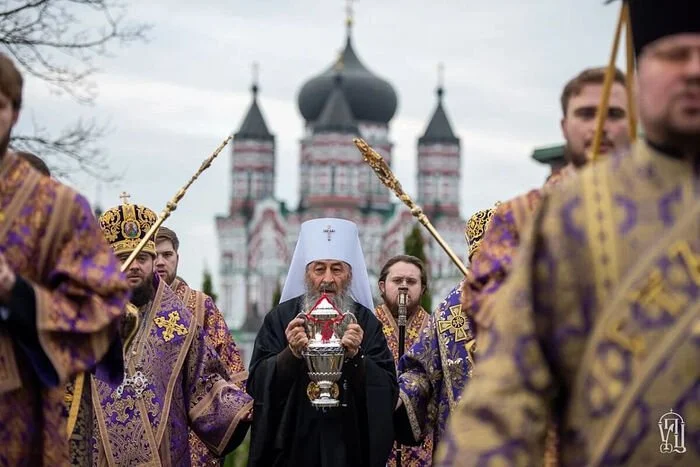
If reporters had the slightest interest in the historic Ukrainian Orthodox Church — with 1,000 years of shared history with Slavic cultures — they would be paying attention to this church’s (a) ongoing attempts to sever, within the limits of Orthodox canon law, it’s remaining ties to the Russian Orthodox Church, (b) its leaders’ opposition, since Day 1, to the Russian invasion and (c) the criticisms of this church by leaders of the new, competing Orthodox Church of Ukraine, which is supported by the United States, the European Union, the current Ukrainian government and the tiny, but symbolic, Ecumenical Orthodox Patriarchate in Turkey. These criticisms have escalated into a full-tilt government attempt to crush the older Orthodox body.


Please respect our Commenting Policy

Campaign for thorough reform of Muslim law deserves mainstream coverage -- now

Campaign for thorough reform of Muslim law deserves mainstream coverage -- now

The world’s largest organization of Muslims is campaigning for thorough worldwide reform of how to understand the faith’s religious law (Sharia) and applied jurisprudence (Fiqh).

Such an ambitious goal may seem unlikely and, to date, western media have given the effort minimal coverage. It’s time for that trend to change.

Far from some esoteric intellectual discourse, such a philosophical change could potentially affect the future of the world’s second-largest faith regarding democracy, blasphemy laws, human rights, education, the role of women, treatment of other religions, warfare, extremism, terrorism and crime and punishment.

The organization in question is Nahdlatul Ulama (NU, meaning Revival of Islamic Scholars) in Indonesia, the nation with the largest Muslim population. Consider these numbers from James M. Dorsey, a freelance writer and adjunct senior fellow in international studies at Singapore’s Nanyang Technological University: NU encompasses an estimated 90 million lay followers, tens of thousands of religious scholars, 44 universities and 18,000 lower schools.

NU upholds Sunni orthodoxy, but with a more tolerant tone than is customary in the Mideast. Its legal reform program was prominent during the massive February celebration of its 100th anniversary, analyzed in Dorsey’s March 31 Substack column. His article is a good starting point for journalists, but its opinionated viewpoint warrants careful follow-up interviewing. Also note this 2021 NU backgrounder by political scientist Ahmet T. Kuru (akuru@sdsu.edu).

Moderate Muslim thinkers have long favored some sort of move away from rigid legal traditionalism. Dorsey depicts a two-sided struggle among them, pitting allies of NU’s fully democratic and tolerant outlook against religious leaders beholden to rulers in the Mideast, as in Saudi Arabia, where certain social liberation is being allowed without fundamentally rethinking Islamic law or politics.


Please respect our Commenting Policy