International News

Thinking about persecution in Nigeria: It isn't news (#SIGH), but why is the Vatican so quiet?

Thinking about persecution in Nigeria: It isn't news (#SIGH), but why is the Vatican so quiet?

Tragically, I could have written a “think piece” post about the following topic during every week over the past few years and it would have been relevant in terms of debates about politics, human rights, religious freedom and the practice of journalism.

I am talking about religious conflict in Nigeria, which often escalates into ISIS-level outbreaks of violence and persecution. But Nigeria is only one example of a wider problem in international news, at the moment. For more background, see the recent Richard Ostling religion-beat Memo with this title: “Buried story of 2022? The persecution of Christians keeps surging around the world.”

But let’s start with this new Reuters headline: “Catholic priest burned to death, another shot in north Nigeria.

Actually, there is testimony that Father Isaac Achi was already dead, from gunshot wounds, when his attackers set fire to his home. There is some chance, however, that he was burned alive. Here’s the overture of the Reuters piece, which may be the only mainstream media coverage that has been done of this latest hellish vision of religious life in Nigeria:

Gunmen burned a Catholic priest to death and shot and injured his colleague in northwest Nigeria on Sunday, police said, the latest violence raising concerns about security ahead of an election next month.

Nigerians will vote for a new president on Feb. 25 but kidnappings for ransom and killings by armed gangs in the north have lead to fears that polls may not be held in some areas.

The motive for the latest attack was not immediately clear but gunmen have previously targeted priests in the largely Muslim north.

Once again, we see a phenomenon that I have written about many times here at GetReligion.

This kind of international story, in the context of America’s niche-media realities, is now seen as a merely religious, Catholic or even “conservative” story. Click here to see a Google News file illustrating this, in the case of the murder of this particular priest. There are the major, trend-defining newsrooms in this picture? That is, of course, the question.

But you can find more details (#DUH) in Catholic media.

Please respect our Commenting Policy

Concerning Prince Harry, Episcopalians and the choices faced by millions of 'nones'

Concerning Prince Harry, Episcopalians and the choices faced by millions of 'nones'

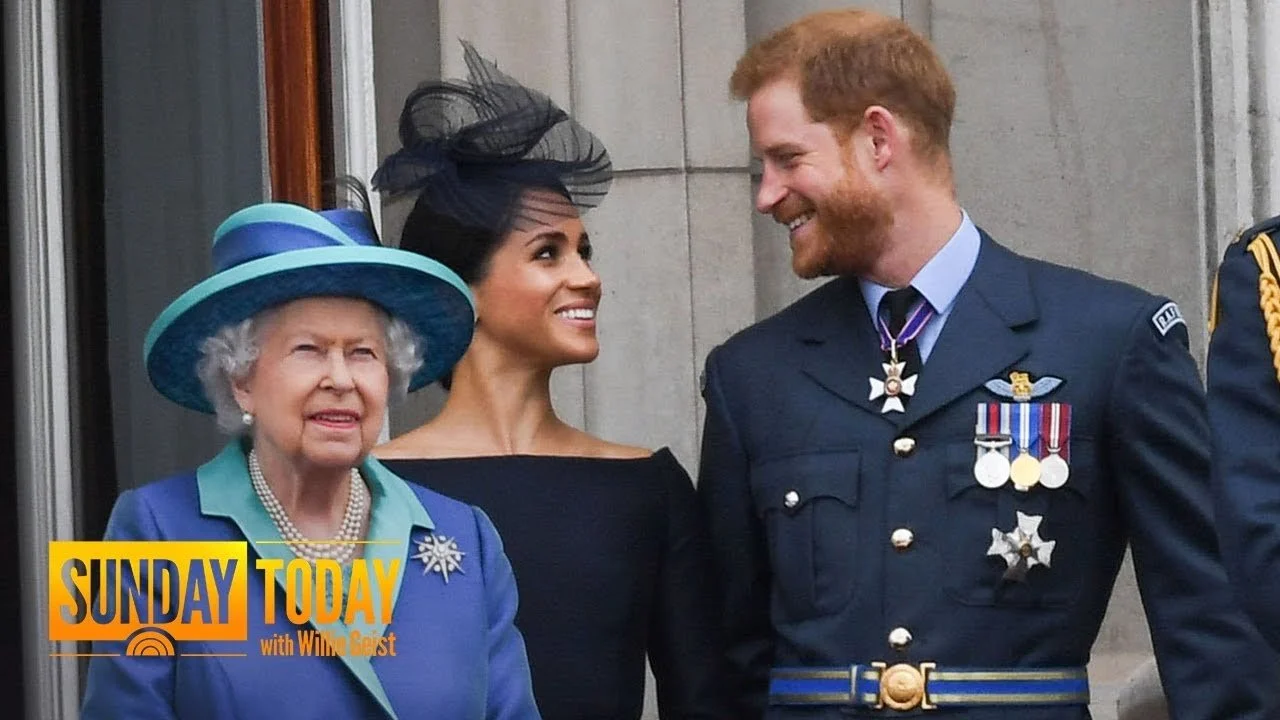
If low-church Anglican evangelicals were active in the whole naming-saints thing, you know that the process would already be in motion to honor Queen Elizabeth II. The quiet dignity of her Christian faith was at the heart of her long life of service.

This brings us to what I would argue is a valid religion-angle story linked to “Spare,” the tell-all confessional memoir Prince Harry has released from the media-friendly alternative palace that he is creating with Meghan Markle here in America.

Here is the basic question: In what church will Harry and Meghan raise their children?

This points, of course, to broader questions about the seismic changes inside England’s Royal Family after the passing of Elizabeth the Great. Yes, some of these questions are linked to the complex ecumenical history of King Charles III (see “The Religion of King Charles III” at The National Catholic Register). But it’s pretty clear that there is another divide — in style and content — between the king and Prince Harry.

This brings us to a good news-bad news situation for one of America’s most symbolic denominations.

The good news: Prince Harry would make a great Episcopalian.

The bad news: Prince Harry would make a great Episcopalian, or he could be another “none” or “nothing in particular.”

In a way, Prince Spare faces choices about faith — even liberal Protestant faith — linked to the great exodus of Americans from established religion and, in particular, from the fading “Seven Sisters” of liberal Protestantism. Will the Duke of Sussex and his family become active, vocal Episcopalians or will they become examples of trends described in the book “Nonverts: The Making of Ex-Christian America,” by Stephen Bullivant.

Think about this for a minute. If you sort through the 17,900,000 or so stories in a Google News file about “Spare,” it’s hard to find a better high-point in this drama than the 2018 wedding of Prince Harry and Meghan Markle. And who was the rock star of that media circus? It was the preacher — the leader of the Episcopal Church in the United States. You can hear the hosannas in the overture of this celebratory New York Times feature:


Please respect our Commenting Policy

Plug-In: Texas synagogue hostage-crisis anniversary and a new anti-Semitism report

Plug-In: Texas synagogue hostage-crisis anniversary and a new anti-Semitism report

We have seen another Friday the 13th come and go.

Well, I’m still your Weekend Plug-in columnist and I’m not at all superstitious about dates.

But I am totally shameless, so look for two of my own stories in today’s roundup of the best reads and top headlines in the world of faith. Let’s jump right in!

What To Know: The Big Story

Think hostility or prejudice toward Jews is fading in America? Think again.

“Classical fascist” anti-Semitic views are widespread in the U.S., according to a new survey by the Anti-Defamation League. Veteran religion writer Michelle Boorstein details the findings for The Washington Post.

At the same time, rising anti-Semitism in the U.S. is seeping into the workplace, according to Bloomberg’s Arianne Cohen.

“It’s not just high-profile incidents,” Cohen’s story notes. “Jewish workers say they’re experiencing more overt discrimination.”

Hostage anniversary: Sunday marks one year since the FBI gunned down a pistol-wielding captor at Congregation Beth Israel in Colleyville, Texas.

“Let’s be blunt: We’re healing. We’re not healed,” Jeff Cohen — who was taken hostage along with Rabbi Charlie Cytron-Walker and two others — told me in an interview for The Associated Press.

More: The Washington Times’ Mark A. Kellner — a former GetReligion team member — delves deeper into the Colleyville anniversary, while The Washington Post’s Danielle Paquette profiles a Chicago street artist who painted a mural of Kanye West — and then heard from a rabbi.

Power Up: The Week’s Best Reads

1. Controversial prayers: A sacred Jerusalem site has become a flashpoint with Israel’s rightward shift, The Wall Street Journal’s Shayndi Raice and Aaron Boxerman report.

Jewish activists are “gaining more support for praying at the Temple Mount, called the Noble Sanctuary by Muslims, who have controlled the site for centuries,” according to the Journal.


Please respect our Commenting Policy

Before reaching Rome, Cardinal Ratzinger put modern Europe in the rear-view mirror

Before reaching Rome, Cardinal Ratzinger put modern Europe in the rear-view mirror

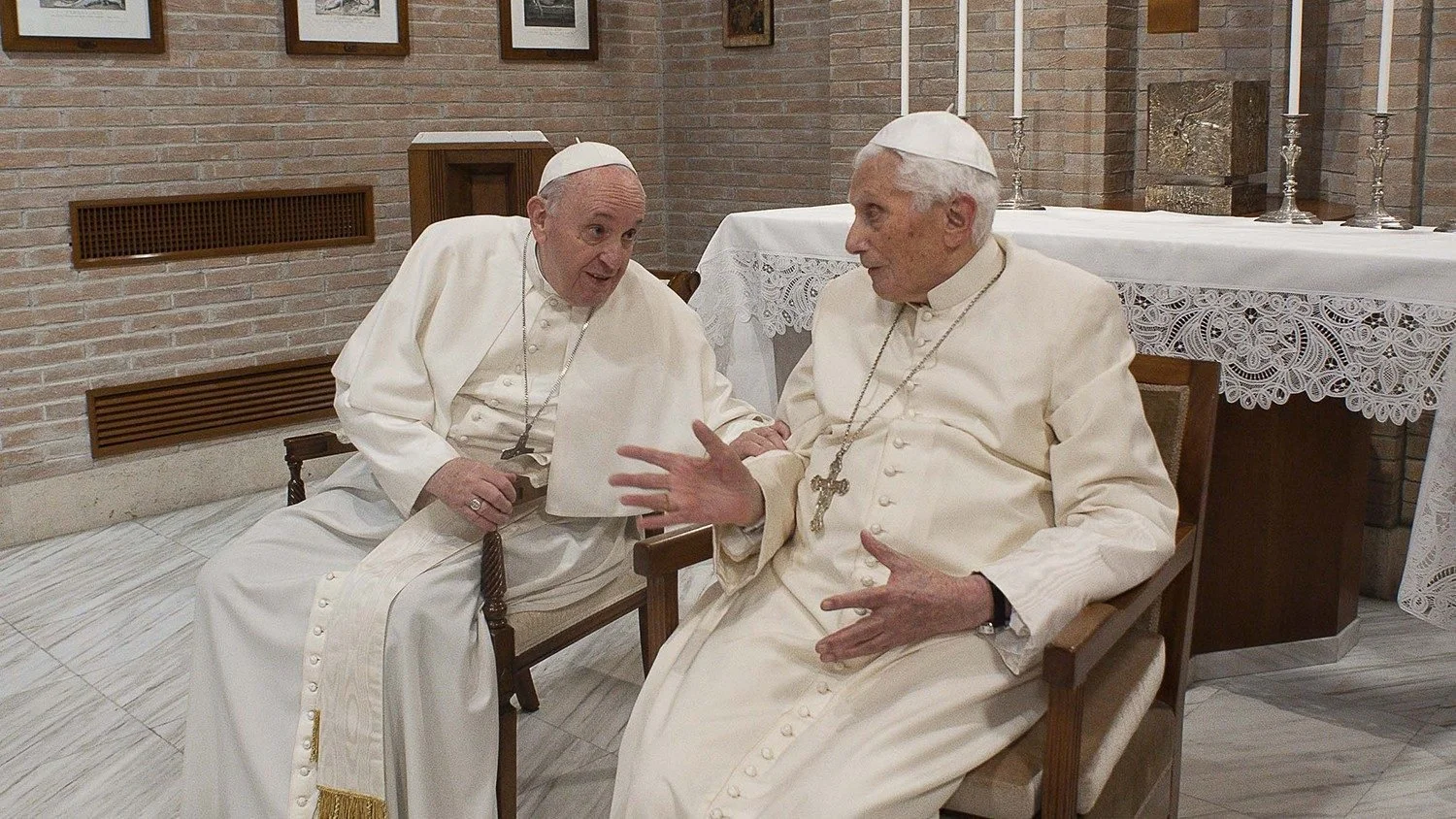
In a rite before the funeral of Pope Emeritus Benedict XVI, Vatican officials placed unique symbols of his pontificate inside his cypress casket, along with a scroll in Latin describing his ascent to the Chair of St. Peter.

"His faith and family upbringing prepared him for the harsh experience of the problems connected with the Nazi regime, aware of the climate of strong hostility towards the Catholic Church," said the English translation of this "rogito," or deed. "In this complex situation, he discovered the beauty and truth of faith in Christ."

After deserting the German army without firing a shot, Josef Ratzinger began his theology studies and, in 1951, was ordained a priest. He emerged as an intellectual voice preaching hope, as opposed to mere optimism. The future pope's sobering views on modern Europe would affect his entire career -- as well as debates about his legacy when he died.

"This so-called Christian Europe … has become the birthplace of a new paganism, which is growing steadily in the heart of the Church, and threatens to undermine her from within," said Ratzinger, in a 1958 lecture. This modern church "is no longer, as she once was, a Church composed of pagans who have become Christians, but a Church of pagans, who still call themselves Christians."

Four years later, the 35-year-old priest advised Cardinal Joseph Frings of Cologne during the historic Second Vatican Council, emerging as a "progressive" on reform issues, yet one who saw painful challenges ahead.

"From the crisis of today the church of tomorrow will emerge – a church that has lost much," he warned, on German radio in 1969. "As the number of her adherents diminishes, so it will lose many of her social privileges. In contrast to an earlier age, it will be seen much more as a voluntary society, entered only by free decision. As a small society, it will make much bigger demands on the initiative of her individual members."

Ratzinger envisioned a "more spiritual church" with no political mandate, "flirting as little with the left as with the right. … It will make her poor and cause her to become the church of the meek."


Please respect our Commenting Policy

Benedict XVI's death ushers in media speculation on what Pope Francis can (or will) do next

Benedict XVI's death ushers in media speculation on what Pope Francis can (or will) do next

One of my five things to watch for in 2023 included media speculation over Pope Francis’ health and speculation over his possible retirement.

Within three days of that post — and prompted by the death on Dec. 31 of Pope Emeritus Benedict XVI at the age of 95 — speculation increased once again.

This is what I wrote in that Dec. 28 post:

The pope has often praised the decision of his predecessor, now Pope-Emeritus Benedict XVI, to resign because he felt unable to carry the duties of the papacy due to his advanced age.

In 2013, Benedict, who currently lives in a monastery at the Vatican and is seldom seen, became the first pontiff to resign in 600 years, paving the way for Francis’ election. Now his health appears to be failing.

Will there be a new conclave in 2023? There’s no way to know that now. One thing, however, is certain. Speculation will only mount with each passing day. Pope Francis isn’t getting younger.

The election of a new pope is a story journalists love to report. It’s something like a cross between a presidential election and a royal wedding. The bottom line: Journalists see it as a political horse race.

Speculation will certainly mount. Journalists love elections.

Much of the speculation over what Benedict’s death means for Francis, however, cast a shadow over what should have been stories around the legacy of former Cardinal Joseph Ratzinger. Instead, the news coverage quickly shifted to “what happens next” — not an unusual journalism strategy in order to have political-style coverage that looks ahead rather than at the past — and whether Francis would someday step down.


Please respect our Commenting Policy

Correction? Washington Post on the 'religious event' that marked passing of Benedict XVI

Correction? Washington Post on the 'religious event' that marked passing of Benedict XVI

Once upon a time, it was relatively clear when a news organization did or did not need to publish a correction about an error in one of its reports.

But then the World Wide Web came along and reporters at major organizations began writing what were, in effect, news reports that evolved during or just after an important event — rather like the “write-thru” story updates that wire services had for decades sent to newsrooms.

In the old days, however, there was a definitive moment when ink hit paper and readers and journalists could consider a news report “published.” If there was an error of fact in that published story, then everyone (within reason) knew that there needed to be an ink-on-paper correction.

What is supposed to happen when a news report is merely published online? Is a story in digital bytes as “real” as the old ink-on-paper version? That’s the kind of issue journalists have been debating ever since professionals began “breaking” stories online or producing early versions of news reports that, eventually, merged into final reports that were “published.”

This brings me to an interesting sentence that ran, sort of, in a Washington Post foreign-desk (as opposed to the religion desk) story about the funeral Mass for Pope Emeritus Benedict XVI. Here is that sentence, which has circulated in screen shots taken of the Post website:

At the religious event, sometimes called the Eucharist, the faithful receive the sacrament, normally consecrated bread like wafers and wine, symbolizing the body and blood of Jesus.

I have done quite a bit of searching for that material online — especially the “symbolizing the body and blood of Jesus” reference — and I can only find fragments of digital material that show that it once existed. Maybe I have missed it, somehow. If so, I would welcome a correction and a working URL.

Meanwhile, check out, this wispy reference found in this online search file.


Please respect our Commenting Policy

Podcast: Benedict XVI protected ancient doctrines, while looking into an ominous future

Podcast: Benedict XVI protected ancient doctrines, while looking into an ominous future

The passing of any pope unleashes waves of news commentary, frequently with supporters clashing with critics in an attempt to help shape the narrative heading into the conclave to pick the next occupant of the Throne of St. Peter.

What about the passing of a pope emeritus? That would make things simpler, since there the current pope was still alive and in charge. Right?

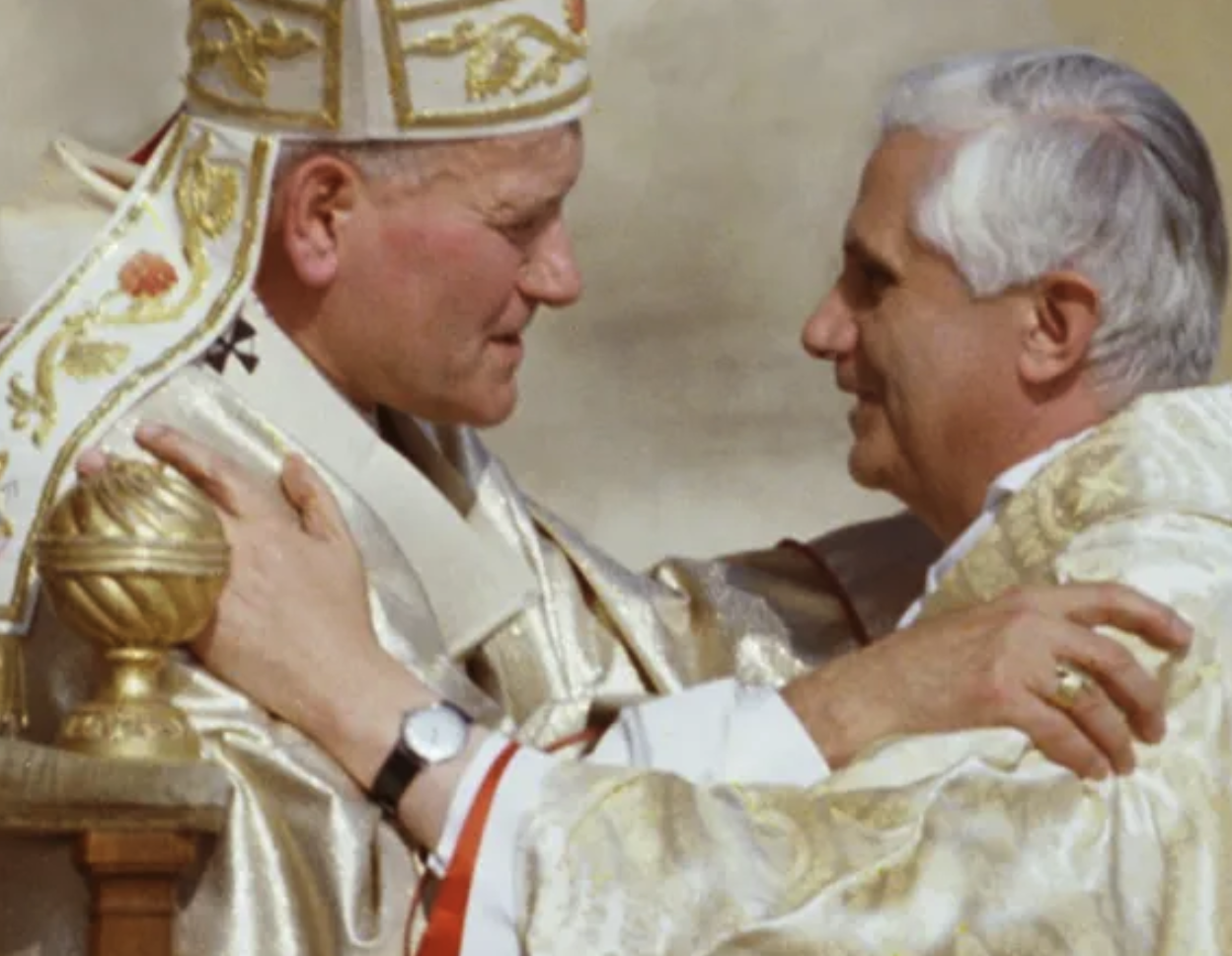
Apparently not. The death of Pope Benedict XVI, if anything, seemed to raise the stakes in many lingering debates in Catholic life. My takeaway is that it represented the final, formal close of the era of St. Pope John Paul II, as well as that of Pope Benedict XVI, who, as Cardinal Ratzinger, had played a crucial theological role in support of John Paul.

Thus, this event — for many on the Catholic right and left — marked the end of the “Veritatis Splendor” era, with John Paul II’s emphasis on the defense of transcendent truths, and the open door into the Synod on Synodality era, with its modern Jesuit emphasis on dialogue and evolving doctrine.

The complex nature of this transition provided the hook for this week’s “Crossroads” podcast (CLICK HERE to tune that in).

How complex? For a glimpse of the sweeping nature of this story, check this post from the Catholic listserv Big Pulpit — which circulates daily lists of URLs to news reports, blog posts, podcasts and other commentary on Catholic affairs.

The January 2 offering include a list of “The Top-10 Most Visited Links” about the death of Pope Benedict XVI. That was followed with the “Next-10 Most Visited Links.” Then there was “Another-10 Most Visited Links” and “The-Next-Another-10 Most Visited Links.” This went on and on for another screen or two, with a total of 80 must-read links for that day.

That’s all. Good luck reading all of that — plus countless other offerings in both the mainstream press and countless Catholic commentary sources.

GetReligion readers will not be shocked to discover that, for many journalists, the death of this orthodox theologian was primarily a political story.


Please respect our Commenting Policy

Clergy or spies? Concerning that New York Times update on accusations inside Ukraine

Clergy or spies? Concerning that New York Times update on accusations inside Ukraine

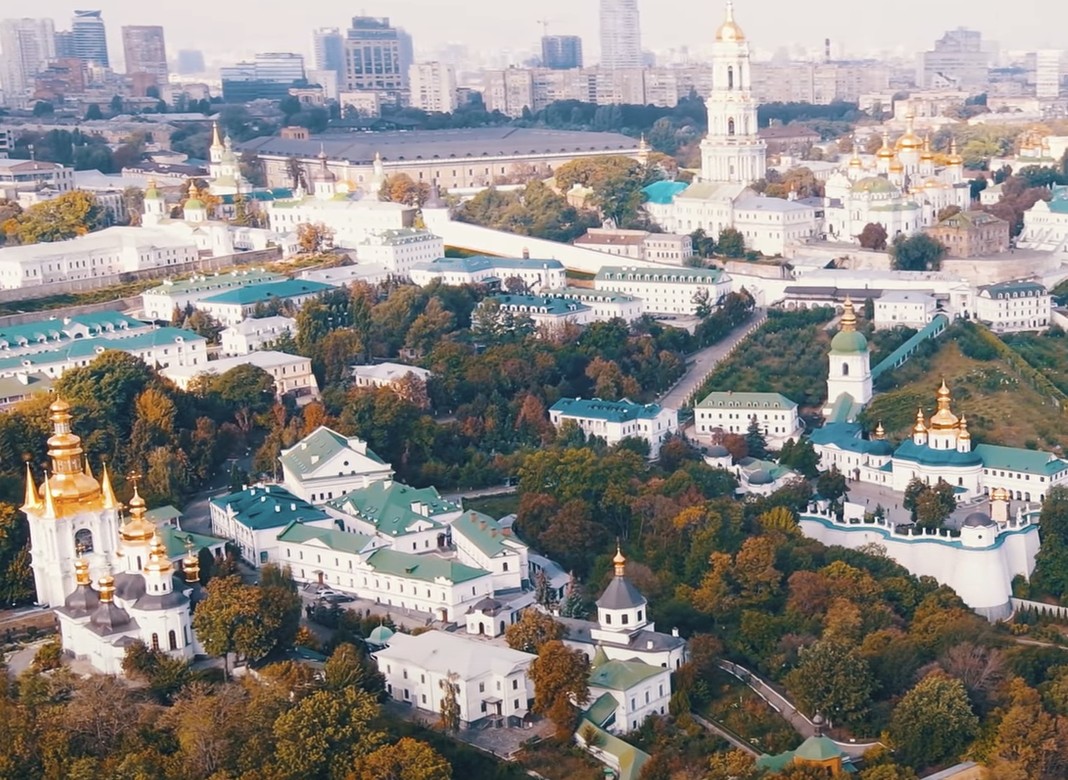
There are many, many facts about Orthodox church life in Ukraine that are hard to verify right now — for obvious reasons.

Civil wars create waves of fog that make it hard for reporters to do their job — if one assumes journalists have some responsibility to attempt to test the fact claims of armies on both sides.

All of this is relevant to that New York Times story that ran the other day with this headline: “Clergymen or Spies? Churches Become Tools of War in Ukraine.” Let me stress that this was an important story about an important topic. It would shocking if there were not divisions among Orthodox clergy and their parishes during a civil war.

Basically, this Times story is a press release built on evidence gathered by Ukrainian officials who want to shut down the historic Ukrainian Orthodox Church (UOC), which has for centuries had canonical ties to the Russian Orthodox Church. That church has done everything possible — under Orthodox polity — to cut its Moscow ties, while waiting for some kind of intervention from the world’s Orthodox patriarchs.

On the other side, the United States, the European Union and the Ecumenical Patriarchate in Istanbul have backed the creation of the new Orthodox Church in Ukraine (OCU) — which is, no surprise, backed by the current government of Ukraine.

So, before we get to the central claims of the Times story, let’s pause and ask a rather important question: How many Orthodox parishes, and clergy, are there in Ukraine these days? Yes, it complicates matters that some have been destroyed, by forces on both sides, and some have been closed or seized. How many parishes have been shut down or seized, and by whom? How many parishes have split? These are the kinds of questions that are hard to answer during a civil war.

Here is some interesting material from a source on the left side of Orthodox life here in the United States, the Orthodox Christian Studies Center at Fordham University in New York City. The headline on this blog post: “Which Orthodox Church in Ukraine is the Largest?” It was written by Thomas Bremer, a retired professor in Eastern Church studies at Münster University, Germany. Let’s walk through some key info:

Regarding parishes, the Ukrainian authorities have very thorough statistics. Every religious community that wants to exist legally in Ukraine has to register … and to provide data regularly about numbers of parishes, clergy, training institutions, etc.


Please respect our Commenting Policy

Of course the fall of Roe was 2022's top religion-beat story (including those church attacks)

Of course the fall of Roe was 2022's top religion-beat story (including those church attacks)

In the years before Roe v. Wade, one of America's largest Christian flocks struggled to find a way to condemn abortion, while also opposing bans on abortion.

A 1971 resolution said: "Some advocate that there be no abortion legislation, thus making the decision a purely private matter between a woman and her doctor" while others "advocate no legal abortion," permitting it "only if the life of the mother is threatened." Thus, it backed legislation allowing "abortion under such conditions as rape, incest, clear evidence of severe fetal deformity, and carefully ascertained evidence of the likelihood of damage to the emotional, mental, and physical health of the mother."

After the 1973 Roe decision, the same body stressed the "limited role of government" in abortion questions, while supporting a "full range of medical services and personal counseling" for expectant mothers.

That was the Southern Baptist Convention -- before its conservative wing gained control, creating a powerful cultural force against abortion rights.

Churches were always active in abortion debates, with some embracing centuries of doctrine on the sanctity of human life, while overs became strategic abortion-rights supporters. Thus, journalists in the Religion News Association named the Supreme Court decision to overturn Roe v. Wade as the year's top American religion-news story. Now churches -- left and right face -- face the challenge of proclaiming certainties while many states seek compromise.

Stressing politics, the RNA stated: "The Supreme Court overturns the 1973 Roe v. Wade precedent and says there is no constitutional right to abortion, sparking battles in courts and state legislatures and driving voters to the November polls in high numbers. More than a dozen states enact abortion bans, while voters reject constitutional abortion restrictions in conservative Kansas and Kentucky and put abortion rights in three other states' constitutions."

This poll avoided other religion-news elements of this story, such as acts of violence against churches -- especially Catholic parishes -- and crisis pregnancy centers, ranging from vandalism to arson, from the interruption of sacred rites to the destruction of sacred art. Protestors marched at the homes of SCOTUS justices and police arrested an armed man who threatened to invade the house of Justice Brett Kavanaugh.

This year, the RNA added an international list, selecting Russia's war against Ukraine as the top story, in part because of bitter tensions between the Russian Orthodox Church and the new Orthodox Church of Ukraine, backed by the United States and the Orthodox Ecumenical Patriarchate in Turkey.


Please respect our Commenting Policy