International News

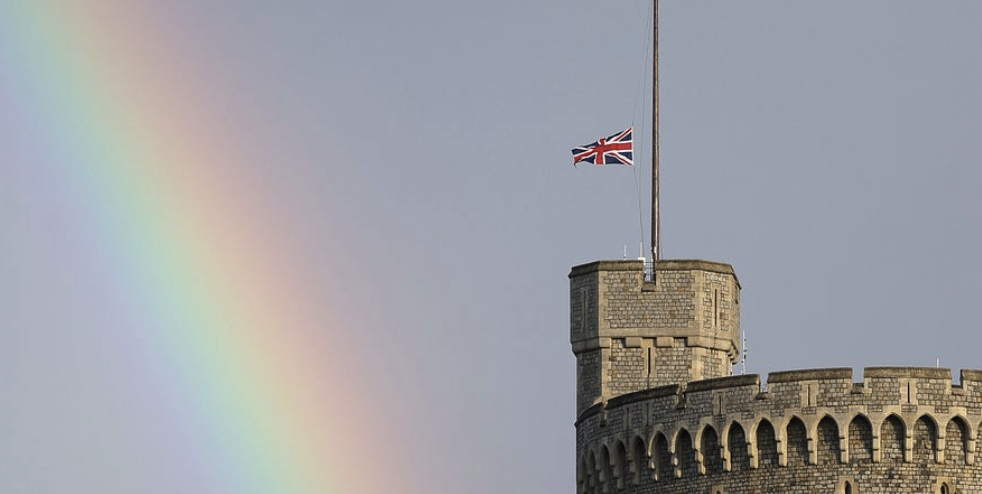
'Till we cast our crowns before Thee' -- ties that bind in last rites for Queen Elizabeth II

'Till we cast our crowns before Thee' -- ties that bind in last rites for Queen Elizabeth II

During the private funeral of her husband, Queen Elizabeth II sat alone near the St. George's Chapel altar, socially distanced from her family and wearing a black pandemic mask.

This searing portrait of grief moved viewers worldwide. And as Prince Philip's casket was lowered into the Windsor Castle vault, singers chanted the Kontakion of the Departed, a tie to his Orthodox roots in Greece.

“Give rest, O Christ, to thy servant with thy saints," they sang, "where sorrow and pain are no more; neither sighing but life everlasting. … All we go down to the dust; and weeping o'er the grave we make our song: Alleluia, alleluia, alleluia."

Only 18 months later, Queen Elizabeth requested the same chant, in the same chapel. This time it marked the start of the committal liturgy which closed a 10-day wave of statecraft, vigils, memorials and processions preceding the majestic state funeral.

The queen's final, intimate Windsor Castle service began where her husband's had ended, as if one rite was flowing into another.

"Queen Elizabeth was one of those people in this mortal life who always thought ahead," said David Lyle Jeffrey, distinguished senior fellow at the Institute for Studies in Religion at Baylor University. When preparing these rites, the queen was "clearly looking for prayers, scriptures and hymns that made connections she wanted to make for her family, her people and the world. … I think she succeeded brilliantly."

An Anglican from Canada, Jeffrey said the events closing the queen's historic 70-year reign were an appropriate time to explore the "essence of her admirable Christian character." Thus, the retired literature professor wrote a poem after her death -- "Regina Exemplaris (An exemplary queen)" -- saluting her steady, consistent faith. It ended with:
Please respect our Commenting Policy

Role of religion in Leicestershire riots? BBC journalists fell prey to 'word salad' logic

Role of religion in Leicestershire riots? BBC journalists fell prey to 'word salad' logic

I apologize for repeating this sobering anecdote, but — alas — it’s relevant again.

When “Blind Spot: When Journalists Don’t Get Religion” was released in 2008, several of the authors took part in a circle-the-globe trip for events linked to the issues covered in the book. One interesting — or disturbing — forum took place with journalism students at the multi-faith Convergence Institute of Media in Bangalore, India.

The topic, of course, was how to improve religion-news coverage in print and broadcast media. In a previous post — “Life and death (and faith) in India” — I noted:

I was struck by one consistent response from the audience, which I would estimate was about 50 percent Hindu, 25 percent Muslim and 25 percent Christian. When asked what was the greatest obstacle to accurate, mainstream coverage of events and trends in religion, the response of one young Muslim male was blunt. When our media cover religion news, he said, more people end up dead. Other students repeated this theme during our meetings.

In other words, when journalists cover religion stories, this only makes the conflicts worse. It is better to either ignore them or to downplay them, masking the nature of the conflicts behind phrases such as "community conflicts" or saying that the events are caused by disputes about "culture" or "Indian values."

Cover the story WRONG and more people die, they said. But if you cover the story ACCURATELY, even more people will die. As a rule, editors and producers resorted to vague terms — “community violence” was common — to hide bloody sectarian divides. Journalism is not an option when covering religious divides in India.

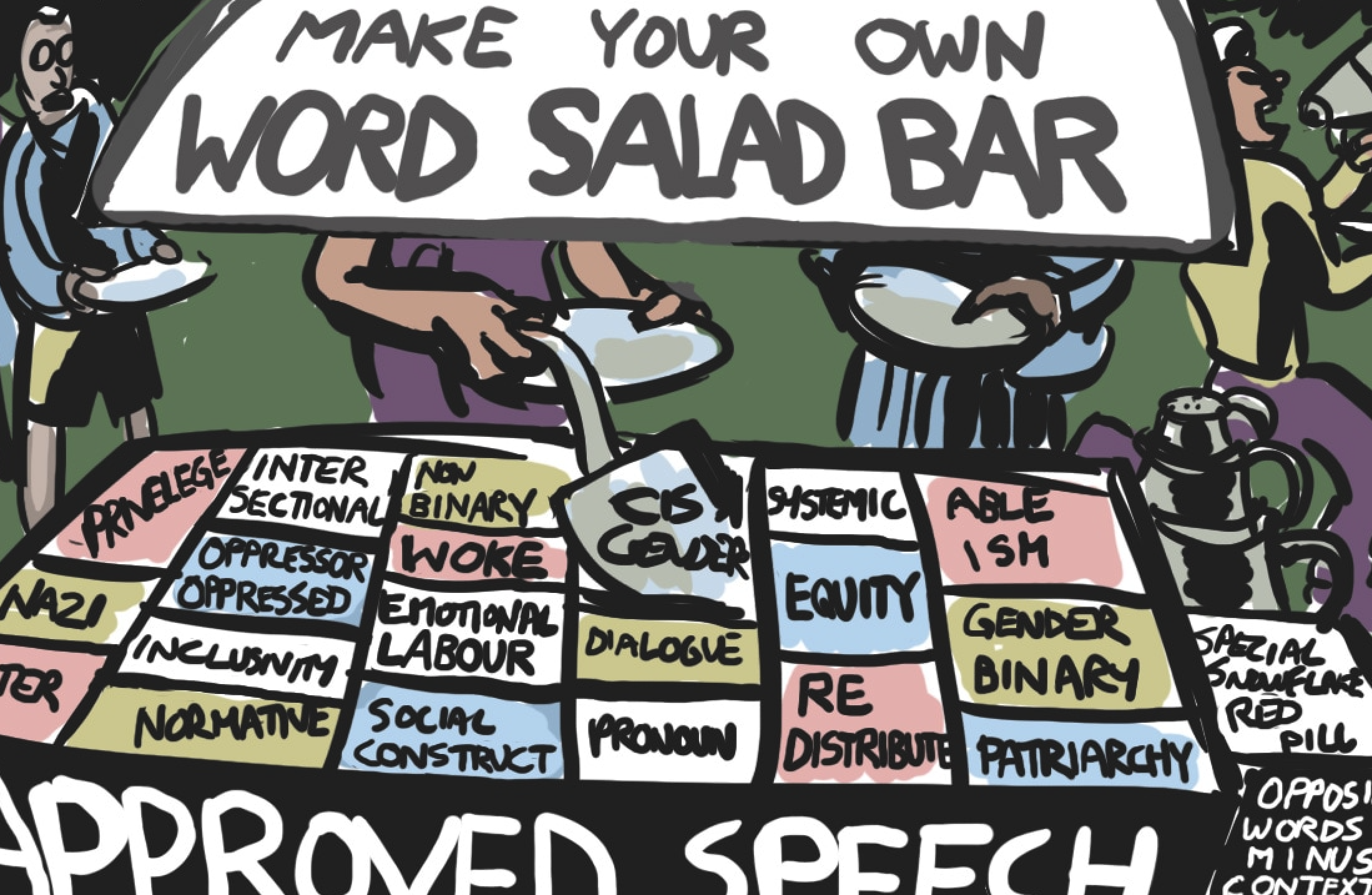
With that in mind, consider the foggy “word salad” language at the top of this recent BBC report about what were clearly sectarian riots in East Leicester. This is from a web archive, since the story was updated later without explanation. The bottom line: The religion angles in this story were too hot to mention.

Police and community leaders have called for calm after large numbers of people became involved in disorder in parts of East Leicester. Footage online shows hundreds of people, mainly men, filling the streets. …

It is the latest in a series of disturbances to have broken out following an India and Pakistan cricket match on 28 August.


Please respect our Commenting Policy

Memory eternal: The quiet, yet very public faith, of Queen Elizabeth the Great

Memory eternal: The quiet, yet very public faith, of Queen Elizabeth the Great

Before wearing the Imperial State Crown, Queen Elizabeth II knelt at the Westminster Abbey altar for a moment of silent, private prayer.

The three-hour coronation in 1953 contained myriad oaths and symbols, but the most ancient rite -- Archbishop of Canterbury Geoffrey Fisher anointing Elizabeth with holy oil -- sought the highest possible blessing on her life's work and eventually her death.

"Our Lord Jesus Christ, the Son of God," he prayed, "who by his Father was anointed with the oil of gladness … that by the assistance of His heavenly grace you may govern and preserve the people committed to your charge in wealth, peace and godliness; and after a long and glorious course of ruling a temporal kingdom wisely, justly and religiously, you may at last be made partaker of an eternal kingdom."

Televised for the first time, 27 million BBC viewers watched what Oxford don C.S. Lewis called the "tragic splendour" of this drama.

“Over here people did not get that fairy-tale feeling about the coronation. What impressed most who saw it was the fact that the Queen herself appeared to be quite overwhelmed by the sacramental side of it," he noted, writing to an American friend.

It was "a feeling of (one hardly knows how to describe it) -- awe -- pity -- pathos -- mystery. The pressing of that huge, heavy crown on that small, young head becomes a sort of symbol of the situation of humanity itself: humanity called by God to be his vice-regent and high priest on earth, yet feeling so inadequate."

Few could have imagined that the woman many now call "Elizabeth the Great" would reign for 70 years, striving to lead by example after the suffering of World War II and into an age in which humanity would be united by the Internet, terrorism, pandemics and other challenges.


Please respect our Commenting Policy

An old question that's back in the news: Why can’t non-Muslims visit Mecca and Medina?

An old question that's back in the news: Why can’t non-Muslims visit Mecca and Medina?

THE QUESTION:

Why does Islam ban non-Muslims from the holy cities of Mecca and Medina?

THE RELIGION GUY’S ANSWER:

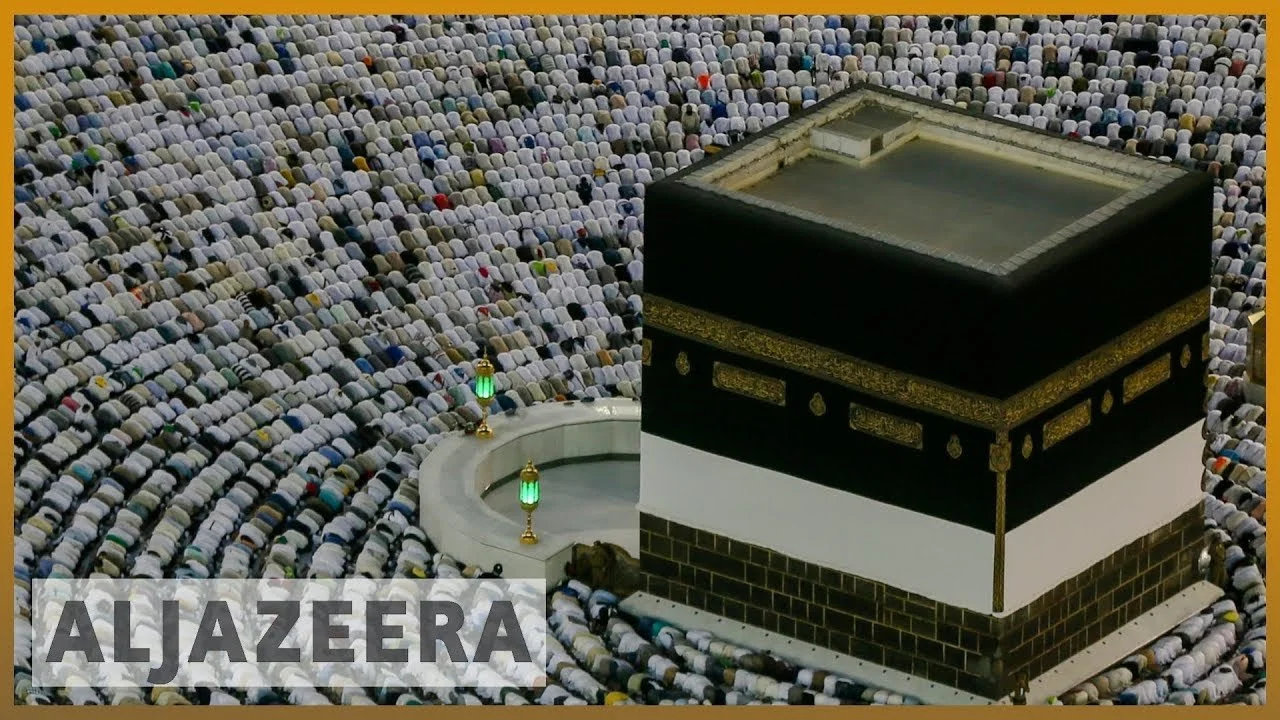
Daniel Pipes of the Middle East Forum is among the last people Saudi Arabians might want to listen to. Yet he penned a Wall Street Journal op-ed last month urging Crown Prince Mohammed bin Salman to end Islam’s long-standing ban against non-Muslims entering the faith’s two holiest locations, Mecca, where the Prophet Muhammad issued the Quran and founded the religion 14 centuries ago, and Medina, where he led the first Muslim regime.

This prohibition hit the news when Gil Tamary, an American Jew and TV journalist in Israel, illicitly slipped into Mecca to record material and broadcast a much-hyped 10-minute travelogue. Muslims have enforced the ban so carefully, Pipes reports, that only 18 non-Muslims are known to have ever entered Mecca, including Tamary and two others in recent decades.

The violation of sacred space provoked an international furor among not only Muslims but Israelis and westerners who feared a rise in hostility. The regime has filed criminal charges against Tamary and his Saudi driver. Tamary apologized and said his intent was to “showcase the importance of Mecca and the beauty of the religion” and thereby foster religious tolerance. Guess again.

But cheerleader Pipes thinks Tamary “boldly challenged an archaic status quo that the world unthinkingly accepts. Bravo to him for breaking a taboo. . . . He deserves respect, not condemnation.” Pipes even wants unspecified international organizations to lobby for open access with the Saudis.

Pipes did not mention another exclusionary policy noted in the U.S. State Department’s 2022 religious freedom report. Saudi Arabia strictly forbids all non-Muslim houses of worship nationwide, though private or secret Christian gatherings are known to occur.


Please respect our Commenting Policy

Podcast: What will Queen Elizabeth II tell the world about her faith with her funeral liturgy?

Podcast: What will Queen Elizabeth II tell the world about her faith with her funeral liturgy?

This week something unexpected happened after I filed my national “On Religion” column, something that I have never seen before in my decades of religion-news work.

What? A retired literature professor responded to my column with a poem.

The topic was easy to predict. Like millions of other people around the world, but especially in Great Britain and the Commonwealth, I have spent many hours watching (primarily on British television) the rites and public drama surrounding the death of Queen Elizabeth II.

I will post the column at GetReligion at the usual time this weekend, after it has run in most newspapers linked to the Universal syndicate. But the podcast team decided to go ahead and use it as the hook for this week’s “Crossroads” (CLICK HERE to tune that in), since so many people are talking about the death of the queen. Here is a short clip from that column:

Throughout her life, Queen Elizabeth II understood the symbolic importance of kneeling, according to former Durham Bishop N.T. Wright. After one Church of England synod, she privately expressed surprise — disappointment, even — that worshippers in Westminster Abbey simply lined up to receive Holy Communion, instead of kneeling.

“Kneeling was important to her,” said the popular author, in a “Premier Christianity” tribute. In his encounters with her, Wright found the queen “very friendly and clearly a very devout, what we would consider ‘old fashioned’ Church of England Christian. I remember thinking during more than one Christmas broadcast, she has just preached the Gospel to the nation in a way that perhaps nobody else could have done.”

In response to the column, a reader raised in Canada — but best known for his work at Baylor University in Texas and at Peking University — wrote a poem and sent it to me.

David Lyle Jeffrey, now a distinguished senior fellow at Baylor’s Institute for Studies in Religion, noted that he has never considered himself a “royalist,” but the queen’s death is certainly a time to explore the “essence of her admirable Christian character and gracious reign.” The former Baylor provost and literature professor entitled the poem “Regina Exemplaris (An exemplary queen).” Here is how it ends:


Please respect our Commenting Policy

Here's a solid religion information source for office, home libraries and (of course) newsrooms

Here's a solid religion information source for office, home libraries and (of course) newsrooms

Here are some interesting facts about war-ravaged Ukraine you might not have heard:

* The nation was 97% Christian in 1900, slumped to 60% when atheistic Soviet Communists held power, and has rebounded to 86%. But in one survey only 20% of Ukrainians said religion is “very important” for them.

* The Orthodox Church historically under the Moscow Patriarchate has 13.5 million members. But even before the current Russian invasion, the young rival Orthodox Church of the independent Kyiv Patriarchate had gained a bigger following of 16 million.

* Evangelical, Pentecostal and Charismatic Protestants, though a small minority, have so thrived since national independence in 1991 that Ukraine is known as Eastern Europe’s “Bible Belt.” Pentecostal believers who once survived in the underground church are now a force in civic affairs.

* Despite electing the first Jewish president, anti-Semitic incidents still occur.

* Regarding morals, “domestic violence is a massive problem,” especially in COVID-19 times, with complaints up 40% in the first half of 2020 compared with 2019.

Why mention these newsworthy pieces of information?

That’s a sampling of the sort of data about each of 233 countries you’ll find in the brand-new “Global Christianity: A Guide to the World’s Largest Religion from Afghanistan to Zimbabwe” (Zondervan Academic, $29.99 paperback). This valuable and inexpensive resource updates key information from the 2019 edition of the invaluable “World Christian Encyclopedia” (Edinburgh University Press, list price $270 with discounts online).

The new book’s editor is Gina Zurlo — https://ginazurlo.com; gzurlo@gordonconwell.edu) — co-editor of the “Encyclopedia” and co-director of the independent agency that produces it, the Center for the Study of Global Christianity at evangelical Gordon-Conwell Theological Seminary.


Please respect our Commenting Policy

More Elizabeth II coverage: Washington Post goes deep on her Billy Graham contacts

More Elizabeth II coverage: Washington Post goes deep on her Billy Graham contacts

Confession: I am still paying next to zero attention to American telly when it comes to rites linked to the death of Queen Elizabeth II. I’m tuned into BBC World and, via YouTube, streaming Sky News.

The few times I’ve flipped over to the major U.S. networks left me with the same impression as before — that the Royal Family is viewed as kind of a cleaned-up version of the Kardashians, with the queen as a sad, nobel celebrity matriarch. See this earlier post: “Elizabeth the Great: Why do many journalists choose to edit faith out of her Christmas talks?

I think the big gaps (other than details about her faith) have been any sense of (a) the gravitas added by her World War II service, including her work driving an Army ambulance. Also, it’s poignant that, (b) until the stunning abdication of King Edward VIII, she was raised with zero expectation of becoming queen. This relatively normal childhood (until age 10) created tight ties to her parents and shaped her views on family.

Yes, the BBC has had a very heavy emphasis on the admiration for the queen seen in mainline, establishment churches and minority faiths. At some point I would like to know if the admiration for Elizabeth II common among American evangelicals also exists in the UK. Click here for a roundup of that, including these typical remarks from Bishop Andrew Forster of the Church of Ireland:

"Throughout her life she set Christ, and his message and his teaching, as the primary thing that has helped her and blessed her and I think made her into the incredible monarch, sovereign that she was."

Bishop Forster described the late Queen as the "grandmother of the nation".

"Maybe it was because people understood that she had an understanding of some of the issues that we might face behind closed doors, some of the issues of increased frailty, of family strife — there was that sense of a grandmotherly figure who understood the challenges of life," he said.

In my previous post, I noted that a Washington Post feature about the queen’s “most memorable remarks” that said her public appearances were “peppered with words of wisdom, faith and occasionally personal reflections.” There was content about her Christmas messages, while omitting any faith content.

However, the religion desk — veteran Sarah Pulliam Bailey (a former GetReligion contributor) — went in depth on one of the most interesting religion-news angles from the queen’s long life: “Fact checking ‘The Crown’: Queen Elizabeth’s faith and her close relationship with preacher Billy Graham.”


Please respect our Commenting Policy

Columns from 1991 & 2022: Mysteries surrounding the mind and soul of Mikhail Gorbachev

Columns from 1991 & 2022: Mysteries surrounding the mind and soul of Mikhail Gorbachev

It isn't every day that one of the creators of a political thriller gets to ask its real-life protagonist to evaluate the novel's plot.

But that happened when the late Billy Wireman, president of Queens University in Charlotte, N.C., handed the last Soviet Union leader a copy of "The Secret Diary of Mikhail Gorbachev." The 1990 novel was written by journalist Frye Gaillard, based on a Wireman idea.

The plot: There were spiritual motivations behind "glasnost" and "perestroika," Gorbachev's risky ideas to restructure Soviet life. But furious KGB insiders -- including a would-be assassin -- managed to steal Gorbachev's diary, in which he confessed his Christian faith.

Wireman wrote down Gorbachev's response after hearing the book's premise: "You must have been reading my real diary."

This faith question never vanished, no matter how often Gorbachev reaffirmed his atheism, while also stressing his respect for the beliefs of his Communist father and devout Russian Orthodox mother. His maternal grandparents hid holy icons behind their home's token Vladimir Lenin portraits.

Gorbachev died on August 30 at age 91 and his funeral was held in the Pillar Hall of Russia's House of the Unions, after President Vladimir Putin denied him a state funeral. He was buried next to his wife Raisa, who died in 1999 of cancer, in the cemetery of Moscow's Novodevichy Convent.

"Regardless of the geo-political realities of that era, there was something going on inside Gorbachev," said Gaillard, writer in residence at the University of South Alabama in Mobile and former Southern editor of The Charlotte Observer. He is the author of 30-plus books, including "A Hard Rain: America in the 1960s," which won the 2019 F. Scott Fitzgerald Literary Prize.

"Why did he do it? That's the question that won't go away," Gaillard added. "That's what has fascinated people for decades and it still does. We may never know now that he's gone. … But all that speculation about his beliefs is at the heart of the book."


Please respect our Commenting Policy

Look at a United Methodist timeline: Why are conservatives going nuclear with lawsuits?

Look at a United Methodist timeline: Why are conservatives going nuclear with lawsuits?

The slowly evolving trainwreck that is the disunited United Methodist Church is an unbelievably complicated story and I have lots of sympathy for journalists who are being asked to cover it — week after week — in normal-length news reports.

I have some right to say this, since I have been covering this story since 1984 or earlier.

For starters, there is no one United Methodist Church and there hasn’t been one for decades. See this flashback column that I wrote a few years ago: “Old fault lines can be seen in the ‘seven churches’ of divided Methodism,” which was followed by “Doctrinal debates that define the divided United Methodists.

The bottom line, once again: This war has always been about biblical authority and a host of other doctrinal clashes, with battles about homosexuality grabbing the headlines.

Anyway, I was reading another update from The Nashville Tennessean the other day — “United Methodists grapple with schism as 300-plus churches leave across U.S.” (high paywall) — and something hit me (other than the fact that “schism” still isn’t an accurate word for what is happening here). The key was looking at several key events on a timeline.

First, let’s plug in a key fact from a recent Religion News Service report about the doctrinally conservative UMC congregations who are trying to hit the denominational exit doors in Western North Carolina and Florida. The lawyers trying to sue the UMC establishment are, you see, are working on a deadline

A lawyer for the Western North Carolina Annual Conference, which has more than 1,000 congregations, responded … saying it would not comply since the request does not follow the disaffiliation plan approved by a special session of the United Methodist Church’s General Conference in 2019.

That plan allows churches to leave the denomination through the end of 2023. They can take their properties with them after paying two years of apportionments and pension liabilities.

Tick, tick, tick.

That 2019 General Conference was, of course, the watershed event in which a coalition of growing Global South churches and some conservative Americans infuriated the shrinking UMC establishment by passing the “Traditional Plan,” while also (#TriggerWarning) urging enforcement of “Book of Discipline” doctrinal stands on marriage and sexuality.


Please respect our Commenting Policy