International News

Thinking about Internet-age ethics with J.D. Flynn, especially rumors about dead popes

Thinking about Internet-age ethics with J.D. Flynn, especially rumors about dead popes

Everyone was talking about this story last week: Pope Benedict XVI is (a) dead, (b) not dead or (c) come on, what’s up with this tired Internet game again?

In that final category, I offer you the following mini-think piece from J.D. Flynn of The Pillar, that must-bookmark source of Catholic news, commentary and Canon law-specifics.

This whole circus was a classic example of people being tempted to report, as semi-news, the fact that online people were TALKING ABOUT something that was being reported with zero creditable attribution. Thus, Flynn starts with this basic equation:

… Pope emeritus Benedict XVI is still not dead. …

Why is that news?

Because last night an Italian schoolteacher named Tommaso De Benedetti created a moral panic online, with a hoax that seems to have been in the works for nearly a year.

“Moral” panic?

That’s an interesting choice of words. The key is that journalists had to stop and ponder whether they had the fortitude to not push the “RETWEET” button on a story that was essentially about Internet chatter.

Let’s keep walking through Flynn’s piece as he works his way through this:

Back in August 2021, the guy created a Twitter account for Bishop Georg Bätzing, who is president of the German bishops’ conference. The account managed to amass thousands of followers. He didn’t use the account, but he built that following by strategically following the right people, and allowing the Twitter algorithms to do the rest.

Then yesterday evening, he tweeted in German, English, and Spanish that Pope emeritus Benedict XVI had died.

The tweets took off like wildfire. Several media outlets picked them up, and a lot of producers and journalists retweeted them. My phone started blowing up — priests, bishops, and other journalists were all asking me if it was true.

What to do?


Please respect our Commenting Policy

Podcast: Experts call the Unification Church a 'cult,' and that word requires explanation

Podcast: Experts call the Unification Church a 'cult,' and that word requires explanation

It has been a long time since I have done a podcast post about a developing news story only one day after I wrote the original post on that topic.

However, yesterday’s post — “New York Times report says the Unification Church is a 'church' and it's as simple as that” — turned out to have some old issues connected to it that, when discussed in this week’s “Crossroads” episode, took us back into a familiar journalism minefield. (To get to the actual podcast, JUST CLICK HERE.) Can you say “cult”?

Before we get to the old issue of journalists (and academics) struggling to define “cult,” let’s look at some of the ways and religious and political language are woven into the story of the assassination of former Prime Minister Shinzo Abe of Japan — primarily through the family history of Tetsuya Yamagami, who was arrested after the shooting. This is from The Guardian:

Tetsuya Yamagami has confessed to killing the former Japanese prime minister during a campaign speech on Friday. He blamed the global religious movement — whose members are often referred to as Moonies — for bankrupting his family, and believed that Abe had championed its activities in Japan.

The Japan branch of the church has confirmed that Yamagami’s mother is a member, but declined to comment on the suspect’s claims that she had made a “huge donation” more than 20 years ago that left the family struggling financially.

The branch’s president, Tomihiro Tanaka, told a press conference that Yamagami’s mother became a follower in the late 1990s, adding that the family had suffered financial ruin around 2002.

As I mentioned in the first post, it’s normal to call the Unification Church a “church” on first reference, since that is it’s primary name — as opposed to the Holy Spirit Association for the Unification of World Christianity or the Family Federation for World Peace and Unification.

The journalism issue here is how reporters describe this religious movement in follow-up references and how much material news reports include about the messianic claims of its founder, the Rev. Sun Myung Moon. Let’s return to the Guardian report:

Moon, who died in 2012, said he had had a vision aged 15 in which he was told by Jesus to complete his unfulfilled mission to restore humanity to a state of “sinless” purity.


Please respect our Commenting Policy

New York Times report says the Unification Church is a 'church' and it's as simple as that

New York Times report says the Unification Church is a 'church' and it's as simple as that

I have received several texts and emails about a recent New York Times story that ran with this headline: “Suspect in Abe Shooting Held a ‘Grudge.’ Scrutiny Falls on a Church.”

If you run a quick search for “church” in this report, you will find the term used 25 times. That’s quite a few uses of what appears to be, for the Times team, a word with no specific meaning.

Thus, we need to do that GetReligion thing that we do. Let’s look at some online dictionaries and see what the word “church” means. This Dictionary.com reference is typical and we need to see several of its secondary definitions:

church:

* a building for public Christian worship.

* public worship of God or a religious service in such a building: to attend church regularly.

* (sometimes initial capital letter) the whole body of Christian believers; Christendom.

* (sometimes initial capital letter) any division of this body professing the same creed and acknowledging the same ecclesiastical authority; a Christian denomination: the Methodist Church.

What’s the basic issue here? As one veteran journalist put it, in a text about this Times report: “I didn’t know the Unification Church was a Christian church.”

Once again we need to talk about how journalists use, or don’t use, tricky words such as “sect” or even “cult” — which may affect how news publications use a word like “church.” When dealing with the Holy Spirit Association for the Unification of World Christianity and the work of the late Rev. Sun Myung Moon, we also need to pay attention to the word “messiah.”

The bottom line: Moon’s movement called itself a “church” and identified it’s leader as either (lines tend to blur) a messiah or “the” new messiah. The problem with the Times report is that readers are told that this is a “church” and that is that — no additional information is needed.


Please respect our Commenting Policy

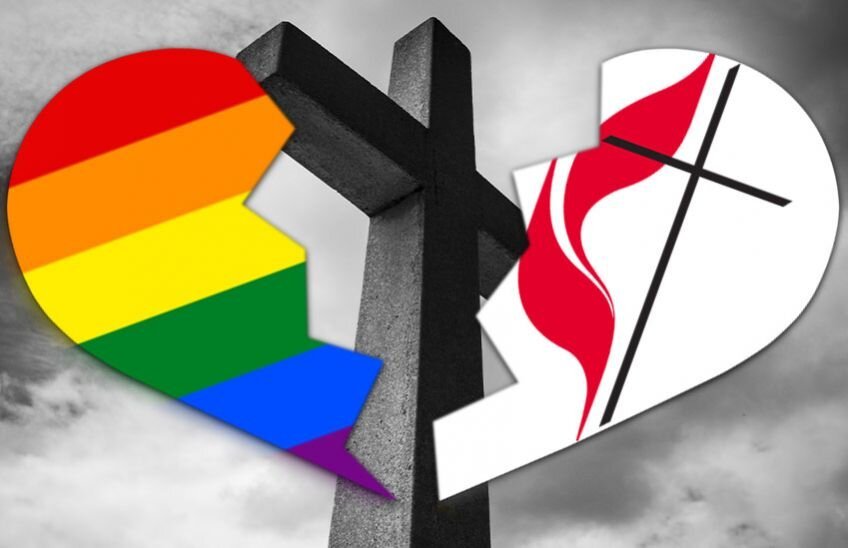
United Methodist conflict hits Bible Belt pews, while Tennessean report omits crucial facts

United Methodist conflict hits Bible Belt pews, while Tennessean report omits crucial facts

If you have followed United Methodist warfare for the past 40 years or so, as I have, you know that this is a local, regional, national and global story that is only getting more complex now that it has reached pews in local churches.

For years, the key battles were between activists in the global UMC majority (primarily growing churches in Africa and Asia) and the North American UMC establishment (rooted in agencies, seminaries and shrinking blue-zip-code flocks).

At the moment, the fiercest battles are in parts of the Midwest and the Bible Belt where doctrinally conservative churches (usually rural and suburban) will square off with establishment leaders based in big-city-friendly regional conferences. You can see this drama in a recent Tennessean story: “As United Methodists in Tennessee navigate schism, 60 churches leave denomination.” Here’s the overture:

As 60 churches in West and Middle Tennessee leave the United Methodist Church, churches in East Tennessee are so far sticking around but passionately debating denomination policies.

The departures and disagreements were features of recent annual meetings for Tennessee’s two UMC conferences, illustrating the regional variation of the ongoing schism in the UMC.

In May, the split within the UMC solidified when a new "traditionalist" denomination splintered from the UMC for churches with more conservative theological and cultural views, including on sexuality and gender.

When the new Global Methodist Church launched, the pace of churches leaving the UMC was expected to intensify.

Yes, there is that problematic word once again — “schism.” In this recent post — “In terms of church history, should the United Methodist break-up be called a 'schism'?” — I argued, for several reasons, that it’s more accurate to call what is happening a “divorce.”

Without repeating all of that, the crucial point is that group given the “traditionalist” label is, in fact, the majority in the GLOBAL denomination that has, for several decades, won tense votes defending the doctrines in the UMC’s Book of Discipline. The group seeking to change these doctrines is the entrenched North American establishment. According to the Tennessean framing, the majority is creating the “schism,” while the establishment minority represents the doctrinal heart of the denomination.

Instead of a “schism,” many in the denomination — a coalition on the doctrinal left and right —negotiated is a “divorce” plan that could save years of additional pain and millions of dollars in legal fees. That plan is the “Reconciliation and Grace Through Separation” protocol, which remains in limbo after establishment leaders twice delayed the vote, citing COVID-19 fears.

This Tennessean story never mentions this important document.


Please respect our Commenting Policy

Reality on bloody ground: That Pentecost massacre in Nigeria wasn't all that unusual

Reality on bloody ground: That Pentecost massacre in Nigeria wasn't all that unusual

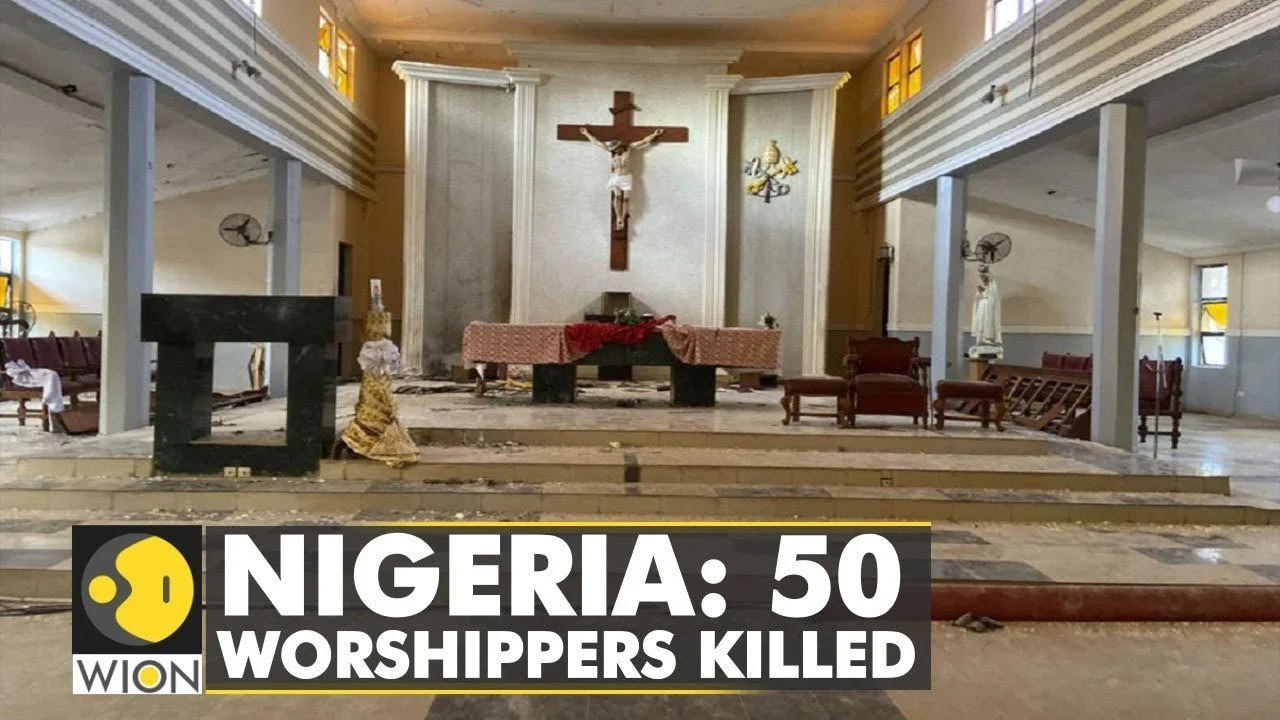
The massacre occurred during a Sunday Mass, but it wasn't an ordinary Sunday -- this was the great feast of Pentecost, which marks the end of the Easter season.

What's more, the gunmen didn't strike in tense northern Nigeria, where Christian communities are isolated in a majority-Muslim region. This 30-minute attack was inside St. Francis Catholic Church, located in the safer southwestern state of Ondo.

While 40 worshippers were confirmed dead, including five children, the number was almost certainly higher since many families buried their dead privately. Another 100 were wounded.

The scope of this attack was "unique," especially in southern Nigeria, but "this violence … was not unique in its occurrence," stressed Stephen Rasche, senior fellow at the independent Religious Freedom Institute in Washington, D.C. "These types of murders are taking place weekly, almost daily, in Nigeria -- murders of innocent Christians, being gunned down, slaughtered indiscriminately, throughout the north and, increasingly, into the central part of Nigeria and into the south."

Human-rights activists are trying to document the bloodshed. According to the nondenominational watchdog group Open Doors, the 4,650 Christians killed in Nigeria during 2021 accounted for 80% of such deaths worldwide -- nearly 13 per day. Nigeria's Christian death toll has topped 60,000 over the past two decades.

Nevertheless, this year's International Religious Freedom Report from the U.S. State Department said the "Secretary of State determined that Nigeria did not meet the criteria to be designated as a Country of Particular Concern for engaging in or tolerating particularly severe violations of religious freedom or as a Special Watch List country for engaging in or tolerating severe violations of religious freedom."

It's understandable that news reports about Nigeria have faded, in part because of Russia's invasion of Ukraine and pressing global economic issues, said Rasche, who visited Nigerian churches during this Holy Week and Easter.

Also, many Western leaders view atrocities in Nigeria as clashes between Christian farmers and Muslim cattle herders, with climate-change issues erasing safety zones between these groups.


Please respect our Commenting Policy

What's news? Attacks on Christians in Nigeria provide an important case study

What's news? Attacks on Christians in Nigeria provide an important case study

As an undergrad, The Religion Guy took a valuable course titled “Evaluation and Display of News,” an elemental skill for journalists who cope with difficult choices.

Take the Johnny Depp-Amber Heard trash-a-thon. Please. Just as car crashes produce rubbernecking, “human interest” justified vast voyeurism that fed the market and stole print space and air time from more substantive stories.

Editors’ tendentious coverage decisions continually erode public trust in the media. Liberal outlets give scant play to the assassination plot against Brett Kavanaugh, harassment of other Supreme Court justices and their families and related attacks on a couple dozen pro-life agencies. Meanwhile, conservatives downplay the near-miss danger to Vice President Mike Pence and other high officials amid the January 6 attempt to block the Constitution’s election process.

The Guy could list other examples from both sides, and so could you.

Let’s leap across the Atlantic to assess neglectful news judgment regarding the important plight facing Christians in Nigeria. Their continual conflict with Muslim jihadi factions has left an estimated 37,500 dead since 2011, says the latest annual report (.pdf here) from the U.S. Commission on International Religious Freedom (www.uscirf.gov; contact media@uscirf.gov or 202–523–3240).

The nondenominational watchdog group Open Doors USA says that in 2021“more Christians were murdered for their faith in Nigeria than in any other country,” making up nearly 80% of Christian deaths worldwide. Nigeria is the “most dangerous place to be a Christian” in the world, says the Intersociety for Civil Liberty and Rule of Law, a Nigerian human rights monitor. Christian observers speak openly of “genocide.”

In addition to the deaths, it’s all but impossible to count up the maimed victims who’ve survived, the kidnapped schoolchildren and clergy, forced child marriages and forced conversions or the widespread destruction of Christians' churches, homes, shops and even whole villages.

Sounds like compelling news from here.


Please respect our Commenting Policy

What responsibility do journalists have when covering incendiary wars about religion and culture?

What responsibility do journalists have when covering incendiary wars about religion and culture?

We tend to pay attention to news that impacts us most directly. So for Americans, the culture war playing out between religious (and some non-religious) traditionalists and social progressives is most compelling.

Half-way around the world, however, another ongoing war about religion and culture has heated up yet again. This one has direct international ramifications and has the potential to negatively impact global religious-political alignments perhaps as much or more than America’s nasty cultural war.

It also contains an important lesson about the possible consequences of governments employing divisive culture war tactics for political gain (more on this theme below.) I do not think it absurd to fear that our homegrown culture war could become just as bad, or worse.

I’m referring to India, a constitutionally secular nation wracked by inter-religious conflict between majority Hindus and minority Muslims (Christians have been caught in this imbroglio, too, but put that aside for the duration of this post).

Here’s a recent overview of India’s situation from The Washington Post. And here’s the top of that report:

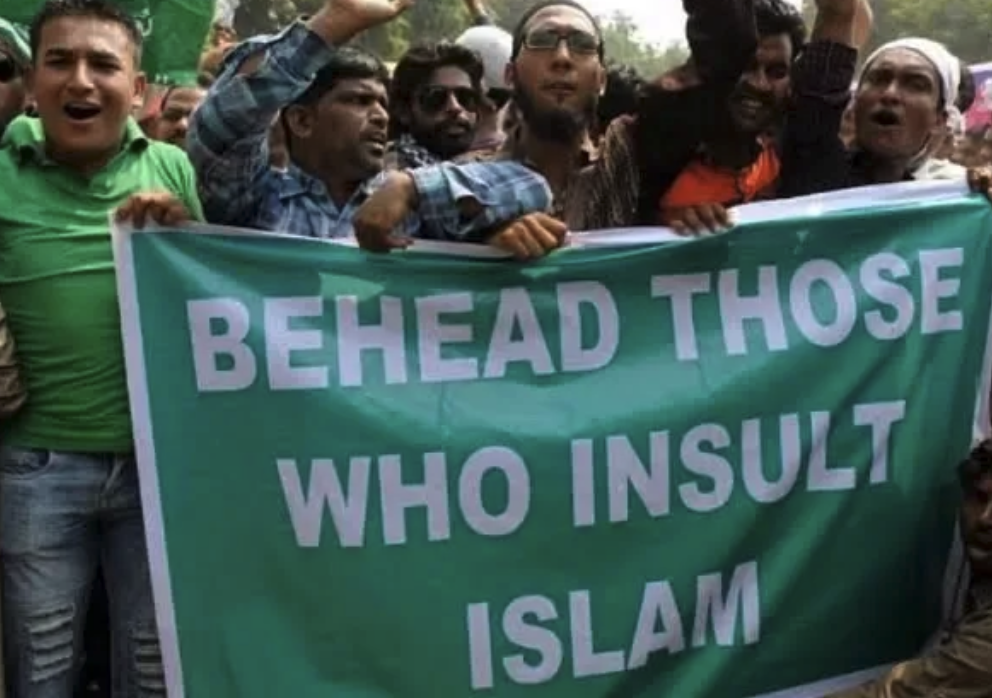
NEW DELHI — After a spokeswoman for India’s ruling party made disparaging remarks about the prophet Muhammad during a recent televised debate, rioters took to the streets in the northern city of Kanpur, throwing rocks and clashing with police.

It was only the beginning of a controversy that would have global repercussions.

Indian products were soon taken off shelves in the Persian Gulf after a high-ranking Muslim cleric called for boycotts. Hashtags expressing anger at Prime Minister Narendra Modi began trending on Arabic-language Twitter. Three Muslim-majority countries — Qatar, Kuwait and Iran — summoned their Indian ambassadors to convey their displeasure. The governments of Saudi Arabia, Indonesia and Afghanistan on Monday condemned the spokeswoman, Nupur Sharma, as did the Organization of Islamic Cooperation.

Inflammatory comments by right-wing activists and political leaders in India often make headlines and spark outrage on social media. But rarely do they elicit the kind of attention that Sharma drew in [early June], which sent her political party — and India’s diplomats — scrambling to contain an international public relations crisis.

Let’s step back from the news coverage for a moment to consider some underlying dynamics and their impact on journalism.


Please respect our Commenting Policy

Vatican game that never ends: Knowns and unknowns with covering next papal election

Vatican game that never ends: Knowns and unknowns with covering next papal election

It might seem ghoulish to outsiders, but the media have a duty to closely monitor news personalities’ retirement plans, health woes, aging processes and impending deaths, whether that of a British queen, U.S. president, Supreme Court justices, tycoons or even Hollywood superstars.

Or a pontiff.

Currently, there’s a season of speculation about Pope Francis’s future and whether his newly chosen cardinals to be installed August 27 are his final bid to shape the conclave that will elect the next pope.

Careful. If you figure he’s making sure it will be a fellow liberal, don’t forget that the conservative Popes John Paul II and Benedict XVI named the cardinals who elected Francis.

Speaking of successors, AP Correspondent Nicole Winfield follows the Rome bureau’s legendary Victor Simpson, who covered four popes across 41 years. On Sunday, she knowledgeably sifted some Francis scenarios.

Francis has just announced that when the cardinals gather in August he’ll visit the Italian hometown of Celestine V, the pope who famously resigned in A.D. 1294.

Surprisingly, Benedict did the same in 2013. So, is this trip a signal, or only a trip? Francis has remarked that Benedict was “opening the door” for resignation by future popes, hinting he might consider the idea. But Vaticanologists figure Francis will not resign so long as another ex-pope is alive.

At age 95, Benedict is alert but frail. Francis, age 85, appears reasonably healthy but underwent colon surgery last year and recently appeared in public in a wheelchair for the first time due to chronic knee pain.

Then there’s this. The cardinals elected Francis partly in hopes he’d reform the perpetually troubled Roman Curia (as in the sprawling Vatican bureaucracy). Restructure is now set in a Francis edict that took effect on Sunday. But fully implementing the scheme may be thorny and Francis may feel a responsibility to pursue his project.

Surveying the batch of incoming cardinal electors, Bishop Robert McElroy of San Diego stands out as the only American and as a mere bishop, not an archbishop (see this tmatt “On Religion” column about this drama). Francis again snubbed nearby Los Angeles Archbishop Jose Gomez, the Mexico-born head of the nation’s largest archdiocese and the elected president of the U.S. bishops. Did membership in the Opus Dei organization count against him?


Please respect our Commenting Policy

Latest massacre of Nigerian Christians? It would help to know this was the Feast of Pentecost

Latest massacre of Nigerian Christians? It would help to know this was the Feast of Pentecost

In my experience, if you ask most newsroom managers and copy-desk pros to name the most important Christian holy day, the majority will say “Christmas.”

Actually, that’s the biggest holiday, from the perspective of the surrounding culture. The correct answer is Easter, the feast of the Resurrection of Jesus Christ.

Now, here is a tricky question — one linked to yet another hellish massacre of Christians in the tense land of Nigeria. What holy day would be ranked No. 2 in the calendar of ancient Christianity?

There may some debates about this, but many historians will say it is the joyous Feast of Pentecost (click here for background material), which closes the great season of Easter. Hold that thought, because we will come back to it. Meanwhile, something very important is missing from the top of this Reuters report: “At least 50 killed in massacre at Catholic church in southwest Nigeria.”

LAGOS, June 5 (Reuters) — Gunmen attacked a Catholic church in southwest Nigeria during mass on Sunday, killing at least 50 people including women and children, according to a hospital doctor and media reports.

The gunmen shot at people outside and inside the church building, killing and injuries worshippers, said Funmilayo Ibukun Odunlami, police spokesperson for Ondo state. She did not say how many people were killed or injured at St Francis Catholic Church in the town of Owo but added police were investigating the cause of the attack.

Ondo state Governor Arakunrin Oluwarotimi Akeredolu, who visited the scene of the attack and injured persons in hospital, described Sunday's incident as "a great massacre" that should not be allowed to happen again. The identity and motive of the attackers was not immediately clear.

The motive was unclear?


Please respect our Commenting Policy