International News

When assisted suicide becomes 'a crossing over' church rite and a mere 'procedure'

When assisted suicide becomes 'a crossing over' church rite and a mere 'procedure'

Writer Emily Standfield drew a challenging assignment recently for Broadview magazine: write about Betty Sanguin, who chose to hasten her death as part of a religious rite performed inside the church she loved for many years, amid a diagnosis of amyotrophic lateral sclerosis.

Here’s the full headline: “Manitoba’s first medically assisted death in a church was an ‘intimate’ ceremony — Betty Sanguin spent her last day with family and friends at Churchill Park United.” And this is the overture:

At around noon on March 9, Betty Sanguin arrived at her church, Churchill Park United in Winnipeg, on a stretcher.

“The moment we rolled her in … and sat her up in her recliner, she lit up like a Christmas tree,” Lynda Sanguin-Colpitts, one of Sanguin’s daughters, recalls. “I hadn’t seen that much life in her eyes, so much joy [in a long time]. And honestly I think part of it was just being in the church.”

But this was no ordinary church service. Sanguin chose to die in the sanctuary that day.

Let’s stipulate some points up front:

First of all, Standfield is an editorial intern. Also, it’s crucial that Broadview, a publication affiliated with the United Church of Canada, has many ideological commitments and states them explicitly on its website. Here are some quotes:

— “Broadview’s values include LGBTQ2 inclusion, environmental sustainability and ethical investing, as well as increasing the presence of diverse contributors.”

— “In October 2020, we pledged to have one-third BIPOC (Black, Indigenous, People of Colour) staff and freelance contributors by 2025, and we’ll check in on our progress annually. Our governing board has also committed to achieving a similar target among its 11 members.”

— “In our writing, we refer to diverse communities with their preferred cases and spellings. For example, we capitalize ‘B’ in ‘Black’ and ‘I’ in ‘Indigenous,’ and use our Indigenous writers’ and subjects’ preferred spellings for Indigenous nations.”

Please respect our Commenting Policy

The pope, Cardinal Becciu and bad real estate deals: Concerning the Vatican 'Trial of the Century'

The pope, Cardinal Becciu and bad real estate deals: Concerning the Vatican 'Trial of the Century'

The news media loves the term “Trial of the Century.”

This phrase gained widespread acceptance and use during the 1935 trial that stemmed from the kidnapping of Charles Lindbergh’s son three year earlier. That was in an era when newspapers and sensationalism went hand in hand.

The moniker came back in a more modern context when O.J. Simpson went on trial for double homicide in 1995 — a salute to the power of celebrity in American life, as well as debates about race. This era included both newspapers and TV (the trial was televised live), along with a nascent Internet that would eventually come to dominate the news landscape a few decades later.

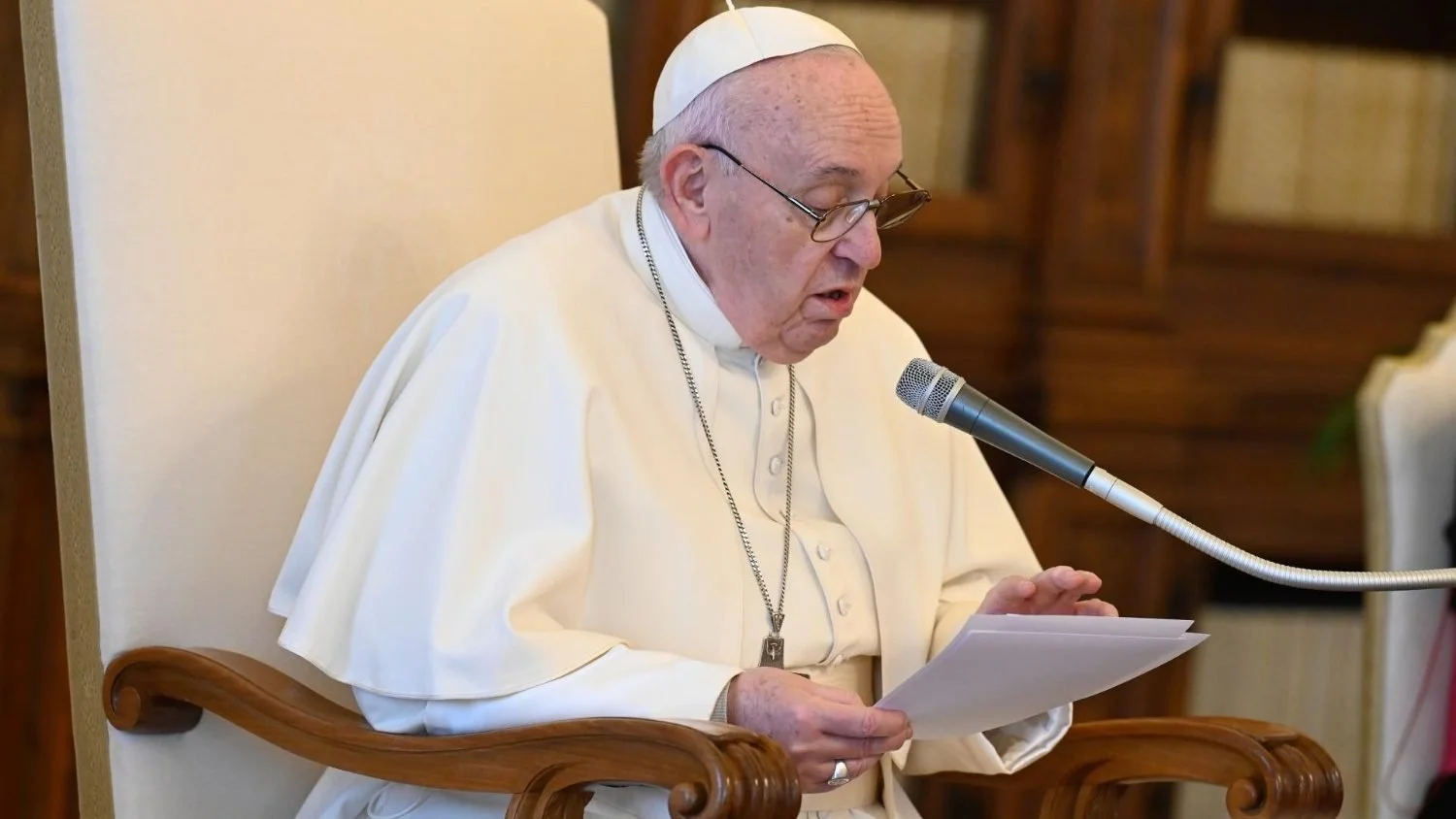
Something akin to a Catholic “Trial of the Century” has gotten underway in Rome and there’s plenty of palace intrigue to go around. The trial involving corruption, bad real estate deals and financial wrongdoing has placed Pope Francis in the center of a controversy that for the first time doesn’t involve doctrine or theology.

Familiar journalism questions leap to mind: What did the pope know and when did he know it? What if a witness implicates Francis? Hold that thought.

Pope Francis may not be on trial, but he might as well be, as news coverage of this trial attempts to cut through all the noise and get readers what’s most important. Catholic media has done a very good job covering the trial, although I expect coverage to expand in the mainstream press should Francis become a central figure during testimony.

It’s moments such as this trial, delayed over the past year by preliminary hearings and COVID-19, that highlight the Vatican as both a religious institution as well as a political one, with all the headaches that come with managing a city state with immense wealth and properties. News coverage of this trial and its lead up has been interesting to dissect — depending on whether you read mainstream media or the Catholic press — and exactly what this latest scandal means for the church.


Please respect our Commenting Policy

Great and Holy Pascha in Ukraine: Details matter when war crashes into holiest day of the year

Great and Holy Pascha in Ukraine: Details matter when war crashes into holiest day of the year

Once a copy-desk fanatic, always a copy-desk fanatic. If you ever get caught up in obscure debates about items in the Associated Press Stylebook, then you’re trapped. You see picky style issues all over the place.

This is certainly true on the religion beat. Readers may recall that the AP team recently updated and expanding some of the style bible’s references to religious terms, history, etc. See this recent post and podcast: “Can the AP Stylebook team slow down the creation of new Godbeat 'F-bombs'?

This brings me to the most important holy day on the Eastern Orthodox Christian calendar — it’s called Pascha and you may have heard that the ancient churches of the East celebrate it according to the older Julian calendar. It’s complicated, but there are times when East is East and West is West.

Pascha is certainly one of those times. OrthodoxWiki notes:

Pascha is a transliteration of the Greek word, which is itself a transliteration of the Aramaic pascha, from the Hebrew pesach meaning Passover. A minority of English-speaking Orthodox prefer the English word "Pasch."

Here is the note that I’d like the AP style pros to think about. It is also accurate to say that this holy day is, in the West, called “Easter.” Thus, we frequently see the term “Orthodox Easter” in the mainstream press. In fact, that is pretty much the only language that we see in news reports about this holy day.

Here me say this: As a journalist who is an Orthodox Christian (and a former copy-desk guy). I get it. I know that “Orthodox Easter” is a quick way to save some ink that journalists would have to use to offer an explanation of, well, Pascha.

But the word “Pascha” is real and it’s ancient and it has great meaning to the second largest Christian communion on the Planet Earth. If you are writing about Orthodox believers at this time of the year, why not use both terms in the story? Why avoid THE WORD. (Oh, and the name of our eucharistic rite is the “Divine Liturgy,” not “Mass.”)

This is an important issue, at the moment, because you have a war going on (whatever Vladimir Putin wants to call it) in the season of Pascha between Russia and Ukraine — two lands with centuries of shared history rooted in Orthodox Christianity.


Please respect our Commenting Policy

In terms of church history, should the United Methodist break-up be called a 'schism'?

In terms of church history, should the United Methodist break-up be called a 'schism'?

When I moved to Denver in 1984, Rocky Mountain News (RIP) my work plunged me into the ongoing United Methodist Church battles over creed-level doctrines, the Bible and, of course, homosexuality.

The region’s defining institution was the Iliff School of Theology, a UMC authorized seminary that a former professor there once told me was “the single most liberal school in America that still bothers to call itself ‘Christian.’ “ In the late ‘80s, an Iliff student said he had encountered one professor who believed that the resurrection of Jesus actually happened, as an event in real time. I would doubt this seminary has become more small-o “orthodox” in the past third of a century.

If you were in Denver back then it was clear that the United Methodists were in the midst of a very slow train wreck and that a parting of the ways was inevitable. The question: Who would leave and who would control the assets of this large, but shrinking, denomination?

This brings us to a recent story in The Nashville Tennessean with this dramatic double-decker headline (behind a fierce paywall):

Methodists focus on Easter amid denominational schism and the tough decisions ahead

A new, more conservative Methodist denomination is set to launch May 1 after a years-long debate centered largely over LGBTQ rights.

People have been using the word “schism” for decades, when describing this conflict. I would like to argue that this technical term is problematic, in this case, and that recent events — especially the proposed “Reconciliation and Grace Through Separation” protocol — have made it even more so. I propose using the word “divorce,” in this case. Hold that thought.

There is much to praise in this Tennessean story, especially the many quotes from regional church leaders on both sides of this battle. However, the “schism” lens is easy to see. I think that with two or three extra sentences, readers would have a better idea what is going on in this conflict. It’s also important to know that the Southeast is a crucial region in this conflict (along with the core Midwest), in which there are many doctrinally conservative churches paired with bishops who are more progressive.

But let’s start with the term “schism.” Here is a helpful Britannica reference:

schism, in Christianity, a break in the unity of the church.


Please respect our Commenting Policy

Father Joseph Ratzinger's sobering 1969 vision of the future and the new German reality

Father Joseph Ratzinger's sobering 1969 vision of the future and the new German reality

The 1960s were turbulent times and, in Europe, Catholics faced storms of radical change that left many weary or even cynical.

In 1969, one of Germany's rising theologians -- a liberal priest at Vatican II who then became a conservative -- was asked what he saw in the future.

"What St. Augustine said is still true -- man is an abyss; what will rise out of these depths, no one can see in advance," said Father Joseph Ratzinger, on German radio. "Whoever believes that the church is not only determined by the abyss that is man, but reaches down into the greater, infinite abyss that is God, will be the first to hesitate with his predictions."

Ratzinger's words grew in importance in 1977 when he became Archbishop of Munich and quickly became a cardinal. Then Pope John Paul II made him prefect of the Vatican's powerful Congregation for the Doctrine of the Faith, where his orthodoxy led liberals to call him "God's Rottweiler." In 2005, he became Pope Benedict XVI.

Catholics continue to ponder his 1969 words: "From the crisis of today the church of tomorrow will emerge -- a church that has lost much. … As the number of her adherents diminishes, so it will lose many of her social privileges. In contrast to an earlier age, it will be seen much more as a voluntary society, entered only by free decision. As a small society, it will make much bigger demands on the initiative of her individual members."

The future pope predicted a "crystallization" process creating a "more spiritual church, not presuming upon a political mandate, flirting as little with the left as with the right. … It will make her poor and cause her to become the church of the meek."

The retired pope celebrated his 95th birthday on April 16th -- Holy Saturday. During an earlier meeting with Jesuits, Pope Francis called his predecessor "a prophet" and cited Benedict's predictions of a "poorer" and "more spiritual" church..


Please respect our Commenting Policy

Podcast: The New York Times misses some key voices as Ukraine prepares for Pascha

Podcast: The New York Times misses some key voices as Ukraine prepares for Pascha

I have said it before and I will say it again: If I could pick a major event from my life and live it over again — knowing what I know now — it would probably be the trip that I took to Moscow in 1991, arriving the week after the events that ended the Soviet Union.

There were still flowers on the sidewalks (near our hotel) where protesters were killed by Soviet tanks. There were Orthodox icons, as well. I was an evangelical Anglican, at that time, and really didn’t grasp the importance of many of the Orthodox people and places I encountered during that stay. I was there as part of the Moscow Project, an effort to help the emerging Russian Bible Society print 4 million Bibles.

One moment, in particular, was relevant to our discussion during this week’s belated “Crossroads” podcast (CLICK HERE to tune that in), which focused on a New York Times report about Ukraine and tensions in global Eastern Orthodoxy heading into this weekend and the holiest day on the Christian calendar — Pascha (Easter in the West).

I was visiting with a veteran Orthodox priest who was active in the Moscow Project. We were talking about the future of Russian Orthodox Church and the realities that would shape the next few decades. This is from an “On Religion” column on the topic. He said:

It’s impossible to understand the modern Russian church … without grasping that it has four different kinds of leaders. A few Soviet-era bishops are not even Christian believers. Some are flawed believers who were lured into compromise by the KGB, but have never publicly confessed this. Some are believers who cooperated with the KGB, but have repented to groups of priests or believers. Finally, some never had to compromise.

“We have all four kinds,” this priest said. “That is our reality. We must live with it until God heals our church.”

I bring this up, of course, because of the firestorm surrounding the words and actions of Patriarch Kirill, the current leader of the Russian Orthodox Church. In KGB documents, it appears that his codename was “Mikhailov” during the years before the 1991 coup.

How would Kirill be classified, using this priest’s typology?


Please respect our Commenting Policy

Five faith facts about the life of Ketanji Brown Jackson, the first Black woman at SCOTUS

Five faith facts about the life of Ketanji Brown Jackson, the first Black woman at SCOTUS

Faith. It’s an important part of Ketanji Brown Jackson’s story.

Here are five religion facts about the 51-year-old judge who on Thursday became the first Black woman confirmed to the U.S. Supreme Court:

1. Jackson will be “the first-ever nondenominational Supreme Court justice,” as Christianity Today’s Kate Shellnutt points out.

2. She’ll become the second current Protestant on the court (along with Neil Gorsuch), joining six Catholics (Samuel Alito, Amy Coney Barrett, Brett Kavanaugh, John Roberts, Sonia Sotomayor and Clarence Thomas) and one Jewish justice (Elena Kagan), according to Christianity Today’s Megan Fowler.

But Religion News Service’s Jack Jenkins tweets that Jackson will be “the only current Supreme Court justice who publicly IDsas Protestant.” “Gorsuch attended an Episcopal church before joining SCOTUS,” Jenkins explains, “but grew up Catholic and how he personally IDs is unclear.”

3. Jackson “has put her religious faith front, center — and vague,” notes The Associated Press’ Peter Smith. “She’s spoken strongly of the role of her faith in her life and career but hasn’t gotten into the specifics of that commitment.”

RNS’ Adelle Banks offers more details on Jackson’s past statements about her faith in God.

4. At a hearing last month, Jackson was pressed on her faith by Sen. Lindsey Graham, a Republican from South Carolina, ReligionUnplugged.com’s Hamil R. Harris reports.

The Deseret News’ Kelsey Dallas recounts this exchange between Graham and Jackson:

“On a scale of 1 to 10, how faithful would you say you are in terms of religion? I go to church probably three times a year so that speaks poorly of me. Do you attend church regularly?,” Graham said.

Jackson declined to give a rating, noting that she worried about the message doing so would send to Americans watching at home.


Please respect our Commenting Policy

Ukraine war savagery will loom over this year's World Council of Churches Assembly

Ukraine war savagery will loom over this year's World Council of Churches Assembly

If Russian invaders continue their current aggression, how much of Ukraine will be turned to rubble and how many innocent civilians will be dead by August 31?

That's opening day for the 11th global Assembly in the 74-year history of the World Council of Churches (WCC). COVID willing, the delegates from 352 Protestant and Orthodox church bodies will be joined by thousands of observers, including Catholic and evangelical Protestant representatives.

The WCC has gotten little media ink in North America during recent times, but 2022 sparks obvious news interest in how the organization deals with the Ukraine imbroglio at the Assembly, which runs through Sept. 8 in Karlsruhe, Germany.

Media that do original international reporting and have the money should be laying plans to staff the event, which The Guy knows from covering the 1975, 1983 and 1998 Assemblies supplies numerous trend stories and features alongside the spot news. Reporters unable to attend in person should be lining up contacts to help interpret the goings-on long distance.

This is a critical moment for the WCC, Orthodoxy and global Christian unity. The Russian Orthodox Church, some of whose leaders have made public statements hacking Vladimir Putin's war, is by far the WCC's biggest member — claiming 113.5 million parishioners plus another 30 million in its Ukraine jurisdiction and with ties elsewhere. That compares with the WCC's reported over-all church constituency of 580 million.

On Sunday, former Archbishop of Canterbury Rowan Williams all but demanded that the WCC expel the Russian Orthodox Church from membership:

“The riot act has to be read. When a church is actively supporting a war of aggression, failing to condemn nakedly obvious breaches in any kind of ethical conduct in wartime, then other churches have the right to raise the question and challenge it — to say, unless you can say something effective about this, something recognizably Christian, we have to look again at your membership.”

Also last week, Bishop Rob Schenck of America's Dietrich Bonhoeffer Institute in Washington, D.C., took to Religion News Service to promote a Ukraine petition campaign. It urges the WCC to expel the Russian Orthodox from membership over Moscow Patriarch Kirill's "unholy compact" with Russian dictator Putin.


Please respect our Commenting Policy

Thinking about the Catholic vocations 'crisis': The Pillar asks if this is truly a global problem

Thinking about the Catholic vocations 'crisis': The Pillar asks if this is truly a global problem

When journalists are covering a truly global religion — take the Catholic Church, for example — it really helps to pay attention to the fine details in statistics.

What is true in America may not be true in Africa. What’s true in the shrinking churches of Western Europe may not be true, literally, anywhere else.

I brought this up in a recent think piece — “Thinking about world Christianity, as Crux digs deep into many overlooked Catholic details” — pointing readers to an interesting Crux essay by John L. Allen, Jr. (of course). Here’s a key bite of commentary from Allen:

… Catholicism added 16 million new members in 2020, the latest year for which statistics are available. Granted, that meant the church did no more than keep pace with overall global population growth, but it’s still significant at a time when most western perceptions are that the church is shrinking due to the fallout from the sexual abuse crisis, various scandals at senior levels, bitter political infighting, increasing irrelevance to younger generations, and any number of other alleged failures.

For sure, if you live in western Europe or in some parts of the United States, where parishes are closing or consolidating and Mass attendance seems in free fall, those perceptions are understandable. Yet the reality is that on a global level, Catholicism enjoyed the greatest expansion in its history over the past century, more than tripling from 267 million in 1900 to 1.045 billion in 2000 and 1.36 billion today.

Basically, Catholicism is growing wherever it’s churches, to be blunt, have plenty of children, converts and clergy.


Please respect our Commenting Policy