International News

Bonus podcast: 'What's next in Afghanistan?' Warning: this news topic involves religion

Bonus podcast: 'What's next in Afghanistan?' Warning: this news topic involves religion

Here is a truth claim that, over the years, I have heard (or seen) stated in a number of ways by journalists and mass-media professors: Without strong, or at least adequate, visual images a story doesn’t exist in television news.

Yes, there are exceptions. But the exceptions almost always take place when big stories break in print media and television producers are highly committed to getting them on air — somehow.

Now, in the smartphone era, there are lots of ways for visual images to emerge (ask Hunter Biden). However, in our era of partisan, niche news, it may not matter if images exist. What citizens cannot see (or read) will not hurt them?

This brings me back to a subject I addressed in this recent GetReligion essay: “What's next in Afghanistan? Press will have to face issues of religion, culture and gender.”

The big question: Where does the Afghanistan story go next and, frankly, will elite American media cover the religion elements of this story?

That question was at the heart of a recent Religion Unplugged podcast discussion that I had with a friend and, long ago, a former religion-beat colleague — Roberta Green. In recent decades, she is better known as the philanthropist and fine arts-maven Roberta Green Ahmanson (click here for a typical arts lecture).

This new podcast is entitled, “How Will Afghanistan's Next Chapter be Written?” Click here to head over to iTunes to tune that in. Meanwhile, here is a key chunk of the GetReligion essay linked to our discussion about religion, journalism, culture, politics and “nation building”:

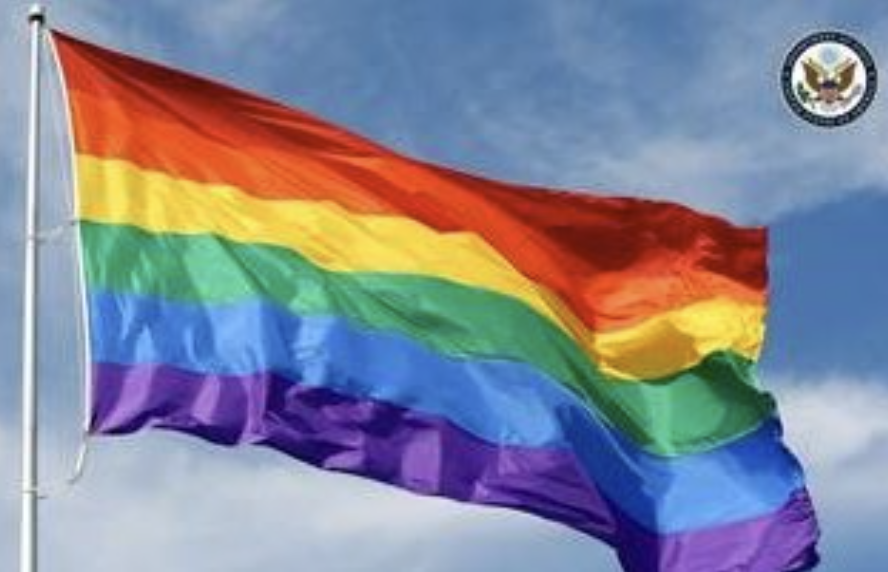
Viewed through the narrow lens of Taliban doctrine, it doesn’t matter if Western governments were forcing open doors for the work of Planned Parenthood or Christian missionary/relief groups, the work of LGBTQ think tanks (or the American corporations that back them) or Islamic thinkers and clerics whose approach to the faith clashed with their own.
Please respect our Commenting Policy

Push comes to shove on climate change. What more can clergy and religion reporters do?

Push comes to shove on climate change. What more can clergy and religion reporters do?

Imagine, if you dare, being forcibly parachuted into Taliban-ruled Afghanistan, the world’s current hell-hole du jour.

Suddenly you’re forced to shelter and feed your family and you’re at a loss as to how to do this.

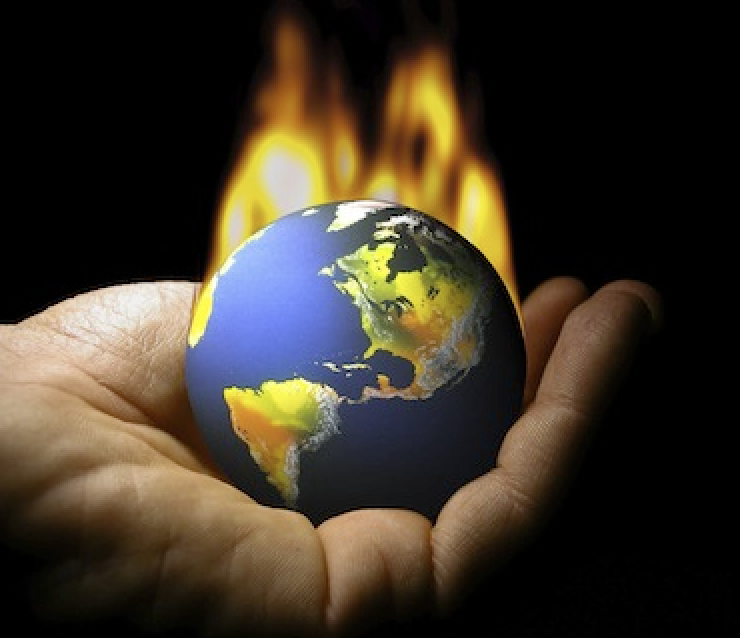
Now consider how the increasingly dramatic consequences of human-accelerated climate change might make your already dire situation worse.

A recent New York Times piece attempted to paint this picture.

It was not pretty. Here’s its opening graphs.

Parts of Afghanistan have warmed twice as much as the global average. Spring rains have declined, most worryingly in some of the country’s most important farmland. Droughts are more frequent in vast swaths of the country, including a punishing dry spell now in the north and west, the second in three years.

Afghanistan embodies a new breed of international crisis, where the hazards of war collide with the hazards of climate change, creating a nightmarish feedback loop that punishes some of the world’s most vulnerable people and destroys their countries’ ability to cope.

And while it would be facile to attribute the conflict in Afghanistan to climate change, the effects of warming act as what military analysts call threat multipliers, amplifying conflicts over water, putting people out of work in a nation whose people largely live off agriculture, while the conflict itself consumes attention and resources.

Just like that, a regional hell hole turns into a global tragedy that should be generating global headlines. Powerful nations half-a-world away scramble to deal with the situation — or should I say scramble to look like they’re dealing with it.

Nor is Afghanistan the only failed state suffering from ongoing political violence complicated by climate change’s frightening uncertainties. “Of the world’s 25 nations most vulnerable to climate change, more than a dozen are affected by conflict or civil unrest, according to an index developed by the University of Notre Dame,” The Times article reported.


Please respect our Commenting Policy

What's next in Afghanistan? Press will have to face issues of religion, culture and gender

What's next in Afghanistan? Press will have to face issues of religion, culture and gender

The headline on the National Catholic Register story is simple and timely: “Trapped by the Taliban, Praying for Escape from Afghanistan.

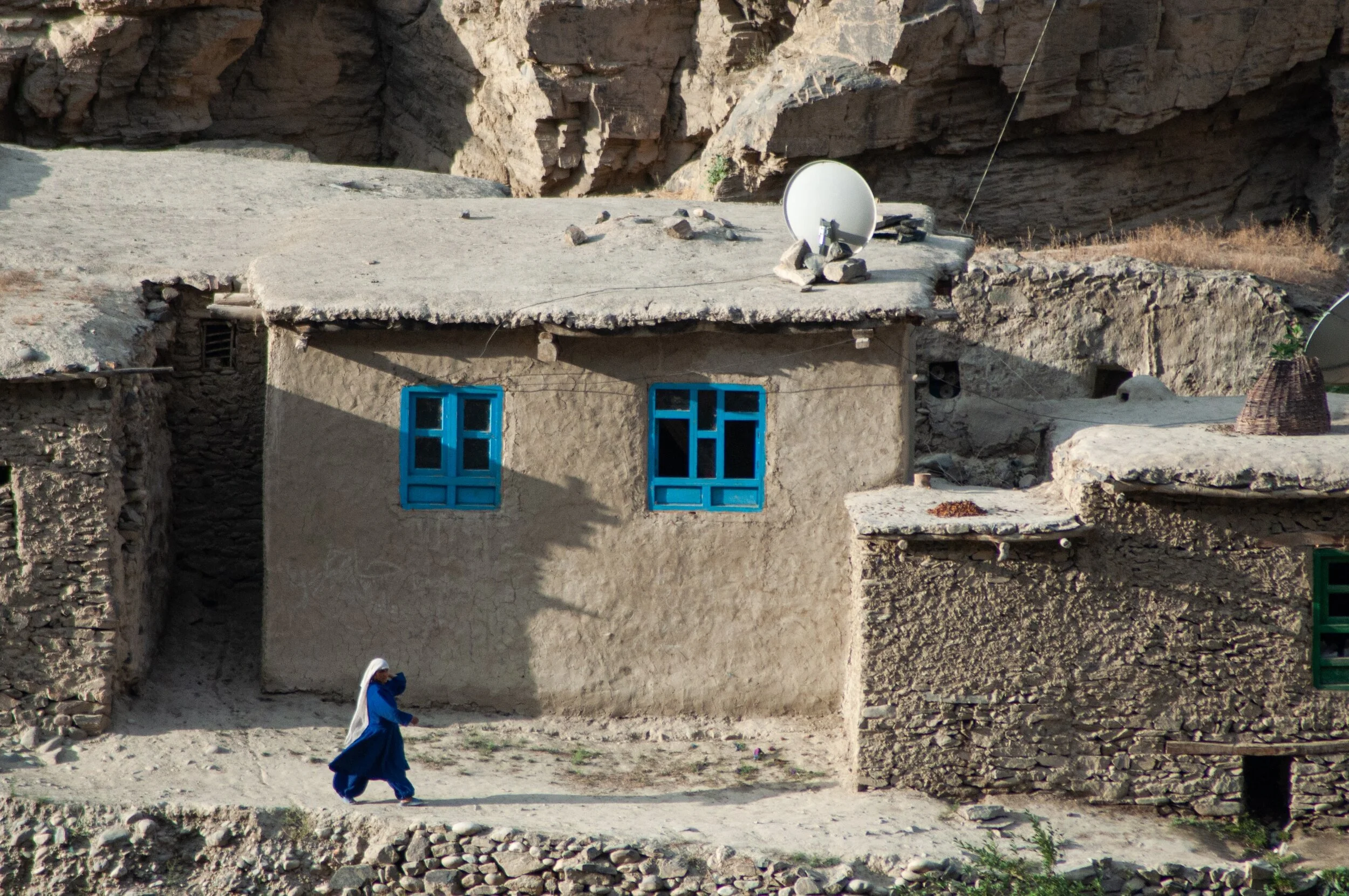
The reporting is simple, as well, as long as the journalists involved have established contacts with people inside Kabul who have smartphones and there are functioning cell towers and satellites. The story is built on people describing what they claim is going on around them, especially events affecting their families and friends.

These people are U.S. citizens, Afghans with U.S. “green cards” and others who cooperated with Western governments and agencies, including religious groups, during the 20 years of “nation building” in the war-torn land of Afghanistan.

The question is whether the contents of this story remain newsworthy, since Afghanistan has, for now, moved off the front burner in elite newsrooms. What happened? Clearly, Republicans and centrist Democrats had “pounced” on the topic while blasting President Joe Biden and his White House team.

But is this NCR piece news? Yes, it is. Also, this is a story journalists can study while looking for clues about realities, and news, at ground level in the Taliban’s new-old Afghanistan. Here is the overture:

For two decades, Sher Shah had worked alongside U.S. and Afghans to build a democratic country free from the Taliban and war. He had established a new life with his family in the U.S. with the help of Catholic Charities and a Catholic sponsor family, but briefly returned to Afghanistan this summer to attend his father’s funeral.

Now, he’s a man trying to escape the Taliban and get back home to the U.S.

More? Here is a claim — let me stress this is a CLAIM — coming from this source. But the Register report has other anonymous voices making similar statements in what appear to be telephone interviews or contacts via email.

U.S. Secretary of State Anthony Blinken has stated approximately 100 U.S. citizens and lawful permanent residents remain in Afghanistan. …

But Sher Shah said he has heard nothing from the State Department since Aug. 26 — and he made use of the State Department’s information posted on its website for U.S. citizens and lawful permanent residents stuck in Afghanistan.

“There are thousands of Americans still in Afghanistan,” he said. “And I’m one of them.”

The reality that emerges, in this stories and others, is that the United States and other Western forces were not engaged in 20 years of “nation building,” as in building an Afghanistan government that looked to the nation’s past — its monarchy, for example. It would be more accurate to say the goal was building a new culture, one that incorporated elements of modernity and even postmodernity in America and Europe.


Please respect our Commenting Policy

Pope Francis isn't resigning this summer: Here's a case study on media speculation

Pope Francis isn't resigning this summer: Here's a case study on media speculation

The U.S. mainstream press covers the Vatican very much like it does Washington, D.C. The parallels are similar, but there is a pope instead of a president, a College of Cardinals rather than Congress and believers, not voters.

The three — pope, cardinals and believers — are not political entities. Although there is overlap with politics, there is a lot more nuance to the Catholic church that many reporters often miss. As we say here at GetReligion, politics is the true faith in most newsrooms. Politics is real. Religion? Not really.

The press also gets very, very, very excited when it comes to the election of a new pope. It is, after all, a global news event and a type of power struggle the press thinks that it can cover like it does a political election. That’s something the press understands better than complicated things such as doctrine, tradition and history.

The big difference is that you never know when a pope will either die or, as of late, resign. In 2013, Benedict XVI did just that and gave up his post. It was a surprise, but not one that caught everyone off guard.

For example, U.S. newspapers and TV networks plan years ahead for a papal election. I wrote a feature that ran in the New York Post in 2001 on just that topic. Here’s how that story opened:

Ghoulish as it may sound, TV is already making elaborate – and expensive – plans for covering the funeral of Pope John Paul II and the selection of his successor.

The pontiff’s frail health was apparent during Easter Sunday services eight days ago – and it has pushed news organizations around the world to renew preparations for the inevitable.

Apartment-building roofs and hotel terraces surrounding the Holy See are suddenly a battle ground as dozens of news organizations try to outbid each other for places where they can be first to capture on camera the historic puff of white smoke from the Sistine Chapel – signaling the election of a new pope.

Italians are calling the jockeying for space the “War of the Terraces.”

Pope Francis’ colon surgery in July fueled speculation that he could be near death or contemplating to resign. Much of this speculation — indeed most of it when it comes to the papacy — comes from Italian newspapers.


Please respect our Commenting Policy

Mexico's high court backs abortion rights: Who did the Washington Post choose to interview?

Mexico's high court backs abortion rights: Who did the Washington Post choose to interview?

The trend started a decade ago, or even earlier, about the time when social media took over and many elite newsrooms began caring less about seeking out qualified, informed voices on both sides of hot stories.

The result was a kind of fail-safe method for spotting media bias, especially with stories located at the intersection of politics, religion and the cultural changes, especially those linked to the Sexual Revolution.

First, readers can print a copy of the story in question and then, with a highlighter pen, mark quotes from people who appear to have been interviewed by the reporters — the sources whose voices provide the framing anecdotes and quotations that provide crucial facts and material that interpret the facts.

Then, with a second highlighter, mark the quotes from experts, activists and citizens on the other side of the issue. The key question: How many of these quotes came from actual interviews and how many were taken from online press releases and statements?

Compare and contrast. The big question: What sources were shown respect — with personal interviews — and which sources were demoted to PR release status? (Personal comment: As a columnist, I have found that quoting personal weblogs — Twitter as well — can offer a kind of neutral ground, with more information and authentic “voices” than mere press releases.)

In my experience, 99% of the time the people who are quoted from interviews represent the viewpoints that are favored and respected by the journalists who produced the story. With that in mind, let’s look at the sourcing in an international-desk story that ran in The Washington Post with this headline: “Mexico decriminalizes abortion, a dramatic step in world’s second-biggest Catholic country.

The Catholic angle is crucial, of course. Who would be interviewed? Activists in ministries to pregnant women? Canon lawyers? Perhaps a Catholic priest or historian who knows why “life” issues are so crucial in the church’s theology? I will also ask: Was anyone from the religion-desk allowed input into the sourcing?

Let’s start with the overture:

MEXICO CITY — Mexico’s supreme court voted Tuesday to decriminalize abortion, a striking step in a country with one of the world’s largest Catholic populations and a decision that contrasts with tighter restrictions introduced across the border in Texas.


Please respect our Commenting Policy

Plug-In: Ida, abortion and Afghanistan: The best religion reads in stunning news week

Plug-In: Ida, abortion and Afghanistan: The best religion reads in stunning news week

I was in Waverly, Tenn., reporting on the aftermath of historic flooding that claimed 20 lives as Hurricane Ida — “one of the most powerful storms ever to hit the U.S.” — made landfall in Louisiana on Sunday.

On Monday afternoon, as I was boarding a flight in Atlanta to return home to Oklahoma City, The Associated Press sent a “flash” — its designation for “a breaking story of transcendent importance” — about the chaotic end of America’s 20 years of war in Afghanistan.

Guess what?

The big news week was just getting started.

By midnight Wednesday, a divided U.S. Supreme Court had provided “a momentous development in the decades-long judicial battle over abortion rights.” The court declined, at least for now, to overrule a new Texas law that bans most abortions in the state, raising hope among abortion opponents and concern among abortion-rights supporters that Roe v. Wade could be jeopardy.

Also, Ida’s “weakened remnants tore into the Northeast and claimed at least 43 lives across New York, New Jersey and two other states in an onslaught that ended Thursday and served as an ominous sign of climate change’s capacity to wreak new kinds of havoc.”

The news just keeps coming, and I haven’t even mentioned COVID-19 — which continues to rage with cases and hospitalizations “at their highest level since last winter.”

Mercy.

Power Up: The Week’s Best Reads

1. Afghanistan’s arc from 9/11 to today: once hopeful, now sad: This is a powerful read by Kathy Gannon, Afghanistan and Pakistan news director for The Associated Press.

“A country of 36 million, Afghanistan is filled with conservative people, many of whom live in the countryside,” Gannon explains. “But even they do not adhere to the strict interpretation of Islam that the Taliban imposed when last they ruled.”


Please respect our Commenting Policy

Everything the media will cover about Afghanistan is bound up with a rigid form of Islam

Everything the media will cover about Afghanistan is bound up with a rigid form of Islam

Two weeks ago, the Religion Guy looked at the future of world Islam and the media after Afghanistan's Taliban takeover. Herewith a look backward with a bit of historical and cultural perspective for writers covering this turbulent and tormented land.

As University of Washington political scientist Anthony Gill commented in the Wall Street Journal, "Despite the seeming irrelevance of religion in the secular West, policy-makers and military strategists would do well to understand its power elsewhere in the world." In the case of Afghanistan, one good source for that is "Holy Wars: The Rise of Islamic Fundamentalism" (Routledge, 1989, reissued 2014) by British journalist Dilip Hiro, a native of Pakistan.

A big theme emerges: Anything and everything that has occurred and will occur is bound up with an especially rigid form of Islam that dominates Afghan culture. In rural villages across the countryside, where most live, mullahs with rudimentary schooling are part of the influential elite establishment.

Time and again over the past century, monarchs tried to tame the clergy and impose a somewhat flexible form of Islam only to be defeated by populist rancor. Among the issues: whether to educate girls, child marriage, modern dress vs. the veil and burqa, whether women can leave their houses without male chaperones or hold down jobs, women voting, alcohol prohibition, polygamy rules and whether to permit banks when the religion bans charging of interest.

Hiro writes that Afghanistan was "a landlocked society which clung to medieval Islam and tenaciously resisted modernization well into the last quarter of the 20th Century." The media have well and amply surveyed the following eruptions since a 1973 military coup abolished the monarchy.

Soviet troops invaded to prop up a Marxist regime and produced the militant Muslim movement (1979). U.S.-aided Mujahideen forces won Soviet withdrawal (1989). The Taliban emerged from the resulting confusion to impose harsh theocracy (1996). Western powers and Afghan allies expelled Taliban rulers for harboring the 9/11 plotters (2001). The Taliban rapidly regain power (August, 2021).


Please respect our Commenting Policy

Plug-In: Is Afghanistan a religion story? If so, it may be the year's biggest religion story

Plug-In: Is Afghanistan a religion story? If so, it may be the year's biggest religion story

A few weeks ago, realizing how quickly 2021 was racing toward 2022, I made a mental note of the year’s top religion stories so far.

On my quick list: Christian nationalism at the Jan. 6 Capitol riot. Battles over pandemic-era worship restrictions. Faith’s role in vaccine hesitancy. The biggest Southern Baptist Convention annual meeting in many years. The Communion drama between President Joe Biden and U.S. Catholic bishops. Jewish connections to the Florida condo collapse.

Nowhere in my mind: Afghanistan.

But now — especially after the suicide bombings in Kabul on Thursday — it’s looking as if news (much of it tied to religion) in that war-torn nation will dominate headlines for weeks and even months.

As I noted last week, it’s impossible to keep up with all the rapid-fire developments, but these stories delve into compelling religion angles:

Stranded at the airport (by Mindy Belz, World)

Taliban follow strict Islamic creed that doesn’t change with the times, scholars say (by Mark A. Kellner, Washington Times)

Taliban’s religious ideology has roots in colonial India (by Sohel Rana and Sumit Ganguly, ReligionUnplugged.com)

Who is ISIS-K, the group officials blame for the Kabul airport bombings? (by Jack Jenkins, Religion News Service)

Desperate Afghan Christians turned away at airport, aid groups say (by Alejandro Bermudez, Shannon Mullen and Matt Hadro, Catholic News Agency)

Kabul airport attacks strand Afghan contacts of Christian humanitarians (by Cheryl Mann Bacon, Christian Chronicle)


Please respect our Commenting Policy

So ... where are the hidden converts to Christianity in Afghanistan? Can reporters find them?

So ... where are the hidden converts to Christianity in Afghanistan? Can reporters find them?

There’s an online discussion happening now among religion writers about all the uncovered religion angles of the current mess in Afghanistan.

The crux of the Afghanistan quagmire is religious, not simply political. It’s not just some guerrilla group taking over the country. It’s a radical Islamist group that aims to drag Afghanis back to the 7th century. There’s a reason why Afghanistan is vying with North Korea for the world’s worst country in terms of religious persecution.

The question nagging at some of us is what’s not getting covered in the daily drama of thousands of hapless people trying to leave the country despite the Taliban hordes gathered outside the airport. Also, sadly, there are the Marines inside the perimeter who are likewise keeping many people from getting on planes. (The Wall Street Journal has been covering the latter situation better than anyone else).

And on Wednesday, Catholic News Service reported that people who qualify for refugee status, including Christians, are being barred by the State Department from boarding outgoing military flights. Soo, who’s coming to the rescue? Political commentator Glenn Beck, that’s who. CNA says he’s raised $28 million via his Nazarene Fund to fly 20 jets into Kabul and pick up stranded Christians. This is an amazing story but where is the mainstream coverage?

While my co-writer Clemente Lisi covered the Catholics marooned in this desperate place, I’ve been focusing on coverage of evangelical Protestants, the only other religious group of any size that’s trapped there. (There were Sikhs and Hindus in Afghanistan as well, but they read the tea leaves after terrorists killed 25 Sikhs in March of 2020. After last year’s attack, those who could leave the country, left.)

Recently, India offered to take the estimated 650 Sikhs and Hindus who remain, a move that’s gotten criticism by Indian Muslims who want to get some of their friends out as well, according to the New York Times.

But, right now, there are no government or sympathetic Vatican officials out there willing to fish out the surprising number of evangelical Protestants who have somehow cropped up in this forbidding terrain. We read news accounts of “missionaries” who are stranded in country and I want to know: What missionaries? What converts? Does anyone have facts?

It’s nearly impossible to get reputable statistics at this point and all the news I found was anecdotal and scattered.


Please respect our Commenting Policy