International News

Attention news editors: Are German Catholic bishops poised to become liberal Luthers?

Attention news editors: Are German Catholic bishops poised to become liberal Luthers?

Germany’s Catholic bishops embarked on a series of conversations in 2018 aimed at reforming church teachings. It was an ambitious, if not audacious, effort addressing everything from homosexuality, priestly celibacy and the ordination of women.

As always, the word “reform” — in this context — means modernizing ancient church doctrines.

Conservative Catholics across the world decried the prospect. The tensions that arose at that time — and still simmering today — even caused some to warn that a permanent split could occur.

Indeed, the dreaded “s-word” — schism — can be used to describe the current moment. It was just last year that a high-ranking prelate argued that pushing such changes could lead to a “German national church.”

That’s a big news story — period. Over the past three years, the bishops in Germany haven’t been shy about making headlines — in Catholic-market publications. The question is when their proposals will draw major coverage by professionals in major newsrooms, including television networks.

Meanwhile, Pope Francis has elevated women at the Vatican, but he hasn’t endorsed such progressive doctrinal proposals — although his papacy has emboldened the Germans to push for such changes.

The church across the West has suffered tremendously due to secularism and the clergy sex scandal, especially in Germany. None of these German innovations, along with the alleged cover-ups, has helped matters. Still, the German bishops have continued to propose “reforms” in the past few weeks — with a series of moves that could forever change Roman Catholicism.

These latest pronouncements have received attention in the U.S. press, primarily in conservative religious publications. There are exceptions, but overall these fast-moving developments have gone unnoticed as of late.

These moves come as the church in Germany continues to lose members. In 2019, for example, over 272,000 Catholics quit the church.


Please respect our Commenting Policy

Israel issue complicates anti-Semitism definition. This could haunt Biden’s Middle East work

Israel issue complicates anti-Semitism definition. This could haunt Biden’s Middle East work

A tired Jewish cliche states, “two Jews, three opinions.” As a member of the tribe for, well, my entire life, I have to agree that it has a clear ring of truth.

However, I’m inclined to say that it’s not just Jews who seem to disagree about almost everything, certainly these days, and perhaps never. To quote the Talking Heads (one of my favorite post-punk rock bands, “same as it ever was, same as it ever was…”

So, President Joseph R. Biden, unity will not be had just for the asking. But I digress.

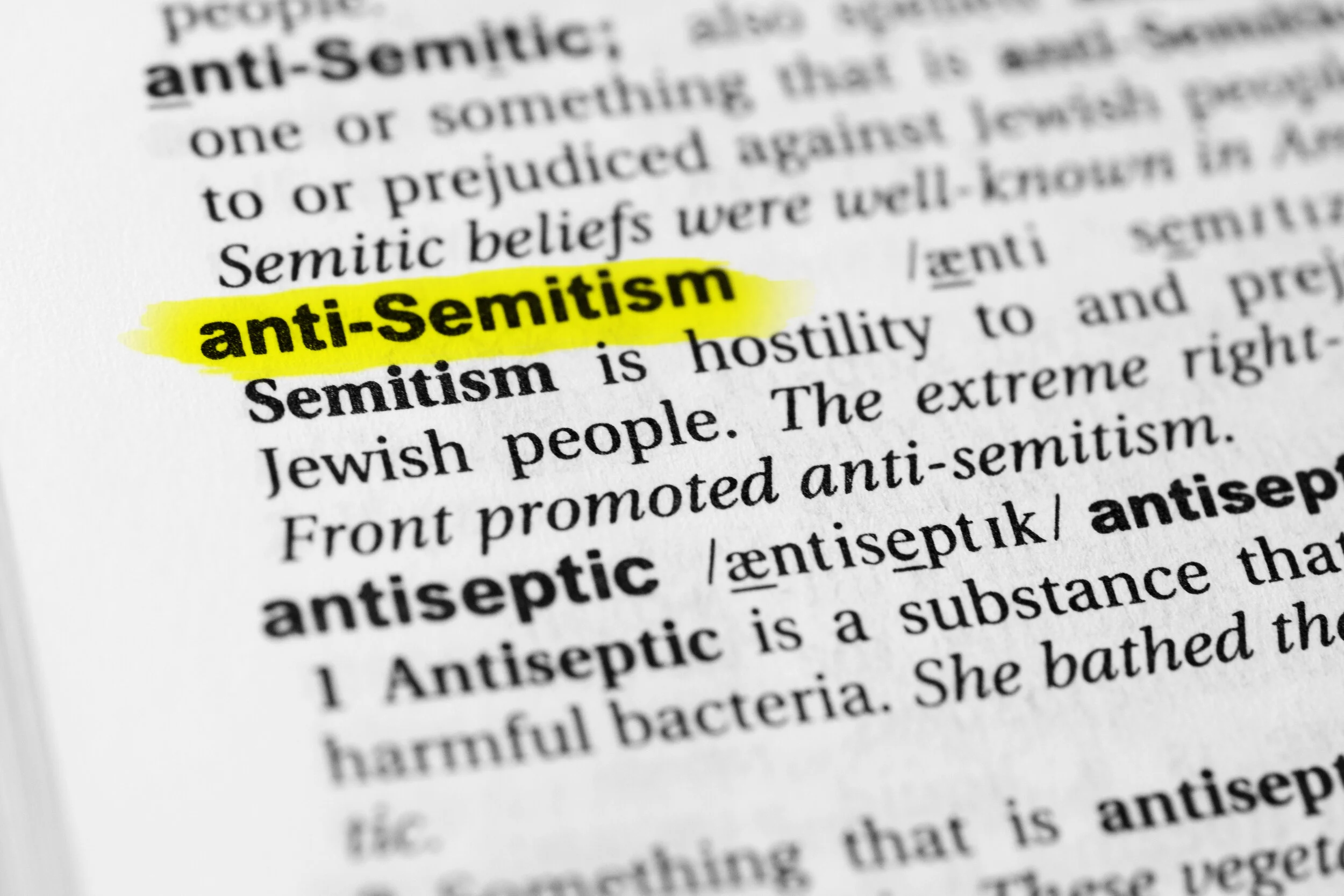
Among the latest Jewish communal verbal slugfests is one an outsider might reasonably think Jews would likely agree upon — which is, how do you define anti-Semitism?

But we don’t, because nothing is simple in life (allow me to refer you back to the “two Jews, three opinions” cliche above) no matter what we’d like to think.

This is particularly so when you add Israel to the equation. Or, to be more precise, the question of what constitutes fair political criticism of Israel and what is unfair — or biased — criticism of Israel that bleeds into hateful anti-Semitism?

The top of this JTA (the international Jewish news agency) story from mid-January lays out the issue.

(JTA) — When is it anti-Semitic to criticize Israel?

Anti-Semitism signifies hatred of Jews and the ways that hatred is perpetuated through age-old conspiracy theories and their modern variants. But what about when that hatred is expressed through rhetoric about the Jewish state? Is anti-Zionism anti-Semitism?

Those questions have divided American Jews in recent years — and are doing so again.


Please respect our Commenting Policy

Could these writings shatter Christian history? True or false, journalists might take a look

Could these writings shatter Christian history? True or false, journalists might take a look

Let's pretend there's not much news coming out of Washington, D.C and a reporter yearns to cover something different. And what if the press has missed "the biggest biblical discovery to date," indeed, "arguably the most important religious discovery of all time"?

Sounds interesting. And if those lavish promotional claims turn out to be false, that's a story, too.

A friend of The Religion Guy uses the News360.com app, whose algorithms scan 7,000 newspapers and magazines for articles keyed to the individual's interests. This friend's interests include Christian history, and he was alerted to a Jan. 29 article announcing the discovery of ancient documents that "could revolutionize our picture of Christianity."

A seasoned journalist immediately recalls hoaxes of this sort. Leave aside the deceptive history on Christian origins offered as fact in "The Da Vinci Code" novel, a huge 2003 seller that spawned a movie starring Tom Hanks. A claim of proof Jesus Christ was married that emanated from august Harvard Divinity School was debunked. Evangelicals swooned over spurious reports about finding a manuscript of the Gospel of Mark written in the 1st Century. In 2017, The Guy attempted to assess the Shroud of Turin dispute.

The Jan. 29 article wasn't from a recognized scholarly journal or site but CoreSpirit.com, which informs practitioners, entrepreneurs and curiosity-seekers about magic, esoterica, life enhancement nostrums, transcendence and "ancient wisdom."

By the way, this site is potentially useful for media. The Guy bets journalists know nothing about most of the 800-plus topics covered (e.g. global brain, isolation tank, medical intuition, superhuman agility, urine therapy, tongue cutting, wall crawling, you name it).

Core Spirit neglected to tell readers that its news is not new.

The mysterious "Jordanian Codices," a collection of small, bound-together metal tablets, first won publicity in 2011 and mostly in Britain. Though scholars scoffed, there's been lively chatter across the Internet ever since that reporters can plumb to assess story prospects. The history of where these items came from is confused, but they're now being held by Jordan's antiquities department.


Please respect our Commenting Policy

Should elite European officials outlaw Jewish and Muslim ritual slaughter for meat?

Should elite European officials outlaw Jewish and Muslim ritual slaughter for meat?

THE QUESTION:

Should Europeans outlaw ritual slaughter for meat practiced by Judaism and Islam as cruelty to animals?

THE RELIGION GUY’S ANSWER:

With such unprecedented political mayhem, Americans can be forgiven for barely noticing important events overseas.

The Guy, who believes threats to religious freedom warrant especially close attention, highlights a Dec. 17 ruling by the Court of Justice, the highest tribunal in the European Union (which covers 27 member nations with the departure of Great Britain). Readers will want to check out this recent Ira Rifkin post on this topic: “EU hypocrisy? Foie gras and factory farming continue, but kosher and halal traditions nixed.”

The decision, on referral from Belgium’s Constitutional Court, approved a regional statute mandating that animals be stunned before they are slaughtered for meat. This requirement directly pits animal-welfare advocates against Judaism and Islam, in which long-standing tradition allows observant believers to eat only meat from ritual slaughter, which forbids such stunning. European Jews and Muslims plan to appeal the decision, which could influence policies in other nations.

The court acknowledged that religious liberty is important, but on balance stated that the crackdown in Belgium occurs in “an evolving societal and legislative context which is characterized by an increasing awareness of the issue of animal welfare.” Several European nations already require stunning before slaughtering. (In the United States, statutes require stunning but allow for religious exemptions.)

Adding to the emotions in Europe, this dispute brings to mind that in 1933 Germany’s new Nazi-influenced regime prohibited Jewish slaughter on grounds of the stunning problem. More recently, this argument has been employed by Islamophobes.

The Conference of European Rabbis, which represents believers in 40 nations, said such prohibitions “put Jewish life at risk.” Omer Yankelevitch, a member of Israel’s parliament and the government diaspora affairs minister, wrote similarly in the Jerusalem Post last week. He said the European Union is violating freedom of religion and “harms the viability of Jewish communities in Europe,” so intense diplomatic efforts will be undertaken to respect the age-old observance.

Those who enjoy eating meat may give barely a thought to the methods used to produce it, although perhaps some reflected on this reality when COVID outbreaks brought attention to slaughterhouse conditions.


Please respect our Commenting Policy

UK ready to welcome waves of Hong Kong residents (Yes, BBC ignored religion angles)

UK ready to welcome waves of Hong Kong residents (Yes, BBC ignored religion angles)

On the night of the Hong Kong handover to China, I walked through that great city’s old airport — noting the many residents who sat, passports in hand, preparing to leave. I was leaving after a small international gathering of journalists and academics focused, naturally, on religion and the news.

I talked to a few of the solemn people I saw that night in 1997. Some said they were leaving for good. Others said they were going abroad to explore the legal and economic hurdles they would need to clear if or when they decided to leave. I didn’t hear a single optimistic voice.

Like the people I interviewed for the two “On Religion” columns I researched during that stey, they said that they expected that, in a few years, the Chinese authorities would crack down on dissent, free speech and, yes, some mentioned freedom of religion. Here are those columns: “Silence and tension in Hong Kong” and “Hong Kong II: There’s more to life than $.”

I bring this up because of an important story that is unfolding, in slow motion, in the United Kingdom. Here is the top of a long BBC website story with this headline: “The Hong Kong migrants fleeing to start new lives in the UK.

The UK will introduce a new visa at the end of January that will give 5.4 million Hong Kong residents — a staggering 70% of the territory's population — the right to come and live in the UK, and eventually become citizens.

It is making this "generous" offer to residents of its former colony because it believes China is undermining Hong Kong's rights and freedoms.

Not everyone will come. Some of those eligible to leave have expressed their determination to stay and continue the fight for democracy.

In the end, Britain estimates that about 300,000 will take up the visa offer over the next five years.

As you would expect, the story introduces a family that is already in the UK, exploring their reasons for making the leap. Any signs of religion here?

Readers are told that Andy Li and his wife Teri Wong moved to York in October, just after the announcement of plans for this policy change. They said, no surprise, that they were thinking about their children, daughter Gudelia, 14, and son Paul, 11.

"We feel that the things we treasure about Hong Kong — our core values — are fading over time," said Mr Li. "So we decided we needed to provide a better opportunity for our children, not only for their education, but also for their futures."


Please respect our Commenting Policy

EU hypocrisy? Foie gras and factory farming continue, but kosher and halal traditions nixed

EU hypocrisy? Foie gras and factory farming continue, but kosher and halal traditions nixed

My fantasy very best self adheres to a strictly vegan diet. That means consuming no foods from members of the animal kingdom.

No meat, no eggs, no fish, no dairy, and just for consistency’s sake, no honey or even vitamin supplements containing traces of animal products. My fantasy very best self believes a plant-based diet to be best for me based on ethical, environmental, and health considerations (I’ve had serious heart issues).

But as you’ve probably already deduced, my current best self falls way short of my fantasy best self. While I rarely eat red meat (a couple of times a year at most), I regularly eat poultry, fish, eggs and dairy. So I’m by no means there yet.

When I do eat animal flesh, however, I restrict myself to animals in accord with traditional Judaism’s dietary protocols. That means I won’t eat pork or shell fish and won’t mix meat with dairy at the same meal. My wife and I also restrict our consumption to organic, free-range animal products. It also means that the allowed meats I do eat must be slaughtered in accordance with kosher guidelines.

As a theologically liberal Jew, I do not do all this because I believe HaShem — God — has directly commanded me to do so. I do this as a way to sustain my Jewish identity and as a voluntary spiritual discipline.

Which is why recent news out of Europe concerning the outlawing of kosher slaughtering protocols caught my attention. Journalists should note that traditional Muslims, who adhere to a similar slaughtering protocol, are also impacted by the European Union court ruling.

Here’s the gist of the issue, courtesy of a December story from JTA, the international Jewish news service:

(JTA) – The European Union’s highest court has upheld Belgium’s bans on slaughtering animals without first stunning them, a ruling that confirms the prohibition on the production of kosher and halal meat in parts of Belgium and clears a path for additional bans across Europe.

Israel’s ambassador to Belgium called the ruling “a blow to Jewish life in Europe.”


Please respect our Commenting Policy

Yearenders-palooza finale: 2020 Top 10 religion-news lists from several Getreligionistas

Yearenders-palooza finale: 2020 Top 10 religion-news lists from several Getreligionistas

OK. This is it. I promise. This is the last GetReligion #2020 Top 10 religion-news post that you’re going to see. I think. And sorry about the Kiss 2020 goodbye concert video with this post (I could not resist).

Let me be clear what this is. A few of us have already written columns or posts evaluating the results of the Religion News Association poll, like this “On Religion” column that I shared here: “Of course the pandemic was top 2020 religion-news story: But which COVID-19 story?

However, each of us — when creating our own personal lists — saw the religion-news landscape through our own lens. Thus, I thought readers might enjoy seeing all of the RNA poll items — 27 news events and trends were on the ballot — and how some of us arranged them. Some readers, for example, have expressed a desire to explore what was left OFF the list and how the items were described on the official ballot. Read it all at the RNA.org website.

As I said earlier, in the GetReligion podcast and post in which I shared my own ballot (“The year when religion news went viral, and that was a bad thing”), I thought the key was that the COVID-19 crisis was several stories in one. I thought the most important angle was the First Amendment fights, so I wrote:

According to journalists who cover religion, this was the year's biggest story: "COVID-19 pandemic claims lives of many religious leaders and laity, upends death rituals, ravages congregational finances, spurs charitable responses, forces religious observances to cancel or go online and stirs legal fights over worship shutdowns."

But there was a problem on my ballot. The RNA list included another coronavirus item focusing on religious liberty. In some cities and states, officials created pandemic regulations that claimed many institutions — from grocery stores to casinos — provided "essential services." Meanwhile, other institutions — like churches and synagogues — were deemed "non-essential."

The U.S. Supreme Court eventually ruled that religious institutions shouldn't face tougher rules than secular groups and activities. It was wrong, for example, to ban masked priests from hearing confessions – outdoors, 10 feet away from masked penitents – while consumers were lined up at liquor stores.

Ryan Burge, in a post this weekend, had a similar take at the top of his list, stressing First Amendment and Supreme Court issues. The key, he said, was this: “I made a list based on what I thought would have the most lasting impacts into 2021 and beyond.”

So that brings us to new material from other members of the team, starting with Julia Duin. She sent me an email raising another issue with the RNA results:


Please respect our Commenting Policy

Of course the pandemic was top 2020 religion-news story: But which COVID-19 story?

Of course the pandemic was top 2020 religion-news story: But which COVID-19 story?

There was never any question whether the global coronavirus pandemic would be named the most important religion-news story in 2020.

The question was which faith-driven COVID-19 story -- out of a dozen or so -- would top the Religion News Association's Top 10 list.

According to journalists who cover religion, this was the year's biggest story: "COVID-19 pandemic claims lives of many religious leaders and laity, upends death rituals, ravages congregational finances, spurs charitable responses, forces religious observances to cancel or go online and stirs legal fights over worship shutdowns."

But there was a problem on my ballot. The RNA list included another coronavirus item focusing on religious liberty. In some cities and states, officials created pandemic regulations that claimed many institutions -- from grocery stores to casinos -- provided "essential services." Meanwhile, other institutions -- like churches and synagogues -- were deemed "non-essential."

The U.S. Supreme Court eventually ruled that religious institutions shouldn't face tougher rules than secular groups and activities. It was wrong, for example, to ban masked priests from hearing confessions -- outdoors, 10 feet away from masked penitents -- while consumers were lined up at liquor stores.

These conflicts continued. In a symbolic pre-Christmas press conference, Virginia Governor Ralph Northam explained why he thought religious groups should be willing to move their activities online and stay there -- for now.

"This year we need to think about what is truly the most important thing," Northam explained, in a Richmond press conference. "Is it the worship or the building? For me, God is wherever you are. You don't have to sit in the church pew for God to hear your prayers."

Bishop Robert Barron of the Catholic Archdiocese of Los Angeles was not amused. The problem with this"secularized, Protestant-ized" view of worship, he said, is that it doesn't work for believers with ancient traditions that don't work online, such as offering communicants consecrated bread and wine.


Please respect our Commenting Policy