
International News

When it comes to covering controversial petitions, the little guy in the list may be the big story

It’s hard to make a petition sound exciting, but there are ways. A few days ago, a bunch of evangelical Protestant leaders signed a petition denouncing the Trump refugee ban and ran it in a full-page ad in the Washington Post. Being that such ads cost somewhere north of $30K, that was a substantial outlay for World Relief, the sponsor.

I am surprised that other than CNN, the Post itself, The Hill and The Guardian, most other publications ignored it, or simply rewrote CNN’s piece.

I’ll start with CNN’s account, as I believe they broke the story:

(CNN) -- Scores of evangelical leaders, including at least one from each state, have taken out a full-page newspaper advertisement to denounce President Donald Trump's temporary ban on refugees, urging him to reconsider his executive order and welcome people fleeing persecution and violence.
On January 27, Trump issued an executive order that temporarily restricts travelers from seven majority-Muslim countries, suspends the US Refugee Admissions Program for four months, indefinitely bars Syrian refugees and reduces the number of refugees the United States will accept from 110,000 to 50,000.
The evangelicals' advertisement, which is slated to run in The Washington Post, is signed by 100 prominent evangelical pastors and authors, including some who rarely wade into politics. It is addressed to Trump and Vice President Mike Pence.
Signees include Pastor Timothy Keller of Redeemer Presbyterian Church in New York, Christian author Ann Voskamp, Bill and Lynne Hybels of Willow Creek Community Church, preacher and author Max Lucado, Pastor Eugene Cho of Quest Church and Leith Anderson, president of the National Association of Evangelicals.
CNN obtained an early copy of the advertisement, which appears in the name of World Relief, an evangelical relief organization that has resettled thousands of refugees in the United States. In addition to the leaders who signed the print ad, hundreds more have endorsed its message online, said Scott Arbeiter, World Relief's President.

Please respect our Commenting Policy

Looking for on-the-record Vatican voices in the New York Times shocker about Darth Bannon

It would be hard to imagine a subject more intriguing to some editors at The New York Times than suggestions that the Darth Vader of the Donald Trump administration -- that would be Stephen K. Bannon -- was somehow working with forces close to the Vatican to undercut Pope Francis.

Thus, there has been quite a bit of online buzz about the rather BuzzFeed like feature (in terms of its sourcing) that Times editors ran under the headline, "Steve Bannon Carries Battles to Another Influential Hub: The Vatican." 

Catholic insiders -- on the left and right -- will be able to see more in the thin tea leaves of this piece than I can. I am primarily interested in journalism issues linked to how the piece was reported and presented. The bottom line: It is very rare to see such sweeping, conspiratorial language used in a news feature that -- on its key points of fact -- appears to have one crucial named source, other than quotes from other journalists. Hold that thought.

The intrigue, as you would expect, starts right where it should -- in the overture.

ROME -- When Stephen K. Bannon was still heading Breitbart News, he went to the Vatican to cover the canonization of John Paul II and make some friends. High on his list of people to meet was an archconservative American cardinal, Raymond Burke, who had openly clashed with Pope Francis.
In one of the cardinal’s antechambers, amid religious statues and book-lined walls, Cardinal Burke and Mr. Bannon -- who is now President Trump’s anti-establishment eminence -- bonded over their shared worldview. They saw Islam as threatening to overrun a prostrate West weakened by the erosion of traditional Christian values, and viewed themselves as unjustly ostracized by out-of-touch political elites.
“When you recognize someone who has sacrificed in order to remain true to his principles and who is fighting the same kind of battles in the cultural arena, in a different section of the battlefield, I’m not surprised there is a meeting of hearts,” said Benjamin Harnwell, a confidant of Cardinal Burke who arranged the 2014 meeting.

Harnwell appears to be the main source for this entire story. He is founder of the Dignitatis Humanae Institute, a foundation that -- as the Times piece notes -- is currently displaying prominent images of Bannon, linked to quotations praising Harnwell.

The timing of the meeting is fascinating and, for journalists, a bit problematic.


Please respect our Commenting Policy

Crux warning: That automatic good pope, bad president, framework can skew the news

Into the GetReligion guilt file we go once again, as I continue to dig out from a recent one-two punch of travel and sickness that, truth be told, still has me down quite a bit.

However, I called "dibs" some time ago on a very interesting Crux think piece by Vatican correspondent Ines San Martin that I really think GetReligion readers will want to see.

It's about Pope Francis, of course. And it's about President Donald Trump, of course. Obviously, these two men have some past history. It's also safe to say that, at this point, it's hard to get a fix on what either of these men stand for without taking into account the way the mainstream press has framed almost everything that they say or do.

In the case of Pope Francis, this has led to a very important question that pro-Catechism Catholics have been asking pretty much since the start of this papacy. The blunt way to state it: Is Pope Francis the "reform" pope that The New York Times and other elite media seem to think that he is? 

In this context, of course, "reform" means going soft on lots of icky ancient Catholic doctrines linked to morality and, especially, sex. It also means that Francis is supposed to be carrying out a consistent agenda of punishing, or at the very least throwing cold water, on doctrinal conservatives in the church. It also means that his emphasis on the care of the poor and weak is "liberal" or "progressive," as opposed to being an expression of basic Christian orthodoxy.

But back to the press. As I have stated before, concerning the conservative Catholics debates about Pope Francis and the press:

There may be a few -- repeat few -- who (1) see him as a secretly liberal Machiavelli who is steering the Catholic boat toward icebergs in order to cause massive doctrinal changes. There are others who think (2) he is fine, when you read him in context, and that the press is to blame for any confusion that exists. There are others who (3) think he means well, but that he is naive when it comes to how his off-the-cuff papacy will be presented in the news media. I am sure there are other options on the right that I missed.

Now, if you overlap these Francis issues with the "meltdown" mindset that continues to frame much of the media coverage of Trump, you have an interesting dynamic.


Please respect our Commenting Policy

A blog's life: GetReligion turns 13, still clinging to hope that more journalists will get it

You know the old saying that one year in the life of a dog is equal to seven years for its owner?

Well, if people talk about the relative value of "dogs years," is there some kind of corresponding scale for comparing years in ordinary human life with those in digital, online and social-media life? I mean, how old are Apple iPhones? They seem like they have been here forever. Every year on Twitter equals how much time in the real world?

I bring this up because GetReligion turns 13 today. What does it mean when a weblog lasts long enough to become a teen-ager? 

If your evolving team of GetReligionistas has been at this media-criticism thing for 13 years on regular analog calendars, how long is that in "blog years?" By the way, we have published, oh, 10 million words or so of new material here in that amount of time.

Why do we keep doing what we do? (Click here for our "What we do, why we do it" trilogy.)

To be blunt, we still believe that it's impossible to understand real events and trends in the lives of real people living in the real world without taking religion really seriously. We still believe that the more controversial the religion-news story, the more journalists should strive to accurately cover the crucial voices of believers and thinkers on both sides. The word "respect" is crucial in that equation. Ditto for "balance." We believe that doctrine and history matter. We believe that, when in doubt, you should report unto others as you would want others to report unto you. We remain committed to the old-school (as historians would put it) American model of the press.

Trust me, we can go on. And we plan to. After all, the editor of The New York Times recently saidt: "We don't get religion. We don't get the role of religion in people's lives." Who knows what will happen in the next 12 months? 

But as we mark Feb. 2 once again, let me point readers toward a recent essay that ran at the The Common Vision website with this double-decker headline:


Please respect our Commenting Policy

Anti-clickbait 2.0: Warning! This post asks readers to think about messy life in Russia

Alas, it's true. As our own Bobby Ross Jr. mentioned earlier today, nothing seems to push readers away from a news-driven blog quicker than headlines about complex stories on the other side of the world.

Well, culture-wars readers on left and right might click to read something about a Pope Francis statement attacking President Donald Trump's refusal to put gender-neutral bathrooms at gateway facilities in a new border wall. Maybe. Just thinking out loud about that one.

So USA Today had an international story the other day that I ran into on Twitter, before I saw coverage of this topic elsewhere. The headline: "Russia parliament votes 380-3 to decriminalize domestic violence."

Now, that's a rather shocking headline, especially when we are talking about a culture that leans toward the authoritarian, to say the least. However, when I read the overture to the piece I found the details a bit more complex and nuanced than I expected.

Russia's parliament voted 380-3 ... to decriminalize domestic violence in cases where it does not cause "substantial bodily harm" and does not occur more than once a year.
The move, which eliminates criminal liability in such cases, makes a violation punishable by a fine of roughly $500, or a 15-day arrest, provided there is no repeat within 12 months. The bill now goes to the rubber-stamp upper chamber, where no opposition is expected. It then must be signed by President Vladimir Putin, who has signaled his support.
Kremlin spokesperson Dmitry Peskov told journalists that family conflicts do "not necessarily constitute domestic violence."

Now, I am no expert on Russia. Most of what I know is from books, from other Orthodox believers (my current parish includes more than a few Russians) and from an intense two weeks in Moscow a few days after the 1991 fall of the Soviet Union (click here for info on that).

When I read that lede, as opposed to the headline, I immediately had several reactions as a journalist:


Please respect our Commenting Policy

Anti-clickbait: This post won't mention YOU KNOW WHO. Warning! International news

On my iPad the other day, I was checking the top headlines on a major news organization's app. 

A certain influential national elected official/former reality TV star was everywhere. I must have counted his name in 15 headlines before I got to one that didn't include him. Then immediately after that came a half-dozen more that did.

Social media is even worse: Twitter and Facebook have become a vast wasteland of folks on the right and left who don't seem to realize the election was over three months ago. Apparently, these people eat, drink and sleep U.S. politics and intend to wage online war until Jesus returns. (Soon, please?)

Of course, I'm the last one who ought to be preaching on this overkill. I've lost count of how many stories, columns and blog posts I've written, just in the last few weeks, about HE WHO (JUST THIS ONCE) SHALL NOT BE NAMED.

Alas, news is news. I know that. And there's no doubt that the guy with the world's most interesting (that's not necessarily a compliment) haircut is big news. The biggest. Yuuuuuuuggge!!! 


Please respect our Commenting Policy

Snip, snip? The symbolic clout of Sikh man nodding approval for (a) Trump or (b) Schumer

Anyone who knows anything about America in the past half century or so knows that we live in a culture that is increasingly dominated by visual images and the emotions they produce.

Images were crucial as modern print journalism evolved. It goes without saying that images are crucial in visual storytelling in television, past and present. 

Today? While words matter in social media, nothing grabs people quite like that punchy, ironic, cute, infuriating or poignant image that seems to sum up (a) whatever is happening in the real world at the moment or (b) whatever we are consuming in order to be able to ignore whatever is happening in the real world at the moment.

Thus, a former GetReligionista sent the current team an email the other day -- with the simple headline, "Hmmmm" -- containing the item at the top of this post.

What's the point? The question has been asked many times: Why do so many people get confused and think that Sikhs are Muslims? Is there something compelling about the Sikh turban (the dastaar) that makes journalists think "foreign," "exotic," maybe "Arab" and, thus, "Muslim" or someone who would be accused of being a "Muslim terrorist"?

Ah, but the turban is VISUAL and it all but screams "diversity," "other world religions" and "multiculturalism."

At the moment, is the whole point -- in terms of journalism shorthand -- that a Sikh believer looks like the kind of man that the angry, fact-challenged, Islamophobic Donald Trump voter is supposed to want to (a) beat up and then (b) accuse of being a "Muslim" terrorist? 

Well, a few key facts are all wrong. But, hey, the point is to make a point. Right?


Please respect our Commenting Policy

Weekend of #MuslimBan: Did it help for press to ignore key contents of executive order?

Weekend of #MuslimBan: Did it help for press to ignore key contents of executive order?

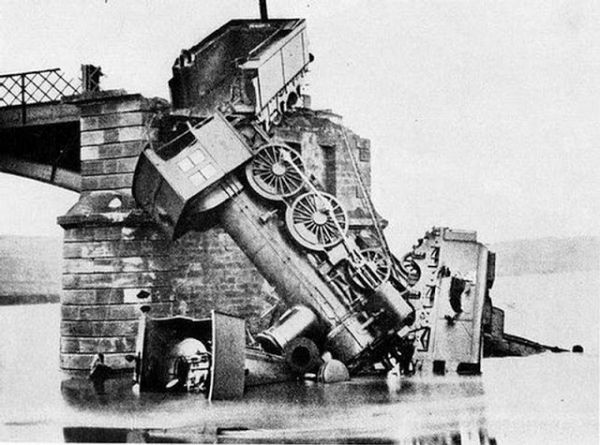
What a train wreck. There is really no way to dig into the thousands, maybe millions, of words that the mainstream press poured out over the weekend in coverage of President Donald Trump's rushed, flawed executive order creating a temporary ban on most refugees from lands racked by conflicts with radicalized forms of Islam.

My main question, in this post, does not concern the merits of order or the process that created it. That's clearly part of the train wreck and, as someone who was openly #NeverTrump (and #NeverHillary), I think mainstream reporters should go after that mess that with the same fervor they dedicated to the humanitarian impact of the previous administration's policies in Syria, Iraq, etc. We need to know who decided to rollout such a important executive order in such a slapdash, incompetent fashion -- especially whatever it did or didn't say about people in transit or those with green cards.

Now, I would like to focus on one question in particular related to this journalistic blitz that I think will be of special interest to GetReligion readers.

The hashtag for the day was clearly #MuslimBan, even though the order contained language specifically trying to protect many oppressed Muslims. The media also focused on Trump's statements pledging to protect oppressed Christians (I know it's hard to #IgnoreTrump, even when it's wise to do so), even though the text of the order said something else.

My question: Did journalists make this tragic crisis worse by ignoring or mangling some key contents of this order? Following the action on Twitter, it seemed that there are two stances on that.

The first was from Trump critics on the left, which included almost all elite media. It said: The news coverage of the executive order was fine. We all know what Trump meant, no matter what the order's words said. So there.

The second -- with very few exceptions -- was among conservative Trump critics (click here for essential National Review essay by #NeverTrump stalwart David French). I said: The EO was messed up and flawed, but press didn't help by ignoring the order's content. This, along with Trump sloppiness and ego, helped add to the panic and added to the firestorm that hurt real people.

It certainly did appear that, in many cases, panicky police and immigration officials acted like they were enforcing what press reports said the executive order said, rather than the text of the order (which was rushed out in a crazed, flawed manner). I hope there is follow-up coverage on that issue.

So, when considering these questions, what is the key passage of the #MuslimBan order?


Please respect our Commenting Policy

Define 'radical Islam,' please: Is this a candidate for 'scare quote' status? Really?

If you have read GetReligion.org for any time at all, you are probably familiar with the whole idea of "scare quotes."

Actually, I would assume that this piece of media jargon is now in common in just about any setting in which critics, news consumers and journalists argue about issues linked to news coverage and, especially, media bias.

So what does the term mean and what, on this day, does it have to do with discussions of "radical" forms of Islam? Wait. You see the quote marks that are framing the word "radical"?

Here is one online definition of this term:

scare quotes -- noun
quotation marks used around a word or phrase when they are not required, thereby eliciting attention or doubts.

For example, this online dictionary notes that, "putting the term 'global warming' in scare quotes serves to subtly cast doubt on the reality of such a phenomenon."

Here at GetReligion, many of our discussions of scare quotes have started using them to frame a perfectly normal term in discussions of the First Amendment -- religious liberty. Religious liberty turns into "religious liberty" whenever religious traditionalists, usually in conflicts over the Sexual Revolution, attempt to defend their free speech rights, rights of freedom of association and rights to free exercise of religious beliefs.

A GetReligion reader sent me a recent piece from The Atlantic and asked if another important term in public discourse is about to be shoved into "scare quotes" territory. The double-decker headline on that piece saith:

The Coming War on ‘Radical Islam’
How Trump’s government could change America’s approach to terrorism

You knew Trump had to be involved in this somehow, right? Here is the overture, which shows the context of the question that was raised by our reader:


Please respect our Commenting Policy