Godbeat

Did mainstream media distort America's religion-and-politics divide? Are they still doing so?

Did mainstream media distort America's religion-and-politics divide? Are they still doing so?

While culling files from decades of religion-beat work, The Religion Guy has come across a forgotten and seminal article from 2002 that contended the media were distorting public understanding of American politics. It said "religious right" Republicans were blanketed with coverage and turned the tables, contending that "the true origins" of cultural conflict were found in increased "secularist" influence in the Democratic Party.

As journalists contemplate the tumult of the succeeding two decades, ask what the article in question might say about media performance, past and present.

Consider the hostility toward openly religious nominees expressed by Senators Schumer, Feinstein, and Harris (now vice president and prospective future president). Or contrast the Religious Freedom Restoration Act, which passed the Senate 97-3 in 1993, with current House Democrats' unanimous vote for the pending Equality Act, which would forbid practical applications of that very law.

Customary political history emphasizes such landmarks as the Rev. Jerry Falwell (Senior) launching Moral Majority in 1979, Ronald Reagan's Republicans cultivating conservative Christians in the winning 1980 campaign or the Rev. Pat Robertson founding Christian Coalition in 1989 after his Republican run for president.

These events were important, of course. But what about Democrats and the other half of what was happening?

That's the focus of the 2002 article, by political scientists Louis Boice and Gerald De Maio from the City University of New York's Baruch College, drawn from their 2001 presentation at an academic conference. The piece appeared in the conservative journal The Public Interest, which is now defunct, but fortunately the American Political Science Association archive has posted the text (.pdf here). Also, click here and then here for tmatt columns on this duo’s work.

In their telling, 1972, the year before the Supreme Court legalized abortion, was the pivot point for Democrats' shift on emotion-laden social issues away from cultural conservatism and an "accommodation" policy toward religion.

Please respect our Commenting Policy

Donald Trump enthroned with the angels: Why are media missing this story?

Donald Trump enthroned with the angels: Why are media missing this story?

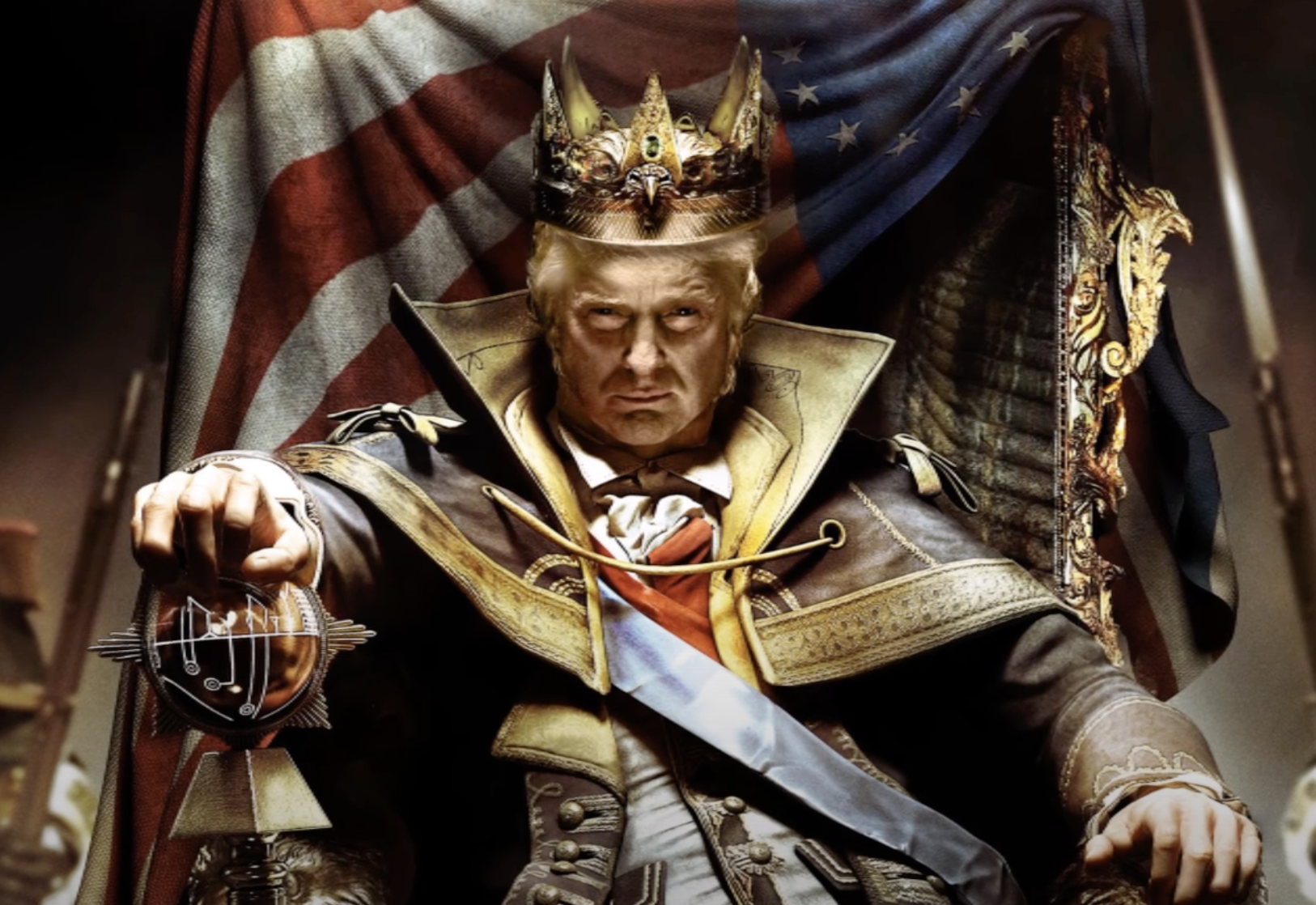
This just in: Former President Donald Trump not only has an angelic host surrounding him — he’s also seated on a throne with a golden crown and holding a golden scepter.

You’ve not heard about this edgy hook for a news story?

Then you’re not attuned to “Prophet Wars,” my name for the fistfight going on between powerful factions of the Pentecostal/charismatic movement over whether the 45th president will be restored to the White House sometime soon.

I’ve been amazed at how this large Pentecostal chunk of American Christianity — and there are roughly 65 million Americans that belong to this group — is being ignored by much of the media. Trump’s spiritual advisor, the Rev. Paula White-Cain, is part of this segment, so it’s not an obscure bunch.

Last week, I wrote a piece for ReligionUnplugged on a group of 85 leaders in this movement who were fed up with the “Trump prophecies;” predictions from dozens of people to the effect that Trump would coast his way into the White House last November. When that didn’t happen, several leaders began apologizing for their false prophecies; a phenomenon I covered for GetReligion here.

I followed this with a lengthy story in Politico. Ruth Graham of the New York Times wrote a similar piece here.

Then we all waited for a few months. Most of the false prophets did not retract their prophecies. Meanwhile, as detailed in the ReligionUnplugged story, a group of charismatic leaders drafted a four-page document of “prophetic standards” spelling out what biblical prophecy is — and is not — and suggesting that those who prophesy falsely, especially in a public forum, need to apologize when they get it wrong. Those who refuse to do so won’t be allowed on their social media platforms.


Please respect our Commenting Policy

Plug-In: COVID-19 vaccines are still creating buzz on religion beat -- pro and con

Plug-In: COVID-19 vaccines are still creating buzz on religion beat -- pro and con

After sticking close to home for over a year, I’ve returned to in-person worship at my church in Oklahoma.

I’ve joined my sons and 2-year-old grandson in watching a game at my beloved Texas Rangers’ splashy new ballpark.

I’ve boarded an airplane and — for the first time since the pandemic hit — made a reporting trip (to Minneapolis this past weekend after Derek Chauvin’s conviction in George Floyd’s murder).

For millions, the COVID-19 vaccines have brought joy and hope, and I count myself among them after receiving my two Moderna shots.

Weekend Plug-in has covered various angles related to the vaccines and religion — from whether the shots are “morally compromised” to efforts to overcome skepticism among wary African Americans.

Still, the topic remains timely and important, as evidenced by interesting stories published just this past week:

COVID-19 has hit the Amish community hard. Still, vaccines are a tough sell (by Anna Huntsman, NPR)

Francis Collins urges evangelicals: ‘Love your neighbor,’ get COVID-19 vaccine (by Adelle M. Banks, Religion News Service)

At Orange County mosques, they come for the halal tacos and stay for the vaccination (by Alejandra Molina, RNS)

Churches, Christian universities hosting COVID-19 vaccine clinics (by Chellie Ison, Christian Chronicle)

For evangelical leader Jamie Aten, advocating for vaccines led to a death threat (by Bob Smietana, RNS)

Also, in case you missed it last week, Ryan Burge offers fascinating analysis here at ReligionUnplugged on data showing White evangelicals and Catholics are more likely to get the vaccine than religious “nones” and the general public. Yes, you read that right.


Please respect our Commenting Policy

Ministry after 2020? The year when COVID-19 caused clergy stress to zoom to a new level

Ministry after 2020? The year when COVID-19 caused clergy stress to zoom to a new level

When training pastors and chaplains, educators frequently stress the need for "boundaries" between work and home.

Clergy need -- somehow -- to find "personal" time, along with face-to-face contact with loved ones. That challenge became more difficult in the age of smartphones, texting and emails, noted Marlon C. Robinson, pastoral care director at AdventHealth in Manchester, Ky., and a specialist in marriage and family therapy.

Then came the COVID-19 lockdowns and the pressures on clergy zoomed to a whole new level.

"Everything came home, all at once," said Robinson, reached by telephone. "Pastors were spending more and more time with their families -- jammed into one space. But this wasn't quality time. Everyone was at home, but they were staring at their own phones and computer screens. There was no intimacy, and all the pressures of ministry grew even more intense."

To make matters worse, the usual struggles with church leadership and finances were complicated by political warfare and conspiracy theories that, literally, began to shape how congregations handled worship, pastoral care, education and even efforts to keep sanctuaries clean and safe.

Instead of arguing -- to cite church clichés -- about the color of new carpet or outdated hymnals, the faithful were fighting about whether masks were necessary to save lives or merely "politically correct" virtue signals.

Meanwhile, people were sick, and some died, with their pastors and families on the other side of locked hospital or nursing-home doors. And it was illegal to have funerals? Attendance dropped, along with offerings. More than a few members vanished.

Ministers "are inundated with phone calls, emails, text and WhatsApp messages, and communications through a host of other platforms," wrote Robinson, in Ministry Magazine.

While it's impossible to know how many will flee the ministry, early research indicates pastors are "experiencing intensified stress levels that … put them at increased risk for developing a mental illness. …


Please respect our Commenting Policy

Was Jesus truly without sin? Did he have doubts? Do these questions matter to anyone?

Was Jesus truly without sin? Did he have doubts? Do these questions matter to anyone?

THE QUESTIONS:

Was Jesus Christ totally without sin? Does it matter?

THE RELIGION GUY'S ANSWER:

Christian tradition says yes, and yes.

This month, related discussions with weighty implications popped up online, so The Religion Guy takes a look at this belief, which dates from the very earliest days of church history. But we begin with the fact, perhaps surprising to Christians, that Jesus' sinlessness is also taught by Islam. These two faiths combined engage upwards of 4 billion people.

In the Quran's account of Jesus' birth, older English translations of verse 19:19 say the child is "holy," but modern versions by Majid Fakhry (endorsed by the authoritative Al-Azhar University), A.S. Abdel Haleem, and Seyyed Hossein Nasr's team understand the Arabic adjective to mean the somewhat stronger "pure."

The Muslim belief is reinforced by a standard hadith saying of the Prophet Muhammad that "no child is born but that Satan touches, but when it is born it starts crying loudly because of being touched by Satan, except Mary and her Son.: (Sahih Al-Bukhari, 6.65.4550). Muslim commentators explain that Jesus, Muhammad and the other prophets may have made simple human mistakes but never sinned, that is, consciously violated the will of God.

Muhammad's mention of Mary befits Catholicism's Immaculate Conception, made mandatory dogma by Pope Pius IX in 1854. The Catholic Catechism states that "from the instant of her conception, she was totally preserved from the stain of original sin and she remained pure from all personal sin throughout her life."

Protestants dissent. But all Christians unite on Jesus' sinlessness, which is taught in four of the New Testament books:

-- "For our sake he [God] made him [Jesus Christ] to be sin who knew no sin, so that in him we might become the righteousness of God" (2 Corinthians 5:21).

-- "We have not a high priest who is unable to sympathize with our weaknesses, but one who in every respect has been tempted as we are, yet without sin" (Hebrews 4:15).

-- "He committed no sin" (1 Peter 2:22).


Please respect our Commenting Policy

Ira Rifkin offers Jewish (and Buddhist) thoughts as he lives with the ashes of his son

Ira Rifkin offers Jewish (and Buddhist) thoughts as he lives with the ashes of his son

I shared the following story a year ago, but I thought of it again when reading a stunning piece in the Forward by my GetReligion colleague Ira Rifkin. The headline there is simple, but unforgettable: “The day my son’s ashes arrived in the mail.

Journalists who cover the religion beat know that it includes everything from national politics to local-church politics, from sports to the arts, from fights over ancient doctrines to the latest trends in digital worship. But it’s important to remember the degree to which religious rites, traditions, doubts and questions help define many of the gateway moments in human life.

Before I share a few passages from Ira’s must-read essay, let me return to something that happened in the early 1980s when I was working for the now-deceased Charlotte News. I was writing a story about the last local church that was resisting the use of a hymnal prepared for the merger that created the Evangelical Lutheran Church in America.

It was a battle between the “red book” and the modernized “green book.” Here is a flashback:

At this Charlotte church, I met with an older man who led the fight to retain the “red book.” He had a long list of reasons — historical and theological — for why the old hymnal and prayer book was superior to the new. …

When the interview was over, we walked the center aisle toward the foyer and main exit. At the last pew, he stopped and picked up a battered red hymnal. Tears began running down his cheeks.

“I married my wife with this book,” he said. “Our children were baptized with this book. I buried my wife with this book. … They are not going to take it away from me.”

This man was wrestling with issues that transcended logic. He was dealing with the basic building blocks of his own life and faith, his past and his present. This was an issue that involved both head and heart.

This brings us to overture of Ira’s piece for the Forward:

The ashes came to my home in Maryland from Southern California, shipped via special delivery by the aptly named funeral home Ashes to Ashes. They arrived encased in a rectangular, polished, dark wood box about the size of a loaf of artisan bread. I immediately opened it to make sure it was not empty. It was not.


Please respect our Commenting Policy

Plug-In: Murder convictions in death of George Floyd -- why faith angles were important

Plug-In: Murder convictions in death of George Floyd -- why faith angles were important

Guilty. Guilty. Guilty.

This week’s big news — former Minneapolis police officer Derek Chauvin’s conviction on all counts in George Floyd’s murder — is a story about police brutality. And racial justice. And yes, the power of faith.

USA Today captures this powerful scene:

George Floyd's brother Philonise Floyd was sitting with his head bowed and his hands folded in front of his face in prayer before the verdict was read. As each verdict was read, his hands increasingly shook and his head nodded up and down.

"I was just praying they would find him guilty. As an African American, we usually never get justice," Floyd said.

The exceptional coverage by the Minneapolis Star-Tribune’s Chao Xiong and Paul Walsh contains this important highlight:

As news spread of the verdicts — guilty on all counts — social media sites reposted the Minneapolis Police Department's initial report that Floyd died of a medical event at the scene, an assertion that might never have been contradicted so forcefully were it not for a teenage girl, Darnella Frazier, walking by and recording Floyd's death last May 25 on her cellphone and posting it for the world to see.

"I just cried so hard. This last hour my heart was beating so fast, I was so anxious, anxiety [busting] through the roof," Frazier, who was 17 at the time, posted on Facebook after the verdict. "But to know GUILTY ON ALL 3 CHARGES !!! THANK YOU GOD THANK YOU … George Floyd we did it!! Justice has been served."

The Los Angeles Times’ Kurtis Lee recounts this scene:


Please respect our Commenting Policy

Thinking about 'Uncle Ted' McCarrick's rise and fall: Did Catholic leaders learn anything?

Thinking about 'Uncle Ted' McCarrick's rise and fall: Did Catholic leaders learn anything?

If you have followed the career of fallen cardinal Theodore “Uncle Ted” McCarrick, you know that for a decade or two he was probably the most influential Catholic leader in the United States — especially with journalists (think “Team Ted”) and gatekeepers in the church hierarchy.

With McCarrick, it wasn’t enough to discuss his evil deeds. That was a tragic, hellish story, but it wasn’t the most important story.

The big question was how he managed to land a cardinal’s “red hat” and a throne in Washington, D.C. — even while, behind closed doors, warning lights were flashing and sirens were sounding in America and in the power centers of Rome.

Once journalists have asked that question, they need to ask (a) who promoted McCarrick, (b) who protected him and (c) who were the McCarrick disciples who used their connections with him to climb the ladders of Catholic power?

This brings us to a think piece at The Catholic Herald in England that received some attention in social media and probably deserved more. The headline: “How McCarricks Happen.”

The big idea: Are we talking about a “bad apple” or about multiple “bad barrels” that consistently produce rotten apples? Thus:

Barrels influence apples, sure: how big the barrel, how tightly packed, one’s position within it, who one’s neighbors are, how regularly the apples get mixed, removed, or replenished. But the apples themselves, good or bad, influence both each other, and collectively, the barrel environment as a whole. Furthermore, while barrels come in different shapes, sizes and materials – as whisky connoisseurs know, outwardly indistinguishable single casks can produce subtly different drops – there are significant commonalities between them.

This is precisely why, to leave barrels behind for a bit, when reading exposés of high-profile sexual predators (and we’ve read more over the past several years than is probably mentally healthy) they start to feel a little samey.


Please respect our Commenting Policy

Catholic news site proving to be a 'Pillar' when it comes to religion journalism

Catholic news site proving to be a 'Pillar' when it comes to religion journalism

I teach journalism at The King’s College in New York City. I have for the past four years. GetReligion readers may recall that tmatt used to teach there, as well.

Among the many classes I enjoy teaching is one called “Entrepreneurial Journalism and the Future.” It is a class that teaches aspiring journalists the importance of the business side of the profession and how technology has disrupted the traditional distribution methods by which people consume news.

We all know that the number of people who read a daily newspaper — in paper form that is — has dropped dramatically over the last decade as more people use iPads and smartphones to connect to information. The news ecosystem has grown to envelope legacy news organizations such as The New York Times and Washington Post to digital-only sites like Buzzfeed and Vice.

The Catholic news world has also seen its share of startups since the internet has changed the news industry. It’s these changes that have brought more issues like fake news and misinformation, but also allowed journalists to become entrepreneurs and build start-ups of their own.

Journalists have found news and innovative ways — like the growing subscription platform Substack — to tell stories and do great journalism.

One of the bright spots of 2021 so far has been The Pillar. Founded by journalists (and canon lawyers) J.D. Flynn and Ed Condon who have experience at a variety of places like Catholic News Agency, The Pillar says its “a Catholic media project focused on smart, faithful, and serious journalism, from committed and informed Catholics who love the Church.”

This is what else they claim to be:

Our focus is on investigative journalism, which is how we’ll spend most of our time. We think investigating stories that matter can help the Church to better serve its sacred mission, the salvation of souls.


Please respect our Commenting Policy