Godbeat

Hey journalists: Can you name three or more Ramadan news angles linked to COVID-19 vaccines?

Hey journalists: Can you name three or more Ramadan news angles linked to COVID-19 vaccines?

I don’t mind admitting it. I thought I had read just about every religion-angle COVID-19 vaccine story that there was to read (and I say that just before heading out the door to drive deep into the Cumberland Mountains to get shot No. 1 at a small-county health clinic).

The Detroit Free Press published a long, long story the other day that certainly proved me wrong on that. The headline: “Vaccine-mobile brings COVID-19 shots to Dearborn mosque, helping to convince the hesitant.

The key to the story was mentioned in an email from the GetReligion reader who (thank you readers who take the time to do this kind of thing) sent us the URL for this story. Here is part of her note:

What I really liked about this article was the way it presented vaccine concerns of the Metro Detroit Muslim community in the context of how the mosque met those concerns. Some of the concerns are unique to the Muslim community (such as the relationship of vaccination to the Ramadan fast) and others are more broad, but the article shows how this religious community is addressing them. The article quotes a variety of actual community members, which I always appreciate.

The Ramadan angle?

That’s the connection that I admit had not occurred to me. The key is explaining the specific link between the strict rules of the Ramadan fast and the simple act of getting a shot of vaccine. We are not talking, at this point, about conspiracy theory talk about the vaccine formulas containing traces of pork.

Here is the crucial part of the story, quoting Mirvat Kadouh, vice chair of the Islamic Center of America's Board of Trustees.

"We are trying to vaccinate as many people as we can before Ramadan," Kadouh said early Monday morning, spreading a plastic tablecloth over a folding table in a large conference room, where the Islamic Center's first COVID-19 vaccine clinic was about to begin.


Please respect our Commenting Policy

Christians, Jews, Muslims and lobbyists left and right fret over SCOTUS 'donor privacy' case  

Christians, Jews, Muslims and lobbyists left and right fret over SCOTUS 'donor privacy' case   

What cause could ever possibly unite Christian Right activists, the Council on American-Islamic Relations, the Zionist Organization, "pro-family," "pro-life," "pro-choice" and gun-rights lobbies, Mitch McConnell, the American Civil Liberties Union, Chamber of Commerce, Judicial Watch, NAACP, People for the Ethical Treatment of Animals, Planned Parenthood, Southern Poverty Law Center, Columbia University's First Amendment institute and religious-liberty advocates?

Answer: These and many more are allied in the Americans for Prosperity Foundation v. Becerra case (#19-251), which the U.S. Supreme Court put on its upcoming docket January 8.

Yes, that Becerra is Xavier, as in President Biden's controversial pick for secretary of Health and Human Services, acting in his previous role as California's attorney general. Moreover, this situation implicates the track record of his predecessor as A.G., Kamala Harris — now U.S. vice president and a major 2024 presidential prospect.

At issue is "donor privacy." Non-profit groups cannot operate or raise money in the state of California unless they give its attorney general the names and addresses of their major donors, the same list that's required as an appendix to their federal IRS returns. The non-profits argue that this violates their right to freedom of association under the Constitution's First Amendment.

Obviously this is something for alert media eyes, including pros on the religion beat.

Adding to news interest, this case displays contrasting beliefs of the U.S. Department of Justice in its Trump Administration brief filed last November (.pdf here) versus its revised stance under the new Biden Administration (.pdf here). The Trump brief strongly backs non-profit interest groups. The Biden brief dodges the question and asks the court to bounce the case for further investigation.

Religion specialists note: The Supreme Court consolidated the Americans for Prosperity case, raised by the libertarian political foundation established by the Koch brothers, with a second appeal from the Thomas More Law Center. This second agency provides free legal representation for "people of faith" to uphold "the religious freedom of Christians, time-honored family values and the sanctity of human life."


Please respect our Commenting Policy

Another shot of controversy: New Catholic questions about Johnson & Johnson vaccine

Another shot of controversy: New Catholic questions about Johnson & Johnson vaccine

My wife has lupus and autoimmune diseases that make her high-risk if infected with COVID-19. Because of that, we’ve adhered strictly to masking, distancing and other safety precautions. For nearly a year, we’ve not attended an in-person worship assembly or eaten inside a restaurant.

After reporting from all 50 states and 15 nations in my career, I’ve done all my work from home since flying to Tennessee to cover deadly tornadoes last March. That was right before the coronavirus lockdown hit America in the middle of that month.

Last week, I mentioned my excitement to roll up my sleeve for the first of two Moderna shots. And on Thursday, our family got an extra dose of hope: Tamie received a Johnson & Johnson single shot, the coronavirus vaccine recommended by her rheumatologist because of her life-threatening reactions to medications last year.

Ironically, my wife was able to schedule her last-minute appointment on the same day that Religion Unplugged managing editor Meagan Clark and I moderated an online panel on the COVID-19 vaccines and religion.

A key focus of the panel: conflicting and sometimes confusing statements issued by U.S. Catholic bishops on the morality of the newly approved Johnson & Johnson shot.

“Leaders at the U.S. Conference of Catholic Bishops are discouraging Catholics from using the new Johnson & Johnson COVID-19 vaccine if given a choice, citing the use of cells with a distant link to abortion in the development of the vaccine,” reported Religion News Service national reporter Jack Jenkins, one of the panelists.

Jenkins offered excellent insight on the diversity of Catholic responses to the vaccine debate, from individual bishops to the Vatican.

Panelist Clemente Lisi, who analyzes Catholic news for Religion Unplugged, noted: “Unless you’re a scientist, this is a very difficult thing to understand. … I think most people are getting this (news) through headlines, through Twitter, and I think it may cause some misunderstanding.”

Many Americans have no choice which COVID-19 vaccine to receive, Lisi stressed. Stopping the virus’ spread, he added, could itself be construed as a pro-life act.


Please respect our Commenting Policy

That painful issue of SBC culture -- is 'Southern' more important than 'Baptist'?

That painful issue of SBC culture -- is 'Southern' more important than 'Baptist'?

When megachurch pastor J.D. Greear became the 62nd president of the Southern Baptist Convention he saw all kinds of statistics headed in all kinds of directions.

After decades of growth, America's largest Protestant flock faced steady decline as many members joined thriving nondenominational evangelical and charismatic churches. Ominously, baptism statistics were falling even faster. On the other side of the 2018 ledger, worship attendance and giving to SBC's national Cooperative Program budget were holding strong.

But one set of numbers caught Greear's attention, he told the SBC's executive committee, as he nears the end of his three years in office.

"Listen, I made diversity … one of my goals coming into this office, not because it's cool, or trendy, or woke," he said. "It's because in the last 30 years the largest growth we've seen in the Southern Baptist Convention has been among Black, Latino and Asian congregations. They are a huge part of our future. … Praise God, brothers and sisters."

Greear's blunt, emotional address came during a Feb. 22 meeting in Nashville in which SBC leaders ousted two churches for "affirming homosexual behavior" by accepting married gay couples as members and two more for employing ministers guilty of sexual abuse.

Those issues loomed in the background during Greear's remarks, which ranged from a fierce defense of the SBC's move to the right during 1980s clashes over "biblical inerrancy" to his concerns about "demonic" attacks from social-media critics who are "trying to rip us apart."

"I've read reports online that I was privately funded by George Soros with the agenda of steering the SBC toward political liberalism," he said. "My office has gotten calls from people who say they've heard that I am friends -- good friends -- with Nancy Pelosi and that we text each other regularly, that I am a Marxist, a card-carrying member of the Black Lives Matter movement and that I fly around on a private jet paid for by Cooperative Program dollars."


Please respect our Commenting Policy

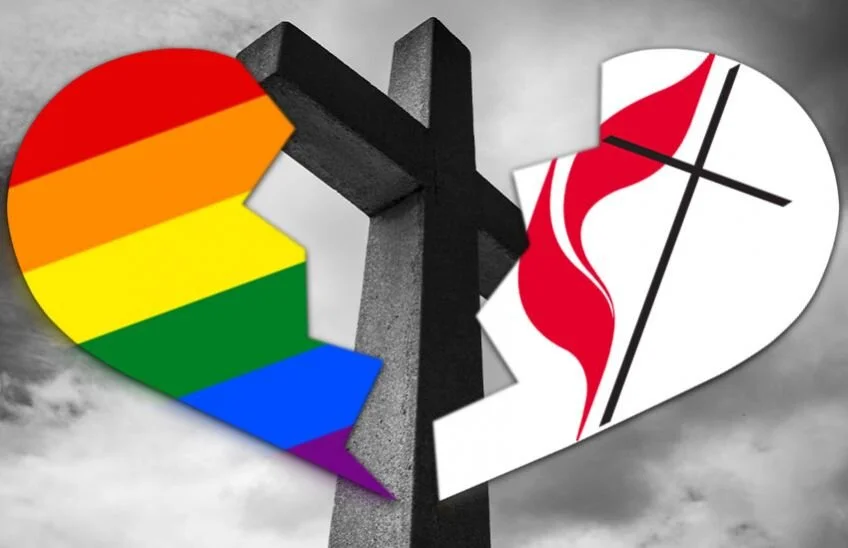
Thinking about disunited Methodist future: Questions, terms and fault lines to ponder

Thinking about disunited Methodist future: Questions, terms and fault lines to ponder

So the “United” Methodists are back on the clock, in terms of waiting for their amicable divorce?

It would appear so, as COVID-19 continues to delay all kinds of large-scale meetings for pretty much everyone. Maybe they could have a socially distanced meeting in something like the University of Michigan’s “Big House” stadium (which seats about 110,000 under normal conditions)?

This is a huge story, of course, any way you cut it — with major implications for the shrinking world of the Seven Sisters of oldline liberal Protestantism, as well as putting the spotlight on the thriving evangelicalism of the Global South. As GetReligion patriarch Richard Ostling noted the other day:

The United Methodist Church is on the brink of America's biggest religious schism since the Civil War, with the conflict centering on sexual morality, biblical authority and theological liberalism.

At stake is an empire with 6.7 million U.S. members and 31,000 congregations located across most American counties, 6.5 million members overseas and $6.3 billion in annual donations (though there's now a severe money crunch). Many of those churches sit on prime urban and suburban real estate.

You know that COVID-19 has to be affecting the economics of all of this, especially for the center-left UMC establishment. Will they try to run out the clock somehow, assuming that the doctrinal conservatives will simply leave on their own (thus avoiding the need for some kind of severance check)? But that kind of split would lead to legal warfare (think of it as the United Methodist lawyers Employment Act) over church sanctuaries, clergy benefits, etc. Ask the the Episcopalians about that.

This leads me to two think pieces for reporters and news consumers to file. The first comes from the Mark Tooley, the must-follow analyst on the Methodist right: “Global Methodism’s New Church.” He covers essential background, with logical attention to Methodist growth in Africa, then offers this helpful summary:

Why are conservatives leaving when they won at the General Conference?

Liberals, although outnumbered globally, dominate the U.S. church and its bureaucracy. Few American conservatives want to inherit liberal church agencies, seminaries, and local conference structures, whose financial viability is already dubious.


Please respect our Commenting Policy

New podcast: Yes, cover RFRA; but Equality Act coverage has also been quiet on local stories

New podcast: Yes, cover RFRA; but Equality Act coverage has also been quiet on local stories

What we have here is a logical question that journalists (and news consumers) should be asking at this point in coverage of debates about the Equality Act. It’s also one of the questions that “Crossroads” host Todd Wilken and dissected during this week’s podcast (click here to tune that in).

That question: How many religious health organizations, schools, recreation centers, homeless shelters, campgrounds, day-care centers and other forms of faith-driven ministries and nonprofit groups are located in the zip codes covered by the newsrooms of your local media outlets?

Earlier this week, I wrote a post (“Puzzle: Many reporters ignoring Equality Act's impact on this crucial Schumer-Kennedy legislation”) noting that a few mainstream news organizations have covered the ways in which the Equality Act would edit or even crush the Religious Freedom Restoration Act (RFRA) of 1993, which passed in the U.S. Senate vote of 97-3. That vote symbolized both the bipartisan nature of that legislation and stunning left-right coalition of sacred and secular groups that supported it.

That remains a valid angle for coverage. However, the more I thought about this topic, and the more Equality Act reports that I read, the more I focused in on another “quiet zone” in the mainstream news coverage — including at the local and regional levels.

For starters, let’s look at two pieces of a major New York Times report on the Equality Act:

It was the second time the Democratic-led House had passed the measure, known as the Equality Act, which seeks to amend the Civil Rights Act of 1964 to add explicit bans on discrimination against lesbian, gay, bisexual and transgender people in both public and private spaces.

Now, that’s remarkably broad language. What kinds of groups and institutions, pray tell, are included under “both public and private places”? And remember this old journalism mantra: All news is local.

Later on, the story adds:

In a landmark decision in June, the Supreme Court ruled that the 1964 civil rights law protects gay and transgender people from workplace discrimination, and that the language of the law, which prohibits discrimination on the basis of sex, also applies to discrimination based on sexual orientation and gender identity. House Democrats sought to build on that ruling with the Equality Act, which would expand the scope of civil rights protections beyond workers to consumers at businesses including restaurants, taxi services, gas stations and shelters.


Please respect our Commenting Policy

Attention news editors: Are German Catholic bishops poised to become liberal Luthers?

Attention news editors: Are German Catholic bishops poised to become liberal Luthers?

Germany’s Catholic bishops embarked on a series of conversations in 2018 aimed at reforming church teachings. It was an ambitious, if not audacious, effort addressing everything from homosexuality, priestly celibacy and the ordination of women.

As always, the word “reform” — in this context — means modernizing ancient church doctrines.

Conservative Catholics across the world decried the prospect. The tensions that arose at that time — and still simmering today — even caused some to warn that a permanent split could occur.

Indeed, the dreaded “s-word” — schism — can be used to describe the current moment. It was just last year that a high-ranking prelate argued that pushing such changes could lead to a “German national church.”

That’s a big news story — period. Over the past three years, the bishops in Germany haven’t been shy about making headlines — in Catholic-market publications. The question is when their proposals will draw major coverage by professionals in major newsrooms, including television networks.

Meanwhile, Pope Francis has elevated women at the Vatican, but he hasn’t endorsed such progressive doctrinal proposals — although his papacy has emboldened the Germans to push for such changes.

The church across the West has suffered tremendously due to secularism and the clergy sex scandal, especially in Germany. None of these German innovations, along with the alleged cover-ups, has helped matters. Still, the German bishops have continued to propose “reforms” in the past few weeks — with a series of moves that could forever change Roman Catholicism.

These latest pronouncements have received attention in the U.S. press, primarily in conservative religious publications. There are exceptions, but overall these fast-moving developments have gone unnoticed as of late.

These moves come as the church in Germany continues to lose members. In 2019, for example, over 272,000 Catholics quit the church.


Please respect our Commenting Policy

Yo, Nashville Tennessean: What does 'people of faith' mean in a political argument?

Yo, Nashville Tennessean: What does 'people of faith' mean in a political argument?

When I arrived at the Rocky Mountain News (RIP) long ago — think early ‘80s — I quickly learned that the city-desk team had an informal way of checking the Colorado pulse on religious issues.

Basically, they were interviewing clergy at the churches in downtown Denver. That was pretty much it. They would also call the Denver Catholic archdiocese (rather progressive at that time) and the “local seminary,” as in the already “woke” Iliff School of Theology, nationally known as an edgy United Methodist campus. It appeared no one knew about the larger Denver Seminary (evangelical) only a few blocks from Iliff.

What kind of churches were downtown? Almost all of them were mainline Protestant congregations and very few of them were showing any sign of life, in terms of attendance and growth. But they were nearby and most were progressive, so that was that. Why talk to folks at the region’s growing megachurches?

Hang in there with me. I am working toward a recent Nashville Tennessean article that ran with this headline: “Hundreds of people of faith call on Tennessee's Republican congressional delegation to repudiate lies about election fraud.” The key question: Define “people of faith”?

Back to Denver, for one more comment. Early on, I attended a press conference linked to the Colorado Council of Churches. Here is how I described what happened in a post back in 2013:

The key was that the organization … was claiming that it spoke for the vast majority of the state's churches. The problem was that, by the 1980s, the conversion of the Colorado Front Range into an evangelical hotbed (including evangelicals in many oldline Protestant bodies) was well on its way. Also, a more doctrinally conservative Catholic archbishop had arrived in town, one anxious to advocate for Catholic teachings on public issues on both sides of the political spectrum. …

Still, it was an important press conference that helped document one side of a religious debate in the state.

Near the end of the session, I asked what I thought was a logical question: Other than the Roman Catholic Archdiocese of Denver, did any of the CCC leaders present represent a church that had more members at that moment than during any of the previous two or three decades?

Well, hey, I thought it was a fair question.


Please respect our Commenting Policy

Polls apart: Pew Research switching methodologies with its much-used U.S. religious surveys

Polls apart: Pew Research switching methodologies with its much-used U.S. religious surveys

Political journalists give lavish attention to polls and often slide past those footnotes about a "95 percent level of confidence" and "margin of error plus or minus 4 percentage points."

Thus, numbers are never exact and a three-point edge could actually be seven points ahead or one point behind. Not to mention that even the best poll is merely a time-bound snapshot of reality (and it always pays to check how questions are worded).

After Election Day 2020, complaints about misleading political polls were as loud as usual, perhaps even louder. Take the bizarre Maine Senate race data. Polls consistently showed incumbent Susan Collins would lose, and she was behind 6% in the one closest to Election Day. She won easily by an 8.6% margin.

Or consider recent surveys about whether Americans plan to get COVID-19 shots. The Wall Street Journal notes that "yes" answers have ranged from 20% to 63% depending on the methodology, the wording and, especially, whether respondents were offered more than two options.

These days the "response rates" among those in randomly selected samples are so low it's tough to tell how representative the people are.

That's among the major problems raised by eminent Princeton sociologist Robert Wuthnow in his 2015 book "Inventing American Religion: Polls, Surveys, and the Tenuous Quest for a Nation's Faith.”

Gallup data about U.S. religion are important because the firm has asked consistent questions across so many decades. But 21st Century religion writers rely heavily upon the Pew Research Center (where Alan Cooperman, a former Washington Post colleague, is director of religion research). Pew's expertise often provides all-important distinctions between white "mainline" and white "evangelical" Protestants, and between white and Hispanic Catholics.

Pew is changing the way it surveys religious behavior and attitudes, so the media will want to be aware of why and how.

Of major importance is how this affects writing about trend lines over time that uses past surveys.


Please respect our Commenting Policy