Evangelicals

In terms of church history, should the United Methodist break-up be called a 'schism'?

In terms of church history, should the United Methodist break-up be called a 'schism'?

When I moved to Denver in 1984, Rocky Mountain News (RIP) my work plunged me into the ongoing United Methodist Church battles over creed-level doctrines, the Bible and, of course, homosexuality.

The region’s defining institution was the Iliff School of Theology, a UMC authorized seminary that a former professor there once told me was “the single most liberal school in America that still bothers to call itself ‘Christian.’ “ In the late ‘80s, an Iliff student said he had encountered one professor who believed that the resurrection of Jesus actually happened, as an event in real time. I would doubt this seminary has become more small-o “orthodox” in the past third of a century.

If you were in Denver back then it was clear that the United Methodists were in the midst of a very slow train wreck and that a parting of the ways was inevitable. The question: Who would leave and who would control the assets of this large, but shrinking, denomination?

This brings us to a recent story in The Nashville Tennessean with this dramatic double-decker headline (behind a fierce paywall):

Methodists focus on Easter amid denominational schism and the tough decisions ahead

A new, more conservative Methodist denomination is set to launch May 1 after a years-long debate centered largely over LGBTQ rights.

People have been using the word “schism” for decades, when describing this conflict. I would like to argue that this technical term is problematic, in this case, and that recent events — especially the proposed “Reconciliation and Grace Through Separation” protocol — have made it even more so. I propose using the word “divorce,” in this case. Hold that thought.

There is much to praise in this Tennessean story, especially the many quotes from regional church leaders on both sides of this battle. However, the “schism” lens is easy to see. I think that with two or three extra sentences, readers would have a better idea what is going on in this conflict. It’s also important to know that the Southeast is a crucial region in this conflict (along with the core Midwest), in which there are many doctrinally conservative churches paired with bishops who are more progressive.

But let’s start with the term “schism.” Here is a helpful Britannica reference:

schism, in Christianity, a break in the unity of the church.


Please respect our Commenting Policy

Plug-In: Déjà Vu all over again, as religion plays big role in fight over Disney and sex ed

Plug-In: Déjà Vu all over again, as religion plays big role in fight over Disney and sex ed

I’ve never visited Walt Disney World, but I did make it to Disney church one Sunday.

Mickey, Minnie and friends are, as you might have noticed, key actors in the nation’s latest culture war skirmish.

Over the last week, the fight over Florida’s Parental Rights in Education bill — or, as critics call it, the “Don’t Say Gay” law — has made front-page headlines in the New York Times, the Wall Street Journal and the Los Angeles Times.

Call it Disney déjà vu.

The Los Angeles Times’ Ryan Faughnder asserts:

It’s a battle that, to people who have followed Disney’s history, has a familiar ring. The current conflict is just the latest clash to reveal underlying tensions that have existed between Disney and religious conservatives for decades as the company has increasingly embraced the LGBTQ community.

It has strong echoes of the anti-Disney protests of the late 1990s, when religious leaders criticized the extension of health benefits to the partners of LGBTQ Disney employees, the coming out of Ellen DeGeneres on her sitcom on Disney-owned ABC and unofficial “Gay Day” celebrations at the theme parks.

Religious broadcaster Pat Robertson, host of “The 700 Club,” warned the city of Orlando that it risked hurricanes by tolerating Gay Days. The Southern Baptist Convention in 1997 called for a Disney boycott after the nondenominational American Family Assn. campaigned against the Burbank entertainment giant by sending thousands of protest packets to pastors. The difference now is that, instead of brochures, there’s Fox News and Twitter.

A major development in the current brawl came Thursday, as the Wall Street Journal’s Arian Campo-Flores and Robbie Whelan report:

Florida lawmakers gave final approval to a bill that would end a special tax district that allows Walt Disney Co. DIS 0.07% ▲ to govern the land housing its theme parks, escalating a weekslong dispute with Disney over its public opposition to a Florida bill that limits classroom instruction on gender and sexuality.

The measure now goes to Republican Gov. Ron DeSantis, who has made clear he would sign it.

In a twist, Southern Baptists have been “offering discounted Disneyland tickets for families traveling to Anaheim this June for the denomination's big annual meeting,” as the Tennessean’s Liam Adams reported earlier this month.


Please respect our Commenting Policy

Thinking about 'bothsidesism' and sad changes in American politics and journalism

Thinking about 'bothsidesism' and sad changes in American politics and journalism

This is Holy Week for those of us in the ancient churches of the East. Thus, I am spending lots of time at my local parish as we march through many hours of ancient prayers, scriptures and liturgy. Yes, we are hearing more than a few prayers for peace in Ukraine and for the victims of that hellish fratricidal conflict. Will there, at the very least, be a ceasefire for Pascha (Easter)?

At the same time, my “Crossroads” partner — Todd Wilken of Lutheran Public Radio — was on the road to attend a funeral, so we didn’t record the podcast at our usual time. That should go live here at GetReligion tomorrow (mid-day Saturday).

Thus, I would like to point readers to a “think piece” that I have had in the hopper for some time now. It’s an opinion essay by Damon Linker that ran at The Week with this headline: “The noble and needful philosophical tradition of bothsidesism (no, really) — A call for equanimity in a polarized time.”

The term in question — “bothsideism” — is closely linked with another hot-button word that is frequently used as a semi-curse in social media. That would be “whataboutism.” Click here to read Merriam-Webster on that.

My interest in “bothsideism” is rooted in journalism theory, as opposed to pure political science.

During my days leading the Washington Journalism Center, two of the key lectures focused on four models of the press that dominate journalism debates in religious circles. For some people these days, discussions of balance, fairness and even accuracy — think the “American model of the press” — are one jump away from “bothsideism.” Here is a bite of an essay based on those lectures (.pdf here):

The American Model fit well with other American values — promoting a lively public square in which citizens could believe that their views would be treated with respect. It was possible, reading coverage over a period of time, to see which newsrooms were striving to be accurate and fair-minded. This approach meshed with a liberal approach to the First Amendment, as well.

Yes, this is a challenge for journalists as they do their work. I’ll be blunt. I think the most important skill in journalism is the ability to accurately report the views of a person with whom you disagree. Journalists are supposed to strive to show respect to people on both sides of hot- button debates.

This brings us to Linker.


Please respect our Commenting Policy

Could Hispanic-Americans, Protestants especially, shape the '22 and '24 elections?

Could Hispanic-Americans, Protestants especially, shape the '22 and '24 elections?

Something is afoot when two New York Times columnists, Charles Blow on the left and Ross Douthat on the right, both make the identical observation in Monday's edition.

Blow, who fears a "Biden blood bath" in the November midterms, underscored that Quinnipiac polling shows President Joe Biden's approval rating is even lower among Hispanics than whites, partly because "Hispanics hew conservative on some social issues." Douthat wrote that to win, Democrats need to do better with two groups from the Barack Obama coalition that have drifted rightward since, "culturally conservative Latinos and working class whites."

The 2020 election was a landmark for this community with an estimated 16.6 million voters, a record proportion of the electorate. There are a number of good analyses of the 2020 Hispanic vote online to consider. A Bloomberg piece reminds us "the Latinos of the United States have no single identity, no shared world view."

This article notes that Donald Trump won 53.5% in majority Hispanic precincts in Miami-Dade County on the way to carrying all-important Florida with its 29 electoral votes. Understandable aversion to any hint of "socialism" by those from Cuba, as well as Nicaragua and Venezuela, no doubt helped. In Arizona's populous Maricopa County, Trump improved his showing over 2016 in 61% of Hispanic-majority precincts. Exit polling said Trump improved over 2016 in Nevada by 8%. Other reports cited similar shifts in southern border areas of Texas. In 2004, George W. Bush proved Republicans can obtain a handsome number of Hispanic-Americans.

GetReligion's own tmatt has more than once proposed that the news media have neglected the religion aspect of recent Republican inroads and, in particular the growth of Hispanic Protestant churches. This is a big religion beat story in its own right. Or it could provide a strategic political analysis leading up to November 8 focusing either on politics nationally or on a specific regional audience.

The essential starting point for background is religion data from Pew Research Center's major survey of 5,103 U.S. Hispanic adults, in a report compiled in 2014.


Please respect our Commenting Policy

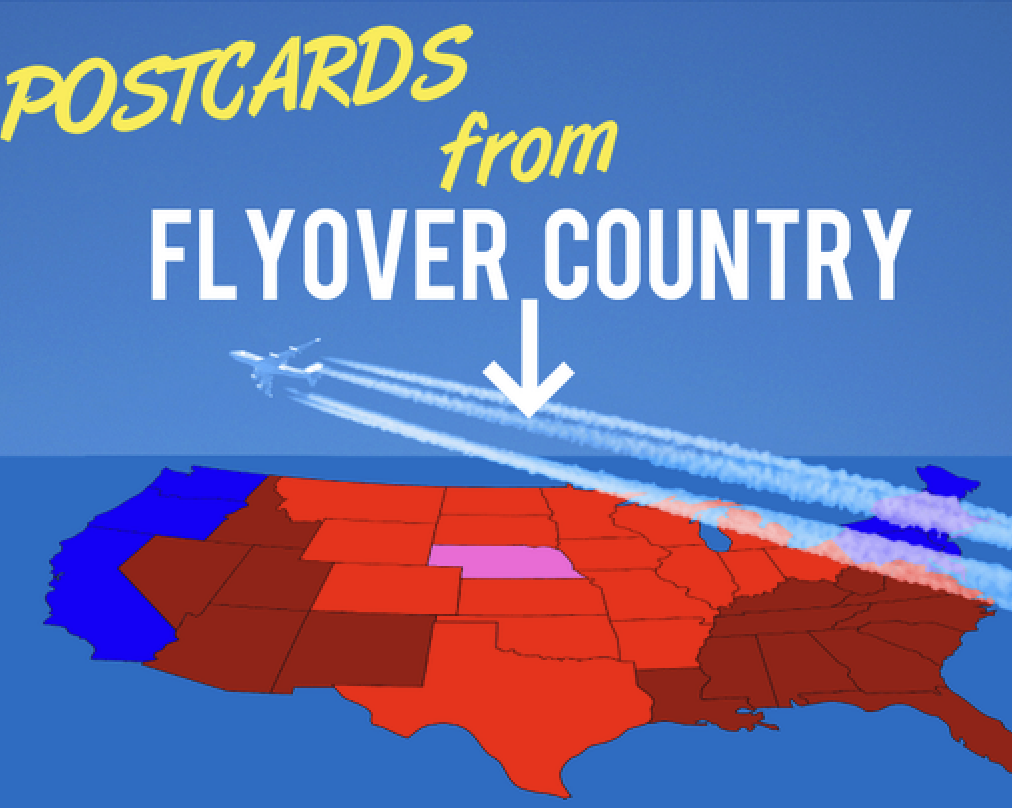
Washington Post seeks brave, skilled reporter to venture into mysterious heart of Jesusland

Washington Post seeks brave, skilled reporter to venture into mysterious heart of Jesusland

Is there anyone out there who remembers fax machines?

There was a time when sending faxes played a crucial role in the news process and, from time to time, journalists even received crucial story tips and sort-of-anonymous tips via fax.

If you know your religion-beat history, for example, you may remember this quotation from a job notice posted in the newsroom at the Washington Post back in 1994, when editors were seeking a reporter to fill the religion-news desk. Someone in the newsroom faxed it to other scribes.

Here’s a note about that, via Julia Duin (who has written on this topic many times) and, well, a book quote from moi. Duin’s whole post (with lots of URLs) is here: “Here we go again: The New York Times can't admit it needs theologically astute writers.”

The Post’s job announcement said in part, “The ideal candidate is not necessarily religious nor an expert in religion.” … It was a Washington Times columnist, John McCaslin, who broke the story about that Post job announcement and a lot of protest followed.

As our own tmatt put it in the 2008 book, “Blind Spot: When Journalists Don’t Get Religion” phrased the problem in this way:

“Post editors are correct are correct in that the ‘ideal candidate’ is ‘not necessarily religious.’ What is controversial is the statement that the ‘ideal candidate’ is not necessarily ‘an expert in religion.’ They were, in effect, arguing that a lack of expertise and experience can be a plus — a virtue — when covering religion news.”

Why do I bring this up? Well, there is a long history of newspaper managers trying to find fresh, new, innocent reporters to send into dangerous, foreboding parts of America — think religious sanctuaries full of believers — in which news stories Just. Keep. Happening. The result, frequently, reads like those in-depth National Geographic features about strange cultures on the other side of the world.

This brings us, in a roundabout way, to a headline that ran the other day atop a short David Harsanyi item at National Review. The headline: “Washington Post Seeks Seasoned Anthropologist to Observe the Indigenous Tribes of Waco.”

Maybe religion plays a role in this hiring drama? What do you think?


Please respect our Commenting Policy

Just in time for Easter media and academic discussions: Did Jesus Exist?

Just in time for Easter media and academic discussions: Did Jesus Exist?

THE QUESTION:

Did Jesus Exist?

THE RELIGION GUY'S ANSWER:

Yes.

It would be the ultimate blow to the Christian religion if Jesus, and with him the entirety of the New Testament, is totally fictional.

However, the strong consensus among historians, including non-Christians and skeptics, is that, yes. Jesus was an actual person of the 1st Century (Anno Domini!!). Yet an Ipsos poll for the Episcopal Church, released last month, showed only 76% of Americans "believe in the historical existence" of Jesus, with 89% of self-identified Christians, 43% for adherents of other religions and 38% among the non-religious.

Among scholars, across the years certain "mythicists" have contended that he never existed.

University of North Carolina Professor Bart Ehrman, author of "Did Jesus Exist?" (2012) and rather skeptical himself, knows of only one such thinker among thousands of scholars with Ph.D. degrees who are working in the New Testament field. He's Robert Price, a onetime Baptist minister, member of the radical "Jesus Seminar," and author of "The Historical Bejeezus" who teaches at Johnnie Coleman Theological Seminary, a "New Thought" school.

Other mythicists have included Frank Zindler, a science educator, Jesus Seminar participant, and an editor with American Atheists. In 1970, Doubleday published an eccentric book by Britain's John M. Allegro, who thought there never was a Jesus and Christianity originated as a drug cult. John Remsburg, a 19th Century superintendent of public instruction for Kansas, backed mythicism by listing 42 ancient authors never wrote about Jesus. (A newsman like The Guy would figure that's what you'd expect with an itinerant teacher executed as a criminal in a backwater of the Roman Empire.)

But Remsburg raised an interesting question. Let's say for the sake of argument we totally exclude the New Testament as evidence (which historians would never do in judging the existence of other figures from ancient times). Do we have any other relevant documentation?


Please respect our Commenting Policy

Is evangelical Protestantism breaking into five factions in the United States of America?

Is evangelical Protestantism breaking into five factions in the United States of America?

Let’s start with two quotes.

A weary grievance from the Bible: "Of making many books there is no end" (Ecclesiastes 12:12). The same can be said about endless journalistic articles trying to figure out what's with U.S. evangelical Protestantism in the age of Donald Trump -- saith The Religion Guy himself.

"A successful political movement must incorporate both elites and the people. Only intermittently, however, has the American right been able to achieve such a synthesis. That is why its victories have been so tenuous." So writes Matthew Continetti in "The Right," his new opus about U.S. political conservatism.

The Guy has taken Continetti's view regarding U.S. conservative Protestantism and is far more interested in the gap between its intellectual elite and the grassroots than e.g. the current hullabaloo over The New York Times describing worship mingling with Trumpified politicking by a segment of evangelicals (see tmatt post here).

Which brings us to a must-read article entitled "The Five Emerging Factions in Evangelical Higher Education" by Daniel K. Williams (contact: 678-839-6034 and dkwillia@westga.edu). He's a history professor at the University of West Georgia and author of "God's Own Party" (2010), and "The Politics of the Cross" 2021).

Williams reflects on the recent convention of the Conference on Faith and History, an association of Christians who teach this subject at both secular and religious colleges. Crucial: He writes only about diverse camps among evangelical scholars and schools. But does this breakdown characterize U.S evangelicalism as a whole? He depicts five factions.

Culture warriors -- These political conservatives actively oppose socialism, critical race theory, feminism, the new sexuality and "cultural liberalism in all its forms," while embracing "Trumpist conservative partisanship." Such teachers at e.g. Bob Jones, Liberty and Regent Universities; Patrick Henry and Saint Andrews Colleges; and elsewhere rarely interact with "the rest of Christian academia."

Anti-nationalists -- These evangelicals mostly agree with the culture warriors on the issues but don't want to be "adjuncts of the Republican Party" and are anti-Trump.


Please respect our Commenting Policy

Blue states vs. red ones: Does the New York Times team get why the two are parting?

Blue states vs. red ones: Does the New York Times team get why the two are parting?

Recently I was talking with a friend who is homeschooling her daughter in the eastern part of Washington state, which is far more conservative than the Seattle area, where I live. She was agonizing over whether to return her child to public school.

She’s not afraid of Covid; Washington state was one of the most careful states on that score, and masks were mandated longer here than most other places. What she really feared was the state’s liberal sex ed law, passed when Covid was beginning to ravage the local population. Washington state was the first place in the nation to have Covid, but what was our governor, Jay Inslee, doing at the time? Pushing through a graphic sex ed curriculum. The floor debate on it went on until 2 a.m., as I described here.

A recall election to zero out the curriculum failed.

Which is all to say that when the New York Times ran a piece headlined, “New Laws Moves Blue and Red States Further Apart,” it didn’t mention some of the more obvious reasons why people are walking away. Guess what? Many of these reasons are linked to issues are linked to morality, culture and religion.

SACRAMENTO — After the governor of Texas ordered state agencies to investigate parents for child abuse if they provide certain medical treatments to their transgender children, California lawmakers proposed a law making the state a refuge for transgender youths and their families.

When Idaho proposed a ban on abortions that empowers relatives to sue anyone who helps terminate a pregnancy after six weeks, nearby Oregon approved $15 million to help cover the abortion expenses of patients from out-of-state.

The Idaho ban is slated to begin April 22, unless some federal judge knocks it down. Abortion clinics in Oregon, particularly Bend, are expecting a deluge, as the central Oregon clinic is the nearest one to Boise that has easy abortion access. (Other nearer cities, like Walla Walla, Wash., have a Planned Parenthood clinic, but that clinic doesn’t do abortions after 10 weeks. And clinics in Salt Lake City require a 72-hour waiting period.)


Please respect our Commenting Policy

White evangelicals, again: New York Times urgently probes praise music on political right

White evangelicals, again: New York Times urgently probes praise music on political right

At this point, it’s safe to say that some New York Times editors are still engaged in a passionate quest to find a large group of Americans to blame for the 2016 general-election victory of Donald Trump of Queens.

There’s an obvious answer: White evangelicals. And it’s certainly true that independent and, especially, Pentecostal Protestants played a strategic role in the shocking rise of Orange Man Bad. It’s also true that independent evangelicals, fundamentalists, charismatics and Pentecostal believers have played high-profile roles in video-friendly pro-Trump events, including the January 6th attack on the U.S. Capitol to hunt down Vice President Mike Pence — a mainstream White evangelical if there ever was one.

However, White evangelical voters were not the crucial Rust Belt voters that put Trump in the White House, although Latino evangelicals and charismatics were a major force in Florida

Therefore, what are discerning religion-beat readers supposed to make of that long, vague Times sermon that ran the other day with this dramatic double-decker headline? (Sorry for the delay getting to this piece, but surgery slowed me down last week.)

The Growing Religious Fervor in the American Right: ‘This Is a Jesus Movement’

Rituals of Christian worship have become embedded in conservative rallies, as praise music and prayer blend with political anger over vaccines and the 2020 election.

Here is one strong opinion that is drawn — with his permission — from an email I received from Kenneth Woodward, for decades the religion-beat pro at Newsweek and the author of “Getting Religion: Faith, Culture, and Politics from the Age of Eisenhower to the Ascent of Trump.”

This is the most naive religion story I’ve read in decades and illustrates precisely why the Times still does not get religion. … Only the Times could publish a piece as misinformed as this one.

Why does Woodward think that? To some degree, he is blaming a newspaper story for lacking the kind of depth seen in interpretive magazine pieces produced during the glory years of religion-beat work at Newsweek and at Time by GetReligion patriarch Richard Ostling. For a short period of time, Emma Green was allowed to do similar work at the Atlantic.

Depth is an issue here. But this Times feature is quite long and has lots of room for anecdotes, when what is missing is a hard skeleton of facts that link (if this is possible) these vague trends and illustrations to actual denominations, publishing houses, parachurch groups, think tanks and academic institutions at the heart of American evangelicalism.


Please respect our Commenting Policy