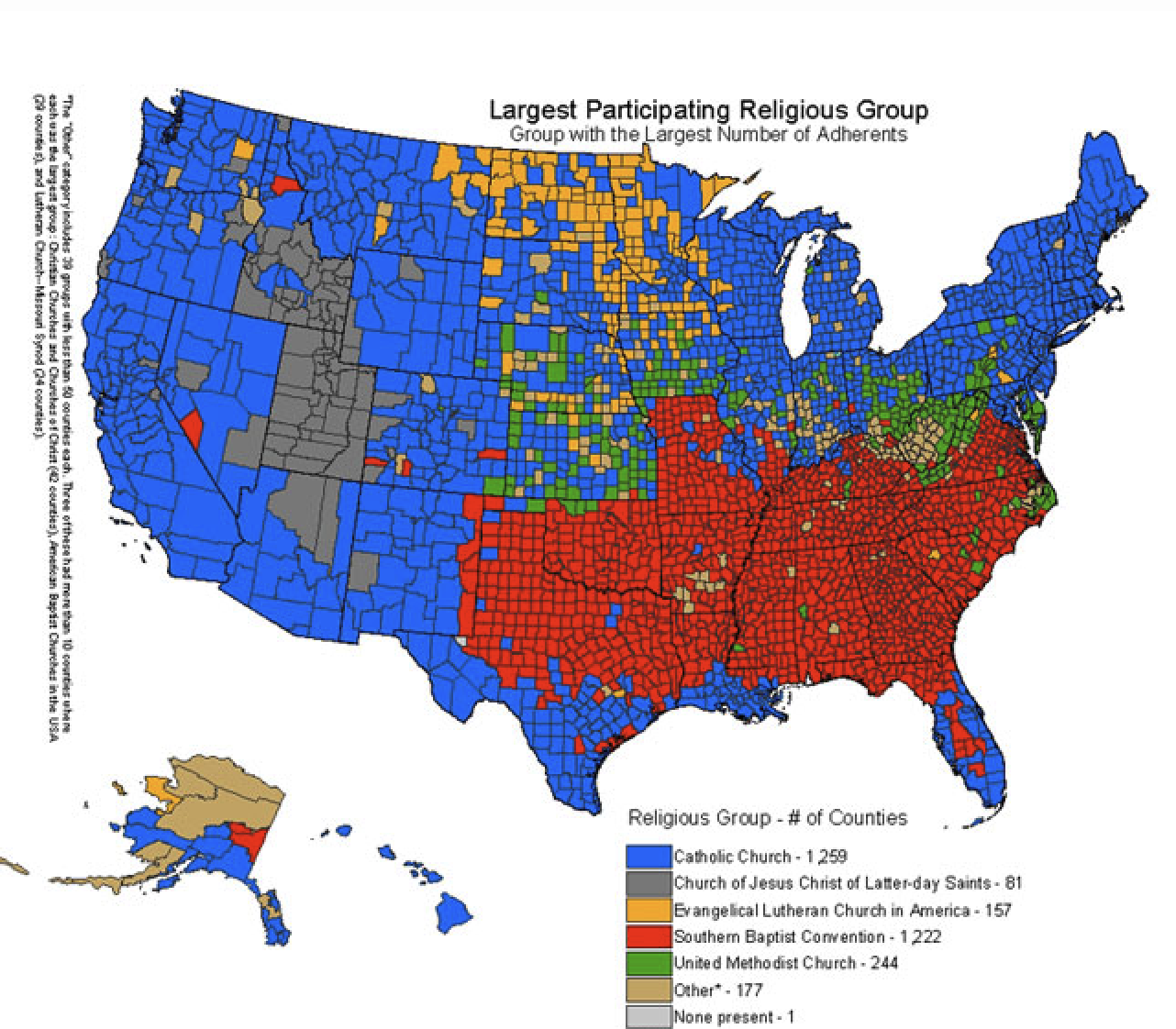
Evangelicals

'Gender affirming?' Texas press keeps backing one side in battles over trans therapies

'Gender affirming?' Texas press keeps backing one side in battles over trans therapies

Texas is definitely at the forefront of the culture wars these days, with legislation restricting abortion past six weeks, addressing concerns about critical race theory and now a state directive nixing hormone treatments aimed at changing a child’s gender.

Naturally, media have been all over these issues. The latest, which has to do with sex changes for kids, has gotten a lot of people riled up on both sides. In the Lone Star state, all of these debates have obvious religious and moral implications.

However, only one side ends up in newspapers like the Houston Chronicle, from whose March 4 story I’ll quote from here:

Texas Children’s Hospital has stopped prescribing gender-affirming hormone therapies — a move that could affect thousands of transgender children in Texas — in response to a controversial directive from state leaders to investigate medical treatments for transgender youth as child abuse.

The nation’s largest pediatric hospital revealed the decision Friday, dealing a blow to parents of transgender children who were seeking access to medicine that slows the onset of puberty or hormone treatments that help older children develop into bodies that match their identities.

A few paragraphs down, we learn that a state agency was investigating the parents of a 16-year-old “who underwent gender-affirming care.”

“Gender-affirming care” means puberty blockers that block the hormones — testosterone and estrogen — that cause periods and breast growth, or voice-deepening and facial hair growth. It’s not known their effect on fertility, bone marrow density or brain development. Supposedly there are no bad long-term effects, but we don’t know everything at this point, do we?

We do know that there are strong voices on both sides of these debates and, as tmatt noted the other day, not all of them (“Top Trans Doctors Blow the Whistle on ‘Sloppy’ Care”) fit neatly into the familiar right-left, straight-LGBTQ niches.
Please respect our Commenting Policy

There goes that Ryan Burge guy, again: Myths about evangelicals, Catholics and others

There goes that Ryan Burge guy, again: Myths about evangelicals, Catholics and others

During my years as a journalism professor (now over), I must have told my students the following a thousand times: Pay close attention when one of your sources consistently offers information and insights that (a) fit the actual facts on the ground, yet (b) anger (or at least puzzle) people on both sides of the hot-button issues that make headlines.

For several decades, my classic example of this phenomenon has been political scientist John C. Green of the University of Akron, best known for years of consulting work with the Pew Forum team. A few years ago, I added religious-liberty specialist David French to that list. Sociologist James Davison Hunter, author of that “Culture Wars” classic? Ditto. How about the notorious scholar Karen Swallow Prior?

Then that Ryan Burge guy (@RyanBurge) started lighting up Twitter with chart after chart backed with data on religion and public life. He’s been a GetReligion contributor, in a variety of ways, for several years now and was a big hit when he Zoomed into a December religion-news program at the Overby Center at Ole Miss.

If you agree with Burge on everything, then you aren’t paying attention. That’s a compliment. Like Green, Burge is a man of the mainline-church world, but he’s consistently candid about the trends that he sees on left and right.

How he has another book out — “20 Myths about Religion and Politics in America” — and readers are sure to disagree with one or more of his myths. But the numbers he spotlights are always worthy of attention, especially for journalists who cover religion, culture and politics.

I’ll note some new Burge appearances on audio and video podcasts, as they roll out in the weeks ahead — starting with the one at the top of this post. He also did a Religion News Service Q&A the other day with Jana Riess that ran with this provocative headline: “Evangelicalism isn’t dying, and Catholics are going Republican.”

The first question is exactly what you’d expect, if you’ve been following Burge in recent years:

Your first chapter says that rumors of evangelicalism’s death are premature. Could you talk about that?


Please respect our Commenting Policy

Are Southern Baptists bracing for another civil war? Well, today isn't 1979 ...

Are Southern Baptists bracing for another civil war? Well, today isn't 1979 ...

Once upon a time, Southern Baptists in Bible Belt communities knew how to talk to people who didn't go to church.

"We were dealing with people who were, for the most part, like us," said Baptist historian Nathan Finn, the provost of North Greenville University, located in the South Carolina hills near the North Carolina border. "Everyone understood sweet tea, fried chicken and SEC football. It was easier to talk to those people about Jesus."

Things changed, as the greater Greenville-Spartanburg welcomed waves of high-tech firms and industries with global brands such as BMW, Bosch, Fluor, Hitachi and many others. Today's newcomers speak German or Japanese.

"It's not Black folks and White folks from the South. We're past that. The Sunbelt has gone global and we're more urban. We don't know how to talk to the new people," said Finn. "The cultural gaps are bigger. … Southern Baptists are better at handling these kinds of issues in foreign missions than in our own communities."

Finn has been studying this trend and others for years, which led him to write a series of articles in 2009 for Southeastern Baptist Theological Seminary entitled "Fifteen Factors that have Changed the SBC since 1979."

Anyone who knows Southern Baptist Convention history gets that 1979 reference. That was when activists backing "biblical inerrancy" attacked establishment leaders of America's largest Protestant flock, while also supporting causes favored by the surging Religious Right. Electing one SBC president after another during the 1980s, this "conservative resurgence" helped change the face of evangelicalism.

There are signs a second Baptist civil war may be ahead.


Please respect our Commenting Policy

One of the central religion-beat issues of our day: What is 'Christian nationalism'?

One of the central religion-beat issues of our day: What is 'Christian nationalism'?

THE QUESTION:

What is “Christian nationalism”?

THE RELIGION GUY’S ANSWER:

“Christian nationalism” became common coinage in the U.S. fairly recently, usually raised by cultural liberals who view it with alarm, and often with “white” as an added adjective. The term is not generally embraced by those considered to be participants.

As journalist Samuel Goldman remarks, to describe something as Christian nationalism “is inevitably to reject it.”

The Merriam-Webster definition of plain “nationalism” is “loyalty and devotion to a nation” but adds this important wording: “ … especially a sense of national consciousness exalting one nation above all others and placing primary emphasis on promotion of its culture and interests as opposed to those of other nations or supranational groups.”

“Nationalism” is not the same as “patriotism,” the natural and benign love and loyalty toward one’s homeland that characterizes all peoples and countries, including huge numbers of non-nationalists on America’s religious left as well as the right. Nor is it the same thing as either political or religious conservatism but is instead a narrow faction within those broad populations.

The latest bid to shape public perceptions of the concept is a 63-page “Report on Christian Nationalism and the January 6 Insurrection,” issued last month by the Baptist Joint Committee for Religious Liberty (BJCRL) and the Freedom From Religion Foundation (FFRF). Click here for .pdf text.

These two organizations may seem odd partners, since FFRF claims that “persons free from religion” have brought about “most” of the West’s “moral progress.” But FFRF shares the Baptist committee’s devotion to strict separation of church and state and opposition to “targeting of religious minorities” and “the politicization of houses of worship” as well as to Christian nationalism.


Please respect our Commenting Policy

The latest United Methodist bombshell will create news throughout 2022 and beyond

The latest United Methodist bombshell will create news throughout 2022 and beyond

Yet another United Methodist bombshell will create news throughout 2022 and beyond

In this, the 50th anniversary year of the 12.9-million-member United Methodist Church's fierce debate over the Bible and sexuality, a late summer General Conference was set to settle how to split. But a March 3 bombshell announcement cancelled this all-important meeting, already postponed twice due to COVID. Without plans for an orderly and respectful breakup, rancor will persist till delegates finally do assemble, presumably in May, 2024.

Here's some lay of the land for the media through 2022 and beyond.

"The only problem with [cancellation] is everything," remarks Religion News Service commentator Jacob Lupfer. "Every major faction in the church agrees on the need for schism. The status quo is untenable." The liberal Reconciling Ministries Network supports the delay, but "this lengthening test of our patience" postpones "the road to justice for our LGBTQ+ kin" who want a policy change that regularizes weddings and clergy ordinations for Methodists in same-sex relationships.

Conservatives are more upset, so much so they immediately rushed to launch a new "Global Methodist Church" (GMC) on May 1. Mark your calendars: GMC supporters will hold a "global gathering" in Avon, Indiana, just afterward on May 7. The GMC will combine U.S. conservatives with sizable groups from the Methodists' flocks in Africa, the Philippines and elsewhere in the diverse Global South. (Most other "mainline" denominations exist in the United States only.)

Crucially, the breakup "protocol" on the 2022 General Conference agenda would have approved a temporary time window until 2024 during which congregations could quit the UMC and keep ownership of their buildings and other assets. The 2024 General Conference could still OK such an escape clause, but by then the schism will be in full swing.

Here is the key for journalists working at the local and regional levels: Without a mutually agreed pact, Lupfer expects expensive, "chaotic, unruly litigation."


Please respect our Commenting Policy

Plug-In: Seeking Russia-Ukraine war input? Here are some religious perspectives

Plug-In: Seeking Russia-Ukraine war input? Here are some religious perspectives

I don’t typically devote this space to touting the work of my ReligionUnplugged.com colleagues.

I’m going to make an exception this week. As the Russia-Ukraine war rages, I feel compelled to call attention to the outstanding journalism produced by ReligionUnplugged.com staff members and contributors around the world.

Don’t miss these stories:

Russian invasion reveals fissures among Orthodox Christians: Meagan Clark, ReligionUnplugged.com’s managing editor, reports from Boston on how “the Orthodox schism between Moscow and Constantinople that broke open in 2019 is cracking further.” As Clark’s in-depth report points out, “What is good and what is evil in the war in Ukraine is far from agreed upon.”

Support for Ukraine rises worldwide as a shadow of war falls over Eastern Europe: “From Oklahoma to New Jersey to Nairobi, faith communities are taking up collections, helping refugees and voicing opposition to the military invasion of Ukraine,” notes this global overview from Paul Glader, ReligionUnplugged.com’s executive editor, and a team of writers including Michael Ray Smith, Tom Osanjo, Michael Finch and Meagan Clark.

Q&A with Serbian Ambassador Darko Tanaskovic on Catholic-Orthodox relations: ReligionUnplugged.com contributor Jovan Tripkovic interviewed Darko Tanaskovic “to understand the role of diplomacy at the Vatican and the potential for further Catholic-Orthodox cooperation.”

As Russia invades Ukraine, students abroad fear for their families: In a dispatch from Lithuania, professor and journalist Michael Ray Smith “shares how his students are coping with what many consider to be the biggest attack on Europe since WWII.”

In rural Oklahoma, Ukrainian priest prays for his mother — and his homeland: Please forgive this shameless plug for my own story from Jones, Oklahoma, featuring the Rev. Stepan Bilogan, who preaches in his native language as a choir member translates his Ukrainian words into English. Bilogan came to the U.S. a year ago to serve spiritual needs in a rural community, but his mother, brother and countless other relatives remain in Ukraine.


Please respect our Commenting Policy

Podcast: Return of the SBC civil war? That'd be a huge development in American religion

Podcast: Return of the SBC civil war? That'd be a huge development in American religion

In the early 1980s, the Religion Newswriters Association (now the Religion News Association) held many of its annual meetings in the days just before the Southern Baptist Convention’s big national gatherings .

With good cause: The SBC was in the midst of a spectacular, painful civil war — “moderates” fighting the armies of “biblical inerrancy” — for control of America’s largest non-Catholic flock Big headlines were a certainty, year after year. Religion reporters knew their editors — back in the days when more newsrooms had travel budgets for this sort of thing — would pay to get them to the SBC front lines.

Thus, the trip was a twofer. Religion-beat pros arrived early and started work during the meetings that preceded the actual convention, such as the Pastors’ Conference (a preaching festival featuring rising SBC stars) and the Women’s Missionary Union. The RNA would work its own seminars into the gaps.

One of my favorite memories was in New Orleans in 1982. Religion-beat patriarch Russell Chandler of the Los Angeles Times and some other scribes got into a convention-hotel elevator, carrying a box of wine and liquor for an RNA social hour. The elevator was packed with WMU women, who didn’t like the looks of that box.

When the RNA folks got off the elevator, one of the women said, under her breath: “Well, they’re not here for the Southern Baptist Convention.” Over his shoulder, Chandler replied: “Oh, yes we are.”

I bring this up because there’s plenty of evidence that the Southern Baptists are about to have a second civil war. As I argued during this week’s “Crossroads” podcast (CLICK HERE to tune that in), that would be a big news story for at least three reasons.

Before we get to those, here’s a few key passages from a Religion News Service story by Bob Smietana describing a big SBC domino that tipped over this week: “SBC President Ed Litton won’t run again — to focus on racial reconciliation instead.” Here’s the overture:

Saying he wants to spend his time focusing on racial reconciliation, Southern Baptist Convention President Ed Litton announced via video Tuesday (March 1) that he would not seek a second term in office.

Litton will become the first SBC president in four decades to not seek reelection after his first one-year term.


Please respect our Commenting Policy

Two insiders' writings should be weighed carefully by evangelical-watchers in the press

Two insiders' writings should be weighed carefully by evangelical-watchers in the press

As U.S. Protestant evangelicalism copes with internal divisions and problematic status in the broader society, along with the usual brickbats from the Left, non-partisan journalists and evangelical strategists alike should carefully monitor the thinking of knowledgeable insiders who are not wedded to customary loyalties and assumptions. Two in particular: David French and the lesser-known Michael F. Bird.

Preliminaries: (1) The media should indicate when they're talking about WHITE evangelicals, who are so distinct from the Hispanic and Black subgroups in socio-political terms. (2) Contrary to the customary media story line, it's important to acknowledge that grassroots, evangelicalism remains the LEAST politically involved of U.S. religion's major segments, as seen in the National Congregations Study.

Attorney-turned-pundit David French is, yes, a critic of Donald Trump who even flirted with a quixotic third-party run against him in 2016. Therefore his journalism is ignored if not despised by legions yearning for a second Trump term (which would end when he's age 82.5). Yet consider that though a Harvard Law product, French is a conservative's conservative and an evangelical's evangelical.

The Tennessee-based writer, who worships in the conservative Presbyterian Church in America, is a senior editor of The Dispatch and formerly a National Review writer. During his prior legal career he was a senior counsel with two top evangelical shops, the American Center for Law and Justice and the Alliance Defending Freedom, and president of the Foundation for Individual Rights in Education. Perhaps no attorney has labored more effectively to defend Christian voices and organizations on U.S. campuses, harassed local churches and conservatives and pro-lifers exercising Bill of Rights freedoms.

Additionally, he served with the U.S. Army in Iraq, winning the Bronze Star for combat service. His importance as a conservative thinker was depicted in this 2019 New Yorker article. Wife Nancy was a Sarah Palin ghostwriter and founded Evangelicals for Romney in 2012.

With that background, you'll understand why The Guy keeps thinking about the contention in French's weekly column on religion February 13 that "the seeds of renewed political violence are being sown in churches across the land."


Please respect our Commenting Policy

The New York Times fails to ask a key 'parental rights' question linked to Texas trans wars

The New York Times fails to ask  a key 'parental rights' question linked to Texas trans wars

No one in his or her right (or left) mind would expect the college of journalism cardinals at The New York Times to write a balanced story about one of the latest battles in Texas over core doctrines of the Sexual Revolution.

In this case, I am not referring to Gray Lady coverage of the state’s efforts to ban most abortions after unborn children have detectable heartbeats, which is about six weeks into pregnancies.

No, I am referring to a massive new story about Gov. Greg Abbott call for child-abuse investigations of parents who back appeals by their children and teens to begin medical efforts to transition to another gender. The double-decker headline is rather restrained, when one considers the level of outrage among the vast majority of Times-persons.

Texas Investigates Parents Over Care for Transgender Youth, Suit Says

The investigations by the state’s Department of Family and Protective Services started last week with an employee of the agency, according to the suit, after Gov. Greg Abbott called for such inquiries.

As I said, no one would expect the Times to do a balanced story on this kind of subject, one that is so close to the newspaper’s doctrinal heart.

I was, however, surprised that this story didn’t include (a) some kind of reference to the newspaper’s involvement in an important discussion of a related topic by two of America’s leading trans activists and medical professionals and (b) some input from religious conservatives — major players in Texas life — discussing whether Abbott’s actions limit parental rights in decisions affecting their children. Religious conservatives have been very concerned, in the past, about government efforts (see this ongoing Canada case) to punish parents who oppose transition efforts by their children (usually backed by a former spouse).

Back to the Times report. Here is some crucial material:

The investigations by the state’s Department of Family and Protective Services, which have not been previously reported, were started in response to an order from Mr. Abbott to the agency, the lawsuit says. The order followed a nonbinding opinion by the Texas attorney general, Ken Paxton, that parents who provide their transgender teenagers with puberty-suppressing drugs or other medically accepted treatments — which doctors describe as gender-affirming care — could be investigated for child abuse.


Please respect our Commenting Policy