Evangelicals

Lisa Beamer on the hard spiritual lessons learned in a media spotlight after 9/11

Lisa Beamer on the hard spiritual lessons learned in a media spotlight after 9/11

For those who lived through Sept. 11, 2001, the drama of Todd Beamer and the heroes of Flight 93 has become an essential part of many anniversary rites.

Everyone remembers the final act, with Beamer aboard the hijacked plane, patched through to a telephone operator for a clandestine13-minute call. After learning about the World Trade Center attacks, Beamer and other passengers decided to try to seize control of the plane.

Finally, Beamer said: "Let's roll." That was the end of the call, moments before the plane -- now believed to have been headed to the U.S. Capitol -- crashed into a rural field near Shanksville, Pa.

That wasn't the whole story, of course. The young software salesman had also asked operator Lisa Jefferson if he could be connected to his wife, Lisa Beamer, and, if not, he shared a final message to her and their two sons.

"I was trying to get as much information from him as I could, and he told me to say the Lord's Prayer with him," said Jefferson, in a transcript of her talk days later with Beamer's wife.

"He wanted you to say the Lord's Prayer with him? … And you guys completed it?", asked Lisa Beamer.

"Top to bottom," said Jefferson. "He just said, 'Oh God, help me. Jesus could you please help me.' … He wasn't upset at all. He was very peaceful."

The details of the Flight 93 passenger revolt were soon made public -- a story of courage and sacrifice welcomed by a stunned nation.

Please respect our Commenting Policy

Thinking with Ryan Burge (and one of his critics) about abortion and evangelical voting

Thinking with Ryan Burge (and one of his critics) about abortion and evangelical voting

If you follow political scientist Ryan Burge on Twitter (which you should do, of course), then you know that he sends out waves of poll information, creatively sifted, in the form of charts.

From time to time, people have been known to bounce questions back to him, seeking clarification or more specific numbers on some strange angle of the topic at hand. I confess that I have been known to do that.

Burge is relentlessly helpful in that online setting. However — imagine this — there are people who argue with him? On Twitter, of all places! Some disagree with his interpretations. On Twitter!

I’m being sarcastic, to make a point linked to this weekend’s pair of “think pieces.” I’m one of those guys who disagrees with Burge from time to time. That happens, when someone is delivering and then interpretting lots of information in a public forum. The difference with Burge is that he is relentlessly candid, even when dealing with numbers and trends that challenge lots of common news templates.

Recently, Burge wrote a commentary piece — backed with some of his charts — for Religion News Service, flashing back to some polling from 2018. The piece ran with this double-decker headline:

Abortion just isn’t the motivating issue for evangelicals it once was

Studies show white evangelicals, by and large, do not have a hard-line approach to abortion — other issues like immigration and race are taking priority over advocating for the unborn.

Whatever your stance on “life” issues, don’t you want to read more about that claim? Here is a key (and quite long) section of that:


Please respect our Commenting Policy

What's next in Afghanistan? Press will have to face issues of religion, culture and gender

What's next in Afghanistan? Press will have to face issues of religion, culture and gender

The headline on the National Catholic Register story is simple and timely: “Trapped by the Taliban, Praying for Escape from Afghanistan.

The reporting is simple, as well, as long as the journalists involved have established contacts with people inside Kabul who have smartphones and there are functioning cell towers and satellites. The story is built on people describing what they claim is going on around them, especially events affecting their families and friends.

These people are U.S. citizens, Afghans with U.S. “green cards” and others who cooperated with Western governments and agencies, including religious groups, during the 20 years of “nation building” in the war-torn land of Afghanistan.

The question is whether the contents of this story remain newsworthy, since Afghanistan has, for now, moved off the front burner in elite newsrooms. What happened? Clearly, Republicans and centrist Democrats had “pounced” on the topic while blasting President Joe Biden and his White House team.

But is this NCR piece news? Yes, it is. Also, this is a story journalists can study while looking for clues about realities, and news, at ground level in the Taliban’s new-old Afghanistan. Here is the overture:

For two decades, Sher Shah had worked alongside U.S. and Afghans to build a democratic country free from the Taliban and war. He had established a new life with his family in the U.S. with the help of Catholic Charities and a Catholic sponsor family, but briefly returned to Afghanistan this summer to attend his father’s funeral.

Now, he’s a man trying to escape the Taliban and get back home to the U.S.

More? Here is a claim — let me stress this is a CLAIM — coming from this source. But the Register report has other anonymous voices making similar statements in what appear to be telephone interviews or contacts via email.

U.S. Secretary of State Anthony Blinken has stated approximately 100 U.S. citizens and lawful permanent residents remain in Afghanistan. …

But Sher Shah said he has heard nothing from the State Department since Aug. 26 — and he made use of the State Department’s information posted on its website for U.S. citizens and lawful permanent residents stuck in Afghanistan.

“There are thousands of Americans still in Afghanistan,” he said. “And I’m one of them.”

The reality that emerges, in this stories and others, is that the United States and other Western forces were not engaged in 20 years of “nation building,” as in building an Afghanistan government that looked to the nation’s past — its monarchy, for example. It would be more accurate to say the goal was building a new culture, one that incorporated elements of modernity and even postmodernity in America and Europe.


Please respect our Commenting Policy

Are we finally witnessing the long-anticipated (by journalists) evangelical crack-up? 

Are we finally witnessing the long-anticipated (by journalists) evangelical crack-up? 

Those impossible-to-ignore and hard-to-define white " evangelicals" have, for decades, been the largest and most dynamic sector in U.S. religion. Are we finally witnessing an evangelical crack-up as so long anticipated -- and desired -- by liberal critics?

That's a big theme for the media to affirm or deny.

To begin, The Religion Guy is well aware that millions of these conservative Protestants quietly attend weekly worship, join Bible and prayer groups, try to help those in need, fund national and foreign missions and are oblivious to discussions of this sort on the national level.

For years we've seen a telltale slide of membership and baptisms in the Southern Baptist Convention, that massive and stereotypical evangelical denomination. At the same time, it’s clear (follow the work of Ryan Burge for background) that many of those Southern Baptists have simply moved to independent, nondenominational evangelical megachurches of various kinds.

But more than numbers, analysts are pondering insults to cultural stature, which greatly affect any movement's legitimacy, respect, impact and appeal to potential converts, especially with younger adults.

The Scopes Trial to forbid teaching of Darwinian evolution nearly a century ago continues to shape perceptions of evangelicalism and its fundamentalist wing, especially due to the fictionalized 1955 play and 1960 movie "Inherit the Wind." No doubt ongoing evangelical enthusiasm for Donald Trump has a similar negative impact among his critics, but this is not merely a political story but involves evangelicalism's internal dynamics. The Trump era exacerbates divisions that already existed despite unity in belief.

Turn to former GetReligion writer Mark Kellner, who is already making his mark (pun intended) as the new "faith and family" reporter for the Washington Times. Here is an essential recent read: “After scandals, is evangelical Christianity's image damaged?"

The immediate cause behind the question was an odd little incident that spoke volumes, the sacking of Daniel Darling as spokesman for National Religious Broadcasters (NRB).


Please respect our Commenting Policy

This story has been hot for about 50 years: Religion do's and don'ts in public schools

This story has been hot for about 50 years: Religion do's and don'ts in public schools

THE QUESTION:

What are the do's and don'ts on religion in U.S. public schools?

THE RELIGION GUY'S ANSWER:

As U.S. public schools cope with in-person learning in the midst of another COVID-19 upsurge and argue about "critical race theory," let's remember some good news. Divisive past disputes about how schools handle religion have been substantially settled. Debates continue on certain church-and-state issues but most deal with religious schools and taxpayer funding, not public education.

There's widespread agreement on what federal court rulings require, and on what common sense commends in light of today's pluralistic student bodies. A remarkably broad alliance of groups has joined in a series of policy statements brokered by Senior Fellow Charles Haynes at the First Amendment Center. Click here to read the full texts for yourself or print them out.

The lists of those endorsing the policies vary somewhat but typically they involve all the relevant public school associations alongside major "mainline" and "evangelical" Protestant organizations; Reform, Orthodox and "communal" Jewish groups; religious liberty advocates; and the Council on Islamic Education. Though most lack official backing from the U.S. Catholic bishops' conference, no conflicts with church thinking have been raised.

Especially significant is "A Teacher’s Guide to Religion in Public Schools," issued in 2004. Others are "A Parent's Guide to Religion in the Public Schools," "The Equal Access Act: Questions and Answers," "Religion in the Public School Curriculum: Questions and Answers," "Religious Holidays in the Public Schools: Questions and Answers," "The Bible and Public Schools: A First Amendment Guide" and "Public Schools and Religious Communities: A First Amendment Guide."

The overriding agreed principle: "The First Amendment prohibits public-school teachers from either inculcating or inhibiting religion. Teachers must remain neutral concerning religion, neutral among religions and neutral between religion and non-religion."

Thus, schools are neither "religion-free zones" nor platforms for worship or evangelism.


Please respect our Commenting Policy

Possible clues for reporters seeking religion angles in 2022 and 2024 elections

Possible clues for reporters seeking religion angles in 2022 and 2024 elections

A year from now the Supreme Court will have ruled on its lollapalooza Dobbs abortion case, we'll know how much permanent damage Afghanistan dealt to the Biden-Harris Administration and -- we can hope -- COVID-19 and Delta may finally be under control.

Also, journalists will be in the thick of covering a red-hot election for the U.S. House and Senate and the state legislatures.

How will religion play into the outcome? Though church numbers are sliding, reporters shouldn't forget that more than with many other factors, religious participants by the millions provide readily organized activists and voting blocs.

There could be clues in Pew Research Center's report last week offering the last word on religious voters in 2020, with some comparative information from its 2016 post-election report. Rather than exit polling, Pew analyzed responses from 9,668 members of its ongoing, randomly selected American Trends Panel who were verified as having actually voted by checking commercially available lists.

White evangelical Protestants went 84% for Donald Trump's re-election, which is not surprising but remains significant for Republican strategists (and for this movement's own societal and outreach prospects). Pew says they gave Trump "only" 77% in 2016, slightly less than was shown in exit polls and a bit below Mitt Romney's 2012 support.

But evangelicals always go Republican. That’s no surprise.


Please respect our Commenting Policy

Thinking about fights over religious liberty and 'religious exemptions' from COVID vaccines

Thinking about fights over religious liberty and 'religious exemptions' from COVID vaccines

The Delta variant story keeps getting bigger and bigger, which means that debates between anti-vaccine activists and mainstream science and government leaders are getting hotter and hotter.

There are plenty of religion-news angles there, of course. There are plenty of articles to read about COVID-19, vaccines and fights in pews.

With that in mind, let’s connect several dots while on our way to this weekend’s “think piece” — which is a David French essay with this double-decker headline:

It’s Time to Stop Rationalizing and Enabling Evangelical Vaccine Rejection

There is no religious liberty interest in refusing the COVID vaccine.

Start here, with this passage near the end of my GetReligion post earlier this week that ran with this headline: “Was this a story? Why? Mississippi governor talks about heaven and Southern anti-vax trends.”

When thinking about religious liberty and those seeking exemptions from vaccine mandates, remember that — for decades — the U.S. Supreme Court has said that government can ask tough questions about religious beliefs and actions when they involve fraud, profit and clear threats to life and health. Watch for discussions of that third factor in these public-policy debates. …

The fact that there are bitter debates on this topic in conservative pews is a sign of DIVISION on the topic, not that Black and White believers are UNITED against vaccines and masks. The press coverage keeps implying unity here and that is the opposite of what the facts show.

Now, it is becoming clear that some religious leaders are going to test these religious-liberty arguments with employers and then in courts.


Please respect our Commenting Policy

New podcast: Harvard head chaplain is an atheist and Gray Lady covers half of that story

New podcast: Harvard head chaplain is an atheist and Gray Lady covers half of that story

Perhaps you saw that New York Times headline the other day that proclaimed: “The New Chief Chaplain at Harvard? An Atheist.”

That led, during this week’s “Crossroads” podcast (click here to tune that in) to a logical question: Is it really surprising, and newsworthy, that the office for chaplains at today’s Harvard is led by an atheist/humanist rabbi?

For me, this was a totally valid story. However, I do wish that the Times had followed through and fleshed out the two big themes mentioned in this feature.

You can see one of those themes in the sub-headline: “The elevation of Greg Epstein, author of ‘Good Without God,’ reflects a broader trend of young people who increasingly identify as spiritual but religiously nonaffiliated.”

Ah, another story about the young “religiously unaffiliated” folks who have received so much ink in recent years, following in the footsteps of the “spiritual, but not religious” and “Sheilaism” trendsetters of previous decades. But how many of the “nones” are actually atheists or agnostics? Hold that thought.

The other big idea here is that Epstein was a popular choice among the Harvard chaplains, in part because of his abilities to build bridges between a wide variety of religious brands — including evangelical Protestants and Christian liberals. Hold that thought, as well.

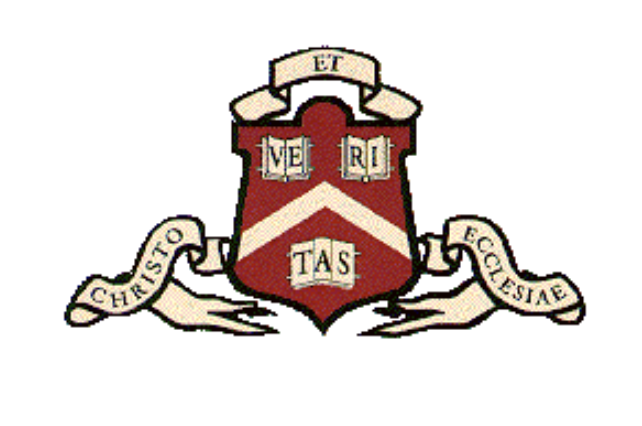
I found myself, while reading the Times piece, wondering: What is the dominant religious worldview at postmodern Harvard? I am sure that there are more than a few atheists and agnostics there. But people I know with ties to the campus tell me that a kind of “woke” liberal faith is the norm, which actually fits with the school’s roots in mainline Protestant New England. Also, there are more than a few evangelicals in the mix (look up “The Veritas Forum”).

I was reminded of the debates almost a decade ago at Vanderbilt University, as campus leaders tried to push evangelical Protestant student ministries off campus because of tensions over You Know What.


Please respect our Commenting Policy

Do Christian 'conservatives' have different beliefs than secular 'conservatives'?

Do Christian 'conservatives' have different beliefs than secular 'conservatives'?

I very much enjoy when other people share my work, especially when they have an audience as large as Rod Dreher’s over at the American Conservative.

Dreher recently picked up on a piece that I wrote laying out the most recent data that we have on the religiosity of Generation Z. In short, about 45% of them do not identify with a religious tradition. But, where a lot of that growth is coming from is through young people who identify as politically conservative.

Dreher writes:

“I would like to know what separates conservative Nones from political conservatives who are religious. That is, on what political points they differ. Are the Nones pro-choice, for example? I’m guessing they are probably fine with gay rights, though I don’t know what they think about trans; maybe they’re for it. What, exactly, makes them conservative?”

Well, I can make an attempt at documenting whether politically conservative Christians look like politically conservative nones using the same data sources that were included in my post.

Let’s start very broadly, by assessing just what percentage of Christians (regardless of age) identify as conservatives compared to those who are atheists, agnostics, or nothing in particular.

Just a bit less than 50% of Christians (of all races) identify as politically conservative. That’s been basically true dating back to 2008. The share has never dropped below 45% and vacillates very little from year to year. It’s fair to say that 47-48% of Christians are conservatives. The share of nothing in particulars who are conservative is much lower. In 2008, it was just 21% but that slowly crept up to 27% by 2011, but has stuck around 25% in the last few years.

Political conservatives represent a very small portion of atheists and agnostics. In 2008, just one in 10 atheists and agnostics were conservative. By 2014, that had increased to 15% for agnostics, and maybe had jumped a single point for atheists. By 2020, 11% of agnostics were conservative and 9% of atheists.

But looked at holistically, it’s important to note that about three quarters of all conservatives identify as Christians, 17% are secular and the remainder come from smaller religious groups like Jews, Hindus, Muslims, etc.


Please respect our Commenting Policy