Evangelicals

Was this a story? Why? Mississippi governor talks about heaven and Southern anti-vax trends

Was this a story? Why? Mississippi governor talks about heaven and Southern anti-vax trends

Here’s a complex question that is worthy of serious research by journalists: Are people who believe in heaven less likely to feel the need to get vaccinated against COVID-19?

Now, lots of people believe in eternal life and the vast majority of them believe — no matter what their level of faith or practice — that they are headed straight to heaven when they die. Belief in hell? That’s another matter.

Ah. But who, according to most media stereotypes, are the folks who REALLY believe in heaven? In particular, what kind of person would let that belief affect their actions in the real world (which means issues of political policy and public health)?

Obviously, we’re talking about those dang White evangelical Protestants. Right?

That brings us to a recent headline at The Daily Memphian (“the primary daily online publication for intelligent, in-depth journalism in the Memphis community”) that caught the eye of some GetReligion readers. The emails I received made it clear that some people were mad about this story for different reasons. Hold that thought.

First, the headline: “Miss. Gov.: South’s response to COVID impacted by belief in ‘eternal life’.” Then, here is the overture:

Mississippi Gov. Tate Reeves believes religion has a lot to do with the region’s response to the COVID-19 pandemic.

During a … fundraiser at the Eads home of Shelby County Election Commission Chairman Brent Taylor, Reeves spoke to several dozen Republicans.

“I’m often asked by some of my friends on the other side of the aisle about COVID … and why does it seem like folks in Mississippi and maybe in the Mid-South are a little less scared, shall we say,” Reeves said.

“When you believe in eternal life — when you believe that living on this earth is but a blip on the screen, then you don’t have to be so scared of things,” he said, but added: “Now, God also tells us to take necessary precautions. And we all have opportunities and abilities to do that and we should all do that.

Please respect our Commenting Policy

Reporting on faith-based investment guru Cathie Wood? Do your homework (better)

Reporting on faith-based investment guru Cathie Wood? Do your homework (better)

Investments aren’t my specialty at all, but I was lured to a New York Times business story recently that was headlined: “God, Money, YOLO: How Cathie Wood Found Her Flock.” (YOLO means “you only live once.”)

Hmm, I thought, an article about Christian investing? After all, this woman manages some $85 billion in assets. A superstar in the world of investing, she is known for her risky moves and appeal to the Reddit/Millennial crowd.

So, after 20 paragraphs describing the CEO of Ark Invest, we finally got to the God part.

It happened in the 21st paragraph, just after a mention about Wood speaking to business and religious groups about her late-career decision to start her own investment shop.

It began, she says, with a head-on encounter with the Holy Spirit.

On a gorgeous day in August 2012, Ms. Wood — a fund manager struggling through a rough quarter at AllianceBernstein — was struck by the silence inside her stately home in Wilton, Conn.

Her three children were gone, off to camp and other activities for the summer. She was facing two full weeks alone in the nearly 6,000-square-foot house she bought with her ex-husband in the 1990s.

Then she felt it.

“Wham,” Ms. Wood said last year on the “Jesus Calling” podcast, which is centered on the devotional writings of the best-selling Christian author Sarah Young. “I really feel like that was the Holy Spirit just saying to me, ‘OK, this is the plan.’”

“Jesus Calling,” for those of you who’ve lived on Pluto for the past few decades and have never heard of it, is one of the most successful devotional aids of all time. Thirty million units of this book -– and associated products –- have sold since 2004, when the one-time reclusive missionary to Australia (now living near Nashville) first published a devotional with words allegedly from Jesus himself.

Its fans claim that its words are what Jesus would sound like today if living in the 21st century. Its detractors call it theologically shallow and New Agey.


Please respect our Commenting Policy

When talking about vaccines, shame isn't going to change minds in many pews

When talking about vaccines, shame isn't going to change minds in many pews

Donald Trump had to know it was coming, even if -- to use a Bible Belt expression -- he was preaching to his choir.

"You know what? I believe totally in your freedoms," he said, at a rally in Cullman, Ala. "You got to do what you have to do, but I recommend: Take the vaccines. I did it -- it's good."

Videos of this August 21 event make it clear that quite a few people booed this request by the former president.

Truth is, the longer a health crisis lasts, the more pollsters will find that anti-vaccine citizens have "turned into true believers" who are rock-solid in their convictions, said political scientist Ryan Burge of Eastern Illinois University. He is co-founder of the Religion in Public website and a contributor to the GetReligion.org weblog I have led since 2004.

"At this point, the holdouts are the only people that (pollsters) have to talk to. … They've heard everything, and nothing is moving the needle for them," he said. "In fact, it seems like whatever you say to try to change their minds only makes it worse. These hardcore folks are digging in their heels all the more."

When exploring the most recent Data for Progress poll numbers, it's hard to nail down a religion factor in this drama. As summer began, 70% of non-evangelical Protestants had received at least one shot of COVID-19 vaccine -- but so had 62% of both evangelical Protestants and Catholics. As the author of a book entitled "The Nones: Where They Came From, Who They Are, and Where They Are Going," Burge found it significant that only 47% of the religiously unaffiliated reported receiving at least one shot.

"Religion may be a factor, for some people, but it's not the main thing" causing Americans to be reluctant, he said. "Age is clearly the No. 1 factor, even when you factor in politics. Young Republicans and independents are the same. …


Please respect our Commenting Policy

Once again, journalists need to ponder this question: What is an 'evangelical'?

Once again, journalists need to ponder this question: What is an 'evangelical'?

THE QUESTION:

One more time: What is an "evangelical"?

THE RELIGION GUY'S ANSWER:

Last month the Public Religion Research Institute reported that its latest polling shows white U.S. Protestants who identify as "evangelical" are now outnumbered by whites who do not do so. That upended the usual thinking on numbers, and analysts raised doubts. The discussion led Terry Shoemaker of Arizona State University, writing for theconversaation.com, to again mull the perennial question of what "evangelical" means.

In the American context, this term essentially covers the conservative wing of Protestantism, a variegated constellation of denominations, independent congregations, "parachurch" ministries, media outlets, and individual personalities that is organizationally scattered but religiously coherent.

There are three ways of defining and counting U.S. evangelicals -- by belief, by church affiliation and by self-identification. Shoemaker's analysis (which is open to some nitpicking) started from the belief aspect and a four-point definition by historian David Bebbington in his 1989 work "Evangelicalism in Modern Britain." In summary, these points are:

(1) a high view of the Bible as Christians' ultimate authority,

(2) emphasis on Jesus Christ's work of salvation on the cross,

(3) the necessity of conscious personal faith commitments and changed lives (often called the "born again" experience) and

(4) activism in person-to-person evangelism, missions and moral reform.

Problem is, those four points overlap with the definition of "Protestant" or even "Christian."


Please respect our Commenting Policy

New podcast: Gray Lady prints some complex Ryan Burge insights on Democrats and religion

New podcast: Gray Lady prints some complex Ryan Burge insights on Democrats and religion

Something old, something new.

Something red, something blue.

We started with something new and something blue during this week’s “Crossroads” podcast (click here to tune that in). But, as you will see, the “something old” turned out to be blue, as well.

“Blue,” of course, refers to the liberal/progressive half of the starkly divided American political scene, which also reflects, of course, divisions on moral, social, cultural and religious issues.

Oceans of mass-media ink have been poured out in recent decades by journalists covering the Religious Right and its scary impact on the Republican Party. What about the religious left — no capital letters, of course — and its impact on the Democrats?

That isn’t an important story, of course. At the start of the podcast I quoted some numbers retrieved at mid-week from some Google searches. A basic search for “Religious Right” yielded 6.5 million hits and a Google News search found 77,500 items. Do the same thing for “religious left” and you get 196,000 in the first search and 3,680 in the news search. Amazing, that.

This brings us to a New York Times op-ed essay by the increasingly omnipresent (and that’s a good thing) political scientist Ryan Burge, who contributes charts and info here at GetReligion. The headline: “A More Secular America Is Not Just a Problem for Republicans.” Here’s an early thesis statement:

Today, scholars are finding that by almost any metric they use to measure religiosity, younger generations are much more secular than their parents or grandparents. In responses to survey questions, over 40 percent of the youngest Americans claim no religious affiliation, and just a quarter say they attend religious services weekly or more.

Americans have not come to terms with how this cultural shift will affect so many facets of society — and that’s no more apparent than when it comes to the future of the Republican and Democratic Parties.

The impact on the GOP is rather obvious. While conservative religious groups remain strong in America (evangelicals are not vanishing, for example), the number of religiously unaffiliated (“nones”) continues to rise and the vague middle of the religious spectrum continues to shrink. Meanwhile, conservatives face an increasingly “woke” corporate culture and fading support on the left for old-fashioned First Amendment liberalism (think “religious liberty” framed in scare quotes).

Things get interesting — especially in the context of the Times op-ed world — when Burge discusses complications now facing Democratic Party leaders.


Please respect our Commenting Policy

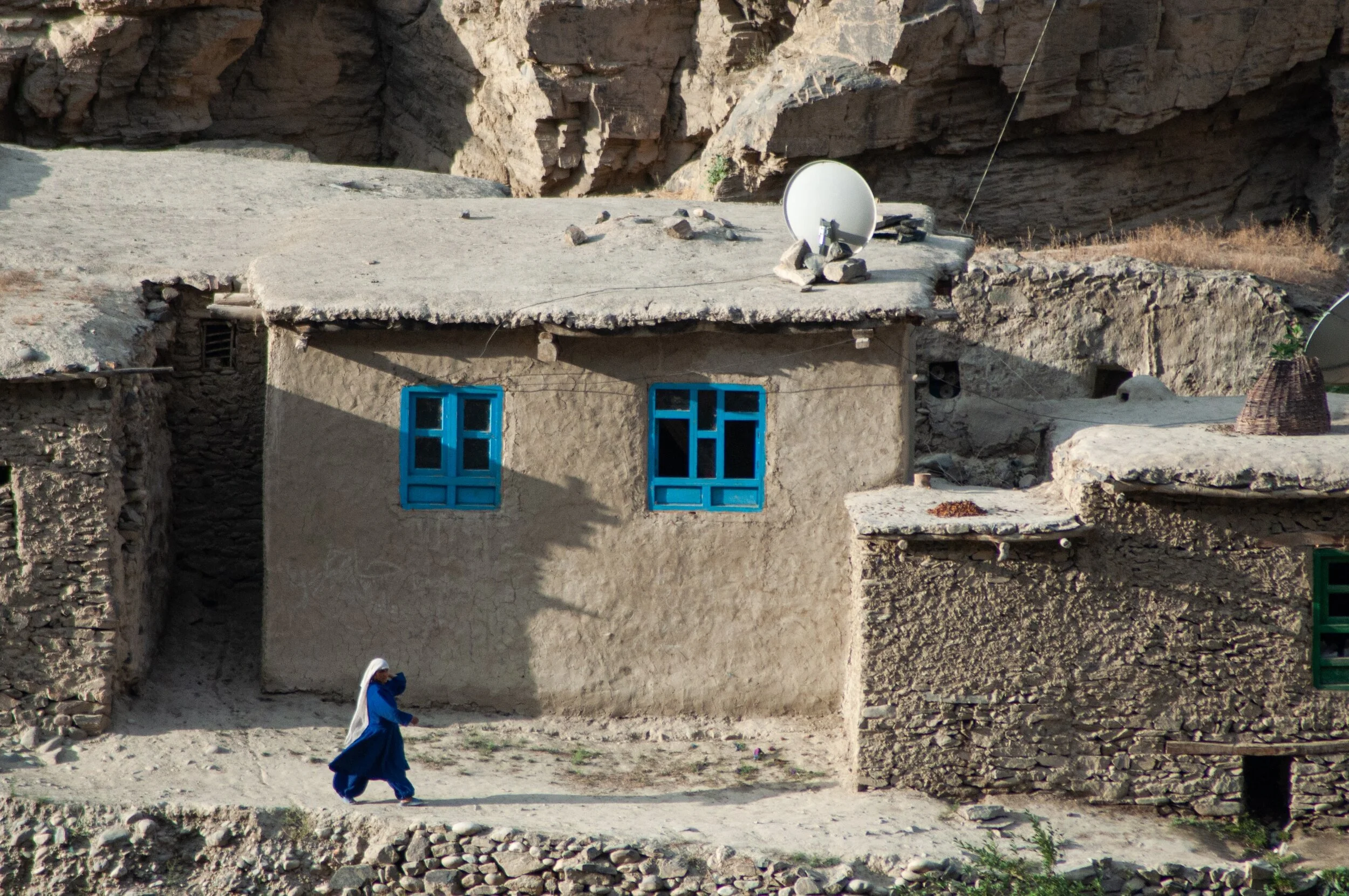
So ... where are the hidden converts to Christianity in Afghanistan? Can reporters find them?

So ... where are the hidden converts to Christianity in Afghanistan? Can reporters find them?

There’s an online discussion happening now among religion writers about all the uncovered religion angles of the current mess in Afghanistan.

The crux of the Afghanistan quagmire is religious, not simply political. It’s not just some guerrilla group taking over the country. It’s a radical Islamist group that aims to drag Afghanis back to the 7th century. There’s a reason why Afghanistan is vying with North Korea for the world’s worst country in terms of religious persecution.

The question nagging at some of us is what’s not getting covered in the daily drama of thousands of hapless people trying to leave the country despite the Taliban hordes gathered outside the airport. Also, sadly, there are the Marines inside the perimeter who are likewise keeping many people from getting on planes. (The Wall Street Journal has been covering the latter situation better than anyone else).

And on Wednesday, Catholic News Service reported that people who qualify for refugee status, including Christians, are being barred by the State Department from boarding outgoing military flights. Soo, who’s coming to the rescue? Political commentator Glenn Beck, that’s who. CNA says he’s raised $28 million via his Nazarene Fund to fly 20 jets into Kabul and pick up stranded Christians. This is an amazing story but where is the mainstream coverage?

While my co-writer Clemente Lisi covered the Catholics marooned in this desperate place, I’ve been focusing on coverage of evangelical Protestants, the only other religious group of any size that’s trapped there. (There were Sikhs and Hindus in Afghanistan as well, but they read the tea leaves after terrorists killed 25 Sikhs in March of 2020. After last year’s attack, those who could leave the country, left.)

Recently, India offered to take the estimated 650 Sikhs and Hindus who remain, a move that’s gotten criticism by Indian Muslims who want to get some of their friends out as well, according to the New York Times.

But, right now, there are no government or sympathetic Vatican officials out there willing to fish out the surprising number of evangelical Protestants who have somehow cropped up in this forbidding terrain. We read news accounts of “missionaries” who are stranded in country and I want to know: What missionaries? What converts? Does anyone have facts?

It’s nearly impossible to get reputable statistics at this point and all the news I found was anecdotal and scattered.


Please respect our Commenting Policy

What does the New York Times mean when it reports on 'religious leaders' in Afghanistan?

What does the New York Times mean when it reports on 'religious leaders' in Afghanistan?

Anyone who has read GetReligion for more than a month probably knows that I have always been concerned about the lack of press coverage of endangered religious minorities in large parts of the world — including nations such as Afghanistan.

It’s crucial to remember, when talking about religious freedom issues and the Universal Declaration of Human Rights, that it is tragically common for members of a major world religion to punish other members of their own faith because of strong disagreements about doctrine and tradition. It is common to see persecution of those who have no faith — think atheists and agnostics — as well as those who have converted to a new faith.

As a reminder, here is Article 18 of that landmark United Nations document:

Everyone has the right to freedom of thought, conscience and religion; this right includes freedom to change his religion or belief, and freedom, either alone or in community with others and in public or private, to manifest his religion or belief in teaching, practice, worship and observance.

With all of that in mind, it’s easy to understand why I was interested in this headline atop a New York Times report: “The Taliban holds first meeting of religious leaders since taking Kabul.

The key, of course, is the meaning of these two words — “religious leaders.”

If you follow news updates, you know that the ancient Jewish community in Afghanistan is long gone — unless merchant Zablon Simintov chose to attend this meeting. Was there a Catholic representative at the meeting? Were leaders of the growing underground church invited? Did they dare to come out of hiding? What about the Muslim leaders of progressive (for lack of a better word) mosques who cooperated with Western leaders during the past 20 years?

Who were these “religious leaders”?


Please respect our Commenting Policy

Thinking about the practical impact of shaming messages aimed at vaccine-resistant believers

Thinking about the practical impact of shaming messages aimed at vaccine-resistant believers

During my decades in religion-beat work, I have heard many an evangelical leader make the following sardonic observation.

Wait, I’ve also heard traditional Catholics offer variations on this theme. And there may be partisan political versions of this, as well. But that’s not my turf.

OK, here is the message: The quickest way for an evangelical to receive glowing elite press coverage and commentary (add social-media praise, after about 2000+) is to attack other evangelicals.

Now, that is not what this think piece is about. I say that, even though some vaccine-resistant religious leaders may have thought that’s what Daniel Darling, senior vice president for Communications at the NRB (think National Religious Broadcasters) was doing in his recent USA Today op-ed entitled, “Why, as a Christian and an American, I got the COVID vaccine.”

But careful readers could see that his message was way more complicated than that. If you weren’t sure about his intent, check out the lengthy interview with Darling that followed on MSNBC’s “Morning Joe” program (click here or see the YouTube at the top of the full copy of this post). The veteran evangelical leader — former head of communications for the Southern Baptist Convention’s Ethics and Religious Liberty Commission — was clearly sending two messages.

Yes, one was to religious leaders who have doubts about the COVID-19 vaccines. But he also had sobering words for their critics, whose attacks have caused anger and conflict, instead of changing minds.

Thus, what we have here is a piece of op-ed work, and the MSNBC appearance that followed, that people on both sides of this warfare need to parse carefully. This includes journalists who are covering this story — which is so not over yet.


Please respect our Commenting Policy

Plug-In: From life issues to gov't mandates, religious reactions to vaccines have been complex

Plug-In: From life issues to gov't mandates, religious reactions to vaccines have been complex

Want to be smart?

Then avoid simple narratives in news coverage. That’s especially true on the still-timely subject of religion and debates about the COVID-19 vaccines.

For evidence, check out these recent stories:

“As vaccine mandates become a reality, politicians, pastors and even the pope are speaking out against faith-based exemptions,” the Deseret News’ Kelsey Dallas reports.

But here’s the twist: “In many cases, those who claim a religious exemption are part of a denomination that doesn’t share their concerns, although many faith leaders do support making exemptions available.”

“Does respect for human life mean vaccine mandates?” asks a story by the Washington Post’s Michelle Boorstein.

The answer? It’s complicated.

“In recent days, with a handful of organizations from Facebook and Google to the University of Virginia announcing vaccine mandates, religious leaders and organizations have considered their own teachings and values on the question of how to show respect for life,” Boorstein writes. “And their conclusions vary widely.”

This news, via USA Today, jumps out at you: “Florida church vaccinates hundreds after 6 members die from COVID-19 in 10 days.”

"It's just been ripping our hearts apart,” the senior pastor says in the story by Marina Pitofsky.

It’s probably no surprise that social media pounced on the church for waiting until members died to promote vaccinations.

Except, as anyone reading the entire report learns, it didn’t: “The church vaccinated about 800 people in March at a similar event as COVID-19 vaccines became widely available in the U.S.”

While not religion related per se, Peggy Noonan’s Wall Street Journal column this week makes some excellent points.


Please respect our Commenting Policy