Evangelicals

'I Love Jesus, But I Want to Die' -- A sobering message to church leaders on mental health

'I Love Jesus, But I Want to Die' -- A sobering message to church leaders on mental health

The first time Sarah J. Robinson tried to kill herself was eight months after she became a born-again Christian.

She had struggled with suicidal thoughts since elementary school. She would imagine jumping into highway traffic or fill her hand with pills and consider swallowing them. But her depression only deepened after she was baptized as a teen and poured herself into Bible studies and upbeat youth-group projects.

She felt like a failure. Finally, she pressed a knife harder and harder into her skin -- but she couldn't force herself to end it all on the kitchen floor. Looking back, she wrote: "I didn't want my family to find me there, so I got up and put the knife away. I climbed into bed, put on a worship CD, cursed God and went to sleep."

Robinson kept stacks of journals and they provided crucial material for "I Love Jesus, But I Want to Die," a book written during three years of struggle and research. Her battles with depression have continued, even during her years working as a youth minister.

Images of handwritten pages appear in the book, including this 2007 plea: "Lord, I'm struggling. I need your help. This week has been really rough -- I've been sad & lonely & angry & numb. I cut myself and berated myself, wished for the end, tried so hard to hide it. I'm not just empty -- I've become a vacuum, taking on more and more of the absence of your presence. … God, please don't let me be lost."

It was hard to be that vulnerable, said Robinson, reached by telephone in Nashville. But including actual journal pages "seemed like a no-brainer" if the goal was to "let other people who are hurting know they are not alone. I wanted them to know that I've been there -- in that kind of midnight."

Among secular researchers, it's common to find two views of mental-health issues, said Robinson, citing the work of Stanford University researcher Carol Dweck. The first is a "fixed mindset" that assumes these conditions are predetermined and unchangeable. Thus, "setbacks and failures reveal who we really are and will always be," said Robinson." The second is a "growth mindset" that says individuals can adapt and change.

In pews and pulpits, many believers simply assume all mental-health struggles represent a lack of faith. Strugglers will be healed if they dedicate themselves to Bible study and prayer, while turning away from their sins. Church-based "pastoral counseling" is an option.

"The idea is that if I put the right things into the spiritual vending machine, then I'll get the right things out," said Robinson.

Please respect our Commenting Policy

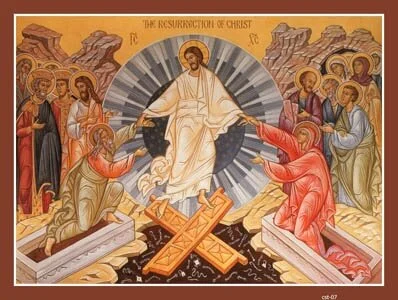
Big question linked to Easter: Does Christianity believe in 'the immortality of the soul'?

Big question linked to Easter: Does Christianity believe in 'the immortality of the soul'?

THE QUESTION:

Does Christianity believe in the “immortality of the soul”?

THE RELIGION GUY’S ANSWER:

No.

Not exactly. And before anyone has a heart attack reading that, The Guy hastens to explain that Christianity has always vigorously affirmed the Easter message that earthly death is followed by everlasting life. But the oft-used phrase about a mere “immortality of the soul,” which stems from ancient Greek philosophy, could suggest bodily life is problematic and mistakenly suppose that our soul exists through all eternity as only a disembodied spirit.

Instead, Christianity teaches that just as Jesus arose bodily from the grave, so the promise of everlasting life involves a person’s eventual resurrection that unites the soul with the body in a newly glorified state. As with the central belief that Jesus was God incarnate in full human and bodily reality, this Christian affirmation about the afterlife proclaims that, as in Judaism, our bodies are God’s good creation and fundamental to each person’s human identity.

This understanding of New Testament teaching was defined orthodoxy as early as A.D. 180 in Against Heresies by Bishop Irenaeus of Lyons, an authority and saint for Catholic and Orthodox Christians:

“… It is manifest that the souls of his disciples also, upon whose account the Lord underwent these things, shall go away into the invisible place allotted to them by God, and there remain until the resurrection, awaiting that event; then receiving their bodies, and rising in their entirety, that is bodily, just as the Lord arose” (from book 5, chapter 31).

A precise Protestant formulation appears in the Westminster Confession of Faith, the Presbyterian credo from 1647 (here “men” refers to both genders):


Please respect our Commenting Policy

New podcast: Rising tensions between religious liberty, pronoun wars, academic freedom, etc.

New podcast: Rising tensions between religious liberty, pronoun wars, academic freedom, etc.

My name is Terry Lee Mattingly. However, when I converted to Eastern Orthodoxy, I took the name of a patron saint — St. Brendan the Navigator.

Let’s pretend that I am young and attending a state university right now and that I have decided to require professors to address me as “Holy St. Brendan the Navigator.” It is, after all, my name. While we are at it, let’s say that all of the Catholic and Orthodox students take the same tack, if their saint names are different then the names they were given at birth.

Some professors would wince, but go along with this. But let’s say that one professor is very secular, a Marxist perhaps, and he refuses — stating that my request violates his personal convictions. I threaten to sue, along with other students in the same situation. Game on.

How would the leaders of this taxpayer-funded public university respond? Would this be treated as a natural request on my part, with the understanding that any refusal would attack my sense of identity? What if I requested that my university ID card state my name as “St. Brendan the Navigator”?

It’s a crazy question, of course. But it would — at a state university — raise issues about the First Amendment (free speech and religious liberty) and academic freedom. These questions were at the heart of this week’s “Crossroads” podcast discussion. Click here to tune that in. [This episode also includes a bizarre gaffe when — I’m wrestling with a painful medical condition right now — I messed up my own saint’s name, mixing St. Brendan’s title with that of St. Nicholas of Myra. Listen for it.]

At the heart of the podcast discussion is a timely question: Can the state force the professor to recognize and even affirm — with public speech — beliefs that violate his conscience?

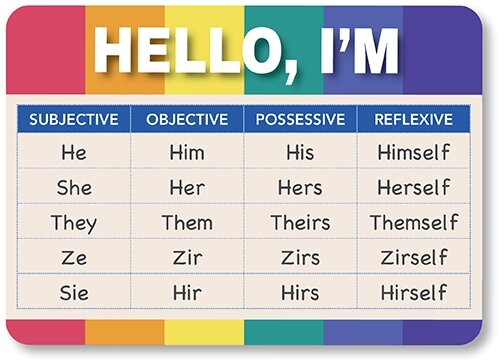
Now, as readers probably guessed right from the get go, this podcast focuses on another matter of personal identity — the degree to which professors can be forced to cooperate with students who chose to use any of the myriad and evolving gender pronouns linked to the LGBTQ+ movement. We looked at a Washington Post story with this headline: “A professor was reprimanded for refusing to use a transgender student’s pronouns. A court says he can sue.

Now, when these clashes take part in PRIVATE schools — left or right, religious or secular — it’s clear (pending passage of the Equality Act) that these doctrinally defined institutions have a right to create belief and lifestyle covenants that settle issues of this kind. Students can chose to affirm these beliefs, freely signing on the dotted line, or go to school somewhere else.

But what about state schools built and operated with tax dollars?


Please respect our Commenting Policy

Vague doctrine at for-profit company? Tennessean nails key issue in new Ramsey lawsuit

Vague doctrine at for-profit company? Tennessean nails key issue in new Ramsey lawsuit

Get ready for more stories in which religious believers clash with the increasingly woke doctrines proclaimed, and enforced, by the Human Resource personnel in modern corporations.

Can your company fire you for declining to use a colleague’s preferred pronouns? What happens if (a) someone declines to remove a study Bible from his or her desk or (b) some believers refuse to hang LGBTQ+ rainbow solidarity posters in their offices? What if an employee marches in a right-to-life parade? Battles continue, in some workplaces, over crosses, beards, headwear and other religious symbols.

That’s one side of the HR culture wars. Meanwhile, it’s clear — pending the outcome of the Equality Bill debates — that faith-defined nonprofits have the right to create lifestyle and doctrinal covenants for the people who chose to sign them and, thus, work in these ministries.

But what about for-profit companies led by executives who want to maintain faith-friendly images? What are the limits on their policies?

For example, Hobby Lobby won its U.S. Supreme Court case after rejecting the Obamacare requirement that contraceptives be included in employee benefits packages. But what if for-profit company leaders said that, for faith-based reasons, they could investigate and fire employees who USED contraceptives?

This brings us to another fascinating dispute inside the Ramsey Solutions empire. The Tennessean headline asks: “Can you be fired over your sex life? Dave Ramsey thinks so.” Here is the overture:

While a former employee has accused Ramsey Solutions of terminating her because of her pregnancy, the company disputes the claim. Company lawyers said in court filings the employee was fired for premarital sex and so were a dozen other employees.

Former administrative assistant Caitlin O'Connor, who was employed by Ramsey Solutions for over four years and never disciplined, said when she announced she was pregnant in June and requested paperwork for maternity leave, she was terminated for her pregnancy since she isn't legally married to her longtime partner, the baby's father.

Lawyers for Ramsey Solutions, owned by Dave Ramsey — a conservative financial titan who made headlines when he hosted a giant Christmas party during the pandemic and refused to let his employees work from home — said O'Connor wasn't fired because she was pregnant. She was terminated for having premarital sex.


Please respect our Commenting Policy

Returning to Kamp Kanakuk: Is this new expose a work of journalism, theology or both?

Returning to Kamp Kanakuk: Is this new expose a work of journalism, theology or both?

Readers with long memories will recall that, when the Internet arrived it had an immediate impact on important subjects that rarely received adequate coverage in mainstream media.

Take religion, for example. The lower cost of publishing online led to an explosion of forums, listservs, newsletters, online “radio” channels, podcasts and weblogs. Some failed or evolved into new forms — consider the long and complicated histories of Beliefnet and Patheos — and others became, well, normal.

Now, in the “cancel culture” era, it’s clear that another example of online evolution is affecting serious coverage of religion, as well as other complicated topics.

I am referring to the controversies surrounding Substack and the myriad newsletters and alternative publications thriving there. For a sample of the fea paranoia surrounding Substack, click into this thread from a professor at the UCLA Center for Critical Internet Inquiry or read between the lines of this Washington Post column: “The Substack controversy’s bigger story.” Here is a sample of that:

Substack is a start-up for self-publishing email newsletters: Writers decide how often to write and whether and how much to charge; Substack sends the newsletters and collects any fees. The ease of use has made it popular with journalists. …

Some of the most prolific users are heterodox political writers who had found mainstream publications an increasingly poor fit. A number quickly rose to the top of the Substack leader boards. This attracted the gimlet eye of the cancelers: Other online writers — some of whom had their own Substack newsletters — have leveled accusations of transphobia and other offenses. A nascent boycott aims to pressure Substack into deplatforming the alleged offenders. Reportedly, their campaign is having some effect.

“Heterodox” is an interesting word. It appears, in this context, to define the work of various kinds of conservatives or, even worse, free thinkers (Andrew Sullivan and Bari Weiss, for example) who accuse many “liberals” or “progressives” of turning dangerously illiberal.

This brings me to this weekend’s must-read missive from Nancy and David French, care of The Dispatch, an alternative conservative online publication that is thriving in this new online environment. Here is the dramatic double-decker headline atop this long feature:

‘They Aren’t Who You Think They Are’

The inside story of how Kanakuk — one of America’s largest Christian camps — enabled horrific abuse.


Please respect our Commenting Policy

Purity culture questions: A friendly, but crucial, dialogue between two evangelical thinkers

Purity culture questions: A friendly, but crucial, dialogue between two evangelical thinkers

The purity culture wars continue over on Twitter, where a crucial question — from a journalism perspective — can be seen in the following sequence.

There is no question that some church leaders went too far with purity culture themes and rites, including hellish actions by abusive men. Can anyone deny that? However, can journalists (and their academic and activist sources) assume that because evil happened in some cases means that it happened in all cases? And, to be specific, do journalists have on-the-record evidence that the alleged shooter in Atlanta was, in fact, warped by abusive people at an abusive church?

GetReligion published two posts linked to these debates. Check out Julia Duin’s post here: “Panning purity culture: What the press doesn't get about basic Christian doctrines on sex.”

Then, I raised other basic journalism questions here: “Wait a minute: How is a sermon on the Second Coming linked to shootings in Atlanta?

Before we get to this weekend’s two “think pieces” on this topic — by religious-liberty activist David French and Crossway books executive Justin Taylor — here is a flashback to a key passage in my post, which is linked to some of Taylor’s constructive criticism of the French piece.

It’s not enough to say that this or that conservative congregation, or counseling center, or parachurch ministry is “evangelical” and, thus, the public can assume that Christian doctrines were used in manipulative ways. …

Ponder this equation: Journalists cannot assume that a specific evangelical flock advocates dangerous doctrine X, simply because there are experts (progressive evangelicals even) who insist that all evangelicals teach dangerous doctrine X and, thus, we know that dangerous doctrine X causes broken, manipulated individuals to do hellish things.

At some point, journalists need to find specific people advocating specific ideas and actions — using research methods that are deeper than second-hand reports and the convictions of hostile experts on one side of fights about the Sexual Revolution.

This brings us to French’s must-read piece:


Please respect our Commenting Policy

New podcast: Tensions with NCAA and Christian schools? That issue will not go away

New podcast: Tensions with NCAA and Christian schools? That issue will not go away

A decade or so ago, I had a chance to speak to journalism students at Oral Roberts University. My strongest memories — other than visions of the shiny modernist architecture — center on an unusual moment during a campus chapel service.

There’s nothing unusual about a Christian university having a full-house chapel service. There’s nothing unusual about a student-led praise-rock band blasting out Contemporary Christian Music songs that inspired lots of people to do their share of swaying and dancing.

But here’s the memory. My visit to the campus took place during a meeting of ORU’s board of trustees, who sat together near the front of the auditorium during chapel. Looking down from the balcony, I was surprised to see that (a) many of the trustees were rather young, (b) a much higher than normal number of them were Black or Latino and (c) several were enthusiastically dancing with the students, including at least one in an aisle (the current board doesn’t look quite as young).

All of this was a reminder that much of the racial and cultural diversity at ORU — a major factor in campus life — was and is linked to the school’s roots in charismatic and Pentecostal Christianity, a movement that as been highly multiracial since its birth. Founder Oral Roberts was a famous, and often controversial, leader among charismatic Christians, even though, as an adult, he aligned with the United Methodist Church (which is more conservative in Oklahoma than, let’s say, parts of Illinois and other blue zip codes).

I bring this up because of a recent USA TodayFor the Win” column that served as the hook for this week’s “Crossroads” podcast (click here to tune that in). Here’s the headline for that piece, which was written by the “race and inclusion editor” at USA Today sports: “Oral Roberts University isn't the feel good March Madness story we need.” Here is a crucial passage:

… As the spotlight grows on Oral Roberts and it reaps the good will, publicity and revenue of a national title run, the university’s deeply bigoted anti-LGBTQ+ polices can’t and shouldn’t be ignored.

Founded by televangelist Oral Roberts in 1963, the Christian school upholds the values and beliefs of its fundamentalist namesake, making it not just a relic of the past, but wholly incompatible with the NCAA’s own stated values of equality and inclusion.


Please respect our Commenting Policy

Panning purity culture: What the press doesn't get about basic Christian doctrines on sex

Panning purity culture: What the press doesn't get about basic Christian doctrines on sex

Here we go again.

Evangelical “purity culture” is getting royally trashed these days for being responsible for a multiple murder last week in Atlanta. If only, these stories suggest, this man hadn’t been so messed up by primitive Christian morals, he might not have gunned down eight people.

Members of the GetReligion team have written before (in this 2019 piece by the Religion Guy) about how reporters consistently don’t get the doctrinal issues that are linked to purity culture. Here we are again with a string of murders by a Southern Baptist man who had a sex obsession. Suddenly, the national conversation is about the Christian teachings that might have driven him to it.

A number of media took a whack at the topic. I’ll start with Business Insider, which, in a piece headlined “The Atlanta shooting and the dangers of American evangelicalism’s trademark purity culture,” commits tons of journalistic sins starting with its fourth paragraph:

"It's not a jump to say white conservative Christianity played a role here," said Joshua Grubbs, an assistant professor of psychology at Bowling Green State University. "The facts need to come to light, but all the facts that are in the light right now suggest it's at play." …

Huh? All white conservative Christians are now complicit in the shootings? This whole marrying of what various writers hate about Christianity to “white evangelical culture” shows a massive ignorance of evangelicals.

First, a lot of evangelicals, especially younger ones, aren’t white. Show up at a college InterVarsity meeting sometime (that is, those that are still are allowed to use university facilities, which many aren’t these days because of their views on gay marriage) and take a look at the variety of folks there.

Back to the Business Insider piece:

Two key concepts here are "temptation" and "sex addiction." Both feature heavily in evangelical "purity culture," a set of rituals and beliefs around gender roles, designed to encourage believers, especially young men and women, to abstain from sex outside of heterosexual marriage.

The article marshals a list of scholars to trash white supremacy, the boogeyman in all this.


Please respect our Commenting Policy

Wait a minute: How is a sermon on the Second Coming linked to shootings in Atlanta?

Wait a minute: How is a sermon on the Second Coming linked to shootings in Atlanta?

The hellish shootings in Atlanta have unleashed fierce debates combining questions about sex, sin, salvation, repentance, race and various combinations of all of those hot-button topics.

The debates center, of course, of statements by Robert Aaron Long — the suspect in the killing of eight people, including six Asian women — and his complicated and troubled history as a young member of Crabapple First Baptist Church in Milton, Ga., a Southern Baptist congregation.

Eventually, court testimony will provide hard facts about this case. At this point, all the evidence is that Long was raised as a conservative Christian, was active in his church youth group and that he abandoned his faith and then, quite literally, all hell broke loose in his personal and family life. Long has said that a “sex addiction” drove him to frequent massage parlors and his family, apparently, sent him to a Christian counseling center for treatment. His conservative Christian parents “threw him out of the house” the night before the shootings, according to reports in the Washington Post and elsewhere.

Like I said, on-the-record details will emerge. Right now, I want to raise a journalism question or two about coverage of the SBC congregation that is involved in this story. What do we know about this church and, well, how do we know what we know? One Post story notes the following, quoting a solid, factual source:

The evangelical congregation’s minister, the Rev. Jerry Dockery, is an energetic preacher who advocated for a socially conservative brand of Christianity that, as the church bylaws put it, views “adultery, fornication, homosexuality, bisexual conduct, bestiality, incest, polygamy, pedophilia, pornography, or any attempt to change one’s sex, or disagreement with one’s biological sex” as “sinful and offensive to God.”

This isn’t shocking material, if you know anything about traditional forms of Christianity. It would be easy to find specific quotations from recent Catholic popes — including Pope Francis — condemning behaviors such as these, and more.

This congregation is also connected to several doctrinally conservative organizations or movements linked to SBC life, such as the Founders Ministries. All of this leads me to a specific sermon reference discussing the end of the world and Christian teachings about the second coming of Jesus Christ. Oh, and if you stop and think about it, this includes the church’s pastor — indirectly — offering a warning about Christians worshipping political leaders such as Donald Trump.

Say what?


Please respect our Commenting Policy