Demographics

New podcast: Spot any 'ghosts' in New York Times story about aid for (large) U.S. families?

New podcast: Spot any 'ghosts' in New York Times story about aid for (large) U.S. families?

At first glance, it looks like another New York Times story about all those public policy debates between the entrenched Republicans and White House, along with the narrow Democratic majorities on Capitol Hill.

But if you look carefully, there is a reason that this Gray Lady update about the arrival of the expanded Child Tax Credit was, to use a turn of phrase from “Crossroads” host Todd Wilken, a “haunted house” of religion-news ghosts. He was riffing on a term your GetReligionistas have used since Day 1 at this blog. (Click here to tune in this week’s GetReligion podcast.)

OK, let’s play “spot the religion ghost.” First, here is the double-decker headline on this report:

Monthly Payments to Families With Children to Begin

The Biden administration will send up to $300 per child a month to most American families thanks to a temporary increase in the child tax credit that advocates hope to extend.

Nine out of 10 children in the United States will be eligible for these payments, which are linked to the COVID-19 crisis, but call back memories of policies from the old War on Poverty. The program will expire in a year, at which point the debates over its effectiveness will crank into a higher gear. Here’s the Times overture:

WASHINGTON — If all goes as planned, the Treasury Department will begin making a series of monthly payments in coming days to families with children, setting a milestone in social policy and intensifying a debate over whether to make the subsidies a permanent part of the American safety net.

With all but the most affluent families eligible to receive up to $300 a month per child, the United States will join many other rich countries that provide a guaranteed income for children, a goal that has long animated progressives. Experts estimate the payments will cut child poverty by nearly half, an achievement with no precedent. …

While the government has increased many aid programs during the coronavirus pandemic, supporters say the payments from an expanded Child Tax Credit, at a one-year cost of about $105 billion, are unique in their potential to stabilize both poor and middle-class families.

As you would expect, many Republicans oppose what they consider a return to old-style “welfare” payments of this kind.

That’s many Republicans, but not all.

Please respect our Commenting Policy

Any kind of turnaround for 'Mainline' Protestantism would be big news, but is it true? 

Any kind of turnaround for 'Mainline' Protestantism would be big news, but is it true? 

One danger facing religion-beat veterans is that a broad trend becomes so familiar we overlook its continuing journalistic importance. One example is the year-by-year-by-year decline of America's once-influential "Mainline" Protestant churches over the past half-century, even as conservative or "Evangelical" Protestants generally kept up with population growth -- until recently.

(For additional background, please note that the June 24 Guy Memo lamented media neglect of Mainline angles in spot news coverage. See also this recent Ryan Burge post.)

The Mainline shrinkage is one of this era's momentous changes in American religion, a great void in the public square into which evangelicals moved. Other major trends include the substantial rise of unaffiliated "nones," immigration-driven increases in Hispanic Catholics and followers of Asian religions, and white Catholics' shift from loyal Democrats to pivotal Republican constituency.

It's big stuff if that Mainline Protestant slide has bottomed out or that’s any kind of upswing. And what if Mainliners now suddenly outnumber the rival white Evangelicals (leaving aside the distinctive Black and Hispanic Evangelicals). Such is the scenario in a major new survey released July 8 by the Public Religion Research Institute (contacts at press@prri.org or 202-238-9424).

PRRI tells us that white Mainliners are now 16.4% of the U.S. population, a remarkable gain from 13% as recently as 2016, while white Evangelicals have fallen to 14.5% from a 23% peak in 2006. White Catholics constitute a pretty stable 11.7%.

Politically, Mainliners are divided and thus have less clout than other groups, identifying as 35% Democrats, 33% Republicans, and 30% Independents.

As journalists ponder what to make of this surprising report, begin with what's “Mainline” in the church marketplace. The Guy (and others) say the word designates those Protestant denominations — the so-called “Seven Sisters” — born in Colonial America or the early Republic, with predominantly white memberships, that are affiliated with the National Council of Churches and are tolerant or favorable toward liberal belief. We could add that the well-educated Mainliners typically enjoy relatively high incomes and social status.

Here is the key: This PRRI survey at hand identified Mainliners by what they are not instead of what they are.


Please respect our Commenting Policy

Think about it: Southern Baptist tweetstorm spotlights an important issue for religion-beat pros

Think about it: Southern Baptist tweetstorm spotlights an important issue for religion-beat pros

How many times have you read a story that said something like, “Southern Baptists are expected to do so-and-so or such-and such”?

I’m not talking about coverage of the actual annual meeting when “messengers” from autonomous SBC churches actually get together and vote on this-and-that and make statements and changes in the mechanisms that affect their common work. I am referring to news stories that seem to assume that Southern Baptists can be summed up with one set of cultural or political images or a set of data points.

You know: I’m talking about news coverage of Southern Baptists that assumes that Sunbelt suburban megachurches are the only reality. It’s so easy, when trying to write news reports of 666 words or so, to settle into language that attempts to make the blurry real world snap into super-sharp focus.

The same is true of all big religious movements, of course. We all know that the singular “Catholic vote” doesn’t exist, now or ever. We know that rural United Methodists are not the same folks as blue zip-code urbanites (and there are complexities inside those two groups). We know that many Episcopalians in north Texas are not the same as those in northern California. But there’s only so much space (even in today’s online world) and editors always want snappy phrases and punchy conclusions, usually with a political hook or two.

Anyway, Nathan A. Finn — provost at North Greenville University, a campus in South Carolina with strong Southern Baptist ties — recently rolled out a tweetstorm in the wake of all the news coverage of the SBC annual meeting in Nashville.

This is not a news story. It isn’t even a conventional “think piece,” although Finn could have turned it into one quite easily. It’s “just” a long chain of tweets. Nevertheless, there is much to learn here. Let us attend.

The chain opened with the tweet at the top of this post. Here’s the rest of the “storm” (sorry about the repeats, but it’s the best way to keep the URLs clear).


Please respect our Commenting Policy

These stark numbers are headline worthy: Death of the Episcopal Church is approaching

These stark numbers are headline worthy: Death of the Episcopal Church is approaching

Last November, I wrote a post for Religion in Public with the title, “The Data is Clear — Episcopalians are in Trouble.” In it, I used survey data to paint a portrait of a denomination that was on the brink of collapse.

One of the most troubling things about the future of the Episcopal Church is that the average member is incredibly old. The median age of an Episcopalian in 2019 was sixty-nine years old. With life expectancy around 80, we can easily expect at least a third of the current membership of the denomination to be gone in the next fifteen or twenty years. That’s problematic when membership has already been plummeting for decades.

But, I came across some data in the last few weeks that I just had to look at in more depth.

Before I get into the graphs I have to give some serious kudos to the data team that works for the denomination. I have looked at the websites of all kinds of Baptist, Methodist, Presbyterian and Catholic traditions over the last few years. The Episcopalians blow them all out of the water in terms of accessibility and ease of use.

Don’t believe me? Well, they have an interactive dashboard of all their churches in the United States. You can sort based on a map, church size, or amount of offering. It’s incredible and can be accessed at this link.

Let’s get down to it, though. How many people actually attend an Episcopal church on an average Sunday? I grabbed a PDF of their membership reports from here and did some quick analysis of the national trends.

In 2009, 725,000 people attended an Episcopal church on an average weekend. According to their own data, the Episcopal Church has about 1.8 million baptized members. (The denomination’s membership peaked at 3.4 million in the 1960s.) Thus, about 40% of current members attend on a regular basis. That’s been declining steadily over the last decade. A typical year sees attendance dip by 25,000-35,000 people. That represents a 2-3% year-over-year decline.

By 2019, the weekly attendance was 547,000. In percentage terms, the Episcopalians have seen their attendance drop by a quarter in just the last decade.

But, that doesn’t tell the whole story about the future of the Episcopalians.


Please respect our Commenting Policy

Don't neglect Mainline Protestants when analyzing, e.g., sexual abuse or Baptist turmoil

Don't neglect Mainline Protestants when analyzing, e.g., sexual abuse or Baptist turmoil

Two blockbusters dominated the American religion beat last week.

The Catholic bishops defied a nudge from Pope Francis's Vatican and decided overwhelmingly to write a Communion policy that might target President Joe Biden and other pols for liberal abortion stances. And conservative establishment voters in a Southern Baptist Convention (SBC) presidential showdown narrowly defeated (for now) hard-right populists.

Standard news judgment automatically puts the spotlight on hot disputes in the nation's two largest religious sectors — white evangelicalism and Catholicism. Meanwhile, week by week, year by year, the media consistently downplay the third-ranking religious category, "Mainline" Protestantism, which not so long ago exercised such vast cultural influence. (They also neglect fourth-ranking Black Protestantism.)

Two thoughtful new articles show intriguing ways to overcome sins of omission.

President Mark Tooley of the conservative Institute on Religion & Democracy asks, at the Juicy Ecumenism weblog, why Mainline churches apparently suffer fewer sexual abuse scandals than their evangelical rivals. And University of West Georgia historian Daniel K. Williams compares the turbulent Southern Baptists with their smaller and rarely covered Mainline rival, American Baptist Churches (ABC). [Disclosure: The Guy was happily raised in the ABC and remained a nominal member till age 30.]

"Mainline" refers to church bodies dating from Colonial and post-Revolutionary times that have been predominantly white, involved in ecumenical groups like the National Council of Churches and are either liberal on theology and politics or give liberals ample running room. The largest such denominations — often called the “Seven Sisters” — are the ABC, Christian Church (Disciples of Christ), Episcopal Church, Evangelical Lutheran Church in America, Presbyterian Church (USA), United Church of Christ and United Methodist Church.

Tooley is a Methodist evangelical and major critic of liberal trends, so when he faintly praises Mainline performance this commands attention.


Please respect our Commenting Policy

Pope Francis questions the purpose of official Vatican media: Does he have a point?

Pope Francis questions the purpose of official Vatican media: Does he have a point?

The year was 2012 and then-Pope Benedict XVI, yearning to “encounter men and women wherever they are, and begin dialogue with them” sent out his first tweet.

The papal Twitter account in English — and associated accounts in different languages — continue to this day under Pope Francis. For the leader of the world’s 1.3 billion Roman Catholics, it remains a way to evangelize through the computer, especially during the pandemic.

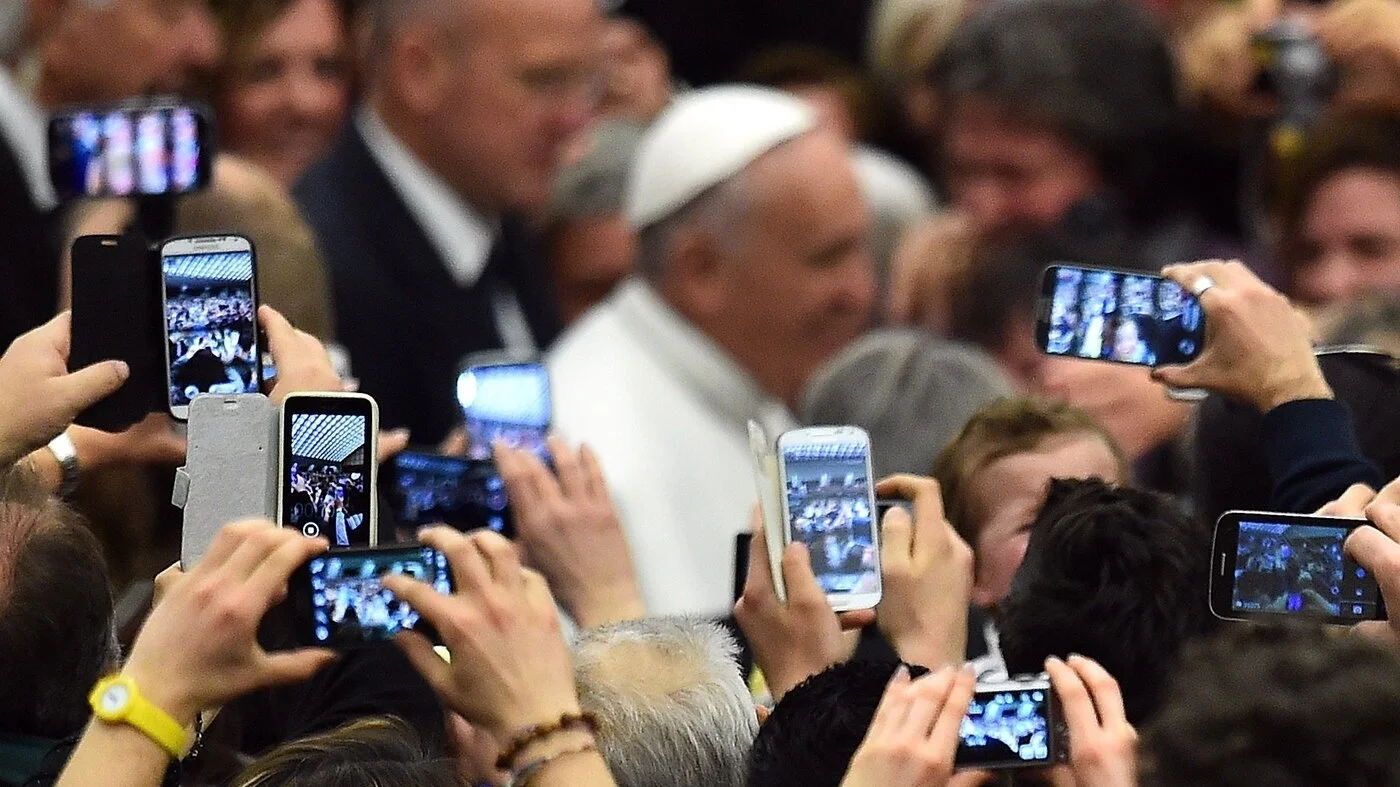
It did not go unnoticed when Francis — paying a visit on May 24 to the Dicastery of Communications to mark the 90th anniversary of Vatican Radio and the 160th anniversary of the Vatican’s newspaper L’Osservatore Romano — used the occasion to call the Vatican’s in-house media to stay relevant during a challenging media landscape.

The Associated Press, in its news story, noted the following:

Francis has vowed not to fire anyone to offset the economic crisis created by COVID-19 and the pandemic-related shuttering of one of the Holy See’s main sources of revenue, ticket sales from the Vatican Museums.

But in a warning of sorts to the Vatican communications staff, he opened his unscripted remarks Monday with a pointed question.

“There are a lot of reasons to be worried about the Radio, L’Osservatore, but one that touches my heart: How many people listen to the Radio? How many people read L’Osservatore Romano?” Francis asked.

He said their work was good, their offices nice and organized, but that there was a “danger” that their work doesn’t arrive where it is supposed to. He warned them against falling prey to a “lethal” functionality where they go through the motions but don’t actually achieve anything.

In dealing with Vatican-run media, journalists need to ask several questions:

* Why has Pope Francis questioned his own media?


Please respect our Commenting Policy

Demographics make news: How will religion shape the oncoming Birth Dearth and vice versa?

Demographics make news: How will religion shape the oncoming Birth Dearth and vice versa?

A Newsweek magazine feature back in 1975 was headlined "The Cooling World." (Journalists beware: The supposed 1977 Time magazine cover story "How to Survive the Coming Ice Age" is among the countless frauds that infest the Internet.)

Eventually, cultural concern shifted instead to "global warming" (which was then rebranded as "climate change").

Seven years before Newsweek's freeze alarm, Stanford University biologist Paul Ehrlich published his apocalyptic "The Population Bomb," which sold in the millions and updated Thomas Malthus's dire demographic predictions from 1798. Ehrlich warned, for example, that due to global overpopulation, in the 1970s "hundreds of millions of people are going to starve to death." He then helped found the Zero Population Growth organization (since rechristened Population Connection).

Now comes The New York Times with a major page-one May 23 feature headlined "Long Slide Looms for World Population, With Sweeping Ramifications." We're told fertility rates are falling most everywhere except Africa south of the Sahara Desert, and that experts project the first population decline in world history will take hold by the end of this century. Click here for tmatt’s podcast and first take on some of the religion hooks in that story.

Stagnant and shrinking populations will thrill a segment of environmentalists, but these trends also destabilize society — which creates news. Whether with the shared responsibilities families have always assumed, or modern-day governments' social security systems, humanity must have enough younger workers carrying older people to sustain itself.

To keep the population stable, a society needs 2.1 children in the average nuclear family. A survey in The Lancet last year predicted that 183 of the world's 195 nations and territories are on a path to fall below that mark.

The particulars are staggering. The United States is well below that replacement number, and India and Mexico are nearly there, but South Korea has plummeted to a remarkable 0.92.


Please respect our Commenting Policy

New podcast: New York Times still ignoring religion ghosts in 'demographic winter' trends

New podcast: New York Times still ignoring religion ghosts in 'demographic winter' trends

I could, without breaking a sweat, create a list of important religion-beat news stories that are, to some degree or another, connected to the sinking birth rates in the Unites States and around the world.

Clashes between Chinese leaders and Muslims inside their borders? Decades of declining numbers of men seeking Catholic priesthood? The sharp decline in the power of “mainline” Protestant churches? American political clashes between red-zip code and blue-zip code regions, usually seen as tensions between rural and urban life. Tensions between Orthodox and progressive Jews. Soaring numbers linked to anxiety and loneliness. And so forth and so on.

So when I saw this headline in The New York Times — “Long Slide Looms for World Population, With Sweeping Ramifications“ — I immediately thought to myself, “Here we go again.” I also figured that this would be the topic for this week’s “Crossroads” podcast (click here to tune that in).

Sure enough, this new feature was the global version of a Times story several years ago that led to a GetReligion post with this headline: “New York Times asks this faith-free question: Why are young Americans having fewer babies?” As I wrote at that time:

In a graphic that ran with the piece, here are the most common answers cited, listed from the highest percentages to lowest. That would be, "Want leisure time," "Haven't found partner," "Can't afford child care," "No desire for children," "Can't afford a house," "Not sure I'd be a good parent," “Worried about the economy," "Worried about global instability," "Career is a greater priority," "Work too much," "Worried about population growth," "Too much student debt," etc., etc. Climate change is near the bottom.

The economic and cultural trends are all valid, of course. But they also point toward changes in how modern people in modern economies define and look for “meaning in life” and the beliefs that define those choices.

Think birth, marriage, vocation, death. We are talking about topics that, for several billion people on this planet, are linked to religious faith.

So what did the Times have to say?


Please respect our Commenting Policy

Still thinking about (trigger alert) a scary Twitter topic -- Elizabeth Bruenig and motherhood

Still thinking about (trigger alert) a scary Twitter topic -- Elizabeth Bruenig and motherhood

At this point, I am a bit confused. What is the latest Twitter firestorm about Elizabeth Bruenig, the latest New York Times talent to hit the exit door for one reason or another? I may have missed a controversy or two in recent weeks.

You see, I am still stuck on the furor that greeting that essay published (May 7) just before she left the Gray Lady, the one with that terrifying headline: “I Became a Mother at 25, and I’m not Sorry I Didn’t Wait.”

I’ve been thinking about that one ever since and, thus, I have decided to treat it as a weekend think piece. But part of me still wants to argue that there was some kind of news feature that could have been written about that whole affair.

Yes, it was another example of folks in the blue-checkmark tribe losing their cool because someone triggered the urban, coastal principalities and powers. Can you say “fecundophobia”? However, this essay was also linked to some huge trends in postmodern America, especially crashing fertility rates and declines in the number of people getting married. There was news here, of some kind.

First, here is the Bruenig overture:

If someone had asked on the day of my college graduation whether I imagined I would still be, in five years’ time, a reliable wallflower at any given party, I would have guessed so. Some things just don’t change. What I would not have predicted at the time is that five years hence I would be lurking along the fringes of a 3-year-old’s birthday party, a bewildered and bleary-eyed 27-year-old mom among a cordial flock of Tory Burch bedecked mothers in their late 30s and early 40s who had a much better idea of what they were doing than I ever have.


Please respect our Commenting Policy