Church & State

Reporting Betsy DeVos: Journalists can't seem to get a handle on details of her faith

Betsy DeVos, who President Donald Trump has nominated to be education secretary, will be voted on Tuesday by a Senate committee. She has never been a household word in America and neither have her Calvinist roots, which have been tripping journalists up ever since she was nominated. 

Can this woman, who’s been an advocate of private Christian education and who’s never attended public school (nor have her children), be the new education secretary? A lot of people think not, including 700 students and alumni at Calvin College, her alma mater, according to this Washington Post piece. Others point out that former President Barack Obama never attended public school, either. 

In 2013, Philanthropy Roundtable interviewed her about school reform in a piece that didn’t mention Calvinism or her faith at all. But once she was nominated, everyone was suddenly intensely curious about her beliefs.

Is it true that she wants America’s schools to build “God’s kingdom,” as alleged in a Mother Jones piece? Or is the general media hyperventilating about DeVos’s 15-year-old comments, as our own Bobby Ross asked in December regarding a piece in Politico? 

Politico has circled back to write more on DeVos and even claims some expertise on the nominee as evidenced by the presence of one of its reporters on this talk show. But they've got some major blind spots as to any decent qualities this woman might have. Even the New York Times is saying that she's been sympathetic to gay marriage all along -- a factoid that Politico completely missed.

So, let’s turn to this lengthy profile which has the headline “How Betsy DeVos used God and Amway to take over Michigan politics.”

On election night 2006, Dick DeVos, the bronzed, starched 51-year-old scion of Michigan’s wealthiest family, paced to a lectern in the dim ballroom of the Sheraton Hotel in Lansing to deliver the speech that every candidate dreads.
The Michigan gubernatorial race that year had been a dogfight of personal attacks between DeVos, the Republican nominee, and Democratic Governor Jennifer Granholm. Gloomy, bleached-out b-roll of shuttered factories in anti-Granholm ads made the governor’s sunny economic promise that “You’re gonna be blown away” sound less like an aspiration than a threat. Anti-DeVos ads cut closer to the bone, with one depicting a cartoon DeVos cheering a freighter hauling Michigan jobs to China. It was an unsubtle reference to DeVos’ time as president of Amway, the direct-sales behemoth his family co-founded and co-owns, when he eliminated jobs in Michigan while expanding dramatically in Asia. DeVos ended up personally spending $35 million on the race—the most expensive campaign in Michigan history—and when the votes came in, lost by a crushing 14 points.

Then it zeroes in on the wife.

Please respect our Commenting Policy

Weekend of #MuslimBan: Did it help for press to ignore key contents of executive order?

Weekend of #MuslimBan: Did it help for press to ignore key contents of executive order?

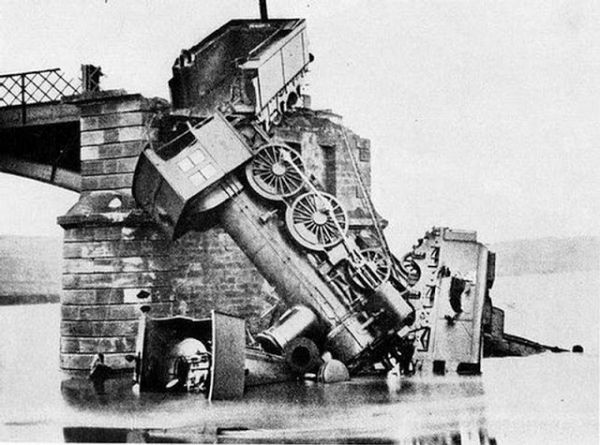
What a train wreck. There is really no way to dig into the thousands, maybe millions, of words that the mainstream press poured out over the weekend in coverage of President Donald Trump's rushed, flawed executive order creating a temporary ban on most refugees from lands racked by conflicts with radicalized forms of Islam.

My main question, in this post, does not concern the merits of order or the process that created it. That's clearly part of the train wreck and, as someone who was openly #NeverTrump (and #NeverHillary), I think mainstream reporters should go after that mess that with the same fervor they dedicated to the humanitarian impact of the previous administration's policies in Syria, Iraq, etc. We need to know who decided to rollout such a important executive order in such a slapdash, incompetent fashion -- especially whatever it did or didn't say about people in transit or those with green cards.

Now, I would like to focus on one question in particular related to this journalistic blitz that I think will be of special interest to GetReligion readers.

The hashtag for the day was clearly #MuslimBan, even though the order contained language specifically trying to protect many oppressed Muslims. The media also focused on Trump's statements pledging to protect oppressed Christians (I know it's hard to #IgnoreTrump, even when it's wise to do so), even though the text of the order said something else.

My question: Did journalists make this tragic crisis worse by ignoring or mangling some key contents of this order? Following the action on Twitter, it seemed that there are two stances on that.

The first was from Trump critics on the left, which included almost all elite media. It said: The news coverage of the executive order was fine. We all know what Trump meant, no matter what the order's words said. So there.

The second -- with very few exceptions -- was among conservative Trump critics (click here for essential National Review essay by #NeverTrump stalwart David French). I said: The EO was messed up and flawed, but press didn't help by ignoring the order's content. This, along with Trump sloppiness and ego, helped add to the panic and added to the firestorm that hurt real people.

It certainly did appear that, in many cases, panicky police and immigration officials acted like they were enforcing what press reports said the executive order said, rather than the text of the order (which was rushed out in a crazed, flawed manner). I hope there is follow-up coverage on that issue.

So, when considering these questions, what is the key passage of the #MuslimBan order?


Please respect our Commenting Policy

Flashback: Where did term 'opposition' come from in Trump vs. @NYTimes war?

Flashback: Where did term 'opposition' come from in Trump vs. @NYTimes war?

Believe it or not, we did get a "Crossroads" podcast recorded late this week, even as I keep fighting a sick-unto-death virus that I obtained on Capitol Hill in Washington D.C. at midweek. I've been sleeping, oh, about 16 hours a day.

Yes, I can follow Twitter some while laying on my back with my glasses perched on my nose. What I have been reading has only made me more and more furious.

Right, back to the podcast. Please click here to tune that in. You will probably be able to hear that I am under the weather in the recording. You will also hear that, for some strange reason (I blame fury and delirium), that I kept putting an "i" sound in the last name of Donald Trump's media-bating pro Stephen K. Bannon -- as in "Bannion." Mea culpa

The podcast focuses on the question of whether many elite journalists have reached the point that they simply not willing to listen to what Trump is saying (yes, it's often incoherent) or even to the factual details in the documents spelling out some of this actions. At the same time, we recorded as the annual March For Life was unfolding and it was clear that some media outlets had poured on the coverage (think The Washington Post), while others had done next to nothing with live work.

So, is the media listening? Do some elite journalists want to listen? Or, to use the Bannon phrase adopted (see video up top) by Trump, are The New York Times and other powerhouse news organizations now functioning as the clearly non-loyal opposition (after eight years of near worship for the previous president)?

Let's back up and look at two things one more time. First, what did Bannon tell the Times, once again?

“I want you to quote this,” Mr. Bannon added. “The media here is the opposition party. They don’t understand this country. They still do not understand why Donald Trump is the president of the United States.”

I do wonder what the word "here" means in that quote, as in "the media here is the opposition party." Is that D.C.? The Acela zone?

But where did Bannon get this idea that the Times, in particular, would fill that oppositional role so openly?


Please respect our Commenting Policy

Old-now-new question: Should churches and other religious non-profits be tax-exempt?

Old-now-new question: Should churches and other religious non-profits be tax-exempt?

RACHAEL’S QUESTION:

Once in a while I’ll see someone comment online about how taxing churches could help with some of the nation’s financial problems. Would taxing churches help or hurt? How do other countries handle their churches and taxes?

THE RELIGION GUY’S ANSWER:

Governments always want more cash. However, a unanimous U.S. Supreme Court warned in 1819 (in McCulloch v. Maryland) that “the power to tax involves the power to destroy,” so policy-makers need to weigh societal benefits churches provide, often not available otherwise (more on this below).

Those are political and economic calculations. But there’s the far more fundamental issue of fairness.

The United States has always recognized the natural and inherent right to exemption for groups that operate on a not-for-profit basis, whether schools, hospitals, and secular charities or -- treated equally -- churches (or synagogues, mosques, ashrams) and religious charities and organizations.

However, a 2016 report from the U.S. Commission on Civil Rights stated that all sorts of religious exemptions should be designed “narrowly” so they do not “unduly burden non-discrimination laws and policies” for instance on gay matters. (Religious groups through history have hired employees who share their beliefs and moral tenets.) Weeks after that, a petition from Christian conservatives declared that tactics such as removal of tax exemption due to gay and transgender policies “threaten basic freedoms of religion, conscience, speech, and association.”

One reason for such concerns was the oral arguments prior to the Supreme Court’s Obergefell v. Hodges ruling that legalized same-sex marriage nationwide.


Please respect our Commenting Policy

Just listen for a while: What Spayd said @NYTimes. OK, even what Bannon said ...

For the past several days, I have been in transit from New York to Baltimore to Washington, D.C., and finally home -- all while getting sick as a dog, as we would say in East Tennessee. So I confess that I'm a bit out of touch, when it comes to what's been happening in news and social media.

But let me try to pull things together from my fevered point of view. It seems the hot media items have something to do with President Donald Trump's bluster-maestro Stephen K. Bannon saying something about America's elite media needing to "shut up" and/or do some listening. In fact, if you search for "Bannon," "mouth" and "shut" right now on Google News you get a mere 238,000 hits.

Oh my. What did this man actually say to The New York Times

“The media should be embarrassed and humiliated and keep its mouth shut and just listen for a while,” Mr. Bannon said in an interview on Wednesday.
“I want you to quote this,” Mr. Bannon added. “The media here is the opposition party. They don’t understand this country. They still do not understand why Donald Trump is the president of the United States.”

Oh my, again. Never use a flyswatter when a baseball bat will do. But let's assume that this quote should not be read with the kind of hyper-literalism the Times team would be tempted to call "fundamentalism" in another context. (As usual, turn to M.Z. "GetReligionista emerita" Hemingway at The Federalist for a stunning summary of the online storm.)

Instead of jumping straight to the nuclear option -- Trump aide tells press to shut *$^@#*+ up (some of that was implied, to be sure) -- I think it's possible that the actual content of that quote could better be stated as: "The media should be embarrassed and humiliated and keep its mouth shut for a while and just listen."

Right, right. All I did was move the words "for a while." I think that's what Bannon meant, since everyone knows that the press -- when it comes to listening to Americans on tense topics such as politics, culture and, YES, religion -- is supposed to be listening all the time. I think that's an essential part of their job. 

Is the actual content of this acidic Bannon comment radically different than what ordinary readers said in letters to Times Public Editor Liz Spayd in the hours after Trump won the White House race? Let's flash back to that, while remembering (hello editor Dean Baquet) that discussions of this kind, at the Times and in other elite newsrooms, often include references to the need to "get religion."


Please respect our Commenting Policy

Who penned this satire gem? Democrats in U.S. Senate or editors at The Politico?

All of us have social-media buttons that our friends know how to push to get us to click this or that link, to forward this or that item, to pull out of our email haze and to PAY ATTENTION.

For me, one of the most magic phrases in the world is "Not The Onion." This is especially true when the item is sent by GetReligion co-founder Doug LeBlanc, whose sense of humor has a similar laugh-to-keep-from-crying twist as my own.

But in this case, when I saw the headline, I had my doubts.

This was supposed to be a short story from The Politico. But the whole tone of the thing was just so dry and understated and, well, surreal. How could this not be from The Onion or even the Babylon Bee?

Are you ready? Here is what has to be the first nomination for the Not The Onion headline of 2017:

Democrats hold lessons on how to talk to real people

Alas, there is no second line to this masterpiece of a headline. After all, it would be hard to top the excellence of that first line.

I also liked the fact that the story was so short and that it ignored so many obvious "real people" topics. Yes, like religion and culture. It was like no one in the room had ever even heard of books such as "What's the Matter with Kansas?" or "Hillbilly Elegy."

Once again, life is all about politics and money and that is that. Here is the brilliantly boring opening of the piece:


Please respect our Commenting Policy

Gay and transgender issues underscore a Godbeat rule: Carefully monitor parochial media

Gay and transgender issues underscore a Godbeat rule: Carefully monitor parochial media

In late 2016 the Colson Center for Christian Worldview assembled endorsements from dozens of Christian leaders for a conservative declaration decrying problems with religious freedom with the gay and rapidly emerging transgender issues.

Coverage to date underscores a perennial rule of thumb in religion coverage: Carefully monitor parochial religious media -- and in this case also gay media -- to catch developments that might have broader significance.

Apparently the earliest story on this occurred in the Seattle Gay News (December 2), and then online postings by religious and conservative media. Eventually, mainstream press articles appeared, but in outlets like the Deseret News of Salt Lake City (January 12) and Colorado Springs Gazette (January 13).  As of this writing, The Guy found nothing in major national media (or The Advocate).

Did the sponsors try and fail to gain publicity? Or was this designed to rally activist insiders, not to sway public opinion?

Either way, there’s ample room left for reporters to take a look.

Activists and ideologues continually pepper the media with such petitions on this or that, signed by the highest-profile endorsers they can manage to muster. Amid the glut, why would this document be worth journalistic consideration? Hold that thought till we scan what the text says.

It contends that laws and administrative rulings to protect “sexual orientation” and “gender identity” (SOGI) interests “threaten basic freedoms of religion, conscience, speech, and association” and “violate privacy rights.” Such pressures “attempt to compel citizens to sacrifice their deepest convictions on marriage and what it means to be male and female,” through a range of penalties for both individuals and organizations.

On marriage, it explains, a small business may be willing to “serve everyone” yet in conscience cannot be involved with a same-sex wedding. On the transgender question, people may want “to protect privacy by ensuring persons of the opposite sex do not share showers, locker rooms, restrooms, and other intimate facilities.” 

What’s significant?


Please respect our Commenting Policy

Horse diapers -- yes, horse diapers -- spur useful Wall Street Journal data dump on RFRA

Headlines don't get more provocative -- or clickable, to use modern lingo -- than this one from the Wall Street Journal (behind its strong paywall): "When Horse Diapers and Freedom of Religion Collide." 

Yes, I wonder if the late Immanuel "Worlds in Collision" Velikovsky would appreciate the humor.

True to its general form of getting the story straight, the WSJ piece sets forth the conflict between the town of Auburn, Kentucky, wanting to keep its roadways clean(er) and the Old Order Swartzentruber Amish, whose theological conservatism precludes diapering horses:

Horse diapers have been thrust into the debate over religious freedom.
Two Amish men in Auburn, Ky., filed a lawsuit last month saying a city ordinance requiring horses to wear equine diapers -- bags designed to catch manure -- violated the ability of Amish residents to exercise their religion.
The ordinance, passed in 2014, broadened an existing law mandating the removal of dog waste in public places. The new law, which the city said was spurred by complaints from neighbors about horse manure, requires a “properly fitted collection device” to be placed on all horses walking on the street.

What could have been an occasion for lowbrow comedy turns out, in fact, to be a respectful and frank discussion of the merits of an ostensible public health law, as well as competing efforts to defend individual religious freedoms -- specifically the free exercise of religion.

Members of the town’s Amish community have refused to comply with the ordinance, saying equine diapers violate the community’s religious standards. That stance has landed many of them in court, or worse.


Please respect our Commenting Policy

Why you can buy a beer in North Dakota on Sunday morning but not a belt at Wal-Mart

On a reporting trip to North Dakota last year, I woke up bright and early Sunday and enjoyed a not-so-healthy breakfast at McDonald's.

When I finished eating, I had an hour to kill before services at the Bismarck church I was covering for The Christian Chronicle. Since I was driving that afternoon to Black Hills Bible Camp in South Dakota, I decided to visit the closest Wal-Mart. I needed to buy a few snacks and supplies.

But when I got to the Wal-Mart — which looked just like the 24-hour supercenter near my home in Oklahoma City — I found the parking lot strangely empty. Even odder, the store's automatic doors refused to open for me. Weird, I thought.

However, Google Maps quickly located a Super Target just down the street. I discovered that it, too, was closed.

I was reminded of my experience when The Associated Press reported this week that North Dakota is debating whether to lift its Sunday morning shopping ban.

Of course, there's a strong religion angle — and kudos to AP for stressing it:

BISMARCK, N.D. (AP) — North Dakota residents can order alcohol at a restaurant or bar late Sunday morning but must wait until afternoon to go shopping because of a ban — rooted in religious tradition — that some legislators say no longer makes much sense.
Critics of the nation's strictest so-called blue law began another effort Monday to strip it from the books. Some such restrictions have existed since North Dakota became a state in 1889, stemming from fears that visiting a retail store on Sunday morning would compete with church and erode family values, leaving little time for rest.
"I'm annoyed that I have to wait until Sunday afternoon to shop," said Fargo Democratic Rep. Pam Anderson, who has introduced legislation that would abolish the shopping restrictions. She said ending the prohibition would add tax revenue for the state and provide more employment opportunities.
A House committee began mulling the bill on Monday but took no immediate action. Anderson called it a "falsehood" that allowing Sunday morning sales would impact the number of people in the pews.

I'm not certain the politician seeking the law's repeal is the best source to assess whether Sunday morning sales would hurt church attendance.


Please respect our Commenting Policy