Charities-Nonprofits

Visiting the monks at Christ in the Desert monastery, during a pandemic that closed its gates

Visiting the monks at Christ in the Desert monastery, during a pandemic that closed its gates

Religion-beat work is complicated, in part because of the many different ways that believers use the same words when describing their lives. The word “charismatic” has a rather different meaning in a Pentecostal flock than when Baptists — or maybe most Baptists — use it to describe preachers.

Here at GetReligion, we frequently note the challenges faced when journalists from other beats cover complex stories that are baptized in religious language and imagery.

That brings me to a feature that ran the other day at The Washington Post with this headline: “Monks in New Mexico desert dedicated to hospitality reflect on two years without guests.”

There is much to praise in this piece, along with a few word choices that would be challenged by insiders in specific religious traditions. Also, I should note that the author of this piece is Chris Moody, a CNN veteran who is a former student of mine at both Palm Beach Atlantic University and the Washington Journalism Center.

It’s rather hard to critique and praise the work of a talented former student! However, I know that many GetReligion readers will want to see this feature. Plus, I love New Mexico and, early in my religion-beat work, I wrote similar pieces about monasteries in North Carolina and later Colorado.

Let’s start with the overture, which is long, but shows the larger context of this COVID-tide story:

CHAMA RIVER CANYON, N.M. — Hidden in this canyon of crimson sandstone cliffs encompassed by miles of federally protected wilderness, the Monastery of Christ in the Desert seems like an ideal place to ride out a pandemic.

For more than 50 years, a small community of Benedictine monks has quietly lived, worked and worshiped here in a cluster of off-grid adobe buildings along the banks of northern New Mexico’s Chama River. Considered the most remote Catholic monastery in the hemisphere, it can be reached only by a 13-mile single-lane earthen road that winds through the canyon. Abiquiú, the closest village — population 151 — is 25 miles away. Groves of cottonwood and willows line the river where bald eagles hunt for rainbow trout. Black bears, coyotes and cougars prowl the pinyon- and sage-scented Santa Fe National Forest, which surrounds the monastery.

Despite the difficult journey, outsiders have flocked to this serene abbey for decades in search of spiritual renewal.

Please respect our Commenting Policy

Was the life of Dorothy Day too Catholic for the New York Times to grasp?

Was the life of Dorothy Day too Catholic for the New York Times to grasp?

The New York Times veers close to self-parody in publishing “Was Dorothy Day Too Left-Wing to Be a Catholic Saint?

The very deck beneath the headline undercuts it: “The Archdiocese of New York has asked the Vatican to consider the social activist for sainthood. But church leaders are not entirely comfortable with her politics.”

Actually, Day has always made Catholics on the right and left uncomfortable. The key is making sure that readers know why this is true.

What Liam Stack has to report is pretty straightforward.

Martha Hennessy was upset with what Cardinal Timothy Dolan preached during a Mass in Day’s honor:

“He has reduced her to ‘she lived a life of sexual promiscuity and she dabbled in communism,’” she said. “What worse enemy could we have, saying those things about her?” Ms. Hennessy is active in the [canonization] movement and did a reading at the Mass. “We have got to focus on her policies, we have got to focus on her practices.”

Stack’s report does not link to the cardinal’s homily, which is available on YouTube and embedded in this post (the homily begins at one hour and 15 minutes).

Viewers will note that there is no indication in Cardinal Dolan’s remarks that he is anything other than an admirer. He calls Day “one of our greats,” and mentions that he asked Pope Francis to declare her venerable: one major step toward becoming a saint.

While Dolan’s brief homily did not dwell on Day’s political life, he referred to the significant detail of her being on assignment by a Catholic magazine to report on a Hunger March in 1932 in the nation’s capital. Dolan added a detail omitted by the Times: after observing this march, Day prayed in the Basilica of the Immaculate Conception and took another step toward integrating her politics and her emerging faith.


Please respect our Commenting Policy

Religion news 2021: Which story was No. 1? Return of Taliban or Jan. 6 riot at U.S. Capitol?

Religion news 2021: Which story was No. 1? Return of Taliban or Jan. 6 riot at U.S. Capitol?

For journalists who braved the chaos, the Jan. 6th riot on Capitol Hill offered a buffet of the bizarre -- a throng of Proud Boys, QAnon prophets, former U.S. military personnel and radicalized Donald Trump supporters that crashed through security lines and, thus, into history.

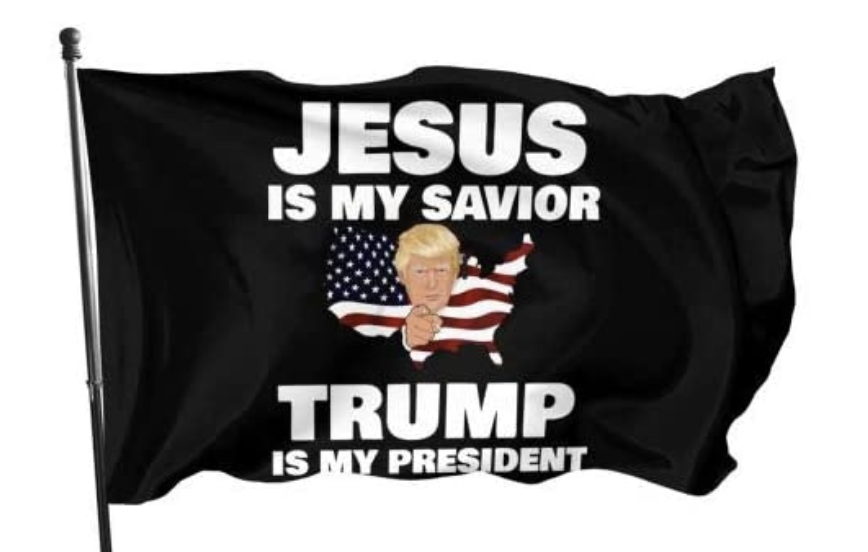
Many protestors at Trump’s legal "Save America" rally carried signs, flags and banners with slogans such as "Jesus is my Savior, Trump is my president" or simply "Jesus 2020." In this context, "Jesus saves" took on a whole new meaning.

Some of that symbolism was swept into the illegal attack on the U.S. Capitol.

In its poll addressing major religion events in 2021, members of the Religion News Association offered this description of the top story: "Religion features prominently during the Jan. 6 assault on the U.S. Capitol by pro-Trump insurrectionists. Some voice Christian prayers, while others display Christian or pagan symbols and slogans inside and outside the Capitol."

Consider, for example, Jacob Anthony Chansley -- or Jake "Yellowstone Wolf" Angeli. With his coyote-skin and buffalo-horns headdress, red, white and blue face paint and Norse torso tattoos, the self-proclaimed QAnon shaman, UFO expert and metaphysical healer became the instant superstar of this mash-up of politics, religion and digital conspiracy theories.

"Thank you, Heavenly Father … for this opportunity to stand up for our God-given inalienable rights," he said, in a video of his U.S. Senate remarks from the vice president's chair. "Thank you, divine, omniscient, omnipotent, omnipresent Creator God for filling this chamber with your white light and love. Thank you for filling this chamber with patriots that love you and that love Christ. …

“Thank you for allowing the United States of America to be reborn. Thank you for allowing us to get rid of the communists, the globalists and the traitors within our government."

That was one loud voice. A big question that must be answered, in future trials and the U.S. House investigation, is whether it's true -- as claimed by the New York Times -- that the "most extreme corners of support for Mr. Trump have become inextricable from some parts of white evangelical power in America."


Please respect our Commenting Policy

New podcast: Top Godbeat story of 2021? Look for Jan. 6 religion hooks (#DUH)

New podcast: Top Godbeat story of 2021? Look for Jan. 6 religion hooks (#DUH)

beat stories.

Trust me, I understand that preparing the ballot for this poll is a thankless job. One of the hardest tasks is finding a way to describe some of the broader trends during any given year. It’s easier — most of the time — to describe singular events.

During this week’s “Crossroads” podcast (CLICK HERE to tune that in), host Todd Wilken asked me to describe some of the patterns that I have seen in the RNA poll results through the decades.

Trend No. 1 is clear: Name the biggest political story of the year and look for a religion angle. After all, politics is the true religion of many folks who run newsrooms.

Trend No. 2 works about 76% of the time: What did the pope do this year, especially if it has any implications for U.S. political fights over moral and social issues (see trend No. 1).

Trend No. 3 comes and goes: What did liberal leaders of the Seven Sisters of Mainline Protestantism proclaim about sex and did it cause new revolts that might split their churches? Every now and then, the Southern Baptists slip in with battles over sex, race or politics (newsworthy topics, in other words).

In light of these trends, it was easy to predict that the RNA poll’s top story for 2021 would be:

Religion features prominently during the Jan. 6 assault on the U.S. Capitol by pro-Trump insurrectionists. Some voice Christian prayers, while others display Christian or pagan symbols and slogans inside and outside the Capitol.

That’s actually a careful wording and, in particular, note that the RNA leaders refrained (this must have been hard) from including a reference to “white evangelicals.”

The key, in this description, is the tension between “prominently” and “some,” as in the folks saying “Christian” prayers. It’s safe to assume that this is the rebel that they had in mind (as quoted in one of my “On Religion” columns):


Please respect our Commenting Policy

Yet another theodicy news story: Where was God in the Mayfield tornado disaster?

Yet another theodicy news story: Where was God in the Mayfield tornado disaster?

Words fail to convey the emotions in Mayfield, Kentucky, after last weekend’s devastating tornado.

Let’s try anyway, directly from the mouths of those relying on their faith in the EF4 twister’s aftermath.

It’s another “theodicy” story: It would appear that God is on trial.

“My little girl asked me, ‘Why would God let this happen?’ … I had to look at my little 8-year-old girl, who looks to me for answers, and I had to say … ‘I don’t know. I don’t know.’” — the Rev. Wes Fowler, senior pastor of First Baptist Church in Mayfield (via Associated Press story by Holly Meyer)

"Thanks be to God the parts of the building that came down didn’t come down on us. I realized it might be the last few moments of my life on this earth. … All I care about is the fact that the most valuable possessions in my life, my wife’s life, my children, they’re all safe. Everything else is replaceable." — the Rev. Joey Reed, lead pastor of First United Methodist Church in Mayfield (via Louisville Courier-Journal story by Christopher Kuhagen)

"As a parent, it's like there's only so much you can say or do to take the fear out of your children. The girls' room was — I say 'was' because, obviously, if you come in here and look around, there's no walls anymore; there's no ceiling. I mean, they know how much of it's in our hands and how much of it's, you know, up to the storm and up to God. ... We lost everything, but we didn't lose everything. I mean, everything that we have that is worth anything was in that closet." — Joseph Tyler, Mayfield resident who survived with his family in the closet and worships at His House, a local church (via CNN story)

“God is not in the devastation. He’s not in the destruction. He was not in the storm. But he’s in the response, and that’s where we are. That’s what we’re trying to be. We’re trying to amplify the response that is happening from the survivors and victims of the tornado.” — Susan Montalvo-Gesser, director of Catholic Charities of the Diocese of Owensboro, Kentucky (via America magazine story by Michael J. O’Loughlin)

"It's awful. It's tragic. People who have lost loved ones, there is no way to take that pain away. I think you just have to embrace the pain and pray that God will guide you as you overcome it." — the Rev. Milton West, senior minister of First Christian Church in Mayfield (via WLKY story by Marvis Herring)


Please respect our Commenting Policy

Attention please: Two housekeeping items (both important) as GetReligion enters 2022

Attention please: Two housekeeping items (both important) as GetReligion enters 2022

Believe it or not, GetReligion has been around since 2004.

Doug LeBlanc clicked a mouse and launched the earliest version of this weblog on February 1, to be precise. When you’ve been working that long in the craziness that is the World Wide Web, you end up with some inevitable housekeeping issues.

Please hang in there with me for a minute or two for updates on two pieces of in-house business.

First, we have had to change — once again — the format of our daily mini-newsletter for those who would rather read GetReligion via email. The current list will vanish in a day or so.

A bit of history: Long, long ago, we had more than 600 people signed up for this kind of service. Then we switched platforms (it’s a long story) and lots of email readers got lost in the process. It’s always a hassle when something changes what does, and what doesn’t, show up in your daily wave of emails.

Now, we are having to relaunch our Mailchimp list. This is yet another side effect of the 2014 death of our co-worker Arne Fjeldstad of the Media Project, who launched the current version and, thus, was the “owner” of that list. Yes, many people (around the world) still miss Arne.

Now this feature needs to be updated. However, signing up for this updated Mailchimp list isn’t rocket science. Just click here and fill in the blanks. That’s all there is to it.

Item No. 2 is linked to the end of 2021 — think taxes and end-of-the-year donations to nonprofit groups.

For many of you, GetReligion is in that list. To cut to the chase, we still need your help.


Please respect our Commenting Policy

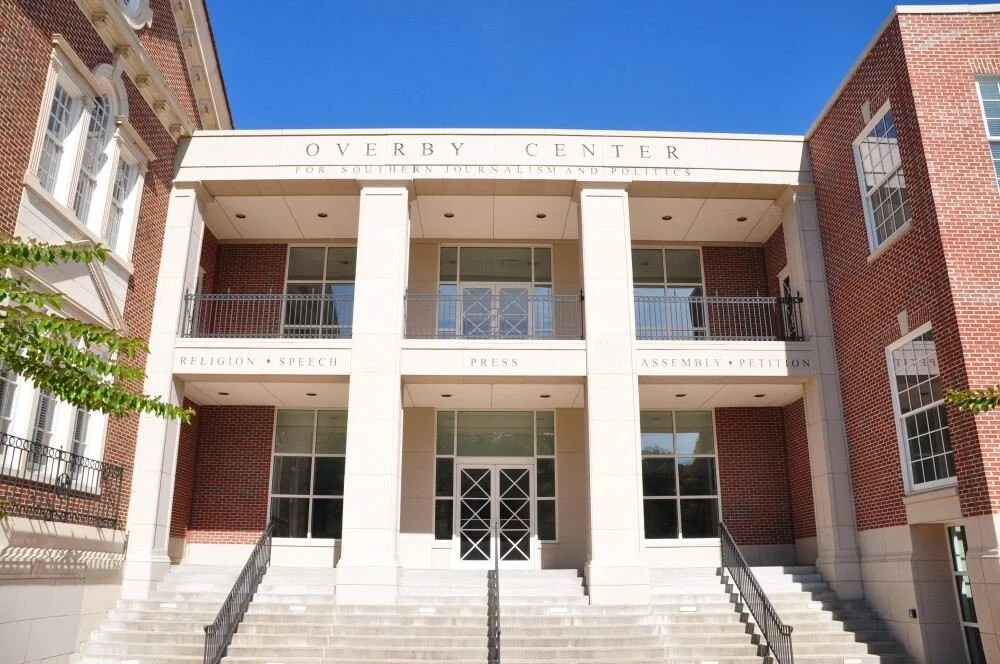
Finally, another Overby Center program: Why religion was one big factor in vaccine wars

Finally, another Overby Center program: Why religion was one big factor in vaccine wars

I have strong memories, to say the least, of the first Overby Center program in which I was able to participate, as a senior fellow for the center and as editor of GetReligion.

The topic was the role that religion would play in the 2020 presidential election. Religion-beat patriarch Richard Ostling was there and both of us stressed that, while journalists were pouring oceans of ink into coverage of (#TriggerWarning) white evangelicals, Catholic voters would play the pivotal role in swing states. I also noted the little-covered 2016 impact of Latino evangelicals and, especially, Pentecostal believers in Florida. I didn’t think to predict a starring 2020 role these Latino voters in Texas.

When was that program? Here’s a clue. As I drove home, I stopped for lunch in Jackson, Tenn. As I pulled back onto the interstate headed east, I heard a radio report noting that the mysterious virus that was causing havoc in Wuhan, China, had now been detected in Europe and, perhaps, in New York City.

Days later, the whole world turned upside down.

With social-distancing, masks and vaccines in mind, we recently gathered in Oxford for a forum addressing a logical topic — why religion was a key factor (but not the only one or even the dominant one) in America’s wars over COVID-19 vaccines. Click here to watch the event on YouTube.

In addition to Center founder Charles Overby, I was joined by three logical voices on this subject.

First, political scientist (and GetReligion contributor) Ryan Burge Zoomed in with several crucial charts full of relevant info. Take this post, for example: “Thinking about white evangelicals, COVID-19 vaccines and VERY popular headlines.” Then there was Marquita Smith of the University of Mississippi faculty, a journalist I came to know while she was teaching at John Brown University on the edge of the Ozarks. She is now the assistant dean of graduate programs at the Ole Miss J-school.

The final panelist was the Rev. Daniel Darling, who was recently named director of the Land Center for Cultural Engagement at Southwestern Baptist Theological Seminary in Fort Worth, Texas.

Then again, Darling may be better known in religion-beat circles because of this New York Times headline: “Fired After Endorsing Vaccines, Evangelical Insider Takes a Leadership Role.”


Please respect our Commenting Policy

Journalism tips on: (1) Evangelical crack-ups, (2) campus faith fights, (3) COVID exemptions

Journalism tips on: (1) Evangelical crack-ups, (2) campus faith fights, (3) COVID exemptions

A potential U.S. evangelical crack-up continues as a lively story topic since Guy Memos here since these two Memos here at GetReligion, “Are we finally witnessing the long-anticipated (by journalists) evangelical crack-up?” and also “Concerning evangelical elites, Donald Trump and the press: The great crack-up continues.” In USA Today, Daniel Darling, for one, sought hope despite his recent victimhood in these tensions.

Media professionals considering work on this theme should note a lament at book length coming next week: "Struggling with Evangelicalism: Why I Want to Leave and What It Takes to Stay" by Dan Stringer. The author is a lifelong evangelical, Wheaton College (Illinois) and Fuller Theological Seminary alum, leader of InterVarsity's graduate student and faculty ministries in Hawaii and Evangelical Covenant Church minister. This book comes from InterVarsity Press.

The Guy has yet to read this book, but it looks to be a must-read for reporters covering American evangelicals in the Bible-Belt and elsewhere. Stringer ponders how evangelicalism can move beyond too-familiar sexual scandals, racial and gender conflicts, and Trump Era political rancor -- what a blurb by retired Fuller President Richard Mouw calls "blind spots, toxic brokenness and complicity with injustice."

Regarding the Donald Trump factor, the evangelical elite was largely silent, with one faction openly opposed, while certain outspoken evangelicals backed the problematic populist.

As The Guy has observed, recent politics exposed the already existing gap between institutional officials and the Trumpified evangelical rank and file. Problem is, to thrive any religious or cultural movement needs intelligent leaders united with a substantial grass-roots constituency to build long-term strategy.

Evangelicalism has always combined basic unity in belief with a wide variety of differences. Think denominational vs. independent, Arminian vs. Calvinist, gender "complementarian" vs. "egalitarian," Pentecostal-Charismatic vs. others and a racial divide so wide that many Black evangelicals shun the e-word alltogether.

In an October 21 Patheos article, historian Daniel K. Williams at the University of West Georgia added North vs. South to those internal divisions. He recounts that the Southern Baptist Convention remained mostly apart when northerners began to supplant "fundamentalism" with "evangelicalism" in the World War II era. Eventually, he says, this movement formed a North-South alliance but it's now eroding.


Please respect our Commenting Policy

New podcast: Did Glenn Youngkin win the Latino vote in Virginia? Maybe ask folks in pews?

New podcast: Did Glenn Youngkin win the Latino vote in Virginia? Maybe ask folks in pews?

On the morning after The Virginia Election, I noted that the sharp folks at a must-bookmark niche-news website — A Journey Through NYC Religion — had done some old-fashioned digging and discovered some interesting religion ghosts (to use an old GetReligion term) in that political earthquake. Click here for that story: “Faith trumps Trump in Virginia.”

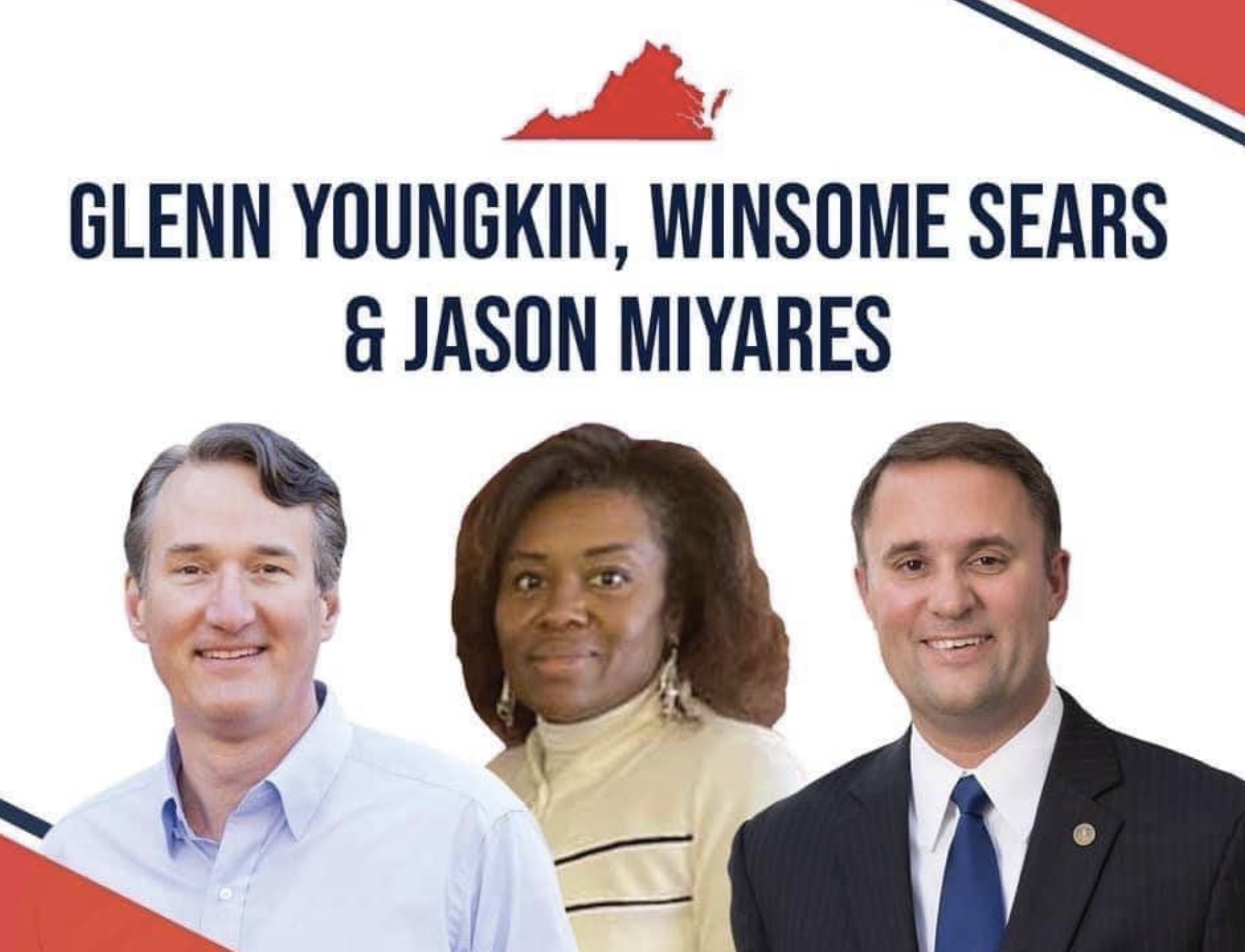
I sure didn’t know, from reading mainstream press coverage, that Governor-elect Glenn Youngkin was an evangelical Anglican who once was a leader in the Alpha course, an evangelism program that expanded from the Church of England into churches and denominations around the world.

I didn’t know that Lieutenant Governor-elect Winsome Sears, an African American evangelical and former Marine, had once led a Salvation Army ministry and that the state’s new attorney general, Jason Miyares, appears to be a Latino evangelical Episcopalian.

All of that showed up in my post-election piece with this headline: “Yes, there were overlooked religion angles in today's biggest U.S. political news story.”

We talk about all of that in this week’s “Crossroads” podcast (click here to tune that in), but also veered off into other religion-based angles in the current political climate. One of them took us into familiar territory, at least for those who have followed GetReligion for the past five or six ears. I’m talking about the rising political clout of Latino evangelicals, traditional Catholics and Pentecostal believers.

There’s some evidence that Youngkin and the diverse GOP lineup actually WON the Latino vote in the Virginia election (click here for a totally faith-free Politico discussion of that topic).

So here is that question again: How can journalists cover shifting patterns among Latino voters — and Black voters, as well — without examining the role of religion and cultural issues?

Let’s say: Is it safe to assume that pro-life Latinos are more likely — lacking acceptable Democrats on the ballot — to opt for Republicans? How about Latinos who favor school choice? Who old traditional Christian views on gender issues?


Please respect our Commenting Policy