Charities-Nonprofits

PBS special on Billy Graham claims the famous evangelist was always a political animal

PBS special on Billy Graham claims the famous evangelist was always a political animal

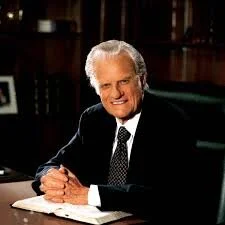
The best way I can describe the recent PBS special on the nation’s most famous evangelist is to say it’s a woke version of the life of Billy Graham.

It’s not only that the cast of commentators departs from the ranks of Graham’s largely white, male biographers to a mélange of scholars, several of whom are female or black and whose expertise on Graham remains unclear.

It’s how the nearly two-hour special that puts a political lense on everything — yes, everything — Graham did in his life and career. The show is barely a minute old when it comes up with the following quotes:

ANTHEA BUTLER, HISTORIAN: Billy Graham is like the Protestant pope.

WILLIAM MARTIN, BIOGRAPHER: There was a war between ambition and humility. He wrestled with that throughout his life.

REV. DR. JOHN HUFFMAN: Billy was attracted to political power like a moth is attracted to flame.

RANDALL BALMER, HISTORIAN: He was drawn to politicians. It was almost like a narcotic for him.

UTA A. BALBIER, HISTORIAN: The closer he moved Christianity to politics, the more he opened up the opportunity for Christianity being used to polarize, to politicize.

UTA A. BALBIER, HISTORIAN: He opened Pandora's box the second he stepped into the Oval Office for the very first time.

So, it’s simple to grasp right off the bat where this show is going. And the show’s director admitted the main idea was the explore the mix of politics and religion, curiously right after an era when conservative politics and conservative religion were bedfellows all four years of the Trump administration. Am I being skeptical in noticing the timing of this show?

Please respect our Commenting Policy

Religion ghosts in Bill and Melinda Gates split? There are some old questions to ask ...

Religion ghosts in Bill and Melinda Gates split? There are some old questions to ask ...

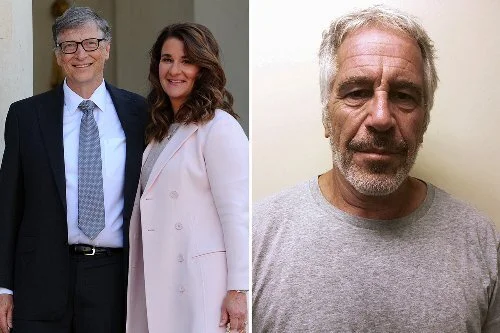
I have written quite a few headlines over the past four decades or so and read a kazillion more. Still, I have to admit that a news headline the other day in The Washington Post stopped me in my tracks: “If Bill and Melinda Gates can’t make a marriage work, what hope is there for the rest of us?

I immediately assumed this was some kind of first-person commentary.

However, it appears that this was a news feature — using the break-up of one of the world’s richest couples as a chance to examine the marital stress caused by COVID-19 lockdowns, life changes for aging Baby Boomers and the resulting need for professional counseling. Here’s the overture:

Just imagine how many hours of couples therapy you can afford when you’re among the world’s richest people. Or the shared sense of purpose you could forge while raising three children and running a $50 billion charitable foundation with your spouse.

Then imagine that it’s not enough to keep you together.

In announcing their decision to divorce, Bill and Melinda Gates cited the work they’d done on their marriage, and a mutual sense of pride in their children and philanthropy. But, they said in identical joint statements shared on Twitter, “we no longer believe we can grow together as a couple in this next phase of our lives.”

Now, for millions of Americans it would be logical to ask another question whenever a couple faces a crisis of this kind. It’s a kind of two-edged sword question that can be carefully worded as follows: Did religions and-or moral issues have anything to do with the break-up of this marriage?

All of the initial coverage that I saw didn’t include any religion/moral information at all. There is a chance that these questions will be asked in the days ahead, now that the Wall Street Journal and other publications have added a rather problematic name to the cast list in this drama — Jeffrey Epstein.

However, I had already opened a digital file folder on this topic because my pre-Internet (think dead tree pulp) files on this couple included a lengthy 1997 Time magazine feature with this headline: “In Search of the Real Bill Gates.” This long-ago article included several details of interest, including at least two of the religious-moral nature. We will take the less famous of these two details first:


Please respect our Commenting Policy

What do you know? Doctrinal-covenant fights can occur on an Orthodox Jewish campus

What do you know? Doctrinal-covenant fights can occur on an Orthodox Jewish campus

By now, GetReligion readers are probably aware that some journalists have their doubts about whether the First Amendment actually protects religious doctrines and the “free exercise thereof” by believers.

The problem is that the old-liberal defense of “religious liberty” — inside the usual “scare quotes” — now clashes with the evolving doctrines of the Sexual Revolution. This leads to fights on religious campuses in which journalists pit bad religious believers who defend ancient doctrines against good believers who want those bad doctrines to evolve to mesh with the good teachings of the New York Times and other sacred texts.

The key in most of these clashes is whether students, faculty and staff sign a “doctrinal covenant” when they choose to work or study at one of these private schools. Private schools — liberal and conservative — have a right to defend the doctrines of the religious groups that founded them. As GetReligion readers know (explore this file), journalists often ignore the content of these covenants and fail to ask progressive activists whether they read these covenants before signing them.

Most of these stories focus on disputes at evangelical and Catholic schools. If you ever wondered how an education-beat newsroom would handle one of these stories in an Orthodox Jewish context, now you know — care of an Inside Higher Education report under this double-decker headline:

Students Sue Over Denial of LGBTQ+ Club Recognition

A lawsuit accuses Yeshiva University of violating New York City human rights law in its long-standing refusal to recognize an LGBTQ+ student group

The reader who forwarded this URL was rather blunt, stating that the article is “a mess. Journalistically speaking, it's biased, lopsided, and incurious.”

As usual, there is no way to know whether the school’s admission documents include a doctrinal covenant, since the reporting is sketchy, at best, on that subject.


Please respect our Commenting Policy

New podcast: German priests plan huge rite to bless gay unions? Time for time travel ...

New podcast: German priests plan huge rite to bless gay unions? Time for time travel ...

I don’t know about you, but this Crux headline sounds like a big story to me: “German Catholics plan huge blessing of gay unions on May 10.

I mean, think of the global ramifications of that kind of event, when connected to other doctrinal developments on the Catholic left in German and Europe in general. Remember that recent Memo to journalists that GetReligion patriarch Richard Ostling, the one with this headline: “With open talk of schism, will German bishops mar the rest of Pope Francis's reign?

But there seems to be some question about whether the plans for this event are worthy of mainstream media coverage. Why is that? That was the topic of this week’s “Crossroads” podcast (click here to tune that in or sign up for the podcasts with iTunes).

One crucial detail jumped out at me in the overture of this Crux report (see if you can spot it):

ROME — Continuing to openly challenge the Vatican, several Catholic leaders in Germany are openly supporting the blessing of same-sex couples, with a massive blessing service scheduled for May 10, in direct opposition to Rome’s chief doctrinal office.

Bishop Franz-Josef Overbeck of Essen said that the priests in his diocese will face no canonical consequence if they decide to bless gay and lesbian couples next month as part of the event called “Love wins, blessing service for lovers.” …

His comments came in an interview with WDR earlier this week, and follow his comments on Easter, when he argued that there are “many blessings for gay couples” in Germany. He also said that the Catholic Church is not supposed to reject gay people but “find ways for homosexuals to be able to live together.”

Note: We are not talking about one or two rebellious priests. There is a bishop who plans — in a rather passive-aggressive manner — to support the event by refusing to discipline his priests if they take part.

Obviously, Bishop Overbeck is not the only man in a mitre in Europe who has gone on the record in opposition to that recent headline-fueling Vatican ruling against same-sex marriages. Check out my “On Religion” column on that ruling and the aftermath on the Catholic left: “Did Pope Francis undercut that Vatican ruling on blessings for same-sex couples?”

There are many, many Catholic priests (and other activists) in the German Parish Priests Initiative who have signed a petition in support of same-sex blessings.


Please respect our Commenting Policy

New podcast: Rising tensions between religious liberty, pronoun wars, academic freedom, etc.

New podcast: Rising tensions between religious liberty, pronoun wars, academic freedom, etc.

My name is Terry Lee Mattingly. However, when I converted to Eastern Orthodoxy, I took the name of a patron saint — St. Brendan the Navigator.

Let’s pretend that I am young and attending a state university right now and that I have decided to require professors to address me as “Holy St. Brendan the Navigator.” It is, after all, my name. While we are at it, let’s say that all of the Catholic and Orthodox students take the same tack, if their saint names are different then the names they were given at birth.

Some professors would wince, but go along with this. But let’s say that one professor is very secular, a Marxist perhaps, and he refuses — stating that my request violates his personal convictions. I threaten to sue, along with other students in the same situation. Game on.

How would the leaders of this taxpayer-funded public university respond? Would this be treated as a natural request on my part, with the understanding that any refusal would attack my sense of identity? What if I requested that my university ID card state my name as “St. Brendan the Navigator”?

It’s a crazy question, of course. But it would — at a state university — raise issues about the First Amendment (free speech and religious liberty) and academic freedom. These questions were at the heart of this week’s “Crossroads” podcast discussion. Click here to tune that in. [This episode also includes a bizarre gaffe when — I’m wrestling with a painful medical condition right now — I messed up my own saint’s name, mixing St. Brendan’s title with that of St. Nicholas of Myra. Listen for it.]

At the heart of the podcast discussion is a timely question: Can the state force the professor to recognize and even affirm — with public speech — beliefs that violate his conscience?

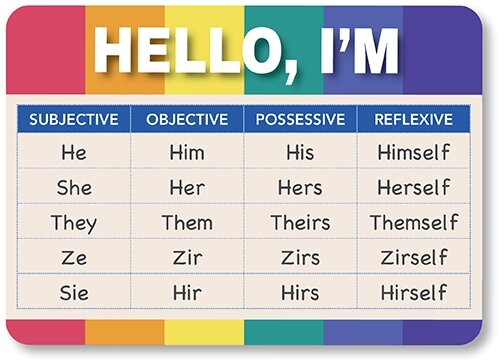
Now, as readers probably guessed right from the get go, this podcast focuses on another matter of personal identity — the degree to which professors can be forced to cooperate with students who chose to use any of the myriad and evolving gender pronouns linked to the LGBTQ+ movement. We looked at a Washington Post story with this headline: “A professor was reprimanded for refusing to use a transgender student’s pronouns. A court says he can sue.

Now, when these clashes take part in PRIVATE schools — left or right, religious or secular — it’s clear (pending passage of the Equality Act) that these doctrinally defined institutions have a right to create belief and lifestyle covenants that settle issues of this kind. Students can chose to affirm these beliefs, freely signing on the dotted line, or go to school somewhere else.

But what about state schools built and operated with tax dollars?


Please respect our Commenting Policy

Vague doctrine at for-profit company? Tennessean nails key issue in new Ramsey lawsuit

Vague doctrine at for-profit company? Tennessean nails key issue in new Ramsey lawsuit

Get ready for more stories in which religious believers clash with the increasingly woke doctrines proclaimed, and enforced, by the Human Resource personnel in modern corporations.

Can your company fire you for declining to use a colleague’s preferred pronouns? What happens if (a) someone declines to remove a study Bible from his or her desk or (b) some believers refuse to hang LGBTQ+ rainbow solidarity posters in their offices? What if an employee marches in a right-to-life parade? Battles continue, in some workplaces, over crosses, beards, headwear and other religious symbols.

That’s one side of the HR culture wars. Meanwhile, it’s clear — pending the outcome of the Equality Bill debates — that faith-defined nonprofits have the right to create lifestyle and doctrinal covenants for the people who chose to sign them and, thus, work in these ministries.

But what about for-profit companies led by executives who want to maintain faith-friendly images? What are the limits on their policies?

For example, Hobby Lobby won its U.S. Supreme Court case after rejecting the Obamacare requirement that contraceptives be included in employee benefits packages. But what if for-profit company leaders said that, for faith-based reasons, they could investigate and fire employees who USED contraceptives?

This brings us to another fascinating dispute inside the Ramsey Solutions empire. The Tennessean headline asks: “Can you be fired over your sex life? Dave Ramsey thinks so.” Here is the overture:

While a former employee has accused Ramsey Solutions of terminating her because of her pregnancy, the company disputes the claim. Company lawyers said in court filings the employee was fired for premarital sex and so were a dozen other employees.

Former administrative assistant Caitlin O'Connor, who was employed by Ramsey Solutions for over four years and never disciplined, said when she announced she was pregnant in June and requested paperwork for maternity leave, she was terminated for her pregnancy since she isn't legally married to her longtime partner, the baby's father.

Lawyers for Ramsey Solutions, owned by Dave Ramsey — a conservative financial titan who made headlines when he hosted a giant Christmas party during the pandemic and refused to let his employees work from home — said O'Connor wasn't fired because she was pregnant. She was terminated for having premarital sex.


Please respect our Commenting Policy

New podcast: Tensions with NCAA and Christian schools? That issue will not go away

New podcast: Tensions with NCAA and Christian schools? That issue will not go away

A decade or so ago, I had a chance to speak to journalism students at Oral Roberts University. My strongest memories — other than visions of the shiny modernist architecture — center on an unusual moment during a campus chapel service.

There’s nothing unusual about a Christian university having a full-house chapel service. There’s nothing unusual about a student-led praise-rock band blasting out Contemporary Christian Music songs that inspired lots of people to do their share of swaying and dancing.

But here’s the memory. My visit to the campus took place during a meeting of ORU’s board of trustees, who sat together near the front of the auditorium during chapel. Looking down from the balcony, I was surprised to see that (a) many of the trustees were rather young, (b) a much higher than normal number of them were Black or Latino and (c) several were enthusiastically dancing with the students, including at least one in an aisle (the current board doesn’t look quite as young).

All of this was a reminder that much of the racial and cultural diversity at ORU — a major factor in campus life — was and is linked to the school’s roots in charismatic and Pentecostal Christianity, a movement that as been highly multiracial since its birth. Founder Oral Roberts was a famous, and often controversial, leader among charismatic Christians, even though, as an adult, he aligned with the United Methodist Church (which is more conservative in Oklahoma than, let’s say, parts of Illinois and other blue zip codes).

I bring this up because of a recent USA TodayFor the Win” column that served as the hook for this week’s “Crossroads” podcast (click here to tune that in). Here’s the headline for that piece, which was written by the “race and inclusion editor” at USA Today sports: “Oral Roberts University isn't the feel good March Madness story we need.” Here is a crucial passage:

… As the spotlight grows on Oral Roberts and it reaps the good will, publicity and revenue of a national title run, the university’s deeply bigoted anti-LGBTQ+ polices can’t and shouldn’t be ignored.

Founded by televangelist Oral Roberts in 1963, the Christian school upholds the values and beliefs of its fundamentalist namesake, making it not just a relic of the past, but wholly incompatible with the NCAA’s own stated values of equality and inclusion.


Please respect our Commenting Policy

Christians, Jews, Muslims and lobbyists left and right fret over SCOTUS 'donor privacy' case  

Christians, Jews, Muslims and lobbyists left and right fret over SCOTUS 'donor privacy' case   

What cause could ever possibly unite Christian Right activists, the Council on American-Islamic Relations, the Zionist Organization, "pro-family," "pro-life," "pro-choice" and gun-rights lobbies, Mitch McConnell, the American Civil Liberties Union, Chamber of Commerce, Judicial Watch, NAACP, People for the Ethical Treatment of Animals, Planned Parenthood, Southern Poverty Law Center, Columbia University's First Amendment institute and religious-liberty advocates?

Answer: These and many more are allied in the Americans for Prosperity Foundation v. Becerra case (#19-251), which the U.S. Supreme Court put on its upcoming docket January 8.

Yes, that Becerra is Xavier, as in President Biden's controversial pick for secretary of Health and Human Services, acting in his previous role as California's attorney general. Moreover, this situation implicates the track record of his predecessor as A.G., Kamala Harris — now U.S. vice president and a major 2024 presidential prospect.

At issue is "donor privacy." Non-profit groups cannot operate or raise money in the state of California unless they give its attorney general the names and addresses of their major donors, the same list that's required as an appendix to their federal IRS returns. The non-profits argue that this violates their right to freedom of association under the Constitution's First Amendment.

Obviously this is something for alert media eyes, including pros on the religion beat.

Adding to news interest, this case displays contrasting beliefs of the U.S. Department of Justice in its Trump Administration brief filed last November (.pdf here) versus its revised stance under the new Biden Administration (.pdf here). The Trump brief strongly backs non-profit interest groups. The Biden brief dodges the question and asks the court to bounce the case for further investigation.

Religion specialists note: The Supreme Court consolidated the Americans for Prosperity case, raised by the libertarian political foundation established by the Koch brothers, with a second appeal from the Thomas More Law Center. This second agency provides free legal representation for "people of faith" to uphold "the religious freedom of Christians, time-honored family values and the sanctity of human life."


Please respect our Commenting Policy

New podcast: Yes, cover RFRA; but Equality Act coverage has also been quiet on local stories

New podcast: Yes, cover RFRA; but Equality Act coverage has also been quiet on local stories

What we have here is a logical question that journalists (and news consumers) should be asking at this point in coverage of debates about the Equality Act. It’s also one of the questions that “Crossroads” host Todd Wilken and dissected during this week’s podcast (click here to tune that in).

That question: How many religious health organizations, schools, recreation centers, homeless shelters, campgrounds, day-care centers and other forms of faith-driven ministries and nonprofit groups are located in the zip codes covered by the newsrooms of your local media outlets?

Earlier this week, I wrote a post (“Puzzle: Many reporters ignoring Equality Act's impact on this crucial Schumer-Kennedy legislation”) noting that a few mainstream news organizations have covered the ways in which the Equality Act would edit or even crush the Religious Freedom Restoration Act (RFRA) of 1993, which passed in the U.S. Senate vote of 97-3. That vote symbolized both the bipartisan nature of that legislation and stunning left-right coalition of sacred and secular groups that supported it.

That remains a valid angle for coverage. However, the more I thought about this topic, and the more Equality Act reports that I read, the more I focused in on another “quiet zone” in the mainstream news coverage — including at the local and regional levels.

For starters, let’s look at two pieces of a major New York Times report on the Equality Act:

It was the second time the Democratic-led House had passed the measure, known as the Equality Act, which seeks to amend the Civil Rights Act of 1964 to add explicit bans on discrimination against lesbian, gay, bisexual and transgender people in both public and private spaces.

Now, that’s remarkably broad language. What kinds of groups and institutions, pray tell, are included under “both public and private places”? And remember this old journalism mantra: All news is local.

Later on, the story adds:

In a landmark decision in June, the Supreme Court ruled that the 1964 civil rights law protects gay and transgender people from workplace discrimination, and that the language of the law, which prohibits discrimination on the basis of sex, also applies to discrimination based on sexual orientation and gender identity. House Democrats sought to build on that ruling with the Equality Act, which would expand the scope of civil rights protections beyond workers to consumers at businesses including restaurants, taxi services, gas stations and shelters.


Please respect our Commenting Policy