Catholicism

Here is a solid news peg for the severely under-covered story of Christian persecution

Here is a solid news peg for the severely under-covered story of Christian persecution

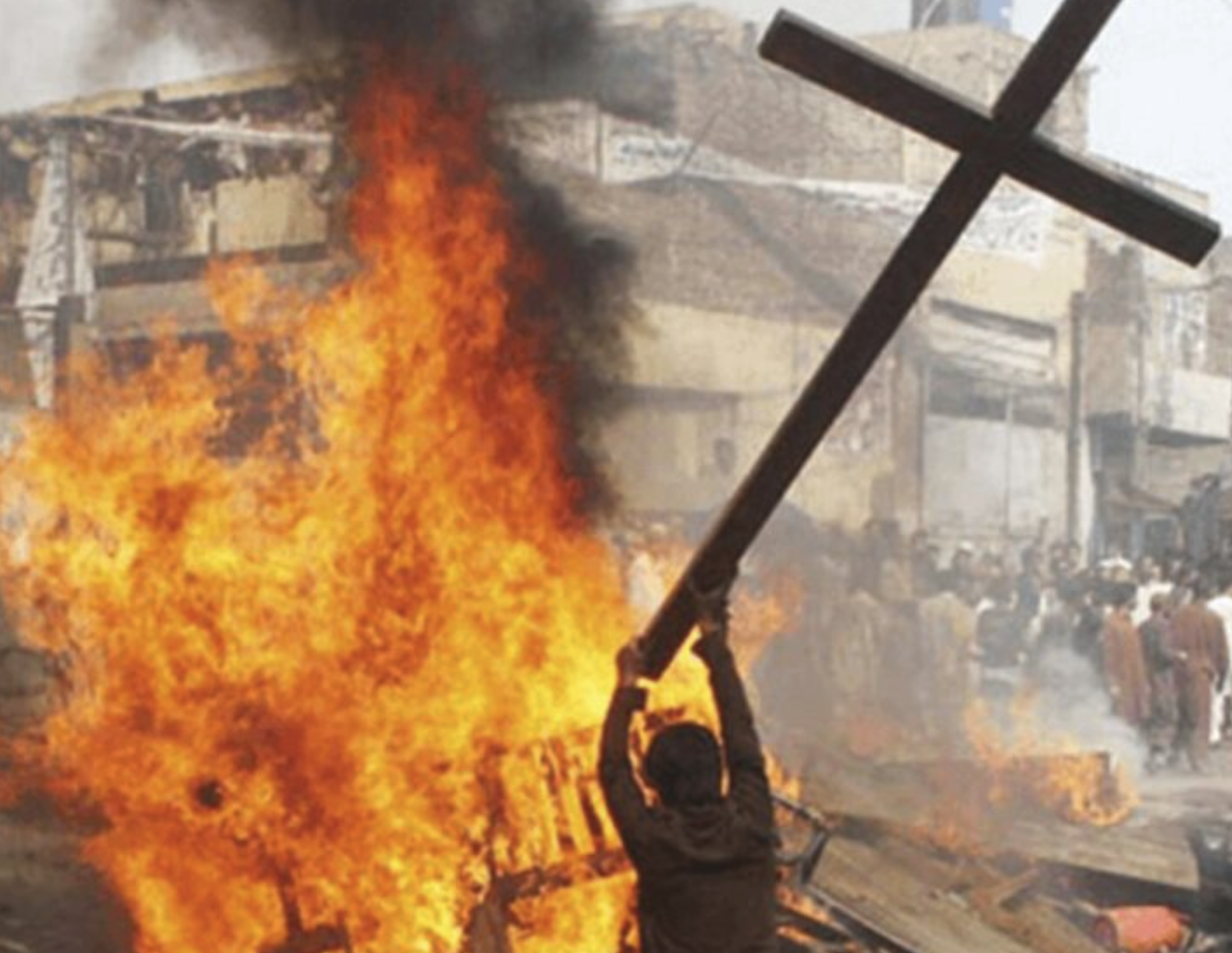
With all-important developments in the Middle East and Ukraine, it seems off-kilter to state that another major international story is being severely neglected, and has long been so. But such is The Guy’s opinion about mainstream media neglect of the waves of evidence for ongoing global persecution of Christians, on which we now have a Nov. 1 news peg.

A previous GetReligion Memo addressed the plight of Armenian Christians within Islamic Azerbaijan.  That’s just one of many tragedies detailed in the annual “Persecutors of the Year” report for 2023, just issued by International Christian Concern (ICC).

Yes, followers of other world religions also face inexcusable abuse in several nations. The parallel 2023 report produced last May by the federal government’s independent U.S. Commission on International Religious Freedom (USCIRF), which is also important to check out, emphasizes the plight of both Christians and other minorities in Iran but “sounds the alarm regarding the deterioration of religious freedom conditions in a range of other countries.” Click here for that report (.pdf).

But the scale is distinctive if, as ICC reports, “there are an estimated 200 to 300 million Christians who suffer persecution worldwide.” There’s corroboration of such a vast problem in the latest edition of the “World Christian Encyclopedia.

The overall global scenario warrants coverage, but many specific situations are newsworthy.

In ICC’s estimation, the world’s five worst individual persecutors today are Yogi Adityanath, the Hindu chief minister of India’s most populous state; Isaias Afwerki, Eritrea’s dictator; the better-known President Recep Tayyip Erdogan of Turkey and atheistic Communist dictators Xi Jinping of China and Kim Jong Un of North Korea.

Here’s the ICC list of the most bloodthirsty non-governmental organizations: Allied Democratic Forces (Islamic State affiliate operating in Congo and Uganda), Al-Shabab (al-Qaida affiliate in Somalia), ethnic Fulani jihadists in Nigeria, the five terrorist groups jointly disrupting Africa’s Sahel region, the Tatmadaw (Myanmar’s army) and the famous Taliban who again rule Afghanistan.

The ICC material from 50 researchers, half at Washington headquarters and half working overseas, shows that action against Christians is frequently linked with oppression of ethnic minorities and of political dissenters.
Please respect our Commenting Policy

What's happening to Polish Catholicism? This NYTimes story needs more religion stuff

What's happening to Polish Catholicism? This NYTimes story needs more religion stuff

Every now and then, major news stories about religious trends in the real world actually have something to do with religion, as opposed to being driven by politics, alone.

I know, I know. It’s hard to imagine that.

Yes, it’s also possible for an important story about religion to involve factors other than “religion,” narrowly defined. These stories may involve economics, mass media, education and, yes, politics. Life is complex.

I thought about this when reading an important New York Times story the other day that ran with this double-decker headline:

Polish Bishop Resigns After Diocese Is Rocked by Sex Scandal

A priest in the bishop’s diocese was accused of holding a sex party in his church apartment that involved a male prostitute who lost consciousness.

Here is the long, but essential, overture for that:

A Polish bishop whose diocese has been badly tarnished by reports of a gay orgy involving priests and a prostitute resigned … , the latest in a long series of sexual and financial scandals in Poland’s Roman Catholic Church.

Grzegorz Kaszak, the bishop of Sosnowiec in southwestern Poland, announced his departure after one of his priests was placed under criminal investigation in connection with reports last month that he had organized a sex party during which a male prostitute lost consciousness from an overdose of erectile dysfunction pills.

Gazeta Wyborcza, a liberal daily newspaper, reported in September that one of the priests at the gathering, held in a building belonging to the parish of the Blessed Virgin Mary of the Angels in the town of Dabrowa Gornicza, had called an ambulance. Others at the party prevented paramedics from tending to the unconscious man, the paper reported, but the paramedics called the police and the priests relented.

The priest who organized the gathering in his church apartment, identified by the diocese only as Father Tomasz Z., gave a statement last month to Polish media that disputed details of what had happened, quibbling over the number of priests present at the time of the alleged sex party and saying that “it is worth reading what the definition of an orgy is.”


Please respect our Commenting Policy

This is not a new question for religious leaders: Does secrecy ever help? Does it work?

This is not a new question for religious leaders: Does secrecy ever help? Does it work?

QUESTION:

Does secrecy help the church? Does it work?

THE RELIGION GUY’S ANSWER:

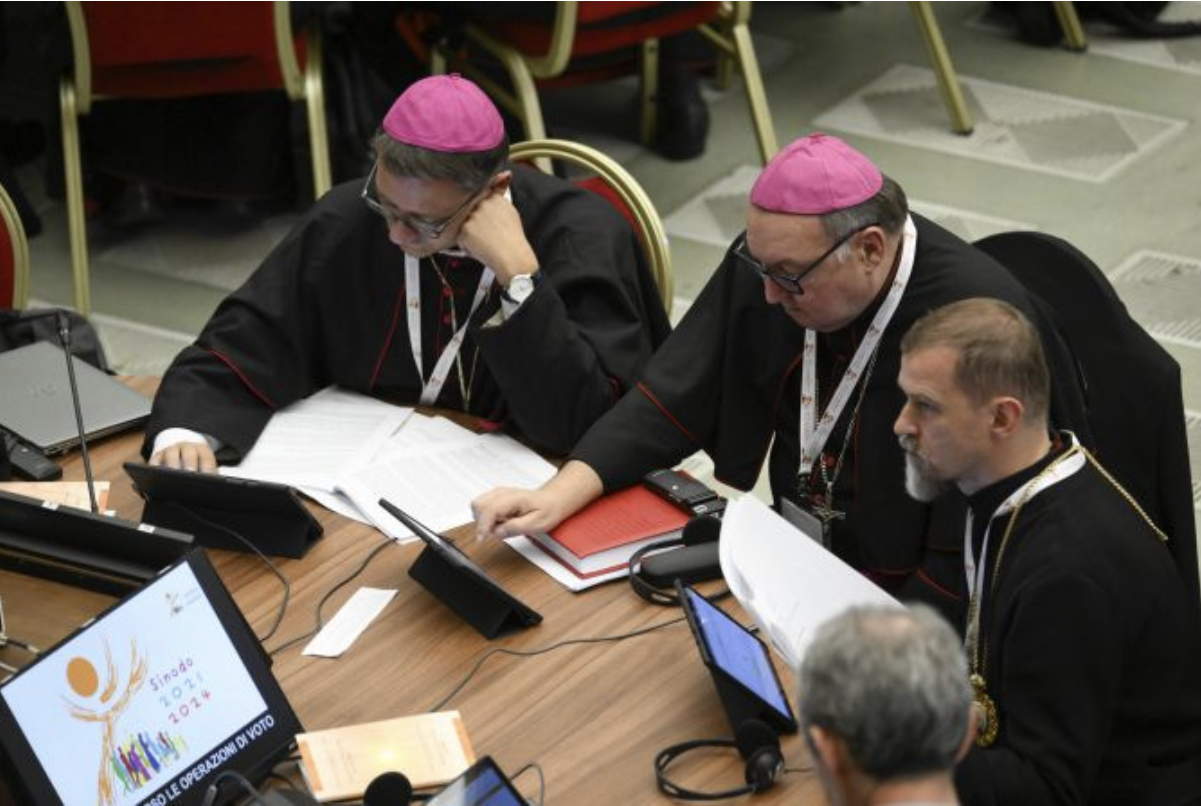
This issue erupted in the news with the surprise decision by Pope Francis to clamp unusual strict secrecy upon the Synod of Bishops he has summoned to the Vatican this month. (The synod’s second and concluding session will occur a year from now). This indicates to church leaders the extent to which bishops are facing internal difficulties.

The media typically portray Francis as a relatively liberal pontiff. But it may not be coincidental that the pope’s native Argentina has a dicey record on journalistic and political freedoms. And Father Thomas Reese, who has observed Vatican Synods for decades, says “Pope Francis does not like the press, especially the western media, which, he believes, only writes about issues of concern to the Global North.”

True, western media — and their audiences — are especially interested in the ongoing sexual molesting scandals, women’s role in the church, LGBTQ+ concerns, Communion for divorced and remarried Catholics or shared with Protestants and proposals to end the celibacy mandate for   priests.

All those controversies, and more, were part of the discussions leading up to this synod. That’s news.

Regular meetings of Synods are a new idea authorized in 1965 by the Second Vatican Council because the world’s bishops “share in the responsibility for the universal Church” along with the pope. For decades, these meetings have occurred behind closed doors but with informative press briefings and helpful explanations on the ongoing discussions from participants. Francis himself preserved this tradition at his four prior Synods.

Not now. On the eve of the meeting, Vatican regulations, reinforced in the pope’s opening address, directed delegates to say nothing about the discussions, including even what they themselves said. Moreover, the ban is in force perpetually after the Synod concludes (though a spokesman for the Holy See said violators are not under a formal threat of excommunication).

One result of closed doors is that outside interest groups affect news coverage of an event when the actual participants cannot.


Please respect our Commenting Policy

Does America still defy the classic 'secularization theory' favored by sociologists?

Does America still defy the classic 'secularization theory' favored by sociologists?

Journalists should be aware that 2023 turns out to be big for the much-discussed “secularization theory” framed by the 19th Century founders of sociology.

The nub of theory claims that economically advancing societies with improved education inevitably become more secular, largely because modern science explains matters formerly left to the religious realm.

The NYU Press states that its 2023 release “Beyond Doubt: The Secularization of Society” demonstrates “definitively that the secularization thesis is correct, and religion is losing its grip on societies worldwide.” Steve Bruce of the University of Aberdeen, author of the classic “Secularization: In Defence of an Unfashionable Theory” (Oxford, 2011), blurbs that this new title “will be the defining text on the undeniable proof” that supports the concept.

The three co-authors of “Beyond Doubt,” all experts, are Ryan Cragun (University of Tampa), Isabella Kasselstrand (also at Aberdeen), and Phil Zuckerman (founder of Pitzer College’s Secular Studies program). They take on such noted U.S. critics of the theory as Christian Smith, Rodney Stark, and the late Peter Berger. Though such theorizing has focused on the West, this book (which The Guy has yet to read) is distinctive in drawing together elaborate data from several dozen varied countries.

The United States, however, has long been a serious problem for the theory. It’s an educationally, economically and scientifically advanced culture that has persisted with a far more devout population than in, say, Western Europe or Canada.

Yes, but now, as the news media frequently remind us, 21st Century America has experienced a rapid and substantial increase in “nones” who tell pollsters they have no religious identity and are either atheist, agnostic, or — by far the largest category — “nothing in particular.” Their ranks have nearly doubled since 2007. And there other signs of sagging religious vitality.

It seems secularization has finally triumphed even in the United States.


Please respect our Commenting Policy

Pope's media blackout created a shadowy Synod on Synodality, with its own 'sideshows'

Pope's media blackout created a shadowy Synod on Synodality, with its own 'sideshows'

Sometimes the boring stuff is the most important. Anyone who has ever worked in journalism for several decades, such as myself, can attest to this. 

Whether you’re sifting through legal documents or financial statements, there’s more often than not a story — or at the very least some important information that can be used as supporting material — that can be gleaned from such an exercise.  

The same often goes for materials and documents released by the Vatican. I often try to read Holy See correspondence in Italian (like the United Nations, the Vatican often puts out information in a variety of languages) on the Vatican website or in its official newspaper l’Osservatore Romano.  

But information out of Rome, often resembling a fire hose, was down to a trickle over the past month. That was the story that loomed over the whole Synod on Synodality story.

For several weeks, there were no documents to read through and very few notable news conferences. You ended up with talking points about the lack of talking points. It was, to be blunt, next to impossible to know what was happening. Maybe that was the point?

We know, now that this second phase of the synod has come to an end, that the Vatican issued a document that “said it was ‘urgent’ that women have a larger role but postponed discussion of major issues such as ordaining women as deacons and failed to address outreach to L.G.B.T.Q.+ Catholics.”

That’s what The New York Times reported this past weekend upon the synod’s conclusion. It should be noted that the final phase will take place in October 2024. At that point, recommendations on what doctrinal changes — yes, doctrinal changes — the church should adopt will be put in front of Pope Francis for consideration.

While there was plenty of coverage once the meeting was over, there was little to no coverage of the synod while it was taking place. At least no coverage that informed readers in general, and Catholics in particular, on what was actually going on inside the Vatican these past few weeks. Almost all “information” available was second-hard or from Vatican approved voices. There were no transcripts or videos of crucial speeches, for example.

The reason for all of this was a simple one. Pope Francis wanted a media blackout.

That’s right. A meeting meant to inspire open dialogue was held under a veil of silence.


Please respect our Commenting Policy

Plug-In: Looming Israel-Hamas war brings familiar questions about the end of the world

Plug-In: Looming Israel-Hamas war brings familiar questions about the end of the world

No big deal. OK, it’s sort of a big deal: went to Arlington, Texas, for the start of the World Series. Let’s go, Rangers! But you knew that I would say that.

Speaking of the Fall Classic, Marvin Olasky writes at ReligionUnplugged that the World Series “reflects life and what little we can control.” I sure hope my favorite team can control its bullpen and win its first title ever.

But you signed on for religion news, not my baseball analysis, so here goes: The new speaker of the U.S. House is a Southern Baptist who has served as a trustee of the SBC’s Ethics and Religious Liberty Commission, Baptist Press’ Brandon Porter notes.

Rep. Mike Johnson, a Republican from Louisiana, suggested his election as speaker was ordained by God, according to Religion News Service.

This is our weekly roundup of the top headlines and best reads in the world of faith. We start again with the Israel-Hamas War, this time focusing on questions about the end of the world.

What To Know: The Big Story

End times debate: The Israel-Hamas war has sent Christians in search of prophetic meaning, as the Washington Times’ Mark A. Kellner, a former GetReligion contributor, explains:

Evangelical leaders are looking to the Bible’s end-of-days prophecies as congregants seek to understand the Israel-Hamas war.

While the Book of Revelation and the Gospel of Matthew offer details of what is to happen before Christ’s return, apocalyptic Scriptures have often been cited when global tensions flare up, such as Israel’s war of independence in 1948, the 1967 Six-Day War and the October War of 1973.

Believers also sounded alarms after the eruption of World War II, the Cold War and the 9/11 attacks.

“I think even secularists would tell you never have we faced so many severe threats in the world that we’re facing right now,” said the Rev. Robert Jeffress, senior pastor of the First Baptist Church of Dallas.


Please respect our Commenting Policy

Upcoming U.S. Supreme Court case could be a huge religion-beat sleeper story

Upcoming U.S. Supreme Court case could be a huge religion-beat sleeper story

The agenda for the U.S. Supreme Court term that began this month has zero cases involving the two religion clauses of the First Amendment.

That’s quite the change after the important religion rulings the past two years, not to mention religious conservatives’ and liberals’ agitation after the 2022 Dobbs decision, which overturned Roe , which had legalized abortion nationwide.

So religion-watchers may not be aware that the court soon takes up two potentially tectonic cases involving — would you believe it — small businesses that fish for herring off the New England coast and say they shouldn’t have to pay their federal monitors. The cases are Loper Bright v. Raimondo (docket # 22-451), newly combined Oct. 13 with Relentless Inc. v. Department of Commerce (docket #22-1219). Oral arguments could come as soon as January.

This gets into the weeds of administrative law, an area that normally does not set pulses pounding but here involves the hot political dispute over powers exercised by federal agencies. Conservatives assert that agencies have long been interpreting and enforcing laws in ways that Congress never intended or has never defined, thus usurping legislative prerogatives and violating the Constitution’s “separation of powers.”

Background: The two fishing companies seek relief by overturning the Court’s highly influential 1984 precedent in Chevron v. Natural Resources Defense Council. This unanimous decision granted wide deference to federal agencies in “reasonable” interpretations, applications and enforcement of ambiguous laws passed by Congress.

The list of Loper briefs posted by the invaluable SCOTUSBlog.com shows the variety of interests that include 48 of the 50 states lined up on the two sides and the Republican U.S. House of Representatives, along with e.g. the AFL-CIO, American Cancer Society, Environmental Defense Fund, Gun Owners of America and e-cigarette industry.

You are waiting for the religion-beat angle?


Please respect our Commenting Policy

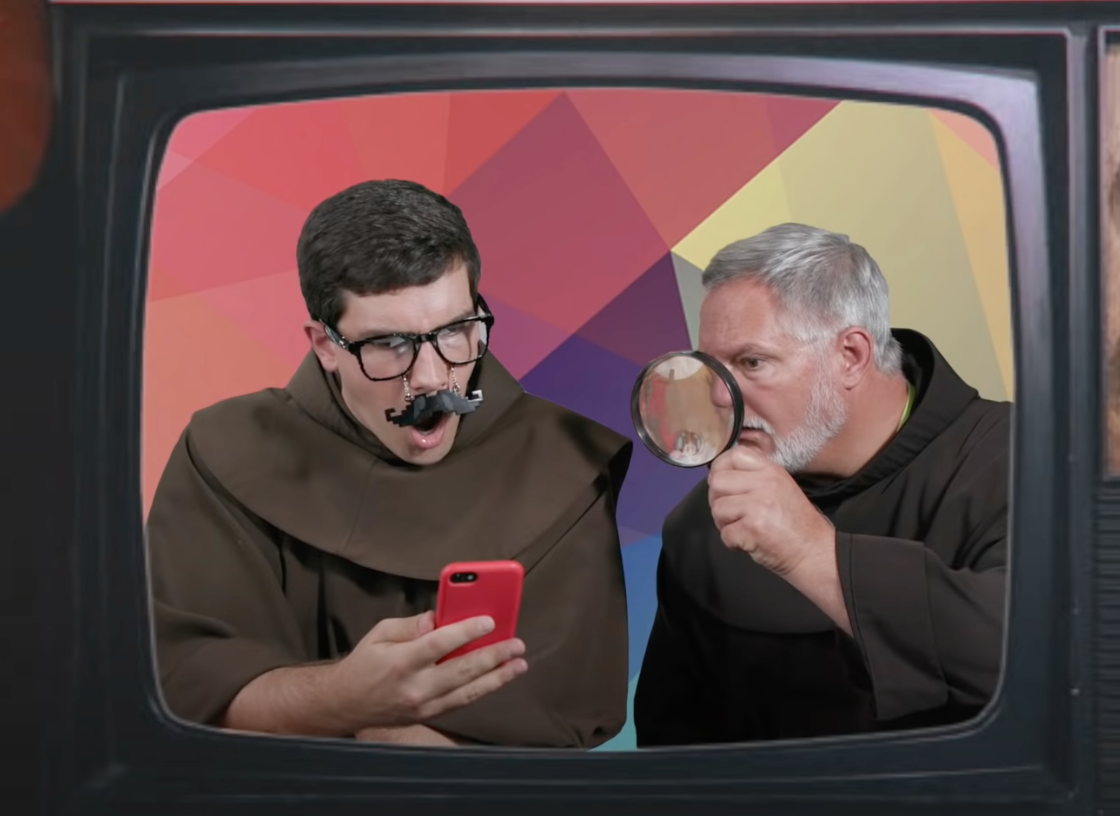
Upon Friar Review -- Looking for spiritual questions in the wilds of pop culture

Upon Friar Review -- Looking for spiritual questions in the wilds of pop culture

During the 1990s, legions of kids could quote chapter and verse from the "X-Files" adventures of FBI special agents Fox Mulder and Dana Scully.

Scully was the skeptic who put her faith in science, while Mulder plunged head-first into the supernatural. But in one case, Scully experienced mysterious visions that helped her save a life. Stunned, she returned to church. Confessing to a priest, she asked why she witnessed a miracle, but her partner did not.

Maybe, the priest said, God was only speaking to her. "With the Lord, anything is possible. Perhaps you saw these things because you needed to. … Why does that surprise you?"

Scully answered: "Mostly it just makes me afraid. … Afraid that God is speaking, but that no one is listening."

Father Casey Cole grew up in that era. While he wasn't an "X-Files" fan, many of his friends were, hooked by the show's mantra, "The truth is out there." Thus, this confession scene has become one of many video clips he uses as chaplain at three schools in Macon, Georgia.

When exploring pop culture, the young Franciscan friar is looking for good questions -- the kinds of questions he thinks the church needs to hear.

That's easier with some forms of entertainment than others. It's possible for savvy pastors, youth leaders and teachers to respond to high-quality movies and television programs, especially those that address spiritual issues, said Cole, describing the approach used in the "Upon Friar Review" videos he makes with Father Patrick Tuttle of Holy Spirit Catholic Church in Macon.

Then there are "times when Father Patrick closes his eyes and says, 'This is awful.' … There are times when I want to say, 'This is the worst thing ever.' But when we're at our best, we can say, 'Let's take a step back and let's analyze this. What question is being asked here? …

"These things ask important questions, and maybe questions the church seems unwilling or unable to answer. Well, we need to be the ones t


Please respect our Commenting Policy

Trying to count religious believers in United States? Good luck with that ...

Trying to count religious believers in United States? Good luck with that ...

QUESTION:

How many members do major U.S. religious groups have?

THE RELIGION GUY’S ANSWER:

Well, that’s impossible to say with any accuracy since there’s no one agreed-upon statistical source and some groups do not collect or issue good numbers.

We do know two things for sure about the U.S. (1) It remains predominantly Christian despite a recent decline, and (2) There’s been notable growth in non-Christian religions through immigration and conversion.

Recently, some noteworthy new numbers about U.S. Christianity became available. We’ll review those below, but let’s begin with complexities regarding the major non-Christian faith groups.

Judaism is traditionally second in population size to Christianity. The American Jewish Population Project at Brandeis University reports there are 7,631,000 American Jews, children included, among which 4,873,000 are adults and “Jewish by religion” as opposed to a secular ethnic identity. That’s similar to the 7,387,992 ethnic total reported by the American-Israeli Cooperative Enterprise.

A major report by the Pew Research Center, a go-to-source for surveys on American religion, said that as of 2020 there were “approximately” 5.8 million Jewish adults, of whom 4.2 million were “Jews by religion.” Then we can consult these two standard sources:

* The 3rd edition of the “World Christian Encyclopedia” (Edinburgh University Press), compiled by a study center at Gordon-Conwell Theological Seminary, contains extensive information on all religions in all nations, not just Christianity and not just the United States. It counts 5.6 million Jews of all categories.

* The U.S. Religion Census, compiled once each decade by the Association of Statisticians of American Religious Bodies, yielded 2020 data on 372 religious bodies posted here. With Jews, the Census primarily used groups’ own reports given to the Synagogue Studies Institute.


Please respect our Commenting Policy