Catholicism

The bottom line: The 'pew gap' remains a powerful reality in American political life

The bottom line: The 'pew gap' remains a powerful reality in American political life

As an emerging American voice, the Rev. Jerry Falwell visited South Carolina in 1980 to promote his new Moral Majority network, while urging evangelicals to back Ronald Reagan, instead of President Jimmy Carter, a Southern Baptist.

Then Furman University professor John C. Green was intrigued by mixed reactions on three Baptist campuses in Greenville -- his own "moderate" Baptist school, a mainstream Southern Baptist college and the proudly fundamentalist Bob Jones University. For example, Bob Jones, Jr., called Falwell the "most dangerous man in America today," because of his efforts to unite religious groups in political activism.

This potent blend of politics and religion was an obvious topic for political-science research. Colleagues agreed, but one said they needed to act fast, "since these kinds of trends burn out quick," Green recalled, laughing. "Here we are in 2023 and arguments about religion and politics are hotter than ever."

From the start, experts tried to show a clash between religion and secularism, noted Green, author of "The Faith Factor: How Religion Influences American Elections."

The reality is more complex than a "God gap." By the late 1980s, researchers learned that -- while most Americans remain believers -- it's crucial to note how often voters attend worship services. The more fervently Americans support religious congregations with their time and money, the more likely they are to back cultural conservatives.

This "religiosity gap" remains relevant. A new Pew Research Center analysis noted that, in 2022 midterms: "The gap in voting preferences by religious attendance was as wide as it's been in any of the last several elections: 56% of those who said they attend religious services a few times a year or less reported voting for Democratic candidates in the 2022 midterms. … But GOP candidates were the favorite among those who attend services monthly or more by more than two-to-one (67%, vs. 31% who voted for Democratic candidates)."

Meanwhile, Protestants supported the "GOP by nearly two-to-one." White evangelical support for Republicans hit 86%, while white Catholics "favored Republican candidates by 25 points, whereas Hispanic Catholics favored Democratic candidates by an even greater margin (34 points)." Jewish voters preferred Democrats -- 68% to 32%. Atheists, agnostics or "nothing in particular" voters remained loyal to the Democrats, with 72% supporting that party, and 27% backing Republicans.

In 2012, Green was part of the Pew Research team behind the landmark "Nones on the Rise" study, which documented the stunning growth of the "religiously unaffiliated."


Please respect our Commenting Policy

Catholic press, and Ross Douthat, remain must-reads during a busy Vatican summer

Catholic press, and Ross Douthat, remain must-reads during a busy Vatican summer

It should come to no surprise to any reader that we live in a polarized nation. We are separated along political partisan lines and in our own media universes.

There are those who watch and/or read Fox News on the web and consume copious amounts of information regarding President Joe Biden and his son’s alleged ties to corruption.

On the other side, the Hunter Biden is ignored. Instead, we get investigative journalism from The New York Times looking into the dealings and relationships of conservatives such as Supreme Court Justice Clarence Thomas and Florida Gov. Ron DeSantis.

This is why tmatt keeps quoting, here at GetReligion and in his national column, the opening lines of the David French book "Divided We Fall: America's Secession Threat and How to Restore Our Nation.”

"It's time for Americans to wake up to a fundamental reality: the continued unity of the United States cannot be guaranteed," wrote French. Right now, "there is not a single important cultural, religious, political, or social force that is pulling Americans together more than it is pulling us apart."

Confession: I have found it healthy and important to watch both Fox News and read The New York Times. Both are highly influential in their respective partisan bubbles. Both impact the world around us, for better or worse, and that’s of great importance in a world were journalistic objectivity is a relic of a pre-internet world.

I also like to read columnists. I like a few. Longtime Vatican observer John L. Allen, Jr., is one. J.D. Flynn over at The Pillar is another.

Yet another must-read is New York Times columnist, blogger and author Ross Douthat.

Douthat is a convert to Catholicism and often writes about the church. He is openly pro-Catholic Catechism. Thus, it is often refreshing to read Douthat because he tackles issues his own newspaper often fails to cover. I don’t know Douthat’s reading habits but I have to think he reads guys like the aforementioned Allen and Flynn.

Douthat was the target of recent criticism in the Jesuit magazine America.


Please respect our Commenting Policy

Plug-In: More Moore on values voters and what appears to be a permanent Trump effect

Plug-In: More Moore on values voters and what appears to be a permanent Trump effect

Among the week’s intriguing headlines: Pope Francis is hurrying to bolster his progressive legacy as his health problems increase, the Wall Street Journal’s Francis X. Rocca reports.

In Israel, the political rise of ultra-Orthodox Jews is shaking the nation’s sense of identity, the WSJ’s Dov Lieber and Shayndi Raice note. A related major vote is expected as soon as Sunday.

In the U.S., a crowded field of GOP presidential candidates is vying for the Christian Zionist vote as Israel’s rightward shift spurs protests, according to The Associated Press’ Tiffany Stanley.

Also, “the Robert F. Kennedy boomlet is over,” Semafor’s Benjy Sarlin opines. Before it ended (or not, since he isn’t that interested in mainstream press views), the Democratic presidential candidate gave an exclusive, nearly 40-minute interview to Jewish News Syndicate’s Menachem Wecker.

The King’s College in New York is canceling fall classes and laying off faculty but insists it’s not closing, as Emily Belz at Christianity Today and Meagan Saliashvili at Religion News Service explain.

This is our weekly roundup of the top headlines and best reads in the world of faith. We start with former President Donald Trump’s lingering hold on right-wing voters.

What To Know: The Big Story

More of the same: “One of former President Donald Trump’s most steadfast evangelical critics said he expects Trump to be the Republican nominee in 2024, and that the years since Trump’s election in 2016 have been an ‘apocalypse.’”

“There’s a wide-open choice, and still you have a majority in the Republican primary behind Trump,” Christianity Today editor-in-chief Russell Moore tells Yahoo News’ Jon Ward. “I would be shocked if he’s not the Republican nominee.” Moore has a new book, ”Losing Our Religion: An Altar Call for Evangelical America,” which releases July 25.


Please respect our Commenting Policy

Podcast: WPost finds a 'good' religion vs. 'bad' religion sermon in small-town Georgia

Podcast: WPost finds a 'good' religion vs. 'bad' religion sermon in small-town Georgia

If you grew up in the Bible Belt or in the heavily churched Midwest, you know that a good sermon is supposed to contain (all together now) “three points and a poem.”

This week’s “Crossroads” podcast (click here to tune that in) focused on a Washington Post sermon that ran with this headline: “A small-town Georgia preacher fills pews by leaving no one out.

It’s possible that the author of this highly doctrinal news story understood the basics of Southern preaching. Hold that thought, because we will return to it. But first: The Big Idea of this sermon is stated in absolute terms — there is “good” religion and there is “bad” religion. Let they who have ears, let them hear (or whatever the new language is in this case).

I. It is always appropriate to open a sermon with a conversion story that illustrates the preacher’s Big Idea. This grab-a-tissue Washington Post feature could not be more explicit about that:

HARTWELL, Ga. — At night, the worn sign looks like a beacon in the darkness out front of the modest, red-brick Mt. Hebron Baptist Church.

The tired, it reads. The poor. And huddled masses. Welcome home.

In this small town in the rural northeast corner of Georgia, it’s the kind of message that assures Teri Massey she is loved for being who she is — a message 180 degrees from the one she heard in the Baptist church where she spent her teens into her 40s, where her grandfather, father and brother all held leadership positions.

When Massey came out in 2004, shortly after meeting the woman she later would marry, the congregation in that other small Georgia town responded by campaigning to send her to conversion therapy and holding prayer vigils outside her home.

She found Mt. Hebron a few years ago through a friend. Pastor Grant Myerholtz, whose usual preaching attire is T-shirt and jeans, met her and her wife at the door. They listened carefully as he stood in the pulpit and proclaimed: All are welcome.

“It was like this load was off of me,” Massey, 63, recalled last week.

There are good churches and there are bad churches. Got that.

II. This is an age in which churches need to change their doctrines if they want to, well, grow (or at the very least get good coverage from blue-zip-code elite newsrooms).

Thus, this Post story offers a very clear thesis statement as Point II.


Please respect our Commenting Policy

A nuanced look at Portland Archbishop Sample? Journalists aren't coming up with it

A nuanced look at Portland Archbishop Sample? Journalists aren't coming up with it

It must be a trend: Catholic bishops are laying down the law these days on the use of preferred pronouns, cross-dressing and other accoutrements of transgender individuals on their property – and they’re not getting a lot of love from the media over it.

The latest fight is within the Archdiocese of Portland (Ore.), but the dioceses of Des Moines, St. Paul and Minneapolis and Springfield, Ill. have taken similar stands. So I am curious a decision by the Catholic archbishop of Portland has created such a ruckus. Could it be because of the ultra gay-friendly ethos of the area? The Oregonian’s headline made it clear where it stood: “Portland-area Catholic schools are at a crossroads over transgender, nonbinary student rights.”

Hundreds of Portland area families whose children attend Catholic schools are protesting western Oregon Archbishop Alexander Sample’s guidance that schools under the church’s umbrella not recognize transgender and nonbinary students’ pronouns and identities.

Sample quietly released the 17-page document in January, when it was billed as a “teaching and formation resource” and not a mandate for the 41 archdiocesan schools, which stretch from Portland to Medford and include Central Catholic High School and 15 K-8 schools in Portland.

Nowhere in the rest of the piece is the statistic of “hundreds” of families supported although I read elsewhere that more than 1,000 people signed a petition opposing the archbishop.

The news of Catholic resistance to Sample was broken in the middle of Pride Month, a true insult in left-left Portland. (Note: I attended college there, had my first newspaper job in the Portland suburbs, have friends and family there, and I swoop through town at least once or twice a year, so I have more than a glancing knowledge of the place).


Please respect our Commenting Policy

After all of the miracles he has seen in his life, why doesn't Indiana Jones truly believe?

After all of the miracles he has seen in his life, why doesn't Indiana Jones truly believe?

By the end of "Raiders of the Lost Ark," archaeologist Indiana Jones had learned enough to know that he should close his eyes when facing the wrath of God.

Apparently, that kind of power can melt Nazis -- without changing the hero's soul.

"Why won't Indiana Jones convert? We aren't insisting that he convert to our faith or to his father's faith or really to any faith in particular," noted Jack Bennett, in a Popcorn Cathedral video marking the "Indiana Jones and the Dial of Destiny" release.

"What we want to know is why he is always back to square one at the start of every adventure -- a skeptic, or even a scoffer. I mean, think about it: He has seen the Ark of the Covenant opened and the destroying angels pour out God's vengeance on his enemies. He has seen the sacred Hindu stones come to life. …He has seen the true cup of Christ heal his own father from a fatal gunshot wound -- on screen, with no ambiguity."

In what the 80-year-old Harrison Ford has promised is the finale, Indiana Jones remains the archaeologist who risks everything to keep supernatural, even holy, artifacts out of the bad guys' clutches.

This is a war between archetypes of Good and Evil -- with capital letters. The Nazis are on one side, fighting with a brave skeptic who careens through scenes based on Saturday-matinee classics. Miraculous stories from the past are mere fairy tales, until he learns that Higher Powers are at work. Then again, maybe it's just aliens or generic supernatural forces.

In the new film, Jones confesses: "I don't believe in magic, but a few times in my life I've seen things, things I can't explain." But after a life wrestling with sacred mysteries, he concludes: "It's not so much what you believe. It's about how hard you believe it."


Please respect our Commenting Policy

Podcast: Culture Wars 2023 -- As it turns out, traditional Muslims have children too

Podcast: Culture Wars 2023 -- As it turns out, traditional Muslims have children too

Gentle readers, please allow me to start with a short anecdote from about 15 years ago, during the years when I was teaching journalism a few blocks from the U.S. Capitol.

I attended a typical off-the-record think tank forum in which lawyers from church-state groups were talking about rising tensions in public, taxpayer funded, institutions. At one point, someone asked a question that sounded something like this: What should public-schools leaders do when approached by parents who want opt-out choices for their children when faced with class activities that clash with the teachings of their faith?

The question, of course, was linked to tensions between public-school leaders and evangelicals, and maybe traditional Catholics (“traditional” in the FBI meaning of the word).

One lawyer gave an answer that was way ahead of its time: School administrators should look at these people and do everything they can to pretend that these parents are Muslims. In other words, pretend these parents are part of a minority faith that public officials respect (Muslims), as opposed to part of a larger faith group that administrators distrust, fear and possibly even loathe (evangelicals).

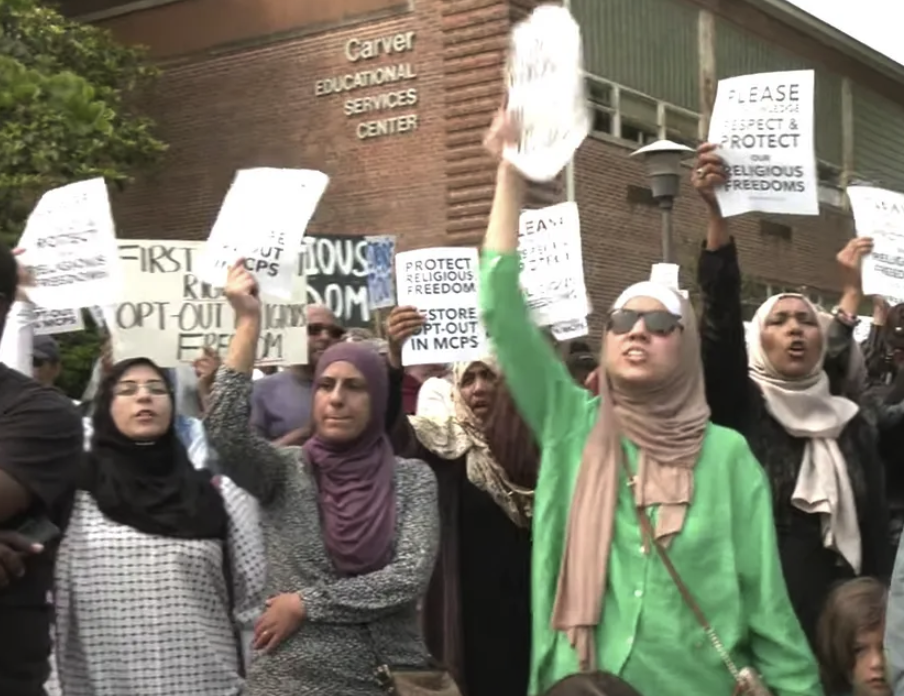
This was one of two Beltway anecdotes I shared during this week’s “Crossroads” podcast (click here to tune that in), which focused on a Washington Post story that I have been thinking about during the past week or two. That headline: “Hundreds of Md. parents protest lessons they say offend their faiths.” The Post team appears to have worked hard to keep the main news hook out of that headline and even the lede.

Hundreds of parents demonstrated outside the Montgomery County Board of Education’s meeting … demanding that Maryland’s largest school district allow them to shield their children from books and lessons that contain LGBTQ+ characters.

Still in the dark, right? Keep reading:

The crowd was filled largely with Muslim and Ethiopian Orthodox parents, who say the school system is violating their religious rights protected under the First Amendment by not providing an opt-out. Three families have filed a lawsuit against the school system.


Please respect our Commenting Policy

Who is Archbishop Fernandez? What is his theology? That depends on who you read in the press

Who is Archbishop Fernandez? What is his theology? That depends on who you read in the press

The doctrines that govern Catholicism have been very much in the news this summer.

This isn’t normal with the mainstream press. So, why is this the case?

This question has several answers. The Synod of Synodality, a multi-year process involving bishops and parishioners, could very well change church doctrine on a number of key issues. (See this recent tmatt post and podcast for more background.)

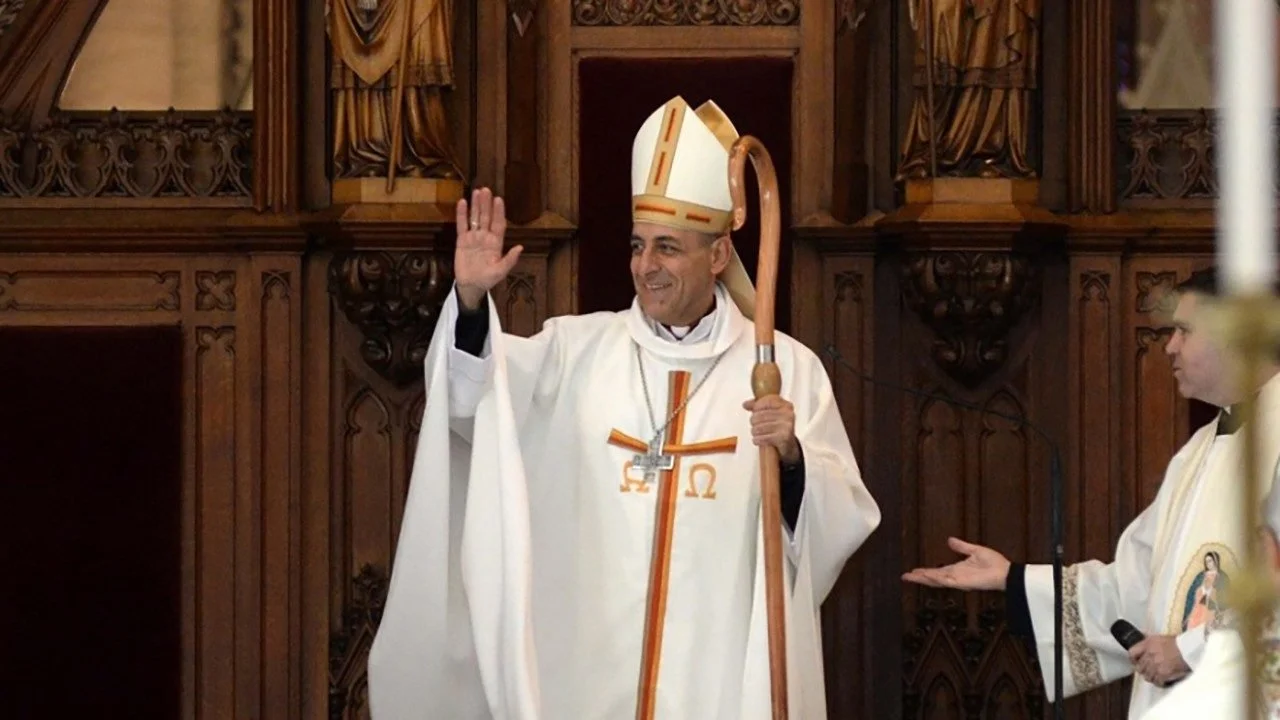
The second involves the pope’s recent appointment of Archbishop Víctor Manuel Fernandez as Prefect of the Dicastery for the Doctrine of the Faith.

Both are connected in that they have to do with the future direction of the church and Pope Francis’ legacy. This pontiff very much wants to leave a lasting impression on the global church, in part acting through the synod, and Cardinal-elect Fernandez could very well help shape it. Let’s face it, it has been a very busy news cycle since my last post on the media coverage (and non-coverage) of the synod.

The other major question reporters need to ask themselves is this one: Who is Archbishop Fernandez and why does any of this matter?

It depends on who you read in the Catholic press. Like a Supreme Court nominee, the man now tasked with overseeing church doctrine — and possibly making changes going forward — is seen as a controversial choice. This is especially true in contrast to the most famous recent theologian who held this post, as in Cardinal Ratzinger Joseph Ratzinger, who became the very orthodox Pope Benedict XVI.

Like Francis, Fernandez is an Argentine and soon-to-be cardinal after the pontiff announced a new consistory this past Sunday where 21 men will be given red hats on Sept. 30.

Again, why does this matter?

It matters because the cardinal who heads the Prefect of the Dicastery for the Doctrine of the Faith — an office dating back to the 1500s — wields much power and is automatically considered what Italian press calls papabile (which translates into “popeable), meaning a candidate who can be pope someday.


Please respect our Commenting Policy