Catholicism

Before reaching Rome, Cardinal Ratzinger put modern Europe in the rear-view mirror

Before reaching Rome, Cardinal Ratzinger put modern Europe in the rear-view mirror

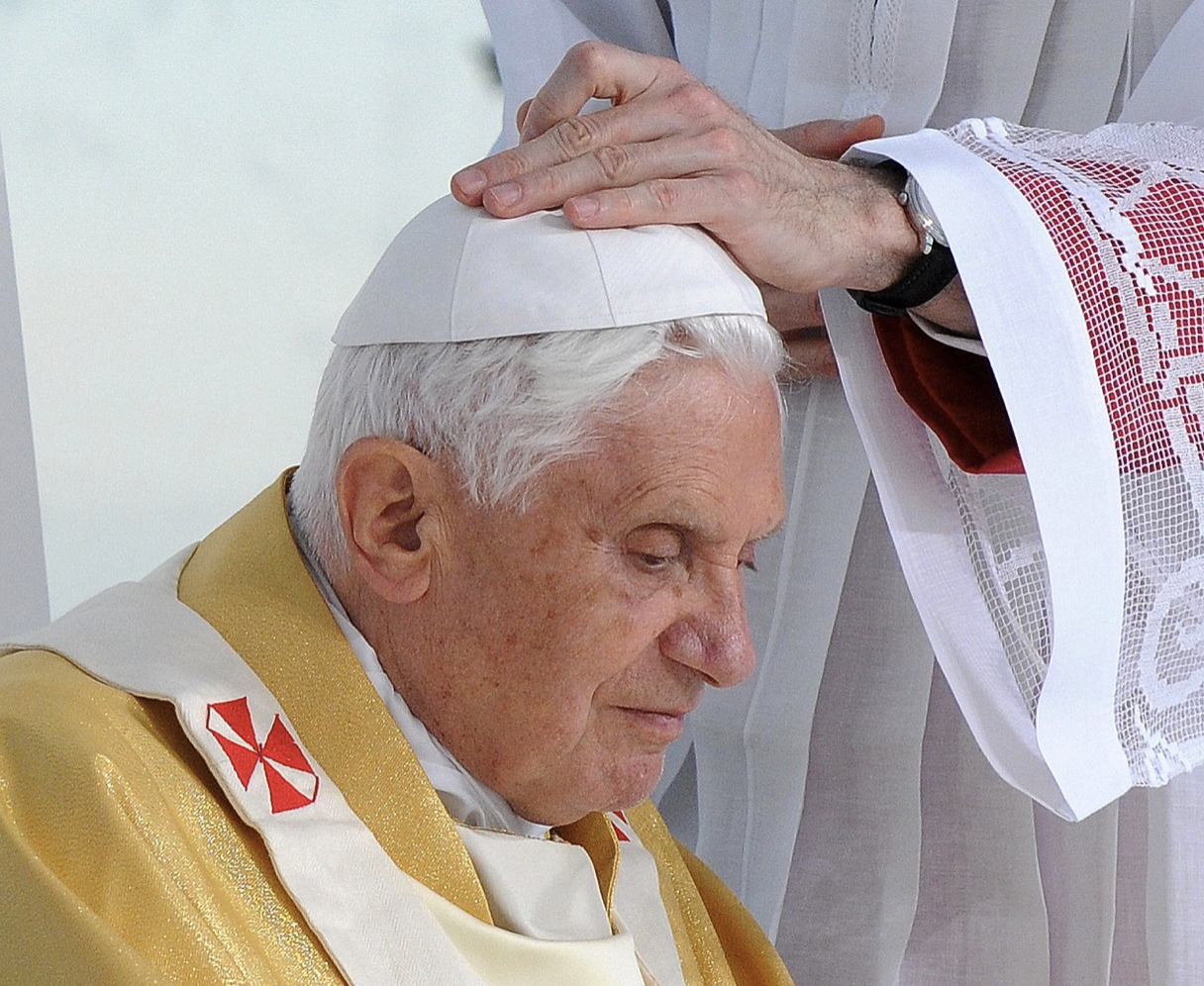
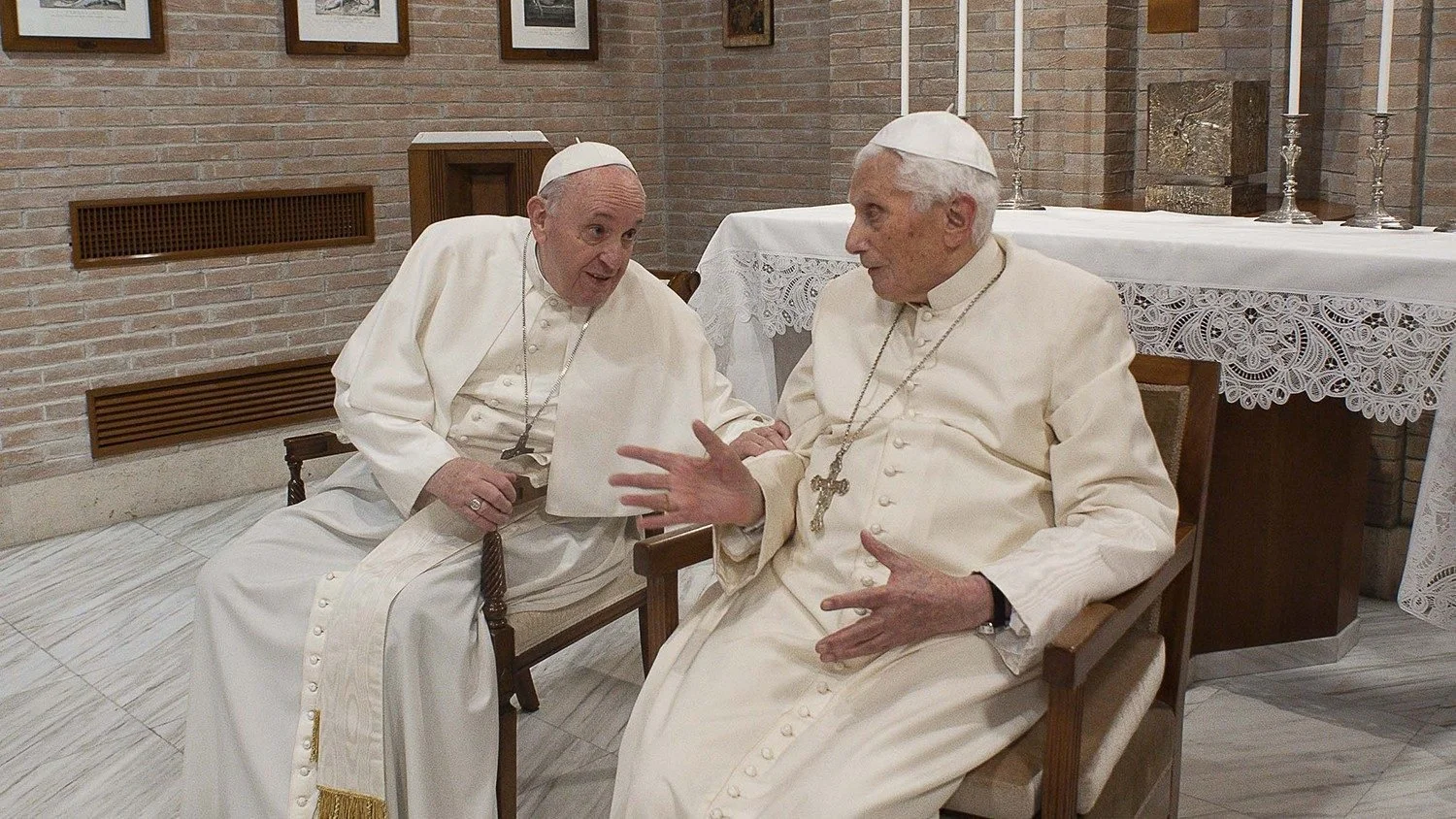
In a rite before the funeral of Pope Emeritus Benedict XVI, Vatican officials placed unique symbols of his pontificate inside his cypress casket, along with a scroll in Latin describing his ascent to the Chair of St. Peter.

"His faith and family upbringing prepared him for the harsh experience of the problems connected with the Nazi regime, aware of the climate of strong hostility towards the Catholic Church," said the English translation of this "rogito," or deed. "In this complex situation, he discovered the beauty and truth of faith in Christ."

After deserting the German army without firing a shot, Josef Ratzinger began his theology studies and, in 1951, was ordained a priest. He emerged as an intellectual voice preaching hope, as opposed to mere optimism. The future pope's sobering views on modern Europe would affect his entire career -- as well as debates about his legacy when he died.

"This so-called Christian Europe … has become the birthplace of a new paganism, which is growing steadily in the heart of the Church, and threatens to undermine her from within," said Ratzinger, in a 1958 lecture. This modern church "is no longer, as she once was, a Church composed of pagans who have become Christians, but a Church of pagans, who still call themselves Christians."

Four years later, the 35-year-old priest advised Cardinal Joseph Frings of Cologne during the historic Second Vatican Council, emerging as a "progressive" on reform issues, yet one who saw painful challenges ahead.

"From the crisis of today the church of tomorrow will emerge – a church that has lost much," he warned, on German radio in 1969. "As the number of her adherents diminishes, so it will lose many of her social privileges. In contrast to an earlier age, it will be seen much more as a voluntary society, entered only by free decision. As a small society, it will make much bigger demands on the initiative of her individual members."

Ratzinger envisioned a "more spiritual church" with no political mandate, "flirting as little with the left as with the right. … It will make her poor and cause her to become the church of the meek."
Please respect our Commenting Policy

Thinking about those sad, old Vatican II 'fundamentalists' -- such as Pope Benedict XVI?

Thinking about those sad, old Vatican II 'fundamentalists' -- such as Pope Benedict XVI?

If religion-beat journalists looked carefully enough, they could see an interesting question lurking inside the rhetoric of the current Latin Mass wars.

That question: What does it mean to be “pro-Vatican II”? If reporters flip that question around it turns into this: What does one need to do to be “anti-Vatican II”?

For example, see this language at the top of a Catholic News Agency report this past summer with this headline: “Pope Francis: There are many ‘restorers’ in the US who do not accept Vatican II.

There are many “restorers” in the United States who do not accept the Second Vatican Council, Pope Francis said. …

Speaking to the editors of Jesuit journals, he criticized what he called “restorationism” in the Church, which he defined as the failure to accept Vatican II, the ecumenical council held from 1962 to 1965. He said: “Restorationism has come to gag the Council. …”

Note the tension between “accept the Council” and “gag the Council.” What, precisely, does it mean to “gag” the Second Vatican Council? Let’s keep reading:

“The problem is precisely this: in some contexts, the Council has not yet been accepted. It is also true that it takes a century for a Council to take root. We still have 40 years to make it take root, then!”

Pope Francis cited opposition to Vatican II when he issued the motu proprio Traditionis custodes in July 2021, limiting celebrations of the Traditional Latin Mass.

This leads to a logical question: What ARE the teachings of Vatican II? Are they the actual contents of the Council documents or are these teachings an evolving body of work with current and future Catholic leaders deciding what the Council meant to say? Yes, note how these questions echo decades of academic warfare about, well, everything from the U.S. Constitution to the New Testament.

This is a timely subject, in light of the recent death of Pope Benedict XVI — one of few remaining Vatican intellectuals who, as an advisor to a cardinal in the Vatican II sessions, had direct exposure to the debates that led to its final documents. Benedict stressed a strict reading of the contents of Council’s teachings on a host of subjects — such as liturgy and the future role of Catholic tradition.

That leads us to a Religion News Service think piece written before shortly before the death of Benedict XVI. The author, Jesuit Thomas Reese, is a priest who for decades has been one of the most powerful voices (think “usual suspects”) shaping news coverage of American Catholicism.


Please respect our Commenting Policy

Benedict XVI's death ushers in media speculation on what Pope Francis can (or will) do next

Benedict XVI's death ushers in media speculation on what Pope Francis can (or will) do next

One of my five things to watch for in 2023 included media speculation over Pope Francis’ health and speculation over his possible retirement.

Within three days of that post — and prompted by the death on Dec. 31 of Pope Emeritus Benedict XVI at the age of 95 — speculation increased once again.

This is what I wrote in that Dec. 28 post:

The pope has often praised the decision of his predecessor, now Pope-Emeritus Benedict XVI, to resign because he felt unable to carry the duties of the papacy due to his advanced age.

In 2013, Benedict, who currently lives in a monastery at the Vatican and is seldom seen, became the first pontiff to resign in 600 years, paving the way for Francis’ election. Now his health appears to be failing.

Will there be a new conclave in 2023? There’s no way to know that now. One thing, however, is certain. Speculation will only mount with each passing day. Pope Francis isn’t getting younger.

The election of a new pope is a story journalists love to report. It’s something like a cross between a presidential election and a royal wedding. The bottom line: Journalists see it as a political horse race.

Speculation will certainly mount. Journalists love elections.

Much of the speculation over what Benedict’s death means for Francis, however, cast a shadow over what should have been stories around the legacy of former Cardinal Joseph Ratzinger. Instead, the news coverage quickly shifted to “what happens next” — not an unusual journalism strategy in order to have political-style coverage that looks ahead rather than at the past — and whether Francis would someday step down.


Please respect our Commenting Policy

Correction? Washington Post on the 'religious event' that marked passing of Benedict XVI

Correction? Washington Post on the 'religious event' that marked passing of Benedict XVI

Once upon a time, it was relatively clear when a news organization did or did not need to publish a correction about an error in one of its reports.

But then the World Wide Web came along and reporters at major organizations began writing what were, in effect, news reports that evolved during or just after an important event — rather like the “write-thru” story updates that wire services had for decades sent to newsrooms.

In the old days, however, there was a definitive moment when ink hit paper and readers and journalists could consider a news report “published.” If there was an error of fact in that published story, then everyone (within reason) knew that there needed to be an ink-on-paper correction.

What is supposed to happen when a news report is merely published online? Is a story in digital bytes as “real” as the old ink-on-paper version? That’s the kind of issue journalists have been debating ever since professionals began “breaking” stories online or producing early versions of news reports that, eventually, merged into final reports that were “published.”

This brings me to an interesting sentence that ran, sort of, in a Washington Post foreign-desk (as opposed to the religion desk) story about the funeral Mass for Pope Emeritus Benedict XVI. Here is that sentence, which has circulated in screen shots taken of the Post website:

At the religious event, sometimes called the Eucharist, the faithful receive the sacrament, normally consecrated bread like wafers and wine, symbolizing the body and blood of Jesus.

I have done quite a bit of searching for that material online — especially the “symbolizing the body and blood of Jesus” reference — and I can only find fragments of digital material that show that it once existed. Maybe I have missed it, somehow. If so, I would welcome a correction and a working URL.

Meanwhile, check out, this wispy reference found in this online search file.


Please respect our Commenting Policy

Plug-In: After the death of Benedict XVI -- questions about his legacy and his funeral

Plug-In: After the death of Benedict XVI -- questions about his legacy and his funeral

I’m your Weekend Plug-in columnist, and I’m excited to launch the fourth year of this newsletter.

Plug-in aims to highlight the best reads and top headlines in the world of faith. In 2023, we’re tweaking our format to make it even smarter and more concise.

Let’s jump right in!

What To Know: The Big Story

Pope Emeritus Benedict XVI died Saturday at age 95. Clementi Lisi recounts the life of the first pope in 600 years to resign.

Pope Francis presided over the funeral Mass for his predecessor, as Lisi reports. But some found fault with Francis’ brief homily for Benedict, according to The New York Times’ Jason Horowitz and Ruth Graham.

For more coverage from the Vatican, follow The Associated Press’ Nicole Winfield, the National Catholic Reporter’s Christopher White, Religion News Service’s Claire Giangravé and the Wall Street Journal’s Francis X. Rocca.

Looking ahead: Francis may have a freer hand after Benedict’s death, Rocca reports. But U.S. bishops’ rift with Francis is unlikely to ease, according to AP’s David Crary. At Crux, Elise Ann Allen explores whether Benedict’s death might open the door to new rules for retired popes.

More: Lisi presents “5 Catholic storylines you need to follow closely in 2023.”

Power Up: The Week’s Best Reads

1. Football and prayer: In America, the phrase “thoughts and prayers” is uttered frequently at painful times, as Poynter.org’s Al Tompkins notes.

But what happens when people actually pray?


Please respect our Commenting Policy

Nondenominational era 2.0: What are America's biggest local Protestant churches?

Nondenominational era 2.0: What are America's biggest local Protestant churches?

THE QUESTION:

What are America’s biggest local Protestant churches?

THE RELIGION GUY’S ANSWER:

Through American history, Catholic parishes tended to have large memberships while local Protestant congregations were relatively small, with a few prominent exceptions. But beginning in the 1970s, the U.S. has entered a remarkable era with, by now, at least 1,750 Protestant “megachurches,” typically defined by average (pre-COVID-19) weekend attendance of 2,000 or more.

These flocks often say they’re simply “Christian,” but The Guy insists the “Protestant” label is truly accurate. Most are young and they’re overwhelmingly “evangelical” in belief and ministry. Which are the biggest of these “big box” churches?

Outreach magazine posts annual listings of the 100 largest, based on churches’ own reports, and also calculates the 100 fastest-growing congregations. Both rankings are available at this website. The stats are collected by the Southern Baptist Convention-linked Lifeway Research and the Hartford Institute for Religion Research. The key: Look for the word “nondenominational.”

Here are the top 20:

* Life Church, Edmond, Oklahoma (85,000 weekend attendance counting all off-site locations; affiliated with the Evangelical Covenant Church).

* Church of the Highlands, Birmingham, Alabama (60,000; nondenominational).

* Lakewood Church, Houston (45,000; nondenominational).

* Crossroads Church, Cincinnati (35,253; nondenominational)

* Christ’s Church of the Valley, Peoria, Arizona; (30,482; Independent Christian Churches — see explanation below)

* Saddleback Church, Lake Forest, California (28,000; Southern Baptist Convention)


Please respect our Commenting Policy

NYTimes editors ask, 'When does life begin?' and (bravo) include religious and legal responses

NYTimes editors ask, 'When does life begin?' and (bravo) include religious and legal responses

You never know what newsroom professionals will decide is a “holiday” story, of one kind or another.

For example, major publications have through the years run a wide variety of bizarre and even offensive stories that were, somehow, supposed to be linked to Easter. That season is problematic since it is so explicitly Christian, as in the faith’s most important holy day.

Christmas is a different matter, since the season is a cultural steamroller at the level of pop culture, big business and church-state warfare (a drag queens and you are on A1, for sure). Toss in the need for valid year-end features and lots of staff taking vacations and things can get pretty complex for editors.

All of that was an introduction to what I think was a totally valid Christmas-Yearender feature that ran at The New York Times with this big-issue headline: “When does life begin? The question at the heart of America’s abortion debate is the most elemental — and the most complicated.”

Talk about a complex, yet absolutely essential, topic to address after the fall of Roe v. Wade, and it’s absolutely essential that the editors assigned this one to the religion desk. That made sense because it’s impossible to draw a bright red line between the spiritual and legal issues in this debate. As if that isn’t enough, a reporter then has to deal with valid debates on this issue among scientists, and religious leaders (think popes) commenting on those debates.

Thus, this is a story that will draw few cheers from activists on either side of America’s abortion wars. That’s a compliment, with this kind of story. Here is a large chunk of its summary-thesis material:

When does life begin?

In the months since the Supreme Court overturned Roe v. Wade, it has become unavoidable, as activists and politicians try to squeeze concrete answers from an eternal question of human existence.

Lawmakers and judges from Arizona to South Carolina have been reviewing exactly which week of development during pregnancy the procedure should be allowed. Some states draw the line at conception, or six weeks or 15 or around 40. Many others point to viability, the time when a fetus can survive outside the uterus. The implication is that after the determined time, the developing embryo or fetus is a human being with rights worth protecting.

Over the summer, when lawmakers in Indiana fought over passing a law banning most all abortions from conception, Republicans argued at length that a fertilized egg was a human life, at times citing their Christian principles — that “human life begins at conception” and “God our creator says you shall not murder.” A Democrat pointed to another answer found in Title 35-31.5-2-160 of the Indiana code: “‘Human being’ means an individual who has been born and is alive.” A disagreement over abortion policy became a fight over what it means to be human, the tension between conception and birth, church and state.

Like I said, that’s just the start.


Please respect our Commenting Policy

Piecemeal coverage of Benedict XVI death reveals ultra-thin ranks of religion reporters

Piecemeal coverage of Benedict XVI death reveals ultra-thin ranks of religion reporters

The death of a pope is like a World Series Day for religion reporters, who know that whatever they write will show up on the front page — alongside whatever Associated Press dispatches come from Rome.

This time around, papal coverage was strung together with a collection of work by beat specialists, columnists, general assignment reporters dragooned into doing pope coverage and retired folks brought in for a one-off and Catholic insiders. As the religion beat has been eviscerated at so many outlets, media managers aren’t sure where to turn when a major story like a papal death comes up,

So, when word came out last week that Pope Emeritus Benedict XVI was rapidly failing, newsrooms quickly called in whomever they knew could whip up a re-telling of this fascinating man’s life.

The timing flummoxed publications that had come out early with their list of notable 2022 deaths, only to have to add not only Benedict but broadcaster Barbara Walters and Brazilian soccer king Pelé, both of whom also died in the closing days of the year.

Naturally I jumped at the chance to do something for Newsweek (I’m their religion correspondent), so I began perusing what was already out there. I found a wave of hatred and ill will in the secular media for this traditional Catholic leader.

Topping the list was a tweet — since deleted — posted by Politico cybersecurity reporter calling Benedict a “Hitler Youth alumnus” and “homophobic pedophile protector,” both of which were below-the-belt blows in that all German boys in the early 1940s were dragooned into joining Hitler Youth.

As for the latter accusation, it was Benedict, then known as Cardinal Joseph Ratzinger, who saw how bishops were passing the buck on pedophile clergy in their dioceses — which is why he ordered all cases of credibly accused priests and deacons sent to his office at the Congregation for the Doctrine of the Faith so he could defrock these people. That was in 2001.


Please respect our Commenting Policy

The complex legacy of Benedict XVI: Defender of tradition who opened door to Pope Francis

The complex legacy of Benedict XVI: Defender of tradition who opened door to Pope Francis

Pope Emeritus Benedict XVI, who served as head of the Roman Catholic church from 2005 until his surprise resignation in 2013, has died and his passing has fueled renewed debates about several newsworthy trends in the modern Catholic Church.

The scholarly Benedict, a former theology professor, was known for his writings and defense of traditional values to counter the increased secularization of the West. Benedict’s death at age 95 was announced by the Vatican. Pope Francis will preside over the funeral Mass on Jan. 5 at St. Peter’s Square.

Benedict XVI broke several records during his papacy, including being the first pontiff to have a Twitter account. In recent years, however, press coverage stressed his resignation from the papacy.

On February 11, 2013, the Vatican confirmed that Benedict XVI would resign at the end of that month as he neared his 86th birthday, becoming the first pope to step down since Gregory XII in 1415. His resignation ushered in the papacy of Francis, leaving Catholics around the world to grapple with the idea of two living pontiffs. In September 2020, Benedict became the longest-living pontiff — at 93 years, four months and 16 days — surpassing Pope Leo XIII, who died in 1903.

As for Benedict’s legacy, it remains mixed and complex. In the press coverage, it is crucial to note how journalists handle his childhood in Nazi Germany, his move from German liberalism to conservative thinking on doctrine and his public and private actions when handling church scandals.

Vatican observer John L. Allen, in a piece for the National Catholic Reporter in 2013, wrote:

“A legacy, of course, is partially in the eye of the beholder. For many feminists, gays, dissident theologians, liberal Catholics of various stripes, and victims of clerical abuse, Benedict simply wasn’t the pope they wanted. Others will be inclined to celebrate Benedict not so much for what he did, but what he represented. …

“For his part, Benedict probably won't be terribly interested in the discussion. He is, after all, a man who once joked to a French friend after the Paris papers had been hard on one of his speeches, ‘I’m like the cellist Rostropovich — I never read the critics.’”

A voracious writer and theologian, Benedict penned 66 books during his lifetime. Among the most notable are “Introduction to Christianity” (1968), “Called to Communion: Understanding the Church Today” (1996) and “Last Testament: In His Own Words” (2016). He also wrote a trilogy of popular books — written for the laity — on the life of Jesus. The Vatican has reported that his final words were: “Jesus, I love you.”


Please respect our Commenting Policy