Catholicism

Here's a solid religion information source for office, home libraries and (of course) newsrooms

Here's a solid religion information source for office, home libraries and (of course) newsrooms

Here are some interesting facts about war-ravaged Ukraine you might not have heard:

* The nation was 97% Christian in 1900, slumped to 60% when atheistic Soviet Communists held power, and has rebounded to 86%. But in one survey only 20% of Ukrainians said religion is “very important” for them.

* The Orthodox Church historically under the Moscow Patriarchate has 13.5 million members. But even before the current Russian invasion, the young rival Orthodox Church of the independent Kyiv Patriarchate had gained a bigger following of 16 million.

* Evangelical, Pentecostal and Charismatic Protestants, though a small minority, have so thrived since national independence in 1991 that Ukraine is known as Eastern Europe’s “Bible Belt.” Pentecostal believers who once survived in the underground church are now a force in civic affairs.

* Despite electing the first Jewish president, anti-Semitic incidents still occur.

* Regarding morals, “domestic violence is a massive problem,” especially in COVID-19 times, with complaints up 40% in the first half of 2020 compared with 2019.

Why mention these newsworthy pieces of information?

That’s a sampling of the sort of data about each of 233 countries you’ll find in the brand-new “Global Christianity: A Guide to the World’s Largest Religion from Afghanistan to Zimbabwe” (Zondervan Academic, $29.99 paperback). This valuable and inexpensive resource updates key information from the 2019 edition of the invaluable “World Christian Encyclopedia” (Edinburgh University Press, list price $270 with discounts online).

The new book’s editor is Gina Zurlo — https://ginazurlo.com; gzurlo@gordonconwell.edu) — co-editor of the “Encyclopedia” and co-director of the independent agency that produces it, the Center for the Study of Global Christianity at evangelical Gordon-Conwell Theological Seminary.
Please respect our Commenting Policy

Podcast: New York Times talks to a Catholic 'star' and (#triggerwarning) things went OK

Podcast: New York Times talks to a Catholic 'star' and (#triggerwarning) things went OK

It isn’t everyday that I get emails from Catholic readers, of one tribe or another, praising a New York Times article, especially one in which a Catholic leader is asked tough questions about some controversial points of doctrine.

That’s strange, in a sad kind of way. This phenomena was almost worth a “Crossroads” podcast in and of itself (CLICK HERE to tune that in).

But there are other worthwhile reasons to discuss the New York Times Magazine feature that ran with what was clearly meant to be a grabber headline: “A Catholic Podcasting Star Says Theocracy Is Not the Way.”

Yes, yes, we all know that there are armies of Catholics out there who believe that this diverse and rapidly secularizing nation can be turned into some kind of Catholic or ecumenical Christian theocracy. Try to imagine either of those political options in a culture dominated by Big Tech, Big Academia and Hollywood.

Before we get to the “theocracy” discussion, let’s note the identity and the credentials of the priest featured in this interview. In the end, we want to know: Why was this priest able to emerge relatively unscathed by this dance with the Gray Lady, to the degree that many Catholics were pleased with this encounter? Here is some of the introduction:

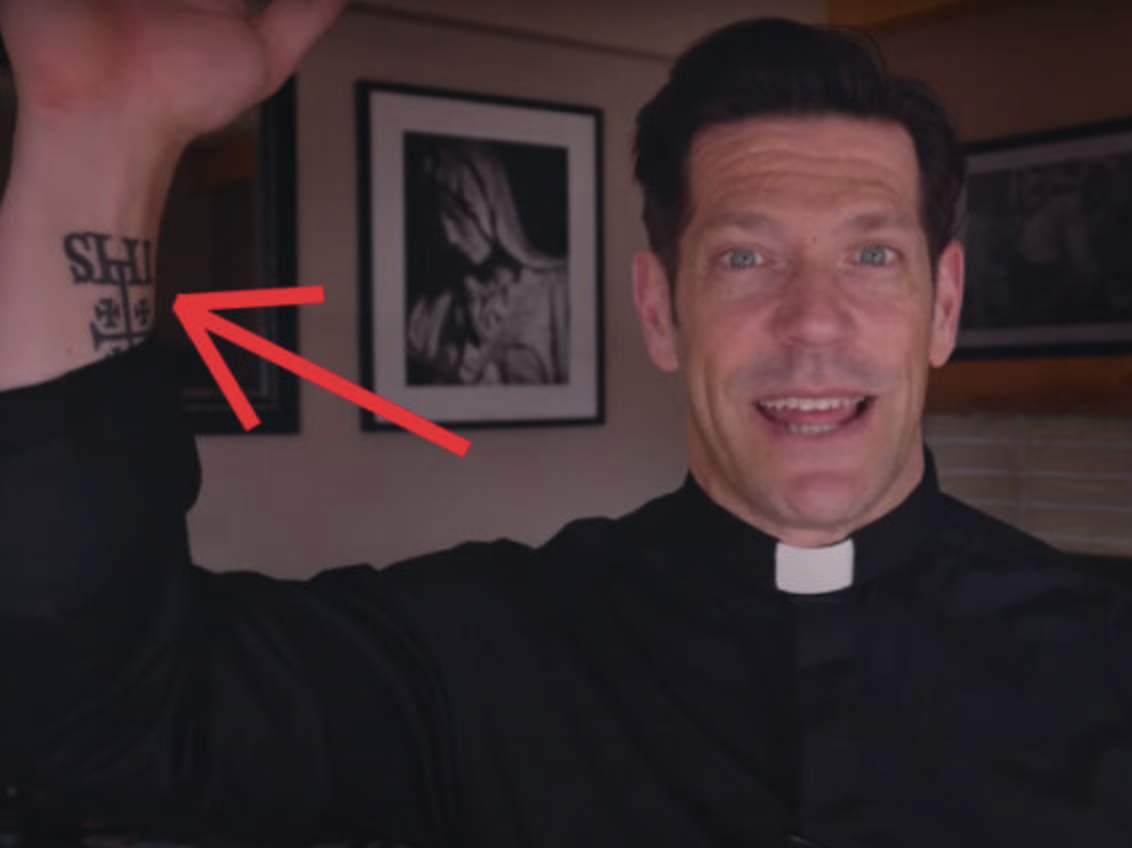
Since it was introduced by the Catholic priest Mike Schmitz, who goes by Father Mike, in January 2021, the little-heralded “The Bible in a Year (With Fr. Mike Schmitz)” has been the most popular Apple religion podcast for a majority of 2021 and 2022 and has even, on two occasions, reached the No. 1 spot among all podcasts on Apple’s platform. The show has been downloaded 350 million times and an average of 750,000 times a day.

That’s credibility, in our tech-defined world — even to Times-people. Let’s continue:

Each 20-to-25-minute installment … features two or three short scriptural readings and a pithy reflection by Father Mike, an affable 47-year-old Midwesterner whose upbeat and self-deprecating manner — not to mention regular-guy good looks — exude strong Ted Lasso vibes. The staggering success of the podcast has helped turn its host, whose day job is as a chaplain at the University of Minnesota Duluth and the director of the youth ministry for the Duluth diocese, into a kind of celebrity. He travels the country giving speeches, and some of his YouTube videos have racked up millions of views.

Now, on to the content that provided that click-bait headline for faithful New York Times readers.


Please respect our Commenting Policy

In praise of the humble news Q&A: God, Lt. Dan and spiritual motivations for public service

In praise of the humble news Q&A: God, Lt. Dan and spiritual motivations for public service

It would be hard to name a form of journalism more “humble” than a simple Q&A piece about a celebrity or someone else who has found his or her way into the news.

The journalist produces a short introduction and then, theoretically, gets out of the way.

Yes, the news organization still controls the narrative — as in asking the questions and then publishing edited versions of the questions and the answers. In practice, readers encounter this bit of journalism-speak: “This conversation has been edited for length and clarity.” (I often advise newsmakers to record these interviews for themselves, allowing them — if necessary — to post transcripts of what went down.)

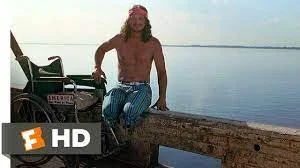
This brings me to a recent Knoxville News Sentinel feature about actor Gary Sinise, whose work with injured veterans and first responders was bringing him back to Knoxville for the 2022 Medal of Honor Celebration. His public-service work on these issues is rather logical because of his famous role as Lieutenant Dan Taylor, an angry wounded warrior who finds his way back to wholeness in the movie “Forest Gump.”

Here at GetReligion, we often ask why so many journalists, when writing about public figures of this kind, tend to leave facts about religion out of the mix. This is especially problematic when the person being profiled has, on numerous occasions, made it clear that faith is one of the defining elements of his or her life. To cut to the chase: It’s harder to do that kind of crude editing when offering what is supposed to be a verbatim transcript of an interview.

There were zero “religious” questions about in this interview, even though Sinise has for years talked openly about his faith. But the humble Q&A format allowed the actor to talk about his life on his own terms. Here is an example of that in a discussion that is at the heart of the feature:

Knox News: You've played Lt. Dan, but also directed a production of "Tracers," a story about wounded Vietnam vets, in the '80s. You've been very involved with veterans in your show career, how has that influenced your work as a philanthropist?


Please respect our Commenting Policy

Shia LeBeouf converts to Catholicism: News coverage -- good and bad -- focuses on redemption

Shia LeBeouf converts to Catholicism: News coverage -- good and bad -- focuses on redemption

Celebrity news coverage and religion couldn’t be more polar opposites most of the time. Coverage of actors, models and others in the entertainment industry often resembles a list for the seven deadly sins.

Every so often, the world of celebrity and faith intersect. When they do, the mainstream press doesn’t know what to do with it, creating tone-deaf coverage similar to sports stories containing what GetReligion has long called religion “ghosts.”

Meanwhile, the religious press — I’m referring to Catholic media in this case — love to jump on this kind of story. This has certainly been the case with actor Shia LaBeouf this summer and public statements regarding his conversion to Catholicism.

It’s a textbook case of the mainstream press largely ignoring such an announcement, while the Catholic press can’t get enough of it. When the mainstream press did cover LaBeouf’s interview, it was in the context of his troubled personal life. For some journalists in the Catholic press, he became a poster child for upholding tradition and the Latin Mass against the more progressive forces in the church.

Depending on who and what you read, LeBeouf’s conversion story is either a farce, something to be celebrated or something to be feared.

LaBeouf, like many in his profession, does interviews primarily to promote specific movies and their careers overall. While promoting his new film “Padre Pio,” which premiered at the Venice International Film Festival, LaBeouf announced that he had converted to Catholicism. The movie is based on the life of Padre Pio, an Italian Franciscan Capuchin friar famous for exhibiting stigmata most of his life. He was canonized as a saint by Pope John Paul II in 2002.

The former “Transformers” star made it known that he was now a practicing Catholic during an Aug. 25 appearance on Bishop Robert Barron’s show “Conversations at the Crossroads.” The YouTube link alone has generated over 1.3 million views.

Here is where the celebrity news coverage got interesting.


Please respect our Commenting Policy

Old debates behind the new headlines: What does the Bible teach about abortion?

Old debates behind the new headlines: What does the Bible teach about abortion?

THE QUESTION:

What does the Bible teach about abortion?

THE RELIGION GUY’S ANSWER:

This question is raised by the assertion that the Bible “says nothing about abortion.”

So writes Melanie Howard, a scripture scholar at Fresno Pacific University, a Mennonite Brethren campus self-defined as both “evangelical and ecumenical” that “embodies Christ-centered values.” Her July 25 article titled “What the Bible actually says about abortion may surprise you” for TheConversation.com was widely distributed to Associated Press and Religion News Service clients under the three outlets’ cooperative agreement.

Later in the article, Howard is more precise, explaining correctly that though abortion was known and practiced in biblical times it “is not directly mentioned” in scripture. True, but there’s more to be said about how the Bible views unborn human lives.

The biblical passage that applies most specifically is Exodus 21:22-23, which involves miscarriage but was extended to the abortion issue by ancient rabbis. It states that if a pregnant woman is hit accidentally “when men fight” and “a miscarriage results,” the person responsible pays a negotiated fine. But “if other damage results” (understood to be the woman’s death), then the “life for life” principle requires the death penalty. (This Memo uses the 1999 JPS translation throughout).

The Jewish Study Bible (2nd edition, 2014) presents the faith’s understanding from ancient times that this passage means “abortion is permitted when necessary to save the mother.” Today, even pro-life conservative Christians mostly agree with that. Due to this passage, Judaism also teaches that “feticide is not murder” because the unborn life is not yet regarded as fully a person. Over the centuries, authoritative “responsa” from rabbis issued varied opinions on allowing abortions in specific circumstances.

Otherwise, one Christian website lists 100 Bible passages said to bear on abortion.


Please respect our Commenting Policy

Podcast: Why are churches closing? There are many forces at work, but doctrine still matters

Podcast: Why are churches closing? There are many forces at work, but doctrine still matters

For years, there was a simple answer to the old question: Why do some churches grow, while others shrink?

You simply bought a copy of the 1972 book “Why Conservative Churches Are Growing: A Study in Sociology of Religion” by the late National Council of Churches leader Dean M. Kelley and that provided information answering lots (but not all) of the big questions. It was crucial that this groundbreaking book was written by a mainline Protestant insider, as opposed to a Southern Baptist or Assemblies of God leader.

Of course, everyone knew that some churches grew because of location, location, location. Also, there were always a few liberal churches that grew because of talented preachers or other strengths. Like I said: Kelley answered lots of church-decline questions, but not all of them.

What about 2022 in post-pandemic church life? For starters, many churches will never be post-pandemic — because many congregations (and maybe denominations or communions) were changed forever and we will see more evidence of that in the next few years.

All of this is an overture to this week’s “Crossroads” podcast (CLICK HERE to tune that in) which focuses on a must-read feature story by Godbeat veteran Bob Smietana. The headline at Religion News Service: “For a small Chicago church, closing down was an act of faith.” This was a personal, heartfelt story for Smietana, since this was a congregation that he once called home.

Like so many pastors around the United States, the Rev. Amanda Olson has kept one eye on the Bible and another on the evolving religious landscape.

She knew change was coming to the church in America.

Yet she hoped her congregation might be spared the worst of it.

“Everyone thinks that churches are going to close,” said Olson, the longtime pastor of Grace Evangelical Covenant Church on Chicago’s North Side. “But nobody thinks it is going to be their church.”


Please respect our Commenting Policy

Do the math: Was Archbishop Rembert Weakland a flawed hero or an erudite heretic?

Do the math: Was Archbishop Rembert Weakland a flawed hero or an erudite heretic?

Writing obituaries about controversial — but to many people beloved — public figures is a difficult task that involves some complicated mathematics.

The death of former Catholic Archbishop Rembert Weakland of Milwaukee is a classic example and, here is the crucial point in this post, this was not a simple matter of “left” vs. “right.”

That said, there is no question that for decades — during the papacies of St. Pope John Paul II and Pope Benedict XVI — Weakland was a liberal Catholic superstar, with the word “liberal” in this case defined in political, cultural and doctrinal terms. But then there were revelations about his ethics and private life.

Thus, it was not surprising to see a double-decker New York Times headline with this kind of content:

Archbishop Rembert Weakland, Critic of Vatican Orthodoxy, Dies at 95

In his long career, he was an intellectual touchstone for progressive Catholic reformers. But he resigned after the disclosure of a long-ago love affair.

The Gray Lady’s obit also included this block of background material:

In the 1980s and ’90s, Archbishop Weakland had been a thorny problem for the Vatican. Addressing issues that troubled many of America’s more than 60 million Catholics, he championed new roles for women; questioned church bans on abortion, birth control and divorce; and challenged the Vatican’s insistence on celibacy for an all-male priesthood.

He also became a leading critic of America’s economic and social policies during the administration of President Ronald Reagan, drafting a landmark 120-page pastoral letter on the economy that called for reordering the nation’s priorities to cut military spending and attack poverty and inequality.

However, let me stress that the Times placed that salute to Weakland AFTER a pretty solid, accurate look at his scandalous fall and other revelations that emerged about his behavior and decisions, for decades, during the Church of Rome’s hellish clergy sexual abuse crisis.

If you want to dig into the hard facts about Weakland’s role in that crisis, click here for crucial material — “Deposition of Archbishop Emeritus Rembert G. Weakland, O.S.B.” — by the independent Bishop Accountability organization. That is an organization that defied a simple “left” or “right” tag.


Please respect our Commenting Policy

Hillbilly Thomists: Dominican brothers singing about the Americana ties that bind

Hillbilly Thomists: Dominican brothers singing about the Americana ties that bind

With its sobering lyrics and a droning country-blues riff, "Holy Ghost Power" by the Hillbilly Thomists is a song with zero chance for Christian radio success.

The jilted protagonist has been "living off of grits, whiskey and Moon Pies." His man cave offers no refuge: "A hundred channels of nothing on the TV at 10. It's like Diet Coke and original sin. … Now it's a zombie town, there's a lot of undead. They wander around looking underfed."

But the chorus offers hope: "He makes a rich man poor; He makes a weak man strong. No more going wrong just to get along. I felt the force of the truth when they pierced His side. I saw the war eagle dive and I could not hide."

It wouldn't shock old-school country fans if this was a Johnny Cash song. But it was written by a banjo-playing Dominican from Georgia who has an Oxford theology doctorate and now leads the Pontifical University of Saint Thomas Aquinas. Writing to the National Reso-Phonic Company, Father Thomas Joseph White said he likes to play this classic blues guitar "in my office looking out at the Roman Forum that's 2,700 years-old."

That makes sense in the Hillbilly Thomists, a "musical collective" of Dominicans, most of whom have Bible-belt roots. The band recently staged a concert in the Grand Ole Opry and, over the past decade, has recorded three albums of music that would sound at home at Appalachian fairs, but not in most church halls.

There's a vital tie linking these songs to the life and work of this band of priests and brothers, said Father Simon Teller (who plays fiddle). Whether singing Appalachian hymns or their own original songs, the Hillbilly Thomists -- dressed in the white habits of their order -- keep returning to images of suffering, sorrow, eternity, hope, grace and redemption.

"We're priests in the Dominican order and that kind of states our vision of the world and the faith and everything we do," he said. "In our day job, we're working a lot with people who are dealing with very concrete situations and have a lot of very concrete questions."

"Holy Ghost Power," for example, is "not sung from the voice of a clergyman. It's sung with the voice of a man who's living a very ordinary life that is going off the rails in a very ordinary way," said Teller. "There's a malaise there and he's unsatisfied by the things of this world."


Please respect our Commenting Policy

Bonus podcast: Clemente Lisi on news about 'good' Catholics, as opposed to 'bad' ones

Bonus podcast: Clemente Lisi on news about 'good' Catholics, as opposed to 'bad' ones

Here is a question from the news, sort of, that cuts to the heart of this bonus GetReligion podcast by Clemente Lisi, taken from his on-air visit this week with Todd Wilken at Lutheran Public Radio (CLICK HERE to tune that in).

If Gov. Ron DeSantis started carrying a rosary, and talking about it quite a bit in the context of his Catholic faith (think President Joe Biden), would journalists in major newsrooms see this as a good thing or a bad thing? Possible answers: “Yes,” “No” and “You need to ask?”

Go ahead, if you want to, and think about it in the context of these recent posts: “Concerning the right-wing rosary attack — was that Atlantic feature really 'news'?” and “Tip for reporters — Don't assume what Catholics believe based on politics or Internet memes.”

In reality, the spark for this podcast came from Religion Dispatches piece the other day, by exevangelical trans scribe Chrissy Stroop, with this headline: “Media fail to acknowledge that 2024 hopeful Ron DeSantis is as Catholic as Biden.” Hold that thought.

The Religion Dispatches piece included commentary on a March 22 GetReligion post with this headline: “As Florida's DeSantis wages culture war, his Catholic faith isn't news — unless it's used to attack him.” By the way, editors there failed to note that Lisi is Catholic, as opposed to evangelical, which seems relevant.

Here is the key passage from the Lisi post:

The two things that lots of people don’t want to read about these days is the coronavirus pandemic and Donald Trump, part of a larger trend regarding news fatigue in this country. Unfortunately, this post will mention both and only because it is about Ron DeSantis.

The Florida governor has been in the news the past few years because of his connection to the former president and a virus that paralyzed the planet for two years. A hero to the right and bogeyman to the left, DeSantis has received plenty of mainstream news coverage — much of it one-sided — because of his use of so-called culture war issues to push legislation.

DeSantis, who is running for re-election and among the favorites to run for the White House in 2024, has been a lightning rod for Democrats and a focus of criticism from the mainstream press. … While the coverage has predictably focused on politics, the religion-news hooks in these stories have largely been ignored — unless they were highlighted to be used against him.


Please respect our Commenting Policy