Catholicism

Great and Holy Pascha in Ukraine: Details matter when war crashes into holiest day of the year

Great and Holy Pascha in Ukraine: Details matter when war crashes into holiest day of the year

Once a copy-desk fanatic, always a copy-desk fanatic. If you ever get caught up in obscure debates about items in the Associated Press Stylebook, then you’re trapped. You see picky style issues all over the place.

This is certainly true on the religion beat. Readers may recall that the AP team recently updated and expanding some of the style bible’s references to religious terms, history, etc. See this recent post and podcast: “Can the AP Stylebook team slow down the creation of new Godbeat 'F-bombs'?

This brings me to the most important holy day on the Eastern Orthodox Christian calendar — it’s called Pascha and you may have heard that the ancient churches of the East celebrate it according to the older Julian calendar. It’s complicated, but there are times when East is East and West is West.

Pascha is certainly one of those times. OrthodoxWiki notes:

Pascha is a transliteration of the Greek word, which is itself a transliteration of the Aramaic pascha, from the Hebrew pesach meaning Passover. A minority of English-speaking Orthodox prefer the English word "Pasch."

Here is the note that I’d like the AP style pros to think about. It is also accurate to say that this holy day is, in the West, called “Easter.” Thus, we frequently see the term “Orthodox Easter” in the mainstream press. In fact, that is pretty much the only language that we see in news reports about this holy day.

Here me say this: As a journalist who is an Orthodox Christian (and a former copy-desk guy). I get it. I know that “Orthodox Easter” is a quick way to save some ink that journalists would have to use to offer an explanation of, well, Pascha.

But the word “Pascha” is real and it’s ancient and it has great meaning to the second largest Christian communion on the Planet Earth. If you are writing about Orthodox believers at this time of the year, why not use both terms in the story? Why avoid THE WORD. (Oh, and the name of our eucharistic rite is the “Divine Liturgy,” not “Mass.”)

This is an important issue, at the moment, because you have a war going on (whatever Vladimir Putin wants to call it) in the season of Pascha between Russia and Ukraine — two lands with centuries of shared history rooted in Orthodox Christianity.
Please respect our Commenting Policy

Father Joseph Ratzinger's sobering 1969 vision of the future and the new German reality

Father Joseph Ratzinger's sobering 1969 vision of the future and the new German reality

The 1960s were turbulent times and, in Europe, Catholics faced storms of radical change that left many weary or even cynical.

In 1969, one of Germany's rising theologians -- a liberal priest at Vatican II who then became a conservative -- was asked what he saw in the future.

"What St. Augustine said is still true -- man is an abyss; what will rise out of these depths, no one can see in advance," said Father Joseph Ratzinger, on German radio. "Whoever believes that the church is not only determined by the abyss that is man, but reaches down into the greater, infinite abyss that is God, will be the first to hesitate with his predictions."

Ratzinger's words grew in importance in 1977 when he became Archbishop of Munich and quickly became a cardinal. Then Pope John Paul II made him prefect of the Vatican's powerful Congregation for the Doctrine of the Faith, where his orthodoxy led liberals to call him "God's Rottweiler." In 2005, he became Pope Benedict XVI.

Catholics continue to ponder his 1969 words: "From the crisis of today the church of tomorrow will emerge -- a church that has lost much. … As the number of her adherents diminishes, so it will lose many of her social privileges. In contrast to an earlier age, it will be seen much more as a voluntary society, entered only by free decision. As a small society, it will make much bigger demands on the initiative of her individual members."

The future pope predicted a "crystallization" process creating a "more spiritual church, not presuming upon a political mandate, flirting as little with the left as with the right. … It will make her poor and cause her to become the church of the meek."

The retired pope celebrated his 95th birthday on April 16th -- Holy Saturday. During an earlier meeting with Jesuits, Pope Francis called his predecessor "a prophet" and cited Benedict's predictions of a "poorer" and "more spiritual" church..


Please respect our Commenting Policy

Could Hispanic-Americans, Protestants especially, shape the '22 and '24 elections?

Could Hispanic-Americans, Protestants especially, shape the '22 and '24 elections?

Something is afoot when two New York Times columnists, Charles Blow on the left and Ross Douthat on the right, both make the identical observation in Monday's edition.

Blow, who fears a "Biden blood bath" in the November midterms, underscored that Quinnipiac polling shows President Joe Biden's approval rating is even lower among Hispanics than whites, partly because "Hispanics hew conservative on some social issues." Douthat wrote that to win, Democrats need to do better with two groups from the Barack Obama coalition that have drifted rightward since, "culturally conservative Latinos and working class whites."

The 2020 election was a landmark for this community with an estimated 16.6 million voters, a record proportion of the electorate. There are a number of good analyses of the 2020 Hispanic vote online to consider. A Bloomberg piece reminds us "the Latinos of the United States have no single identity, no shared world view."

This article notes that Donald Trump won 53.5% in majority Hispanic precincts in Miami-Dade County on the way to carrying all-important Florida with its 29 electoral votes. Understandable aversion to any hint of "socialism" by those from Cuba, as well as Nicaragua and Venezuela, no doubt helped. In Arizona's populous Maricopa County, Trump improved his showing over 2016 in 61% of Hispanic-majority precincts. Exit polling said Trump improved over 2016 in Nevada by 8%. Other reports cited similar shifts in southern border areas of Texas. In 2004, George W. Bush proved Republicans can obtain a handsome number of Hispanic-Americans.

GetReligion's own tmatt has more than once proposed that the news media have neglected the religion aspect of recent Republican inroads and, in particular the growth of Hispanic Protestant churches. This is a big religion beat story in its own right. Or it could provide a strategic political analysis leading up to November 8 focusing either on politics nationally or on a specific regional audience.

The essential starting point for background is religion data from Pew Research Center's major survey of 5,103 U.S. Hispanic adults, in a report compiled in 2014.


Please respect our Commenting Policy

Some 'Father Stu' coverage misses real-life redemptive message while shooting at actors

Some 'Father Stu' coverage misses real-life redemptive message while shooting at actors

Easter weekend has become secular enough over the past few decades where many Americans use the holiday weekend to go to the movies.

It’s a trend that started with the summer blockbuster during the Fourth of July holiday and subsequently by Hollywood with premieres on Christmas Day. While COVID-19 put some of that on hold as audiences streamed movies at home, it seems to be making a comeback with the easing of the pandemic.

The gently gay-friendly Fantastic Beasts: The Secret of Dumbledore won the box office this past weekend, while the religiously-inspired film Father Stu finished a respectable fifth. It wasn’t a bad finish for a film that doesn’t feature a Marvel superhero and may find an audience in Western-rite Christians who were otherwise at church and with family this past Sunday.

Of course, this is a film that features a superhero of a different kind.

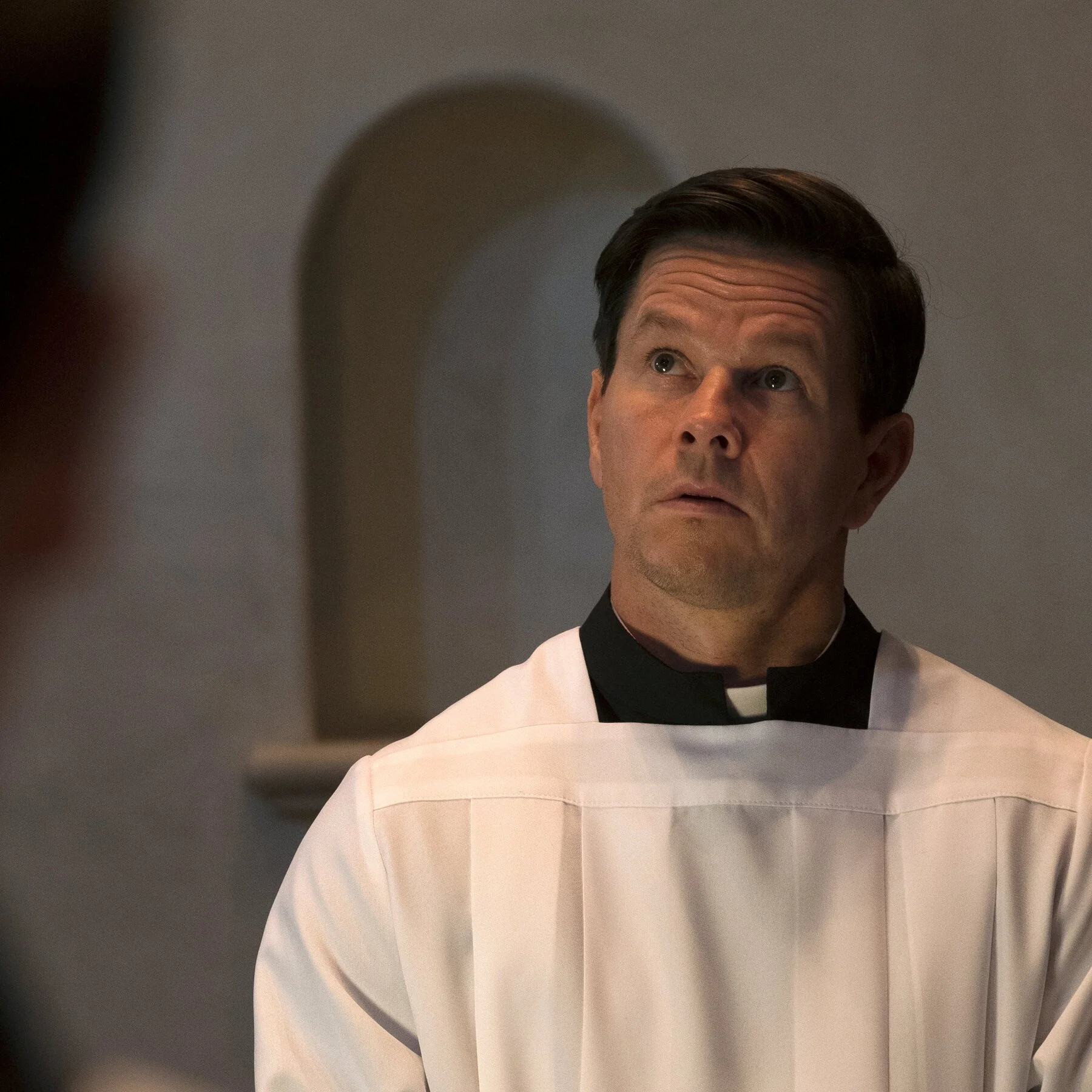
Father Stu is the true story of Stuart Long, an amateur boxer who eventually moves to Los Angeles in order to pursue an acting career and along that journey he becomes a Catholic priest. That’s the simplest way to put it without giving away too much of the plot for those who are planning to see it in the coming days.

The two-hour film, featuring Mark Wahlberg as the main character, gets a Rotten Tomatoes score of 45% based on 75 reviews by critics, but a 95% from verified users from the general audience. It shouldn’t surprise me that there is a divergence between media-market critics and the audience when it comes to movies that glorify faith. I found the story compelling, despite the vulgar language, but it is worth seeing.

I get that reviewers are entitled to their opinions. After all, that’s the job of a critic. But the coverage around the film, however, has been framed in a certain way, offering up lopsided and negative takes among many mainstream news sites.

This isn’t a traditional news-coverage question, but it’s appropriate to ask: What’s going on here?


Please respect our Commenting Policy

Plug-In: Reflections on a reporting trip to a Slavic congregation in Alaska

Plug-In: Reflections on a reporting trip to a Slavic congregation in Alaska

On my first reporting trip to Alaska several years ago, I saw a moose by the highway and stopped to take a picture.

On a quick visit to the Last Frontier this past week, the only moose I personally encountered was the one that greeted me at the airport. I didn’t spot any bears either, except for the two behind glass in my hotel lobby.

Still, I enjoyed the breathtaking scenery — who doesn’t love snow-capped mountains? — and the opportunity to delve into two compelling religion stories firsthand.

My piece for ReligionUnplugged.com on an Anchorage church with members from Ukraine, Russia and other Slavic nations was published this morning. It focuses on that Russian-speaking congregation’s work to help Ukrainians fleeing their homes.

For The Christian Chronicle, I covered the first Alaska State Lectureship in three years. COVID-19 had prompted the cancellation of the previous two annual lectureships. Members of the state’s scattered-but-interconnected Churches of Christ were elated to be back together.

My favorite interview was with a couple in their 80s who live 26 miles above the Arctic Circle. Ron and Zona Hogan use a phone translation app to communicate in Spanish with newcomers from the Dominican Republic who attend their home church.

It’s good stuff. I hope you’ll check it out.

Power up: the week’s best reads

1. As Ramadan, Passover and Easter converge, an interfaith trolley rolls out: “The rare alignment of major Christian, Muslim and Jewish holidays is fueling a flurry of interfaith celebrations across the nation this month,” Mya Jaradat reports for the Deseret News.


Please respect our Commenting Policy

Just in time for Easter media and academic discussions: Did Jesus Exist?

Just in time for Easter media and academic discussions: Did Jesus Exist?

THE QUESTION:

Did Jesus Exist?

THE RELIGION GUY'S ANSWER:

Yes.

It would be the ultimate blow to the Christian religion if Jesus, and with him the entirety of the New Testament, is totally fictional.

However, the strong consensus among historians, including non-Christians and skeptics, is that, yes. Jesus was an actual person of the 1st Century (Anno Domini!!). Yet an Ipsos poll for the Episcopal Church, released last month, showed only 76% of Americans "believe in the historical existence" of Jesus, with 89% of self-identified Christians, 43% for adherents of other religions and 38% among the non-religious.

Among scholars, across the years certain "mythicists" have contended that he never existed.

University of North Carolina Professor Bart Ehrman, author of "Did Jesus Exist?" (2012) and rather skeptical himself, knows of only one such thinker among thousands of scholars with Ph.D. degrees who are working in the New Testament field. He's Robert Price, a onetime Baptist minister, member of the radical "Jesus Seminar," and author of "The Historical Bejeezus" who teaches at Johnnie Coleman Theological Seminary, a "New Thought" school.

Other mythicists have included Frank Zindler, a science educator, Jesus Seminar participant, and an editor with American Atheists. In 1970, Doubleday published an eccentric book by Britain's John M. Allegro, who thought there never was a Jesus and Christianity originated as a drug cult. John Remsburg, a 19th Century superintendent of public instruction for Kansas, backed mythicism by listing 42 ancient authors never wrote about Jesus. (A newsman like The Guy would figure that's what you'd expect with an itinerant teacher executed as a criminal in a backwater of the Roman Empire.)

But Remsburg raised an interesting question. Let's say for the sake of argument we totally exclude the New Testament as evidence (which historians would never do in judging the existence of other figures from ancient times). Do we have any other relevant documentation?


Please respect our Commenting Policy

Five faith facts about the life of Ketanji Brown Jackson, the first Black woman at SCOTUS

Five faith facts about the life of Ketanji Brown Jackson, the first Black woman at SCOTUS

Faith. It’s an important part of Ketanji Brown Jackson’s story.

Here are five religion facts about the 51-year-old judge who on Thursday became the first Black woman confirmed to the U.S. Supreme Court:

1. Jackson will be “the first-ever nondenominational Supreme Court justice,” as Christianity Today’s Kate Shellnutt points out.

2. She’ll become the second current Protestant on the court (along with Neil Gorsuch), joining six Catholics (Samuel Alito, Amy Coney Barrett, Brett Kavanaugh, John Roberts, Sonia Sotomayor and Clarence Thomas) and one Jewish justice (Elena Kagan), according to Christianity Today’s Megan Fowler.

But Religion News Service’s Jack Jenkins tweets that Jackson will be “the only current Supreme Court justice who publicly IDsas Protestant.” “Gorsuch attended an Episcopal church before joining SCOTUS,” Jenkins explains, “but grew up Catholic and how he personally IDs is unclear.”

3. Jackson “has put her religious faith front, center — and vague,” notes The Associated Press’ Peter Smith. “She’s spoken strongly of the role of her faith in her life and career but hasn’t gotten into the specifics of that commitment.”

RNS’ Adelle Banks offers more details on Jackson’s past statements about her faith in God.

4. At a hearing last month, Jackson was pressed on her faith by Sen. Lindsey Graham, a Republican from South Carolina, ReligionUnplugged.com’s Hamil R. Harris reports.

The Deseret News’ Kelsey Dallas recounts this exchange between Graham and Jackson:

“On a scale of 1 to 10, how faithful would you say you are in terms of religion? I go to church probably three times a year so that speaks poorly of me. Do you attend church regularly?,” Graham said.

Jackson declined to give a rating, noting that she worried about the message doing so would send to Americans watching at home.


Please respect our Commenting Policy

Bishops meet in secret about 'culture war' stuff: What does this mean for Catholics?

Bishops meet in secret about 'culture war' stuff: What does this mean for Catholics?

While Pope Francis was presiding over a ceremony at the Vatican to consecrate Ukraine and Russia on March 25, a group of high-ranking American bishops met in Chicago.

That could be a news story.

The gathering at Loyola University — entitled “Pope Francis, Vatican II and the Way Forward” — was co-sponsored by Boston College’s Boisi Center for Religion and American Public Life and Fordham’s Center on Religion and Culture. Its aim was, according to what news coverage there was, to create a dialogue between theologians and bishops.

“We want to show that opposition to Pope Francis — not universally, but to a large extent — is opposition to Vatican II,” said Father Mark Massa, a priest and historian of the American Catholic Church, to describe the goal of the meeting. “Francis is trying to cash the check that Vatican II wrote — synodality was the big thing.”

Synodality is an invitation to build deeper communion within the body of Christ, according to the Vatican, and part of a process the pope has embarked on this year to create dialogue between Catholic believers and clergy. Or a certain type of clergy.

In other words, moving forward into the spirit of Vatican II. That is a big news story.

The two-day meeting, by invitation only, didn’t appear to fit the description of synodality. Rather, as Massa said, it was meant to see “how we can move the American church away from these culture wars divided between conservatives and liberals … to a united position where it’s possible to be on a spectrum of positions and still be considered a good Catholic and not be called names by people who disagree with you.”

Critics in the conservative Catholic press read that statement to mean how the 70 prelates in attendance — with help from progressives within the American church in the form of academics, journalists and theologians — could bolster this pope’s agenda. Those on the Catholic left in the National Catholic Reporter billed it as a way bishops “can better support the agenda of Pope Francis.”

I reported at the end of 2021 that this year would “be the one where the battle between this pontiff and doctrinal traditionalists intensifies even further.” The culture war that is dominating our politics at the moment has spilled over into our religious institutions and the Catholic church’s hierarchy.


Please respect our Commenting Policy

What do the latest statistics really tell us about the worldwide Catholic Church?

What do the latest statistics really tell us about the worldwide Catholic Church?

THE QUESTION:

What do the latest statistics tell us about the worldwide Catholic Church?

THE RELIGION GUY'S ANSWER:

The Vatican's Central Office of Church Statistics issued a summary report in February that says as of December 31, 2020, Catholicism had 1.36 billion adherents worldwide. That equals an impressive 17.7% of the world's people and keeps pace with over-all population growth. The church's gain of 16 million members over 2019 exceeds the combined populations of New York City, Los Angeles and Chicago.

The Guy would note, however, that the church counts as members all baptized infants, who as adults will not necessarily be active parishioners.

John L. Allen Jr., the editor of CruxNow.com and a go-to guy on Catholic trends, writes that these numbers counter western perceptions that "the church is shrinking" in the wake of sexual abuse scandals and other problems. Also see this tmatt post here at GetReligion on this topic: “Thinking about world Christianity, as Crux digs deep into many overlooked Catholic details.”

But Catholic expansion is centered in Africa and Asia, not western nations, and the church faces a personnel problem. The Vatican office admits that yet again there's an "obvious imbalance" in the geographical distribution of the slowly decreasing ranks of priests, currently totaling 410,219 worldwide. There's also declining enrollment in seminaries, now totaling just under 112,000, with only Africa showing an increase. Remarkably, Africa plus Asia produce 60% of the globe's seminary students. Here is another tmatt post on that trend: “Thinking about the Catholic vocations 'crisis': The Pillar asks if this is truly a global problem.

Let's drill down on the numbers.


Please respect our Commenting Policy