Catholicism

Naw! Nobody in the Title IX wars is asking LGBTQ questions about religious schools

Naw! Nobody in the Title IX wars is asking LGBTQ questions about religious schools

Every now and then, I finish reading a major-media news story and I think: Wait a minute. There’s a massive hole here (and one that’s going to produce all kinds of news headlines). Didn’t anyone notice?

In this case, we are talking about another story involving a head-on collision between the First Amendment and the evolving doctrines of the Sexual Revolution. The battleground is the hyper-tense world of higher education. The Washington Post headline, in this case: “New Title IX rules set to assert rights of transgender students.”

We will get to the overture in a moment. But can you spot the “hole” that is sort-of mentioned in this background paragraph which is buried way down in the Post report?

Title IX is a 1972 law that bars discrimination on the basis of sex in any educational program or activity that receives federal money. Schools found in violation risk losing federal aid. Advocates have long held that this definition rightfully includes discrimination on the basis of sexual orientation or gender identity.

OK. Does “any educational program or activity that receives federal money” include student-loan programs?

If so, maybe this story should have at least mentioned the 7,000 or so religious colleges and universities in this land? I mean, is there any chance that LGBTQ activists are going to challenge the religious liberty claims of these schools, many of which are explicitly doctrine-defined voluntary associations?

With that in mind, read the top of this feature at The Conversation: “What is the religious exemption to Title IX and what’s at stake in LGBTQ students’ legal challenge?”

While federal law shields most U.S. students from gender and sexual orientation discrimination, an estimated 100,000 LGBTQ students at religious institutions do not have the same protections.

Under a religious exemption provision, scores of colleges and universities can – and do – discriminate on the basis of someone’s sexual orientation, gender identity or gender expression.

A class action lawsuit now challenges that discrimination.


Please respect our Commenting Policy

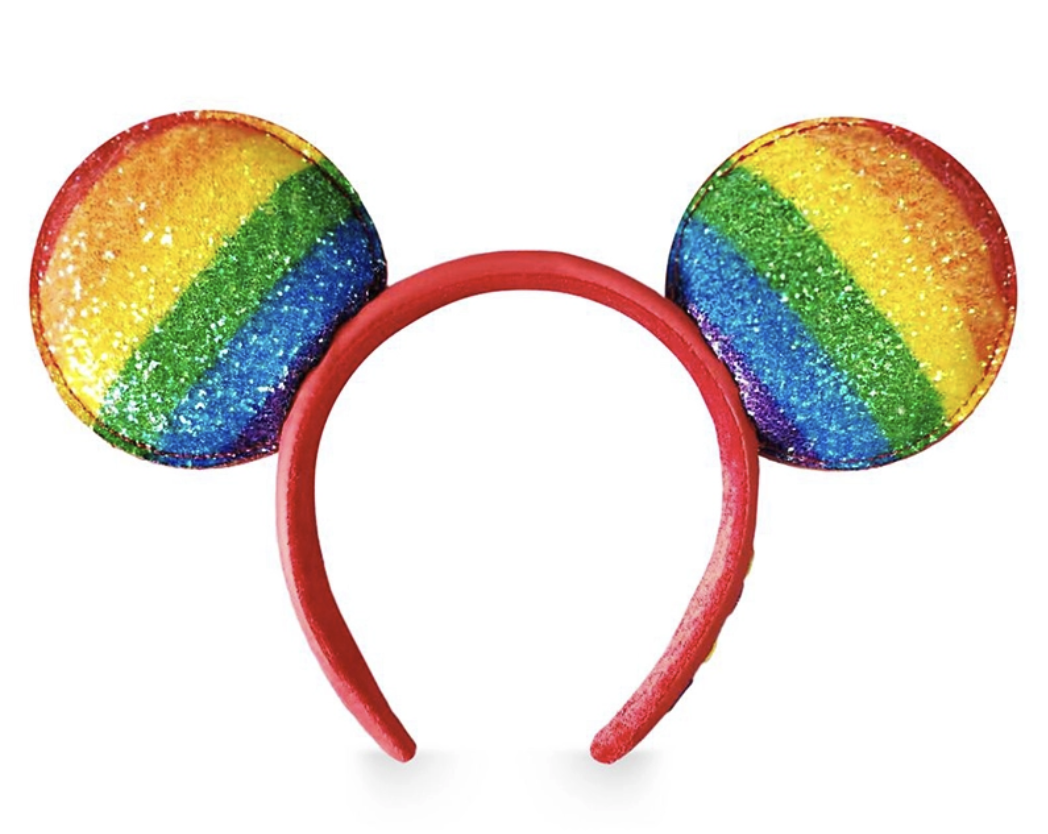
Press quiet as a mouse when it comes to Catholic angles in this Disney-DeSantis fight

Press quiet as a mouse when it comes to Catholic angles in this Disney-DeSantis fight

I was never nuts for Disney. I’ve never been to one of their a theme park, either as a child or now as a parent of two children, and never indulged in their movies much over my lifetime. I’ll freely admit that puts me in the minority, both in the United States and around the world, when it comes to Disney consumption.

I was, however, once a Disney employee. No, I didn’t work in one of their stores. Instead, I was employed at ABC News in New York, where I worked for their digital unit running the website and other internet assets such as social media. It was a great place to work — although not “The Happiest Place On Earth” as the official tagline for Disneyland states. It was, after all, a newsroom — but one of the perks was free tickets each year to their amusement parks.

I say all this in the context of the ongoing feud regarding the Florida “Parental Rights in Education” bill, which is now law after Gov. Ron DeSantis signed it. This is the much-discussed bill that bans classroom instruction on sexual orientation or gender identity from kindergarten through third grade “in a manner that is not age appropriate or developmentally appropriate for students in accordance with state standards.”

The law continues to get media coverage for two reasons. First, because of Disney’s involvement and second due to the larger notion that DeSantis, a potential 2024 presidential candidate, is — everyone chant the media mantra — “engaging in a culture war.” This remains a political story, a business story and a pop culture story.

Is this also an important religion story? It certainly is (tmatt takes on this very topic in GetReligion’s most recent podcast).

My most recent GetReligion post focused on the news media’s largely ignoring the Republican DeSantis’ Catholic faith in regard to the widespread news coverage around the bill, which opponents effectively labeled “Don’t Say Gay” even though the bill never used those words.

At the same time, the news coverage for conservative press around the legislation has centered much more on Disney’s late-in-the-game activism in opposing it. The coverage among mainstream and progressive news sites continues to center on that activist “Don’t Say Gay” mantra.


Please respect our Commenting Policy

Thinking about the Catholic vocations 'crisis': The Pillar asks if this is truly a global problem

Thinking about the Catholic vocations 'crisis': The Pillar asks if this is truly a global problem

When journalists are covering a truly global religion — take the Catholic Church, for example — it really helps to pay attention to the fine details in statistics.

What is true in America may not be true in Africa. What’s true in the shrinking churches of Western Europe may not be true, literally, anywhere else.

I brought this up in a recent think piece — “Thinking about world Christianity, as Crux digs deep into many overlooked Catholic details” — pointing readers to an interesting Crux essay by John L. Allen, Jr. (of course). Here’s a key bite of commentary from Allen:

… Catholicism added 16 million new members in 2020, the latest year for which statistics are available. Granted, that meant the church did no more than keep pace with overall global population growth, but it’s still significant at a time when most western perceptions are that the church is shrinking due to the fallout from the sexual abuse crisis, various scandals at senior levels, bitter political infighting, increasing irrelevance to younger generations, and any number of other alleged failures.

For sure, if you live in western Europe or in some parts of the United States, where parishes are closing or consolidating and Mass attendance seems in free fall, those perceptions are understandable. Yet the reality is that on a global level, Catholicism enjoyed the greatest expansion in its history over the past century, more than tripling from 267 million in 1900 to 1.045 billion in 2000 and 1.36 billion today.

Basically, Catholicism is growing wherever it’s churches, to be blunt, have plenty of children, converts and clergy.


Please respect our Commenting Policy

Podcast: Concerning the many religion-beat stories linked to that 'Don't Say Gay' bill

Podcast: Concerning the many religion-beat stories linked to that 'Don't Say Gay' bill

Let’s talk news-business realities for a moment.

If you do an online search for the following terms — “Parental Rights in Education,” Florida — you will get about 43,000 hits on Google News (as of Thursday afternoon).

Then again, if you run a search for these terms — “Don’t Say Gay,” Florida — you will get 6,820,000 hits on Google News and 24,100,000 hits on Google (period).

That’s a pretty big difference. What’s going on?

On this week’s “Crossroads” podcast (CLICK HERE to tune that in) I argued that the real name of this bill sounded way, way too much like a whatever it was that parents in Virginia wanted during that recent election that left the Democratic Party establishment in shock.

As it turns out, a new Public Opinion Strategies poll (.pdf here) found that registered voters — a majority of Democrats, even — liked the contents of this controversial Florida bill when shown its key, defining language:

“Classroom instruction by school personnel or third parties on sexual orientation or gender identity may not occur in Kindergarten through third grade or in a manner that is not age appropriate or developmentally appropriate for students in accordance with state standards.”

Clearly, “Don’t Say Gay” worked much better for political activists who wanted to keep the focus on LGBTQ-era sexual education for prepubescent children. The whole idea was that way too many parents are burdened with religious, moral and cultural beliefs that were on the wrong side of history. Thus, “parental rights” and classroom transparency are not helpful concepts.

What does this have to do with the many religion-angle stories that journalists could be chasing linked to this legislation and variations on this bill that are sure to show up in other states?


Please respect our Commenting Policy

Along the religion beat: Should 'mainstream media' pundits take sides on church disputes?

Along the religion beat: Should 'mainstream media' pundits take sides on church disputes?

The acerbic anti-Donald Trump conservative Jonah Goldberg says that — at National Review and currently TheDispatch.com — he has spent the past 25 years complaining about "liberal media bias."

But, he wrote last week, much has changed during that time with the breakup of America's onetime "hegemony" of three broadcast networks, the newsmagazines and a few influential newspapers. Now we have devoutly conservative news-talk radio and cable TV while infinite opinions of commentary and information overwhelm the Internet.

Then there's rising distrust in the news media, which The Religion Guy believes is a serious threat to healthy democracy. A Pew Research Center survey, reported last August, found that since 2016 the percentage of Americans with at least "some" trust in the national news media has slumped from 76% down to 58%, and among Trump-era Republicans and Republican leaners from 70% down to 35%.

Another simultaneous change, Goldberg said, is "the blurring of reporting with partisan punditry, particularly on cable news and social media." The Guy would contend that this distrust expands when partisan opinion seeps into or overshadows supposed hard news. (This is the spirit of our media age, since, as tmatt often observes here at GetReligion, opinion is cheap and actual reporting is expensive).

That brings us to religion coverage in the print media and the Internet (broadcasters and cable generally slight the beat) and a rather idiosyncratic must-read complaint about The New York Times from Hillsdale College historian D.G. Hart, posted at Real Clear Religion the same day as Goldberg's article. In case you missed it, the text is here.

Hart thinks the Times "rightly" figures that explicitly religious periodicals can handle faith news, which means he does not read the paper that closely (though it can be criticized for sins of omission). The article appears to suggest the Times and other outlets should downplay or eliminate attempts to do religion-beat reporting -- which would remove the very reason GetReligion exists.


Please respect our Commenting Policy

Updates in the journalism style bible: Appropriate 'cult' advice and other tweaks

Updates in the journalism style bible: Appropriate 'cult' advice and other tweaks

If you know anything about the nuts and bolts of reporting and editing, then you know that the Associated Press Stylebook is the bible — that’s with a lower-case “b” — of journalism.

It’s also a great place to chart tensions inside the news business. Consider, for example, the decades of debate about “pro-life” and “pro-choice,” as opposed to “anti-abortion” and “pro-abortion rights.” Will the next major revision of the AP manual need to include an updated definition for the suddenly controversial word “woman”?

Our GetReligion patriarch, Richard Ostling, recently sent me an interestingly list of some of the religion-beat terms in the latest revisions to this AP bible. He served as a consultant on that revision project and, thus, doesn’t want to make any comments about the results. Here is one of the updates that is sure to lead to newsroom discussions:

cult (new)

A loaded term to be used with caution.

Yes, indeed — proceed with caution. I totally agree that this is a “loaded term” that journalists should avoid whenever possible.

The problem, however, is that this is a term that religious leaders, activists and even scholars are going to use every now and then and it will be hard to avoid the term when it is used in important direct quotations. Thus, editors need to know the various ways that informed people use the word — the key is sociology vs. theology — so that these loaded quotes can be placed in context for readers. Then there are activists of various kinds who throw this term around like a verbal hand grenade.

Readers can tell, with a quick glance at the venerable Merriam-Webster dictionary, that this is a complicated subject. Here are several of the definitions:

cult

noun, often attributive …

Definition of cult

1: a religion regarded as unorthodox or spurious (see SPURIOUS sense 2) also : its body of adherents


Please respect our Commenting Policy

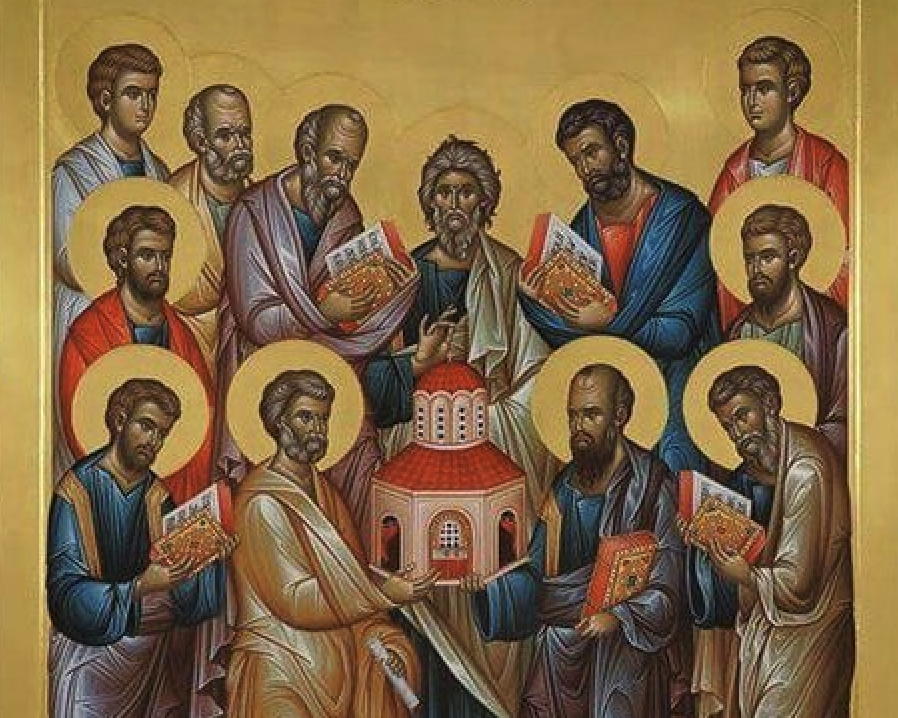
This is still a question that scholars debate: Why did early Christianity rise so rapidly?

This is still a question that scholars debate: Why did early Christianity rise so rapidly?

THE QUESTION:

Why did early Christianity rise so rapidly?

THE RELIGION GUY'S ANSWER:

New religions appear all the time, nowhere more than in the United States, but very few ever achieve prominence and permanence. Christianity is a rare and dramatic case of a faith that triumphed. The tale is told in Rodney Stark's classic "The Rise of Christianity" with this descriptive subtitle in the 1997 paperback edition (still on sale): "How the Obscure, Marginal Jesus Movement Became the Dominant Religious Force in the Western World in a Few Centuries."

Sociologist Stark is now retired as co-director of Baylor University's esteemed Institute for Studies of Religion. The book treats its subject as a puzzle to be explained by objective social science scholarship and does not consider whether Christian teachings are true.

Though we lack reliable census data, Stark's best estimate was that only 7,530 Christians existed at the close of the apostolic era in A.D. 100 [which conflicts with Acts 2:41]. He said the total exceeded 1 million by 250 when systemic persecution by the Roman empire was reaching its peak. The Edict of Milan in 313 allowed the faith to exist without harassment, and as of 350 there were 33.9 million Christians. Stark figured that was a 56.5% majority of the population. Inevitably, by 380 this became the empire's official creed.

What happened? Stark's scenario drew upon more than 300 works plus his own original research, and made heavy use of economic market theory. Let's skim some of what he concluded.

Stark thought Christianity's key advantages included the spread of Greek-speaking Jews across the Greco-Roman world who provided a base to build upon, the failures of rival paganism, attractive charitable efforts (especially during ruinous epidemics), innovative respect for women, high birth rates, good organization, close fellowship, demanding and respected moral standards, the inspiring example of martyrs willing to die rather than renounce their faith and positive doctrines that were attractive to new city dwellers coping with chaos and squalor.


Please respect our Commenting Policy

No longer a Ukraine news sidebar: Pope Francis asks if combat can ever be moral

No longer a Ukraine news sidebar: Pope Francis asks if combat can ever be moral

As Russia's invasion sought to erase Ukraine from the map, Moscow's Orthodox Patriarch Kirill, a key ally of dictator Vladimir Putin, met via video last week with Pope Francis.

The Religion Guy had planned to propose a wartime sidebar about the theological justifications for combat that could run any time, but suddenly the theme has gained timely mainbar status.

That's because an official Vatican release reported that Francis stated this at the meeting: "There was a time, even in our churches, when people spoke of a holy war or just war. Today we cannot speak in this manner. A Christian awareness of the importance of peace has developed. Wars are always unjust, since it is the people of God who pay."

Francis' 2020 encyclical Fratelli Tutti declared similarly that "it is very difficult nowadays to invoke the rational criteria elaborated in earlier centuries to speak of the possibility of a 'just war'."

Francis deplores the bloodshed in Ukraine, but did not publicly castigate Putin or Russia by name, presumably in case a neutral papacy could help negotiate an end to the conflict. (That argument is used to explain Pope Pius XII's silence during Nazi Germany's Holocaust against European Jewry.)

Journalists can, at this point, ask several logical questions:

* Is Francis declaring dead the church's "just war" teaching, first formulated in the 5th Century by St. Augustine?

* Should 1.36 billion Catholics shift to pacifism, which excludes support for all wars?

* Is Ukraine wrong to take up arms to defend its existence as a sovereign and democratic nation?

Nearly all Christian commentators agree that Russia's aggression is evil and Ukraine's military defense against it is justified.


Please respect our Commenting Policy

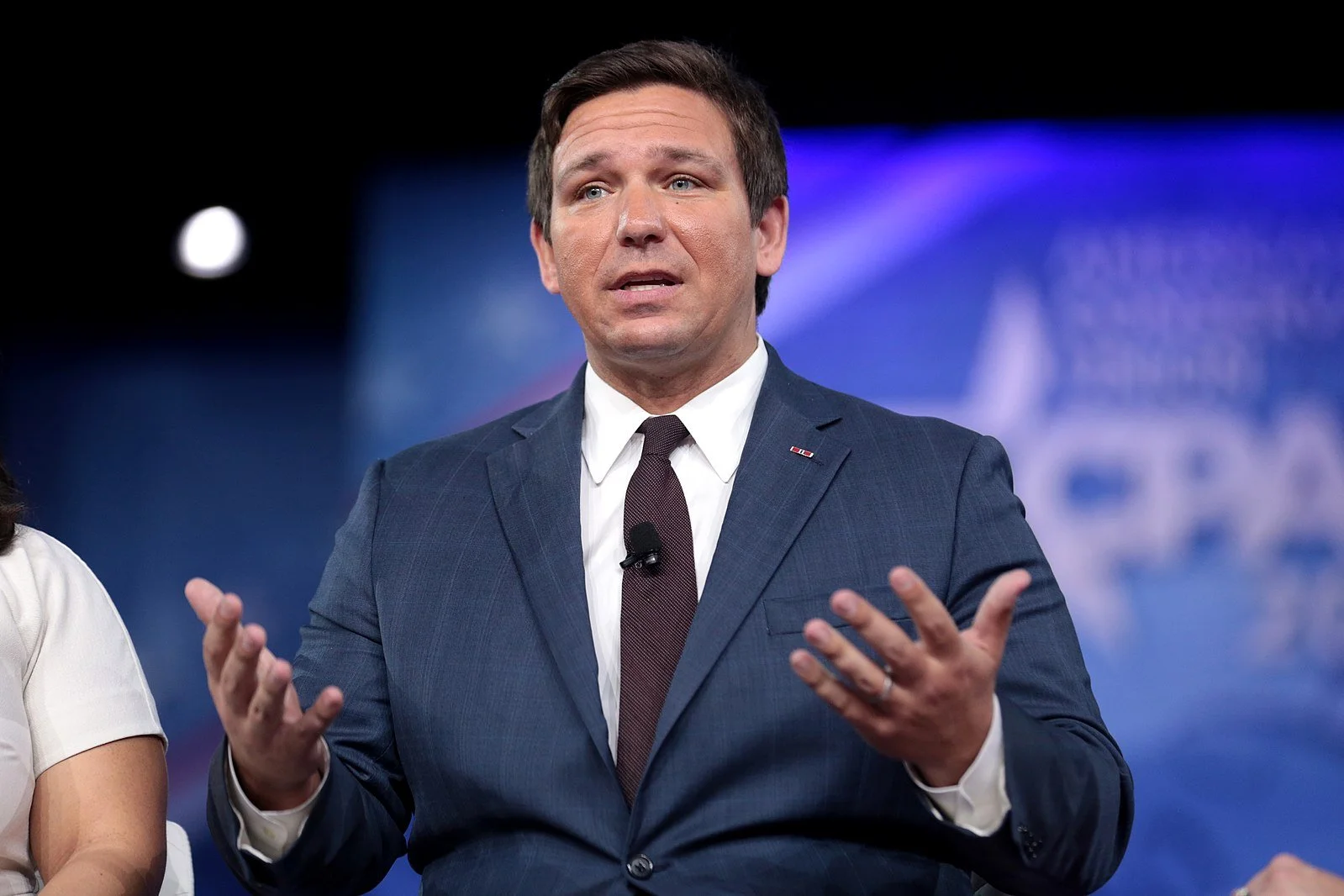
As Florida's DeSantis wages culture war, his Catholic faith isn't news -- unless it's used to attack him

As Florida's DeSantis wages culture war, his Catholic faith isn't news -- unless it's used to attack him

The two things that lots of people don’t want to read about these days is the coronavirus pandemic and Donald Trump, part of a larger trend regarding news fatigue in this country. Unfortunately, this post will mention both and only because it is about Ron DeSantis.

The Florida governor has been in the news the past few years because of his connection to the former president and a virus that paralyzed the planet for two years. A hero to the right and bogeyman to the left, DeSantis has received plenty of mainstream news coverage — much of it one-sided — because of his use of so-called culture war issues to push legislation.

DeSantis, who is running for re-election and among the favorites to run for the White House in 2024, has been a lightning rod for Democrats and a focus of criticism from the mainstream press for the last two years. His actions regarding COVID-19 were at odds with how blue states handled the virus, often catapulting him to national attention.

While the coverage has predictably focused on politics, the religion-news hooks in these stories have largely been ignored — unless they were highlighted to be used against him. The bottom line: DeSantis is not the kind of Catholic who draws cheers from journalists who admire progressive Catholics.

Those angles were once again set aside by the press coverage of the recent debate about the state’s sex-education bill.

As political conservatives and liberals battled it out over the merits of this bill, the press ignored DeSantis’ Catholic faith throughout the past few weeks of coverage.

The legislation — which the press insisted on calling the “Don’t Say Gay” bill — was, as the Associated Press recently noted, the following:

Since its inception, the measure has drawn intense opposition from LGBTQ advocates, students, national Democrats, the White House and the entertainment industry, amid increased attention on Florida as Republicans push culture war legislation and DeSantis ascends in the GOP as a potential 2024 presidential candidate.

There’s a lot to unpack in that paragraph, but mostly for what’s not mentioned.


Please respect our Commenting Policy