Catholicism

Podcast: Strategic cardinal floats trial balloon, saying Catholic LGBTQ doctrines are wrong

Podcast: Strategic cardinal floats trial balloon, saying Catholic LGBTQ doctrines are wrong

If you follow political news, you’re probably familiar with the concept of a “trial balloon.”

One online dictionary definition states: “A trial balloon is a proposal that you mention or an action that you try in order to find out other people's reactions to it, especially if you think they are likely to oppose it.”

Here’s a famous example. Let’s say that the Obama White House wants to shift its stance on gay marriage, once the president has reached a point — in 2012 — where he may or may not need strong support from social-conservative Black church leaders. Thus, it was a surprise, kind of, when Vice President Joe Biden, went on “Meet the Press” and said that he was “absolutely comfortable” with same-sex marriages.

The White House needed to know (1) how other Democrats would respond, (2) how Black-church leaders would respond and (3) how potential conservative critics would respond, including Catholic leaders in America. Central to all of this, of course, is how this “trial balloon” is framed in the coverage by elite media. It took very little time for Barack Obama to get on board.

During this week’s “Crossroads” podcast (CLICK HERE to tune that in), we looked at a complex drama unfolding in the European leadership of the Catholic church. The key player is Cardinal Jean-Claude Hollerich, archbishop of Luxembourg, and a leader — the term is “relator general” — in the Pope Francis team leading the Synod on Synodality on the future of the Catholic faith. Depending on who one talks to, this synod is either a chance to listen to Catholics around the world or the front door to Vatican III.

But here is the key quote from Hollerich, drawn from an interview with the German Catholic news agency KNA.) This is part of a collection of blunt, verbatim statements from Hollerich collected at L’Espresso:

“The Church’s positions on homosexual relationships as sinful are wrong. I believe that the sociological and scientific foundation of this doctrine is no longer correct. It is time for a fundamental revision of Church teaching, and the way in which Pope Francis has spoken of homosexuality could lead to a change in doctrine.

Please respect our Commenting Policy

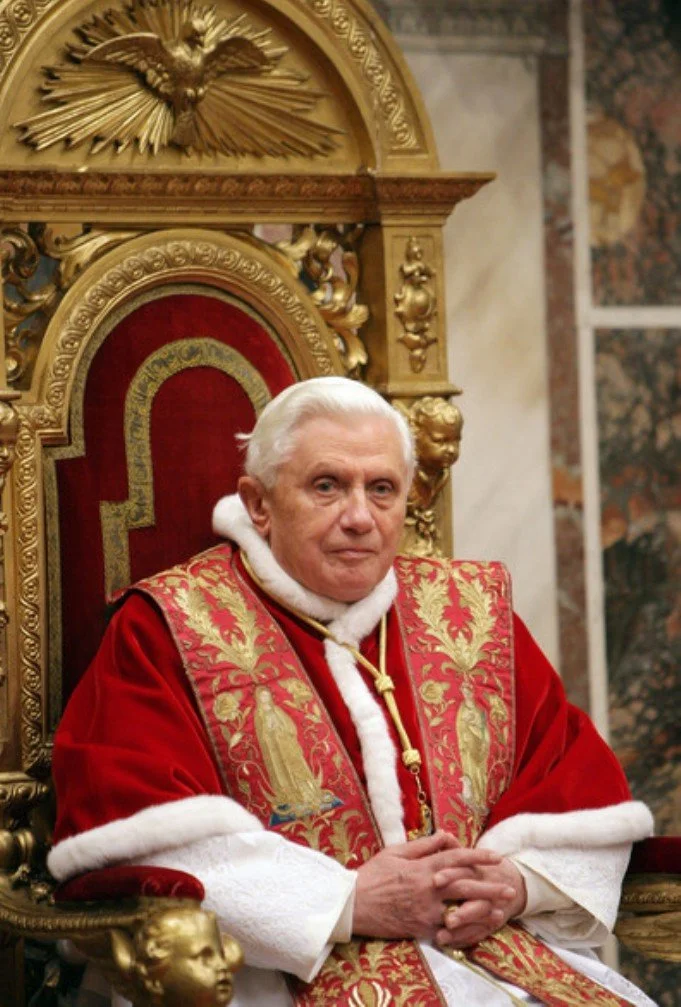
Pope Benedict's blunder and ensuing media coverage have put his legacy on the line

Pope Benedict's blunder and ensuing media coverage have put his legacy on the line

It has been 20 years since The Boston Globe broke open the decades of sexual abuse by Catholic priests, dragging into the light a hellish story that had lingered on the edge of elite media coverage since the 1980s (see this GetReligion post: “That gap between 1985 and 2002”).

Two decades later, this is a story that continues in the form of questions about who in the Catholic hierarchy knew what and when in a variety of dioceses around the world.

The issue wasn’t limited to Boston. Predator priests were everywhere — a scandal that may have been unearthed in the United States, but one that continues to plague other parts of the world.

The focus the past few weeks has been on Germany and the involvement of Benedict XVI in the handling of some abuse cases, decades before he became a key church official in Rome and, eventually, pope. This was also long before the church — in part due to his leadership — adopted stricter policies on how to handle cases of clergy sexual abuse.

This is a complex subject for journalists to cover, in part when events in the past are viewed through the lens of present church policies and standards. How is the press doing?

Here’s a timeline of these fast-moving developments. This latest chapter in the decades-long clergy sex abuse saga began on Jan. 20 when a law firm released a report, commissioned by the German church, to look into how cases of sexual abuse were handled in Munich between 1945 and 2019. Benedict, the former Cardinal Joseph Ratzinger, headed that archdiocese from 1977 to 1982, when he was named to head the Vatican’s Congregation for the Doctrine of the Faith.

The report’s authors found that Ratzinger failed to stop the abuse in four cases. The report also faulted his predecessors and, this is crucial, his successors for their own misconduct in allowing clergy accused of sex abuse to stay in ministry.

The 2,000-page report also criticized Cardinal Reinhard Marx, currently the archbishop of Munich and Freising, for his role in two cases dating back to 2008. Marx offered his resignation to Pope Francis last year, saying he was willing to take responsibility for his part in the sexual abuse crisis. Francis did not accept the resignation, which says something about what this pontiff thinks of the German prelate.


Please respect our Commenting Policy

That murdered 'priest' and accusations of abuse: But this wasn't another Catholic case

That murdered 'priest' and accusations of abuse: But this wasn't another Catholic case

I have, since the 1980s, heard my share of complaints from Catholic readers about news coverage of sexual abuse by clergy.

There are readers who get angry about this coverage, period. They want the topic to go away and see anti-Catholic bias in any coverage of the subject, even when the coverage is accurate and fair-minded.

However, other Catholic readers get mad when they see valid coverage that leaves the impression that sexual abuse is only an issue in the Church of Rome. Many of these readers (on the Catholic left or right) want to see accurate, informed coverage on this hellish topic, which would include some mention of the many, many cases that take place in secular settings (think public schools) and in other religious groups.

That’s the broader context for complaints that I heard about a recent New York Times story that ran with this dramatic double-decker headline:

Scandal on a Wealthy Island: A Priest, a Murder and a Mystery

The Rev. Canon Paul Wancura led a quiet, privileged life. But after his shocking death, a sexual abuse allegation followed.

There were two problems with this tragic story — one obvious and one not so obvious.

The first problem was that readers didn’t find out, until quite a ways into this piece, that this was a story about an alleged abuser in the Episcopal Church. The word “priest” stood alone in the headline and in 300-plus words of text. It helps to read the lengthy overture:

Not much happens of note on Shelter Island, all 8,000 bucolic acres of it. Sandwiched between Long Island’s North and South Forks, it’s the kind of place where people seem to know one another, where car doors are often left unlocked and where, for some 20 years, the most bothersome problem has been Lyme disease-carrying blacklegged ticks.

But much of that changed in March 2018, when the Rev. Charles McCarron was asked to check in on another clergyman who had recently been commuting to a town on Long Island as a fill-in priest. He had failed to show up at church that day.


Please respect our Commenting Policy

In Afghanistan, believers in religious minorities have every reason to go underground

In Afghanistan, believers in religious minorities have every reason to go underground

There's a logical reason that Taliban forces have not been accused of destroying any churches in Afghanistan.

"That's the dirty little secret. There were no churches before the Taliban returned to power," said Nina Shea, director of the Hudson Institute's Center for Religious Freedom and a human-rights activist for 30 years. "Christians were already underground because of the constant threats to their lives, so they didn't have any church buildings to blow up."

Everyone remembers the shocking videos when desperate Afghans chased a U.S. military plane on a Kabul runway, pleading to be among those evacuated. At least two people fell to their deaths after clinging to a plane during takeoff.

Ever since, there have been reports about the dangers faced by those left behind, especially Afghans with ties to the U.S. military, the fallen government or workers in secular or religious non-profit groups that remained behind to continue humanitarian work.

Christians, Hindus, Sikhs, Ahmadis, Shia Muslims and members of other religious minorities are also living in fear.

"They are all on the run. They are all in hiding," said Shea, reached by telephone. "People are being hunted down and beaten and are threatened with death if they don't betray members of their families who are considered apostates" by the Taliban.

It's impossible not to discuss religious freedom during this crisis, she added. "Everything the Taliban does is about religion. Religion is involved when they hang people for violating their approach to Islamic law or when they attack women and girls who want to go to school. For the Taliban, this is all connected."

The problem is that religious freedom concerns are often drowned out during debates about politics, economics, climate change and other issues in violent flashpoints around the world.


Please respect our Commenting Policy

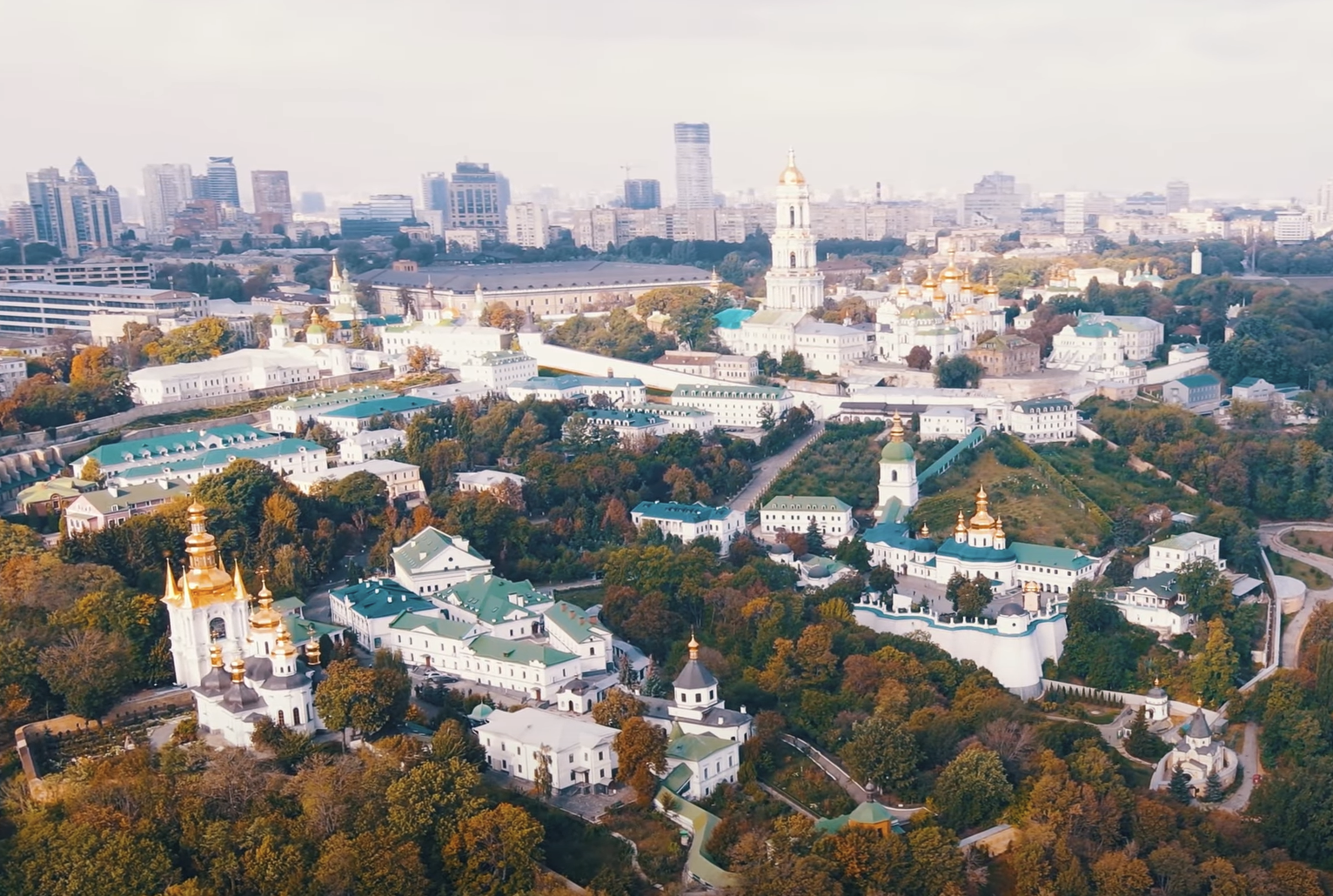
In reportage on Russia and Ukraine, don't neglect the importance of two rival churches 

In reportage on Russia and Ukraine, don't neglect the importance of two rival churches 

On top of the 2014 seizure of Crimea and years of infiltration in eastern borderlands, Russia now poses a more severe threat to neighboring Ukraine.

Whether the nation faces a military invasion, or even a World War 2.5, or less bloody subversion and hoped-for domination, journalists these next few years will need to understand and depict the religious aspect of Ukraine's rising nationalism and resistance against Russian expansionism.

Here are some basics. Russia and Ukraine contain by far the two largest national populations in Eastern Orthodox Christianity. The new World Christian Encyclopedia edition (which belongs in every media and academic library) counts 114 million Orthodox in Russia for 79% of the population, and 32 million in Ukraine for 73%.

Terminology note for writers: "Eastern Orthodox" is the precise designation for such churches, related historically to the Ecumenical Patriarchate based in Turkey, that affirm the definition of Jesus Christ's divinity by the Council of Chalcedon (A.D. 451). The separate branch of so-called "Oriental Orthodox" is non-Chalcedonian; its largest national church is in Ethiopia.

Ukraine's ecclesiastical history, like its political history, is highly complex. The saga began with the A.D. 988 "baptism of Rus" in Kyiv (Russians prefer "Kiev") when Prince Vladimir proclaimed Orthodoxy the religion of his realm and urged the masses to join him in conversion and baptism.

Russians see Christendom's entry into Eastern Europe as the origin of their homeland and the Russian Orthodox Church. Russian President Vladimir Putin cites this history to support his claim for Ukraine as a client area within greater Russia instead of a validly independent nation. His post-Soviet Kremlin maintains close bonds with the Russian Church's Moscow Patriarchate, which in turn has centuries of ecclesiastical authority within Ukraine.


Please respect our Commenting Policy

Catholics for Choice boldly projects its own credo before the 2022 March for Life

Catholics for Choice boldly projects its own credo before the 2022 March for Life

When progressive Catholics list their heroes in the church hierarchy most would include Cardinal Wilton Gregory of Washington, D.C.

When preparing their own lists, most conservative Catholics would include Archbishop Salvatore J. Cordileone of San Francisco.

Thus, it's important to note how these two shepherds reacted to the spectacular protest staged by Catholics for Choice during the 2022 Vigil for Life inside the Basilica of the National Shrine of the Immaculate Conception.

While worshippers gathered for overnight rites and prayers before the Jan. 21st March for Life, pro-abortion-rights Catholics -- using a nearby projector -- displayed their own beliefs on the 329-foot tower and facade of America's largest Catholic sanctuary. "Catholics for Choice" appeared inside a glowing cross, accompanied by a litany of slogans, such as "Stop stigmatizing; Start listening," "Mi cuerpo, mi decision (my body, my decision in Spanish)" and "Pro-choice Catholics you are not alone."

Archbishop Cordileone released this response, via Twitter, using language implying the actions of Satan: "The attempted desecration is enormous. Diabolical. Mother Mary, pray for them, now and at the hour of death. Amen."

Cardinal Gregory's press statement pointed readers to a specific scripture to find the context for his words: "The true voice of the Church was only to be found within The Basilica. … There, people prayed and offered the Eucharist asking God to restore a true reverence for all human life. Those whose antics projected words on the outside of the church building demonstrated by those pranks that they really are external to the Church and they did so at night -- John 13:30."

That verse describes the moment when Judas exits the Last Supper to betray Jesus: "So … he immediately went out; and it was night."

Catholics for Choice offered no apologies on Twitter: "Our faith teaches us that EVERY person, including the 1 in 4 abortion patients who are Catholic, should be able to make their own decisions about their lives and bodies without interference from the church or the state. #AbortionIsEssential!!" The group's communications director, Ashley Wilson, added: "I am tired of feeling shame and stigma for being a pro-choice Catholic. And I'm not here for people to judge my own personal relationship with God."


Please respect our Commenting Policy

And now, in other Pope Francis news: Is having kids a moral duty for married couples?

And now, in other Pope Francis news: Is having kids a moral duty for married couples?

THE QUESTION:

Is having children a moral duty for married couples?

THE RELIGION GUY'S ANSWER:

Pope Francis provoked a fuss at his first general audience of 2022 by remarking that "many, many couples do not have children because they do not want to, or they have just one -- but they have two dogs, two cats. … Dogs and cats take the place of children." He continued, "This denial of fatherhood or motherhood diminishes us; it takes away our humanity" and "civilization becomes aged."

So, do married couples have a moral duty to bear children, and preferably more than one?

Birth rates have emerged as a pressing secular issue of this era. The Religion Guy is old enough to remember progressives' alarm over an impending "population bomb" and enthusiasm for "zero population growth."

While those ideas persist, all the buzz these days is about the globe's great Birth Dearth.

The lead article on page one of the January 18 New York Times was headlined "Worries in China that Population May Soon Shrink." The trend in that nation's official demographic report, issued the day before, suggested that 2021 may be the last year when births outnumber deaths as the population begins decreasing. The birth shortage is even bigger than in 1961 during Mao Zedong's infamous "Great Leap Forward" economic scheme, which produced unaccountably vast famine and death.

The Times stated as objective fact that this is a "crisis" for the vast nation that "could undermine its economy and even its political stability."


Please respect our Commenting Policy

Visiting the monks at Christ in the Desert monastery, during a pandemic that closed its gates

Visiting the monks at Christ in the Desert monastery, during a pandemic that closed its gates

Religion-beat work is complicated, in part because of the many different ways that believers use the same words when describing their lives. The word “charismatic” has a rather different meaning in a Pentecostal flock than when Baptists — or maybe most Baptists — use it to describe preachers.

Here at GetReligion, we frequently note the challenges faced when journalists from other beats cover complex stories that are baptized in religious language and imagery.

That brings me to a feature that ran the other day at The Washington Post with this headline: “Monks in New Mexico desert dedicated to hospitality reflect on two years without guests.”

There is much to praise in this piece, along with a few word choices that would be challenged by insiders in specific religious traditions. Also, I should note that the author of this piece is Chris Moody, a CNN veteran who is a former student of mine at both Palm Beach Atlantic University and the Washington Journalism Center.

It’s rather hard to critique and praise the work of a talented former student! However, I know that many GetReligion readers will want to see this feature. Plus, I love New Mexico and, early in my religion-beat work, I wrote similar pieces about monasteries in North Carolina and later Colorado.

Let’s start with the overture, which is long, but shows the larger context of this COVID-tide story:

CHAMA RIVER CANYON, N.M. — Hidden in this canyon of crimson sandstone cliffs encompassed by miles of federally protected wilderness, the Monastery of Christ in the Desert seems like an ideal place to ride out a pandemic.

For more than 50 years, a small community of Benedictine monks has quietly lived, worked and worshiped here in a cluster of off-grid adobe buildings along the banks of northern New Mexico’s Chama River. Considered the most remote Catholic monastery in the hemisphere, it can be reached only by a 13-mile single-lane earthen road that winds through the canyon. Abiquiú, the closest village — population 151 — is 25 miles away. Groves of cottonwood and willows line the river where bald eagles hunt for rainbow trout. Black bears, coyotes and cougars prowl the pinyon- and sage-scented Santa Fe National Forest, which surrounds the monastery.

Despite the difficult journey, outsiders have flocked to this serene abbey for decades in search of spiritual renewal.


Please respect our Commenting Policy

Was the life of Dorothy Day too Catholic for the New York Times to grasp?

Was the life of Dorothy Day too Catholic for the New York Times to grasp?

The New York Times veers close to self-parody in publishing “Was Dorothy Day Too Left-Wing to Be a Catholic Saint?

The very deck beneath the headline undercuts it: “The Archdiocese of New York has asked the Vatican to consider the social activist for sainthood. But church leaders are not entirely comfortable with her politics.”

Actually, Day has always made Catholics on the right and left uncomfortable. The key is making sure that readers know why this is true.

What Liam Stack has to report is pretty straightforward.

Martha Hennessy was upset with what Cardinal Timothy Dolan preached during a Mass in Day’s honor:

“He has reduced her to ‘she lived a life of sexual promiscuity and she dabbled in communism,’” she said. “What worse enemy could we have, saying those things about her?” Ms. Hennessy is active in the [canonization] movement and did a reading at the Mass. “We have got to focus on her policies, we have got to focus on her practices.”

Stack’s report does not link to the cardinal’s homily, which is available on YouTube and embedded in this post (the homily begins at one hour and 15 minutes).

Viewers will note that there is no indication in Cardinal Dolan’s remarks that he is anything other than an admirer. He calls Day “one of our greats,” and mentions that he asked Pope Francis to declare her venerable: one major step toward becoming a saint.

While Dolan’s brief homily did not dwell on Day’s political life, he referred to the significant detail of her being on assignment by a Catholic magazine to report on a Hunger March in 1932 in the nation’s capital. Dolan added a detail omitted by the Times: after observing this march, Day prayed in the Basilica of the Immaculate Conception and took another step toward integrating her politics and her emerging faith.


Please respect our Commenting Policy