Catholicism

Plug-In: The top religion-beat stories of 2022? Here are some likely scenarios

Plug-In: The top religion-beat stories of 2022? Here are some likely scenarios

What stories will religion reporters be chasing in 2022?

Veteran Godbeat pro Kimberly Winston asked a handful of national journalists — myself included — that question on Interfaith Voices’Inspired” radio show.

“Every one of the reporters we asked had a different answer,” Winston noted.

That’s certainly true.

But a few common themes emerged.

The Washington Post’s Michelle Boorstein, The Conversation’s Kalpana Jain and I all mentioned abortion as the U.S. Supreme Court contemplates overturningor at least severely curtailing Roe v. Wade.

Other topics cited: the COVID-19’s pandemic ongoing impact on religion and the role of faith and Christian nationalism — so evident in the Jan. 6, 2021, Capitol riot — in the midterm elections.

The Los Angeles Times’ Jaweed Kaleem said he’ll be reporting on religious activism related to the climate and environment. Faithfully Magazine’s Nicola Menzie expects to keep monitoring issues of importance to Christian communities of color, such as mental health.

By the way, the 2022 question was just one part of a fascinating show in which Winston delved into how religion reporters get their stories.

I was truly captivated, except for the parts where I had to listen to my own voice. I’d highly recommend it.

Look for more predictions for the coming year — including a major global story — in this week’s Inside the Godbeat section.

Please respect our Commenting Policy

Chicago rules vs. the Latin Mass: There's more to 'worship wars' than the Tridentine Rite

Chicago rules vs. the Latin Mass: There's more to 'worship wars' than the Tridentine Rite

Since the late 19th Century, Catholics have recited the Prayer to St. Michael when facing disease, disaster and despair.

It proclaims, in part: "St. Michael the Archangel, defend us in battle. … O Prince of the heavenly hosts, by the power of God, thrust into hell Satan, and all the evil spirits, who prowl about the world seeking the ruin of souls."

Before Vatican II, this prayer was often recited after Mass, although it wasn't in the rubrics. In 1994, St. Pope John Paul II urged Catholics to embrace it -- while preaching on threats to the unborn.

The faithful at St. Joseph's Parish in Libertyville, Ill., stopped reciting the Prayer to St. Michael aloud after Masses this past summer. While debate continues about what the Archdiocese of Chicago instructed, livestreamed remarks by the associate pastor went viral, during a worship wars surge in modern Catholicism.

"What I'm going to say, I'm going to say this with a lot of respect. Following the directive of Cardinal Cupich, we want to remind everyone that the Prayer of St. Michael is not to be said publicly following Mass," said Father Emanuel Torres-Fuentes. "As a priest, I have to obey, and I obey this at peace."

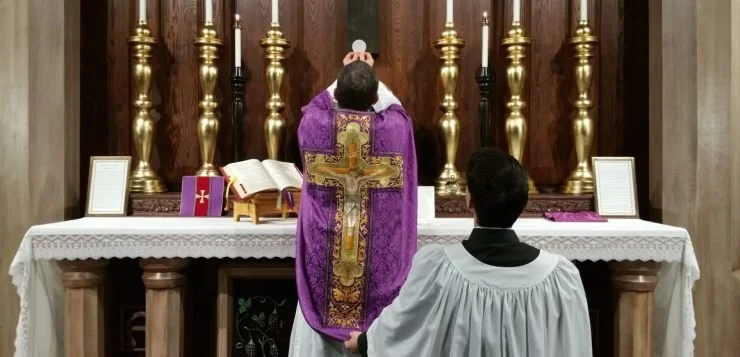
While Cardinal Blase Cupich's actions have made news, this drama opened in July with a Pope Francis apostolic letter entitled "Traditionis Custodes (Guardians of the tradition)." It restricted use of the old Latin Mass, thus undercutting "Summorum Pontificum (Of the Supreme Pontiffs)" by the retired Pope Benedict XVI. That document said the post-Vatican II Novus Ordo was the "ordinary form" for the Mass, but the Tridentine rite was an "extraordinary form" that could be encouraged.

The Pope Francis letter appeared to give local bishops some freedom to control use of the old Latin Mass. Then the Vatican's Congregation for Divine Worship released guidelines on Dec. 18, explaining the pope's edict.

Many bishops, for example, had granted dispensations allowing some diocesan parishes to use the Latin Mass. But Rome's new guidelines said this was not permitted -- only the Vatican could grant exceptions. Also, any parish allowed to celebrate the Tridentine Mass could not list this service in printed or online Mass schedules.


Please respect our Commenting Policy

Two think pieces on changes in American religious life, with a few political twists

Two think pieces on changes in American religious life, with a few political twists

It’s time for another “think piece” weekend double-shot.

In other words, I want to point readers toward two different online features that, at first, may not seem to be related. However, when you look closer you can see the DNA that connects them.

The first is a blog post by my friend Rod “Live Not By Lies” Dreher, but I want readers to consider his post as a mere frame work around a blast of data from the Pew Research Center team. The headline on Dreher’s post states, once again, an old trend (think “Sheilaism”), but one that is being more — not less — important: “Christianity Declines — But Not ‘Spirituality’.”

Dreher points to this quotation from a recent Pew feature, which digs deeper into the center’s mine of religiously unaffiliated research:

The secularizing shifts evident in American society so far in the 21st century show no signs of slowing. The latest Pew Research Center survey of the religious composition of the United States finds the religiously unaffiliated share of the public is 6 percentage points higher than it was five years ago and 10 points higher than a decade ago.

Christians continue to make up a majority of the U.S. populace, but their share of the adult population is 12 points lower in 2021 than it was in 2011. In addition, the share of U.S. adults who say they pray on a daily basis has been trending downward, as has the share who say religion is “very important” in their lives.

Currently, about three-in-ten U.S. adults (29%) are religious “nones” — people who describe themselves as atheists, agnostics or “nothing in particular” when asked about their religious identity. Self-identified Christians of all varieties (including Protestants, Catholics, members of the Church of Jesus Christ of Latter-day Saints, and Orthodox Christians) make up 63% of the adult population. Christians now outnumber religious “nones” by a ratio of a little more than two-to-one. In 2007, when the Center began asking its current question about religious identity, Christians outnumbered “nones” by almost five-to-one (78% vs. 16%).

The recent declines within Christianity are concentrated among Protestants.

A trend this massive will affect almost every area of American life, including politics.


Please respect our Commenting Policy

New podcast: Are the bitter wars over the Latin Mass about politics or Catholic doctrine?

New podcast: Are the bitter wars over the Latin Mass about politics or Catholic doctrine?

I like hearing from readers. I really do.

However, every now and then I write a national “On Religion” column and I just know that I am going to hear from readers about a specific angle that — for reasons of space — I had to leave out. This happens less often here at GetReligion, since length is not an issue in online forums of this kind.

Anyway, this week’s “On Religion” column was about the tensions among Catholics about Pope Francis and his crackdown on use of the old Latin Mass. I focused on developments in the Archdiocese of Chicago, where it is clear that there’s more to these “worship wars” than use of the Tridentine rite.

That column is already online in some mainstream newspapers, with headlines such as this: “Latin Mass meets Chicago rules.” That column served as the launching pad for this week’s “Crossroads” podcast (CLICK HERE to tune that in), which also looked at an important analysis piece at Crux about five kids of Pope Francis stories — both doctrinal and political — that readers can expect to see in 2022.

When I clicked “send” on that column (including my private listserv to family and friends), I knew that some Catholics would ask why I didn’t address a, well, colorful Mass that recently took place at the progressive St. Sabina Parish in Chicago. Here is the top of the Catholic News Agency story about that:

Outraged by a freewheeling Christmas Eve Mass that featured jazz musicians, choreographed dances around the altar, and theatrical lighting effects, some Catholics are calling on Cardinal Blase Cupich to crack down on liturgical abuses in Novus Ordo Masses in the Archdiocese of Chicago, rather than imposing severe restrictions on reverential Traditional Latin Masses.

Father Michael L. Pfleger, a well-known social activist in Chicago, celebrated the Dec. 24 evening Mass. … Many of those upset by the Mass say it crossed the line from worship to entertainment. That view is fueled, in part, by the fact that it is not clear from the nearly 2½ hour video of the service, billed as "Christmas Eve at Sabina," when the liturgy actually begins. There is no apparent greeting, penitential act, or opening prayer, all required Introductory Rites of the Novus Ordo liturgy.

In the video, posted on YouTube, Pfleger does not appear on the altar until after nearly an hour of musical and dance performances.

Well, it is unusual for a Mass to include music by Stevie Wonder and the classic Vincent Guaraldi soundtrack from the Peanuts Christmas special.


Please respect our Commenting Policy

Religion news 2021: Which story was No. 1? Return of Taliban or Jan. 6 riot at U.S. Capitol?

Religion news 2021: Which story was No. 1? Return of Taliban or Jan. 6 riot at U.S. Capitol?

For journalists who braved the chaos, the Jan. 6th riot on Capitol Hill offered a buffet of the bizarre -- a throng of Proud Boys, QAnon prophets, former U.S. military personnel and radicalized Donald Trump supporters that crashed through security lines and, thus, into history.

Many protestors at Trump’s legal "Save America" rally carried signs, flags and banners with slogans such as "Jesus is my Savior, Trump is my president" or simply "Jesus 2020." In this context, "Jesus saves" took on a whole new meaning.

Some of that symbolism was swept into the illegal attack on the U.S. Capitol.

In its poll addressing major religion events in 2021, members of the Religion News Association offered this description of the top story: "Religion features prominently during the Jan. 6 assault on the U.S. Capitol by pro-Trump insurrectionists. Some voice Christian prayers, while others display Christian or pagan symbols and slogans inside and outside the Capitol."

Consider, for example, Jacob Anthony Chansley -- or Jake "Yellowstone Wolf" Angeli. With his coyote-skin and buffalo-horns headdress, red, white and blue face paint and Norse torso tattoos, the self-proclaimed QAnon shaman, UFO expert and metaphysical healer became the instant superstar of this mash-up of politics, religion and digital conspiracy theories.

"Thank you, Heavenly Father … for this opportunity to stand up for our God-given inalienable rights," he said, in a video of his U.S. Senate remarks from the vice president's chair. "Thank you, divine, omniscient, omnipotent, omnipresent Creator God for filling this chamber with your white light and love. Thank you for filling this chamber with patriots that love you and that love Christ. …

“Thank you for allowing the United States of America to be reborn. Thank you for allowing us to get rid of the communists, the globalists and the traitors within our government."

That was one loud voice. A big question that must be answered, in future trials and the U.S. House investigation, is whether it's true -- as claimed by the New York Times -- that the "most extreme corners of support for Mr. Trump have become inextricable from some parts of white evangelical power in America."


Please respect our Commenting Policy

Here we go again: With Catholic news, reporters should be careful with this word -- 'reform'

Here we go again: With Catholic news, reporters should be careful with this word -- 'reform'

Let’s pause for a moment and reconsider a very loaded and tricky word that shows up all the time religion-news coverage (as well as political coverage, of course).

That word is “reform.”

For really, really, loyal GetReligion readers, I will admit that I am, in part, flashing back to this 2008 GetReligion post: “Who gets to "reform" what?” Once again, let’s look at some of the language that shows up in online dictionaries when you search for that term. To “reform” an institution or a law means to:

* make changes for improvement in order to remove abuse and injustices; "reform a political system" * bring, lead, or force to abandon a wrong or evil course of life, conduct, and adopt a right one; "The Church reformed me"; "reform your conduct" ... * a change for the better as a result of correcting abuses; "justice was for sale before the reform of the law courts" ... * improve by alteration or correction of errors or defects and put into a better condition; "reform the health system in this country" * a campaign aimed to correct abuses or malpractices. ...

The key words in that digital cloud are these: “improve by alteration or correction of errors or defects …”

Also, let me remind readers that I am not a Roman Catholic. Some people seem to be confused about that. My views on this topic are based on decades of reporting (and a graduate-school readings class focusing on the church before and after Vatican II) about the very complex world of Catholic life and thought.

With that in mind, let’s look at the top of a recent Religion News Service story that ran with this headline: “Can Pope Francis make real change for women? Vatican women leaders assess his chances.

VATICAN CITY (RNS) — A panel of women who have attained leadership positions in the Catholic Church met … to discuss Pope Francis’ ambitious plan to reform the power structures in the church, raising questions about female ordination, the role of bishops and the need for women theologians.


Please respect our Commenting Policy

Old, nagging conflicts will continue to dominate religion news in the coming year

Old, nagging conflicts will continue to dominate religion news in the coming year

Yes, there will be a hotly contested U.S. election in 2022. And pretty much every secular and religious faction is keyed up awaiting the U.S. Supreme Court's decision on whether to revise or revoke its rulings that legalized abortion.

Big decisions like this typically land in late June.

Other lingering disputes on the news coverage agenda include the following.

* As the U.S. Senate struggles with a rewrite of the Catholic President Joe Biden's elephantine social-spending bill, the Catholic bishops' conference vehemently opposes any inclusion of abortion funding.

The bishops, along with Orthodox Judaism's synagogue union, also fear (.pdf here) this law will cripple funding for widespread religious preschools. In yet another church-state debate, Biden hopes to end religious exemption from anti-discrimination rules, which went into effect in January.

* Inside the world of Mainline Protestantism, the unending dispute over the Bible and LGBTQ+ issues may produce the biggest U.S. church split since the Civil War at the United Methodist Church's General Conference. Early in 2022, a commission must decide whether the twice-postponed conference, now scheduled for August 29-September 6 in Minneapolis, can finally occur despite two years of COVID-related snarls and, some say, stalling by the UMC establishment.

* The T in LGBTQ won new Methodist attention as just-retired Pennsylvania Bishop Peggy Johnson and her husband, a Methodist pastor, publicized the latter's gender transition while identifying publicly as a "cisgender" male.

Last March, a sizable body of U.S. conservatives announced plans to leave the denomination and unite with former mission churches overseas — primarily in Africa and Asia — to form the "Global Methodist Church," led temporarily by Virginia Pastor Keith Boyette (540-898-4960).


Please respect our Commenting Policy

Painting or icon? That big hole in New York Times report on Catholic University controversy

Painting or icon? That big hole in New York Times report on Catholic University controversy

Let’s start here: There is nothing new about artists painting images of Jesus as a Black man.

A few of these images may have been controversial at the time of their creation, in part because of the political motivations of some (repeat “some”) artists. But the vast majority are clearly works of Christian devotion showing reverence for the Incarnation of Jesus Christ. For many Christians, these images are way less problematic than the omnipresent Warner Sallman “Head of Christ” painting from 1940, depicting Jesus with light, wavy hair and very European features.

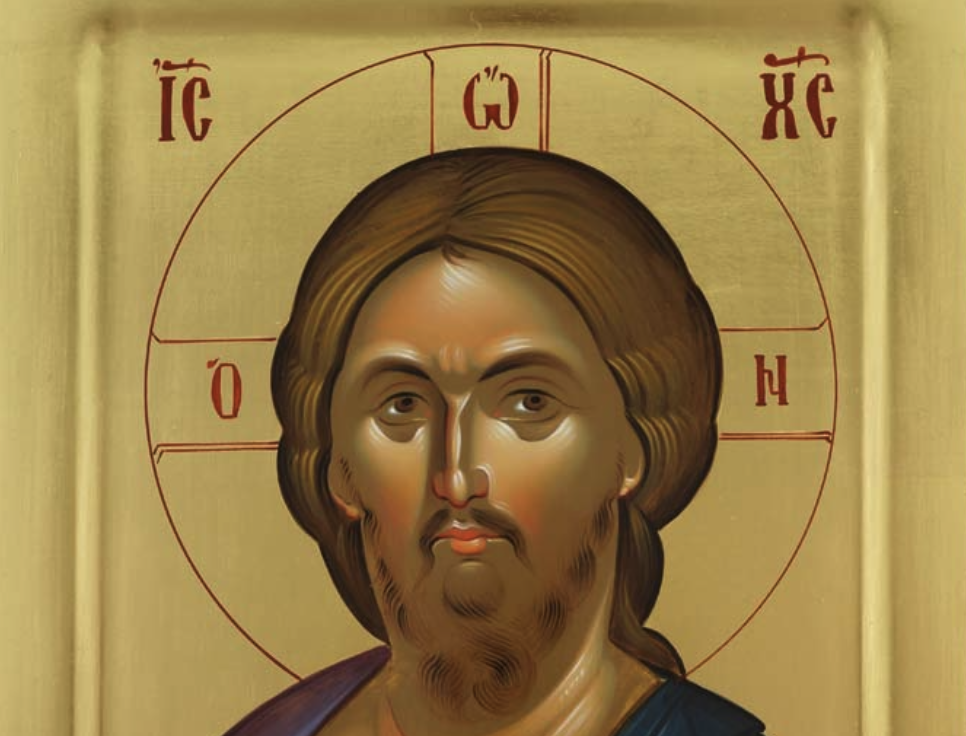
As an Eastern Orthodox Christian, the image of Jesus that I know best is the ancient Christ Pantocrator icon from St. Catherine’s Monastery at Mt. Sinai. It is a complex icon of Jesus that, well, would be hard to label as one of the “surfer Jesus” images in some contemporary churches.

This brings me to that New York Times story that ran the other day with this dramatic double-decker headline:

A Painting of George Floyd Roils Catholic University

At the Catholic University of America in Washington, conservative students called for a campus ban on further displays of an artwork that depicts Floyd as Jesus.

This story does a pretty good job of describing the timeline of this controversy — which is described as yet another clash over race, art and religion. It’s clear that, for the leaders of private schools, controversies of this kind are especially complex.

The problem, for me, is that the image in question — “Mama,” by Kelly Latimore — is consistently described as a painting based on the famous Pieta statue by Michelangelo.

Thus, what we have here is a “painting,” based on one of the most famous statues in Western Christian art, but is clearly meant to be interpreted as a holy icon in the Eastern Orthodox tradition.

Did you follow that? The journalism question here is whether the Times team did an adequate job of describing why the term “icon” — which does not appear in the story — is so important, if the goal is to understand the thinking of some of the Catholics (the story contains zero input from the Orthodox) who believe that this painting is blasphemous. Here is the overture:


Please respect our Commenting Policy

Five big Catholic news angles that journalists will need to cover during 2022

Five big Catholic news angles that journalists will need to cover during 2022

As 2021 comes to a close, everyone is looking towards 2022. The news cycle over the last two years has been dominated by COVID-19 and that doesn’t seem to be subsiding — given the rash of infections the past few weeks as a result of the Omicron variant.

The Catholic world, meanwhile, had in 2021 one of its busiest years. The election of Joe Biden as president — this January will officially mark his first year in office — also dominated news coverage. That Biden was also a Catholic (only second after John F. Kennedy in 1960) thrust Catholicism into the political news coverage. Politics plus religion equals news. It’s a familiar formula.

Biden, a practicing Catholic who attends Mass on Sundays, was at odds this year with many U.S. bishops — setting up a year-long debate over whether he (and other pro-abortion politicians) should receive Holy Communion. In the end, the bishops offered more clarification in the importance of the Eucharist without singling out Biden. Truth is, no one knows if the bishops actually considered mentioning Biden or other pro-abortion-rights Catholics.

Issues around politics and religion will likely dominate once again in 2022. The abortion issue and a pending Supreme Court decision regarding access to it will be a big story in the coming year. The Catholic church, a major part of the abortion debate in this country for decades, will play a major role in news stories that will be written over the coming months.

At the same time, Pope Francis, who recently turned 85, will again be surrounded by rumors that he will either resign or die. Whether this pope — the most polarizing in centuries — can chip away at his agenda to change the church in the 21st century will continue to pit traditionalists versus progressives.

Here are the five big news trends and stories journalists need to keep an eye on in the new year:

(5) Pope Francis and his focus on a progressive agenda

This coming year could be the one where the battle between this pontiff and doctrinal traditionalists intensifies even further. A Dec. 17 Associated Press story set the stage for such a confrontation in what will be Francis’ ninth year as head of the Catholic church.


Please respect our Commenting Policy