Catholicism

Believe it or not: A story that gives decent coverage to a Catholic crisis pregnancy center

Believe it or not: A story that gives decent coverage to a Catholic crisis pregnancy center

I’ve been so used to reading snide MSM articles about pro-lifers in Texas who are reveling in the state’s new anti-abortion regs — and the lengths women in that state are going to have abortions.

So, when I saw a positive take on the head of a crisis pregnancy clinic, I did a double take.

On Saturday, the Washington Post profiled Tere Haring’s crisis pregnancy clinic in San Antonio and her assertion that: Give a woman some diapers and you’ll save a baby.

The best quote in the piece:

“I always tell people, ‘Diapers save a lot more babies than ultrasounds.’ ” Haring said. “I don’t want an ultrasound machine. I want tons of diapers. Buy me $20,000, $40,000, $50,000 worth of diapers because if you have a woman who comes in with four kids — yeah, looking at the baby, she realizes it’s a human being. But if you tell her, ‘I’m going to give you diapers for all four kids,’ believe me, the diapers for all four kids is going to save that baby a lot quicker than a little pennant on the screen.”

Wow — a piece about a Catholic woman doing the unglamorous work of helping the pregnant and poor through a crisis pregnancy center — written with no snark whatsoever.

That’s historic. And against the grain, judging from the horrible comments appended to the piece, many written by some really demented people who can’t conceive of someone out of the goodness of her heart doing such a work.

It’s been my position that there are tons of religious folks all over the globe who do valiant work for unpopular causes. It just takes a little digging to find them. And reporter Casey Parks, who worked for the Oregonian 11 years before coming to the Post this past September, found one.

SAN ANTONIO — Tere Haring worked the math. Already, the antiabortion nonprofit she runs had given away a record number of baby items during the pandemic. She’d helped five women a day in 2020, and she’d handed out 71 car seats, 45,569 diapers, and $71,000 in rent assistance. Then, in September, a state law banning abortions after six weeks went into effect. By late October, Haring was seeing seven or eight clients a day. The phone rang, then rang again.

That uptick was just the beginning, Haring figured.

Please respect our Commenting Policy

Holy Communion wars: What is news at this week's USCCB meeting depends on what you read

Holy Communion wars: What is news at this week's USCCB meeting depends on what you read

What is news?

It’s the key question editors and reporters continuously ask themselves when approaching and covering a major event.

Days before a pre-scheduled event or meeting like a political convention or the Super Bowl, these same people working in newsrooms prepare for what they can expect — although much of journalism deals with the unexpected such as a scandal, a crime or natural disaster.

Reporters are not in the seeing-the-future business — but there are storylines that they look for ahead of a pre-arranged event.

One such event will be the United States Conference of Catholic Bishops annual fall meeting in Baltimore (the first in-person assembly since the pandemic struck in March 2020) that started Monday and runs through Thursday. What used to be largely overlooked week by mainstream news organizations, the meeting has been catapulted into the spotlight in recent years for several reasons.

Many prominent Catholic bishops have become increasingly vocal in the ongoing culture wars and that’s drawn more media attention. At the same time, American Catholics have increasingly become split along political and doctrinal lines on issues such as abortion during the trump years. Last year’s election of Joe Biden, the first Catholic president since John F. Kennedy in 1960, and his open advocacy of pro-abortion policies.

Thus, the USCCB meeting has become a news even that now lives outside the Catholic media ecosystem. Alas, there may even be political-desk reporters covering this event.

The main storyline since the 2020 election season has been the ongoing argument over whether Catholic politicians who openly advocate for abortion are in direct conflict with church teachings and therefore should not receive Holy Communion.


Please respect our Commenting Policy

Private conversations, public debates: Concerning bishops, Joe Biden and Holy Communion

Private conversations, public debates: Concerning bishops, Joe Biden and Holy Communion

Asked if he discussed abortion with Pope Francis during their recent Vatican summit, President Joe Biden said: "No, it didn't. It came up -- we just talked about the fact he was happy that I was a good Catholic, and I should keep receiving Communion."

The next day, the Associated Press noted that Biden received Holy Communion at St. Patrick's Church in Rome.

Asked to validate the president's second-hand quotation, Vatican spokesman Matteo Bruni told reporters: "I would consider it a private conversation."

What do U.S. bishops think? That has remained a hot topic as the United States Conference of Catholic Bishops braces for its fall 2021 meetings next week (Nov. 15-18) in Baltimore -- its first in-person assembly since the start of the coronavirus pandemic.

What is labeled as "draft 24" of a proposed USCCB statement on "Eucharistic coherence" flashes back to an earlier controversy about Catholic politicians, Holy Communion and an atmosphere of "scandal" among the faithful.

"We repeat what the U.S. bishops stated in 2006: 'If a Catholic in his or her personal or professional life were knowingly and obstinately to reject the defined doctrines of the Church, or knowingly and obstinately to repudiate her definitive teaching on moral issues, he or she would seriously diminish his or her communion with the Church," said this draft from late September -- first obtained by The Pillar, a Catholic news website.

The quote continued: " 'Reception of Holy Communion in such a situation would not accord with the nature of the Eucharistic celebration, so that he or she should refrain.' "

As insiders have predicted, this draft of "The Mystery of the Eucharist in the Life of the Church" doesn't mention debates about the sacramental status of Catholic politicians who have consistently served as advocates for abortion rights, such as Biden or House Speaker Nancy Pelosi.

It does, however, connect some dots on this subject, while drawing from the writings of Pope Francis.


Please respect our Commenting Policy

Think piece that's tissue worthy: The Pillar goes inside one family's clergy sex-abuse hell

Think piece that's tissue worthy: The Pillar goes inside one family's clergy sex-abuse hell

This week’s think piece is more than think piece. It’s more like a shudder, shake your head and even weep piece. Then you can think about it.

I am referring to a long, first-person piece that ran the other day at The Pillar and it’s causing lots of buzz in Catholic online life, for good reason. The headline doesn’t really tell you what is coming: “Cleveland priest gets life. Victims’ mother: ‘God is with us'.”

The first-person voice is essential and steers this away from hard-news territory — even though there are facts and news hooks buried inside the narrative. That’s the “thinking about it later” or thinking about it on the re-read side of this piece.

It’s really long, but you have to start at the beginning, with this editorial note:

Cleveland priest Fr. Robert McWilliams was sentenced to life in prison Tuesday, after the priest pled guilty to federal child trafficking, child abuse, and child exploitation charges.

McWilliams, 41, was ordained a priest in 2017. He was arrested in 2019, and pled guilty to federal charges in July of this year.

At his Nov. 9 sentencing hearing, the mother of four boys preyed upon by McWilliams urged a life sentence. That mother and her family told The Pillar their story.

The Pillar team also made the editorial team to change the name of the family and the victims, in order to protect their privacy.

In terms of the story itself, here are three moments — starting at the beginning:

“Ok. I love my Church, I love my family. I want my Church to be healed. Ok.”

When Rachel Christopher … begins to tell her family’s story, she usually starts with a few phrases — a litany, really — that remind her who she is, and what really matters.

This time, I think, she’s using them to remember why she is sitting down with a stranger — sitting down with me — to share the kind of painful memories that no parent wants even to imagine.

Rachel is telling the story of the priest who hurt her children.


Please respect our Commenting Policy

New podcast: Left, right, middle? Two giant U.S. seminaries are pro-vaccine, but anti-mandate

New podcast: Left, right, middle? Two giant U.S. seminaries are pro-vaccine, but anti-mandate

Let’s do a COVID-19 religion-news flashback, looking at a storyline or two near the start of the pandemic.

I’m doing this in order to analyze how the press is framing a major new development — the federal-court lawsuit filed by Southern Baptist Theological Seminary and Asbury Seminary challenging the Biden administration’s vaccine mandate. These are, by the way, two of the largest seminaries in the United States and, while other seminaries are collapsing, these two are growing.

Coverage of this lawsuit was the hook for this week’s “Crossroads” podcast. (CLICK HERE to tune that in.)

So now the flashback. Remember when I was writing — at GetReligion and in my national “On Religion” column for the Universal syndicate — about the vast majority of American religious groups who were caught in the middle of the “shelter in place” and lockdown wars linked to COVID-19?

Remember the Catholic priests in Texas who were trying to hear confessions out in the open air (in a big field and parking lot), while following guidelines for social distancing? Or how about the churches that were under attack for holding services in drive-in movie theaters, with the faithful in cars, while it was OK for folks to be in parking-lot scrums at liquor stores and big box super-marts? Then you had the whole casinos are “essential services” while religious congregations were not “essential.”

I argued, at that time, that this was way more complicated than religious people who cooperated with the government and those who didn’t. This was not a simple left vs. right, good vs. bad situation. In fact, there were at least FIVE different groups to cover in these newsy debates:

They are (1) the 99% of religious leaders who cooperated and took worship online, (2) some religious leaders who (think drive-in worship or drive-thru confessions) who tried to create activities that followed social-distancing standards, (3) a few preachers who rebelled, period, (4) lots of government leaders who established logical laws and tried to be consistent with sacred and secular activities and (5) some politicians who seemed to think drive-in religious events were more dangerous than their secular counterparts.

That’s complicated stuff.

The problem is that, in the world of American politics, things have to be crushed down into left and right templates or even, there for a few years, into pro-Donald Trump and the anti-Donald Trump. I’m sure we’re past that last part. Right?


Please respect our Commenting Policy

Once again: Anti-Catholic hate crimes are way up, but where's the mainstream news coverage?

Once again: Anti-Catholic hate crimes are way up, but where's the mainstream news coverage?

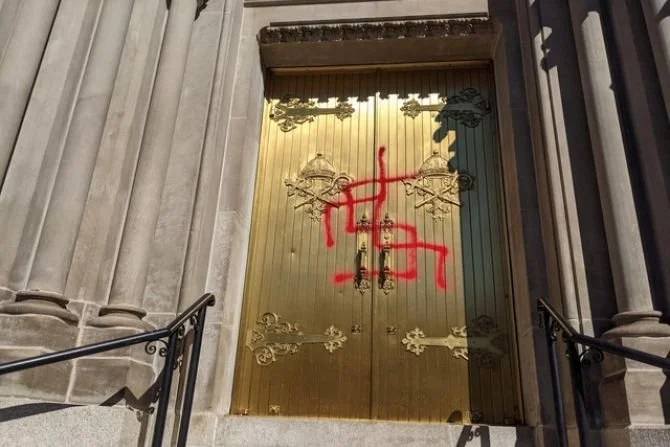
This is a bad time to be a house of worship in the United States, as crazed people are vandalizing and damaging these places in record numbers.

For some time now, this blog has complained about the increasing trend in Catholic churches being vandalized across Europe –- and now here in the United States -– and the secular media barely noticing it. Recently, Religion News Service picked up on the phenomenon of the wreckage happening to Catholic churches.

(RNS) — It was after a pair of Catholic churches caught ablaze last summer, one in Southern California and another in Florida, that the U.S. Conference of Catholic Bishops decided to start documenting and tracking vandalism at Catholic sites across the country.

The two fires occurred on the same morning: July 11, 2020. One destroyed the rooftop of the historic San Gabriel Mission — the fourth of a series of missions across California that Father Junipero Serra founded during the Spanish colonization era. The other ignited in Queen of Peace Catholic Church as parishioners prepared for Mass in Ocala, Florida.

Nobody was injured, but Aaron M. Weldon — of the USCCB’s Office of Religious Liberty — said the fires were “the impetus for us to start monitoring these sorts of events.”

Since then, the USCCB has tracked more than 105 incidents of vandalism of Catholic sites in the U.S., including arson, graffiti and defaced statues. The organization has logged news reports of such incidents dating back to May 2020, but it doesn’t yet have a detailed breakdown that categorizes the different kinds of vandalism.

May 2020 was the fateful month of the killing of George Floyd in Minneapolis by police officers and the start of the Black Lives Matter demonstrations that saw a frenzy of property destruction around the country. (A year later, the Wall Street Journal noted last May, crime in Minneapolis is over the top.)

New FBI stats show the number of hate crimes (8,263) reported in fiscal year 2020 was the highest since 2001. Hate crimes motivated by religious bias accounted for 1,244 offenses, and more than half (683) were antisemitic.

While only 73 were anti-Catholic hate crimes, that represents an annual increase since 2013. There were 64 anti-Catholic hate crimes reported in 2019, and 51 in 2018, according to the FBI data.

The story pointed out that the Catholic Church have been in the news lately for reasons for reasons ranging from Joe Biden’s presidency to whether pro-choice Catholic politicians should be barred from Communion. But Catholics were in the news far more in 2002, when the clergy abuse scandal burst into open, and churches weren’t getting vandalized at such rates then.

Other than the Wall Street Journal, other major media haven’t spotlighted this trend at all.


Please respect our Commenting Policy

Journalism tips on: (1) Evangelical crack-ups, (2) campus faith fights, (3) COVID exemptions

Journalism tips on: (1) Evangelical crack-ups, (2) campus faith fights, (3) COVID exemptions

A potential U.S. evangelical crack-up continues as a lively story topic since Guy Memos here since these two Memos here at GetReligion, “Are we finally witnessing the long-anticipated (by journalists) evangelical crack-up?” and also “Concerning evangelical elites, Donald Trump and the press: The great crack-up continues.” In USA Today, Daniel Darling, for one, sought hope despite his recent victimhood in these tensions.

Media professionals considering work on this theme should note a lament at book length coming next week: "Struggling with Evangelicalism: Why I Want to Leave and What It Takes to Stay" by Dan Stringer. The author is a lifelong evangelical, Wheaton College (Illinois) and Fuller Theological Seminary alum, leader of InterVarsity's graduate student and faculty ministries in Hawaii and Evangelical Covenant Church minister. This book comes from InterVarsity Press.

The Guy has yet to read this book, but it looks to be a must-read for reporters covering American evangelicals in the Bible-Belt and elsewhere. Stringer ponders how evangelicalism can move beyond too-familiar sexual scandals, racial and gender conflicts, and Trump Era political rancor -- what a blurb by retired Fuller President Richard Mouw calls "blind spots, toxic brokenness and complicity with injustice."

Regarding the Donald Trump factor, the evangelical elite was largely silent, with one faction openly opposed, while certain outspoken evangelicals backed the problematic populist.

As The Guy has observed, recent politics exposed the already existing gap between institutional officials and the Trumpified evangelical rank and file. Problem is, to thrive any religious or cultural movement needs intelligent leaders united with a substantial grass-roots constituency to build long-term strategy.

Evangelicalism has always combined basic unity in belief with a wide variety of differences. Think denominational vs. independent, Arminian vs. Calvinist, gender "complementarian" vs. "egalitarian," Pentecostal-Charismatic vs. others and a racial divide so wide that many Black evangelicals shun the e-word alltogether.

In an October 21 Patheos article, historian Daniel K. Williams at the University of West Georgia added North vs. South to those internal divisions. He recounts that the Southern Baptist Convention remained mostly apart when northerners began to supplant "fundamentalism" with "evangelicalism" in the World War II era. Eventually, he says, this movement formed a North-South alliance but it's now eroding.


Please respect our Commenting Policy

Dang it! Your GetReligionistas pounced a bit too early on the 'parental rights' wars

Dang it! Your GetReligionistas pounced a bit too early on the 'parental rights' wars

Dang it (said the Texas Baptist preacher’s kid), I really hate it when GetReligion gets to a serious media topic Just. A. Bit. Too. Early.

What am I talking about?

Well, take a look at the New York Times headline featured in the tweet at the top of this post, a tweet authored by a symbolic figure in the wider world of Democratic Party life. Michael Wear is a political consultant, but he is best known as the faith-outreach director for Barack Obama's 2012 campaign and then as part of Obama's White House staff. Here’s that headline:

Republicans Seize on Schools as a Wedge Issue to Unite the Party

Rallying around what it calls “parental rights,” the party is pushing to build on its victories this week by stoking white resentment and tapping into broader anger at the education system.

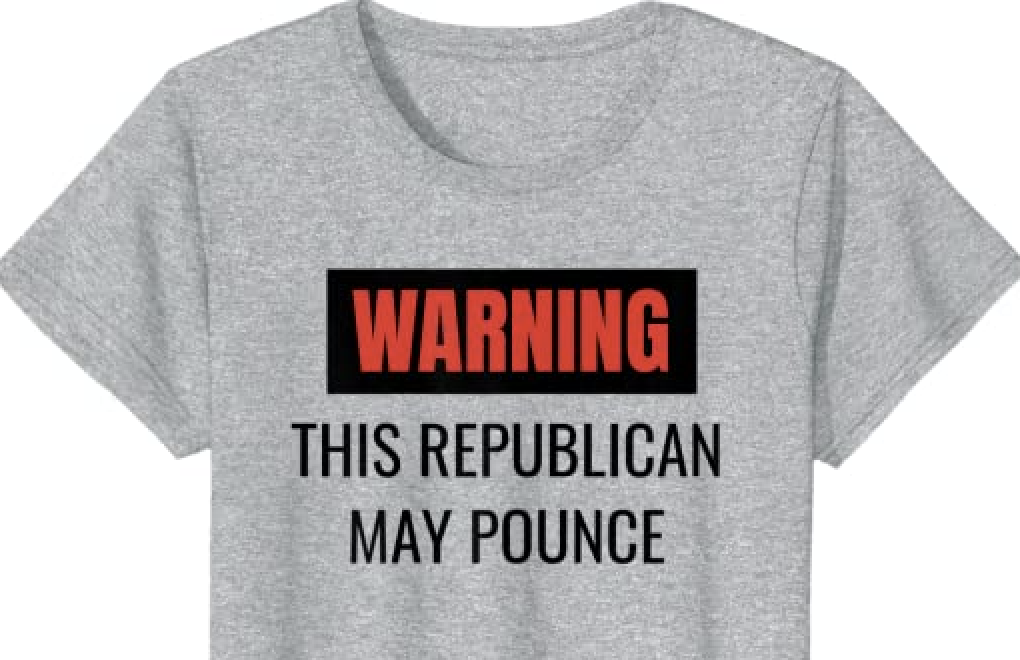
First of all, I think the verb “seize” is a stand-in for the world “pounce,” which has become a bit of a cliche in recent years. Here is the Urban Dictionary take on the “Republicans pounce!” phenomenon or click here for a National Review essay on the subject. The whole point is that the issue at hand isn’t really all that important, but conservatives have “pounced” on it and are using this alleged issue to hurt liberals in social media, conservative news sources, etc.

Major media on the coasts, of course, avoid covering the topic — unless it leads to an embarrassing defeats for Democrats in a symbolic state like Virginia.

Anyway, the Times headline may ring a bell or two for those who read this October 22 podcast-post here at GetReligion: “Are 'parental rights' references (inside scare quotes) the new 'religious liberty.” Here is the opening of that post:


Please respect our Commenting Policy

New podcast: Did Glenn Youngkin win the Latino vote in Virginia? Maybe ask folks in pews?

New podcast: Did Glenn Youngkin win the Latino vote in Virginia? Maybe ask folks in pews?

On the morning after The Virginia Election, I noted that the sharp folks at a must-bookmark niche-news website — A Journey Through NYC Religion — had done some old-fashioned digging and discovered some interesting religion ghosts (to use an old GetReligion term) in that political earthquake. Click here for that story: “Faith trumps Trump in Virginia.”

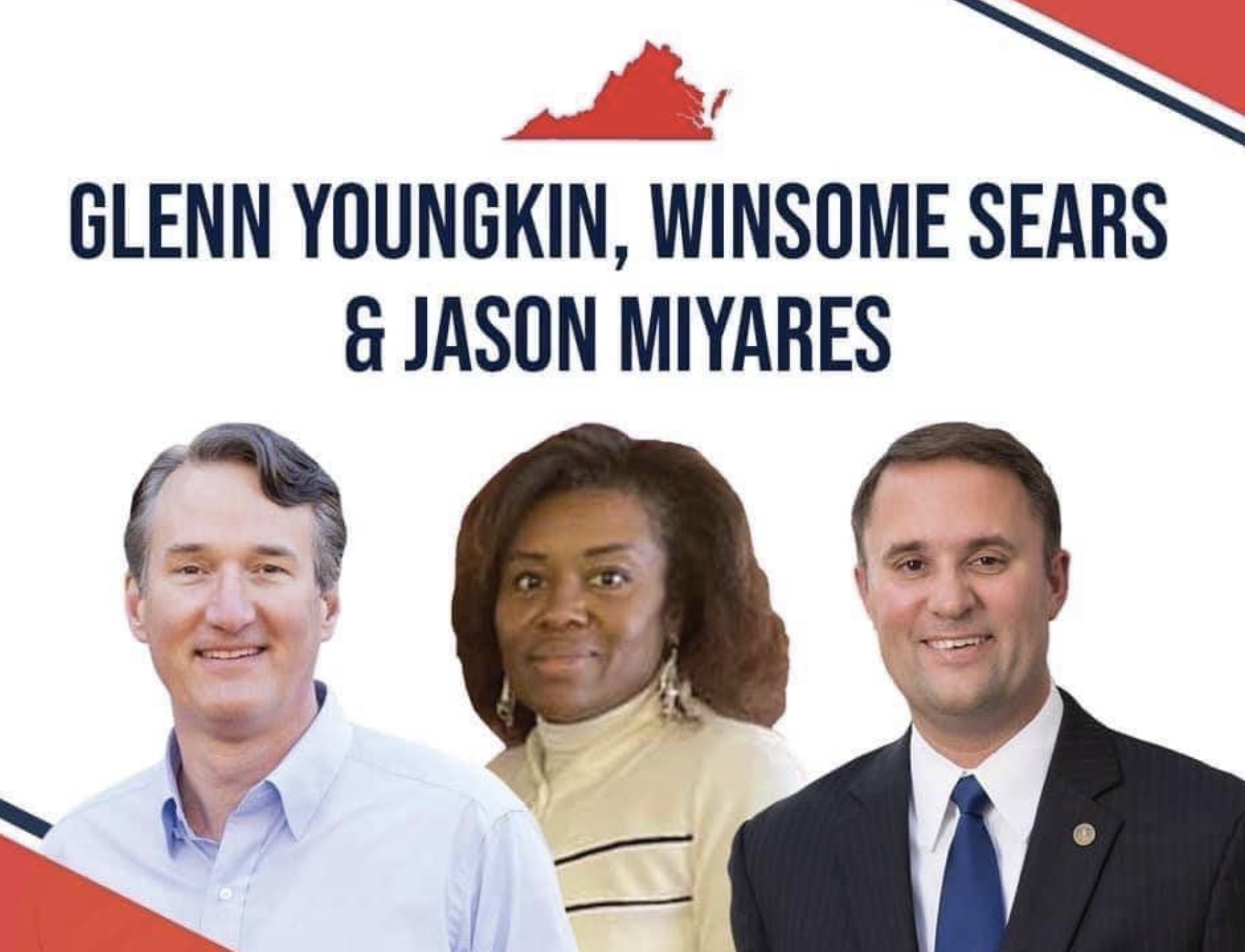
I sure didn’t know, from reading mainstream press coverage, that Governor-elect Glenn Youngkin was an evangelical Anglican who once was a leader in the Alpha course, an evangelism program that expanded from the Church of England into churches and denominations around the world.

I didn’t know that Lieutenant Governor-elect Winsome Sears, an African American evangelical and former Marine, had once led a Salvation Army ministry and that the state’s new attorney general, Jason Miyares, appears to be a Latino evangelical Episcopalian.

All of that showed up in my post-election piece with this headline: “Yes, there were overlooked religion angles in today's biggest U.S. political news story.”

We talk about all of that in this week’s “Crossroads” podcast (click here to tune that in), but also veered off into other religion-based angles in the current political climate. One of them took us into familiar territory, at least for those who have followed GetReligion for the past five or six ears. I’m talking about the rising political clout of Latino evangelicals, traditional Catholics and Pentecostal believers.

There’s some evidence that Youngkin and the diverse GOP lineup actually WON the Latino vote in the Virginia election (click here for a totally faith-free Politico discussion of that topic).

So here is that question again: How can journalists cover shifting patterns among Latino voters — and Black voters, as well — without examining the role of religion and cultural issues?

Let’s say: Is it safe to assume that pro-life Latinos are more likely — lacking acceptable Democrats on the ballot — to opt for Republicans? How about Latinos who favor school choice? Who old traditional Christian views on gender issues?


Please respect our Commenting Policy