Catholicism

Pope Francis isn't resigning this summer: Here's a case study on media speculation

Pope Francis isn't resigning this summer: Here's a case study on media speculation

The U.S. mainstream press covers the Vatican very much like it does Washington, D.C. The parallels are similar, but there is a pope instead of a president, a College of Cardinals rather than Congress and believers, not voters.

The three — pope, cardinals and believers — are not political entities. Although there is overlap with politics, there is a lot more nuance to the Catholic church that many reporters often miss. As we say here at GetReligion, politics is the true faith in most newsrooms. Politics is real. Religion? Not really.

The press also gets very, very, very excited when it comes to the election of a new pope. It is, after all, a global news event and a type of power struggle the press thinks that it can cover like it does a political election. That’s something the press understands better than complicated things such as doctrine, tradition and history.

The big difference is that you never know when a pope will either die or, as of late, resign. In 2013, Benedict XVI did just that and gave up his post. It was a surprise, but not one that caught everyone off guard.

For example, U.S. newspapers and TV networks plan years ahead for a papal election. I wrote a feature that ran in the New York Post in 2001 on just that topic. Here’s how that story opened:

Ghoulish as it may sound, TV is already making elaborate – and expensive – plans for covering the funeral of Pope John Paul II and the selection of his successor.

The pontiff’s frail health was apparent during Easter Sunday services eight days ago – and it has pushed news organizations around the world to renew preparations for the inevitable.

Apartment-building roofs and hotel terraces surrounding the Holy See are suddenly a battle ground as dozens of news organizations try to outbid each other for places where they can be first to capture on camera the historic puff of white smoke from the Sistine Chapel – signaling the election of a new pope.

Italians are calling the jockeying for space the “War of the Terraces.”

Pope Francis’ colon surgery in July fueled speculation that he could be near death or contemplating to resign. Much of this speculation — indeed most of it when it comes to the papacy — comes from Italian newspapers.

Please respect our Commenting Policy

Mexico's high court backs abortion rights: Who did the Washington Post choose to interview?

Mexico's high court backs abortion rights: Who did the Washington Post choose to interview?

The trend started a decade ago, or even earlier, about the time when social media took over and many elite newsrooms began caring less about seeking out qualified, informed voices on both sides of hot stories.

The result was a kind of fail-safe method for spotting media bias, especially with stories located at the intersection of politics, religion and the cultural changes, especially those linked to the Sexual Revolution.

First, readers can print a copy of the story in question and then, with a highlighter pen, mark quotes from people who appear to have been interviewed by the reporters — the sources whose voices provide the framing anecdotes and quotations that provide crucial facts and material that interpret the facts.

Then, with a second highlighter, mark the quotes from experts, activists and citizens on the other side of the issue. The key question: How many of these quotes came from actual interviews and how many were taken from online press releases and statements?

Compare and contrast. The big question: What sources were shown respect — with personal interviews — and which sources were demoted to PR release status? (Personal comment: As a columnist, I have found that quoting personal weblogs — Twitter as well — can offer a kind of neutral ground, with more information and authentic “voices” than mere press releases.)

In my experience, 99% of the time the people who are quoted from interviews represent the viewpoints that are favored and respected by the journalists who produced the story. With that in mind, let’s look at the sourcing in an international-desk story that ran in The Washington Post with this headline: “Mexico decriminalizes abortion, a dramatic step in world’s second-biggest Catholic country.

The Catholic angle is crucial, of course. Who would be interviewed? Activists in ministries to pregnant women? Canon lawyers? Perhaps a Catholic priest or historian who knows why “life” issues are so crucial in the church’s theology? I will also ask: Was anyone from the religion-desk allowed input into the sourcing?

Let’s start with the overture:

MEXICO CITY — Mexico’s supreme court voted Tuesday to decriminalize abortion, a striking step in a country with one of the world’s largest Catholic populations and a decision that contrasts with tighter restrictions introduced across the border in Texas.


Please respect our Commenting Policy

Possible clues for reporters seeking religion angles in 2022 and 2024 elections

Possible clues for reporters seeking religion angles in 2022 and 2024 elections

A year from now the Supreme Court will have ruled on its lollapalooza Dobbs abortion case, we'll know how much permanent damage Afghanistan dealt to the Biden-Harris Administration and -- we can hope -- COVID-19 and Delta may finally be under control.

Also, journalists will be in the thick of covering a red-hot election for the U.S. House and Senate and the state legislatures.

How will religion play into the outcome? Though church numbers are sliding, reporters shouldn't forget that more than with many other factors, religious participants by the millions provide readily organized activists and voting blocs.

There could be clues in Pew Research Center's report last week offering the last word on religious voters in 2020, with some comparative information from its 2016 post-election report. Rather than exit polling, Pew analyzed responses from 9,668 members of its ongoing, randomly selected American Trends Panel who were verified as having actually voted by checking commercially available lists.

White evangelical Protestants went 84% for Donald Trump's re-election, which is not surprising but remains significant for Republican strategists (and for this movement's own societal and outreach prospects). Pew says they gave Trump "only" 77% in 2016, slightly less than was shown in exit polls and a bit below Mitt Romney's 2012 support.

But evangelicals always go Republican. That’s no surprise.


Please respect our Commenting Policy

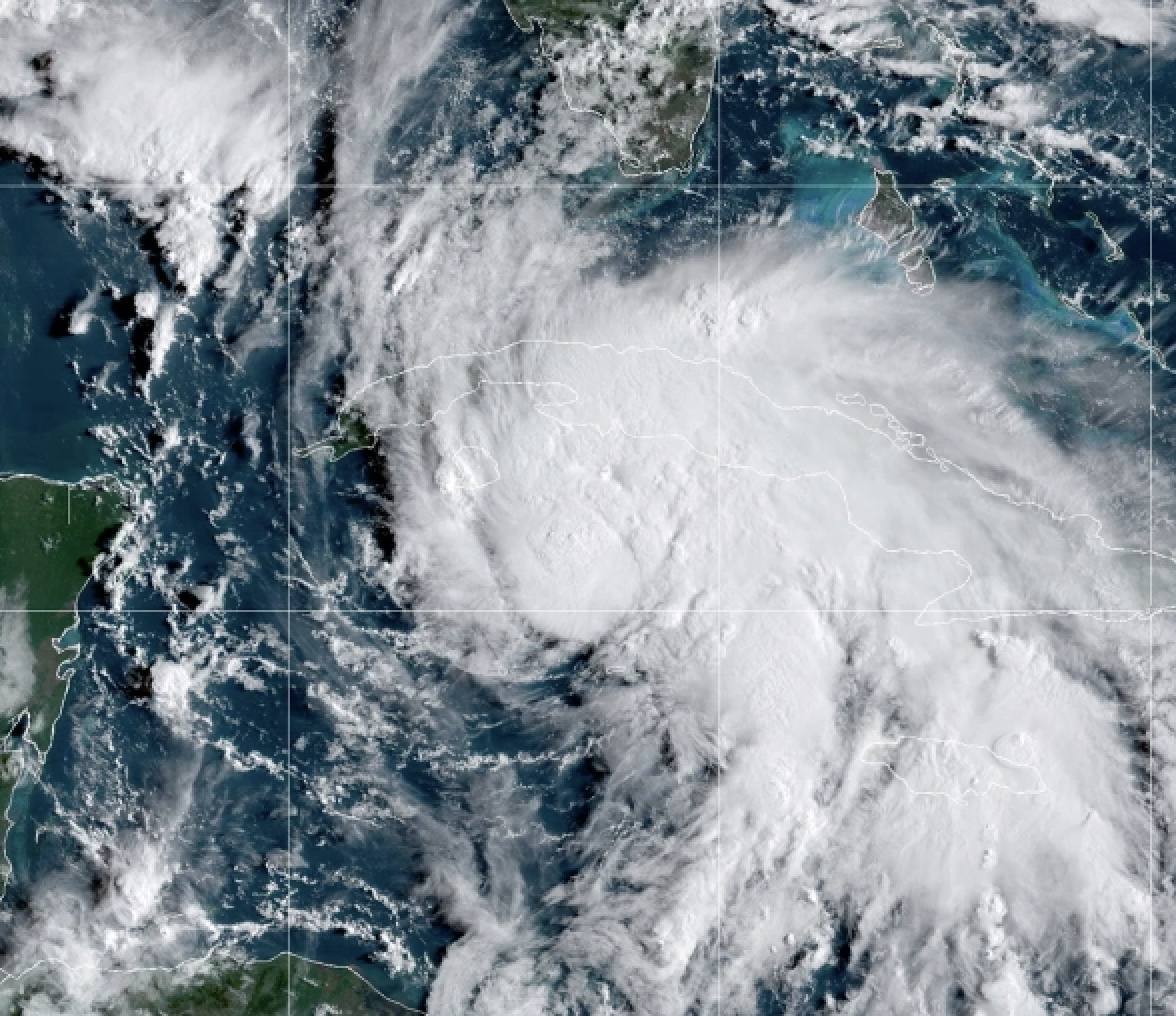
After Hurricane Ida: Prayers, tears, light, miracles and donations from somewhere ...

After Hurricane Ida: Prayers, tears, light, miracles and donations from somewhere ...

If you have ever lived in a major hurricane zone — Port Arthur, Texas, and West Palm Beach, Fla., for me — then you know that after the winds die down, the electric trucks (from all over) roll into town, from all over. The same thing is true with relief efforts from major religious groups. We’re talking Southern Baptists, Church of Jesus Christ of Latter-day Saints, World Vision, Churches of Christ and more.

The second half of that equation usually gets lots of ink the the religious press.

The elite newsrooms? Sometimes, yes. Lots of times, no.

So let’s look at a very interesting Hurricane Ida story from the Associated Press that provided all kinds of religion details about the locals and the people striving to help them: “Louisiana residents thankful for small miracles after Ida.” As a longtime GetReligion reader said, in an email:

This isn't profound, I guess it's just an example of "there, was that so hard?" . ... to report intimately about believers and clergy worshipping after a catastrophe. Frankly I've been kind of overwhelmed by the enormity of the loss in Louisiana — I joined a church relief team to help in Slidell and New Orleans a month after Katrina — and this story brought tears.

But note: This story focuses — with good cause — on the locals and government efforts post-hurricane. That’s a great story. But maybe this needed a word about the other big religion hook in post-storm news?

Meanwhile, here’s the overture:

MARRERO, La. (AP) — Amid the devastation caused by Hurricane Ida, there was at least one bright light Sunday: Parishioners found that electricity had been restored to their church outside of New Orleans, a small improvement as residents of Louisiana struggle to regain some aspects of normal life.

In Jefferson Parish, the Rev. G. Amaldoss expected to celebrate Mass at St. Joachim Catholic Church in the parking lot, which was dotted with downed limbs. But when he swung open the doors of the church early Sunday, the sanctuary was bathed in light.


Please respect our Commenting Policy

Was this a story? Why? Mississippi governor talks about heaven and Southern anti-vax trends

Was this a story? Why? Mississippi governor talks about heaven and Southern anti-vax trends

Here’s a complex question that is worthy of serious research by journalists: Are people who believe in heaven less likely to feel the need to get vaccinated against COVID-19?

Now, lots of people believe in eternal life and the vast majority of them believe — no matter what their level of faith or practice — that they are headed straight to heaven when they die. Belief in hell? That’s another matter.

Ah. But who, according to most media stereotypes, are the folks who REALLY believe in heaven? In particular, what kind of person would let that belief affect their actions in the real world (which means issues of political policy and public health)?

Obviously, we’re talking about those dang White evangelical Protestants. Right?

That brings us to a recent headline at The Daily Memphian (“the primary daily online publication for intelligent, in-depth journalism in the Memphis community”) that caught the eye of some GetReligion readers. The emails I received made it clear that some people were mad about this story for different reasons. Hold that thought.

First, the headline: “Miss. Gov.: South’s response to COVID impacted by belief in ‘eternal life’.” Then, here is the overture:

Mississippi Gov. Tate Reeves believes religion has a lot to do with the region’s response to the COVID-19 pandemic.

During a … fundraiser at the Eads home of Shelby County Election Commission Chairman Brent Taylor, Reeves spoke to several dozen Republicans.

“I’m often asked by some of my friends on the other side of the aisle about COVID … and why does it seem like folks in Mississippi and maybe in the Mid-South are a little less scared, shall we say,” Reeves said.

“When you believe in eternal life — when you believe that living on this earth is but a blip on the screen, then you don’t have to be so scared of things,” he said, but added: “Now, God also tells us to take necessary precautions. And we all have opportunities and abilities to do that and we should all do that.


Please respect our Commenting Policy

Reporting on faith-based investment guru Cathie Wood? Do your homework (better)

Reporting on faith-based investment guru Cathie Wood? Do your homework (better)

Investments aren’t my specialty at all, but I was lured to a New York Times business story recently that was headlined: “God, Money, YOLO: How Cathie Wood Found Her Flock.” (YOLO means “you only live once.”)

Hmm, I thought, an article about Christian investing? After all, this woman manages some $85 billion in assets. A superstar in the world of investing, she is known for her risky moves and appeal to the Reddit/Millennial crowd.

So, after 20 paragraphs describing the CEO of Ark Invest, we finally got to the God part.

It happened in the 21st paragraph, just after a mention about Wood speaking to business and religious groups about her late-career decision to start her own investment shop.

It began, she says, with a head-on encounter with the Holy Spirit.

On a gorgeous day in August 2012, Ms. Wood — a fund manager struggling through a rough quarter at AllianceBernstein — was struck by the silence inside her stately home in Wilton, Conn.

Her three children were gone, off to camp and other activities for the summer. She was facing two full weeks alone in the nearly 6,000-square-foot house she bought with her ex-husband in the 1990s.

Then she felt it.

“Wham,” Ms. Wood said last year on the “Jesus Calling” podcast, which is centered on the devotional writings of the best-selling Christian author Sarah Young. “I really feel like that was the Holy Spirit just saying to me, ‘OK, this is the plan.’”

“Jesus Calling,” for those of you who’ve lived on Pluto for the past few decades and have never heard of it, is one of the most successful devotional aids of all time. Thirty million units of this book -– and associated products –- have sold since 2004, when the one-time reclusive missionary to Australia (now living near Nashville) first published a devotional with words allegedly from Jesus himself.

Its fans claim that its words are what Jesus would sound like today if living in the 21st century. Its detractors call it theologically shallow and New Agey.


Please respect our Commenting Policy

Rabbit hole warning for journalists: When is a 'Catholic priest' not a 'Catholic priest'?

Rabbit hole warning for journalists: When is a 'Catholic priest' not a 'Catholic priest'?

There are few religion-beat rabbit holes deeper and more twisted than the world of alternative and splinter Catholic churches and the bishops and priests who lead them.

Be careful out there, folks. Long ago, I spent days chasing the “apostolic succession” claims of a U.S. Postal Service carrier in a Denver suburb who was a mail-order archbishop in one of the hundreds of “Old Catholic” flocks linked to various schisms after Vatican I or II. Some alternative Catholic of these flocks are conservative and some are liberal. Some have actual parishes. To tip your toe into these troubled waters, click here.

Religion-beat professionals are aware that not all people — men and women — who say they are Catholic priests are actually Roman Catholic priests. As Mollie “GetReligionista emerita” Hemingway said more than a decade ago, just because someone says that he or she plays shortstop for the New York Yankees doesn’t mean that this claim is true. Someone in the House of Steinbrenner gets to make that call.

I say this because of the small, but educational, waves of social-media chatter the other day about the testimony of Father Gabriel Lavery at an Ohio legislature hearing linked to a bill that would prohibit vaccine mandates.

Eyebrows were raised when Lavery, during a discussion of the current pope’s support for COVID-19 vaccines, said that he doesn’t recognize Pope Francis as pope because “you have to be a Catholic to be the pope.”

There’s a sound bite for you. As scribes at The Pillar noted:

In another clip, the priest said of Francis that “there are many clergy, bishops around the world who have simply have looked at the obvious, that his teachings on many things contradict Catholic teaching, and it’s a simple basic principle of Catholic theology — you can’t be the head of the Church if you don’t profess the Catholic faith.”

The priest’s remarks have attracted attention, and have been covered in some press reports with little mention of his ecclesiastical status. In some accounts, he has been identified as a parish pastor.

As I noted earlier, religion-beat professionals know to ask questions about clergy folks of this kind — who play essential roles, for example, in the history of ordination claims in the the Womenpriests, WomenPriests or Women Priests movement. General-assignment reporters covering these events often quote what the activists are saying about their credentials and that is that.


Please respect our Commenting Policy

Plug-In: Is Afghanistan a religion story? If so, it may be the year's biggest religion story

Plug-In: Is Afghanistan a religion story? If so, it may be the year's biggest religion story

A few weeks ago, realizing how quickly 2021 was racing toward 2022, I made a mental note of the year’s top religion stories so far.

On my quick list: Christian nationalism at the Jan. 6 Capitol riot. Battles over pandemic-era worship restrictions. Faith’s role in vaccine hesitancy. The biggest Southern Baptist Convention annual meeting in many years. The Communion drama between President Joe Biden and U.S. Catholic bishops. Jewish connections to the Florida condo collapse.

Nowhere in my mind: Afghanistan.

But now — especially after the suicide bombings in Kabul on Thursday — it’s looking as if news (much of it tied to religion) in that war-torn nation will dominate headlines for weeks and even months.

As I noted last week, it’s impossible to keep up with all the rapid-fire developments, but these stories delve into compelling religion angles:

Stranded at the airport (by Mindy Belz, World)

Taliban follow strict Islamic creed that doesn’t change with the times, scholars say (by Mark A. Kellner, Washington Times)

Taliban’s religious ideology has roots in colonial India (by Sohel Rana and Sumit Ganguly, ReligionUnplugged.com)

Who is ISIS-K, the group officials blame for the Kabul airport bombings? (by Jack Jenkins, Religion News Service)

Desperate Afghan Christians turned away at airport, aid groups say (by Alejandro Bermudez, Shannon Mullen and Matt Hadro, Catholic News Agency)

Kabul airport attacks strand Afghan contacts of Christian humanitarians (by Cheryl Mann Bacon, Christian Chronicle)


Please respect our Commenting Policy

New podcast: Gray Lady prints some complex Ryan Burge insights on Democrats and religion

New podcast: Gray Lady prints some complex Ryan Burge insights on Democrats and religion

Something old, something new.

Something red, something blue.

We started with something new and something blue during this week’s “Crossroads” podcast (click here to tune that in). But, as you will see, the “something old” turned out to be blue, as well.

“Blue,” of course, refers to the liberal/progressive half of the starkly divided American political scene, which also reflects, of course, divisions on moral, social, cultural and religious issues.

Oceans of mass-media ink have been poured out in recent decades by journalists covering the Religious Right and its scary impact on the Republican Party. What about the religious left — no capital letters, of course — and its impact on the Democrats?

That isn’t an important story, of course. At the start of the podcast I quoted some numbers retrieved at mid-week from some Google searches. A basic search for “Religious Right” yielded 6.5 million hits and a Google News search found 77,500 items. Do the same thing for “religious left” and you get 196,000 in the first search and 3,680 in the news search. Amazing, that.

This brings us to a New York Times op-ed essay by the increasingly omnipresent (and that’s a good thing) political scientist Ryan Burge, who contributes charts and info here at GetReligion. The headline: “A More Secular America Is Not Just a Problem for Republicans.” Here’s an early thesis statement:

Today, scholars are finding that by almost any metric they use to measure religiosity, younger generations are much more secular than their parents or grandparents. In responses to survey questions, over 40 percent of the youngest Americans claim no religious affiliation, and just a quarter say they attend religious services weekly or more.

Americans have not come to terms with how this cultural shift will affect so many facets of society — and that’s no more apparent than when it comes to the future of the Republican and Democratic Parties.

The impact on the GOP is rather obvious. While conservative religious groups remain strong in America (evangelicals are not vanishing, for example), the number of religiously unaffiliated (“nones”) continues to rise and the vague middle of the religious spectrum continues to shrink. Meanwhile, conservatives face an increasingly “woke” corporate culture and fading support on the left for old-fashioned First Amendment liberalism (think “religious liberty” framed in scare quotes).

Things get interesting — especially in the context of the Times op-ed world — when Burge discusses complications now facing Democratic Party leaders.


Please respect our Commenting Policy