Catholicism

That SBC powderkeg: Clearly, executive committee is bitterly divided on sexual-abuse issues

That SBC powderkeg: Clearly, executive committee is bitterly divided on sexual-abuse issues

Several decades ago, early in the media coverage of the Catholic clergy sexual abuse scandals, a veteran Catholic educator gave me some sobering advice.

When dealing with stories about sexual abuse, he stressed, the usual doctrinal and cultural labels do not apply. There wasn’t a “left” or a “right” side of the story because there were people hiding their sins on both sides. When dealing with sexual abuse, most conflicts centered on issues of honesty and integrity and, most of all, a willingness to repent and admit that these sins and crimes were real.

I thought of that the other day when reading the Religion News Service story that started dominos falling in America’s largest non-Catholic flock: “Leaked Russell Moore letter blasts SBC conservatives, sheds light on his resignation.” (I apologize for getting to this story late, due to a week of travels with family, followed by a painful health crisis that has me rather drugged and could return me to an emergency room at any moment.)

Journalists and SBC insiders were not surprised that RNS scribe Bob Smietana was involved in breaking that story, in part because of his years of experience in the Nashville market at The Tennessean, as well as five years with Lifeway Research, an organization linked to Southern Baptist life. This is one of those cases in which a reporter can build on years of experience and contacts in a complex, massive organization and, thus, Smietana has been landing one SBC scoop after another in recent years. It’s crucial that this RNS story was supported by a post featuring the full text of the 4,000-word Moore letter.

The next key story, by Sarah Pulliam Bailey, ran in The Washington Post: “Newly leaked letter claims Southern Baptist leaders 'covered up' sex abuse allegations.” Click here (.pdf file) for a full text of this second Moore letter. It’s packed with material from crucial voices on both sides of this conflict, with most of them speaking on the record. This is another MUST read report.

The ink will be flying fast and furious, I imagine, as combatants prepare for the 2021 national Southern Baptist Convention, which will be held June 15-16 in Nashville, with preliminary gatherings two days earlier.

As Moore stated in the letter posted by RNS, many people will assume that this conflict centers on his highly public opposition to the presidential candidacy of Donald Trump. However, he stressed that he is convinced the main lightning rod was his efforts to fight sexual abuse inside the SBC, along with his bridge-building efforts to Black congregations, a growing and strategic network in the convention.

Please respect our Commenting Policy

Thinking about forced marriages (with the Forward), but also happy Catholic moms with lots of kids

Thinking about forced marriages (with the Forward), but also happy Catholic moms with lots of kids

At first glance, this weekend’s two “think pieces” appear to clash.

But readers (and viewers) who dig deeper will find two radically different looks at important and valid stories linked to marriage and family life in very different traditional religious communities — Jewish, fundamentalist Protestant and Islamic.

There is much here for religion-news professionals, and news consumers, to ponder.

One story is dark and hellish, looking at the reality of forced marriages in a few religious groups. The other glows with positive images and voices, as mothers in the United Kingdom share stories from their lives in large, traditional, Catholic families.

First, let’s look at this piece from Simi Horwitz at the Forward: “In 21st century America, where arranged child marriages remain a scourge.” The overture:

Kate Ryan Brewer’s “Knots: A Forced Marriage Story” is one disturbing, though important, documentary, one that grows increasingly unsettling as three articulate and intelligent young women matter-of-factly recount their belittling, exploitive, and ultimately dehumanizing experiences in forced marriages. Mercifully each has escaped and forged successful, independent lives; one has become a recognized outspoken activist on behalf of victims.

The filmmakers assert that the practice of arranged marriages, often involving brides who are 15 or younger, continues almost unchecked and unchallenged. In fact, the only states that require the marrying parties to be at least 18 are Delaware, New Jersey, Minnesota and Pennsylvania. Between 2000 and 2010, nearly 250,000 children in the U.S. were married, and 77 per cent were young girls wedded off to much older men. In some cases they were forced to marry their rapists in order to salvage their reputations and the family’s honor.


Please respect our Commenting Policy

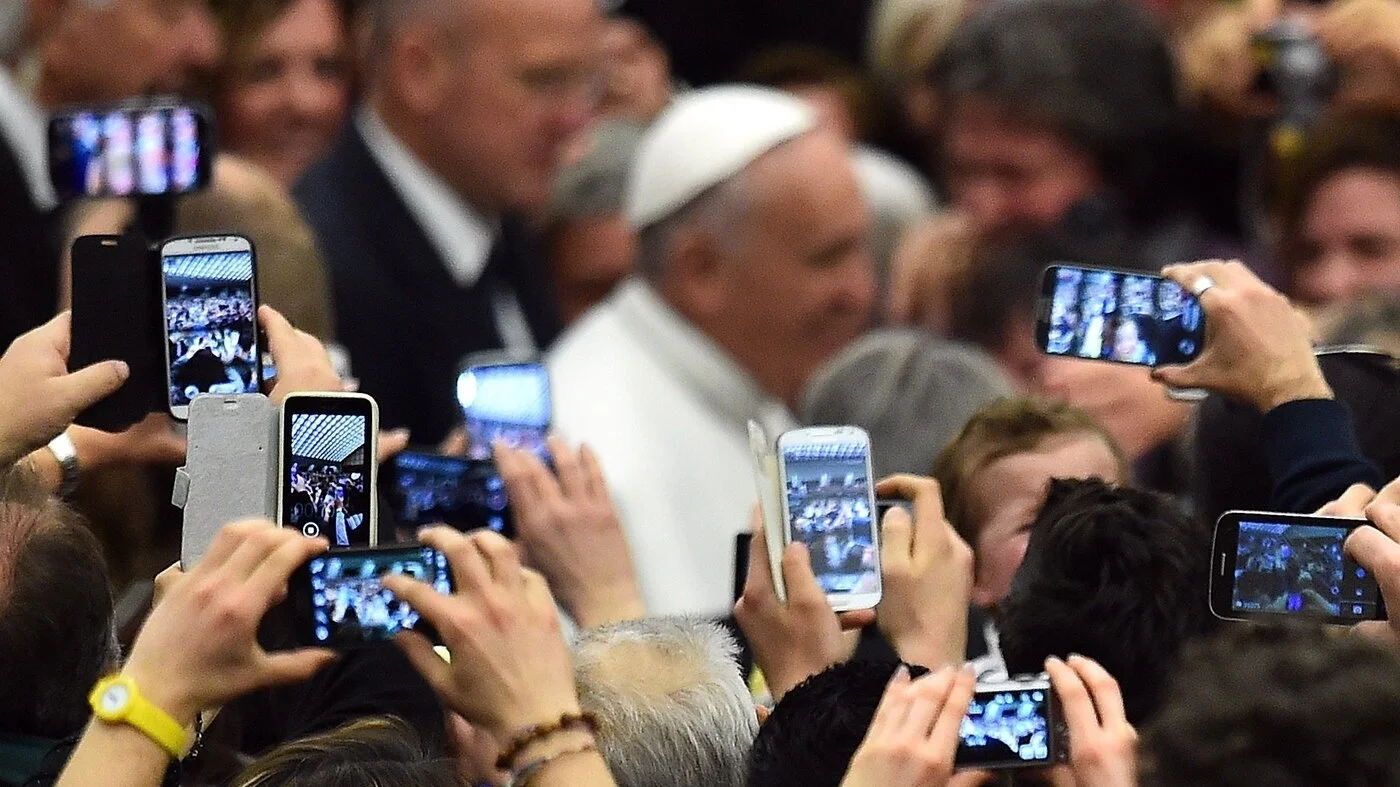
Pope Francis questions the purpose of official Vatican media: Does he have a point?

Pope Francis questions the purpose of official Vatican media: Does he have a point?

The year was 2012 and then-Pope Benedict XVI, yearning to “encounter men and women wherever they are, and begin dialogue with them” sent out his first tweet.

The papal Twitter account in English — and associated accounts in different languages — continue to this day under Pope Francis. For the leader of the world’s 1.3 billion Roman Catholics, it remains a way to evangelize through the computer, especially during the pandemic.

It did not go unnoticed when Francis — paying a visit on May 24 to the Dicastery of Communications to mark the 90th anniversary of Vatican Radio and the 160th anniversary of the Vatican’s newspaper L’Osservatore Romano — used the occasion to call the Vatican’s in-house media to stay relevant during a challenging media landscape.

The Associated Press, in its news story, noted the following:

Francis has vowed not to fire anyone to offset the economic crisis created by COVID-19 and the pandemic-related shuttering of one of the Holy See’s main sources of revenue, ticket sales from the Vatican Museums.

But in a warning of sorts to the Vatican communications staff, he opened his unscripted remarks Monday with a pointed question.

“There are a lot of reasons to be worried about the Radio, L’Osservatore, but one that touches my heart: How many people listen to the Radio? How many people read L’Osservatore Romano?” Francis asked.

He said their work was good, their offices nice and organized, but that there was a “danger” that their work doesn’t arrive where it is supposed to. He warned them against falling prey to a “lethal” functionality where they go through the motions but don’t actually achieve anything.

In dealing with Vatican-run media, journalists need to ask several questions:

* Why has Pope Francis questioned his own media?


Please respect our Commenting Policy

Boris Johnson's Catholic wedding: Why didn't the New York Times consult a Canon lawyer?

Boris Johnson's Catholic wedding: Why didn't the New York Times consult a Canon lawyer?

When preparing news reports about a chess match, it really helps if reporters quote one or more experts on the rules of chess.

The same thing is true when covering the FIFA World Cup. At some point, it would help to have an expert define “offsides” and some of soccer’s other more complicated rules.

When covering the U.S. Supreme Court, it helps to have a reporter on the team with a law degree and some serious experience covering debates in elite courtrooms.

This brings me that New York Times article the other day about that eyebrow-raising wedding at Westminster Cathedral between the current prime minister of England and his latest of many lady friends. The double-decker question covered many essential facts:

Why Could Boris Johnson Marry in a Catholic Church?

The British prime minister was married twice before, but the church didn’t recognize those unions because they were not Catholic.

Now, this article did some things very well, including offering a crisp, clear summary of Johnson’s complicated history as a husband and lover. Read that, if you wish.

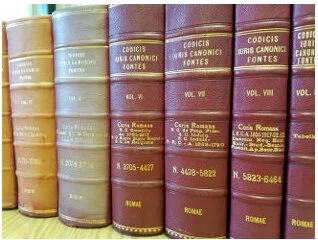
However, I was struck by two words that were missing in this article — that would be, “Canonical” and “form” — even though discussions of this legal term was all over Catholic Twitter once the secret wedding was made public.

What, pray tell, is “Canonical form”? We will get to that in a moment.

In terms of journalism basics, the crucial point is that it really would have helped if the Times team had interviewed one or two Catholic Canon lawyers who understand this term and the history behind the church’s teachings on this subject. As things turned out, readers ended up knowing more about how this rite offended the sensibilities of Catholic LGBTQ activists than the specifics of the church laws that allowed the wedding to take place.


Please respect our Commenting Policy

New podcast: New York Times still ignoring religion ghosts in 'demographic winter' trends

New podcast: New York Times still ignoring religion ghosts in 'demographic winter' trends

I could, without breaking a sweat, create a list of important religion-beat news stories that are, to some degree or another, connected to the sinking birth rates in the Unites States and around the world.

Clashes between Chinese leaders and Muslims inside their borders? Decades of declining numbers of men seeking Catholic priesthood? The sharp decline in the power of “mainline” Protestant churches? American political clashes between red-zip code and blue-zip code regions, usually seen as tensions between rural and urban life. Tensions between Orthodox and progressive Jews. Soaring numbers linked to anxiety and loneliness. And so forth and so on.

So when I saw this headline in The New York Times — “Long Slide Looms for World Population, With Sweeping Ramifications“ — I immediately thought to myself, “Here we go again.” I also figured that this would be the topic for this week’s “Crossroads” podcast (click here to tune that in).

Sure enough, this new feature was the global version of a Times story several years ago that led to a GetReligion post with this headline: “New York Times asks this faith-free question: Why are young Americans having fewer babies?” As I wrote at that time:

In a graphic that ran with the piece, here are the most common answers cited, listed from the highest percentages to lowest. That would be, "Want leisure time," "Haven't found partner," "Can't afford child care," "No desire for children," "Can't afford a house," "Not sure I'd be a good parent," “Worried about the economy," "Worried about global instability," "Career is a greater priority," "Work too much," "Worried about population growth," "Too much student debt," etc., etc. Climate change is near the bottom.

The economic and cultural trends are all valid, of course. But they also point toward changes in how modern people in modern economies define and look for “meaning in life” and the beliefs that define those choices.

Think birth, marriage, vocation, death. We are talking about topics that, for several billion people on this planet, are linked to religious faith.

So what did the Times have to say?


Please respect our Commenting Policy

Where will American religious groups fit into the newly electrified abortion debate?

Where will American religious groups fit into the newly electrified abortion debate?

The U.S. Supreme Court's agreement to review Mississippi's strict abortion law means that the public argument on this unending dispute will be the most intense in many years -- with a ruling due right in the midst of the 2022 election campaign.

Despite the Court's increased conservative majority, there's no certainty it will clamp new restrictions on abortion. Yet it's also possible that the Court might overthrow its own 1973 Roe v. Wade decision, which legalized most abortions nationwide in 1973.

If so, the impact will be momentous but not quite as apocalyptic as "pro-choice" advocates suggest. Abortion would remain widely available because decision-making would simply be returned to democratically elected state legislatures and many would maintain liberal policies. Charities might aid women in the "pro-life" states needing travel for out-of-state abortions.

For those covering the religion beat, the coming year is a major defining moment as America's variegated denominations state what they now believe about the morality of abortion and why.

After the Roe ruling, the 1976 conventions of the two major political parties began setting opposite stances. The Democrats' platform acknowledged that many Americans had "religious and ethical" concerns but opposed a Constitutional amendment to bar abortions. Similarly, the Republicans' platform stated that some in the party favored the Supreme Court's edict, but advocated such an amendment "to restore protection of the right to life for unborn children."

Religion writers well know how that basic split hardened and reshaped religious voters' political alignments. There's been less attention to the way the advent of open abortion turned around the Social Gospel thinking of Protestant liberals.


Please respect our Commenting Policy

Another trial by media: In defense of Mother Teresa and why she is a saint, not a 'cult leader'

Another trial by media: In defense of Mother Teresa and why she is a saint, not a 'cult leader'

Historical figures are going through another mass-media reckoning. They have been for some time. Some with good reason.

Christopher Columbus? Understandable given what was unleashed by his arrival from Europe.

Thomas Jefferson? A paradox that’s worth examining given his ability to pen the Declaration of Independence and also own slaves. In some cases, there is evidence that he fathered children with them.

Other figures haven’t been so obvious. Following the tragic murder of George Floyd last May, many statues were toppled or removed across the United States, including those of 18th century Spanish priest Junipero Serra, Abraham Lincoln and Mahatma Gandhi. These weren’t so obvious to explain. I’m not sure those who damaged them knew either.

This takes me to the latest reckoning: Mother Teresa, now known as Saint Teresa of Calcutta.

Yes, that Mother Teresa. The diminutive woman who dedicated her life to helping “the poorest of the poor” in India. And the same one who was awarded the Nobel Peace Prize in 1979 and Pope Francis canonized a saint in 2016. Turns out she was a cult leader.

Michelle Goldberg penned an opinion piece in The New York Times, which ran Saturday on its website, under the headline: “Was Mother Teresa a cult leader?”

With a headline like that, is it possible the thesis will be that she wasn’t?


Please respect our Commenting Policy

Are religious and culturally conservative groups silenced on the Internet?

Are religious and culturally conservative groups silenced on the Internet?

Not all religious believers are conservatives.

I get that. But many are and not a few in this group have seen their posts frozen out of Facebook and other social media simply because some moderator thinks they’re spreading hate speech (which is usually posts defending centuries of Christian doctrine).

Big Tech has gotten reamed on this by members of Congress (which they seem to ignore) on the grounds of crushing political dissent. But what about religious views?

The National Catholic Register recently posted this thoughtful story about how the silencing of religious views (and the morality that emanates from them) affects Catholics who number some 51 million U.S. citizens or one-fifth of the population. This is not a small group. Here’s how the feature begins:

Lila Rose is no stranger to the tactics social-media giants Facebook and Twitter employed in banning former President Donald Trump from their platforms.

As head of the pro-life group Live Action, Rose has seen the organization she founded permanently banned from Pinterest, barred from advertising on Twitter and its entire TikTok account temporarily removed for unnamed “community violations.”

Rose gained some fame for her sneaking into abortion clinics as a teenager, posing as a girl seeking an abortion while recording everything with a video camera in her backpack to later accuse Planned Parenthood of looking the other way on statutory rape. She’s pictured with this post.

In remaining engaged on social media, where she and Live Action have a combined total of 5 million followers, Rose said she sticks to her message and tries to follow each platform’s guidelines. When an issue arises, she attempts to determine whether it was the result of a misunderstanding or mistake before pursuing a challenge.

“If you don’t have a clear case, saying you do when you don’t is not helpful,” she said. “I would caution people that just because your post is not getting a lot of shares or likes or you lost followers doesn’t mean it’s a nefarious scheme to destroy you. It’s important to have a lot of common sense and be thoughtful and discerning about whether this is truly the case.”

Still, for Catholics and others with conservative views, examples of Big Tech’s heavy hand abound, providing plenty of reasons to be concerned about access to social media.


Please respect our Commenting Policy

Still thinking about (trigger alert) a scary Twitter topic -- Elizabeth Bruenig and motherhood

Still thinking about (trigger alert) a scary Twitter topic -- Elizabeth Bruenig and motherhood

At this point, I am a bit confused. What is the latest Twitter firestorm about Elizabeth Bruenig, the latest New York Times talent to hit the exit door for one reason or another? I may have missed a controversy or two in recent weeks.

You see, I am still stuck on the furor that greeting that essay published (May 7) just before she left the Gray Lady, the one with that terrifying headline: “I Became a Mother at 25, and I’m not Sorry I Didn’t Wait.”

I’ve been thinking about that one ever since and, thus, I have decided to treat it as a weekend think piece. But part of me still wants to argue that there was some kind of news feature that could have been written about that whole affair.

Yes, it was another example of folks in the blue-checkmark tribe losing their cool because someone triggered the urban, coastal principalities and powers. Can you say “fecundophobia”? However, this essay was also linked to some huge trends in postmodern America, especially crashing fertility rates and declines in the number of people getting married. There was news here, of some kind.

First, here is the Bruenig overture:

If someone had asked on the day of my college graduation whether I imagined I would still be, in five years’ time, a reliable wallflower at any given party, I would have guessed so. Some things just don’t change. What I would not have predicted at the time is that five years hence I would be lurking along the fringes of a 3-year-old’s birthday party, a bewildered and bleary-eyed 27-year-old mom among a cordial flock of Tory Burch bedecked mothers in their late 30s and early 40s who had a much better idea of what they were doing than I ever have.


Please respect our Commenting Policy