Catholicism

Catholic News Agency looks at GetReligion (including why Catholics still care about news)

Catholic News Agency looks at GetReligion (including why Catholics still care about news)

There is no “Crossroads” post this week, in part because various people — including me — are engaged in long-awaited in what I think used to be called “vacations.” In my case, I will be trading the lovely mountains of East Tennessee for my old stomping grounds — the Rocky Mountains in Colorado.

If you want to check out some podcasts, by all means click here to head into our online library or go to Apple Podcasts and sign up for the automatic feed.

In place of a podcast, I think GetReligion readers — old and new — will want to check out a new Catholic News Agency feature — “GetReligion points out 'ghosts' in religion reporting among mainstream media“ — about the history of GetReligion and why we keep doing what we do. Here’s the overture:

The news-checking website GetReligion.org is in its 18th year of looking for “ghosts” in mainstream media. The “ghosts,” as co-founder and current editor Terry Mattingly calls them, are holes in news coverage that exist either because the media does not want to cover the religious aspect of a story or because the reporters are unaware that a religious component is present.

“The goal was to openly advocate for an old style, liberal approach to journalism where you are striving for accuracy and striving to let people on both sides of controversial issues have their voices heard in a way that is accurate and shows them respect,” Mattingly said.

GetReligion was founded in 2004. Mattingly and fellow co-founder Douglas LeBlanc set out to dissect news coverage and brought with them a number of experienced religion writers, including Richard Ostling, Ira Rifkin, Julia Duin and Bobby Ross. Together, they hoped to shed light on the inconsistencies in religion reporting or religion bias in the news.
Please respect our Commenting Policy

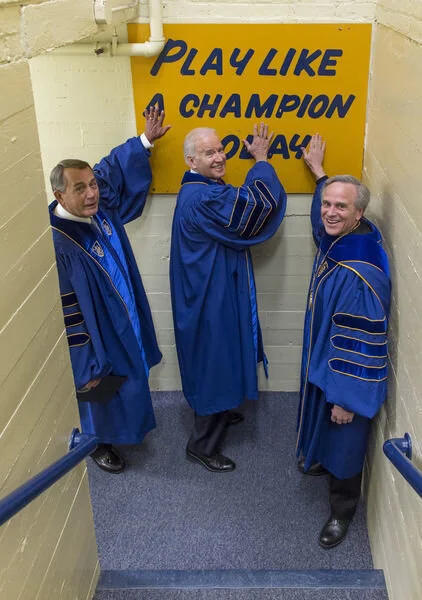
Mainstream press shrugs at Biden's Notre Dame snub for upcoming graduation rite

Mainstream press shrugs at Biden's Notre Dame snub for upcoming graduation rite

This is the time of year where college graduations dominate the lives of many Americans. A year after these ceremonies were relegated to Zoom because of the pandemic, graduations are back this spring, with masks and social distancing in place, to again signal the sending off to undergraduates into the workplace.

For journalists, graduations have long served as an easy news stories. Above all, the graduation speaker is what makes these ceremonies news. At that vast majority of rites at elite and state schools the speaker is — to one degree or another — a cultural or political liberal.

Thus, is it any surprise that the ongoing tug-of-war between the U.S. bishops and President Joe Biden has spilled over into the graduation season? Well, it has in the form of the president not addressing graduates at the University of Notre Dame this year.

This news story was broken by Catholic News Agency. Here’s how the May 11 news story opened:

In a break with recent tradition, President Joe Biden will not be delivering the commencement address at the University of Notre Dame this year – although he was invited by the university to do so.

On Tuesday, the university announced that its May 23 commencement speaker will be Jimmy Dunne, a finance executive and trustee of the university. During the last three presidential administrations, U.S. presidents or vice presidents have addressed the university's commencement in their first year in office, but that trend will not continue in 2021.

Although a university spokesman told CNA that, as a policy, “we do not discuss who may or may not have been approached to address our graduates,” sources from the White House confirmed to CNA that Biden had indeed been invited by the university but could not attend due to scheduling.

Biden, just the second Catholic president since John F. Kennedy in 1960, has not been shy about mentioning his faith in public.

While he’s attended Mass regularly on Sundays, Biden supports taxpayer-funded abortion in defiance of the U.S. bishops’ conference and, as vice president, he performed two same-sex marriage rites. The Biden administration has also started to roll back restrictions on public funding of abortion providers, has supported the expansion of LGBTQ rights and continues to wage a legal battle to keep a mandate in place for doctors to provide gender-transition surgeries.


Please respect our Commenting Policy

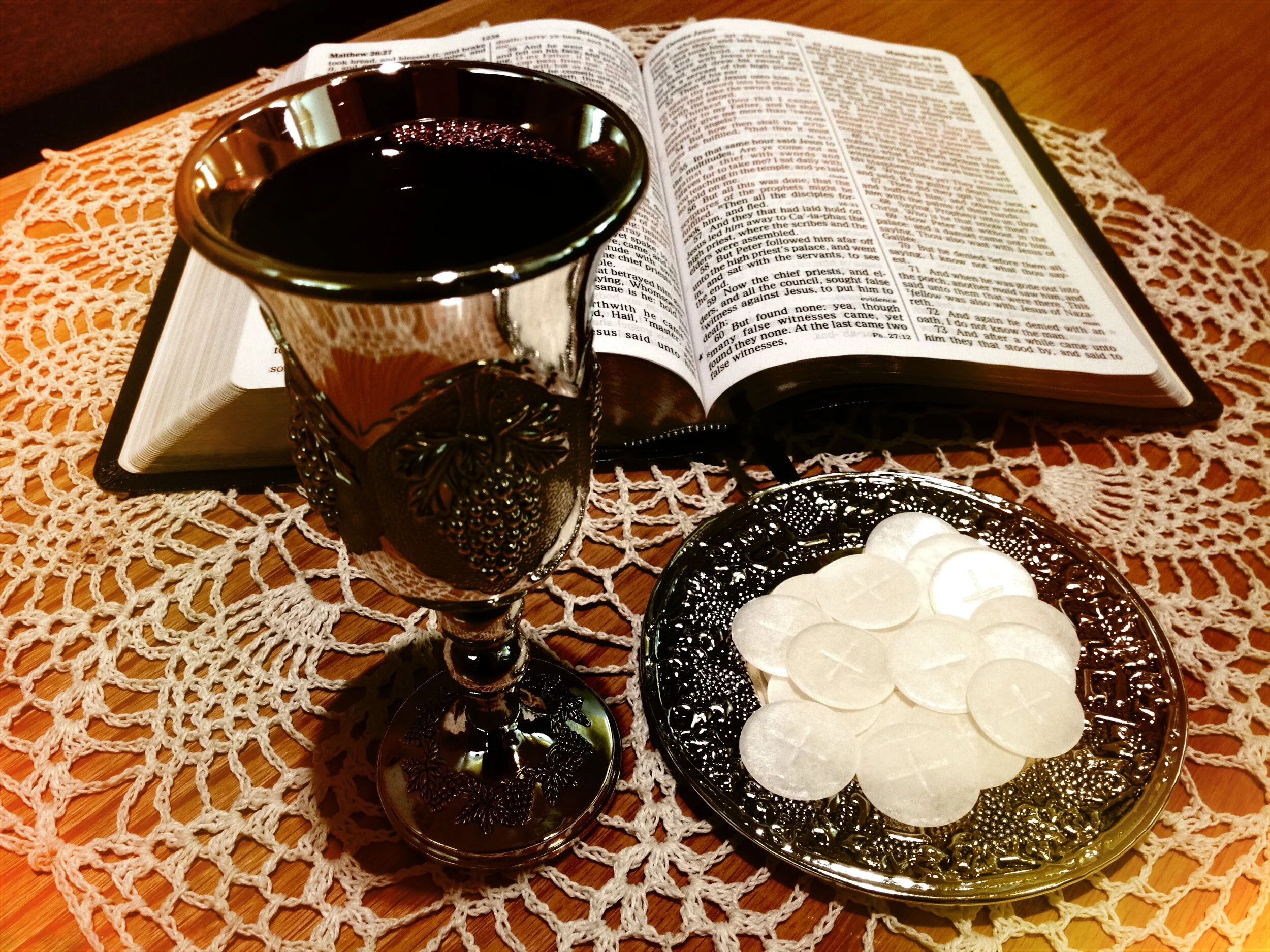
Bishops debate 'Eucharistic coherence,' a matter of doctrine, politics and eternal judgement

Bishops debate 'Eucharistic coherence,' a matter of doctrine, politics and eternal judgement

Archbishop Joseph Cordileone leads the Archdiocese of San Francisco, a symbolic city in debates about modern American culture.

But what matters the most, as tensions rise among Catholic leaders, is that Cordileone is House Speaker Nancy Pelosi's hometown bishop. Thus, it's hard for politicos to avoid blunt passages in his new pastoral letter, "Before I Formed You in the Womb I Knew You."

Citing centuries of church doctrine, the archbishop argued that Catholics who "reject the teaching of the Church on the sanctity of human life and those who do not seek to live in accordance with that teaching should not receive the Eucharist. It is fundamentally a question of integrity: to receive the Blessed Sacrament in the Catholic liturgy is to espouse publicly the faith and moral teachings of the Catholic Church, and to desire to live accordingly."

There is, he added, "a great difference between struggling to live according to the teachings of the Church and rejecting those teachings. … In the case of public figures who profess to be Catholic and promote abortion, we are not dealing with a sin committed in human weakness or a moral lapse: this is a matter of persistent, obdurate and public rejection of Catholic teaching. This adds an even greater responsibility to the role of the Church's pastors in caring for the salvation of souls."

Citing a famous example, Cordileone recalled when former New York Mayor Rudolph Giuliani received Holy Communion during a 2008 Mass led by Pope Benedict XVI. This caused scandal and, according to the late Cardinal Edward Egan, violated an agreement that Giuliani would not receive the Sacrament because of his public support for abortion rights and other clashes with doctrine.

The big issue, as U.S. bishops prepare for June discussions of "Eucharistic coherence," is not how to handle a former New York City mayor. The question is whether bishops can address their own divisions about the status of pro-abortion-rights Catholics such as Pelosi and President Joe Biden. While vice president, Biden also performed two same-sex marriage rites.

San Diego Bishop Robert McElroy, firing back at Cordileone in America magazine, stressed that the "Eucharist must never be instrumentalized for a political end. … But that is precisely what is being done in the effort to exclude Catholic political leaders who oppose the church's teaching on abortion and civil law. The Eucharist is being weaponized and deployed as a tool in political warfare. This must not happen."


Please respect our Commenting Policy

Same-sex Catholic blessing rites in Germany: Why talk to experts on both sides of this story?

Same-sex Catholic blessing rites in Germany: Why talk to experts on both sides of this story?

And this just in: Germany’s Catholic left proceeded with its planned same-sex blessing rites and, as you would expect (see previous GetReligion podcast and post on this topic), mainstream journalists were there to capture the details.

Sort of.

Actually, not so much.

The most important content — the precise wording of the blessing prayers, in doctrinal terms — appear to be Missing In Action. It’s possible that, as usual, journalists were not interested in the liturgical and doctrinal details. However, I could imagine a scenario in which journalists were asked by organizers to avoid that doctrinal content, with good cause. That material that will matter to canon lawyers.

Also, there was no need to look for content drawn from interviews with pro-Catechism Catholics who opposed the winds of change blowing in Germany. Clearly, this was a story with only one side that needed to be covered. Here is a key part of the Associated Press report written just before the main wave of events on May 10 (“German Catholics to bless gay unions despite Vatican ban”):

Germany is no stranger to schism: 500 years ago, Martin Luther launched the Reformation here. …

In Berlin, the Rev. Jan Korditschke, a Jesuit who works for the diocese preparing adults for baptism and helps out at the St. Canisius congregation, will lead blessings for queer couples at a worship service May 16.

“I am convinced that homosexual orientation is not bad, nor is homosexual love a sin,” Korditschke told The Associated Press in an interview Friday. “I want to celebrate the love of homosexuals with these blessings because the love of homosexuals is something good.”

The 44-year-old said it is important that homosexuals can show themselves within the Catholic Church and gain more visibility long-term. He said he was not afraid of possible repercussions by high-ranking church officials or the Vatican.


Please respect our Commenting Policy

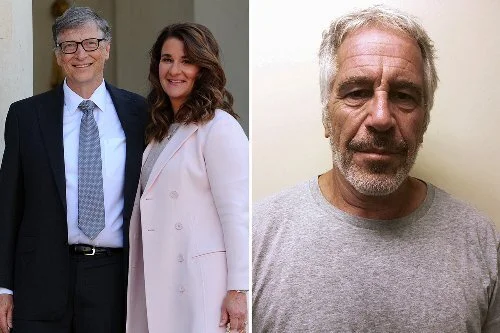
Religion ghosts in Bill and Melinda Gates split? There are some old questions to ask ...

Religion ghosts in Bill and Melinda Gates split? There are some old questions to ask ...

I have written quite a few headlines over the past four decades or so and read a kazillion more. Still, I have to admit that a news headline the other day in The Washington Post stopped me in my tracks: “If Bill and Melinda Gates can’t make a marriage work, what hope is there for the rest of us?

I immediately assumed this was some kind of first-person commentary.

However, it appears that this was a news feature — using the break-up of one of the world’s richest couples as a chance to examine the marital stress caused by COVID-19 lockdowns, life changes for aging Baby Boomers and the resulting need for professional counseling. Here’s the overture:

Just imagine how many hours of couples therapy you can afford when you’re among the world’s richest people. Or the shared sense of purpose you could forge while raising three children and running a $50 billion charitable foundation with your spouse.

Then imagine that it’s not enough to keep you together.

In announcing their decision to divorce, Bill and Melinda Gates cited the work they’d done on their marriage, and a mutual sense of pride in their children and philanthropy. But, they said in identical joint statements shared on Twitter, “we no longer believe we can grow together as a couple in this next phase of our lives.”

Now, for millions of Americans it would be logical to ask another question whenever a couple faces a crisis of this kind. It’s a kind of two-edged sword question that can be carefully worded as follows: Did religions and-or moral issues have anything to do with the break-up of this marriage?

All of the initial coverage that I saw didn’t include any religion/moral information at all. There is a chance that these questions will be asked in the days ahead, now that the Wall Street Journal and other publications have added a rather problematic name to the cast list in this drama — Jeffrey Epstein.

However, I had already opened a digital file folder on this topic because my pre-Internet (think dead tree pulp) files on this couple included a lengthy 1997 Time magazine feature with this headline: “In Search of the Real Bill Gates.” This long-ago article included several details of interest, including at least two of the religious-moral nature. We will take the less famous of these two details first:


Please respect our Commenting Policy

With all due respect, reports about Biden, the 'McCarrick doctrine' and Mass are not stupid

With all due respect, reports about Biden, the 'McCarrick doctrine' and Mass are not stupid

“The Biden Communion stories are stupid,” proclaims the headline atop a Religion News Service column by Father Thomas J. Reese.

The opinion by Reese, a Jesuit priest and RNS senior analyst, follows a flurry of news reports — which we first mentioned last week — about whether the nation’s second Catholic president might be denied Communion because of his support for abortion rights.

“This is a stupid story for canonical, theological and political reasons,” Reese writes. “First, and foremost, the U.S. Conference of Catholic Bishops does not have the canonical authority to tell (President Joe) Biden that he cannot go to Communion.”

For insight on the canonical, theological and political issues, I’d highly recommend Reese’s column. As for his claim that the news stories are stupid, I’d respectfully disagree. From a journalistic perspective, they are, in fact, highly newsworthy.

Even if much of the coverage could be better, as Clemente Lisi explained here at GetReligion, with the essay then appearing at Religion Unplugged. A key topic being avoided? The role of fallen cardinal Theodore “Uncle Ted” McCarrick in developing the awkward compromise currently in effect here in America.

Another helpful read at Religion Unplugged: Stephen P. Millies, an associate professor of public theology at Catholic Theological Union in Chicago, dissects the power struggle behind the U.S. bishops’ move.

Among this week’s related headlines:

Pelosi’s archbishop says prominent Catholics who support abortion rights should be denied Communion (by Reis Thebault, Washington Post)

How faith groups feel after Biden’s first 100 days (by Kelsey Dallas, Deseret News)

New bishop of Biden’s hometown mum on Communion question (by Nicole Winfield and Luis Andres Henao, Associated Press)

Catholic bishops who want to deny Biden Communion may have to reckon with the pope (by Jack Jenkins and Claire Giangravé, RNS)


Please respect our Commenting Policy

Thinking about evangelicals and COVID-19 vaccines: Wait! The numbers show WHAT?!?!

Thinking about evangelicals and COVID-19 vaccines: Wait! The numbers show WHAT?!?!

The last 14 months have given the world a series of public health challenges that it has never had to grapple with before.

Will people willingly disrupt their lives in order to contain the spread of a potentially lethal virus? Can drug manufacturers develop and test a vaccine in a very short period of time that is effective against COVID-19? Will those same pharmaceutical companies be able to ramp up manufacturing capabilities quickly enough to satisfy the demand for those vaccines?

In terms of vaccine creation and distribution, there’s no doubt that it’s been an unqualified success. Every estimate indicates that the United States will be awash in vaccines by May. However, the question that is looming on the very near horizon is the most important and difficult to answer: will the United States be able to vaccinate enough of the population to get to a state of herd immunity and finally put an end to this year long nightmare?

It’s not the hard sciences that are under the microscope, it’s the social sciences. To reach herd immunity, most experts believe that a country needs to get at least 75% of the population fully vaccinated as a minimum threshold. Will that even be possible? Are societal factors like religion actually making the goal of herd immunity even more difficult?

The organization Data for Progress has been putting a poll into the field since the very beginning of the pandemic in March of 2020 as a way to get a sense of what percentage of the public is engaging in risky behaviors and how they feel the government is handling the crisis. Since January they have begun to ask respondents questions about their receptiveness to the vaccine. What these results indicate is that there are some reasons for hope, but there is also ample evidence that getting shots into arms may prove to be a lot more difficult in the very near future.

The survey asked respondents if they had received at least one dose of the COVID-19 vaccine. As can be quickly inferred, those shots were in short supply in January. Just about 6% of the entire sample indicated that they had gotten the vaccine at that point. However, things improved rapidly from there and the share of Americans who had been inoculated essentially doubled every month from January through early April, when 44% of the population had gotten a dose of the vaccine.

However, when the sample is broken down into the three of the largest religious groups: White evangelicals, White Catholics and the religiously unaffiliated, some disparities begin to emerge.


Please respect our Commenting Policy

New podcast: Religious wars over vaccines? They're more complex than those headlines

New podcast: Religious wars over vaccines? They're more complex than those headlines

Once again, it’s time for some time travel on the religion beat — as we ponder the current state of news coverage about the COVID-19 mask-and-vaccine wars.

Think back to Easter a year ago. Church leaders were wrestling with the real possibility that they would not be able to worship during Holy Week and on the holiest day on the Christian calendar. This was got lots of ink from the press, with good cause. There appeared to be two camps: (1) Crazy right-wingers (many journalists saw Donald Trump looming in the background) who wanted face-to-face worship at any cost and then (2) sensible, sane clergy willing to move to online worship and leave it at that.

The reality was more complex, especially since some (not all) government leaders seemed to think that worship was more dangerous than other forms of public life. During this week’s “Crossroads” podcast (click here to tune that in), host Todd Wilken and I discussed how it’s easy to see the same patterns in news reports on bitter battles over COVID-19 vaccines. For some on the left — see this fascinating Emma Green piece at The Atlantic — super-strict coronavirus rules have evolved into faith-based dogma.

Now for that early COVID-19 flashback. In a post and podcast a year ago, I argued that this wasn’t really a simplistic story about two groups (good churches vs. bad churches), but one in which there were at least five camps to cover:

Those five camps? They are (1) the 99% of religious leaders who cooperated and took worship online, (2) some religious leaders who (think drive-in worship or drive-thru confessions) who tried to create activities that followed [government] social-distancing standards, (3) a few preachers who rebelled, period, (4) lots of government leaders who established logical laws and tried to be consistent with sacred and secular activities and (5) some politicians who seemed to think drive-in religious events were more dangerous than their secular counterparts.

Say what? … Why were drive-in worship services — with, oh, 100 cars containing people in a big space — more dangerous than businesses and food pantry efforts that produced, well, several hundred cars in a parking lot?

These five camps still exist and we can see them in the vaccine wars.


Please respect our Commenting Policy

The politics of Holy Communion and what it says about news coverage of Joe Biden

The politics of Holy Communion and what it says about news coverage of Joe Biden

If you regularly read mainstream political news coverage, you can often come away with the notion that President Joe Biden is a man who governs as a moderate, seeks unity with Republicans and is consistently guided by his “devout” Catholic faith.

A lot of this reflexive media coverage is largely a fantasy. Biden went from being compared to JFK before Inauguration Day to FDR by the time he recently reached the 100-day mark. He has outlined a series of initiatives that his adversaries on the other side of the aisle have dismissed as socialism. Biden, it must be highlighted, is president at a time when the Senate is split 50-50 and Democrats have a slim majority in the House. The American people did not, in a tight election, give him a healthy mandate.

But this post isn’t aimed at breaking down Biden’s politics.

Instead, it’s to focus on the news coverage around Biden’s faith and how his beliefs relate to the church’s own teachings and the U.S. bishops tasked with enforcing doctrines. Is Biden a progressive revolutionary on matters of morality and doctrine? If so, can he also be “devout” in his faith? Should he — along with many other Catholic politicians — continue to receive Holy Communion? What can, and will, the bishops do next?

A lot of what we know regarding the answers lies in how the press cover such political issues and religion, of course. Combine political politicization in an age of misinformation with the culture wars and you have a very complicated set of factors for the news media to cover.

It should be noted that secular newsrooms don’t dislike organized religion like many may believe. Instead, they just don’t like religious leaders who attempt to defend traditional dogmas that govern said faith. Therefore, news coverage is often framed this way: Biden can be both “very Catholic” and pro-choice. He’s a good, modern Catholic, not a bad, ancient Catholic.

This very issue was thrust back into the forefront again when The Washington Post published an account on April 29 regarding the ongoing conflict between the president and U.S. bishops, a news story promoted on the newspaper’s Twitter that “a rising group of right-wing U.S. Catholic bishops” had come into conflict with a “very Catholic” Biden over his abortion stance.


Please respect our Commenting Policy