Catholicism

Thinking with two key Southern Baptists: Concerning those scary Gallup Poll numbers

Thinking with two key Southern Baptists: Concerning those scary Gallup Poll numbers

Let’s fly up to high altitude for a moment, before reading two interesting think pieces about those Gallup Poll numbers — “U.S. Church Membership Falls Below Majority for First Time” — that launched a kazillion headlines.

If you’ve been paying attention to the state of Christianity in America for the past 50 years or so, you’re aware of several broad trends.

* In terms of demographics, the world of oldline Protestantism — the “Seven Sisters” churches — is in freefall, with these aging denominations losing around 50% of their members after peaking in the 1960s.

* Catholic churches have grown, kind of, in part due to rising numbers of Latinos in the pews. Worship numbers are down. New vocations for priests and nuns are way down (but it’s fascinating to note the cases in which numbers are steady, or rising). Mass attendance and birth-rate trends are crucial.

* Evangelical Protestants surged, especially in the Sunbelt, filling much of the public-square void created by mainline decline. Growth was especially strong with charismatics and Pentecostals — Black and White. In the past decade or two, the rapid growth of nondenominational or even post-denominational churches and networks has hurt mainstream evangelicalism, especially the Southern Baptist Convention. Most evangelical numbers have stalled or gone into a slower decline.

Summary: Churches are growing or holding steady if members are (a) having children, (b) raising children in the faith, (c) retaining the loyalty of those children into the next generation and (d) winning converts (that final point has more to do with doctrine than politics).

Notice that the words “Donald Trump” are missing. Like I said, this is a view from the heavens.

With all that in mind, let’s look at two essays: “Why American Church Membership Is Plummeting,” by historian Thomas Kidd, care of The Gospel Coalition website, and “Why the Church Is Losing the Next Generation,” in the latest newsletter by the Rev. Russell Moore of the SBC’s Ethics and Religious Liberty Commission.

First, here are two crucial chunks of the Kidd essay, which opens — logically enough — with a discussion of the weaknesses of polling data.

… (A)s I have suggested before, we should take religion polls with a grain of salt. … They usually tell us about some trends on the religious landscape, to be sure, but they are almost always open to widely varying interpretation. Polls are at their best when there is little wiggle room for interpretation in the data.

Please respect our Commenting Policy

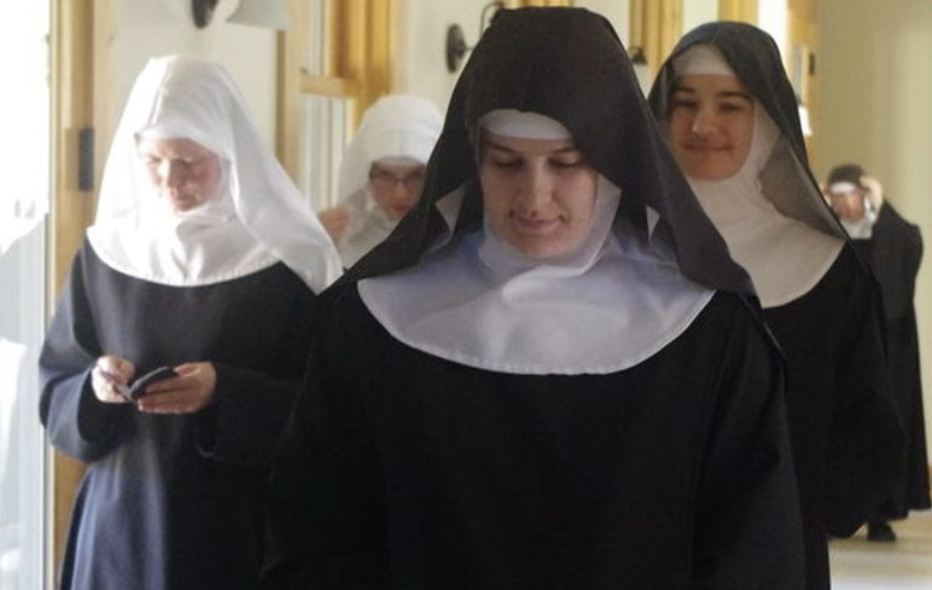
What is news? Apparently, strangers shooting at nuns in an American convent isn't news

What is news? Apparently, strangers shooting at nuns in an American convent isn't news

It’s a question journalists hear all the time from mystified readers: “What is ‘news’?”

At least, that was a question we used to hear when newspapers tried to appeal to all kinds of people in a community, including those on both sides of common cultural and political divisions.

Why are some stories big local, regional and national news stories, while others are not?

Years ago, a Charlotte megachurch pastor asked me why it was news when a downtown Episcopal parish replaced a window, but it wasn’t news when his church built a multi-million-dollar facility. Well, I explained, there was controversy about changing that window because it was part of a historic sanctuary. What I didn’t say is that editors tend to think that what happens downtown is, by definition, more important than what happens in suburbs.

I raise this issue because of events that unfolding in rural Missouri. But before we get to that, let me ask a few questions. Would it be local, regional and even national news if strangers kept shooting rifles at a:

* Mosque in the Bible Belt?

* Catholic parish with an LGBTQ+ rainbow flag?

* Baptist church at the forefront of local #BlackLivesMatter demonstrations?

Clearly, the answer would “yes” in all three cases, especially if that Baptist church was in Georgia.

Now let’s look at an example of a story that is NOT news, care of the Catholic News site called The Pillar: “Missouri nuns targeted in multiple ‘extremely disturbing’ shooting incidents, motive unknown.” Here is the overture on this recent story:

Shots have been fired at a rural Missouri abbey of nuns on several occasions this Lent, the sisters have said, with a bullet from one shooting lodging in the bedroom wall of the order’s superior. The nuns are fundraising for a security fence, while local law enforcement is providing extra security and investigating the shootings.


Please respect our Commenting Policy

'Nothing in particular' is the growing American religion niche few are studying

'Nothing in particular' is the growing American religion niche few are studying

While working on the 1985 book "Habits of the Heart," the late sociologist Robert N. Bellah met "Sheila," who described her faith in words that researchers have quoted ever since.

"I can't remember the last time I went to church," she said. "My faith has carried me a long way. It's Sheilaism. Just my own little voice." The goal was to "love yourself and be gentle with yourself. … I think God would want us to take care of each other."

A decade later, during the so-called "New Age" era, researchers described a similar faith approach with this mantra -- "spiritual but not religious."

Then in the 21st Century's first decade, the Pew Research Center began charting a surge of religiously unaffiliated Americans, describing this cohort in a 2012 report with this newsy label -- "nones."

Do the math. "Nones" were 10% of America's population in 1996, 15% in 2006, 20% in 2014 and 26% in 2019. This stunning trend linked many stories that I have covered for decades, since this past week marked my 33rd anniversary writing this national "On Religion" column.

Obviously, these evolving labels described a growing phenomenon in public and private life, said political scientist Ryan Burge of Eastern Illinois University, author of the new book, "The Nones: Where They Came From, Who They Are, and Where They Are Going."

But hidden under that "nones" umbrella are divisions that deserve attention. For example, the 2018 Cooperative Congressional Election Study found that 5.7% of the American population is atheist, 5.7% agnostic and 19.9% "nothing in particular."

"When you say 'nones' and all you think about is atheists and agnostics, then you're not seeing the big picture," said Burge, who is a contributor at the GetReligion.org website I have led since 2004. "Atheists have a community. Atheists have a belief system. They are highly active when it comes to politics and public institutions.

"But these 'nothing in particular' Americans don't have any of that. They're struggling. They're disconnected from American life in so many ways."


Please respect our Commenting Policy

Biden's 'devout' faith is a news-media talking point, but a survey about it somehow isn't

Biden's 'devout' faith is a news-media talking point, but a survey about it somehow isn't

The culture wars have been on full display during the first two months of the Biden presidency.

It isn’t so much that Joe Biden is fueling the wars — he’s actually steered clear of many of these recent battles that brew on Twitter and cable TV news. Nevertheless, his actions over the arc of a career that spans almost five decades, as senator — vice-president and now commander-in-chief — certainly provides fodder for many Christians who differ with his policies and politics.

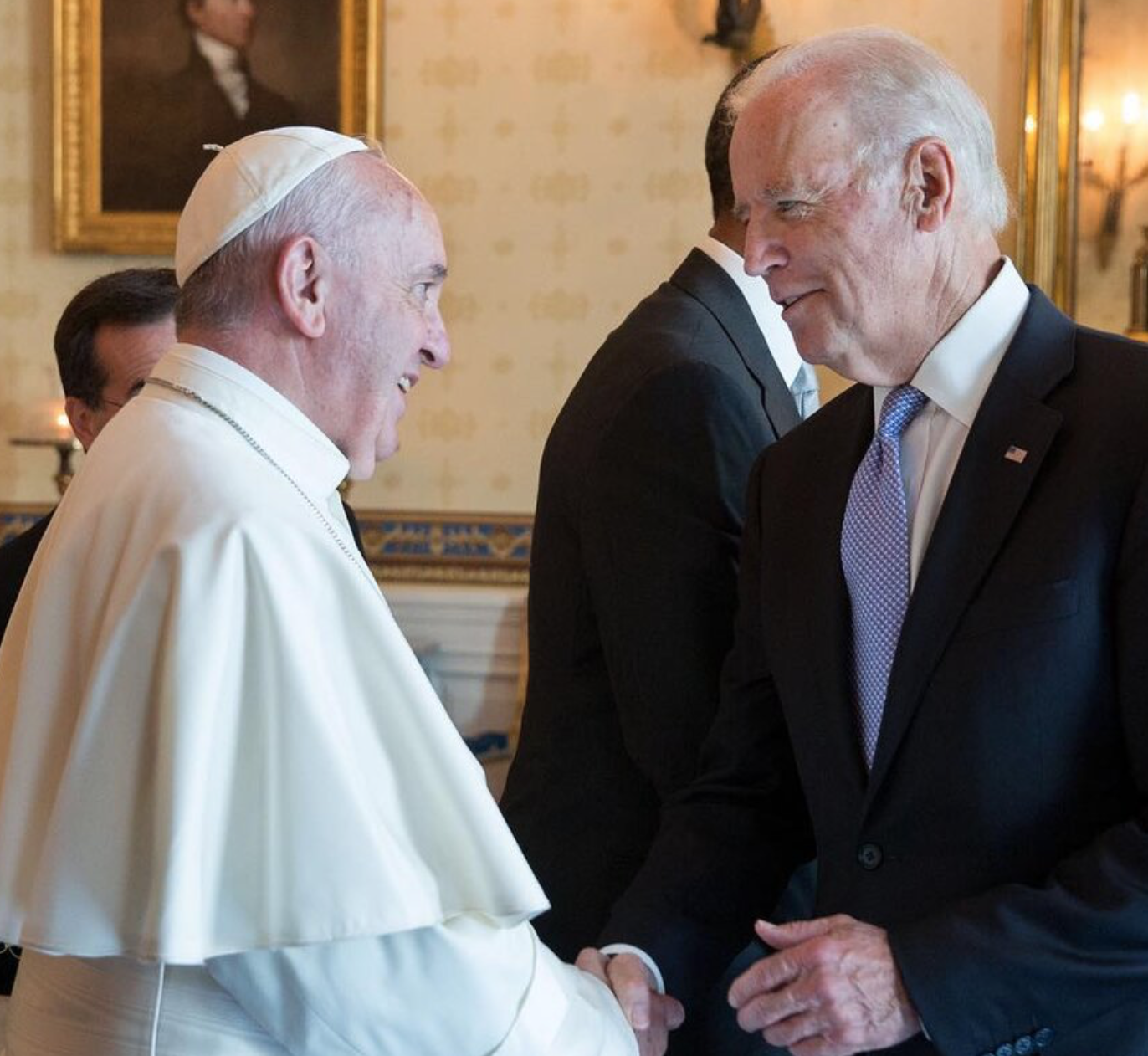
The president’s frequent references to his Catholic faith, mixed with affirmations of policies that clash with Catholic teachings, are at the heart of this discussion in public life and, every now and then, in the mainstream press.

USA Today, in a news feature from earlier this week, made the following observation:

When the Vatican announced last month the Catholic Church wouldn’t bless same-sex unions, the White House dodged when asked for a response from Biden, the nation’s second Catholic president and a gay rights supporter who officiated at a wedding of two men five years ago.

“I don’t think he has a personal response to the Vatican,” White House press secretary Jen Psaki said during a briefing that day. Psaki reaffirmed the president’s support of same-sex unions: “He’s long had that position.”

A couple of weeks earlier, Psaki punted when asked why Biden made no mention of Dr. Seuss in his proclamation declaring March 2 – the children’s book author’s birthday – as the annual “Read Across America Day.” Psaki suggested a reporter reach out to the Department of Education, which she said drafted the proclamation.

Psaki’s nuanced response to both questions underscores the delicate balance the White House is taking as Biden navigates a minefield of hot-button social issues ranging from the gender of children’s toys (see Mr. Potato Head) to transgender athletes in school sports to GOP complaints about “cancel culture.”

It was on March 30, a few days before Easter Sunday, that Pew Research Center released a study on how American Catholics view the president and how they view his approach to the Catholic faith. Here is a sample of that study’s results:


Please respect our Commenting Policy

Hail to the resurrection of the Religious Left, creating media blitz No. 175 (or thereabouts)

Hail to the resurrection of the Religious Left, creating media blitz No. 175 (or thereabouts)

The Easter season 2021 came with legacy media belief in the resurrection -- of the Religious Left.

Since Jerry Falwell (Senior) emerged from the underbrush, how many times have we read forecasts that religiously inspired political liberals will supplant the political prominence and influence of the Religious Right? This must be something like round 175.

The latest, headlined "Progressive Christians Arise! Hallelujah!", emerged from the word processor of Nicholas Kristof, who treats religious themes more often than fellow New York Times commentators — except David Brooks and Ross Douthat.

The Religious Left, so prominent in the New Deal days and the anti-war and civil rights efforts of the 1960s, never went away. Witness the perpetual political pronouncements from the “Seven Sisters” of Mainline Protestantism, for example the United Methodist Church lobby headquartered across the street from the U.S. Capitol and next door to the U.S. Supreme Court.

Journalists need to carefully evaluate these claims because renewed political impact by a Religious Left would loom large on story agendas. What's the evidence?

Kristof pins hopes heavily upon Democrats with religious leanings "moving onto center stage" as follows. Catholic President Joe Biden is a faithful churchgoer (unlike Donald Trump). Veep Kamala Harris regularly "attended" Baptist churches (but note the past tense). Senator Elizabeth Warren "taught" Sunday School (another past tense). Senator Cory Booker and Transportation Secretary Pete Buttigieg "speak the language of faith fluently." And media star Alexandria Ocasio-Cortez says Catholicism "inspires" her radicalism.

The column also touts troubles on the right. Some of those rabid U.S. Capitol rioters invoked religion.


Please respect our Commenting Policy

Big question linked to Easter: Does Christianity believe in 'the immortality of the soul'?

Big question linked to Easter: Does Christianity believe in 'the immortality of the soul'?

THE QUESTION:

Does Christianity believe in the “immortality of the soul”?

THE RELIGION GUY’S ANSWER:

No.

Not exactly. And before anyone has a heart attack reading that, The Guy hastens to explain that Christianity has always vigorously affirmed the Easter message that earthly death is followed by everlasting life. But the oft-used phrase about a mere “immortality of the soul,” which stems from ancient Greek philosophy, could suggest bodily life is problematic and mistakenly suppose that our soul exists through all eternity as only a disembodied spirit.

Instead, Christianity teaches that just as Jesus arose bodily from the grave, so the promise of everlasting life involves a person’s eventual resurrection that unites the soul with the body in a newly glorified state. As with the central belief that Jesus was God incarnate in full human and bodily reality, this Christian affirmation about the afterlife proclaims that, as in Judaism, our bodies are God’s good creation and fundamental to each person’s human identity.

This understanding of New Testament teaching was defined orthodoxy as early as A.D. 180 in Against Heresies by Bishop Irenaeus of Lyons, an authority and saint for Catholic and Orthodox Christians:

“… It is manifest that the souls of his disciples also, upon whose account the Lord underwent these things, shall go away into the invisible place allotted to them by God, and there remain until the resurrection, awaiting that event; then receiving their bodies, and rising in their entirety, that is bodily, just as the Lord arose” (from book 5, chapter 31).

A precise Protestant formulation appears in the Westminster Confession of Faith, the Presbyterian credo from 1647 (here “men” refers to both genders):


Please respect our Commenting Policy

New podcast: Rising tensions between religious liberty, pronoun wars, academic freedom, etc.

New podcast: Rising tensions between religious liberty, pronoun wars, academic freedom, etc.

My name is Terry Lee Mattingly. However, when I converted to Eastern Orthodoxy, I took the name of a patron saint — St. Brendan the Navigator.

Let’s pretend that I am young and attending a state university right now and that I have decided to require professors to address me as “Holy St. Brendan the Navigator.” It is, after all, my name. While we are at it, let’s say that all of the Catholic and Orthodox students take the same tack, if their saint names are different then the names they were given at birth.

Some professors would wince, but go along with this. But let’s say that one professor is very secular, a Marxist perhaps, and he refuses — stating that my request violates his personal convictions. I threaten to sue, along with other students in the same situation. Game on.

How would the leaders of this taxpayer-funded public university respond? Would this be treated as a natural request on my part, with the understanding that any refusal would attack my sense of identity? What if I requested that my university ID card state my name as “St. Brendan the Navigator”?

It’s a crazy question, of course. But it would — at a state university — raise issues about the First Amendment (free speech and religious liberty) and academic freedom. These questions were at the heart of this week’s “Crossroads” podcast discussion. Click here to tune that in. [This episode also includes a bizarre gaffe when — I’m wrestling with a painful medical condition right now — I messed up my own saint’s name, mixing St. Brendan’s title with that of St. Nicholas of Myra. Listen for it.]

At the heart of the podcast discussion is a timely question: Can the state force the professor to recognize and even affirm — with public speech — beliefs that violate his conscience?

Now, as readers probably guessed right from the get go, this podcast focuses on another matter of personal identity — the degree to which professors can be forced to cooperate with students who chose to use any of the myriad and evolving gender pronouns linked to the LGBTQ+ movement. We looked at a Washington Post story with this headline: “A professor was reprimanded for refusing to use a transgender student’s pronouns. A court says he can sue.

Now, when these clashes take part in PRIVATE schools — left or right, religious or secular — it’s clear (pending passage of the Equality Act) that these doctrinally defined institutions have a right to create belief and lifestyle covenants that settle issues of this kind. Students can chose to affirm these beliefs, freely signing on the dotted line, or go to school somewhere else.

But what about state schools built and operated with tax dollars?


Please respect our Commenting Policy

March Madness in pandemic: Why it's fitting that Gonzaga is poised to win NCAA title

March Madness in pandemic: Why it's fitting that Gonzaga is poised to win NCAA title

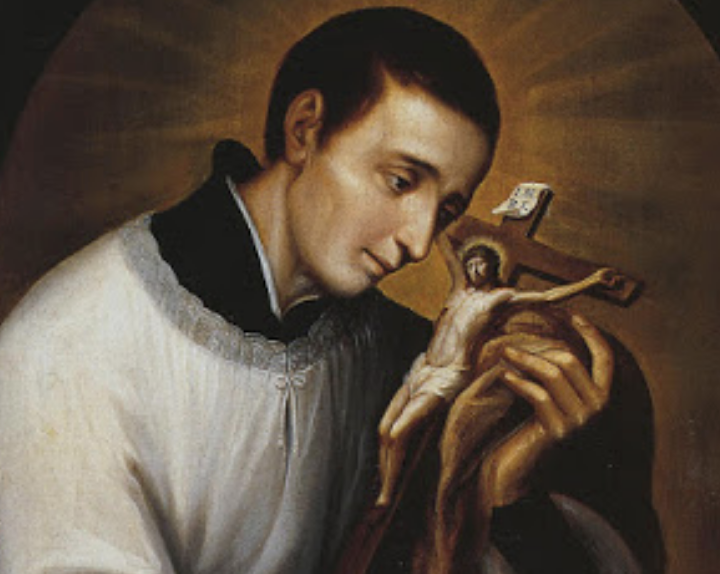
A stroll through the European paintings gallery at the Metropolitan Museum of Art in New York City brings you face-to-face with dozens of masterpieces. Among them is an altarpiece by the Italian Baroque artist Giovanni Francesco Barbieri, commonly known as Guercino.

The piece depicts the celebration of Luigi (also known as Aloysius) Gonzaga, who resigned his inherited title of marquis (he was a member of a prominent Renaissance-era family) to become a Jesuit in 1585 in order to care for the poor in Rome.

Gonzaga died in 1591 at the age of 23 as a result of the plague. He was canonized a saint in 1726.

What does this painting and the man it depicts have to do with March Madness?

Turns out a lot. Gonzaga (the saint) and Gonzaga (the basketball team) are two different things. Nonetheless, the patron saint of Christian youth — who then died serving the poor in a pandemic — can help inspire a team to the final prize. Indeed, it would be only fitting that Gonzaga win it all after the year of COVID-19. And during a college basketball season when historical powerhouses such as North Carolina and Duke are not in contention, Gonzaga could very well capture its first national championship.

It’s no surprise that a Catholic university is among the heavy favorites this season in men’s hoops. After all, Catholic centers of higher education are no strangers to winning the NCAA Tournament. Villanova did it as recently as 2018.

Leading the pack is undefeated Gonzaga, runners up in 2017, who are undefeated so far this season. The school, located in Spokane, Wash., was once considered an underdog capable of defeating high-ranked teams, has reached the tournament every season since 1999. They have advanced to the Sweet 16 on six consecutive occasions.


Please respect our Commenting Policy

Ex-gay Catholic, Muslim shooter, Orthodox Jewish writer: They just don't fit the narrative?

Ex-gay Catholic, Muslim shooter, Orthodox Jewish writer: They just don't fit the narrative?

An infamous gay personality known for his approving comments about pedophilia has had a 180-degree conversion, given up homosexual sex and has consecrated himself to St. Joseph.

Not a joke. The news broke about a month ago. Not read about it? Well, the story is out there, but mostly conservative sites are reporting on it.

Why is this? Well, it all has to do with narrative. Let’s start with the New York Post’s read on it:

Right-wing provocateur Milo Yiannopoulos has come out as “ex-gay” – announcing that he “would like to help rehabilitate what the media calls “conversion therapy” over the next decade, according to a report.

The 36-year-old British political commentator, whose speeches and writings often ridicule political correctness, social justice and feminism, declared himself no longer gay and “sodomy free,” he told LifeSite in an interview.

Yiannopoulos — who once said that sex between 13-year-olds and older men can be “life-affirming” — told the outlet that he is now leading a daily consecration online to St. Joseph.

“When I used to kid that I only became gay to torment my mother, I wasn’t entirely joking,” he said.

But what about his gay marriage?

As far as his personal life, Yiannopoulos said of his husband: “The guy I live with has been demoted to housemate, which hasn’t been easy for either of us. It helps that I can still just about afford to keep him in Givenchy and a new Porsche every year. Could be worse for him, I guess.”

Now we all know that if a major (or even not-so-major) evangelical figure can gone the opposite direction, the media would be all over it. Look at the coverage that Josh Harris, celeb author of “I Kissed Dating Good-bye,” got when he dumped his faith and was last seen marching in a gay pride parade in Vancouver, BC.


Please respect our Commenting Policy