Books

What's up in 2023? The Guy offers a first draft of a religion-beat agenda

What's up in 2023? The Guy offers a first draft of a religion-beat agenda

The new year could be climactic for two aspects of LGBTQ issues, first, the rights of religious and conservative dissenters within liberalized western culture, and second, the ongoing conflicts within church groups.

What should journalists be prepared to cover?

By June, the U.S. Supreme Court will decide the 303 Creative case, in which a website designer — based on First Amendment claims — seeks exemption from Colorado’s anti-discrimination law to avoid work on postings that celebrate same-sex weddings (background here). The Court might broadly define what rights various forms of religious traditionalists have in a host of legal conflicts facing e.g. U.S. religious colleges, social-service agencies and individual businesses now that same-sex marriage is legalized.

Inside a specific religion brand, this could be a pivotal year for the global Anglican Communion with its 46 national branches and some 85 million baptized members. A mid-January meeting of bishops in the “mother” Church of England may well decide dioceses can permit same-sex weddings. That historic change would then need approval from clergy and lay delegates at the February 6–9 General Synod.

Such a move would add explosive potential to the April 17-21 meeting in Kigali, Rwanda, of the Global Fellowship of Confessing Anglicans (“GAFCON”), long vexed by liberal moves in England, the United States and elsewhere in declining First World churches. GAFCON unites the heads of 10 Anglican branches, three of which alone (Kenya, Nigeria, Uganda) encompass half the world’s Anglicans. GAFCON’s chairman, Archbishop Foley Beach (admin@anglicanchurch.net and 724-266-9400), heads a church of conservatives who’ve left the U.S. Episcopal Church and Anglican Church of Canada.

Already, key archbishops have boycotted global Anglican confabs, continuing a slow-motion breakup that began decades ago. Will the maneuvers in England and elsewhere provoke a huge, definitive break from the London-based Anglican Communion by churches in GAFCON and the related Global South Fellowship of Anglican Churches?

The United Methodist Church could be on the brink of the biggest U.S. Protestant split since the Civil War. That’s a huge story at the local, regional, national and global levels.



Please respect our Commenting Policy

Clemente Lisi off to World Cup: Soccer, faith and memories of Maradona's 'hand of God'

Clemente Lisi off to World Cup: Soccer, faith and memories of Maradona's 'hand of God'

Long, long ago, I told the managing editor of The Rocky Mountain News (#RIP) that I should be part of the newsroom team sent to cover the Super Bowl.

My logic was simple: If the Denver Broncos were not a religious organization for a majority of people in the Rocky Mountain Time Zone, there was no such thing as a cultural definition of religion.

With that in mind, it makes all kinds of sense that our own Clemente Lisi is about to get on an airplane and head to Qatar to cover the final rounds of World Cup 2022. In addition to being our Catholic-news specialist here at GetReligion, he is also the author of the new book “The FIFA World Cup: A History of the Planet's Biggest Sporting Event.

You know that there will be religion angles all over the place, in part because of the location. And, once again, if soccer isn’t — for most of the world — a near-religion, then I don’t know what is. After all, one of my all-time favorite book titles is this: “How Soccer Explains the World.”

Yes, the favored samba-style evangelicals of Brazil lost in a heartbreaker yesterday — to a Croatia team with a coach with a rosary in his hands, on the sideline. I’ll keep my eyes open for GetReligion-friendly copy from Lisi, once he arrives in Qatar.

Meanwhile, we ran a piece by Lisi that ran with this headline: “Sports, passion, faith — The ties that bind are always there, even if journalists miss them.” Here is the highly relevant overture:

Sports, in so many ways, are almost like a religion for many people. Like religion, sports can convey important lessons about culture and values. From the times of the Ancient Greeks, athletes were sometimes accorded the status of gods.

Not much has changed since ancient times. Modern society has given god-like status to many athletes. Lebron James, Tiger Woods and Lionel Messi are just three athletes who garner such adulation on a global scale.

The question here at GetReligion is how this relationship shows up in news stories about sports, especially stories in which religious faith is — according to the athletes themselves — a key element in their lives and their success.


Please respect our Commenting Policy

Return of the evangelical arguments about morality, character and two-party politics

Return of the evangelical arguments about morality, character and two-party politics

It was totally logical for the Southern Baptist Convention to pass its "Resolution on Moral Character of Public Officials" in 1998.

Consider this "whereas" clause: "Some journalists report that many Americans are willing to excuse or overlook immoral or illegal conduct by unrepentant public officials so long as economic prosperity prevails." This was followed by: "Tolerance of serious wrong by leaders sears the conscience of the culture, spawns unrestrained immorality and lawlessness in the society, and surely results in God's judgment."

Thus, the SBC urged American leaders to "live by the highest standards of morality both in their private actions and in their public duties."

Yes, this resolution passed soon after the infamous claim by President Bill Clinton, a Southern Baptist, that "I did not have sexual relations with that woman."

It was easy to predict who thought Clinton should exit the White House, noted conservative writer Marvin Olasky, who was writing "The American Leadership Tradition: Moral Vision from Washington to Clinton" at that time.

"In poker, you really don't know what cards someone has," said Olasky, reached by telephone. "You can't tell, with certainty, the character of a politician. … In that book, I argued that the state of a man's marriage was a strong tell. If he's faithful in his marriage, he's likely to be faithful to the nation."

Olasky's fellow religious conservatives praised the book. But things changed when he wrote a World magazine essay in 2016 entitled, "Unfit for power," arguing that Donald Trump should step aside as the Republican nominee.

"Clinton had denied having a sexual relationship with Monica Lewinsky, but her stained blue dress bearing Clinton's DNA was proof that he had used his power for adulterous purposes, and then lied about it," wrote Olasky. Then there was the videotape showing "Trump making lewd remarks about groping women's genitals. While many opponents … have criticized Trump's character, the video gave us new information about how Trump views power as a means to gratify himself."

Olasky recirculated this 2016 editorial after Trump's recent announcement that he would seek the presidency once again, igniting renewed social-media warfare among evangelicals about morality, character and the winner-take-all nature of American politics -- especially when Supreme Court seats are vacant.


Please respect our Commenting Policy

Life in a disenchanted world: Once upon a time, Christians used to write fairy stories

Life in a disenchanted world: Once upon a time, Christians used to write fairy stories

Demons appear on movie screens all the time, but poet Richard Rohlin is convinced he has actually seen them at work when counseling young people whose search for meaning has driven them deep into experiments with sex, drugs and the occult.

"The stories that I can't tell would curl your toenails," he said, speaking at the Eighth Day Institute in Wichita, Kansas. "If you think that these spiritual realities are not still with us, you are deluding yourself. ... The magic is coming back into the world. Something is happening and it is not an unqualified good."

The young people he works with in Dallas are not interested in sermons and detailed descriptions of why their lives are broken. But they are open to fantasies, myths and tales -- ancient and modern -- about unseen, spiritual realities that interact with their lives.

Millions of Americans know where to find stories about angels, demons, warriors, seers, giants, demigods and heroic kings and queens. They head straight to movie theaters and cable television, where they find entire universes of content offering visions of fantastic worlds. The last place they would seek inspiration of this kind is in churches.

The irony is that some of these works draw inspiration from the fantasy classics celebrated in the ecumenical Eighth Day Institute's annual fall celebration of The Inklings, a mid-20th Century circle of Christian writers in Oxford, England, that included C.S. Lewis, J.R.R. Tolkien and others.

This year's lectures focused on Scottish writer George MacDonald, often called the "grandfather of the Inklings," who is best known for "Phantastes," "The Golden Key," "Lilith" and many other works. The festival included Celtic and folk musicians, along with workshops on topics such as "The Art of Making Mead" and "Publishing for the Moral Imagination."

The goal of MacDonald and The Inklings, noted Rohlin, was to reclaim an older vision of life in which physical realities corresponded to spiritual realities and nothing was considered purely material. The real divide was between "the seen and the unseen," not between the "spiritual and the material."

This worldview has been lost, even among many religious believers.

"Demons didn't stop existing, angels didn't stop existing, the saints didn't stop existing because the Industrial Revolution came," he said.


Please respect our Commenting Policy

FitzSimons Allison: Bookish Episcopal bishop who dared to say 'apostasy'

FitzSimons Allison: Bookish Episcopal bishop who dared to say 'apostasy'

It has been three decades since the Rt. Rev. C. FitzSimons Allison took his first step away from his life as one of the Episcopal Church's strongest evangelical voices.

That tentative move took place in a small-group discussion during an Episcopal House of Bishops meeting in Kanuga, N.C., during his final year serving as the 12th bishop of the historic Diocese of South Carolina. The topic that day was, "Why are we dysfunctional?"

Allison attacked Episcopal priests and seminary professors who were openly proclaiming their faith in an ancient, erotic, divine spirit "older and greater" than the God of the Bible. There was, Allison said, a clear, ancient word for that -- "apostasy."

Other bishops said they had no problem accepting clergy who were testing the boundaries of ancient Christian doctrines.

After that clash, Allison remained in his pew and declined to share the consecrated bread and wine during a Holy Eucharist with the entire House of Bishops. He didn't publicly discuss this act of broken Communion for several years, but his silent protest was a poignant symbol of early cracks forming in the global Anglican Communion.

Now the 95-year-old bishop has officially resigned his status as an Episcopal bishop, making his departure official. Two weeks ago, he wrote U.S. Presiding Bishop Michael Curry to clarify that he had been received into the Anglican Church in North America -- a body recognized as valid by many Anglican bishops in Africa, Asia and the Global South, but not by the Archbishop of Canterbury or leaders in the U.S. Episcopal Church.

"Some people said that I didn't need to do this, because everyone knows where I stand," said Allison, reached by telephone. "But I felt, the way things have been going, that I still needed to make things official. That's just the way I am."


Please respect our Commenting Policy

Could secular feminism and some kind of religion converge in a Sexual Revolution rethink?

Could secular feminism and some kind of religion converge in a Sexual Revolution rethink?

Attention journalists: Here are some chapter headings from the latest advice book on sex:

“Men and Women Are Different”

“Some Desires Are Bad”

“Loveless Sex Is Not Empowering”

“Violence Is Not Love”

“People Are Not Products”

“Marriage Is Good”

“Sex Must Be Taken Seriously”

“Listen to Your Mother”

To which geezers in The Guy’s swiftly passing generation can only respond with something that, today, would be #DUH.”

Yet Americans who’ve grown up since the blitz of the 1960s Sexual Revolution have been immersed in a culture that promotes and expects commitment-free hook-ups and casual sex, even very early in a relationship.

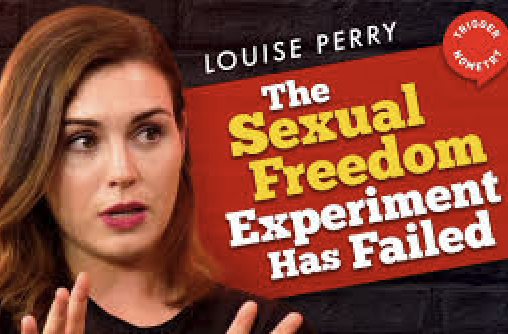
Turns out women feel disheartened, dishonored and coerced by this supposed “freedom,” and have good reason to be, says Britain’s Louise Perry in her spirited book “The Case Against the Sexual Revolution: A New Guide to Sex in the 21st Century” (Polity Press). She assails so-called “liberal feminism” for routinely handing countless women a raw deal.

Her preachments will be routine common sense for folks who resist fierce cultural pressure and remain guided by religious teachings of the past few thousand years.

What might especially intrigue reporters is that Perry, a fellow journalist with the Daily Mail and the New Statesman and an anti-rape crusader, makes a thoroughly secularized case that nonetheless coincides at many points with a religious tradition toward which she expresses zero trace of fondness.


Please respect our Commenting Policy

Loretta Lynn's reality: Gospel truth mixed with rhinestone feminism in the real world

Loretta Lynn's reality: Gospel truth mixed with rhinestone feminism in the real world

On many Sundays, Loretta Lynn sent her social-media followers a thought for the day from Scripture.

Two days before her death at her ranch in Hurricane Mills, Tenn., the 90-year-old country-music legend posted two verses, repeating the second verse to stress her point.

Lynn's final Instagram post said: "Everyone who does evil hates the light, and will not come into the light for fear that their deeds will be exposed. But whoever lives by the truth comes into the light, so that it may be seen plainly that what they have done has been done in the sight of God. John 3:20-21"

The feisty superstar experienced plenty of darkness and light and shared the gritty details in a career that changed the role of women in Nashville. Lynn was raised poor in the Kentucky hills and spent years in church pews before she started singing in honky-tonks. Her husband Oliver "Dolittle" Lynn struggled with alcoholism, but they stuck together in a union that inspired songs about love and loyalty, as well as break-ups and fist fights, such as "Don't Come Home A-Drinkin' (With Lovin' On Your Mind)."

Lynn vowed to tell the truth about both sides of her life. She loved to sing hymns and gospel music, while critics hailed the rhinestone feminism of her hits such as "You Ain't Woman Enough," "The Pill," "Rated X" and "You're Looking at Country."

In her "Coal Miner's Daughter" memoir, Lynn described her faith journey: "I believed it all, but for some reason, I was never baptized. After I started in music, I got away from going to church and reading the Bible. I believe I was living the way God meant me to, but I wasn't giving God the right attention."

In that same 1976 memoir, she added: "I'm trying to lead a good Christian life, especially since I got baptized two years ago. So there ain't too much spicy to tell about me -- just the truth." Christian Chronicle editor Bobby Ross, Jr., noted that she later added a strong kicker to that: "Nobody's perfect. The only one that ever was, was crucified.”

Anyone who explored the details of Lynn's life and music knew that she wasn't a good fit in the "elite feminist establishment" or among advocates of a "status-quo idea of domesticity," noted Russell Moore, Christianity Today's editor in chief.


Please respect our Commenting Policy

Under-covered story in tense times: Counseling with transgender Christian believers

Under-covered story in tense times: Counseling with transgender Christian believers

Experts at UCLA estimate that 0.6% of American adults currently identify as transgender.

Like other writers covering religion, politics and culture, The Religion Guy has accumulated a bulging file on recent transgender conflicts, which go far beyond grade-school curriculums or women’s shelters, locker rooms and athletics. The major question facing practitioners, legislators and moral theologians is how the age-old “do no harm” principle applies to the greatly increasing numbers of teens under 18, especially girls, seeking transition via puberty blockers, hormone treatments and surgery.

A planned Memo analyzing those developments has been supplanted by a new book, “Gender Identity and Faith: Clinical Postures, Tools and Case Studies for Client-Centered Care” (InterVarsity Press) by Mark A. Yarhouse and Julia A. Sadusky, who are evangelicals and licensed clinical psychologists. Their work turns journalistic attention from the socio-political debates to the situations of transgender individuals, especially those raised in traditional forms of religious faith.

A blurb from Laura Edwards-Leeper, who chairs the child and adolescent committee of the World Professional Association for Transgender Health, considers this book “essential” for mental health providers. But The Guy thinks it’s equally pertinent for individual clients, parents, pastors and churches (and journalists!) seeking understanding.

Even The Christian Century thinks that though the book “will at times disappoint” fellow religious progressives, it may “prove an important harm-reduction tool and entry point for conservatives who are struggling to join the conversation.”

The bottom line: Considering the timeliness and difficulty of the topic, The Guy sees it as a Book of the Year prospect in religion, and a compelling topic for journalism.


Please respect our Commenting Policy