Books

Thinking about that 'Define evangelical' thing, with Andrew Walker, Ryan Burge (and Mark Noll)

Thinking about that 'Define evangelical' thing, with Andrew Walker, Ryan Burge (and Mark Noll)

If you search for “define evangelical” in the 18 years worth of material stored here at GetReligion you will find about four screens worth of information. Here’s what that looks like in a Google search.

Believe it or not, this was a hot topic before the advent of Orange Man Bad and the dreaded “81% of White evangelicals” mantra.

Debates about the meaning of the church-history term “evangelical” are so old that I once asked the Rev. Billy Graham for his take. Here’s some information about his answer, drawn from this “On Religion” column: “Define 'evangelical' – please.”

… You might assume that the world's most famous evangelist has an easy answer for this tricky political question: "What does the word 'evangelical' mean?" If you assumed this, you would be wrong. In fact, Graham once bounced that question right back at me.

"Actually, that's a question I'd like to ask somebody, too," he said, during a 1987 interview in his mountainside home office in Montreat, N.C. This oft-abused term has "become blurred. ... You go all the way from the extreme fundamentalists to the extreme liberals and, somewhere in between, there are the evangelicals."

Wait a minute, I said. If Billy Graham doesn't know what "evangelical" means, then who does? Graham agreed that this is a problem for journalists and historians. One man's "evangelical" is another's "fundamentalist."

That leads us to the topic of this quick, and rather rare, Monday “think piece” (I’m traveling right now and rather unplugged, so I wrote this several days ago).

Thus, at the top of this post you will see a video feature from The Gospel Coalition in which two academics — political scientist Ryan Burge ( a GetReligion contributor) and ethicist-apologist Andrew Walker — debate this topic: “Is ‘Evangelical’ a Political or Theological identity?” (Careful readers may have noticed that, a few lines earlier, I called it a “church-history term” and I’m sticking to that.)

I will let Burge and Walker speak for themselves.

Please respect our Commenting Policy

Journalists might ask: Did fundamentalists actually win their debate with modernists?

Journalists might ask: Did fundamentalists actually win their debate with modernists?

Countless sermons each weekend may prove inspiring for American churchgoers, but historians “will little note nor long remember” most of them.

One great exception, titled “Shall the Fundamentalists Win?,” was delivered 100 years ago this spring by the Rev. Harry Emerson Fosdick at New York City’s First Presbyterian Church.

Fosdick threw a bright spotlight on the “Fundamentalist-Modernist controversy,” both predicting and demanding that his fellow modernists would win the era’s theological war. The Presbyterian Church had been debating whether to expel biblical liberals since 1892 and in 1910 mandated what later became known as the “five points of Fundamentalism.”

Yes, some of the pioneers of the “fundamentals of the faith” were part of the old Protestant mainline.

Fosdick’s oration attacked three of these beliefs, including the necessity of belief in Jesus Christ’s literal Virgin Birth and Second Coming. But his third target was pivotal, the contention that as the inspired Word of God, the Bible is free of error on history as well as spiritual and moral teachings. Fosdick conveyed the canard that this meant God “dictated” the words to earthly stenographers and then championed “progressive” revelation as promoted by scholarly biblical criticism. (Along the way he remarked that rigid interpretation of the Quran was a similar “millstone about the neck” for Islam.)

A dictionary note is required here. Fosdick defended what he called “evangelical” religion, using the word to broadly signify Protestants of whatever theology. In the 1940s, conservative Protestant foes of the modernists began embracing that same word to distinguish themselves from the unpopular hard-line “fundamentalists.”

Got that? The label has stuck ever since, though some contend it now signifies a Republican political bloc more than a theological movement.


Please respect our Commenting Policy

Pizza, beer and guys talking books: Lessons from the Hall of Men on the Kansas plains

Pizza, beer and guys talking books: Lessons from the Hall of Men on the Kansas plains

WICHITA, Kan. — The Hall of Men fits the name, with meetings offering beer, cigars, an open bar, some kind of guy food (think pizza) and lots of chatter around a giant wooden table.

But then there are the evening prayers, icons, Bible readings and lectures about authors whose portraits hang in this “Christian speakeasy.” The names include C.S. Lewis, Flannery O’Connor, W.H. Auden, Dorothy Sayers, Fyodor Dostoevsky, J.R.R. Tolkien and many others. Johnny Cash and Bob Dylan are there, as well.

This group has met twice a month for a dozen years and most of the faithful are Orthodox, Catholic and Lutheran, with plenty of evangelicals at special events. The authors honored are selected after an informal process that usually starts during fellowship before and after lectures, with men talking about books that have touched their lives.”

The whole thing is affected by having that bookstore right next door,” said Pastor Geoff Boyle, a Missouri-Synod Lutheran long active in the project. “The man behind the front counter is used to having these conversations and obviously knows all about the books the guys are talking about. The books are right there and, if they’re not, they will be soon.”

“That bookstore” is Eighth Day Books, which draws customers from across the nation to an old three-story house with 46,000 new and used books — 27,000 titles — shelved and stacked anywhere that will hold them, including the basement “Hobbit Hole” packed with children’s literature. The white-haired man behind the counter is owner Warren Farha, an Orthodox believer with family ties to Lebanon.

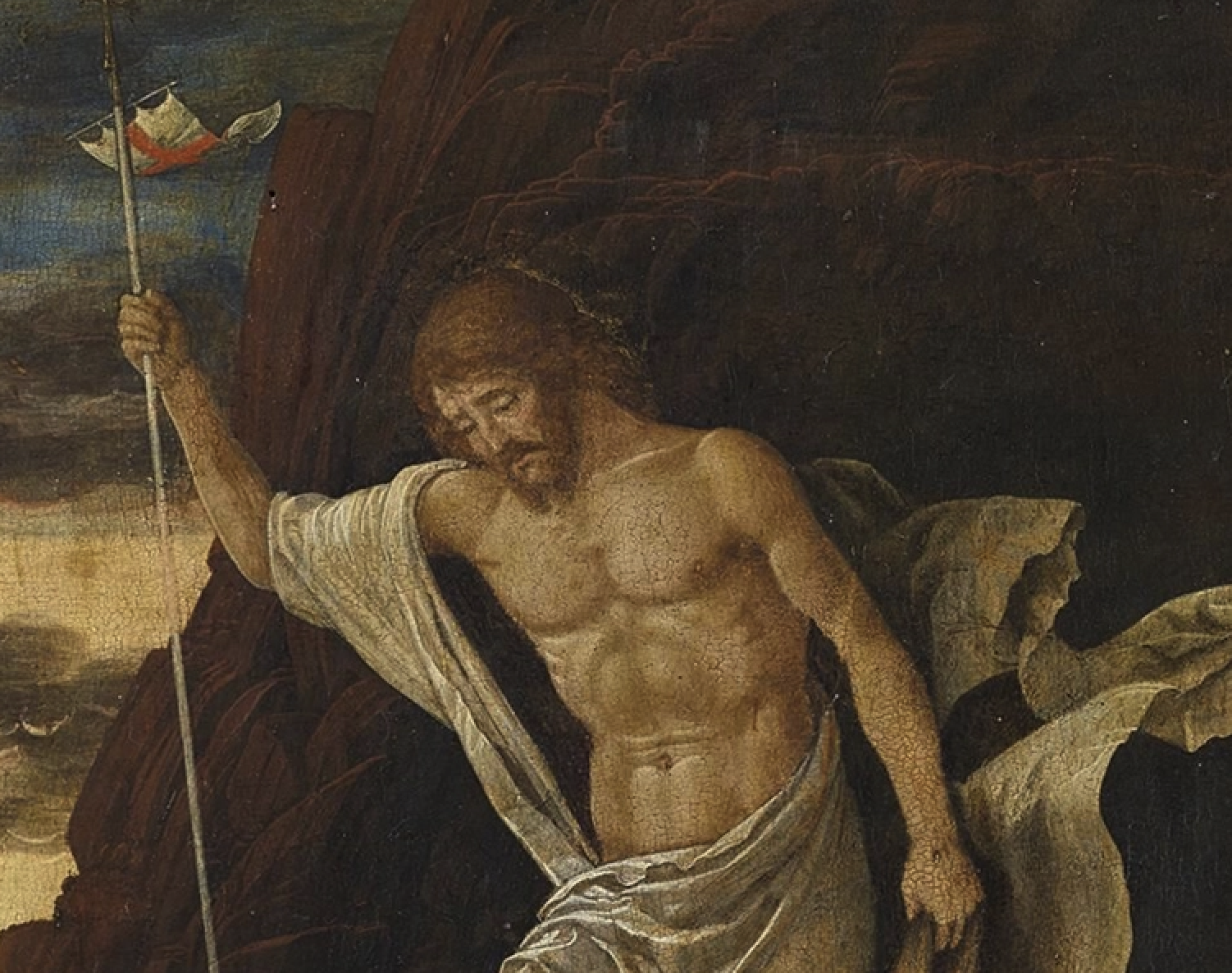
This isn’t a “Christian bookstore” complete with knick-knacks, inspirational posters and religious self-help books — but “Eighth Day” is a reference to the Resurrection of Jesus.

Farha created the store in 1988 and selects all the books, with the help of an ecumenical network woven into the Eighth Day Institute and its conferences, newsletters, podcasts and groups such as the Hall of Men and the Sisters of Sophia.

“My goal has always been to be fair to the great traditions,” said Farha, in his office in the bookstore’s attic. “We have classics in history, literature, poetry, church history, theology and philosophy – Christian writings through the ages. … I’m always listening to people who GET the template for what we’re doing here.

“Great books from different traditions are on the shelves right next to each other, even if they clash in ways that we need to discuss.”


Please respect our Commenting Policy

Naomi Judd: 'It's scary to show that part of you that is the not so smart, not so together side'

Naomi Judd: 'It's scary to show that part of you that is the not so smart, not so together side'

Naomi Judd thought she understood the ties that bind country-music stars and their audience -- then one aggressive fan went and joined the Pentecostal church the Judd family called home.

"It really burdened me," said Judd, after signing hundreds of her "Love Can Build a Bridge" memoir back in 1993. "I just don't sign autographs at church. The best way I can explain it to children … is to say, 'Honey, Jesus is the star.' "

After a year of this tense standoff, Judd became concerned and wrote the fan. "I said, 'I want you to really get away by yourself and read this letter and answer this question honestly: Do you come to church to see The Judds or do you come to church to see God?' She never came back to church. But she was in the autograph line today."

Through it all, Judd and her brash daughter Wynonna have talked openly about their triumphs and their struggles. Many fans identified with their failures just as much as the messages about faith and family.

At the time of that 1993 interview, Naomi Judd had battled through waves of anxiety attacks to address some dark realities -- such as rape, crisis pregnancy and her deadly battle with hepatitis C that retired the The Judds.

What she hadn't discussed at that time was the sexual abuse in her childhood that led to treatment-resistant depression. Judd's April 30th death, at age 76, focused new attention on blunt passages in her 2016 book "River of Time," in which she said had been tempted by suicide. "I wanted to be completely honest that if someone took out a gun and killed me on stage, they would be doing me a favor," she wrote.

The Judds were inducted into the Country Music Hall of Fame the day after Naomi's death and her shaken daughter Ashley Judd told the crowd, "I'm sorry that she couldn't hang on until today." Writing in USA Today, the actress expressed gratitude for her mother's legacy, but added: "Perhaps it's indecorous to say, but my heart is filled with something else, too. Incandescent rage. Because my mother was stolen from me by the disease of mental illness, by the wounds she carried from a lifetime of injustices that started when she was a girl."


Please respect our Commenting Policy

What is religion's role if powerful social media trends are endangering America?

What is religion's role if powerful social media trends are endangering America?

Whew! Within a matter of days Elon Musk bids $44 billion to get full control of Twitter, Netflix's market value plummets $54 billion, Florida's conservative version of "cancel culture" penalizes the Disney empire, and CNN kills off its streaming service in a month after investing $300 million -- perhaps the worst industry flop since Time Warner's 2001 merger with AOL.

Anchor Kasie Hunt, who left MSNBC for CNN+, embraced a life-goes-on attitude: "The news is the news is the news is the news." (She was quickly named CNN's Chief National Affairs Analyst.)

By the way, a certain influential newspaper in New York City also named a new team of top editors. Did you see those photos of incoming editor Joseph Kahn?

Maybe all that media turbulence is far less important than the inexorable accumulation of 21st Century cultural power by Twitter and other "social media: giants.

Thus, readers will want to consider this warning from Jonathan Haidt, a social psychologist at New York University's business school, in the May issue of The Atlantic: “Why the Past 10 Years of American Life Have Been Uniquely Stupid.”

American democracy is now operating outside the bounds of sustainability. If we do not make major changes soon, then our institutions, our political system, and our society may collapse during the next major war, pandemic, financial meltdown, or constitutional crisis.

Religion writers: Despite Haidt's imagery of failed communication taken from the biblical Tower of Babel (Genesis 11:1-9), his article sidesteps whether faith groups could help restore societal calm and how they're being reshaped by ubiquitous media. Perhaps he'll get into that in his book "Life After Babel Adapting to a World We Can No Longer Share," due from Penguin next year.

Though critics often say conflicting religions erode social cohesion, is it only coincidence that organized religion's slump to near-Depression status since A.D. 2000 occurred simultaneously with the disintegration Haidt decries?


Please respect our Commenting Policy

Just in time for Easter media and academic discussions: Did Jesus Exist?

Just in time for Easter media and academic discussions: Did Jesus Exist?

THE QUESTION:

Did Jesus Exist?

THE RELIGION GUY'S ANSWER:

Yes.

It would be the ultimate blow to the Christian religion if Jesus, and with him the entirety of the New Testament, is totally fictional.

However, the strong consensus among historians, including non-Christians and skeptics, is that, yes. Jesus was an actual person of the 1st Century (Anno Domini!!). Yet an Ipsos poll for the Episcopal Church, released last month, showed only 76% of Americans "believe in the historical existence" of Jesus, with 89% of self-identified Christians, 43% for adherents of other religions and 38% among the non-religious.

Among scholars, across the years certain "mythicists" have contended that he never existed.

University of North Carolina Professor Bart Ehrman, author of "Did Jesus Exist?" (2012) and rather skeptical himself, knows of only one such thinker among thousands of scholars with Ph.D. degrees who are working in the New Testament field. He's Robert Price, a onetime Baptist minister, member of the radical "Jesus Seminar," and author of "The Historical Bejeezus" who teaches at Johnnie Coleman Theological Seminary, a "New Thought" school.

Other mythicists have included Frank Zindler, a science educator, Jesus Seminar participant, and an editor with American Atheists. In 1970, Doubleday published an eccentric book by Britain's John M. Allegro, who thought there never was a Jesus and Christianity originated as a drug cult. John Remsburg, a 19th Century superintendent of public instruction for Kansas, backed mythicism by listing 42 ancient authors never wrote about Jesus. (A newsman like The Guy would figure that's what you'd expect with an itinerant teacher executed as a criminal in a backwater of the Roman Empire.)

But Remsburg raised an interesting question. Let's say for the sake of argument we totally exclude the New Testament as evidence (which historians would never do in judging the existence of other figures from ancient times). Do we have any other relevant documentation?


Please respect our Commenting Policy

Is evangelical Protestantism breaking into five factions in the United States of America?

Is evangelical Protestantism breaking into five factions in the United States of America?

Let’s start with two quotes.

A weary grievance from the Bible: "Of making many books there is no end" (Ecclesiastes 12:12). The same can be said about endless journalistic articles trying to figure out what's with U.S. evangelical Protestantism in the age of Donald Trump -- saith The Religion Guy himself.

"A successful political movement must incorporate both elites and the people. Only intermittently, however, has the American right been able to achieve such a synthesis. That is why its victories have been so tenuous." So writes Matthew Continetti in "The Right," his new opus about U.S. political conservatism.

The Guy has taken Continetti's view regarding U.S. conservative Protestantism and is far more interested in the gap between its intellectual elite and the grassroots than e.g. the current hullabaloo over The New York Times describing worship mingling with Trumpified politicking by a segment of evangelicals (see tmatt post here).

Which brings us to a must-read article entitled "The Five Emerging Factions in Evangelical Higher Education" by Daniel K. Williams (contact: 678-839-6034 and dkwillia@westga.edu). He's a history professor at the University of West Georgia and author of "God's Own Party" (2010), and "The Politics of the Cross" 2021).

Williams reflects on the recent convention of the Conference on Faith and History, an association of Christians who teach this subject at both secular and religious colleges. Crucial: He writes only about diverse camps among evangelical scholars and schools. But does this breakdown characterize U.S evangelicalism as a whole? He depicts five factions.

Culture warriors -- These political conservatives actively oppose socialism, critical race theory, feminism, the new sexuality and "cultural liberalism in all its forms," while embracing "Trumpist conservative partisanship." Such teachers at e.g. Bob Jones, Liberty and Regent Universities; Patrick Henry and Saint Andrews Colleges; and elsewhere rarely interact with "the rest of Christian academia."

Anti-nationalists -- These evangelicals mostly agree with the culture warriors on the issues but don't want to be "adjuncts of the Republican Party" and are anti-Trump.


Please respect our Commenting Policy

Updates in the journalism style bible: Appropriate 'cult' advice and other tweaks

Updates in the journalism style bible: Appropriate 'cult' advice and other tweaks

If you know anything about the nuts and bolts of reporting and editing, then you know that the Associated Press Stylebook is the bible — that’s with a lower-case “b” — of journalism.

It’s also a great place to chart tensions inside the news business. Consider, for example, the decades of debate about “pro-life” and “pro-choice,” as opposed to “anti-abortion” and “pro-abortion rights.” Will the next major revision of the AP manual need to include an updated definition for the suddenly controversial word “woman”?

Our GetReligion patriarch, Richard Ostling, recently sent me an interestingly list of some of the religion-beat terms in the latest revisions to this AP bible. He served as a consultant on that revision project and, thus, doesn’t want to make any comments about the results. Here is one of the updates that is sure to lead to newsroom discussions:

cult (new)

A loaded term to be used with caution.

Yes, indeed — proceed with caution. I totally agree that this is a “loaded term” that journalists should avoid whenever possible.

The problem, however, is that this is a term that religious leaders, activists and even scholars are going to use every now and then and it will be hard to avoid the term when it is used in important direct quotations. Thus, editors need to know the various ways that informed people use the word — the key is sociology vs. theology — so that these loaded quotes can be placed in context for readers. Then there are activists of various kinds who throw this term around like a verbal hand grenade.

Readers can tell, with a quick glance at the venerable Merriam-Webster dictionary, that this is a complicated subject. Here are several of the definitions:

cult

noun, often attributive …

Definition of cult

1: a religion regarded as unorthodox or spurious (see SPURIOUS sense 2) also : its body of adherents


Please respect our Commenting Policy

This is still a question that scholars debate: Why did early Christianity rise so rapidly?

This is still a question that scholars debate: Why did early Christianity rise so rapidly?

THE QUESTION:

Why did early Christianity rise so rapidly?

THE RELIGION GUY'S ANSWER:

New religions appear all the time, nowhere more than in the United States, but very few ever achieve prominence and permanence. Christianity is a rare and dramatic case of a faith that triumphed. The tale is told in Rodney Stark's classic "The Rise of Christianity" with this descriptive subtitle in the 1997 paperback edition (still on sale): "How the Obscure, Marginal Jesus Movement Became the Dominant Religious Force in the Western World in a Few Centuries."

Sociologist Stark is now retired as co-director of Baylor University's esteemed Institute for Studies of Religion. The book treats its subject as a puzzle to be explained by objective social science scholarship and does not consider whether Christian teachings are true.

Though we lack reliable census data, Stark's best estimate was that only 7,530 Christians existed at the close of the apostolic era in A.D. 100 [which conflicts with Acts 2:41]. He said the total exceeded 1 million by 250 when systemic persecution by the Roman empire was reaching its peak. The Edict of Milan in 313 allowed the faith to exist without harassment, and as of 350 there were 33.9 million Christians. Stark figured that was a 56.5% majority of the population. Inevitably, by 380 this became the empire's official creed.

What happened? Stark's scenario drew upon more than 300 works plus his own original research, and made heavy use of economic market theory. Let's skim some of what he concluded.

Stark thought Christianity's key advantages included the spread of Greek-speaking Jews across the Greco-Roman world who provided a base to build upon, the failures of rival paganism, attractive charitable efforts (especially during ruinous epidemics), innovative respect for women, high birth rates, good organization, close fellowship, demanding and respected moral standards, the inspiring example of martyrs willing to die rather than renounce their faith and positive doctrines that were attractive to new city dwellers coping with chaos and squalor.


Please respect our Commenting Policy