Books

Variations on old questions: What do U.S. churches believe on transgender issues?

Variations on old questions: What do U.S. churches believe on transgender issues?

THE QUESTION:

What do U.S. churches believe on the transgender issue?

THE RELIGION GUY'S ANSWER:

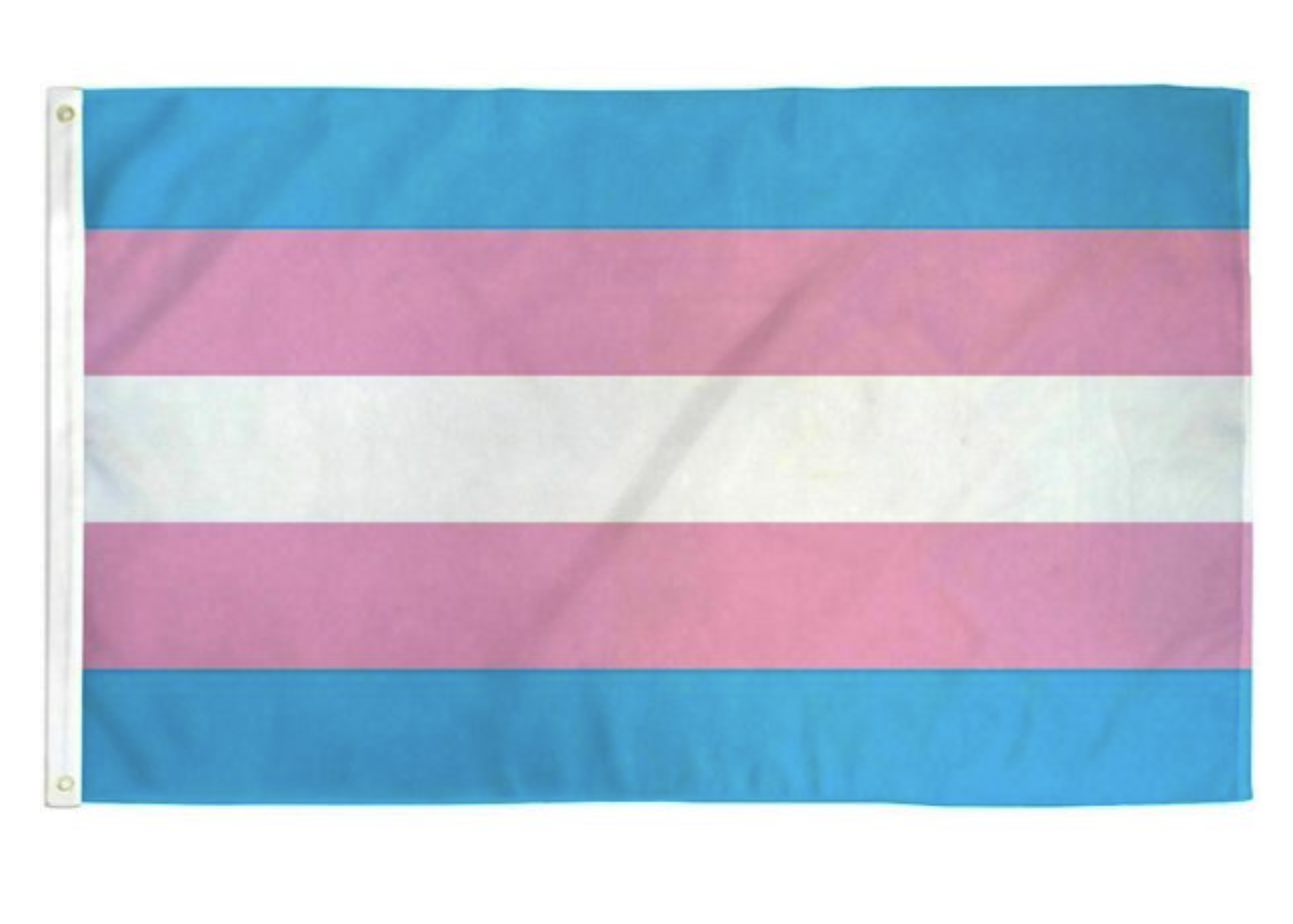
As with American society at large, churches' consideration of the sensitive transgender issue emerged only recently and rather suddenly, compared with their decades-long-debate over whether to leave behind the Christian tradition against sexual activity in gay and lesbian relationships. The religious implications go well beyond political agitation over "bathroom bills," athletic competition or women's shelters.

Transgenderism is part of a broader gender-fluidity movement. A recent survey by the interfaith Religion News Service asked readers to identify themselves as either female, male, transgender, trans woman or MTF, trans man or FTM, intersex, questioning, non-binary, genderqueer, gender fluid, agender or "other."

Among theologically flexible "Mainline" Protestants, a key breakthrough was the Evangelical Lutheran Church in America's September installation of Megan Rohrer of California, its first transgender-identified bishop. Rohrer was barred from the clergy until a 2009 policy change, so was originally ordained by the independent Extraordinary Lutheran Ministries, which works for full LGBT inclusion. (Oddly, that organization suspended Rohrer from membership in December over alleged and unspecified "racist words and actions.")

The United Methodist Church is expected to split this year over the older same-sex disagreement, exactly 50 years after the first floor debate at a governing General Conference. In October, religious media reported the gender transition of the formerly "cisgender" Methodist pastor married to Peggy Johnson, the just-retired bishop for eastern Pennsylvania, Delaware and eastern Maryland. But last month Indiana Methodists removed Pastor Craig Duke from his congregation over drag queen shows and drag education to express solidarity with his daughter, who identifies as pansexual.



Please respect our Commenting Policy

Talking to Jesus? This is big New York Times news when a Hollywood spiritualist is involved

Talking to Jesus? This is big New York Times news when a Hollywood spiritualist is involved

Let’s see. If you were going to write a New York Times article in which someone claimed to be channeling the Buddha, would you, at some point, talk to Buddhists? Maybe even a scholar whose work is rooted in Buddhist thought?

What about Judaism? If someone was claiming to channel Moses, would you talk to a rabbi or two about that? Maybe a scholar who has studied Jewish mysticism?

How about Islam? How would a reporter approach the claims of someone who says she is channeling Mohammad? And what would Islamic believers think of this process?

With these questions in mind, let’s look at that chatty first-person piece that ran more than a month ago at the Times with this headline: “In Good Spirits — Carissa Schumacher channels the dead for her A-list celebrity clients. But most days, she’s in the forest.

The headline omits the big reveal: Schumacher claims to channel the spirits of the dead, including her most famous connection — Jesus. This is tricky territory, as demonstrated in the wild correction at the end of this long feature:

Correction: Nov. 29, 2021

An earlier version of this article described incorrectly the biblical name Yeshua. The name refers to multiple people, including Joshua; it does not refer solely to Jesus Christ. The article also referred incorrectly to the Old Testament; while the name Yeshua appears in it, Jesus Christ does not.

Ready for the overture?


Please respect our Commenting Policy

Two think pieces on changes in American religious life, with a few political twists

Two think pieces on changes in American religious life, with a few political twists

It’s time for another “think piece” weekend double-shot.

In other words, I want to point readers toward two different online features that, at first, may not seem to be related. However, when you look closer you can see the DNA that connects them.

The first is a blog post by my friend Rod “Live Not By Lies” Dreher, but I want readers to consider his post as a mere frame work around a blast of data from the Pew Research Center team. The headline on Dreher’s post states, once again, an old trend (think “Sheilaism”), but one that is being more — not less — important: “Christianity Declines — But Not ‘Spirituality’.”

Dreher points to this quotation from a recent Pew feature, which digs deeper into the center’s mine of religiously unaffiliated research:

The secularizing shifts evident in American society so far in the 21st century show no signs of slowing. The latest Pew Research Center survey of the religious composition of the United States finds the religiously unaffiliated share of the public is 6 percentage points higher than it was five years ago and 10 points higher than a decade ago.

Christians continue to make up a majority of the U.S. populace, but their share of the adult population is 12 points lower in 2021 than it was in 2011. In addition, the share of U.S. adults who say they pray on a daily basis has been trending downward, as has the share who say religion is “very important” in their lives.

Currently, about three-in-ten U.S. adults (29%) are religious “nones” — people who describe themselves as atheists, agnostics or “nothing in particular” when asked about their religious identity. Self-identified Christians of all varieties (including Protestants, Catholics, members of the Church of Jesus Christ of Latter-day Saints, and Orthodox Christians) make up 63% of the adult population. Christians now outnumber religious “nones” by a ratio of a little more than two-to-one. In 2007, when the Center began asking its current question about religious identity, Christians outnumbered “nones” by almost five-to-one (78% vs. 16%).

The recent declines within Christianity are concentrated among Protestants.

A trend this massive will affect almost every area of American life, including politics.


Please respect our Commenting Policy

Whether art or mere craft, old-school interviewing is a reporter's perennial linchpin

Whether art or mere craft, old-school interviewing is a reporter's perennial linchpin

The New York Times offers daily doses of clever self-promotion (and often self-congratulation) in a feature called "Inside The Times: The Story Behind The Story." One of these carefully curated items last week, "How Reporters Interview Celebrities," merits contemplation from other journalists.

Interviews are forever the linchpin of all original reporting. This opus tapped three specialists about dealing with show business personalities, a different challenge from typical interviewing. But some points have broad application.

Prepare thoroughly, which assures interview subjects of your professionalism and intent to conduct a knowledgeable discussion . Know what they have said in previous articles, which they may be anxious to explain or rebut. Inevitably you'll have some prickly questions, and a savvy subject will expect this and be prepared, but don't ask them early on.

The best strategy is often "simply to listen."

Those observations, of course, pertain to feature-writing with advance notice and a reasonable amount of time for the conversation itself — as opposed to breaking news stories where the reporter is scrambling and the interview must quickly get to the point.

How does this apply to the religion beat?

For one thing, the field has few celebrities. Over the decades The Guy has met with some, such as the Dalai Lama, Billy Graham, Mother Teresa or Cardinal Joseph Ratzinger (soon to become Pope Benedict XVI). In those situations, never ever give way to awe, whatever your private reactions. (The Guy has observed this is a more likely temptation among people who do not work the religion beat.)

Even religious leaders who are highly influential within their own spheres typically do not have to deal with inquisitive journalists. They may feel (often for good reason) that representatives of the Mainstream Media will bring little understanding of faith or harbor slight scorn toward this aspect of human experience.


Please respect our Commenting Policy

Despite San Francisco Chronicle sermon, parents oppose teachers hiding LGBTQ evangelism

Despite San Francisco Chronicle sermon, parents oppose teachers hiding LGBTQ evangelism

Some of you may have heard of Abigail Shrier, the Wall Street Journal columnist and author of one of last year’s most controversial books, “Irreversible Damage: The Transgender Craze Seducing Our Daughters.” It discusses the stunning surge in the number of teen-aged girls who are declaring that they are transgender.

The book has done quite well, despite a temporary ban on Amazon.com, and Shrier has become quite the crusader in spreading the message that no one under 18 should try transitioning to an opposite gender without stiff challenges from clinicians. After all, puberty blockers, testosterone treatments and mastectomies are, well, irreversible.

She’s branched out into related subjects. In November, she reported a sensational story: “How Activist Teachers Recruit Kids” on her Substack newsletter, The Truth Fairy. Reaction was swift. More on that in a moment. And by the way, there is a clear religion hook in this story, which is why it is relevant to religion-beat reporters and GetReligion readers, in general.

Shrier’s original story story, which is a must-read no matter what side of the trans debate you’re on, reports on a California Teachers Association conference in October where two presenters bluntly described how they could spy on students’ Google searches and listen in on their conversations to recruit kids into LGBTQ-friendly clubs. They also had tips on how to get LGBTQ material into morning announcements in schools, while making sure parents that don’t know anything about what is happening.

We’re talking middle-schoolers here, not 18-year-olds.

Shrier had the advantage of being sent audio files of the entire conference, so much of her material was verbatim remarks by the presenters. In a recent story, The San Francisco Chronicle offered its version of the event.

Now, tell me, does this headline take a stance or not? It read: “Two California teachers were secretly recorded speaking about LGBTQ student outreach. Now they’re fighting for their jobs.”


Please respect our Commenting Policy

Can someone write a decent article about Rob Bell? That LA Magazine piece wasn't it

Can someone write a decent article about Rob Bell? That LA Magazine piece wasn't it

It’s been awhile since we heard from Rob Bell, the Grand Rapids, Mich., superstar pastor whose 2011 book asking if hell is truly real got him booted out of evangelical Christian circles. He was quite the phenomenon a decade ago and then he disappeared for a time.

Turns out that, like many folks who live in the northern half of the country, Bell wanted to escape to a better climate — so it was off to California he went.

Los Angeles Magazine just ran a long piece on what Bell is up to now as he lives near the tony Venice Beach section of Los Angeles. The soulful photos look like, as one Twitter poster remarked, “like he delivers sandwiches for a hipster restaurant in Portland.”

Bingo.

The story begins with a casual mention about Bell having surfed that morning in Malibu. But (cue the flashback) 10 years ago:

… Bell was among the most prominent Evangelical pastors in America. His Michigan megachurch, Mars Hill, attracted over 10,000 worshippers a weekend. His debut book, 2005’s Velvet Elvis: Repainting the Christian Faith, sold half a million copies. And he performed annual speaking tours to packed theaters around the world. One newspaper called him “The next Billy Graham.” But that was before Bell went to hell.

In his fourth book, 2011’s Love Wins: A Book About Heaven, Hell, and the Fate of Every Person Who Ever Lived, Bell wondered aloud whether a loving God would really condemn billions of nonbelievers to eternal torment. The book sold half a million copies and landed him on the cover of Time. It led to friendships with the likes of Oprah Winfrey. But it also led conservative pastors to label him a heretic and a false teacher; it led to him leaving not just his church, but the church; it led to him questioning the faith that had made him famous. And it led him to Los Angeles.

Then he began a podcast in 2015.

More than 300 episodes and tens of millions of downloads later, the Robcast has helped to resurrect Bell’s career.


Please respect our Commenting Policy

Think pieces: Why are evangelicals evolving on doctrines linked to LGBTQ issues?

Think pieces: Why are evangelicals evolving on doctrines linked to LGBTQ issues?

Yes, this is an unusual “think piece,” in part because it is best to consider it an online debate between two major voices shaping debates in contemporary evangelicalism.

One one side is the Rev. Denny Burk, a biblical studies professor at Boyce College, which is linked to the giant Southern Baptist Theological Seminary in Louisville.

On the other side is historian and gender-studies specialist Kristin Kobes Du Mez of Calvin University, who is best known as the author of the much-discussed book “Jesus and John Wayne: How White Evangelicals Corrupted a Faith and Fractured a Nation.”

Let’s start with a short comment from Burk, who posted:

… I had an important exchange with Kristin Kobes Du Mez on social media. I won’t rehash the entire back and forth here. Some of it is linked below for your reference if you are interested in following the threads. If you boil it all down, she asked me a question, and I asked her one. She asked me whether I thought her book Jesus and John Wayne contains false teaching (to which I answered “yes”), and I asked her if she believes that homosexuality is sinful (to which she answered that she doesn’t know yet).

Hers is my question: What does it mean to state that “homosexuality is sinful”? Is this a discussion of homosexual orientation or of sexual behavior?

In other settings, people have been arguing about whether it is sinful, or perhaps simply spiritually dangerous, for celibate LGBTQ Christians to publicly and enthusiastically proclaim a gay identity. Thus, their sexual behavior does not violate centuries of Christian doctrine.

There are important lines between each of these stances and, frankly, other variations on these themes.


Please respect our Commenting Policy

Emerging split inside old mainline: Is U.S. Christianity becoming two different religions?

Emerging split inside old mainline: Is U.S. Christianity becoming two different religions?

THE QUESTION:

Is Christianity in the United States becoming two different religions?

THE RELIGION GUY'S ANSWER:

If the question above seems off the wall, at least look why it has arisen.

Two years ago, The Guy wrote that he was quite astonished by some survey research reported in "The Twentysomething Soul" (Oxford University Press) by Tim Clydesdale of the College of New Jersey and Kathleen Garces-Foley of Marymount University.

Young Americans age 30 and under, quizzed about religion, were asked how they think of God.

One option was "a personal being, involved in the lives of people today." It doesn't get any simpler or more basic than that, whether you're Jewish, Christian or Muslim. Other choices were some impersonal "cosmic life force," or a deistic creator who is "not involved in the world now," or that God does not exist.

Not surprisingly, the evangelical Protestants were virtually unanimous in embracing the first definition. But remarkably, only half of those in the predominantly white, theologically pluralistic "mainline" Protestant church bodies made that choice, while 40 percent favored the vague "life force." Young adult Catholics fell in between the two Protestant groups. (In this random sample, 30 percent were evangelicals, 18 percent Catholic, 14 percent "mainline" Protestant, and 29 percent with no religious affiliation.)

The Guy therefore posed the question whether Protestants' long-running two-party rivalry "could be evolving toward a future with two starkly different belief systems."

Now a more radical version of that scenario is explored at book length in "One Faith No Longer" (New York University Press) by Baylor University sociologist George Yancey and Ashlee Quosigk, a visiting scholar of religion at the University of Georgia. More info here.


Please respect our Commenting Policy

Finally, another Overby Center program: Why religion was one big factor in vaccine wars

Finally, another Overby Center program: Why religion was one big factor in vaccine wars

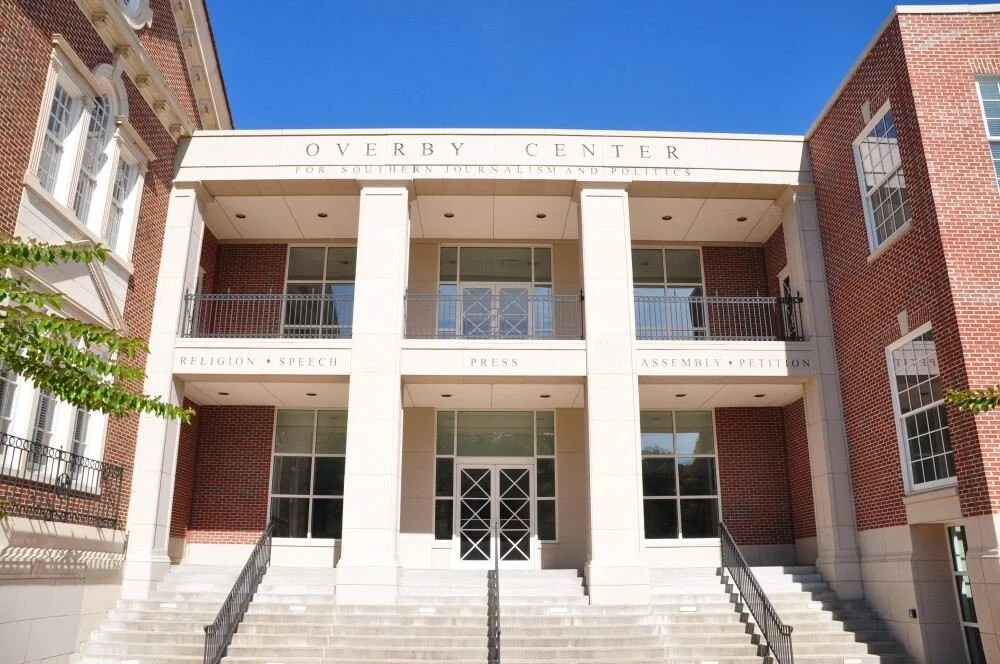
I have strong memories, to say the least, of the first Overby Center program in which I was able to participate, as a senior fellow for the center and as editor of GetReligion.

The topic was the role that religion would play in the 2020 presidential election. Religion-beat patriarch Richard Ostling was there and both of us stressed that, while journalists were pouring oceans of ink into coverage of (#TriggerWarning) white evangelicals, Catholic voters would play the pivotal role in swing states. I also noted the little-covered 2016 impact of Latino evangelicals and, especially, Pentecostal believers in Florida. I didn’t think to predict a starring 2020 role these Latino voters in Texas.

When was that program? Here’s a clue. As I drove home, I stopped for lunch in Jackson, Tenn. As I pulled back onto the interstate headed east, I heard a radio report noting that the mysterious virus that was causing havoc in Wuhan, China, had now been detected in Europe and, perhaps, in New York City.

Days later, the whole world turned upside down.

With social-distancing, masks and vaccines in mind, we recently gathered in Oxford for a forum addressing a logical topic — why religion was a key factor (but not the only one or even the dominant one) in America’s wars over COVID-19 vaccines. Click here to watch the event on YouTube.

In addition to Center founder Charles Overby, I was joined by three logical voices on this subject.

First, political scientist (and GetReligion contributor) Ryan Burge Zoomed in with several crucial charts full of relevant info. Take this post, for example: “Thinking about white evangelicals, COVID-19 vaccines and VERY popular headlines.” Then there was Marquita Smith of the University of Mississippi faculty, a journalist I came to know while she was teaching at John Brown University on the edge of the Ozarks. She is now the assistant dean of graduate programs at the Ole Miss J-school.

The final panelist was the Rev. Daniel Darling, who was recently named director of the Land Center for Cultural Engagement at Southwestern Baptist Theological Seminary in Fort Worth, Texas.

Then again, Darling may be better known in religion-beat circles because of this New York Times headline: “Fired After Endorsing Vaccines, Evangelical Insider Takes a Leadership Role.”


Please respect our Commenting Policy