Baptists

White evangelicals, again: New York Times urgently probes praise music on political right

White evangelicals, again: New York Times urgently probes praise music on political right

At this point, it’s safe to say that some New York Times editors are still engaged in a passionate quest to find a large group of Americans to blame for the 2016 general-election victory of Donald Trump of Queens.

There’s an obvious answer: White evangelicals. And it’s certainly true that independent and, especially, Pentecostal Protestants played a strategic role in the shocking rise of Orange Man Bad. It’s also true that independent evangelicals, fundamentalists, charismatics and Pentecostal believers have played high-profile roles in video-friendly pro-Trump events, including the January 6th attack on the U.S. Capitol to hunt down Vice President Mike Pence — a mainstream White evangelical if there ever was one.

However, White evangelical voters were not the crucial Rust Belt voters that put Trump in the White House, although Latino evangelicals and charismatics were a major force in Florida

Therefore, what are discerning religion-beat readers supposed to make of that long, vague Times sermon that ran the other day with this dramatic double-decker headline? (Sorry for the delay getting to this piece, but surgery slowed me down last week.)

The Growing Religious Fervor in the American Right: ‘This Is a Jesus Movement’

Rituals of Christian worship have become embedded in conservative rallies, as praise music and prayer blend with political anger over vaccines and the 2020 election.

Here is one strong opinion that is drawn — with his permission — from an email I received from Kenneth Woodward, for decades the religion-beat pro at Newsweek and the author of “Getting Religion: Faith, Culture, and Politics from the Age of Eisenhower to the Ascent of Trump.”

This is the most naive religion story I’ve read in decades and illustrates precisely why the Times still does not get religion. … Only the Times could publish a piece as misinformed as this one.

Why does Woodward think that? To some degree, he is blaming a newspaper story for lacking the kind of depth seen in interpretive magazine pieces produced during the glory years of religion-beat work at Newsweek and at Time by GetReligion patriarch Richard Ostling. For a short period of time, Emma Green was allowed to do similar work at the Atlantic.

Depth is an issue here. But this Times feature is quite long and has lots of room for anecdotes, when what is missing is a hard skeleton of facts that link (if this is possible) these vague trends and illustrations to actual denominations, publishing houses, parachurch groups, think tanks and academic institutions at the heart of American evangelicalism.



Please respect our Commenting Policy

Five faith facts about the life of Ketanji Brown Jackson, the first Black woman at SCOTUS

Five faith facts about the life of Ketanji Brown Jackson, the first Black woman at SCOTUS

Faith. It’s an important part of Ketanji Brown Jackson’s story.

Here are five religion facts about the 51-year-old judge who on Thursday became the first Black woman confirmed to the U.S. Supreme Court:

1. Jackson will be “the first-ever nondenominational Supreme Court justice,” as Christianity Today’s Kate Shellnutt points out.

2. She’ll become the second current Protestant on the court (along with Neil Gorsuch), joining six Catholics (Samuel Alito, Amy Coney Barrett, Brett Kavanaugh, John Roberts, Sonia Sotomayor and Clarence Thomas) and one Jewish justice (Elena Kagan), according to Christianity Today’s Megan Fowler.

But Religion News Service’s Jack Jenkins tweets that Jackson will be “the only current Supreme Court justice who publicly IDsas Protestant.” “Gorsuch attended an Episcopal church before joining SCOTUS,” Jenkins explains, “but grew up Catholic and how he personally IDs is unclear.”

3. Jackson “has put her religious faith front, center — and vague,” notes The Associated Press’ Peter Smith. “She’s spoken strongly of the role of her faith in her life and career but hasn’t gotten into the specifics of that commitment.”

RNS’ Adelle Banks offers more details on Jackson’s past statements about her faith in God.

4. At a hearing last month, Jackson was pressed on her faith by Sen. Lindsey Graham, a Republican from South Carolina, ReligionUnplugged.com’s Hamil R. Harris reports.

The Deseret News’ Kelsey Dallas recounts this exchange between Graham and Jackson:

“On a scale of 1 to 10, how faithful would you say you are in terms of religion? I go to church probably three times a year so that speaks poorly of me. Do you attend church regularly?,” Graham said.

Jackson declined to give a rating, noting that she worried about the message doing so would send to Americans watching at home.


Please respect our Commenting Policy

Naw! Nobody in the Title IX wars is asking LGBTQ questions about religious schools

Naw! Nobody in the Title IX wars is asking LGBTQ questions about religious schools

Every now and then, I finish reading a major-media news story and I think: Wait a minute. There’s a massive hole here (and one that’s going to produce all kinds of news headlines). Didn’t anyone notice?

In this case, we are talking about another story involving a head-on collision between the First Amendment and the evolving doctrines of the Sexual Revolution. The battleground is the hyper-tense world of higher education. The Washington Post headline, in this case: “New Title IX rules set to assert rights of transgender students.”

We will get to the overture in a moment. But can you spot the “hole” that is sort-of mentioned in this background paragraph which is buried way down in the Post report?

Title IX is a 1972 law that bars discrimination on the basis of sex in any educational program or activity that receives federal money. Schools found in violation risk losing federal aid. Advocates have long held that this definition rightfully includes discrimination on the basis of sexual orientation or gender identity.

OK. Does “any educational program or activity that receives federal money” include student-loan programs?

If so, maybe this story should have at least mentioned the 7,000 or so religious colleges and universities in this land? I mean, is there any chance that LGBTQ activists are going to challenge the religious liberty claims of these schools, many of which are explicitly doctrine-defined voluntary associations?

With that in mind, read the top of this feature at The Conversation: “What is the religious exemption to Title IX and what’s at stake in LGBTQ students’ legal challenge?”

While federal law shields most U.S. students from gender and sexual orientation discrimination, an estimated 100,000 LGBTQ students at religious institutions do not have the same protections.

Under a religious exemption provision, scores of colleges and universities can – and do – discriminate on the basis of someone’s sexual orientation, gender identity or gender expression.

A class action lawsuit now challenges that discrimination.


Please respect our Commenting Policy

Podcast: Concerning the many religion-beat stories linked to that 'Don't Say Gay' bill

Podcast: Concerning the many religion-beat stories linked to that 'Don't Say Gay' bill

Let’s talk news-business realities for a moment.

If you do an online search for the following terms — “Parental Rights in Education,” Florida — you will get about 43,000 hits on Google News (as of Thursday afternoon).

Then again, if you run a search for these terms — “Don’t Say Gay,” Florida — you will get 6,820,000 hits on Google News and 24,100,000 hits on Google (period).

That’s a pretty big difference. What’s going on?

On this week’s “Crossroads” podcast (CLICK HERE to tune that in) I argued that the real name of this bill sounded way, way too much like a whatever it was that parents in Virginia wanted during that recent election that left the Democratic Party establishment in shock.

As it turns out, a new Public Opinion Strategies poll (.pdf here) found that registered voters — a majority of Democrats, even — liked the contents of this controversial Florida bill when shown its key, defining language:

“Classroom instruction by school personnel or third parties on sexual orientation or gender identity may not occur in Kindergarten through third grade or in a manner that is not age appropriate or developmentally appropriate for students in accordance with state standards.”

Clearly, “Don’t Say Gay” worked much better for political activists who wanted to keep the focus on LGBTQ-era sexual education for prepubescent children. The whole idea was that way too many parents are burdened with religious, moral and cultural beliefs that were on the wrong side of history. Thus, “parental rights” and classroom transparency are not helpful concepts.

What does this have to do with the many religion-angle stories that journalists could be chasing linked to this legislation and variations on this bill that are sure to show up in other states?


Please respect our Commenting Policy

If the big goal is racial reconciliation, pastors may want to start by breaking bread

If the big goal is racial reconciliation, pastors may want to start by breaking bread

The Rev. Martin Luther King, Jr., faced a barrage of questions about race and politics during his landmark 1960 appearance on NBC News' "Meet the Press," but one of the most memorable exchanges concerned a blunt question about church life.

"How many white people are members of your church in Atlanta?", asked a reporter from Nashville.

"I think it is one of the tragedies of our nation, one of the shameful tragedies, that 11 o'clock on Sunday morning is one of the most segregated hours, if not the most segregated hour, in Christian America," King replied. Any church that has "a segregated body is standing against the spirit and the teachings of Jesus Christ, and it fails to be a true witness," he added.

Millions of Americans are still wrestling with this Sunday morning divide.

But another practical question emerged during a recent Southern Baptist Convention program entitled "Pursuing Unity: A Discussion of Racial Reconciliation Efforts and the SBC." Can Black and White church folks find gaps in their jammed schedules and start breaking bread together?

"It doesn't matter how many panel discussions you watch. It doesn't matter how many books you read, how many conferences you go to. None of that will do better than dinner table ministry," said the Rev. Jon Kelly of Chicago West Bible Church.

If people want progress, he said, they need to consider their circle of friends and ask "why everyone looks like me, votes like me, thinks like me. … When we talk about racial reconciliation, we want the fruit of reconciliation without the relationships. Until our dinner tables become diversified, … until we eat bread together and fellowship together, we won't make any progress."

Fellowship meals will not make headlines or ignite rhetorical fireworks in social media, and that's a good thing, said the Rev. Ed Litton, who recently said he wouldn't seek a second term as SBC president. He plans to focus on racial-reconciliation projects linked to his own church near Mobile, Ala.

Years ago, he said, Black and White pastors began sharing meals while discussing the "deep wounds" in that racially divided community. The key was focusing on faith and the ties that bind, until basic bonds of trust were in place.

"We hashed out why we were there," said Litton. "We weren't there to bring about some kind of social change.


Please respect our Commenting Policy

Americans think highly of Jesus: But modern Christians get rather harsh reviews

Americans think highly of Jesus: But modern Christians get rather harsh reviews

When it comes to exploring what Americans think about Jesus, a new study offers Christian leaders both good news and bad news.

The good news is that 76% of Americans affirm the "historical existence" of "Jesus of Nazareth," although it's also interesting to note that if 89% of self-identified Christians embraced that statement, the implication is that 11% are not sure.

Meanwhile, 84% of participants in a new "Jesus in America" study -- conducted by the global Ipsos research company for the Episcopal Church -- agreed that "Jesus was an important spiritual figure."

The bad news? While 50% of "not religious" Americans accepted this "important spiritual figure" language, they were much less impressed with the believers who represent Jesus.

When asked, "What characteristics do you associate with Christians in general?", the nonreligious selected these words from the poll's options -- "hypocritical" (55%), "judgmental" (54%) and "self-righteous" (50%). Next up: "arrogant," "unforgiving" and "disrespectful."

It appears that one of the goals of this poll -- with questions about racism, social justice and last year's attack on the U.S. Capitol -- was to see if nonbelievers have different attitudes about liberal and conservative Christians, said political scientist Ryan Burge of Eastern Illinois University, author of the new book "20 Myths about Religion and Politics in America." He is co-founder of the Religion in Public website and a contributor at GetReligion.org, which I have led since 2004.

"This is the million-dollar question," said Burge, who is also a pastor in the progressive American Baptist Church. "If non-religious people are turned off by what they see as the stricter faith of many Christians, evangelicals in particular, then wouldn't it make sense for them to seek more flexible alternatives?

"If there's all kinds of room in mainline Protestant churches these days, and that's putting it mildly, then why aren't these kinds of people filling up some of those pews?"


Please respect our Commenting Policy

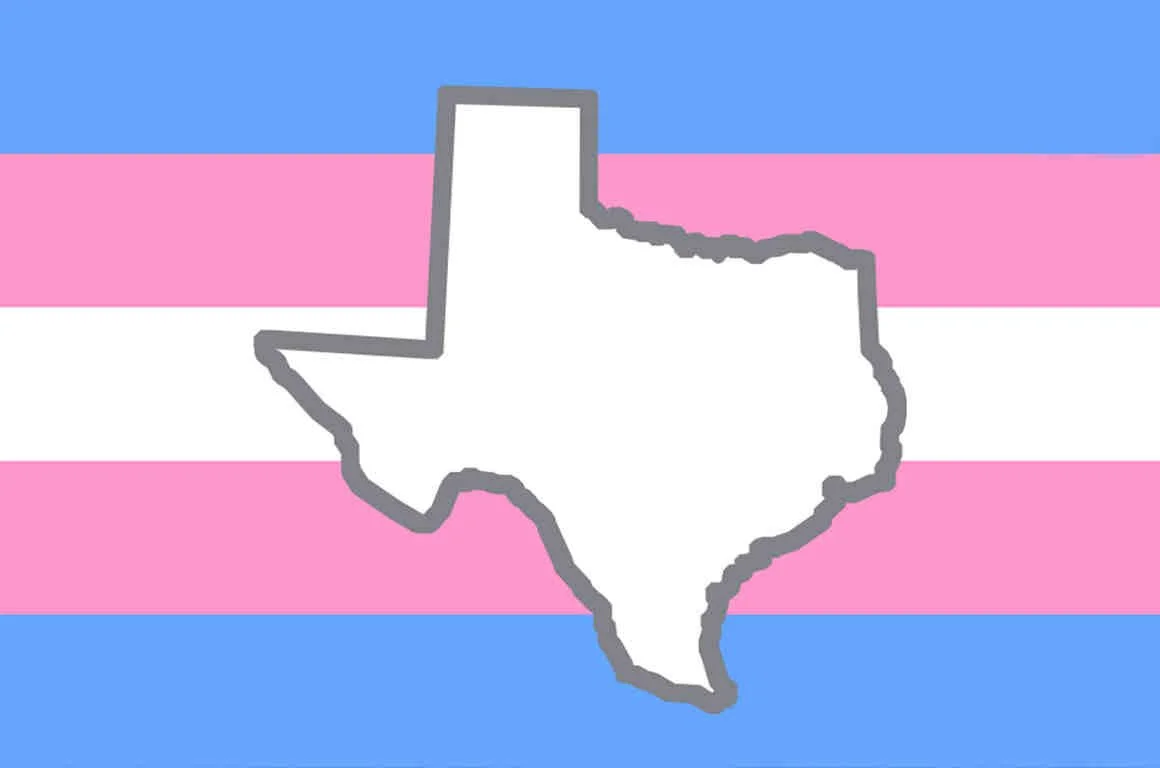
'Gender affirming?' Texas press keeps backing one side in battles over trans therapies

'Gender affirming?' Texas press keeps backing one side in battles over trans therapies

Texas is definitely at the forefront of the culture wars these days, with legislation restricting abortion past six weeks, addressing concerns about critical race theory and now a state directive nixing hormone treatments aimed at changing a child’s gender.

Naturally, media have been all over these issues. The latest, which has to do with sex changes for kids, has gotten a lot of people riled up on both sides. In the Lone Star state, all of these debates have obvious religious and moral implications.

However, only one side ends up in newspapers like the Houston Chronicle, from whose March 4 story I’ll quote from here:

Texas Children’s Hospital has stopped prescribing gender-affirming hormone therapies — a move that could affect thousands of transgender children in Texas — in response to a controversial directive from state leaders to investigate medical treatments for transgender youth as child abuse.

The nation’s largest pediatric hospital revealed the decision Friday, dealing a blow to parents of transgender children who were seeking access to medicine that slows the onset of puberty or hormone treatments that help older children develop into bodies that match their identities.

A few paragraphs down, we learn that a state agency was investigating the parents of a 16-year-old “who underwent gender-affirming care.”

“Gender-affirming care” means puberty blockers that block the hormones — testosterone and estrogen — that cause periods and breast growth, or voice-deepening and facial hair growth. It’s not known their effect on fertility, bone marrow density or brain development. Supposedly there are no bad long-term effects, but we don’t know everything at this point, do we?

We do know that there are strong voices on both sides of these debates and, as tmatt noted the other day, not all of them (“Top Trans Doctors Blow the Whistle on ‘Sloppy’ Care”) fit neatly into the familiar right-left, straight-LGBTQ niches.


Please respect our Commenting Policy

Are Southern Baptists bracing for another civil war? Well, today isn't 1979 ...

Are Southern Baptists bracing for another civil war? Well, today isn't 1979 ...

Once upon a time, Southern Baptists in Bible Belt communities knew how to talk to people who didn't go to church.

"We were dealing with people who were, for the most part, like us," said Baptist historian Nathan Finn, the provost of North Greenville University, located in the South Carolina hills near the North Carolina border. "Everyone understood sweet tea, fried chicken and SEC football. It was easier to talk to those people about Jesus."

Things changed, as the greater Greenville-Spartanburg welcomed waves of high-tech firms and industries with global brands such as BMW, Bosch, Fluor, Hitachi and many others. Today's newcomers speak German or Japanese.

"It's not Black folks and White folks from the South. We're past that. The Sunbelt has gone global and we're more urban. We don't know how to talk to the new people," said Finn. "The cultural gaps are bigger. … Southern Baptists are better at handling these kinds of issues in foreign missions than in our own communities."

Finn has been studying this trend and others for years, which led him to write a series of articles in 2009 for Southeastern Baptist Theological Seminary entitled "Fifteen Factors that have Changed the SBC since 1979."

Anyone who knows Southern Baptist Convention history gets that 1979 reference. That was when activists backing "biblical inerrancy" attacked establishment leaders of America's largest Protestant flock, while also supporting causes favored by the surging Religious Right. Electing one SBC president after another during the 1980s, this "conservative resurgence" helped change the face of evangelicalism.

There are signs a second Baptist civil war may be ahead.


Please respect our Commenting Policy

One of the central religion-beat issues of our day: What is 'Christian nationalism'?

One of the central religion-beat issues of our day: What is 'Christian nationalism'?

THE QUESTION:

What is “Christian nationalism”?

THE RELIGION GUY’S ANSWER:

“Christian nationalism” became common coinage in the U.S. fairly recently, usually raised by cultural liberals who view it with alarm, and often with “white” as an added adjective. The term is not generally embraced by those considered to be participants.

As journalist Samuel Goldman remarks, to describe something as Christian nationalism “is inevitably to reject it.”

The Merriam-Webster definition of plain “nationalism” is “loyalty and devotion to a nation” but adds this important wording: “ … especially a sense of national consciousness exalting one nation above all others and placing primary emphasis on promotion of its culture and interests as opposed to those of other nations or supranational groups.”

“Nationalism” is not the same as “patriotism,” the natural and benign love and loyalty toward one’s homeland that characterizes all peoples and countries, including huge numbers of non-nationalists on America’s religious left as well as the right. Nor is it the same thing as either political or religious conservatism but is instead a narrow faction within those broad populations.

The latest bid to shape public perceptions of the concept is a 63-page “Report on Christian Nationalism and the January 6 Insurrection,” issued last month by the Baptist Joint Committee for Religious Liberty (BJCRL) and the Freedom From Religion Foundation (FFRF). Click here for .pdf text.

These two organizations may seem odd partners, since FFRF claims that “persons free from religion” have brought about “most” of the West’s “moral progress.” But FFRF shares the Baptist committee’s devotion to strict separation of church and state and opposition to “targeting of religious minorities” and “the politicization of houses of worship” as well as to Christian nationalism.


Please respect our Commenting Policy