
Anglicanism

New podcast: The long, complex and mysterious life (and faith) of Prince Philip of Greece

New podcast: The long, complex and mysterious life (and faith) of Prince Philip of Greece

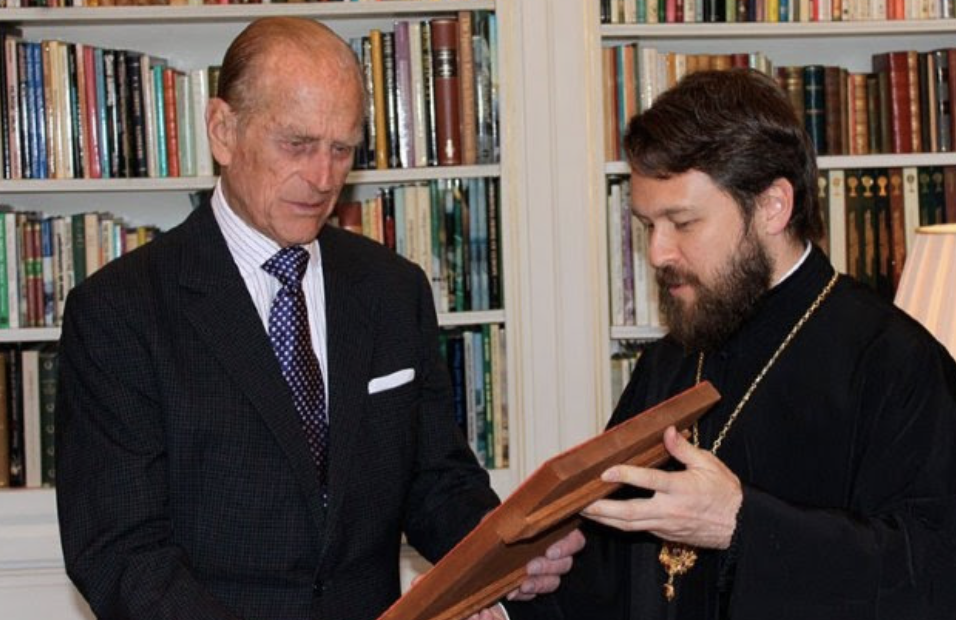
It’s a short scene from second season of “The Crown,” but certainly one the illustrates what the creators of the Netflix series thought of Prince Philip Mountbatten-Windsor — at least at one stage of his dramatic life.

In 1955, while the Rev. Billy Graham was in Scotland leading a crusade in Glasgow, the evangelist received a note from Buckingham Palace inviting him to preach on Easter morning in the private chapel at the Royal Lodge. It’s a poignant scene, especially when paired with another in which Graham visits the queen to discuss an important subject — the need to forgive others.

In the chapel, Graham discusses Christian faith in highly evangelical language, describing the need to have a personal encounter with Jesus Christ. Queen Elizabeth listens attentively. Prince Philip is clearly bored, upset, disturbed, offended, embarrassed or all of the above.

Was Prince Philip struggling with guilt linked to his rumored infidelities? What is happening in his head and heart? That was the starting point for this week’s “Crossroads” podcast, which focused on the mainstream press coverage of the prince after his recent death (click here to tune that in).

For millions of people, “The Crown” offered the dominant image of Prince Philip — the tall, handsome consort of the queen best known for his faults and weaknesses. He was an old-guard British man who went to war, who was known for blunt remarks many considered racist or sexist. Eventually, some would respect his progressive views on the environment.

But it was also obvious that something important happened during this royal couple’s 73 years of marriage. Somehow, they grew together, doing the best they could to handle the pressures of royal life and the searing spotlight on their four children and, eventually, their grandchildren and great-grandchildren.

News consumers who dug into the fine details learned that Prince Philip was, in many ways, an outsider from the Greek wing of Europe’s complicated world of interlinked royal families. He was an Orthodox Christian, at least until he married Elizabeth and, on bended knee, honored her as the leader of the Church of England. He befriended Anglican clergy and was known to confront priests for intense discussions after their sermons.

Something else was going on as the prince aged and matured. There were signs that, spiritually, he was seeking the roots of his faith and his family.

Please respect our Commenting Policy

New podcast: There's more to Lent 2021 than virtual-ash selfies and giving up (fill in the blank)

New podcast: There's more to Lent 2021 than virtual-ash selfies and giving up (fill in the blank)

It happened every year that I worked in a mainstream newsroom. Apparently, there was a law somewhere that official newsroom “advance calendars” should include a note about the beginning of Lent.

Thus, an editor would ask me a question that sounded something like this: “So where are we sending a photographer this year on Ash Wednesday?”

This was, you see, the official way to handle Lent and it would be followed, of course, by some kind of sunrise-and-lilies photo when Easter rolled around. There might be an Easter story of some kind, but that was always a problem since the goal was to have the story in print on that Sunday, which meant the story and photograph needed to be done early. It’s so hard to cover a holy day that hasn’t happened yet.

But Ash Wednesday photographs, backed with a sentence of two about Lent, seem to be a news-culture tradition. That reality was the hook — sort of — for this week’s “Crossroads” podcast (click here to tune that in).

Thus, it was easy to anticipate this COVID-19 era variation on a familiar theme, care of Religion News Service: “Celebrating Ash Wednesday in a pandemic? There’s an app for that.

There are filters that blur “imperfections” in photos and filters that turn lawyers into cats on Zoom.

Now there are filters to help Christians safely display the very visible Ash Wednesday mark on social media.

Many Catholic and other liturgical churches observe Ash Wednesday by smudging ashes on congregants’ foreheads as a sign of repentance and a reminder of one’s mortality. That practice presents a problem during a season when health experts fighting COVID-19 have advised people to avoid touching their faces or coming in close proximity to others. …

In a year when so much of life has been lived virtually, Catholic prayer and meditation app Hallow has also taken the tradition online with an “AshTag” photo filter on both Facebook and Instagram.

That’s a valid story, even if it does fit a now familiar pandemic pattern — lots of coverage of virtual faith in these troubled times, as opposed to a few stories about the creative efforts of analog people to observe their traditions within the parameters of social-distancing guidelines.


Please respect our Commenting Policy

New York Times digs into 'The Messiah' and finds emotions, art, politics and very little Christianity

Gentle readers, please allow me a second moment of reflection on the challenges of secular journalists attempting to cover news stories centering on great works of sacred choral music. I have, after all, been a choral musician since I was 6-years-old and I didn’t jump into journalism until I discovered that it’s hard to major in music at a major university if one cannot play the piano.

The other day, I took a look at a New York Times feature about the unsuccessful efforts at the KIng’s College at Cambridge University to carry on — damn the coronavirus, full speed ahead — with its world-famous Christmas Eve performance of “The Festival of Nine Lessons and Carols.”

As you can tell from my snarky headline, I thought it was strange that the Times team didn’t include anything about the contents of this Anglican worship service, including the fact that the “lessons” are, in fact, lengthy passages of scripture. Thus, the headline: “New York Times asks: Did COVID shut down live festival of content-free lessons and carols?”

I didn’t expect a religion-beat story. However, I still thought it was strange (or, alas, not so strange) to completely skip over the religious intent and message of a worship service held in a chapel. After all, as noted in this Cambridge essay about the rite:

Wherever the service is heard and however it is adapted, whether the music is provided by choir or congregation, the pattern and strength of the service, as Dean [Eric] Milner-White pointed out, derive from the lessons and not the music. ‘The main theme is the development of the loving purposes of God ...’ seen ‘through the windows and words of the Bible’. Local interests appear, as they do here, in the bidding prayer, and personal circumstances give point to different parts of the service. Many of those who took part in the first service must have recalled those killed in the Great War when it came to the famous passage ‘all those who rejoice with us but on another shore and in a greater light’. The centre of the service is still found by those who ‘go in heart and mind’ and who consent to follow where the story leads.

So might these Bible passages about life, death, suffering and new hope have been relevant during the COVID-tide of 2020? Apparently, that is not a topic one could expect to read about in The New York Times.

But what about the even more famous scripture passages, images and themes in “The Messiah” by George Frideric Handel?

Surely the Times team couldn’t produce a feature story — “Meet the People Who Can’t Bring You ‘Messiah’ This Year” — about why this work is so important to listeners and performers without discussing the content of this sacred classic? Maybe a tiny splash of digital ink, like one or two paragraphs?


Please respect our Commenting Policy

New York Times asks: Did COVID shut down live festival of content-free lessons and carols?

For a certain kind of Christmas music lover (tmatt raises his hand high) there are few words richer and more emotional than, “Once in royal David’s city, stood a lowly cattle shed. …”

The former choirboy in me — yes, there are fine choirs in some corners of Texas — has always tried to imagine the pressure on the boy soprano chosen to sing those words at the start of the annual Festival of Nine Lessons and Carols in the gothic chapel at King’s College, Cambridge.

Whatever the word “tradition” means in Anglicanism these days, tuning into the live radio broadcast of this rite is an example of something sacred that still plays an important role in British life. I mean, everyone is listening — including the Queen.

But in 2020 ... And what about that mutant variation on COVID-19 … Isn’t choral music really dangerous? … Of course the chapel is empty … Are there masks that match robes worn by the choristers? Etc., etc.

I’m happy to report that several news organizations thought ahead and wrote stories about the Christmas Eve challenges of COVID-tide, including The New York Times: “A Choir Tries to Keep Its Christmas Tradition Alive.”

The story starts exactly how you would imagine that it would start — with a rehearsal as the choir prepared for the ritual that everyone is hoping will be allowed to proceed:

CAMBRIDGE, England — On a recent evening, the 16 boys and 14 men of the Choir of King’s College, Cambridge, stood in the gothic chapel where they perform, spread out in the flickering candlelight.

A few of the choristers gazed at the vaulted ceiling about 80 feet above them. Then Daniel Hyde, the choir’s music director, signaled that he was ready to begin, and all slipped off the masks they had been wearing to sing “I Saw Three Ships,” a sprightly carol that will be heard by about 100 million people. …

Each Christmas Eve, the choir’s “Festival of Nine Lessons and Carols” is broadcast live on radio stations worldwide, including about 450 in the United States.

What are the stakes here?

In a typical year, the choir performs in religious services in the college chapel several times a week and tours worldwide. It has sung the Christmas Eve carol service every year since 1918, and the event has become a cherished holiday tradition.


Please respect our Commenting Policy

With 400th anniversary, those Plymouth Pilgrims will make the ideal Thanksgiving feature

A brave band of sectarian Protestants facing a harsh winter ahead stepped ashore 400 years ago to establish Plymouth Colony, England's second foothold in America following Jamestown.

The date was December 18, but most readers probably think about these "Pilgrims" on Thanksgiving Day, which is patterned after their legendary 1621 harvest feast with Native American guests.

Print and broadcast media professionals who are already planning Thanksgiving features could not do better with sourcing than to debrief award-winning historian John G. Turner of George Mason University (jturne17@gmu.edu, 703-993-5604) about his timely book "They Knew They Were Pilgrims: Plymouth Colony and the Contest for American Liberty" (Yale University Press).

The Pilgrims were supposed to arrive at New York harbor, but were lucky to land safely anywhere due to leaks and damage on the Mayflower.

Their "first Thanksgiving" was apparently no formal observance of gratitude to God, and the menu was probably fish and venison, not wild turkey. Whatever Plymouth Rock signified, the colonists subjected it to later neglect. The acclaimed "Mayflower Compact" was not the New World's first constitution but a hasty bare-bones agreement.

Since Plymouth was absorbed in 1691 into the wealthier Massachusetts Bay Colony, run by rival "Puritan" Christians, many historians have dismissed it as an unimportant backwater. But Turner uplifts the Pilgrims' significance, then balances their contributions against their sins, well summarized in this National Review piece. The most important story theme for journalists is the role of these pioneers at the beginnings of American democracy, human rights and religious liberty.

The Pilgrims received hosannas as democratic pioneers from 19th Century boosters like John Quincy Adams and Daniel Webster, but Turner says they "were neither democrats nor theocrats."

The colony was run by the believers, but did not require everyone to join the church or attend worship. They did, however, make everyone pay taxes to support their churches. They fled England to escape religious persecution, yet sent Baptists and Quakers into exile. (To be fair, in most countries religious dissenters faced prison or worse.)

State and church leaders were both elected, and lay elders shared power with the clergy -- all rather foresighted and with far-reaching implications.


Please respect our Commenting Policy

What is 'biblicism'? A mere academic term or something that affects the news?

THE QUESTION:

What is “biblicism”?

THE RELIGION GUY’S ANSWER:

This question is the title of an article this month on Patheos.com by Michael Bird, an Anglican priest who teaches theology at Australia’s Ridley College and is also a visiting professor at Houston Baptist University.

More on Bird in a bit, but first let’s lay some groundwork for the discussion and why it is newsworthy..

The dictionary definition of biblicism is adherence to a literal interpretation of the Bible. Merriam-Webster dates the first known use of this term to 1805. Note that this was a century before the rise of the literal-minded U.S. Protestant movement called “fundamentalism,” named after “The Fundamentals” of the faith, a series of conservative ecumenical booklets on the Bible and doctrine published from 1910 to 1915.

Literal interpretation is bound up with the belief that the entire Word of God is free from error. This was the first of the so-called “five points of fundamentalism” that originated as “essential” Christian beliefs defined by a U.S. Presbyterian General Assembly in 1910.

People sometimes distort literal interpretation. There’s a useful explanation in the “Chicago Statement” issued by 300 Protestants at a 1978 meeting of the International Council on Biblical Inerrancy. They stated that God used each human writer’s cultural milieu in inspiring the Scriptures, and that while “history must be treated as history,” Christians should also treat “poetry as poetry, hyperbole and metaphor as hyperbole and metaphor, generalization and approximation as what they are.”

That working principle, of course, does not settle all debates. Classic examples involve the creation of the world, which begins the Book of Genesis. Did the famous six “days” of the process last 24 hours, as some literalists contend, or are the “days” poetic or symbolic references to vast phases of time? Is the account meant to be historical and did the events occur in this precise order? On the discussions rage, frequently affecting public debates and, thus, news.

The “fundamentalist” label often carries negative connotations and should not be applied to people who reject and resent that label. Similarly, the conservative folks at gotquestions.org say, “biblicism” and “biblicist” are sometimes applied to cast aspersions against literalists.


Please respect our Commenting Policy

Newsweek: Core doctrine of Christianity is something 'evangelists' may or may not believe

In recent years, your GetReligionistas have had quite a few discussions of the following question: Should today’s Newsweek continue to be treated as the important newsmagazine that it once was?

Hear me out. I know that Newsweek contains some interesting and provocative commentary pieces and, every now and then, the magazine publishes an interesting essay on a news topic that appears to have been written by someone in the newsroom.

The day-by-day norm, however, appears to consist of quick-hit pieces based on the work of others, often showing signs of work by inexperienced interns. Some of these online pieces can be considered “aggregation” pointing readers to other sources of news and information.

Please don’t read that as an automatic put-down. GetReligion publishes its share of “think pieces” that introduce readers to articles we have seen linked to religion news. The goal is to write a worthy intro and then show readers bites of the article — clearly identifying the source — that lets them see key insights or information. At the end, we encourage folks to “read it all,” with a URL to the source.

The problem, to be blunt, is when there is evidence that the journalists doing this work have little or no understanding of the material they are “writing about.” Consider this overture in a Newsweek piece with this headline: “52 Percent of Americans Say Jesus Isn't God but Was a Great Teacher, Survey Says.”

A slight majority of American adults say Jesus was a great teacher and nothing more during his lifetime, which several Christian leaders say is evidence today's faithful are "drifting away" from traditional evangelist teachings.

As earlier reported by The Christian Post, the 2020 survey conducted by Ligonier Ministries, a Florida-based Reform Church nonprofit, found 52 percent of U.S. adults say they believe Jesus Christ is not God — a belief that contradicts traditional teachings of the Bible through the Christian church, which state Jesus was both man and God.

Nearly one-third of evangelicals in the survey agreed that Jesus isn't God, compared to 65 percent who said "Jesus is the first and greatest being created by God."

Where to begin?


Please respect our Commenting Policy

Walking with C.S. Lewis: George Sayer on his friend and former professor

Walking with C.S. Lewis: George Sayer on his friend and former professor

He always took the early, slow train from Oxford, so he could say his prayers and enjoy the scenery before he arrived at the tiny station at the foot of the Malvern Hills.

C.S. Lewis rarely tinkered with the details of these trips, since the goal was always the same -- to walk and talk with friends. He wore a rumpled tweed jacket with the obligatory leather elbow patches, baggy wool pants, walking shoes and an old hat. He had a battered rucksack and he never carried a watch.

His host was George Sayer, his former pupil at Magdalen College and a close friend for three decades. They usually walked the 10-mile Malvern ridge, with its lovely views of the distant Welsh hills, the Severn valley and the Cotswolds. But sometimes they strayed elsewhere, joined by other colleagues.

"Beauty was so important to Jack and so was good conversation," said Sayer, using the nickname Lewis preferred. "What could be better than putting the two together? One could not have found a better walking companion."

Sayer gazed out the sunny garden window in his sitting room, which served as the starting point for their travels. Then he laughed out loud.

"You should have seen Jack trying to walk with J.R.R. Tolkien! Once Jack got started a bomb could not have stopped him and the more he walked, the more energy he had for a good argument," said Sayer. "Now Tolkien was just the opposite. If he had something to say, he wanted you to stop so he could look you in the face. So on they would go, Jack charging ahead and Tolkien pulling at him, trying to get him to stop - back and forth, back and forth. What a scene!"

That was long ago. It has been nearly a quarter of a century since Sayer led Malvern College's English department and a decade since he wrote "Jack: C.S. Lewis and His Times."


Please respect our Commenting Policy

Question for 2020: Can Episcopal clergy consecrate bread and wine through the Internet?

Question for 2020: Can Episcopal clergy consecrate bread and wine through the Internet?

In the late 1970s, the Episcopal Ad Project began releasing spots taking shots at television preachers and other trends in American evangelicalism.

One image showed a television serving as an altar, holding a priest's stole, a chalice and plate of Eucharistic hosts. The headline asked: "With all due regard to TV Christianity, have you ever seen a Sony that gives Holy Communion?"

Now some Anglicans are debating whether it's valid -- during the coronavirus crisis -- to celebrate "virtual Eucharists," with computers linking priests at altars and communicants with their own bread and wine at home.

In a recent House of Bishops meeting -- online, of course -- Episcopal Church leaders backed away from allowing what many call "Virtual Holy Eucharist."

Episcopal News Service said bishops met in private small groups to discuss if it's "theologically sound to allow Episcopalians to gather separately and receive Communion that has been consecrated by a priest remotely during an online service."

Experiments had already begun, in some Zip codes. In April, Bishop Jacob Owensby of the Diocese of Western Louisiana encouraged such rites among "Priests who have the technical know-how, the equipment and the inclination" to proceed.

People at home, he wrote, will "provide for themselves bread and wine (bread alone is also permissible) and place it on a table in front of them. The priest's consecration of elements in front of her or him extends to the bread and wine in each … household. The people will consume the consecrated elements."

Days later, after consulting with America's presiding bishop," Bishop Owensby rescinded those instructions. "I understand that virtual consecration of elements at a physical or geographical distance from the Altar exceeds the recognized bounds set by our rubrics and inscribed in our theology of the Eucharist," he wrote.

However, similar debates were already taking place among other Anglicans. In Australia, for example, Archbishop Glenn Davies of Sydney urged priests to be creative during this pandemic, while churches were being forced to shut their doors.

During a live-streamed rite, he wrote, parishioners "could participate in their own homes via the internet consuming their own bread and wine, in accordance with our Lord's command."


Please respect our Commenting Policy