
GetReligion.org - GetReligion » “The press . . . just doesn’t get religion.” — William Schneider
member of beliefnet's blogheaven

Recent Posts

Phony outrage over “phony theology”? | A blot on ESPN’s escutcheon? | Stalking the mythical ‘Catholic vote,’ yet again | Thin Mints on thin ice? | When gossip makes the front page | A tale of two rallies | Stunning gap in Sun story on new cardinal | How many woman priests? | The Jeremy Lin factor | St. Athanasius rolls around in grave | 2012 Archive >


Monday, January 9, 2012
Posted by Bobby Ross Jr.
Share

Confession: My brain is mush at the moment.

I woke up this morning in Chicago after a four-day reporting trip to Illinois and Iowa (totally non-caucus-related, by the way). After a bumpy flight home, I’m back in Oklahoma City.

One of the joys (sarcasm intended) of posting regularly at a site such as GetReligion is you do so when you’re well-rested and thinking sharply — and not when you are running on mental fumes.

Like. Right. About. Now.

I say all of that because I will let you decide, kind reader, if the story I’m about to review really is the mish-mash that it seems to me — or if it perhaps makes more sense to readers operating on all cylinders.

A GetReligion reader passed along the link to the NPR report, which features this provocative headline:

Has Obama Waged A War on Religion?

Religious liberty, the focus of the story, is a topic we have tackled frequently here at GR.  In my freelance work with Christianity Today, I have covered some of the same issues and interviewed some of the same sources highlighted in the NPR piece (including here, here and here). Given my experience with the subject, I was intrigued by the headline.

The top of the report:

Americans’ religious liberties are under attack — or at least that’s what some conservatives say.

Newt Gingrich warns the U.S. is becoming a secular country, which would be a “nightmare.” Rick Santorum says there’s a clash between “man’s laws and God’s laws.” And in a campaign ad, Rick Perry decried what he called “Obama’s war on religion,” saying there is “something wrong in this country when gays can serve openly in the military but our kids can’t openly … pray in school.”

Of course, children can pray in school, but Perry is echoing a larger argument: that religious freedom is at risk. The story is much more complicated than either side makes out.

Now, that third paragraph made me chuckle. It starts out by correcting Perry’s contention that children can’t pray in school. Then it follows up with the nut graf: the notion that the religious freedom issue is “much more complicated than either side makes out.” Please see my earlier caveat, but I found the juxtaposition of those two sentences ironic.

Keep reading, and the story takes the kitchen-sink approach to reporting on religious freedom. The piece moves quickly from topic to topic and source to source — all filed under the general heading of religious liberty. For some reason, the notion of “religious freedom speed-dating” popped into my head as I was reading it.

The reader who shared the link commented:

On the whole, it is pretty short and pretty superficial. It lets both sides of the debate give their position on the political issue, but it hardly delves into the reasons they hold those positions.

The piece is less than 1,000 words. Overall, it left me with a “Ho hum” reaction. As the reader said, the reporter — to her credit — included both sides. But in my mushy-brained view, this particular story tried to cover too much ground and, as a result, ended up not covering much at all.

As always, opposing viewpoints — particularly fully awake ones — would be welcomed. Just remember that we’re concerned about journalism, not politics. Please focus comments on the media coverage questions.

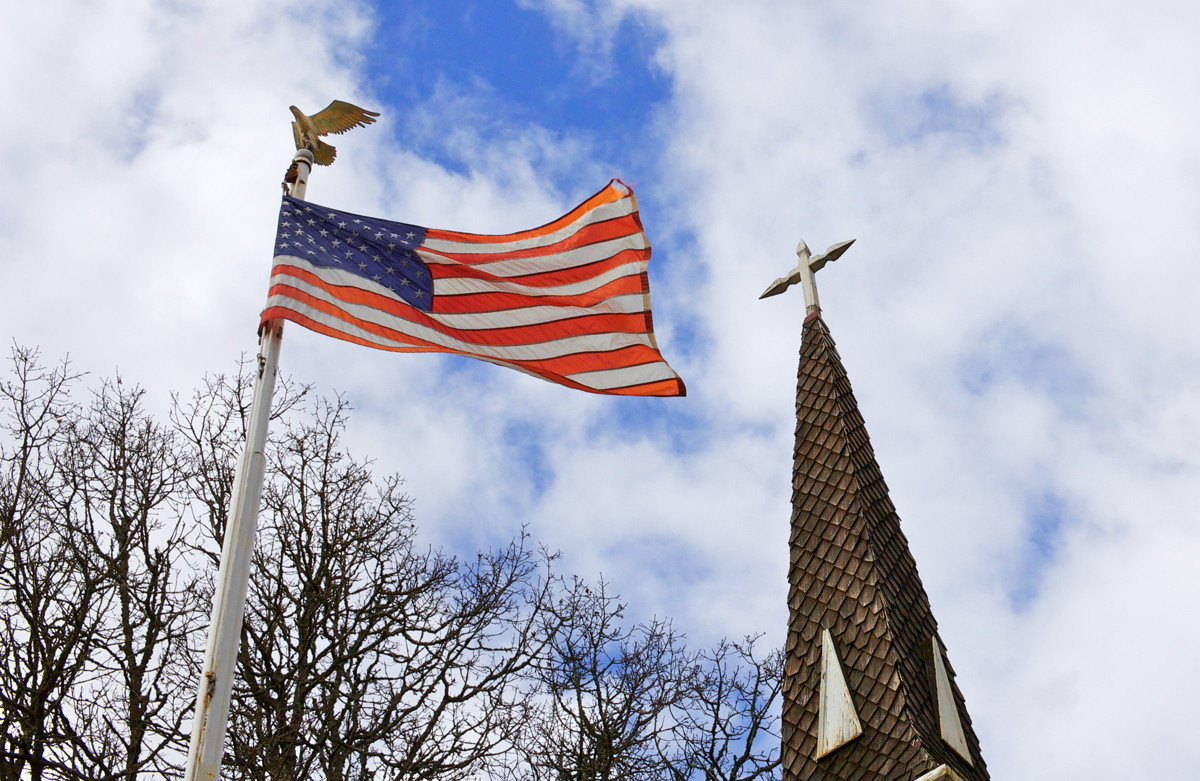
Photo via Shutterstock 

Page Icon Posted at 6:33 pm | Print Print | Permalink | Trackback | Comments (28)
divider

28 Responses to “Obama’s war on religion?”

  1. Deacon John M. Bresnahan says:

    Newt Gingrich hit the nail on the head at a recent debate when he upbraided George Stephanopulous, former Democratic Party operative and now alleged reporter for ABC, for using his powerful position to help bury concerns over religious liberty by —typical for the mass media— never asking questions at debates about issues of serious concern to people who value religious liberty (which is most Americans outside the mass media.)
    And he gave a long list of issues where religious liberty is being grossly trampled on by ballooning government power that the media never raises at debates. For example, driving Catholic groups out of the adoption ministry,to coercing religious institutions to provide immoral forms of medical services and insurance, along with 3 or 4 other clear examples. Catholic bishops and even some Evangelical and Jewish Orthodox leaders have raised serious concerns about what seems the Obama Administration’s callous indifference to the issue of the assault on religious liberty.
    I also looked for reporting on how that accurate, strong critique of Stephanopulous and the media clearly got the loudest and longest cheer of the evening.
    But I saw that fact reported nowhere—although there was some discussion on some news shows about what in the world was George S. trying to prove (some said he certainly did a good job of proving the existence of liberal media bias to those who like to deny its existence.)

    Hot debate. What do you think? Thumb up 16 Thumb down 17

  2. carl jacobs says:

    What is missing in this story is the distinction between the Public and Private sphere. This is a presuppositional fight that revolves around the proper place of religion in life. One side says it is not impacting religious liberty because it is not challenging the practice of religion in the private sphere. “You can believe what you want.” The other side is saying that religious liberty is by definition impacted when religion is constrained to the private sphere. “Action must be allowed to follow belief.” This is the true nature of the conflict. What is never stated however is the authority by which religion is judged by those who would confine it to the private sphere. That is the great untold story. What is the authority of the secularist as he stands upon his supposedly neutral ground?

    carl

    Well-loved. Like or Dislike: Thumb up 21 Thumb down 7

  3. Mark Baddeley says:

    I don’t think this report was that bad. It was limited in words and scope but I think it accomplished its task. I think the point of the report was this final section:

    What’s happened in the past decade, Laycock says, is that the culture wars have become a zero sum game. When one side wins, the other loses.

    “The conservative religious groups want to take away all the liberty of the pro-choice and gay-rights people, and the pro-choice and gay-rights people want to take away all the liberty of the conservative religious groups,” he says. “Neither side seems interested in the American tradition of ‘live and let live’ and protect the liberty of both sides.”

    And Laycock sees little chance of a detente, particularly in an election year.

    That’s the key point the report is trying to convey - that the ‘culture wars’ are becoming a ‘winner-takes-all’ approach for both sides, and that this is unAmerican in terms of history. I think there’s also a minor point about defending the Obama administration and putting the blame for that side of the problem on those campaigning for same-sex rights.

    With that in mind, the article is successful. It is primarily a pastiche of quotes from people so we actually hear from both sides. And by not exploring behind the issues (which would have required the article to focus on just issue, and so would have turned it into a discussion of that one issue, rather than religious freedom more generally) it communicates how intractable the differences are between the two sides - the Catholic bishops saying they have a first amendment right not to be discriminated against vs the group for separation of state and church seeing cutting off all federal funding to religious groups’ social arms as required by the first amendment.

    This mightn’t have been the report you wanted, but as a report communicating that the legal conflicts are likely to get worse from here, I thought it was effective.

    Well-loved. Like or Dislike: Thumb up 9 Thumb down 4

  4. Stan says:

    Hidden due to low comment rating. Click here to see.

    Poorly-rated. Like or Dislike: Thumb up 10 Thumb down 25

  5. R.S.Newark says:

    Shouldn’t Neihaus’ “The Public Square” be referred to?

    Well-loved. Like or Dislike: Thumb up 5 Thumb down 0

  6. Dave says:

    Hidden due to low comment rating. Click here to see.

    Poorly-rated. Like or Dislike: Thumb up 4 Thumb down 20

  7. sari says:

    Bobby,

    This reminded me of the survey articles common to science and high tech publications. The writer summarizes the state of the field or topic and then leaves the reader to research areas of interest in more detail. A more in-depth piece might have provided historical background, shifts in demographics that have led to a more heterogeneous society, and the implications of government by the masses. That is, is the government anti-religion or does the government reflect the will of the majority of Americans? It would have examined the role religion currently plays in American culture and contrasted its position with its position in the past. Anyway, as a survey piece, it works well. As an in-depth piece, it does not.

    Like or Dislike: Thumb up 2 Thumb down 0

  8. Tom says:

    Plenty of evidence that faith in public is under attack, from the treatment of Tim Tebow to the expulsion of churches in New York from renting public buildings. Many people will continue to believe what they want.

    Hot debate. What do you think? Thumb up 6 Thumb down 7

  9. Bobby Ross Jr. says:

    This report is bad because reporters at the NPR are acutely aware that religious conservatives are always attacking the NPR and threatening to cut their funding.

    That’s a nice straw man argument, but it really doesn’t address the specific coverage of the story. The writer involved does some excellent reporting on religion. I just happened not to be a big fan of this particular report.

    Well-loved. Like or Dislike: Thumb up 11 Thumb down 2

  10. Dale says:

    Stan wrote:

    The short answer to the question is that there is no war against religion.

    Douglas Laycock is Robert E. Scott Distinguished Professor of Law, Horace W. Goldsmith Research Professor of Law and
    Professor of Religious Studies at University of Virginia, and is acknowledged by other attorneys and law professors to be one of the best, if not the best, living scholar of the establishment clause. According to this article, he does think that there is a war goin’ on, on both sides. I have met him several times, and can attest that he is neither paranoid nor cynical.

    Your credential for challenging his observation and attacking his character is… ?

    Well-loved. Like or Dislike: Thumb up 8 Thumb down 1

  11. Jerry says:

    This particular story, especially the headline and the voices included, is about politics in an election year. There is an underlying story about religion in America, but the slant of this particular story was not that way.

    There is one particular test that I like to use to see what someone’s point is. And that is to change the speaker’s background and belief. Take this, for example:

    “We don’t have a constitutional right to a contract, but we do have a constitutional right not to be discriminated against because we’re following our own convictions,” he says.

    Said the conservative Jew in forbidding women to work in a business unless they were modestly dressed according to their standards.

    Said the conservative Muslim cab drive in refusing to carry passengers with alcohol.

    You get my drift. The underlying message is about what the nature of America truly is and should be. If some group can assert their standards, even if they are the majority, against other religious standards, then we’re not a secular nation dedicated to treating all religions equally.

    Obviously some will take umbrage with this line of reasoning, but if I had my way, we’d see a lot more in depth reporting and a lot less of “he said she said” coverage. Or even worse, “he said” with “she said” unmentioned.

    Well-loved. Like or Dislike: Thumb up 8 Thumb down 1

  12. Stan says:

    Dale: actually I was not thinking of Laycock when I mentioned paranoid and cynical people. Since he is in favor of same-sex marriage, I generally respect him. But he is, of course, a lawyer most of whose cases involve questions of “religious liberty” (he takes cases on both sides of the issue), so he obviously has a stake in the illusion that there is a war against religion. I doubt that he is paranoid, but he may be cynical.

    Hot debate. What do you think? Thumb up 1 Thumb down 8

  13. Mark Baddeley says:

    Since he is in favor of same-sex marriage, I generally respect him.

    *Sigh* and there’s the culture wars in a nutshell.

    At least Stan was being consistent at #4. If you can only respect someone (and even then only ‘generally’) whose views you agree with, then, yes, a journalistic report is only going to be ‘good’ if it agrees with your party line.

    Well-loved. Like or Dislike: Thumb up 8 Thumb down 2

  14. Dale says:

    Stan:

    [H}e is, of course, a lawyer most of whose cases involve questions of “religious liberty” (he takes cases on both sides of the issue), so he obviously has a stake in the illusion that there is a war against religion.

    cyn.i.cal adjective?/?sinik?l/?

    Believing that people are motivated by self-interest; distrustful of human sincerity or integrity
    - her cynical attitude

    Professor Laycock has a professional reputation of long standing; you make unwarranted attacks on his professional opinion because it is inconvenient to your politics. That kind oynicism has no place in journalism.

    Well-loved. Like or Dislike: Thumb up 5 Thumb down 1

  15. Julia says:

    If some group can assert their standards, even if they are the majority, against other religious standards, then we’re not a secular nation dedicated to treating all religions equally.

    Again - what does “secular” mean? Treating all religions equally or absence of religion from the public square?

    Like or Dislike: Thumb up 2 Thumb down 1

  16. Jeff says:

    “Again - what does “secular” mean? Treating all religions equally or absence of religion from the public square?”

    Treating all religions, theistic and otherwise, equally — even (gasp!) Christianity.

    Like or Dislike: Thumb up 1 Thumb down 1

  17. Stan says:

    Yes, Dale, we know that lawyers are paragon of ethics and are never cynical. Just because they can argue both sides of any issue is of no relevance in thinking that they might have a vested interest in controversy. I didn’t accuse the journalist of cynicism. I accused people who think that there is a war on religion of being either paranoid or cynical. Contrary to a Presidential candidate, children do pray in schools and people do celebrate Christmas.

    Hot debate. What do you think? Thumb up 2 Thumb down 6

  18. Dale says:

    Stan:

    A scholar has stated that both conservative religious groups and gay rights groups have created a “zero sum” contest between each group’s interests. You criticized the journalist because you said that his story was groundless, yet you provided no grounds for your criticism other than your preconceptions and your biases.

    Prayer in schools and the celebration of Christmas are not the sum total of religious exercise protected by the First Amendment. With years of study, Professor Laycock understand that.

    Like or Dislike: Thumb up 4 Thumb down 1

  19. Stan says:

    Let’s rehearse this thread one more time. The journalism is bad, I think, because reporters at NPR are operating under coercive conditions in which they have to make certain that they do not offend powerful religious conservatives. Hence, they bend over backwards to appease them. For me, that accounts for the curious journalism at play here, which Bobby pointed out. I also mentioned that I believe that the people who believe that there is a war on religion are either paranoid or cynical. You take this as a slur on someone you think of as a distinguished scholar, who you think is neither paranoid or cynical. I have not questioned Laycock’s scholarship, and I don’t know him personally so I have no opinion at all about his character. But I lack the reverence for authority that your seem to have and I don’t assume that lawyers are necessarily paragons of ethics. My last comment on Laycock. I hope you extend the same kind of reverence for authority that you do toward him toward, say, Theodore Olsen and David Boies.

    Hot debate. What do you think? Thumb up 1 Thumb down 8

  20. Passing By says:

    No, no war. Except maybe, for these issues :

    •Federal Department of Health and Human Services (HHS) regulations that would mandate the coverage of contraception (including abortifacients) and sterilization in all private health insurance plans, which could coerce church employers to sponsor and pay for services they oppose. The new rules do not protect insurers or individuals with religious or moral objections to the mandate.

    •An HHS requirement that USCCB’s Migration and Refugee Services provide the “full range of reproductive services”—meaning abortion and contraception—to trafficking victims and unaccompanied minors in its cooperative agreements and government contracts. The position mirrors the position urged by the American Civil Liberties Union (ACLU) in the ongoing lawsuit challenging the constitutionality of MRS’s contracts as a violation of religious liberty.

    •Catholic Relief Services’ concern that US Agency for International Development, under the Department of State, is increasingly requiring condom distribution in HIV prevention programs, as well as requiring contraception within international relief and development programs.

    •The Justice Department’s attack on the Defense of Marriage Act (DOMA), presenting DOMA’s support for traditional marriage as bigotry. In July, the Department started filing briefs actively attacking DOMA’s constitutionality, claiming that supporters of the law could only have been motivated by bias and prejudice. “If the label of “bigot” sticks to us—especially in court—because of our teaching on marriage, we’ll have church-state conflicts for years to come as a result,” Archbishop Dolan said.

    •The Justice Department’s recent attack on the critically important “ministerial exception,” a constitutional doctrine accepted by every court of appeals in the country that leaves to churches (not government) the power to make employment decisions concerning persons working in a ministerial capacity.In a case to be heard this term in the U.S. Supreme Court, the Department attacked the very existence of the exception.

    •New York State’s new law redefining marriage, with only a very narrow religious exemption. Already, county clerks face legal action for refusing to participate in same-sex unions, and gay rights advocates are publicly emphasizing how little religious freedom protection people and groups will enjoy under the new law.

    Hot debate. What do you think? Thumb up 6 Thumb down 6

  21. Just visiting says:

    “New York State’s new law redefining marriage, with only a very narrow religious exemption. Already, county clerks face legal action for refusing to participate in same-sex unions, and gay rights advocates are publicly emphasizing how little religious freedom protection people and groups will enjoy under the new law.”

    In Canada, this isn’t seen as a religious freedom issue, but rather an example of the state not condoning discrimination against its citizens whatever their personal characteristics. A civil marriage official can no more deny marriage rites to a couple on the grounds of their sexual orientation than he could on the grounds of their religion or ethnicity. Court cases have determined that the only way for someone to not have to marry a couple on the grounds of certain characteristics is for that person not to be a civil marriage official; formal exceptions aren’t possible (although informal ones probably do exist).

    I don’t understand the religious freedom issue here. No one’s being forced to be a civil marriage commissioner, civil marriages are by definition secular, and civil marriages already allow couples to marry who—by the light of some denominations—should be allowed to (legally divorced Roman Catholics without Church-annulled marriages). Are exceptions made for marriage commissioners in those cases, too?

    Hot debate. What do you think? Thumb up 6 Thumb down 4

  22. Stan says:

    Passing By’s litany of victimhood is simply the talking points of the Catholic Bishops and the hate groups Focus and the Family and Family Research Council. I realize that it may be painful to have to wake up and learn that it is becoming increasingly difficult to deprive other people of their rights in the name of religion and that one might have to obey the law in order to get one’s mitts on taxpayer money, but that hardly justifies misrepresenting the facts.

    Hot debate. What do you think? Thumb up 5 Thumb down 7

  23. Mark Baddeley says:

    I’m beginning to think that ‘Stan’ is actually a social conservative writing to parody the progressive perspective.

    Well-loved. Like or Dislike: Thumb up 6 Thumb down 2

  24. Just visiting says:

    How so?

    Like or Dislike: Thumb up 0 Thumb down 0

  25. Mark Baddeley says:

    It was a partly tongue-in-cheek comment, Just visiting. People who are partisan for either side of the culture war come across as so one-eyed for their position and so unable to acknowledge that you can be intelligent, educated, knowledgeable and yet hold a different view, that it can become almost impossible to caricature or parody what they say. Almost anything you can write to send-up that kind of partisan approach can actually be found in ‘the wild’ on both sides.

    And ‘Stan’ is like that in his comments to date. I’m (fairly) sure he actually is a progressive, and really does think that only progressives are intelligent and fair-minded, but if it ‘Stan’ turned out to be some prank by a social conservative practicing their parody of progressivism I wouldn’t be surprised either. He’s writing in such a way that I don’t think a parody of a progressive partisan could take things any further than he already has without straining suspension of belief beyond the breaking point.

    Thinking the last couple of days about what you said here:

    In Canada, this isn’t seen as a religious freedom issue, but rather an example of the state not condoning discrimination against its citizens whatever their personal characteristics. A civil marriage official can no more deny marriage rites to a couple on the grounds of their sexual orientation than he could on the grounds of their religion or ethnicity. Court cases have determined that the only way for someone to not have to marry a couple on the grounds of certain characteristics is for that person not to be a civil marriage official; formal exceptions aren’t possible (although informal ones probably do exist).

    I don’t understand the religious freedom issue here. No one’s being forced to be a civil marriage commissioner, civil marriages are by definition secular, and civil marriages already allow couples to marry who—by the light of some denominations—should be allowed to (legally divorced Roman Catholics without Church-annulled marriages). Are exceptions made for marriage commissioners in those cases, too?

    I think you’re putting your finger on part of the issue, one that makes this a minefield for both laws and journalism. Carl covered this pretty well in his comment at point 2.

    In my humble opinion, the idea of separation of church and state (one I agree with), and the idea of religious freedom (also one I agree with), is a fudge. There is no clear way to work out what is included in that category from first principles. Some things go in, some things are kept out, but I think arguments can be held as to why those specific things went in and others went out.

    Originally for Mormonism, polygamy was important. And yet that was not allowed in the U.S., despite freedom of religion. In Australia early on some Roman Catholic workers took a day off because their priest considered it to be a saint’s day. The courts determined that there was no legal recognition of that. There’s a couple of fairly clear restrictions on the right of religious people to act on their beliefs in the public square.

    But go the other way and make everything to do with ‘the state not condoning discriminaton’ (or the like) and ‘freedom of religion’ becomes like Chesire’s cat and all you have left is the smile. Part of almost all religions is that they make demands on how you live and act, and not just when you’re doing liturgical stuff in a gathered group. And the English speaking Western tradition has been fairly careful to try and give a wide scope for that to occur without interference from the State.

    That’s why Jerry’s thoughts at #11:

    There is one particular test that I like to use to see what someone’s point is. And that is to change the speaker’s background and belief. Take this, for example:

    “We don’t have a constitutional right to a contract, but we do have a constitutional right not to be discriminated against because we’re following our own convictions,” he says.

    Said the conservative Jew in forbidding women to work in a business unless they were modestly dressed according to their standards.

    Said the conservative Muslim cab drive in refusing to carry passengers with alcohol.

    You get my drift. The underlying message is about what the nature of America truly is and should be. If some group can assert their standards, even if they are the majority, against other religious standards, then we’re not a secular nation dedicated to treating all religions equally.

    Is so problematic. Freedom of religion ‘cashes out’ differently in different contexts. Pick and choose you analogies carefully enough and you can make the Catholic Bishops look like the Taliban, or like defenders of basic human rights. It’s one reason why I got irritated with the ‘this is such an easy thing to report on - there’s no war on religion/it’s all a war on religion’ kind of thing that happened on this thread.

    I think one reason why ‘gay marriage’ is being seen as different from Catholics doing civil marriages that don’t line up with Catholic teaching, is that there is a strong perception among those opposed to gay marriage that these ‘rights’ (and those scare quotes aren’t to say they aren’t a right, just that that is part of the debate) are being fought for, so as to impose state-sanctioned approval of same-gender sexual relationships, and so participating in them is seen to be a bigger invasion of conscience than it might be in a different context.

    It has the feel, not so much of limiting the expression of religious beliefs (as with the two examples of polygamy and saints days I referenced) - a passive effect - but rather forcing people to actively behave in a way incompatible with their religious beliefs. If civil registrars have to act as though they’re okay with gay marriage to hold that job, then any person or institution in the public square has to - and that essentially requires people to act in a way that their convictions say is wrong. And while I’m no legal scholar, my impression is that that really goes against the Western, English speaking tradition on such matters. The threshold has to be very high to justify it.

    And that raising of the threshold is what we see, people are running the arguments for same-gender marriage as one of basic human rights, and opposition as bigotry on a par with racism. None of that is part of the broader package with something like Catholics and marriages that don’t fit Catholic teaching, and so the conscience issues aren’t as involved there.

    I’m not sure how clear all that’s been. My point is that the issues are extremely complex on all sides, and so very hard to report on. Hence, I think the NPR report, given its limitations, did a reasonable job with this one. This is going to get fought out at a legal level, and what ‘religious freedom’ means will be either reappropriated or reinvented as part of that. I think the NPR report did a reasonable job in 1k words of indicating that fact.

    Like or Dislike: Thumb up 1 Thumb down 1

  26. Stan says:

    I am glad that Mark Baddeley doesn’t believe in ad hominem arguments or in attributing questionable motives to others. Otherwise, I’d say that he is a conservative pretending to be a liberal pretending to be a conservative.

    Like or Dislike: Thumb up 2 Thumb down 2

  27. Bobby Ross Jr. says:

    And now…

    Let’s feel free to focus on journalism…

    Like or Dislike: Thumb up 0 Thumb down 0

  28. Anne Peterson says:

    I don’t think there is a “war” on religion but after some debate with friends, we discovered that we are certainly NOT a religious nation, but specifically NOT a christian nation.

    In the Constitution, article VI, it says “and all treaties made, or which shall be made, under the authority of the untied states, shall be the supreme law of the land…”. Now if you accept the constitution as the law of the land, you agree that treaties are legal.

    Next, I refer you to the Treaty of Tripoli, that was written in 1797 by John Adams (a founding father), the president at that time, it was unanimously ratified by the senate (which included at least one other founding father), you will see that it clearly states “As the government of the United States of America is not in any sense founded on the Christian Religion”…

    I’m wondering why anyone, especially politicians, would say that we are a christian nation, when the founding fathers themselves said we are not? Please don’t get me wrong here, I love God but the idea, I believe, is not to taint God with politics and to protect freedom of religion…any religion. What are your thoughts?

    Kind regards,
    Anne Peterson

    Like or Dislike: Thumb up 0 Thumb down 0