
GetReligion.org - GetReligion » “The press . . . just doesn’t get religion.” — William Schneider
member of beliefnet's blogheaven

Recent Posts

Phony outrage over “phony theology”? | A blot on ESPN’s escutcheon? | Stalking the mythical ‘Catholic vote,’ yet again | Thin Mints on thin ice? | When gossip makes the front page | A tale of two rallies | Stunning gap in Sun story on new cardinal | How many woman priests? | The Jeremy Lin factor | St. Athanasius rolls around in grave | 2012 Archive >


Tuesday, January 10, 2012
Posted by Bobby Ross Jr.
Share

One of the most basic principles of journalism is that sources of information should be identified.

Attribution, it’s called. Like I said, it’s a journalism thing.

I thought about that principle as  I read a New York Times story today concerning a land-use dispute in Harlem.

Now, at its most basic level, this situation reminds me of the NIMBY (Not In My Back Yard) zoning battles that I so often covered in my days as a suburban city council reporter. Any time someone proposed building a shopping center or a church gymnasium, neighbors would rush to raise concerns over noise, traffic and other potential harm to their peaceful way of life. But the Harlem case presents a different twist.

So here’s the top of the Times story:

The wider world does not often glimpse the internal disputes of the Mormon Church. Formally known as the Church of Jesus Christ of Latter-day Saints, the fast-growing religion is expanding in places as far-flung as Africa and Latin America, but most big decisions are still made centrally by a church hierarchy in Salt Lake City.

Recently, though, a debate over a ramshackle church property in Harlem has spilled into public view. And perhaps it is no surprise what subject could raise passions strong enough to override Mormons’ aversion to airing differences outside the church: Manhattan real estate.

The angle chosen by the Times seems like a legitimate one. A rare public dispute between a local congregation and the Mormon hierarchy fits my definition of news. I  kept reading, however, to find the source and context to back up the lede’s claim that this situation is unique.

But no experts — inside or outside the faith — are quoted to illuminate readers on the general practices and approaches of local members and the Mormon hierarchy in such situations. Readers are left to take the Times’ word for it that Mormon leaders prefer to handle such disagreements behind closed doors.

To be clear, I don’t doubt that they do. But as a reader, I expect the paper to provide evidence — to clearly show how its reporters and editors know what they claim. You are supposed to tell readers things like that.

On the positive side, the report does quote a church spokesman as well as local church leaders about the local dispute.

But it falls short — with the lack of background and context — in making this local issue a national case study.

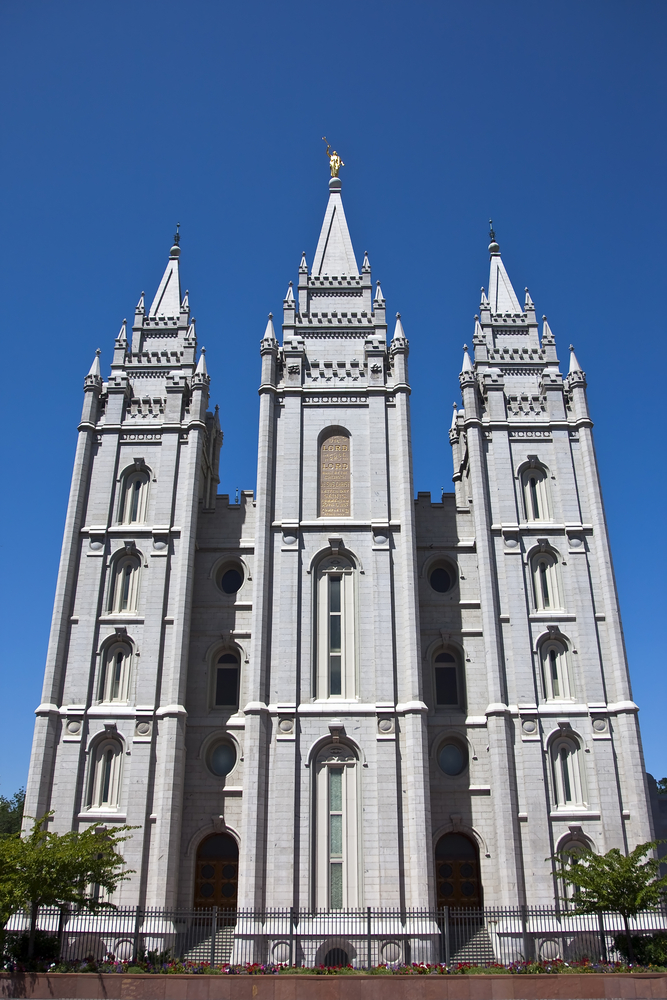
PHOTO: Salt Lake Temple photo via Shutterstock 

Page Icon Posted at 10:23 am | Print Print | Permalink | Trackback | Comments (9)
divider

9 Responses to “How do you know that?”

  1. Chris says:

    A couple things stand out - first I don’t think the church is “formerly” known as the Church of Jesus Christ of Latter-day Saints - I believe that is the “official” name.

    Secondly, it doesn’t really seem like there is much evidence of an “internal dispute” on this issue - the NYT quotes one member that disagrees with the church’s plan (two other members are mentioned but are not quoted as disagreeing with the decision). The only other people quoted as disagreeing with the decision are not part of the church, and so therefore not evidence of an “internal dispute”…..

    Well-loved. Like or Dislike: Thumb up 11 Thumb down 0

  2. Bobby Ross Jr. says:

    Thanks for the comment, Chris.

    The term used in the story is “formally,” not “formerly.”

    Well-loved. Like or Dislike: Thumb up 4 Thumb down 0

  3. Chris says:

    my bad - I guess I need my eyes checked…..

    Well-loved. Like or Dislike: Thumb up 4 Thumb down 0

  4. Bobby Ross Jr. says:

    From one squinter to another: No problem!

    Eagerly awaiting the arrival of my own new pair of glasses …

    Well-loved. Like or Dislike: Thumb up 4 Thumb down 0

  5. Steve Martin says:

    That through me for a loop, also.

    Funny how the brain works (or, in my case, doesn’t).

    Maybe ‘officially’ would have been better. Hindsight…what a great tool!

    .

    Well-loved. Like or Dislike: Thumb up 6 Thumb down 0

  6. Bobby Ross Jr. says:

    You mean “threw” you for a loop, right?

    Sorry, couldn’t resist. :-)

    Like or Dislike: Thumb up 3 Thumb down 0

  7. J. Lahondere says:

    I noticed the line “Mormons shun alcohol and caffeine.” I know this has nothing to do with the topic of the article, but as a Mormon I’m always a little annoyed by the fact that caffeine is brought up. It tends to always happen in newspaper articles. Many Mormons DO shun caffeine, but the doctrine of the church only specifically prohibits alcohol, coffee and tea. You can still be a member in good standing and drink Mountain Dew. You can’t be a member in good standing and drink coffee.

    So yes, I realize that many Mormons choose to abstain from caffeine in general. Perhaps these articles are trying to show how Mormon beliefs are generally practiced as opposed to the actual teachings of the church. But I will say that I served as a Mormon missionary to New York City (the Bronx and Manhattan, which obviously includes Harlem) for two years, and in my experience most of the members there did NOT “shun” caffeine. In fact, very few did. The shunning of caffeine is a much more western (thinking Utah and Idaho) LDS tradition.

    So in the same vein, there are some Mormons in the world who do drink alcohol. But they don’t represent what the official stance of the church is. When you say “Mormons shun” something, it seems to suggest to me that you are making a blanket statement about religious beliefs. Mormons shun alcohol, coffee and tea, and the illicit use of all drugs. I don’t know. Maybe it’s that caffeine could be considered a drug to be used illicitly? I’ll quit while I’m ahead. Apart from this tiny issue, I actually really enjoyed the article.

    Well-loved. Like or Dislike: Thumb up 7 Thumb down 1

  8. sari says:

    A Mormon friend had explained the prohibition against coffee and tea as a prohibition against hot beverages during the long trek cross-country. Don’t know how true this is, but she says the caffeine is a recent gloss.

    Like or Dislike: Thumb up 0 Thumb down 0

  9. John Pack Lambert says:

    Since the article already played up the race angle, it should have noted Corbitt is an African American who is also president of the Cherry Hill New Jersey stake.

    It is also incorrect to say Mormons do not drink cafine. They do not drink coffee and tea, but other cafinated drinks are allowed.

    The Word of Wisdom specifically bans “hot drinks”. That pre-dates the treck across the country by over a decade (1833 to 1847 at earliest) so it is not an issue. The phrasing “hot drinks” has been officially interpreted to mean coffee and tea, including iced tea.

    I will agree this story lacks any context at all. There have been other recent sellings by the LDS Church of former Church buildings that could be explored, even if in general they have not involved local members clearly wanting to keep the property or reuse it. There is a case in far northern California where there is an attempt by neighbors to stop the sale to a residential developer of an old and dilapidated LDS Church building that has not been used for services for nearly a decade. Here is a link on that case http://www.arcataeye.com/2011/11/lds-church-demolition-vehemently-opposed-%E2%80%93-november-18-2011/

    Like or Dislike: Thumb up 2 Thumb down 0